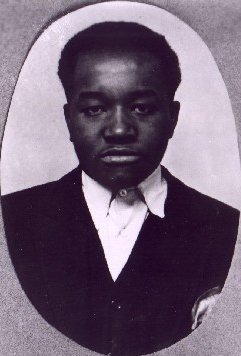
1936: Mary Frances Creighton and Everett Applegate

(Thanks to Meaghan Good of the Charley Project for the guest post. -ed.)

On this date in 1936, onetime lovers Everett C. Applegate (referred to in some accounts as “Edward” or “Earl”) and Mary Frances Creighton, who went by her middle name, were electrocuted in Sing Sing Prison for the murder of Ada Applegate, Everett’s wife.


Mary Frances Creighton (top) and Everett Applegate.

Newspapers of the time referred to Frances as the Long Island Borgia. The murder came about as a result of, depending on your point of view, a Jerry Springer-type sensation or horrific child sexual abuse or both: In 1934, Frances and her husband and their two children were living with the Applegates and their daughter in Nassau County, New York.

By January 1935, Everett Applegate was having an affair with Frances. He was also interested in the Creightons’ blooming teenage daughter, Ruth. By June of that year the thirty-something man was sleeping with her also, with the knowledge of — and in at least one case, in sight of — Ada, whose obesity kept her mostly confined to bed.

Ruth was delighted with her new boyfriend, who drove her anyplace she wanted to go, gave her money and and bought her clothes and other gifts. But when Frances found out about the relationship in July, she was furious and humiliated.

Not only was Everett in the arms of another, but he was making her, Frances, look like a bad mother. Ruth was going to school dressed like a harlot, even wearing lipstick. Suppose she became pregnant? This would bring terrible shame upon the family.

In mid-September, Ada Applegate became violently sick, with diarrhea and bilious vomit. She spent a few days in the hospital and was discharged, without a diagnosis but feeling much better.

Immediately after she got home, however, her symptoms returned, and she died two days later, on September 27. The cause of death was listed as “coronary occlusion” — in other words, a heart attack.

Frances was a bit of a hard case and no stranger to murder. She and her husband John were living with his parents, as well as her teenage brother, Raymond Avery, in New Jersey in 1920 when Anna and Walter Creighton suddenly sickened and died, one after the other.

In 1923, Raymond too became ill with the same symptoms and rapidly expired, and his sister and brother-in-law collected his $1,000 life insurance policy. Frances and John were charged with his murder after the autopsy, held in spite of their objections, found arsenic in young Raymond’s body.

After the autopsy, deeply suspicious investigators exhumed the elder Creightons’ bodies while their son and daughter-in-law were in jail. No arsenic could be found in Walter’s system, but Anna’s contained a lethal dose, and Frances (but not John this time) was charged with murder even before she came to trial for her brother’s death. She’d never gotten along with her in-laws or they with her, and just before Anna became ill, Frances had made ominous statements that the old woman would shortly “destroy herself.”

The Creightons’ four-day trial for Raymond’s murder resulted in acquittal for both defendants. John went home and Frances remained in custody for another two weeks until she faced her next trial, for the death of Anna Creighton. The prosecution was unable to prove she had personally purchased any poison, and the 24-year-old defendant, an attractive nursing mother who was keeping her infant son in her cell with her, presented a sympathetic picture. Once again, she heard a jury announce a murder acquittal.

But she didn’t take warning from her two near escapes.

Twelve years later, Ada Applegate became the third person close to Frances Creighton who died of arsenic poisoning. Goodness knows how many more she might have ventured.

The police knew about Frances’s relatives’ proclivities for mysterious deaths, and were deeply suspicious. An autopsy revealed three times the lethal dose of arsenic in Ada’s corpse, and it didn’t take long for Frances to crack under questioning.

She admitted to poisoning Ada, but also implicated Everett, saying he’d known about the crime all along and had helped her. She also claimed he used his knowledge of her past to blackmail her into having sex with him.

Frances killed Ada, Frances said, so Everett would have a chance to make an honest woman out of Ruth, and because Ada had been gossiping in the neighborhood about her husband’s affair with the girl.

Frances Creighton and Everett Applegate found themselves arrested. Only then did a bewildered John find out about the sexual improprieties that had been going on for months right under his nose. Remarkably, he stood by Frances and said he believed her to be innocent of murder.

He was the only one.

A look into Frances’s past revealed some very additional suspicious incidents apart from the deaths in her family. Relatives of a neighbor she quarreled with got extremely ill after having tea with Frances, and although they pulled through, later on, the neighbor’s house burned down.

The fire was arson and Frances had been the prime suspect, but there was insufficient evidence to arrest her.

As for Everett Applegate, the case against him was far less persuasive.

Frances made three statements: in the first, as told above, she implicated her erstwhile lover. In the second, she said she’d done the murder all on her own and Everett was not involved. The third time she went back to blaming him: he had mixed the poison, and she had given it to his wife.

To this shaky accusation add the ill feeling engendered by Everett’s caddish mores, and it was enough for an indictment. (Everett was also charged with criminally assaulting Ruth. At his arraignment he attempted to plead guilty to this, saying, “I want to marry this girl.” The judge refused to accept the plea.)

By the time of the trial, Frances had gone all-in on blaming Everett. She claimed the lothario had “made” her poison Ada. Her defense portrayed her as a weak woman who had been lead astray by an evil, domineering male. But Everett’s lawyer made sure the jury heard about the deaths of her brother and parents-in-law in New Jersey, and her conviction was a foregone conclusion.

The main evidence against Everett was Frances’s testimony, the fact that he was known to have purchased the rat poison that wound up in Ada’s eggnog, and his despoiling the teenage daughter of his paramour. Everett’s defense attorney agreed their client was a scumbag and a pervert, but denied that he was a murderer.

In his concluding arguments, the attorney asked the jury to acquit Everett of killing his wife and convict him instead of the rape of Ruth. It didn’t work: the jury convicted him on both counts.

While the two condemned awaited their fate, Ruth, who had been sent to a girls’ reform school, would later write a letter to the authorities. She said her mother was innocent and she had heard Everett say he wanted to do away with Ada so he could marry her. No one believed her story.

On the day of their executions, Frances was given the first slot in hopes that she might make a final statement exonerating Everett. Alas, she was in no condition to give any statement at all; suffering from hysterical paralysis, she had to be taken to the chamber on a wheelchair, and some reports state that she was completely unconscious when they strapped her into it. She was the first executee at Sing Sing in 45 years who was unable to walk on their own to their death.

Everett, still protesting his innocence, followed her ten minutes later.

On this day..

1944: George Stinney, Jr., age 14

(Thanks to Meaghan Good of the Charley Project for the guest post. -ed.)

On this date in 1944, a five-foot-one-inch, ninety-pound prisoner walked into the death chamber of the Central Correctional Institute in Columbia, South Carolina and was executed in the electric chair.

He was so small that the guards had trouble strapping him into the chair and fitting the electrodes on. When the first jolt of electricity hit him, the mask fell off his face, revealing an expression of horror.

His name was George Junius Stinney Jr., and at fourteen years, seven months and twenty-six days, he was the youngest person to be legally executed in the U.S. in the 20th century. In spite of this startling distinction, his death went practically unnoticed in the press.

Stinney, a black youth from a poor family in the town of Alcolu, was condemned for the double murder of two white girls he knew: Betty June Binnicker, age 11, and Mary Emma Thames, age 8. The girls had gone out on their bicycles on March 23, 1944, and along the way they saw Stinney and his sister and asked where to look for flowers. The Stinneys said they didn’t know.

The next day, the two girls’ bodies were found in a muddy, water-filled ditch. They had both sustained severe head injuries; their skulls were shattered. A fifteen-inch railroad spike was found nearby.

A few hours later, Stinney was arrested and locked in a room with several police officers and no one else. According to later testimony, at first he claimed the girls had suddenly attacked him and he hit them with the railroad spike in self-defense. However, a short time later he gave a second statement confessing to premeditated murder.

Stinney allegedly stated he had wanted to have sex with Betty June, but he couldn’t do so until the younger girl was out of the way, so he killed Mary Emma with the railroad spike. Betty June ran away, but Stinney caught up with her. When she resisted his sexual advances, he killed her too and dragged both bodies into the ditch. That’s the story.

When the townspeople found out that Stinney had confessed and would be charged with murder, a lynch mob formed outside the jail. Authorities took the boy to another jail in Columbia, fifty miles away, for his own safety; fearing for their own lives, Stinney’s family also fled town.

The trial took place on April 24, one month and one day after the murders, beginning at 2:30 p.m. Virtually the only evidence against Stinney was the testimony of the sheriff who heard the confession: there was no written record of the confession. Stinney’s defense attorney, who planned to run for state office, did not contest the confession and called no witnesses, but only claimed his client was too young to be held responsible for the murders. However, under South Carolina law at the time, a fourteen-year-old was legally an adult.

The jury was sent out at 5:00 p.m. and returned with a guilty verdict just ten minutes later.

There was no appeal.

Some local churches and the NAACP asked the governor for a commutation, citing Stinney’s age — but the governor allowed the execution to proceed. The entire drama from homicides to execution spanned less than 90 days.

One of Betty June Binnicker’s sisters reflected fifty years later, “Everybody knew that he done it, even before they had the trial they knew that he done it. But I don’t think that they had too much of a trial.”

More than sixty-five years after Stinney died, a community activist called for the case to be reopened, suggesting Stinney may have have been innocent. The evidence against him was absurdly slight. He had no history of violent behavior, and it seems unlikely that this short, slender boy would be strong enough to overpower two girls and beat them to death. Stinney’s brother, now a pastor in Brooklyn, said the family always believed in his innocence. Both his brother and his sister recalled that he had been a smart boy, a good student and artistic, and their family had been a close and loving one.

As one article noted, “Stinney’s trial and subsequent execution were suspicious at best and a miscarriage of justice at worst … This was South Carolina in 1944, with a black male defendant, two young white female victims, and an all white, male jury. Stinney never stood a chance.”


Stinney-inspired scene from the TV movie Carolina Skeletons.

On this day..

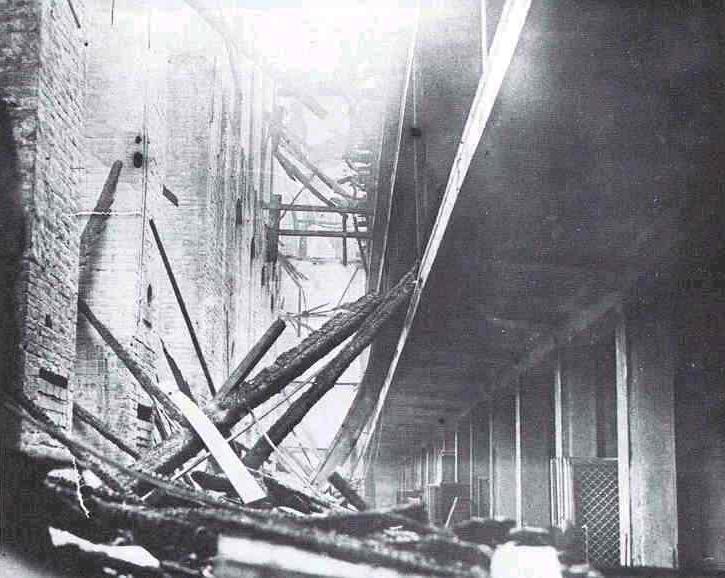
1930: Lee Akers, after the Ohio Penitentiary Fire

On this date in 1930, Lee Akers was electrocuted in Ohio for murdering a Cleveland man at a gas station stickup.

Akers had been held at the death house at the Ohio Penitentiary bound in the end for a May 2, 1930 execution.

The “lucky” break that bought him six extra weeks of life was just the deadliest prison fire in history. (n.b. — Recently surpassed in Honduras)

Already a century old and packed to triple its 1,500-soul capacity, the penitentiary had a fire break out* shortly after supper on April 21 in Section “I”. This fire

licked along dry timber into Section “H”, from Section “H” to Section “G”, and thence upward to where 300 prisoners, trapped like caged animals, tore futily [sic] at steel bars that became their pyre.

It was a twilight of indescribable horror.

Some 320 perished from burns, suffocation, and smoke inhalation. Most of the casualties were those who never got out of their locked prison cells, and couldn’t move a meter as death enveloped them.


20th century literary great Chester Himes also happened to be serving a sentence for armed robbery at this prison:** indeed, it was during that sentence that he began to write at all, setting him on a path towards his life’s work.


1991 cinematic adaptation of Himes’s A Rage in Harlem.

Himes’s novel from his time in the Ohio penitentiary was only published well after his death, in 1998 … the same year the disused Ohio Penitentiary was finally torn down.

One of Himes’s first published works was a short story in Esquire in 1934, written while Himes was still incaracerated. Titled “To What Red Hell” (an allusion to Oscar Wilde’s meditation on prison and death row, The Ballad of Reading Gaol: “For none can tell to what red Hell / His sightless soul may stray.”), this story follows the experience of the Ohio prison inferno through the fictional inmate “Blackie”, who beholds tormented prisoners like “condemned souls jumping flame pots in the ante room of Hell” … but also notices the ironic safety of death row, where the literal condemned souls remained un-burned.

From where he stood he could see the death house, a low, red brick building at the end of the cell block. Just above it was a wall parapet. A guard stood on the cat-walk with a sub-machine gun cradled in his arm. Two searchlights shone in opposite directions down the sides of the gray, stone wall. The green door of the death house looked black in the vague light.

The end of the parade! The last mile! What a joke! The death house was on the other side of the yard tonight, he was thinking. It was quiet over here in the shadows with the scared ghosts of the executed men.

In fact, someone had managed to spring the death house doors, momentarily “liberating” the doomed men. As militia arrived on the scene, they attempted to forestall any general uprising or wholesale prison break by setting up machine gun emplacements on prison towers, with orders to shoot to kill.

When the death row prisoners were collared — they hadn’t actually gone anywhere or tried anything** — they were offered transportation to the city jail for their own safety against these potentially itchy trigger fingers. While three of them took the refuge, the others (Akers included) refused, on the sensible grounds that they could hardly be much worse off being shot dead than being electrocuted.


The inmates — reported to have labored heroically alongside guards, firefighters, civilian nurses, virtually without incident — were understandably incensed at the disaster, charging that guards had allowed most of the victims to die out of needless reticence over releasing anybody as the fire began to spread — and that the refusal to turn the keys went straight to the top. William Wade, “a big Negro prisoner” who had sledgehammered a cell open to save 25 men, was quoted in the next day’s New York Times saying simply, “They could have saved these men. They let human beings burn to death.”

Warden Preston Thomas, who comes off in the story as an unmitigated shit,† was the focus of the prisoners’ ire … and when he showed himself, the focus of their raucous jeers (Thomas tried to dump the blame on lower-level guards, who in turn claimed that they’d been directed by their superiors not to open cells). The Ohio governor’s refusal to dismiss Warden Thomas soon triggered a riot in the prison and the arrival of the National Guard for several tense days of teargas-punctuated negotiations.

This mutiny was only just being settled when Akers’s original May 2 execution date came up. The charred prison clearly had some other priorities at that moment than orchestrating an execution, so Akers and another man, John Richardson, both got a gubernatorial reprieve until things were peaceful enough for orderly killing.

The inferno, meanwhile, opened space for some humanitarian reforms: since overcrowding (which had been fretted in internal reports in the years preceding the fire, and had also contributed to several other prison disturbances) was widely understood to be part of the disaster, a parole board was formed in 1931 that released 2,300 prisoners. “Mandatory minimum” sentences that stuffed minor offenders into these dungeons were widely rolled back.


According to the Justice Policy Institute (pdf), the total United States prison population in 1930 was a mere 180,889.

Although we may have made some provisions to avoid spectacular catastrophes like the Ohio Penitentiary fire in our present-day overcrowded prisons, the routine catastrophe of imprisonment itself — “the moral scandal of American life” — has grown more than twelvefold since 1930.

* The mysterious fire was eventually found to have been started by some (non-death row) prisoners in an abortive breakout bid: two of them later hanged themselves in remorse. However, and rather amazingly, there were no reported escape attempts during the nighttime chaos.

** Himes wasn’t the Ohio penitentiary’s only noteworthy litterateur. The facility’s prison yard was named in honor of the pseudonym that a previous scribbling inmate had concocted there in order to get published while doing his time: O. Henry.

† e.g., a committee formed by the legislature to investigate the fire took testimony from convicts that Warden Thomas was a tyrannous martinet even apart from the disaster, even as Thomas was publicly threatening the angry inmates who were demanding his ouster: “If these prisoners don’t quiet down pretty quick, I’ll use forceful methods against them if it takes a soldier to every man.”

Part of the Themed Set: Ohio.

On this day..

1985: Marvin Francois, back to Africa

On this date in 1985, Florida electrocuted Marvin Francois (to the disappointment of this unknown anti-death penalty protester).

Francois’s last statement, via Last Words of the Executed:

“I am as a grain of sand on the beach of the black race. The black race has lost its pride and dignity and is slowly dying from within and without. My death ends my tears, and the fortune of watching my race slowly die. If there is such a thing as an Antichrist, it ain’t one man, but the whole white race.”

Francois had donned a mask and, with a couple of confederates, stuck up a drug house in 1977.

The mask slipped, exposing Francois’s face — and the home invaders decided to murder the eight prisoners to keep them from making the ID. All were shot in the head execution-style.

Somehow, two survived to identify Marvin Francois. It was an easy conviction. (A confederate, Beauford White, was executed for the same crime in 1987.)

Once the death sentence was on the books, appellate attorneys developed a genuinely sympathetic profile of Francois’s background, if not his crime. A federal appeals court on the day before Marvin Francois died could not help but agree that

[t]he proffered evidence shows that Francois was the product of a sordid and impoverished childhood environment. His parents were not married. His father was a habitual heroin addict who never worked, who brought other addicts into the home for the ingestion of heroin in front of Francois when a child, and who beat Francois because he would not fight with other children when he was a boy. Francois’ mother often worked as a prostitute and was of little benefit to Francois during his childhood. She married but Francois’ step-father abused him. Francois grew up as a child of the street. At the same time he was smart, and although not finishing school, he obtained his G.E.D.

The behavioral scientists in their affidavits posit that “… some offenders, like Marvin Francois, are themselves victims of circumstances that shape their lives in ways beyond their deliberate control.” They suggest that given Francois’ chaotic antisocial upbringing, “clear mitigation of punishment compellingly surfaces.”

Nevertheless, the panel concluded that, given the extent of the crime (and his existing history of violence), all this sob-story stuff “would not have affected the sentencing outcome in this case had it been submitted to the jury.”

That was that.

It was a touching parting for at least one good friend on death row with him. “We wanted to send him out on a high,” a fellow-prisoner later remembered of sharing a last cigarette with Francois while imagining it a joint. “It took a little out of me when they killed him. I’d grown real attached to him.”

According to David von Drehle’s Among the Lowest of the Dead, that disattachment was rather unusually distant: Marvin Francois’s final resting place is … the sea off Dakar, Senegal.

Francois had asked that his ashes be scattered in Africa. Susan Cary, the longtime activist … was determined that this last wish would be honored. But it was one thing to find bus fare for a condemned man’s family, and quite another to raise the money for a trip to Africa. Cary collected the cremated remains of Marvin Francois and put them in a shoebox in her closet, where they sat for two years while she tried to figure out how to get them across the ocean.

In 1987, Michael Radelet, Cary’s frend and fellow activist, announced that he was going to Senegal to visit a relative. Take Marvin, Cary suggested. Radelet was game, but there were rules — human remains can’t just be toted from country to country. Uncertain as to the relevant legalities, Radelet contacted John Conyers, a prominent black congressman from Detroit; Conyers strongly opposed the death penalty, he was well known in Africa, and he had offered more than once to help Florida’s anti-death penalty crusaders any way he could. The congressman pulled the right strings, and shortly before his trip Radelete received an official letter announcing that the Senegalese government would be happy to welcome “Brother Marvin” home.

… Radelet had a darkly comic view of the world. Traipsing around Senegal, shoebox in hand, he would place the box on the opposite chair at restauants and say things like “Marvin, would you like some water?” On sightseeing jaunts, he would take snapshots of the shoebox in front of important buildings and picturesque vistas. Finally, Radelet carried the box to a bluff outside Dakar, a lovely spot with the city in the distance and the Atlantic spread out below. He took one more snapshot – “Marvin at the seashore” — then opened the box and sprinkled the ashes on the sun glittered waves. As he gazed into the oceanic expanse, it occurred to him that this very water might have rocked and sloshed all the way from Florida; now, the waves lapped the shores of Africa, bearing the remains of Marvin Francois to his dreamland.

The aforementioned Michael Radelet — now at Colorado University, not Florida — holding forth on more up-to-date death penalty trends:

On this day..

2010: Paul Warner Powell, jurisprudentially confused

On this date in 2010, Paul Warner Powell was electrocuted in Virginia — the last human being, as of this writing, to be put to death by that method, although he is not likely to retain that distinction long-term.

However many might be yet to ride the lightning, it is doubtful that any will usurp this virulent racist’s place on dumbest-criminals lists.
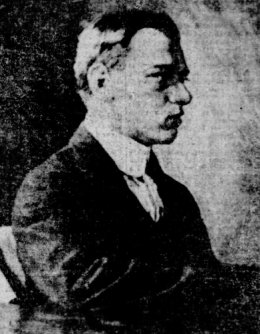
Powell confronted a 16-year-old acquaintance about her relationship with an African-American, and in the altercation that followed our man stabbed Stacie Reed in the heart.

Then the charmer laid in wait in the house for the return of Stacie’s 14-year-old sister, whom he raped and left (so he thought) stabbed to death in the basement. Kristie Reed survived an abdomen wound and a slashed throat.

So far, just a regular malevolent criminal.

But his fate turned on a small legal technicality followed by a monumentally foolish blunder.

Initially death-sentenced for the murder (of Stacie) aggravated by the rape (of Kristie), that sentence was vacated by the Commonwealth’s high court on the grounds that rape could only aggravate the murder into a capital crime if it was the murder victim (Stacie) who was raped. Prosecutors had not shown that.

Erroneously believing this decision to have freed him from any risk of execution thanks to double jeopardy, Powell then proceeded to scribble a lengthy jeering diatribe to his prosecutor “to show you how stupid all of y’all mother fuckers are.”

The entire very profane letter is here. Apart from its intrinsically monstrous narrative, it made this very unwise admission about how things went with the murder victim Stacie:

I told her that all I wanted to do was fuck her and then I would leave and that we could do it the easy way or the hard way.

… she got up and started fighting with me and clawed me face. We wrestled around a little and then I slammed her to the floor. When she hit the floor I sat on top of her and pinned her hands down again. She said she would fuck me and I told her that if she tried fighting with me again, I would kill her.

This freely-confessed attempted rape (it was not consummated — hence the state’s previous inability to charge it) qualified as the exact aggravating factor whose want had just enabled Powell to escape death row. And in fact, prosecutors were able to use it to try Powell for his life once again. This time, they got him — and it stuck.*

Better to remain silent and be thought a fool, than to open your mouth and remove all doubt.

Powell, it turned out, was an energetic correspondent.

Apart from the aforementioned lethal missive, he posted other bigoted mash notes to his prosecutor “Fat Ebert”; he sent menacing taunts to the victims’ mother Lorraine Whoberry; and he even began swapping racy billets-doux with the married forewoman of his first jury who, guilt-stricken at having sent a man to his death, started writing the murderer and wound up falling for him and testifying on his behalf at his second sentencing.

Just a bizarre case all around.

Whoberry, the mother of Stacie and Kristie and the woman whom Powell had crudely harassed by mail from prison, founded the STACIE Foundation to teach compassion for violent crime victims. Whoberry even had some compassion of her own for Powell, eventually forgiving him; the two spoke amicably by phone on the night before Powell’s execution.**

* This raises our periodic reminder to anyone who should come to be of interest in a legal investigation not to talk to the police, period.

However, it is our firm conviction that Executed Today attracts a caliber of reader who intuit the inadvisability of confessing one’s capital crimes in florid written detail.

** Forgiveness or no, Whoberry did continue to support Powell’s execution.

On this day..

1951: The first four of the Martinsville seven

On this date in 1951, the first of two batches comprising the “Martinsville Seven” — black, all — went to the Virginia electric chair for gang-raping a white woman. (The remainder were executed on Feb. 5)


Newspaper scan (click for larger image) via Mr. Beaverhousen (cc).

Somewhat forgotten today, the Martinsville Seven were in their day the locus of radical activism against Jim Crow in the South — very much like Willie McGee, who was put to death in Louisiana later that same year.

In fact, this case generated a bit of a legal milestone: a month before the executions began, the U.S. Supreme Court declined an appeal seeking relief on the then-novel grounds of equal protection — rather than due process.

The argument was that the Old Dominion’s superficially race-neutral rape statute was anything but; that argument was buttressed by data showing that Virginia had executed 45 black men for raping white women from 1908 to 1950, but never once in that period executed any white man for raping a black woman. (The high court only declined to take the appeal; it wouldn’t get around to explicitly ruling equal protection claims based on racial patterns out of bounds until 1987’s McCleskey v. Kemp.)

This seems to be the debut use for this gambit, bound to become an increasingly powerful one both in and out of the courtroom during the civil rights movement.

And it was available — and necessary — here because the Martinsville Seven basically looked guilty as sin. Their confessions and the victim’s accusation and the testimony of a young eyewitness said that, drink-addled, they had opportunistically grabbed a white Jehovah’s Witness housewife when she was proselytizing on the wrong side of the tracks.

Eric Rise, author of The Martinsville Seven: Race, Rape, and Capital Punishment, noted in a scholarly article,*

certain striking characteristics distinguished the proceedings from classic “legal lynchings.” The evidence presented at trial clearly proved that nonconsensual sexual intercourse with the victim had taken place. All seven defendants admitted their presence at the scene, and although some of the men may not have actually consummated the act … The prosecution emphasized the preservation of community stability, not the protection of southern womanly virtues, as the dominant concern of Martinsville’s white citizens. Most significant, the trial judge made a concerted effort to mute the racial overtones of the trials. Although white juries decided each case, blacks appeared in every jury pool. Race-baiting by prosecutors and witnesses, notably evident at Scottsboro and other similar trials, was absent from the Martinsville proceedings. By diligently adhering to procedural requirements, the court attempted to try the case “as though both parties were members of the same race.”**

The standard playbook for fighting a “legal lynching” case was leveraging outrage over a plausibly innocent convict and an outrageous kangaroo court.†

Paradoxically, by taking these elements out of the mix (relatively speaking), the Martinsville Seven perfectly isolated the extreme harshness of the penalty and the structural discrimination under which it was imposed. The NAACP took up the case on appeal strictly for its discriminatory characteristics, steering for its part completely clear of any “actual innocence” argument.

These challenges posed discomfiting questions that jurists shrank away from. The Virginia Supreme Court, in denying an equal protection application, fretted that actual legal relief could mean that “no Negroes could be executed unless a certain number of white people” were, too. Timeless.

Though a later U.S. Supreme Court would completely overturn death-sentencing for rape, based in part on its overwhelming racial slant, justices have generally avoided meddling to redress broad statistical patterns rather than identifiable process violations specific to particular cases.

Those questions of substantive — rather than merely procedural — equality in the justice system remain potently unresolved, still part of Americans’ lived experience of the law from death row to the drug war to driving while black. As if to underscore the point in this instance, just two days prior to the first Martinsville executions, the Wall Street bankster acting as American proconsul in conquered Germany pardoned imprisoned Nazi industrialist Alfried Krupp, and restored him to the fortune he had amassed working Jewish slaves to death during the war. It was a very particular quality of mercy the U.S. showed the world in those days. (The Martinsville case was known, and protested, worldwide.)

Carol Steiker (she used to clerk for liberal Justice Thurgood Marshall, who as an NAACP lawyer worked on the Martinsville case) argues‡ that the Martinsville Seven’s legacy is linked to their later obscurity, for “[t]heir attempt to present statistical proof of discrimination in capital sentencing represents a ‘road not taken'” — neither in 1951, nor since.

The road taken instead had Joe Henry Hampton, 22, Howard Hairston, 21, Booker Millner, 22 and Frank Hairston, 19 electrocuted one by one this morning in 1951. Their three co-accused, John Clabon Taylor, 24, James Luther Hairston, 23, and Francis DeSales Grayson, 40, followed them on February 5.

* “Race, Rape, and Radicalism: The Case of the Martinsville Seven, 1949-1951” in The Journal of Southern History, Aug., 1992.

** This quote an actual trial admonishment of the judge, Kennon Whittle.

† Graded on a curve: this is still Jim Crow Virginia. Six trials were wrapped up at warp speed in 11 days, with a total of 72 jurors — each one white. The implied comparison is something along the lines of, all seven tried together in the course of an afternoon, with a good ol’ boy defense attorney mailing it in.

‡ Review of Rise’s book titled “Remembering Race, Rape, and Capital Punishment” in the Virginia Law Review, Apr., 1997

On this day..

1912: Albert Wolter, white slaver

A century ago today, 20-year-old Albert Walter strolled the 15 feet from the death cell to the Sing Sing electric chair, calling out “Good-bye boys” to his fellow-prisoners as he died for the murder of 15-year-old Ruth Wheeler in a possible white slavery crime two years earlier.

Wolter left a note steadily — all the reports remark on the youth’s sangfroid; he took a nap while the jury went to deliberate with his life in its hands — avowing his innocence, and indulging the “hope there may come a time when the conscience of the perpetrator will overpower him, and he will come to the front and acknowledge his guilt.” He charitably added for “those who have maliciously prosecuted and killed me, for them I pray God’s forgiveness.”

Lots of New Yorkers would have had to ask it.

Despite his cool under fire, Wolter was overwhelmingly acclaimed the guilty party, the evidence against him being as close to airtight as circumstantial gets.

Newsmen ravenous for virginals despoiled by outlanders instantly sunk fangs into the story of the layabout 18-year-old German immigrant — idle lifestyle the product of parasitism upon the drudgery of a young countrywoman toiling 12-hour days at a bakery — who lured the “saintly” stenographers’ school graduate to his apartment with the promise of work and had her charred and headless trunk bundled up on the fire escape by morning. (Other charred remains, and Wheeler’s monogrammed signet ring, were retrieved from inside the apartment.)

Reporters soon sketched the persona of a burgeoning little pimp who had already routed several girls into prostitution. In amid the decadence and displacement of fin de siecle industrialization, you couldn’t ping a more heart-racing (pdf) moral panic than white slavery.*


Sale in a Roman Slave Market, by Jean-Leon Gerome (1883).

Congress was at that very moment in the process of legislating the (still-extant) Mann Act named for the Illinois legislator who sponsored it after a notorious 1909 Chicago case.

But the Big Apple, as the country’s largest city and its gateway for Europe’s polyglot huddled masses, was the reputed center of the whole reputed business.

This illustration from Fighting the Traffic in Young Girls is outstandingly captioned:

“THE FIRST STEP. Ice cream parlors of the city and fruit stores combined, largely run by foreigners, are the places where scores of girls have taken their first step downward. Does her mother know the character of the place and the man she is with?”

The men and the women who engage in this traffic are more unspeakably low and vile than any other class of criminals. The burglar and holdup man are high-minded gentlemen by comparison. There is no more depraved class of people in the world than those human vultures who fatten on the shame of innocent young girls. Many of these white slave traders are recruited from the scum of the criminal classes of Europe.

And in this lies the revolting side of the situation. On the one hand the victims, pure, innocent, unsuspecting, trusting young girls — not a few of them mere children. On the other hand, the white slave trader, low, vile, depraved and cunning, — organically a criminal.

-Chicago U.S. District Attorney Edwin Bell, prefacing the bodice-ripping 1910 Fighting the Traffic in Young Girls**

While the Empire State enacted its own Wolter-inspired law charging schools with vetting the employers who recruit their graduates, Wolter entered the criminal justice system on greased lightning (just like he left it). He was a condemned murderer within five weeks of Ruth Wheeler’s death.†

Wolter himself (evidently surprised to learn that he was old enough for the death penalty; that may not have been the case where he was from) tried to put the blame on a phantom Teuton, one “Frederick Ahner” who was the mastermind in Wolter’s own fall and who must have done the Wheeler business while Wolter was out at the park. That’s “the perpetrator” to whom Wolter’s last letter refers: his conscience never led Ahner to so much as materialize, much less to confess.

The fate of Wolter’s bakery-girl cohabitant — and, one might think, prospective accessory — Katchen “Katie” Mueller was very different. She precipitously aligned herself with her lover’s prosecutors, urged “My dear Al” to confess (almost successfully), and got respectable patronage “to break away from the life she had been leading”. A year after Wolter’s electrocution, Mueller’s redemptive next marriage made the society pages.

* Wolter may have been (pdf; see p. 61 footnote) a specific inspiration of the 1919 Theodore Dreiser play “The Hand of the Potter”, which is all about the era’s white slavery panic.

** Similar dubious (pdf) vice-crusader porn is to be had in (among many other period pieces) a 1911 tract by another Chicago prosecutor, Clifford Roe. Though The Great War on White Slavery is in the public domain, I haven’t been able to locate a complete text online — only this excerpt.

† On the other hand, the then-protracted period of 22 months required to proceed from conviction to execution made Wolter “dean of the death house” by the time he died.

On this day..

1943: Jarvis Catoe

(Thanks to Meaghan Good of the Charley Project for the guest post. -ed.)

On this date in 1943, serial killer Jarvis Theodore Roosevelt Catoe was fried in the federal chair for the murder of Washington D.C. resident named Rose Abramowitz.

The 25-year-old victim, who had married only a month before, had hired Catoe to wax her kitchen floor.

Instead he raped and strangled her, left her sprawled on her bed and made off with $20.

Abramowitz wasn’t Catoe’s first victim and she would not be his last — although she was his first white victim; the previous ones had been black like Jarvis himself. This article summarizes Catoe’s career: homicides in New York City and Washington, beginning in 1935, as well as multiple robberies, rapes, indecent exposures and attempted kidnappings. To add insult to injury, an innocent man, James Matthew Smith, was convicted in his first murder and had already served several years of a life sentence by the time of Catoe’s arrest.

Time magazine called him a “one-man crime wave.” The D.C. police’s failure to catch him resulted in serious public embarrassment for the department and a dressing-down before Congress. Not bad for a killer so obscure his name isn’t even in Wikipedia.

Catoe’s last victim was Evelyn Anderson, a waitress in the Bronx. After he strangled her and left her body in an alley he took her purse and watch and gave it to a lady friend, who gave it to another friend, who gave it to a man who pawned it for $20. The New York Police, who had been checking the local pawn shops, found the watch and traced it through its various handlers, finally landing on Catoe, who had moved back to Washington by then.

He confessed to seven murders that he could remember, but reckoned the real body count was “about ten.” Most, but not all, of his victims had been sexually assaulted. A classic sexual sadist, Catoe stated he suffered from “spells” where he had an uncontrollable urge to kill. These spells tended to happen after he’d been reading detective stories and looking at pornography.

Catoe later retracted all his statements, saying he’d been “sick and weak” and the police and badgered him into making up stories. The jury didn’t buy it: in the Abramowitz trial, they were out for only eighteen minutes before voting for conviction and the death penalty.

He walked into the death chamber singing.

On this day..

1920: Tom Johnson and Jim McDonald, criminal assailants

Charlotte Observer, Nov. 27, 1920 (Nov. 26 dateline)

Govenror Bickett today signed the death warrants of Tom Johnson and Jim McDonald, negroes convicted of criminal assault and whose appeal to the Supreme Court had been dismissed. Johnson, a native of Guilford county, and McDonald, of Davidson, will die in the electric chair at the state prison on December 3.


Charlotte Observer, Dec. 4, 1920 (Dec. 3 dateline)

Tom Johnson and Jim McDonald, Guilford and Davidson county negroes, died in the electric chair at the state prison here today for criminal assault, Johnson preceding McDonald to death by only a few minutes. The killing today was the fourth double electrocution by the state since the electric chair was substituted for the hangman’s noose. Both the prisoners appealed to the supreme court for new trials but their cases were dismissed two weeks ago.

On this day..

1933: Earl Quinn, forgiver

(Thanks to Robert Elder of Last Words of the Executed — the blog, and the book — for the guest post. This post originally appeared on the Last Words blog. Fans of this here site are highly likely to enjoy following Elder’s own pithy, almanac-style collection of last words on the scaffold. -ed.)

I don’t hold it against all you folks because you have condemned me without a fair trial. I don’t even hold it against the jury. Ignorance is not the fault of the ignorant. I don’t even have any malice for the courts although they defied all laws in affirming my case. I forgive all of you. You loved the girls. You let your desire for revenge overshadow your sense of justice.

-Earl Quinn, convicted of murder, Oklahoma. Executed November 24, 1933.

Quinn was described as a “one-time alcohol runner” by the Associated Press, but few other details survive except the names of his victims: schoolteacher sisters Jessie and Zexia Griffith.

On this day..