1821: Patriarch Gregory V, in his vestments

The Ottoman Empire besmirched this date in 1821* by launching the Constantinople Massacre of Orthodox Greeks, prominently including the summary hanging of Patriarch Gregory V in his full clerical vestments — on Easter Sunday.


Gregory V approaching martyrdom, by Nikiforos Lytras.

On edge from the outbreak just days earlier of the rebellion that would become the Greek War of Independence, Ottoman Sultan Mahmud II came down on the Greeks within his empire like a ton of bricks. He demanded a religious fatwa licensing a general massacre, a demand that the Sheikh ul-Islam courageously refused. (It cost him his own life to do so.)

Trapped frightfully in the middle of this was the Patriarch, 75 years old and no revolutionary but with a delicate job to safeguard his flock. Fatwa or no — and Gregory’s own private mission to his Muslim counterpart had helped to block that dreadful order — his people stood at Mahmud’s mercy. With news of rebel advances reaching the Porte during Holy Week, Mahmud had the prelate seized during Easter liturgy, escorted outside, and hanged at the gate of the Patriarchate.


St. Peter’s Gate where Gregory suffered has never since been opened. (cc) image from Alessandro57.

On the same day, dozens of other Greek priests, merchants, and officials were summarily executed around Constantinople; one report described of that day that “[a]ll the Archbishops and Bishops who were in the Church on account of the celebration of Easter, were either executed or thrown into prison. The congregation fled out of the Church to the neighbouring houses of the priest, but many were murdered by the enraged populace.” This assault signaled the start of months of terrors ranging from official persecutions, harassment by Janissaries, pogroms, and frequent public executions of prominent Greek Christians that continued into the summer.

* It was April 10 by the Julian (O.S.) date that was still in use in the Orthodox world; by the Gregorian (N.S.) calendar, it’s April 22. We think the reasons to override our general preference for Gregorian dates in this era of history are self-explanatory, especially since the Patriarch has been canonized with a feast date of April 10.

On this day..

1923: Bernard Pomroy

The Dundee Courier of Feb. 7, 1923, brings us the dramatic entrance into the criminal justice system’s toils of Bernard Pom(e)roy, who murdered his sweetheart Alice Cheshire after two-timing her with Alice’s own sister Mabel — getting the latter pregnant.

Girls’ Fatal Taxi Drive

Lover Who Surrendered Charged With Murder

“It Is All Right Cabby, Drive To Police Station”

“There are blood stains on my hands. The woman is in the taxi.”

With that blunt announcement a well-dressed young man dashed into Vine Street Police Office, Piccadilly, London, early yesterday morning.

To the taxi to which he had referred the police rushed, and there they found a girl with a wealth of golden hair lying unconscious on the floor with an ugly wound in her throat. Without regaining consciousness she died shortly after being admitted to Charing Cross Hospital.

Man Charged.

The victim of the tragedy is Alice Cheshire (22), whose home is at Boxmoor, near Memel Hempstead, Herts, and who was in service in North London.

The man who gave himself up, and who is said to have been her lover, was Bernard Pomeroy (25), also of Hemel Hempstead. He was charged with the murder of the woman at Vine Street Police Station last night, and will appear at Great Marlborough Street Police Station this morning.

“Cabby, It’s All Right”

The couple had evidently been travelling in the taxicab for a long time, for more than £2 was marked on the cab’s clock, representing the equivalent of a 40-miles run.

Pomeroy, it is stated, admitted to the police that he had cut the girl’s throat with a clasp-knife, and with this knife was found in the taxi covered with blood.

When the taxicab was crossing Leicester Square the river heard the woman screaming. Looking through the window, he is alleged to have seen a struggle taking place. He pulled the taxicab up, and when he got to the door the man is alleged to have said, “Cabby, it’s all right, drive me to Vine Street Police Station.” The driver did so and on arrival the man made a statement to the police and was detained.

A ‘Phone Call.

Inquiries made at Hampstead show that the dead girl had been employed at West Hampstead for only a few weeks, and very little was known about her. She was a very quiet spoken girl, and always neatly dressed, said a maid at an adjoining house.

“She said very little to me about her affairs,” a fellow-servant said, “but I had an idea that he was very friendly with a man. Whether he was her fiancee [sic] or not I cannot say, but I know they met occasionally. I thought she had been rather worried lately.”

Some light is thrown on the mystery by a telephone call to the house of the dead girl’s employers yesterday.

The telephone was answered by another servant, and the caller — evidently a man — asked for Miss Cheshire. Miss Cheshire was not available at the moment, so the man rang again ten minutes later.

Miss Cheshire then answered, and it is said she agreed to meet the man, it being her night off. She left after dinner, and was due back at 10 p.m., but nothing was heard until the news of her death.

Pomeroy’s parents are an elderly couple, who have lived in Hemel Hempstead with their son and daughter for some years. “I cannot at all understand or explain anything,” the father said when interviewed. “The news came to us just as we were sitting down to breakfast. All I know is that my son went away last night just about as usual. He has been very strange at times since he came home wounded. He was knocked out in the shoulder and has done nothing since. He has been in a number of hospitals.”

“Worshipped Each Other.”

“Alice,” said Mrs Cheshire, the mother of the dead girl, “was 22, and was the third of four daughters. She went into service at Hampstead about three weeks ago, before which she was in a temporary situation.

“As far as we know she had been acquainted with Pomeroy for about four years. We regarded them at first as very great friends, and latterly as sweethearts. They worshipped each other.

“Bernard used to come here very frequently, and even when she was not here he used to come up and spend the evening with us.

“On Monday he came here and said he was going to see the girl’s father. After an interview with him he came back and said he was going to London to see Alice.

“I begged him not to go. I said we would do everything we could for him if he would act straight to Mabel (an elder daughter). I thought I could see Alice and explain the situation to her, and get her to see the matter in the right light and break it off with Bernard.

“We have begged Alice times out of number, but she always said, ‘Mother, I cannot. It has gone too far.’

“Bernard promised me he would not go to London yesterday, but apparently he sent a wire to Alice and met her. Alice informed me that she intended to meet Bernard.

“Alice kept very much to herself, and when she went out it was always with Bernard. Until Sunday she had no idea that Bernard had formed an intimacy with Mabel. Alice was a tall, pretty girl with a wealth of golden hair.”


Further detail is supplied by the same journal’s February 9 edition, covering the resulting coroner’s inquest.

Driver’s Story of Taxi Tragedy.

Murder Verdict Against Girl’s Lover.

A verdict of wilful murder was returned against Bernard Pomeroy, the girl’s lover, at the inquest at Westminster yesterday on Alice Chester [sic], who died from the effects of a wound alleged to have been inflicted in a taxi by Pomeroy.

Pomeroy, who stands remanded on the capital charge, was present in Court, seated between two policemen. He will be tried at the Old Bailey.

Esau Cheshire, of Bourne End, Hemel Hempstead, father of the dead girl, said that she had been keeping company with Pomeroy for about three years. Witness had another daughter, Mabel, with whom Pomeroy had been on terms of intimacy, and on Sunday evening she told witness she was in a certain condition. Pomeroy owned up to it.

On Monday Pomeroy called with his father and said that he was going west. He also said that he was going to see Alice, but witness tried to persuade him to stop.

He suggested that he should wait till Tuesday, as Alice was coming home that day.

“Say Goodbye Properly.”

Gladys Carrie Payne, cook at Hampstead House, where the girl was employed, said that on Monday evening Alice Cheshire twice had conversations on the telephone. Pomeroy came to the house at 6.30, and had tea with the maids. Pomeroy and the girl left after seven, Alice stating she was probably going to the theatre. As they were going out of the door, added witness, Pomeroy said, “Why not say goodbye properly, in case she does not come back again.” I simply that he was joking, said witness, who added that she thought he seemed a bit agitated and impatien[t] to get off.

Herbert Richard Golding, taxi driver, said Pomeroy hired his taxi at 11.10 on Monday night. Witness drove the couple to Kilburn and then on to Watford. At the latter place Pomeroy said — “It is rather late now. Go straight back to town.” Witness said he took them back to Leicester Square, and then Pomeroy asked him to drive to Templewood Avenue, Hampstead. Approaching Swiss Cottage, witness said he heard a slight scream and what he took to be somebody laughing. When they got to Hampstead Pomeroy asked the time, and said the house was in darkness and they drove back to Leicester Square. It was after 1.30.

Coroner — Weren’t you getting uneasy about your fare? — Yes, sir, but I knew it was in a vicinity where I could get protection. Both appeared fairly well dressed, and in a position to pay.

At Leicester Square Pomeroy told him to drive to the nearest police station. At Vine Street witness noticed accused’s hands were red, but he thought it was red ink.

The girl was afterwards found on her back on the floor of the cab, with the knees drawn up. There was a large box of chocolates on the seat and chocolates were scattered about. The clock of the cab registered 45s 6d.

“Did She Suffer Much, Doctor?”

Dr Gordon Hussey Roberts, of Charing Cross Hospital, said that when the girl was admitted she was gasping through a wound in the neck. She died twenty minutes after admission. Death, added the doctor, was due to hemorrhage. The throat was cut deeply from side to side, completely severing the larynx.

Pomeroy — Did she suffer much, doctor? — No, not after I saw her.

Inspector Rice said Pomeroy told him he had known Alice Cheshire for four years. Asked as to the woman’s injury, he said, “Yes, I did it.” He added that he did it with a knife.

A police official gave evidence that when told he would be charged with the wilful murder of a girl, Pomeroy said, “I have nothing to tell you.” Later, when charged, the accused made no reply.

Inspector Vanner said there were some affectionate letters between the dead girl and Pomeroy. One was handed to the Coroner, who, however, did not read any extracts.

Pomeroy declined to give any evidence.


On April 6, the Courier summed up the Pomeroy would go on to plead guilty to the capital charge, making no effort to oppose his own execution which was carried out on April 5, 1923.

Pomroy Hanged.

Smiled When Sentenced to Death.

Bernard Pomroy, shop assistant, of Hemel Hempstead, was executed at Pentonville yesterday morning for the murder of Alice May Cheshire (21).

The circumstances of the crime were peculiar. Pomroy on the night of the murder took the girl, with whom he had been keeping company, to the Coliseum, and after the performance they travelled in a taxi from Holborn to Watford and back, and thence to hampstead.

Pomroy then told the driver to proceed to Leicester Square, and when the cab arrived there directed him to drive to the nearest police station, where he gave himself up. The girl was lying on the floor of the taxi with a wound in her throat. She died shortly after her admission to hospital.

When put on trial for his life Pomroy pleaded guilty, and refused to withdraw that plea in spite of the Judge’s advice. He also declined legal aid, refused to give evidence, and would not address the jury. He smiled when sentenced to death. An appeal to the Court of Criminal Appeal was dismissed.

At the inquest which followed the execution the Governor of the prison said that only nine seconds elapsed between Pomroy leaving the condemned cell and death taking place. There was no hitch of any kind.

Harold Pomroy, of Hemel Hempstead, said that the deceased was his brother. After serving in the war he was a physical wreck, but the family had the consolation and joy to know that he was innocent of the crime for which he had paid the death penalty.

The usual verdict was returned.

On this day..

1799: Francesco Antonio Lucifero, mayor of Crotone

On this date in 1799, the Jacobin mayor of the Calabrian city of Crotone was shot by counterrevolutionists with three comrades.

Francesco Antonio Lucifero hailed from a devilishly powerful family that had produced several prior mayors who weren’t left-wing radicals. Our Lucifero cleaved to the Parthenopean Republic, the Neapolitan revolutionary state that from the first days of 1799 displaced the Kingdom of Naples.

The Republic was short-lived, and so was Lucifero.

Southerly Crotone was one of the first targets of the Catholic and monarchist Sanfedismo militia led by Calabrian Cardinal Fabrizio Ruffo, which counterattacked the Republic with fury and alacrity. Ruffo overcame that city in March; Lucifero was condemned to death along with three other leading nobleman-revolutionaries Bartolo Villaroja and Giuseppe Suriano, and a Captain Giuseppe Ducarne — the leaders of the holdout republican resistance whom Ruffo besieged in Crotone’s fortress.

On this day..

1918: Paul von Rennenkampf, tsarist general

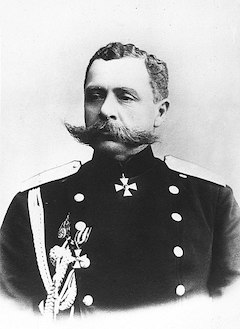
On this date in 1918, General Paul von Rennenkampf dug his own grave by the side of the railway tracks near Taganrog, then was shot by the Bolsheviks for declining a promotion.

The Baltic German with the glorious Hungarian had spent a career in the tsarist officer corps; he took part in the multinational suppression of China’s Boxer Rebellion, and then the entirely domestic suppression of the abortive 1905 revolution.

Less well did the motherland fare against the Japanese in 1904 (where Rennenkampf’s shin and Russia’s infantry were both shattered) or against history in the Great War (which saw Rennenkampf sacked for command failures in the Battle of Lodz).

Although it seems that the latter result was the consequence of political infighting moreso than verifiable incompetence, the man was still cooling his heels in forced retirement when the revolutions of 1917 arrived. Both the February and the October revolutionaries detained him for a time and then released him, finding insufficient interest in those weighty days in a cashiered sexagenarian no matter how backwards his political priors.

But the Bolsheviks found him interesting when they took over Taganrog, where Rennenkampf was parked. This was his wife’s home town, near the southern industrial center Rostov-on-Don — a place that would be intensely contested in the unfolding civil war between communist Red and tsarist White armies. Such moments entail a choice of sides, so when the Bolsheviks offered this veteran senior commander a role in the Red Army, it was understood to be an offer he couldn’t refuse. He refused it, with bold words that were patriotic but not prophetic.

I’m old. I have not much left to live, for the salvation of my life, I will not become a traitor and will not go against my own. Give me a well-armed army, and I will go against the Germans, but you have no army; to lead this army would mean leading people to slaughter, I will not take this responsibility on myself.

On this day..

1908: Chester Gillette, A Place in the Sun inspiration

Theodore Dreiser‘s classic novel An American Tragedy was inspired by an infamous 1906 murder whose author, Chester Gillette, was electrocuted at Auburn Prison on this date in 1908.

It was a crime tailor-made for the burgeoning mass media, popular and pretty 20-year-old Grace Brown gone to work at the Cortland, N.Y. Gillette Skirt Factory where the owner’s nephew seduced and impregnated her.

That, of course, is our man Chester Gillette, who further distressed his lover by tomcatting around town, especially charging the love triangle with class rivalry with his rumored interest in a socialite while he stalled for time with Ms. Brown. Dreiser’s novel — which is freely available from the public domain — spins on this axis, although the real-life heiress in question put out an arch press release averring that “I have never been engaged to Chester E. Gillette … Our acquaintance was of … a limited duration.”

That was also true of Gillette’s acquaintance with Grace Brown. At length he induced the future mother of his child to elope to the Adirondacks upon the apparent prospect of finally regularizing their situation. Instead, after making a couple of stops in upstate New York, they paused on July 11 at Big Moose Lake for a nice canoe outing. While out on the water, Gillette bashed his lover’s head with his tennis racket and forced her into the water to drown.

Letters the two had exchanged would establish that Gillette knew Brown could not swim … and the fact that he’d brought his whole suitcase with him for this supposed day trip would establish his premeditated intent. Gillette schlepped his stuff along with his guilty conscience through the woods to another lake and checked into a hotel under his real name(!). He was as careless with his coverup, alibi, and escape as he had been with his heart; Brown’s body was recovered the very next day and the trail led directly back to Gillette, who was not difficult to find and couldn’t stick to a story — alternately claiming that the drowning was an accident, a suicide, or something that happened when he wasn’t there at all.

The snake was public enemy number one by the time he came to his trial, making the case a national sensation. Dreiser improved it to literature in 1925, and it was such a hit that he was immediately called upon to adapt it for the stage. A version hit the silver screen as soon as 1931, but its best-known rendering is the 1951 classic A Place in the Sun, which earned Academy Award nominations for both Shelley Winters and Montgomery Clift, who portrayed the young lovers.

It’s had an enduring appeal for the century since; rumors of Grace Brown’s ghost haunting Big Moose Lake brought the case to the Unsolved Mysteries television program in the 1990s, and an award-winning 2003 novel A Northern Light centers around a fictional friend of Grace Brown’s. There’s even an A Place in the Sun opera.

On this day..

1572: Annecke Lange, Gesche Herbst, and Annecke Rotschroeder

On this date in 1572, Annecke Lange, Gesche Herbst, and Annecke Rotschroeder were all condemned and burned at Neustadt am Rübenberge, as witches and poisoners.

Although commoners, they were the luckless casualties of misbegotten marital politics in the Holy Roman Empire, and in the words of Tara Nummedal in Anna Zieglerin and the Lion’s Blood: Alchemy and End Times in Reformation Germany, “the entire incident laid bare simultaneously the fear of poison and sorcery and the reluctance to advance witch accusations against women of elite status in the princely courts of central Europe.”

The particular princely court of interest for us is that of Eric(h) II, Duke of Brunswick-Lüneburg, a Lutheran convert who married a House of Wettin princess called Sidonie of Saxony. It was one of those love-matches by which the bluebloods slip the bonds of arranged dynastic alliances and often, of historical irrelevancy. ‘Tis a likely antechamber to the volumes of Executed Today.

Sidonie was a decade Eric’s senior, leading one wise grandee to predict, “All sorts of things will happen inside this marriage after the kissing month ends.”

Just so. Eric reverted to Catholicism and the childless couple became bitterly estranged — not only over religion, but money, and the want of a child. (Eventually Eric would die without an heir, and pass his realm to a cousin.) So intense would the couple’s antipathy become that they began to suspect one another of seeking an abrupt annulment by the hand of the poisoner.

That hypothesis became self-confirming when Eric fell ill in 1564, and Eric (this is Nummedal again) “initiated an investigation, accusing four women in Neustadt am Rübenberge, close to Hannover, of both trying to poison him and using sorcery to disrupt his marriage, keep him away ‘from his land and people,’ and make Sidonie barren.”

Three of these four women broke under torture and admitted not only poisoning but witchcraft; they were burned in 1568. But the fourth woman, Gesche Role, had the fortitude to withstand her interrogators and was released.

It’s by way of Gesche Role that we arrive at our day’s principals — for in some fresh turn of the diplomatic jockeying between the estranged power couple, Eric renewed his accusation and re-arrested the poor woman upon fresh claims of fiendery. This time she succumbed and confessed — adding, as is the style, a series of charges against five other acquaintances: our three victims, Annecke Lange, Gesche Herbst, and Annecke Rotschroeder; plus, Annecke’s husband Hans Lange, who died under torture; and, a woman named Margarethe Ölse or Ölsin, whose fate was stayed by dint of her pregnancy. Hans Lange had actually been a barber and surgeon who had been in ducal employment, affording some material connection to the “victim’s” plate, but of course all confessions were secured in the usual violent manner.

On the 28th of March, our three victims were condemned at Neustadt and immediately sent to the stake. Several others in the widening witch inquiry shared a like fate later that same year; the overall number of Neustadt “witches” executed from the various procedures initiated by Eric is not known, but might run up towards 60.

The reader will mark that all these souls were merely humble folk destroyed as flies to wanton boys. Witch fires were usually quenched once their flames licked titled estates, and so it was in this case, as the 1572 Hexenprozesse “also implicated a cluster of noblewomen (Anna von Rheden, Katharina Dux, and Margaretha Knigge), and it was not long before Duke Erich’s estranged wife, Sidonie, herself was accused of directing the poison plot against her husband, purportedly because of his relationship with his mistress, Katharina von Weldam. This escalation of the trial as it reached into the nobility proved to be too much, apparently, even for Duke Erich II, who halted the trial before the noblewomen were sentenced,” and after a pause the Holy Roman Emperor reconvened a hearing at which all concerned were exonerated.

On this day..

1915: Pandit Kanshi Ram, Ghadar plotter

On this date in 1915, Indian revolutionary Pandit Kanshi Ram was hanged by the British.

Present on the U.S. west coast for the founding of the heavily Sikh revolutionary Ghadar Party, Ram repatriated to participate in that clique’s eponymous Ghadar Mutiny.

This attempt to incite rebellion in the Raj was heavily surveilled, and crushed at the outset. The result was a series of trials bringing 20+ executions in 1915 known as the Lahore Conspiracy trials. (It’s not to be confused with the Delhi-Lahore Conspiracy.) “The British as a nation, all white men as a race and the English Government in particular, are all maligned in a spirit born of a depraved nature,” fumed the first court, the one that condemned Pandit Kanshi Ram. “Facts are not only distorted but most maliciously perverted to appeal to the lowest passions of Indian subjects. In the most open, defiant and unmasked manner mutiny is preached. “

On this day..

1689: Gabriel Milan, Danish West Indies governor

Gabriel Milan, the governor of the Danish West Indies, was beheaded on Copenhagen’s Nytorv Square on this date in 1689.

Born to an emigre family of former Marranos that had resumed open Judaism, Milan (English Wikipedia entry | Danish) was a cavalryman turned merchantman married to the daughter of one of Europe’s most prominent Jewish scholars.

Well-connected in the court of Prince George of Denmark, Milan in 1684 was tapped to govern the struggling nascent sugar colony of the Danish West Indies — the islands of Saint Thomas, Saint John, and Saint Croix that have comprised the U.S. Virgin Islands since Denmark sold the money pits off in 1917.

There he proved to be a pettifogging despot who was noxious to the island’s planters and conspicuous about exploiting his office to fatten his own coffers. His incompetent predecessor, who was only supposed to be sent back to the mother country, Milan instead clapped in a dungeon. Even his brutal treatment of slaves — using impalement for an execution! — shocked peers accustomed to a different spectrum of cruelty.

“I wish for my part that your Excellency could have been here a single day and heard what thundering there has been in the commission, with howling, shouting, and screaming, one against the other,” the official reporter noted. “God be thanked it is over.”

On this day..

1865: Robert Cobb Kennedy, Confederate terrorist

Robert Cobb Kennedy, the last Confederate executed by the Union during the U.S. Civil War, was hanged on this date in 1865 as an arsonist.


Harper’s magazine illustration of an arsonist.

Kennedy, a West Point washout from a Louisiana plantation, was part of an ensemble of Confederate agents who attempted to torch New York City on November 25, 1864 — a mission designed to revenge Sherman’s march.

On that Friday evening, the night after Thanksgiving, the eight conspirators fired 13 Gotham hotels as well as theaters, public buildings, and the ludicrous museum of showman P.T. Barnum.* Nineteen fires were started overall, the plotters hoping that their simultaneous flaring would overwhelm the city’s capacity to respond and turn into a general conflagration. Through a combination of good luck, bad arson, and timely informants the various blazes were caught before they could do any real damage.

That couldn’t quite be said of the arsonists, who were all — even Kennedy — able to slip away safely to Canada before they could be caught. Kennedy risked a return trip through Detroit hoping to reach Confederate soil. He didn’t make it.

“Mr. Kennedy is a man of apparently 30 years of age, with an exceedingly unprepossessing countenance,” by the description of the New York Times (Feb. 28, 1865) as he stood trial before a military tribunal.

His head is well shaped, but his brow is lowering, his eyes deep sunken and his look unsteady. Evidently a keen-witted, desperate man, he combines the cunning and the enthusiasm of a fanatic, with the lack of moral principle characteristic of many Southern Hotspurs, whose former college experiences, and most recent hotel-burning plots are somewhat familiar to our readers. Kennedy is well connected at the South, is a relative, a nephew we believe, of Howell Cobb, and was educated at the expense of the United States, at West Point, where he remained two years, leaving at that partial period of study in consequence of mental or physical inability. While there he made the acquaintance of Ex. Brig. Gen. E.W. Stoughton, who courteously proffered his services as counsel for his ancient friend in his present needy hour. During Kennedy’s confinement here, while awaiting trial, he made sundry foolish admissions, wrote several letters which have told against him, and in general did, either intentionally or indiscreetly, many things, which seem to have rendered his conviction almost a matter of entire certainty.

He was hanged at Fort Lafayette, having admitted to setting the fire at Barnum’s museum (“simply a reckless joke … There was no fiendishness about it. The Museum was set on fire by merest accident, after I had been drinking, and just for the fun of a scare”). His was the only life claimed by the Confederate incendiaries.

* This facility was born under a bad star: although it survived the ministrations of Kennedy and friends, it burned to the ground the following July. Barnum put up a successor museum which also burned down, in 1868 — leading the man to pivot into the circus industry where he fixed his name in the firmament.

On this day..

1985: The Dujail Massacre

On this date in 1985, 96 Iraqis were executed for an assassination attempt on Saddam Hussein. Though not the only or the largest atrocity of that dictator, it was the crime that would do to hang him under the U.S. occupation.

Two years deep into the horrific Iran-Iraq War, Hussein paid a ceremonial visit to theShi’ite town of Dujail north of Baghdad and was greeted by an armed ambuscade — up to a dozen gunmen springing from the cover of date palms to fire at the president’s motorcade. They missed.*

The ensuing vengeance was visited so widely as to earn the sobriquet Dujail Massacre: something like 1% of the 75,000-strong town wound up in the hands of the torturers, with 148 death sentences handed down and approved by the president — and they were none too exacting about direct complicity in the assassination, freely sweeping up regime opponents and sympathizers with the outlawed Dawa Party.

A document of March 23, 1985, certifies their mass execution although the Iraqi Special Tribunal‘s investigation found this to be a a bit of an overstatement; some had already been executed previously or died of maltreatment in custody, while a few of those still alive were not present in Abu Ghraib on that day. All told, it appears that 96 of the 148 people condemned to death for the attempt on Saddam Hussein’s life were put to death on March 23, 1985. To multiply the injury, the families of the alleged perpetrators also suffered confiscation of their homes and destruction of their orchards.

The detailed documentary trail, and specifically Hussein’s personal approval of the death sentences, recommended this case to the U.S. occupation of the early 2000s as the rope by which to hang the now-deposed dictator and his closest associates. Accordingly, the Dujail Massacre executions formed one of the central charges in the 2005-2006 trial that resulted in Saddam Hussein’s own execution.

* There were a couple of presidential bodyguards killed.

On this day..