China has announced the execution this day of “homicide criminal” Xia Junfeng, a kebab vendor from Shenyang.
This case has been in the public eye for several years, and the predominant sentiment has been sympathetic towards the condemned man.
Xia and his wife Zhang Jing were part of China’s vast population of working urban poor, Xia having found his way into job insecurity by virtue of a layoff from the state electricity company. In the entrepreneurial spirit of the age, Xia started up an unlicensed business selling sausages and the like.
These denizens of the gray economy are, as a class, afflicted by the attentions of the City Urban Administrative and Law Enforcement Bureau, better known as the chengguan. Their benign job description entails administering municipal regulations, but this much-loathed force’s relationship to everyday citizens is perhaps best illustrated by the word chengguan‘s status as a shorthand neologism for bullying and abuse. Too many people know this goon squad firsthand, and too many stories of their worst excesses have circulated. Just this past July, the chengguan made headlines by killing a watermelon vendor.
“Chengguan abuses are an open scandal in China,” said Human Rights Watch’s China director. “The chengguan’s ability to flout China’s laws and inflict harm on members of the public is a recipe for greater public resentment and more violent confrontations.”
In the violent confrontation at issue in today’s execution, the chengguan chengguanned Xia Junfeng in May 2009. Xia fought back with his meat-carving knife, and slew two of his tormenters.
Death penalty cases redolent of the social stratification and institutional corruption that ordinary Chinese people experience have proven to be lightning rods in recent years.
Xia Junfeng’s turned, legally, on his claim that he killed protecting himself from the chengguan‘s beating.*
“Extralegal violence, thus employed to compensate for inadequate regulation and an absence of authority and legal deterrence, is no longer individual behavior. Such violence exists everywhere with the permission of the authorities. It is needed because of an overriding concern for “city image” and “urban management.” Finally, when extralegal violence is not monitored by the people and the media, and not punished by the law, it is only natural for Chengguan members to feel justified. Using violence with impunity enables the Chengguans to see violence psychologically as their “privilege,” a sign of status and pride. Since the legal and political status of Chengguan is unclear, it is only natural for its members to seek personal gain, vent their anger, and prey on the citizens they were intended to protect.”
This allegation didn’t fly in court, where brother chengguan denied that they’d been abusing the shishkebaber, but it’s won in a rout when it comes to the court of public opinion. “His life and death are more than just a legal matter, but a bellwether of the era, with the tsunami-like public opinion firmly on the side of Xia Junfeng,” wrote author Yi Chen today.
Particularly galling for many is the disparity in treatment between Xia Junfeng and the likes of Gu Kailai, the latter a powerful business and political figure who was able to avoid execution despite being convicted of a scandalous contract murder. And Chengguan themselves never seem to be at risk of harsh punishment for any misbehavior; had Xia Junfeng been the one to leave that confrontation in a body bag, there certainly wouldn’t have been a death penalty case.
Anonymous cartoon circulated on Weibo criticizing Xia Junfeng’s condemnation. (Via) The drawing of the boy in the background was done by Xia’s son, whose art school fees were earned by his father’s roadside business.
On this date in 2007, John Joe “Ash” Amador died of lethal injection in Texas.
Amador, age 18, and a 16-year-old cousin, hailed a taxi in San Antonio in the dark predawn hours of January 4, 1994, directed it on a long drive to a dark street in Poteet, Texas, and abruptly shot the cabbie in the head with a .25 caliber handgun. Amador’s cousin shot the cab driver’s ride-along companion.
It’s possible to get unusually up close and personal with Amador — both the man himself, and the gears of the death penalty process at the anticlimax of 13 long years.
To begin with, journalist Dave Maass interviewed Ash Amador a month before the latter’s execution, and posted 52 minutes of audio on Archive.org.
And in a more outre vein, a team of British filmmakers crafted a surreal and digressive but frequently touching documentary of Amador’s end, most especially through the eyes of the condemned man’s wife and family. As Maass put it, they’ve “given the man one wicked afterlife.”
If that teaser intrigues, the entire documentary is freely available online here — complete with an amazing scene of a death mask being cast from the freshly-executed, just-body-bagged Ash.
(Thanks to Robert Elder of Last Words of the Executed — the blog, and the book — for the guest post. This post originally appeared on the Last Words blog. Fans of this here site are highly likely to enjoy following Elder’s own pithy, almanac-style collection of last words on the scaffold. -ed.)
“For almost nine years I have thought about the death penalty, whether it is right or wrong and I don’t have any answers. But I don’t think the world will be a better or safer place without me. If you had wanted to punish me you would have killed me the day after, instead of killing me now. You are not hurting me now. I have had time to get ready, to tell my family goodbye, to get my life where it needed to be. It started with a needle and it is ending with a needle.”
— Jeffrey Doughtie, convicted of robbery and murder, lethal injection, Texas.
Executed August 16, 2001
Doughtie had a $400-a-day drug habit, which he financed by selling stolen property. He had once worked for the antique store in Corpus Christi where he sold much of his loot. One day, after shooting a mix of heroin and cocaine, Doughtie beat the store’s proprietors to death with a piece of metal tubing. He confessed to the murders.
On this date in 1993, Joseph Paul Jernigan died by lethal injection in Texas. Yet he lives on still.
A career burglar, Jernigan was surprised mid-robbery in 1981 by 75-year-old Edward Hale: the thief promptly shot the homeowner dead, then finished his looting. His life as a free man would be over within days.
As a criminal you wouldn’t much notice Joseph Paul Jernigan — unless it was your house he was burgling, of course — and you wouldn’t exactly call his smash-and-grab act state-of-the-art. But little over a year after his death, Jernigan was making headlines for a groundbreaking scientific project.
Jernigan donated his body to science, joining an ancient tradition of condemned men and women whose bodies are “cadaverized” for whatever medical material is required of their own day and age.
But instead of serving as a med school’s pincushion, “science” in Jernigan’s case turned out to be — Jernigan had no idea of it while he lived — the Visible Human Project.
This National Library of Medicine initiative built a data set of digital images depicting the complete anatomy of a normal adult man and woman: Jernigan’s cadaver was selected for the male lead.
So, after his execution, Jernigan’s entire body was “sliced” from head to foot into 1,871 one-millimeter slides. (The “slicing” process ground away the body completely; it did not literally slice it like salami.)
Joseph Jernigan’s thorax, including the heart. (From here.)
The project is still online, and has never yet been replicated/surpassed with the the advancing technologies of the intervening decades. It’s a weirdly beautiful, unsettling, and ethically questionable artifact — a Smugglerius of the digital age — but it’s also inescapably awe-striking.
So here: take a tour down Joseph Jernigan at the, er, cutting edge of anatomization.
On this date in 2005, Glen James Ocha took a lethal injection on account of his tiny penis.
It’s true. Ocha on Ocober 5, 1999 picked up a Kissimmee, Fla., barmaid named Carol Skjerva and got her (consensually) into bed.
But Skjerva sent his manhood meter to half mast by busting on Ocha’s unimpressive junk and threatening to tell her boyfriend, who was probably the kind of guy who wouldn’t stand for another man rogering his girl with a mere gherkin.
It’s sad but true that we can’t all wear magnums, and probably most on the hung-like-a-mouse side of the spectrum would prefer not to broadcast the fact to the wide world. But here’s a tip it might have done Glen Ocha well to reflect upon: one good way of keeping strangers in the dark about the paltry dimensions of your John Thomas is not to get yourself arrested for strangling and beheading a woman who makes fun of the paltry dimensions of your John Thomas.
Adolescent chortling aside, this was obviously quite a horrible tragedy for Carol Skjerva, as well as the boyfriend (actually her fiance). Nor was genitalia the only compromised characteristic of the murderer, who was high on ecstasy at the time this all happened and had a history of psychiatric problems and suicidal ideation, all circumstances that comport well with Ocha’s decision to sit his victim’s decapitated head in his lap for a little post-mortem conversation.
This gentleman went right onto suicide watch in the prison, but they needn’t have worried: Ocha was more than ready to work within the system. He confessed to the murder, pled guilty at trial, and dropped all appeals past the minimum required by law, hastening his trip to Florida’s gurney. (Along the way he legally changed his name to Raven Raven.)
I would like to say I apologize to Carol Skjerva, the girl that I murdered, her family and her friends. This is the punishment that I deserve. I’m taking responsibility for my actions. I want everybody to know I’m not a volunteer but this is my responsibility I have to take.
(Meanwhile, he released a last written statement, reading “I unjustly took the life of Carol Skjerva. I have made my peace with my God and go now to face His judgment.”)
Florida Gov. Jeb Bush, a Catholic just as Ocha was, said he was actually prepared to delay the execution out of respect to the April 2 passing of Pope John Paul II. Ocha, the determined volunteer, had no interest in any delay.
Naw Kham (or Nor Kham), a Burmese Shan, ran a sizable gang of drug traffickers/paramilitaries/pirates, the Hawngleuk Militia, in the Golden Triangle.
In addition to heroin smuggling, this gang also shook down for protection money the many Chinese commercial shippers coming down the Mekong River, and wantonly raided shippers that held out on them. He was untouchable in his lawless zone (with the possible protection of Burmese military to boot) for more than a decade.
Times may have started passing Naw Kham by in the 2000s.*
China’s economic boom has driven more shipping, and a search for investment outlets for Chinese capital, both inevitably increasing its presence on the economically developing Mekong. Ultimately this had to come at Naw Kham’s expense.
He had hit Chinese shippers before to the annoyance of Beijing, but matters came to a head when the kingpin allegedly retaliated against the flouting of his “taxes” by massacring 13 Chinese sailors in 2011 on board two tightfisted merchantmen. (“Allegedly” because Naw Kham blamed the Thai military for this slaughter, and some people believe him.)
At any rate, China put the screws to the drug lord, not only pressuring Southeast Asian governments for his capture but directly hunting him with special forces. Early in 2012, Naw Kham was arrested and his gang broken up after a multinational manhunt; the leader was extradited from Laos to face Chinese justice with five of his associates.** The accused had little recourse but to throw themselves on the mercy of the court.
Executed with Naw Kham — and underscoring the multinational complexion of his outfit — were Hsang Kham (a Thai), Zha Xika (a Lao), and Yi Lai (stateless). The other two defendants received a suspended (reprieved) death sentence, and an eight-year prison term.
Naw Kham being led to an execution van on March 1, 2013. Two hours of footage of the “Mekong River murderers” walking their green mile was broadcast on CCTV News, although not the executions themselves.
The case isn’t entirely closed with his date’s executions, however. China is still pressuring Thailand to bring to book Thai troops whom China says colluded (at the very least) in the Mekong murders. The future direction of that investigation is quite unclear.
* China, Burma, Thailand, and Laos, inked a 2001 pact to regularize shipping on the Mekong. It contained no provision allowing for stateless narco-buccaneers.
** It’s noteworthy that this is a non-Chinese citizen being extradited to China for a crime not on Chinese soil.
On this date in 1997, 39-year-old Michael Carl George was executed by lethal injection at Greensville Correctional Center in Virginia. He’d been condemned for the murder of fifteen-year-old Alexander Eugene Sztanko in 1990.
Michael Carl George (top) and his victim, Alexander Sztanko.
The teenager’s death had been horrific by any standard: he was abducted while out riding his dirt bike, handcuffed to a tree and sexually abused. Before shooting him in the head, the killer applied a stun gun to his genitals. His body, fully clothed but shoeless, was found the following afternoon.
The boy had been killed so close to home that his unsuspecting father actually heard the gunshots. A few hours after Alex Sztanko’s body was found, George was seen loitering near the murder site by a police officer and stopped for questioning. He matched the description of a camouflage-clad man seen near the Sztanko residence the day before, and the suspicious officer asked him directly if he’d been there the previous day.
George admitted that he had, claiming he’d been turkey hunting in the woods. As he was being questioned he was standing directly in front of a “No Trespassing” sign, which gave the policeman an excuse to pick him up.
At the time of his arrest he was carrying, among other things, a knife, a handcuff key and a map, which had an “X” marking the site where Alex’s body turned up in the woods and an “O” where the boy’s dirt bike and helmet were ultimately located.
Inside George’s truck was a machete, a hacksaw, bolt cutters, a tear gas canister, leather gloves and a stun gun. A search of his parents’ home, where he lived, turned up more incriminating items: a pair of handcuffs that matched the key he carried, and a loaded 9mm pistol which turned out to be the murder weapon.
Blood, DNA and fiber evidence also pointed to George as the culprit. The case was pretty open-and-shut.
George had a reputation as a pedophile and Alexander Sztanko wasn’t the only person he killed. The first, as far as anyone knows, was Larry Wayne Perry, a mentally disabled nine-year-old who lived with his grandparents in Dumfries, Virginia.
Larry vanished without a trace on May 22, 1979 and was never found. George admitted to burying the child’s body but said his death was an accident. As the authorities lacked the evidence to prove intentional homicide, he was allowed to plead guilty to involuntary manslaughter and abduction.
A model prisoner, he served just two and a half years of a five-year sentence.
Four years later, he killed Alex Sztanko.
George would later claim he had murdered a third person, but he never named the alleged victim and his statements could not be verified. His appeals raced through the court system at top speed; his time on death row was less than five years, one of the shortest in the state since Virginia resumed executions in the early eighties.
Given the circumstances of the murder and his prior record, he had very few sympathizers and not much he could say for himself on appeal. His case went all the way up to the U.S. Supreme Court, but they voted 7 to 2 to deny a stay of execution, with Justices Ruth Bader Ginsburg and Paul Stevens dissenting.
Alex Sztanko’s parents were quoted as saying they were opposed to the death penalty generally, but as far as they saw it, George’s death was society’s gain.
George’s lethal injection took place without incident and he was pronounced dead at 9:18 p.m. He had no last statements for the press, but he did leave a letter for Mr. and Mrs. Sztanko, both of whom declined to witness his execution.
On this date in 1999, Sean Sellers became the last person put to death in the U.S. for a crime committed at the age of 16.
Sellers was just four months into his 17th year when he shot dead an Oklahoma City convenience store clerk in a haze of adolescent angst.
“When I was that person, that murderer, I felt superior,” he later wrote in a confession. “I looked down on people with the secret knowledge that I had killed and was capable of killing them too. When I was not that person I was just a confused teenager, going to school, working, learning to drive, still full of anger, and counting the days when I’d be 18 so I could move OUT of that house.”
Six months later, he moved OUT for good by killing his mother and stepfather as they slept. This killing did not stay secret.
But on trial for having avowedly killed as “an offering to Satan” during the height of the 1980s’ bizarre devil-worship panic, his age barely figured at all. A cash-strapped public defender tried to argue that he was possessed; later, a defense psychiatrist claimed that Sellers suffered from multiple personality disorder. It’s safe to say the young man wasn’t right in the head at some level, but this sort of thing is juridical grasping at straws.
Sellers later converted to Christianity, but this conversion wouldn’t help him any more than it had helped Karla Faye Tucker the year before. In Sellers’ case, quite a lot of people thought it was all more or less a scam — the manipulative killer’s ploy to avoid the needle.
One footnote to the much-hyped Satanism angle was the teenage Sellers’ interest in Dungeons & Dragons. (Just him and a few million other people.)
A guy like Sean Sellers magic missile-ing a beholder one day and then wasting his parents the next — that was pretty much the Platonic ideal of the anti-D&D campaign. People magazine said the hobby “fueled his darkening fantasies”. (For his part, Sellers disputed the connection.)
Although this sort of thing looks pretty laughable, there are still some authorities who fail their saving throw against dumb when it comes to the infernal pastime.
Haven’t they seen the after-school special?
As an aside, this “rant” (author’s word) from a man whose ex-wife became involved in the Sellers clemency campaign is a pretty interesting snapshot of the prisoner himself, and of the relationships in close proximity to him.
Tim Kaine, who governed the Commonwealth of Virginia from 2006 to 2010 and was just last month elected to the U.S. Senate, had a different service to perform on this date in 1996.
Kaine saw his client, double-murderer Lem Tuggle, to the Virginia execution chamber on December 12, 1996.
In 1983, fresh off parole for a 1971 homicide, Tuggle raped and shot 52-year-old Jessie Geneva Havens.
“From past experience, I would like to talk to an attorney,” he told the officer who arrested him. “I’ll probably tell you the full story later.”
In this selfsame spring of 1983, 25-year-old Timothy Michael Kaine was receiving his J.D. from Harvard Law. He moved to Richmond, Va., with his classmate Anne Holton, daughter of the state’s former governor.
Kaine and Holton married in 1984.
This was also an eventful year for the now-twice-convicted killer Lem Tuggle: together with five other condemned inmates, Tuggle sensationally busted out of Mecklenburg Correctional Center — capturing several prison guards, making up a phony bomb threat, and simply strolling out the gates in their stolen uniforms during the confusion.
The “Mecklenburg Six”* cast a terrifying pall in the headlines of June 1984; it took weeks to recapture them all. Tuggle, sensibly, made a bid for Canada’s death-penalty-free soil, only sparing Ottawa a major diplomatic headache when he stopped to rob a Vermont diner for gas money and got arrested.
Kaine’s path was destined to cross with this notorious convict, but not for some years yet. In the meantime, the idealistic young J.D. in his first year at the bar was getting acquainted with death row when he accepted a pro bono legal appointment to represent condemned killer Richard Lee Whitley.
A lifelong Catholic who had spent a youthful finding-himself year working at a mission in Honduras, Kaine was (and remains) a death penalty opponent. This would later prove a sticky wicket, but mid-1980s Kaine didn’t have a career in politics on his radar, as evidenced by his distinctly impolitic remark that “murder is wrong in the gulag, in Afghanistan, in Soweto, in the mountains of Guatemala, in Fairfax County … and even the Spring Street Penitentiary.”
Later, when he was in politics, Kaine would tell a reporter profiling him during the 2005 gubernatorial campaign that he didn’t want the assignment but would have felt like a “hypocrite” to refuse it. The Commonwealth was less easily overcome than Kaine’s scruples, and Whitley died in Virginia’s electric chair on June 6, 1987.
“I just remember sitting on my back step late and just having a couple of beers and just staring out at my backyard,” Kaine recalled of the night he lost his client.
Having had this first taste of failing with a man’s life on the line while being publicly vilified for his work, Kaine signed on to represent Tuggle in 1989.
By the time Tuggle’s legal rope ran out in 1996, Tim Kaine was a 38-year-old Richmond city council member — the trailhead for his new and now-familiar career in politics.
As Kaine elevated himself into a statewide figure in the early 2000s, his death penalty position came in for some controversy which Kaine finessed by taking the position that while he himself opposed capital punishment, he would enforce the state’s death penalty law in his capacity as governor.**
Death penalty stuff has ample third-rail potential, but especially in Kaine’s gubernatorial race, his own personal legal work at the defense bar became fodder for some truly repellent attack ads by the mouthbreather lobby who tried to put Kaine personally on the hook for Tuggle’s crimes by virtue of having represented the man in court.
* The other five were Linwood Briley, James Briley, Earl Clanton, Willie Leroy Jones, and Derick Peterson. All of these men were also executed.
** That was indeed the case. Gov. Kaine commuted only one death sentence, that of Percy Walton, while allowing 11 others to go forward. D.C. sniper John Muhammad was the most notorious man with Kaine’s signature on his death warrant.
On this date in 1989, with the last words “I want to say I hold no grudges,” Carlos DeLuna died by lethal injection in Texas
At the time, not many people took seriously DeLuna’s claim that a different Hispanic man named Carlos — one Carlos Hernandez — was the man who actually slashed Wanda Lopez to death in a Corpus Christi gas station on February 4, 1983.
“I didn’t do it. But I know who did.” That’s what he’d told a police officer soon after his arrest.
A generation later, it’s increasingly clear that Carlos DeLuna really didn’t do it … and that he knew who did it, knew he was going to the gurney for the crime of a man whom the state claimed was just a “phantom” invented by the defendant. Just a few months before DeLuna went to his death, that “phantom”, still on the streets, had knifed a four-inch gash in another woman’s abdomen. Carlos Hernandez had even bragged to others that his “stupid tocayo” — namesake — “took the blame for” a murder he’d committed. (Hernandez died in 1999.)
DeLuna was arrested suspiciously hiding under a truck near the scene of a grisly knife slaying at a gas station. A Hispanic man had been reported as the suspect, and the eyewitness was able to identify DeLuna as that man, just moments after his arrest. Case closed.
Except everyone was wrong.
He was hiding because he’d been violating his parole by drinking at a strip club across the street. He chanced to look just like another Hispanic man from the area, a fellow who just happened to be a violent thug. And he didn’t have a spot of blood on him even though the murder scene looked like the set of a slasher film.
“It was an obscure case, the kind that could involve anybody,” Columbia Law Prof. James Liebman said. “Maybe those are the cases where miscarriages of justice happen, the routine everyday cases where nobody thinks enough about the victim, let alone the defendant.”
The facts of the case have been extensively documented elsewhere, including a 2006 Chicago Tribune series* and an entire 2012 issue of the Columbia University Human Rights Law Review, culmination of a years-long project organized by Liebman.
The latter investigation, complete with original source documents, video, and photographs, is preserved for public use at the magnificent Los Tocayos Carlos site. Its intensively-sourced book-length treatment comes highly recommended, but you might need to clear your schedule.
Executed Today is pleased to welcome one of the coauthors of Los Tocayos Carlos, Andrew Markquart — a 2012 graduate of Columbia Law who collaborated with Prof. Liebman on the DeLuna investigation and now practices in New York.
ET: How did you come to focus on this case, and what went into the investigation?
AM: I got involved after my first year at law school. I started out as a research assistant for Prof. Liebman, and he had been working on this project for years in one form or another when I got involved. I had already had quite a bit of interest in death penalty issues, so I jumped on it.
The initial investigation that Prof. Liebman did was back in 2004. He had done a previous study called “A Broken System” in which they found a shockingly high rate of reversals in capital cases. And basically the question that came out of that for him was, what does that mean?
Does that mean that the courts are doing their jobs and there are a lot of reversals because they’re being very diligent?
Or, is that high number indicative of some big systemic problems?
He started out looking at cases in Texas, for obvious reasons, and particularly focused on cases involving single eyewitnesses. This one came out fairly early on, but there wasn’t much about it initially to suggest this was a strong case. But Prof. Liebman was having someone going down to Corpus Christi anyway and had him check it out, and within one day this investigator was able to track down a lead and figure out exactly who this Carlos Hernandez person was who DeLuna claimed was the actual killer. From there the floodgates opened.
This case reads like something out of Dumas … your doppelganger, who looks just like you and also shares your name, commits a crime and you take the rap. Speaking as a layperson, it’s astonishing that Carlos DeLuna explicitly made the very argument you’re making, that this guy Carlos Hernandez was the real killer. But it wasn’t so much that DeLuna’s allegation was considered and rejected as that it was never taken seriously at all, even by his own defense. Why was that?
It’s a good question and it’s one of the major points we tried to make.
At first DeLuna was a little hesitant, with good reason: Hernandez was well-known in Corpus Christi; he was a terror in the town and had been known to use violence against people who threatened to expose him. Eventually the threat of execution overcame that.
His defense team did very little to research what could or would have been his saving argument, and on the flip side the prosecution said Carlos Hernandez didn’t even exist, which is just a mind-blowing claim. This guy had a rap sheet a mile long. He had been a major suspect in 1979 in another murder case involving one of the prosecutors in the DeLuna case.
The defense lawyer in that case did what DeLuna’s lawyer should have done: he called Carlos Hernandez to the stand and basically prosecuted Carlos Hernandez as his defense. He got his client off, and we’re pretty confident from our research that Hernandez was actually guilty of that murder, too.
Hernandez was definitely no “phantom”: he was known to law enforcement, known in the neighborhood. Can you explain why the prosecuting attorneys would make such a claim?
It’s hard to explain. I suspect they probably thought they had the right guy, they probably thought he was making up a bogus story … and they cut a few corners. But that’s speculation.
Your report writes, “Central to DeLuna’s obscurity was the failure of lawyers on the defense as well as the prosecution side to have the curiosity and gumption to look just an inch or two below the surface.” It seems like there just wasn’t much of any work done by any actor to pursue evidence that could defend DeLuna.
Carlos DeLuna’s defense lawyer had trouble getting any kind of funding to do investigation. And this was his first criminal case of any kind, let alone capital case.
The police only investigated for a couple of hours before turning it over to the store manager to clean up to open the next morning. It was a simple case of tunnel vision: they had arrested Carlos DeLuna, they got a quick eyewitness ID, and they thought they were done.
There’s all kinds of evidence at the scene. In the police photos, which are available at our website, there’s a footprint in blood that has to be the culprit’s shoeprint, and they never even saw it. It was that sloppy. You can also see the detective, Olivia Escobedo, literally standing on evidence — a nice metaphor for the investigation.
Yes, he did. For reasons I can’t make sense of, he either was just severely misremembering, or just made up, some story about hanging out with these girls earlier in the evening that was completely untrue. But the thing about it is that the story as he gave it didn’t even help his case. It didn’t give him an alibi. But it hurt his case, because then they could bring in these girls to testify and destroy his credibility.
It’s hard to figure out what was in his head to say that. DeLuna wasn’t the most intelligent person; his IQ tested just barely above the threshold for cognitive impairment.
The original trial was in 1983, and Carlos was executed in 1989. How representative are the circumstances of this case still, relative to new death penalty trials today or to death row prisoners whose appeals are being handled now?
“[DeLuna]’s lying. He won’t admit it. I hope this is the day he gets it. He’ll lie like he’s been lying and now he’ll have to pay for what he did to my daughter.”
-Wanda Lopez’s mother Mary Vargas, quoted in Dec. 7, 1989 Dallas Morning News
“After carefully reviewing the information recently uncovered and printed by Steve Mills and Maurice Possley in the Chicago Tribune, I am convinced that Carlos DeLuna did not kill my sister and that Carlos Hernandez was the real murderer.”
-Wanda Lopez’s brother Richard Vargas, June 2006
You see these kind of cases and issues come up even today. That’s one point we try to make: yes, this case was from 29 years ago, but a lot of things remain the same.
There was no physical evidence, despite all the blood at the scene: it was just based on eyewitnesses.** And you kind of have a casebook bad eyewitness identification. They didn’t use a lineup; it was nighttime; it was a cross-racial identification, which we know are highly error-prone; he [DeLuna] was in the squad car, at the scene, handcuffed, under a highly stressful environment. You have these kinds of show-up identifications happen all the time, all over the country. They’re rife with error.
And there’s a lot of good public defenders out there who really work hard and do good work, but also a lot of underexperienced and overburdened public defenders who are just being crushed. There’s always systemic pressure for cops and prosecutors to cut corners. I certainly don’t think the lessons of Carlos DeLuna’s case have been learned.
In your view, what are the most important of those lessons?
The fallibility of our criminal justice system. Carlos DeLuna wasn’t convicted and executed in some third world country — he was given a trial and a lawyer and appeals and all the other protections and yet he still slipped through the cracks.
And the other lesson is the widespread nature of the factors involved, like the unreliable eyewitness ID. People go to prison on that basis every day. It seems highly likely there are more Carlos DeLunas.
The way that we found this story and developed it was enormously labor-intensive. The number of man-hours that went into this, between authors, investigators, research assistants, and the whole staff of the Columbia Human Rights Law Review … you just can’t do this for every case where there’s some kind of colorable suggestion of the possibility of wrongful execution.
I’d be very surprised if there aren’t more like him.
* The Tribune series on DeLuna began on June 25, 2006 … the day before Supreme Court crank Antonin Scalia taunted in Kansas v. Marsh that there was “not one” case of a “clear” wrongful execution. “The innocent’s name would be shouted from the rooftops by the abolition lobby,” Scalia wrote.
** Eyewitness (mis)identification is also at the heart of the Ruben Cantu case, another suspected wrongful execution in Texas.


 A career burglar, Jernigan was surprised mid-robbery in 1981 by 75-year-old Edward Hale: the thief promptly shot the homeowner dead, then finished his looting. His life as a free man would be over within days.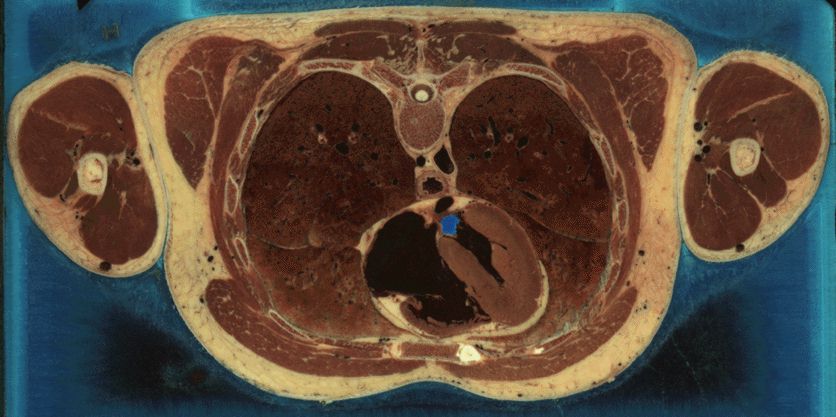
 It’s true.
  Naw Kham (or Nor Kham), a Burmese


 In 1983, fresh off parole for a 1971 homicide, Tuggle raped and shot 52-year-old Jessie Geneva Havens.
 At the time, not many people took seriously DeLuna’s claim that a different Hispanic man named Carlos — one Carlos Hernandez — was the man who actually slashed Wanda Lopez to death in a Corpus Christi gas station on February 4, 1983.