On this date in 1964 — one day shy of his 30th birthday — Algerian officer Mohamed Chabani was executed as a traitor.
It’s a verdict that posterity has washed its hands of; Chabani (other transliterations include Shabani and Chaabani) was officially rehabilitated in 1984 and his name decorates public spaces in Algeria.
But in 1964, when Algeria was but two years into her post-France independence, this former FLN fighter become Algeria’s youngest colonel was governor of the fourth military district in Biskra when he fell foul of the Defence Minister Houari Boumediene.
Boumediene was in the process in this interim of consolidating power to his own circle; the following year he would overthrow President Ahmed Ben Bella and rule Algeria until his death in 1978. Boumediene allegedly feared that Chabani would form an independent bloc that could oppose him, and attempted to have the young commander assassinated.
“How long is it since you began to travel by short stages and side-tracks?” the Marquise de Merteuil demanded of Valmont in a different context. “My friend, when you want to get somewhere — post horses and the main road!”
Boumediene’s main road was to arrest Chabani for a supposed separatist plot to break away oil-rich southern Algeria and have him shot in Oran.
Eighty-three-year-old Catholic theologian Charles-Louis Richard was shot by the army of revolutionary France on this date in 1794 in Mons, Belgium.
Although not a household name to posterity, this Dominican (English Wikipedia entry | French) was in his day one of his party’s great polemicists and adver
is called by Daniel-Rops the most distinguished apologist of the eighteenth century because of his Universal Dictionary of the Sacred Sciences (six folio volumes of almost 5,000 pages, completed 1765) written to counteract the famous Encyclopedie of Voltaire, the Bible of the Enlightenment. He also produced A General Dictionary of the Theological Sciences (Bibliotheque Sacree, 1822, in 29 volumes, the basis for many later works) and 79 polemical works, plus four volumes of sermons characterized by one critic as “simple, natural, intelligible to all; it instructs, touches and convinces.”
In 1778, he fled the Revolutionary Assembly of Paris to Brussels, but could not keep quiet when he found that the University of Louvain had become Josephist, and fled again to Lille and Mons where he wrote The Parallel, comparing the execution of Louis XVI by the French to the killing of the Messiah by the Jews. Hence when the Republican armies in 1794 entered Mons they arrested this octogenarian prophet. He refused a defender, admitted he had written The Parallel and declared he would sign it with his blood. To the condemnation he answered Deo Gratias, and in prison sang the Te Deum. Before his execution he divided what little he possessed with his barber and the jailers, saying, “Charity should be strong as death and zeal unyielding as hell.”
It’s unclear to me whether this army of occupation afar in the field would have been aware at this moment that Robespierre’s Jacobin government had fallen days earlier … nor whether, if it was not so informed, such information would have directed a different course of action.
allowing the CIA to plant men with the local police in sensitive places around the world; and after careful observation on their home territory, bringing to the United States prime candidates for enrollment as CIA employees
…
The foreign policemen themselves understood why they were being sent to Washington. Even before the coup d’etat, in July 1963, one Brazilian officer described the academy program to the governor of Sao Paulo as “the latest methods in the field of dispersion of strikes and striking workers.” He would learn, he said, how to use dogs and clubs and “to modernize the mechanism of repression against agitators in Sao Paulo.”
Brazil is where Mitrione made his bones over the course of the 1960s, years when the CIA trained some 100,000 Brazilian cops. But his mission was as universal as the toenails he ripped off and by 1969 he’d been reassigned to neighboring Uruguay further to that state’s suppression of a growing leftist revolutionary movement, the Tupamaros.*
One recruit named Manuel Hevia Cosculluela — who notoriuosly gave Mitrione’s mission statement as “the precise pain, in the precise place, in the precise amount, for the desired effect” — recalled the “trainings” these Uruguayan pupils received in his now-out-of-print 1978 book Pasaporte 11333: ocho años con la CIA.
As subjects for the first testing, they took beggars, known in Uruguay as bichicones, from the outskirts of Montevideo, along with a woman from the border with Brazil. There was no interrogation, only a demonstration of the different voltages on the different parts of the human body, together with the uses of a drug to induce vomiting — I don’t know why or for what — and another chemical substance.
The four of them died.
(There’s a good deal more stomach-turning stuff about the Mitrione program in this pando.com article.)
Heightened repression also heightened the response of the Tupamaros, who had not previously shown themselves a particularly bloodthirsty bunch. The Uruguayan Chief of Police Intelligence Alejandro Otero gave an embarrassing-to-Washington interview to a Brazilian paper revealing Mitrione’s work, complaining that “The violent methods which were beginning to be employed, caused an escalation in Tupamaro activity. Before then their attitude showed that they would use violence only as a last resort.”
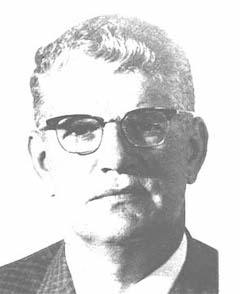
In their day the Tupamaros managed to take a pound of flesh from their persecutors by kidnapping Mitrione as a hostage to the release of 150 political prisoners. Mitrione was executed when Uruguay refused the exchange, although in later years Tupamaros founder Raul Sendic would reveal that the guerrillas had intended to hold Mitrione in indefinite captivity, but were spooked into conducting the execution when early-August police raids on revolutionary cadres broke the lines of communication between leadership and kidnappers ahead of a threatened drop-dead date: thus, “when the deadline came the group that was left with Mitrione did not know what to do. So they decided to carry out the threat.”** He was shot in the early hours of August 10 and his body deposited in a car for easy discovery.
Mitrione’s death met with great umbrage on his native soil; his VIP-rich funeral in his native Richmond, Ind. saw the Uruguayan ambassador vow that his killers would “reap the wrath of civilized people everywhere.” So civilized people “in the aftermath of Dan Mitrione’s death … unleashed the illegal death squads to hunt and kill insurgents.”
As for the OPS, that program wound down in 1974 as exposes made its work increasingly untenable … but the same project of barely-veiled anti-Communist suppression transitioned seamlessly to the Drug Enforcement Agency and a host of other alphabet-soup agencies around Washington.
* They were named for executed Andean revolutionary Tupac Amaru. The Tupamaros were violently suppressed over the course of the 1970s but when the dictatorship ended in 1984 its remaining prisoners were amnestied. The remnants of the movement eventually folded into the Frente Amplio center-left party, which is today Uruguay’s ruling party; Jose Mujica, President of Uruguay from 2010 to 2015, was a former Tupamaros guerrilla who served 13 years in prison.
** Sendic is obviously an interested party in the affair but there’s some corroboration to his account in that the movement held several other hostages whom it could not exchange for months, only to release them unharmed in the end. (e.g. American agronomist Claude Fly, British diplomat Geoffrey Jackson)
Weera Sanadhdhana Weera Balasooriya Kuru Uthumpala Arthadewa Gunaratne Nanayakkara Lakshapathi Maha Widanelage Fransisco Fernando — who is thankfully better known simply as Veera Puran Appu — was executed on this date in 1848 as one of the principals in a Ceylon rebellion against the British.
For several years he had been a famed and colorful bandit in the central highlands around Kandy, and his name bore the romance of the road and the weight of a £10 price. He was “light, well looking, well made, stout, marks of punishment on the back and 4 vaccination marks” in the words of the Brits’ wanted-man bulletin. They forgot to add: political.
In July of 1848, Puran Appu emerged at the head of a popular uprising sparked by land seizures and taxes upon an irate peasantry that every day became more inextricably entangled in the empire’s economic circuitry. It’s known as the Matale rebellion after the central city which Puran Appu briefly held, ransacking government buildings before the disciplined British army was able to rally and put down the rising and stood the rebel in front of a firing squad.
“He died exclaiming, if the king [meaning the self-proclaimed rebel king, in whose name Puran Appu acted] had three men about him as bold and determined as myself he would have been master of Kandy,” the British Governor Torrington* recorded.
He’s honored in Sri Lanka (and Kandy in particular) every year on this anniversary of his death, but fine for any occasion is a 1978 Sri Lankan biopic about, and titled, Veera Puran Appu.
* George Byng was his name, the 7th Viscount Torrington. He’s in the same family tree as the 18th century British admiral infamously executed pour encourager les autres, John Byng: Admiral John was a younger son of the 1st Viscount Torrington.
Maximilian Dortu was shot on this date in 1849 for his part in that era’s failed revolutions, but posterity will always remember his dunk on the future German emperor Kaiser Wilhelm.
A plaque commemorating Herr Dortu in Potsdam. (cc) image from Doris Antony.
A kid fresh out of university when the intoxicating fires of revolution broke out in Europe in 1848, Dortu (the cursory English Wikipedia entry | the detailed German upon hearing that Wilhelm — Prince of Prussia at the time — had deployed artillery in the suppressions roasted him publicly as Kartätschenprinz — the Prince of Grapeshot. It’s a name the Prussian autocrat has never fully lived down.
That got him detained for several months but nothing daunted he emerged after release late in 1848 as a rabble-rousing orator in Potsdam, then took part in the May-July 1849 Palatine uprising — a secondary revolt that occurred after Prince Grapeshot annulled the constitution that the preceding months had nominally secured.
“An idealistic soul, fierce in battle, stormy and ardent on the rostrum, bursting with patriotic fervor at every moment,” a compatriot judged him.
Dortu was captured in Freiburg and condemned as a rebel, pridefully refusing to petition for mercy. “Who has the courage to confess a conviction and fight for it, must also have the courage to die for it,” he wrote to his parents.
This romantic hero, “the first martyr of the Prussian court martial,” (there were two more shot in August) became for many years a democratic icon, of sufficient weight that Wilhelm, as King of Prussia in the 1860s, forbade Potsdam from accepting a memorial donative from Dortu’s widow. But the disdain of the Hohenzollern never sufficed to snuff out his memory; since 2004, he’s been honored annually by a commemorative ceremony at his tomb on the anniversary of his death.
She was captured during the last months of Spanish hegemony, but even as she awaited execution of her sentence her comrades in arms continuing in the field played a part in the crucial Bolivarian victory at the Battle of Pantano de Vargas.
She was shot at 10:30 in the morning on the main square of Socorro, along with Pascual Becerra and Isidro Bravo.
A battalion of the Colombian army’s Seventh Brigade is named for Antonia Santos.
The Gulf state Bahrain shot three men this morning, including two young Shia activists whose condemnation became a worldwide cause celebre. (The third man was an unnamed individual convicted of killing an imam.)
Left: Ali Hakim al-Arab, right: Ahmad al-Mullali
The majority-Shia island, home to American and British military bases, has been ruled by the Sunni House of Khalifa since 1783. In those two-plus centuries, this dynasty has achieved Croesus-like wealth for itself and disproportionately directed the country’s vast oil revenues to a class of predominantly Sunni elites.
This simmering grievance exploded during the Arab Spring era in the form of a 2011 uprising; though these protests were violently squelched by troops requisitioned from Bahrain’s allied Gulf petrokingdoms Saudi Arabia and the United Arab Emirates, protests and opposition have continued ever since.
Many of the political prisoners arrested in this crackdown or subsequently were housed in Jau (or Jaw) Prison, notorious for overcrowding and torture. This prison in turn has become the target of numerous actual and attempted jailbreaks in the 2010s, with outside supporters trying to help imprisoned Shia dissidents escape.
The most daring and deadly of these was the January 1, 2017 raid by armed regime opponents that (temporarily) freed ten prisoners. The gunmen, who reportedly prepped for the operation by scouting the prison and environs with drones, slew a police officer during the escape.
Throughout the 2010s Bahrain has met every exertion of its opposition by heightened repression. Just weeks after this jailbreak, it extended military tribunals to civilian cases, a chilling threat to every dissident. And it made a massive example of the people who were allegedly involved in the Jau Prison outrage, both the escapees and the outside activists — all bracketed together under the expansive rubric of “terrorism”. (Bahrain judges have ruled that mere “moral pressure” can supply the violence necessary to qualify an act as terrorism.)
The result was a mass trial of 60 alleged jailbreak participants. There were two acquittals and 56 sub-capital sentences; Ali Hakim al-Arab and Ahmad al-Mullali earned the headlines with death sentences for killing an off-duty officer (not the one shot during the jailbreak). Most of those convicted also had their citizenship stripped into the bargain.
Both men submitted “confessions” under heavy torture, including beatings, electric shocks, having nails ripped out, and possibly even moral persuasion.
Human rights organizations around the world raised alarms yesterday with the ominous news that the men’s families had been summoned to visit their doomed relations at Jau Prison; in London, an activist scaled the Bahrain embassy to unveil a banner demanding clemency.
“One of Bahrain’s darkest days,” said Bahrain Institute for Rights and Democracy director Sayed Ahmed Alwadaei in a statement. “It appears that the Bahraini government planned this meticulously, timing the executions to coincide with US, EU and UK legislative recesses in order to avoid international scrutiny. These crimes only happened because of the unconditional support lent to dictator Hamad by Washington and London.”
On this date in 1833, the Federal Republic of Central America executed Salvadoran indigenous rebel Anastasio Aquino.
Monument to Anastasio Aquino in Santiago Nonualco, the place where both man and rising originated (it’s sometimes called the Nonualco Rebellion). (cc) image from AlfredoMercurio-503.
This interesting post-Spanish polity lasted until the Central American federation splintered in 1841 into the modern-day independent states of Nicaragua, Guatemala, El Salvador, Honduras, Costa Rica, and a bit of Mexico.
Not for the first time, New World indigenes found the breakaway settler state a less congenial authority than the former colonial overlord — in this case cumbering them with new taxes, with laws facilitating the private takeover of their “uncultivated” lands. and with conscriptions onto exploitive hacienda estates.*
This soon catalyzed a rebellion; its leader, our day’s principal “Aquino the Indian”, was a hacienda laborer aggrieved by the unjust arrest of his brother and for the first months of 1833 he set the state of El Salvador on the brink of revolution, winning several battles as the General Commandant of the Liberation Army and issuing edicts in his own name.
His rebel army was defeated at the end of February and its fugitive general finally captured weeks later — destined for the scaffold and for the literary tribute of subsequent Salvadoran writers who have often styled him a national hero.
This was but a brief and early interruption in what proved to be the 16-year (1969-1985) reign of Col. Gaafar Nimeiry, who himself had taken power at gunpoint two years earlier.
Although Nimeiry initially had the support of Sudan’s then-robust Communist Party, the colonel soon clamped down on the staunchest and most pro-Moscow Communists, eventually inviting the attempted coup.
The “Siesta Coup” was mounted on the scorching afternoon of July 19 while city traffic was greatly thinned by the absence of everyone who could arrange to duck into a shady refuge instead, and it worked at first: Communist officers bloodlessly seized control of the government and of Nimeiry’s own person. But very few Sudanese people — and almost no governments in the region — had enthusiasm for the usurpers; Muammar Qaddafi even had Libyan fighter jets intercept and force down a Khartoum-bound British Airways flight carrying two coup-friendly politicians from London, so that he could arrest them on the tarmac in Benghazi.*
On July 22 anti-Communist soldiers deposed the coup government and restored Nimeiry. Within hours, four principal actors in the Siesta Coup were being dispatched to their eternal rest; the others were Maj. Hashem al?Atta, commander in chief of the armed forces for the coup government; Col. Abdel Moneim Ahmed; Lt. Col. Osman Hussein; and Capt. Muaweya Abdel Hal.
The doomed Hashem al Atta passes his waning hours enduring a harangue from Khalid Hassan Abbas.
* Those two men, Farouk Osman Hamadallah and Babakr al-Nur Osman, were returned to Khartoum as soon as Nimeiry was back in the saddle, and were also executed within days.

 It’s a verdict that posterity has washed its hands of; Chabani (other transliterations include Shabani and Chaabani) was officially rehabilitated in 1984 and his name decorates public spaces in Algeria.
 In their day the Tupamaros managed to take a pound of flesh from their persecutors by kidnapping Mitrione as a hostage to the release of 150 political prisoners. Mitrione was executed when Uruguay refused the exchange, although in later years Tupamaros founder