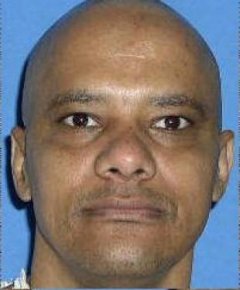
2007: Michael Richard, whose time ran out

Two years ago today, the U.S. Supreme Court unexpectedly accepted a case, Baze v. Rees, challenging the constitutionality of lethal injection — the supposedly humane execution method that seemed less and less so.

Texas inmate Michael Richard, condemned for raping and murdering Marguerite Dixon in 1986, was slated to die that very evening, also by lethal injection.

As Richard’s Texas Defender Service lawyers scrambled to prepare a last-minute legal challenge based on the pending Supreme Court case — for how could Texas carry out a procedure whose constitutionality was in question? — they tripped over an unexpected stretch of red tape that ultimately claimed their client’s life:

The Texas Court of Criminal Appeals closed at 5 p.m. on the day of the scheduled 6 p.m. execution, and refused to accept an appeal filed a few minutes after 5.

Or more specifically, Judge Sharon Keller refused to accept the appeal, for which she came under immediate fire — and launched campaigns like the website SharonKiller.com.

This bizarre situation, complicated by the fact that the Lone Star State did not have written rules for handling last-minute appeals (it does now), has a thicket of procedural detail best appreciated by lawyers.

But it caught worldwide attention as an illustration of Texas’s cavalier approach to its numerous death penalty cases.

Keller, who has what you might say is an inordinate regard for “finality” (and for prosecutors), has herself been forced to defend her conduct in hearings of the State Commission on Judicial Conduct. Those hearings could result in her removal from the bench over this incident; a decision is expected soon. (Update: She skated.)

Though it was not completely clear for a few more weeks, it was in fact true that the pending Baze decision suspended the death penalty in the United States. As a result, Michael Richard — whose execution would have been stayed had the appeal entered the judicial system — was the last American put to death until May of 2008.

On this day..

1993: Leonel Herrera, perilously close to simple murder?

On this date in 1993, Leonel Herrera was executed by lethal injection in Huntsville, Texas, for shooting two policemen. Herrera’s last statement averred,

Herrera’s sister Norma self-published this book about the case — keeping a promise to her executed brother.

I am innocent, innocent, innocent. Make no mistake about this; I owe society nothing. Continue the struggle for human rights, helping those who are innocent, especially Mr. Graham. I am an innocent man, and something very wrong is taking place tonight. May God bless you all. I am ready.

Well, Herrera wasn’t the first to go to his death maintaining his innocence. The circumstances (and circumstantial evidence) of the crime rate on the forgettable side.

But Leonel Torres Herrera was a bit different from his cousins in hopeless protestation: while he died this evening, his name lived on … in a landmark Supreme Court decision

Herrera v. Collins

Years after Herrera was convicted and death-sentenced, multiple affidavits were produced to the effect that his late brother, Raul, was the real killer.

This evidence was naturally pursued with gusto by the condemned man.

Unfortunately, a claim like Herrera’s of “actual innocence” faces a very high bar when raised in appellate courts, once a prisoner has already been convicted and their presumption of innocence become a presumption of guilt.

That this arbitrary rule of the game has a defensible rationale — could any criminal justice system operate if prisoners could continually relitigate their cases while memories fade and evidence ages into obsolescence? — does not make it the less Kafkaesque for individual prisoners, some of whom are in fact innocent.

Herrera presented this problem in unusually stark terms. Lacking any procedural violation upon which to hang his hat as an appeals issue, his claim pitted substance against form in the Supreme Court. (Oral arguments at Oyez.org)

You already know how it ended.

Chief Justice William Rehnquist’s opinion patiently explained a jurisprudential truism loftily uncolored by any experience in life liable to introduce a sense of kinship with a Hispanic man charged with a Texas cop-killing who uncovers too late the evidence that could save him.

“[A]ctual innocence” is not itself a constitutional claim.*

Instead, the Court recommended — tongue no doubt planted firmly in cheek — that Herrera apply for executive clemency, a dead letter procedure in Texas used exclusively in a good cop/bad cop routine opposite the black robes.

“Judicial restraint forbids relieving you,” says the court. “Go ask the governor.”

“The courts have thoroughly reviewed the case,” intones the governor. “May God have mercy on your soul.”

Herrera himself may or may not have been innocent. At the end of the day, he went down because the game was rigged against him: his exculpatory evidence was not available at trial, when it might have introduced “reasonable doubt” — as Rehnquist’s opinion put it, “in state criminal proceedings the trial is the paramount event for determining the guilt or innocence of the defendant.” Once that evidence became available deep in the appeals process, it was procedurally barred, and far from such a slam-dunk exoneration that any institutional actor would stick his, her or its neck out to lift Leonel Torres Herrera from the gurney.

Justice Harry Blackmun’s dissent retorted,

Just as an execution without adequate safeguards is unacceptable, so too is an execution when the condemned prisoner can prove that he is innocent. The execution of a person who can show that he is innocent comes perilously close to simple murder.

Whether “simple murder” happened in Huntsville this night in 1993, perhaps no one can really say with certainty.

But as DNA evidence and other forensic advances in the intervening years have increasingly eroded confidence in the reliability of the justice system that metes out death, Herrera v. Collins stands as a key precedent in a case now before the Supreme Court — in which states (joined by the Obama administration) are asking the justices to agree that convicted prisoners have no right to cheap, simple, and frequently dispositive DNA testing that may not have been available when they were tried.

Given the composition of the court (including three holdovers from the Herrera majority), that decision figures to have Leonel Herrera rolling over in his grave.

* Rehnquist conceded a theoretical possibility that extraordinarily persuasive evidence could generate relief on due process grounds. Antonin Scalia and Clarence Thomas went much further, claiming that prisoners had no right to anything but their trial and their (procedural) appeals.

On this day..

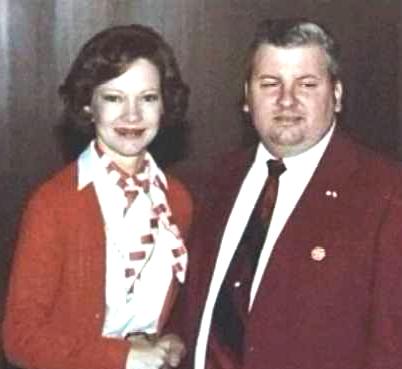
1994: John Wayne Gacy, scary clown

This date in 1994 was the last on earth for Pogo the Clown — better known as John Wayne Gacy.


Hello, children.

The local small businessman and closeted pederast filled his crawlspace with the remains teenage boys he’d either kidnap off the street, or hire in his capacity as an independent contractor.

When he wasn’t raping and murdering, he kept up appearances as a Democratic machine operative (once photographed with First Lady Rosalynn Carter) and amateur block party harlequin.

Gacy was a notable “serial killer artist” in the years he spent awaiting lethal injection.* In that capacity, the clown motif continued to inspire him.


* The lethal injection was botched with a clogged IV tube. It took 18 minutes.

On this day..

1992: Billy Wayne White, after 47 minutes

On this date in 1992, longtime heroin user Billy Wayne White waited 47 minutes while his executioners probed for a vein suitable to inject the lethal cocktail he incurred for a 1976 robbery-murder in Houston.

On this day..

1997: First use of lethal injection in China

On this date in 1997, Kunming City Intermediate People’s Court debuted a brand-new execution technology for the world’s capital of capital punishment.

With a 1996 Criminal Procedural Law reform making lethal injection an option for processing the enormous ranks of China’s condemned, experimentation got underway this date on two convicts whose identities and crimes I have not seen indicated. These were not only the first lethal injections in China, but the first anywhere outside the U.S.

According to the New York Times, China began its foray without the usual accoutrement of medicalization: rather than the familiar strap-down gurney, Kunming officials simply brought the doomed prisoners to the same execution ground used for shootings and had them roll up their sleeves for the needle.

Whatever its initial inelegance, China has enjoyed many thousands of test cases since to refine the practice — as many as 15,000 per year at this time, Amnesty International has charged.*

In the 12 years since, and aided by the offices of its guinea pigs, lethal injection has gained significantly in both technical sophistication and official acceptance; it is now thought that most Chinese executions use this method, rather than the old gunshot-to-the-back-of-the-head.

To What End?

More humane? Maybe.

Easier on an executioner than discharging a bullet at point-blank range? You’d have to think so.

Cheaper? Well, maybe — if the cost of the mobile killing van is spread over enough, er, “subjects”.

But lethal injection enjoys one significant benefit of distastefully obvious utility to the state:** it facilitates tissue transplant from a recently executed prisoner.

Though Chinese officials have always stonewalled on the subject, lucrative organ harvesting from executed prisoners has long been endemic in the country.

* China’s death penalty system has been famously opaque, so this figure is far in excess of the known thousand-plus judicial executions every year (1,718 in 2008) and would include several times that number in other judicial executions not publicly reported, plus extrajudicial killings that presumably wouldn’t involve lethal injection. Even with only the official executions specifically known to the wider world, China easily accounts for the majority of the world’s executions year after year.

** The older (and still-used) method of shooting a prisoner in the head also preserves organs, of course.

On this day..

2006: Yuan Baojing, gangster capitalist

On this date in 2006, one of Beijing’s wealthiest plutocrats (along with two of his relatives) caught a lethal injection for the shady side of his business.

Yuan Baojing, “stock market whizzkid”, had risen from the nameless masses of China’s countryside to prosper in “Red” China’s authoritarian capitalism.

Though worth billions (or at least hundreds of millions), Yuan went down over the trivial sum of $9 million — the amount he reckoned a business associate had taken by fraud.

But then, it’s always impolite to count the corpses stuffed into the pillars of capital. The surprise here is that Yuan got caught: he’d hired a dirty cop to kill that business partner, but after the plot failed the cop started blackmailing the tycoon. Yuan responded by hiring his brother and cousin to pop the cop.

Yuan survived a scheduled execution the preceding October by transferring billions in assets to the Chinese government — understandably triggering some complaints about fair play.

Those billions bought him five months.*

On this date, he and his hirelings were given a public trial in Liaoyang, followed by an immediate lethal injection in one of China’s mobile execution vans.

* The mogul’s wife, Tibetan dancer Zhou Ma, was herself swindled during this period as she spread around cash trying to save her husband’s life.

On this day..

2003: Richard Edwin Fox, bogus job interviewer

On this date in 2003, Richard Edwin Fox was put to death by lethal injection at the Southern Ohio Correctional Facility for murdering 18-year-old Bowling Green student Leslie Keckler in 1989.

Fox had plucked Keckler’s phone number from a job application she submitted to the Bob Evans restaurant where he worked as a short-order cook, then lured her to a phony job interview.

On the pretext of taking her on her prospective “sales route,” Fox drove Keckler to a rural area outside of Bowling Green where he stabbed and strangled her to death.

Creepily, the exact same modus operandi was linked to another woman whose meeting had been more fortunate than Keckler’s. Marla Ritchey met Fox — posing as “Jeff Bennett” — for a similar interview, and after she realized it was a hoax,

[Fox] asked her what she would do if someone pulled a knife on her and asked her for all of her money or asked her to do “other things” at which point Ritchey did jump out of the [parked] car. The man then attempted to grab Ritchie and told her to come back and as Ritchey ran for her car the man immediately pulled away. (Account from Death Penalty USA: 2003-2004)

Fox left an orphaned daughter (then aged 20) who had pled for her father’s life. Keckler’s brother spoke to the media for the victim’s family afterwards, remarking,

“The family feels justice has been served, that Leslie and my mother can now be at peace.”

On this day..

2001: Larry Keith Robison

(Thanks to Kristin Houlé of the Texas Coalition to Abolish the Death Penalty for the guest post, adapted from her Mental Illness and the Death Penalty Resource Guide (pdf link). Kristin blogs at Prevention Not Punishment. -ed.)

A mentally ill man who had been refused treatment because his condition had not yet turned him violent suffered lethal injection in Texas eight years ago today for finally turning violent.

Larry Robison was diagnosed with paranoid schizophrenia at the age of 21, three years before the murders for which he was sentenced to die. He began hearing voices and acting strangely as a teenager, claiming to have secret paranormal mental powers and the ability to read people’s minds and move objects from a distance. He joined the Army but was discharged after only a year.

Robison’s parents sought help and warned mental health authorities of their son’s erratic and increasingly aggressive behavior, but were told that the state could offer no resources unless he turned violent. He was shuffled in and out of mental hospitals, admitted after aggressive behavior and released after a period of medicated passivity. He received no regular, ongoing treatment. Robison was not covered by his parents’ insurance, nor did he have his own.

Robison claimed that voices in his head, which came through the clocks in his room, spewed out warnings about Old Testament prophecies of the Apocalypse and told him to murder, behead, and mutilate his roommate, Bruce Gardner. Robison then went next door and murdered four of his neighbors. When authorities arrested him, he told them that he had committed the murders in order to “find God.”

The four prosecutors developing the case against Larry Robison recognized his past history of mental illness and were willing to accept an insanity plea in exchange for life in a mental institution. The Tarrant County district attorney overruled them, however, and ordered them to seek a death sentence. In the courtroom, most evidence of Robison’s mental illness was ruled inadmissible, so the jury heard little of it. None of the three doctors who had diagnosed Robison before the crime as suffering from paranoid schizophrenia were called to testify at his trial. The jury rejected his plea of not guilty by reason of insanity.

Once in prison, evidence of Robison’s mental illness continued to accumulate. The Texas Court of Criminal Appeals stayed his execution at one point, doubtful as to whether or not he was competent to be executed. When asked what the execution would be like, Robison replied that he felt like “a little kid at Christmas time waiting for Santa Claus to come.” Eventually, he demanded that his lawyers cease filing appeals based on his mental illness, but only if the state agreed to execute him on the night of a full moon. Despite protests from mental health organizations and concerned citizens throughout the world, the state complied.

Larry Robison’s case drew attention largely as a result of the tireless efforts of his own family, taking a public profile unusual for the family of the condemned. CBS News’ 48 Hours profiled the Robisons shortly before Larry’s execution. They continue to maintain a website, larryrobison.org; mother Lois Robison remains a vocal critic of executing the mentally ill, and delivered this address to a Murder Victims’ Families for Human Rights conference last fall.

On this day..

2003: Liu Yong, for corruption

On this date in 2003, Liu Yong’s situation took a very abrupt turn for the worse.

The wealthy Communist Party member and Shenyang city legislator had been sentenced to death 20 months before in a corruption case for ordering the murder of a tobacco vendor as part of a mafioso racket of graft, extortion, black marketeering, and kindred mayhem.

When that sentence was reduced on retrial on a showing that Liu’s confession was extracted by torture, public outcry at the appearance of a well-connected insider getting off scot-free led the Supreme Court to take the unprecedented step of yet again re-trying a criminal case itself.

“According to China’s legal system, a criminal case can usually be tried only twice,” as China Daily lightly put it.

Amnesty International is less measured, and alleges that the irregular Supreme Court hearing was ordered by political insiders to buttress the credibility of the country’s anti-corruption drive — and to avoid setting any precedent that evidence of torture should mitigate criminal sentencing. (China certainly found defenders for the trial (the link is to an ugly layout of raw HTML).)

The high court handed down its sentence this very day, after which Liu was immediately hailed to one of China’s mobile execution vans, given a lethal injection, and cremated.

On this day..

2005: Elias Syriani, a family affair

On this date in 2005, North Carolina executed 67-year-old immigrant Elias Syriani at Raleigh’s Central Prison for the murder of his wife — despite the emotional clemency intervention of the couple’s children.

Syriani, an ethnic Assyrian driven from his native Jerusalem by al nakba who moved to the U.S. from Jordan through marriage to a Jordanian immigrant, had a stormy marriage hit the rocks in 1990. Teresa filed for divorce after a few years facing Elias’s violent objections to her westernized behavior.

Syriani responded by jumping her when she drove home one night, and stabbed her to death with a screwdriver in front of their 10-year-old child.

This case meandered forgettably through the bowels of the criminal justice system; the traumatized children moved on (.pdf).

Until the year before Syriani met his fate, when the mysteries of the human heart flipped the script.

The four children visited Syriani and found themselves forgiving their mother’s murderer … and forging an unexpected bond with the father they hadn’t known for a decade. They called it a miracle, a gift from their late mother to go from “hate, absolute hate, to love in a split second.”

The children — by then grown — became Syriani’s advocates for executive clemency, posing an unusual challenge for Gov. Mike Easley: in an environment that (rhetorically, at least) often counts on survivors’ rage and grief as arbiters of punishment, would he spare a father for killing a mother when the children said execution would redouble the family’s injury?

But commutations rarely happen — there’s just no percentage in them for politicians.

“After careful review of the facts and circumstances of this crime and conviction, I find no convincing reason to grant clemency and overturn the unanimous jury verdict affirmed by the state and federal courts.” (Easley)

This startling story became the subject of a 2007 documentary, Love Lived on Death Row

[flv:https://www.executedtoday.com/video/Love_Lived_on_Death_Row_trailer.flv 440 330]

The following are excerpts from an interview with the film’s Producer/Director Linda Booker originally conducted by Sean O’Connell of The Charlotte Weekly.

When did you first hear about/become interested in this story?

Back in July 2005, I was checking the weather on a local news website and scanning the headlines when the article about the Syriani siblings forgiving their father caught my eye. I think at first it interested me because I have been involved with our local domestic violence agency as a volunteer and fundraiser, but as I read the article something about their reconciling with and forgiving their father really touched me. At this point they had begun to share their story with the public and had just appeared at a domestic violence conference in Charlotte called “Hope to Heal.”

At what point did you get the idea to film the story in documentary form? How long did it take to complete the film?

It was an immediate reaction for me upon reading the article that their story might make a compelling documentary film. I printed it out and carried it around with me. But I was still finishing up interviews and editing my first documentary project “Millworker: the Documentary” so I didn’t act on it right away. Then several months later I learned that they would be speaking in Chapel Hill, close to where I live, and I thought, “okay, if I feel this strongly about this, here’s my chance to meet them and film their discussion.” So there I was, a relatively new filmmaker and very nervous about that first step, but I received permission to film that night. That’s also when I first heard about and met Meg Eggleston, who had been writing letters and visiting Elias Syriani on death row for four years and the Syriani sibling’s attorney Russell Sizemore, who was helping them through their father’s clemency appeal pro-bono. I came to learn that Meg’s friendship with Elias was an essential part of their father’s transformation and was such an interesting story in itself.

I started filming in October 2005, edited in the fall of ’06 and started doing preview screenings in early ’07. Since then the film has screened at film festivals and many grassroots screenings with various non-profits and faith groups as sponsors in the U.S. especially in North Carolina.

The Syriani children are open and honest in the film. Did you have trouble accessing them? Were they open to the idea of participating in the film, even though at this point it could not help their father?

I started filming interviews with Meg Eggleston and Russell Sizemore first who trusted that I was not trying to do a sensationalized story, but that I recognized the Syriani’s story of forgiveness was inspirational, regardless of the outcome of the clemency appeal. The Syrianis knew that I was working with Meg & Russ, but out of respect for all they were going through, I did not push the issue of their participation. About six months after the appeal, I wrote them about participating and subsequently we went to California and Chicago in the summer of ’06 to film interviews with them. While they know that a part of the discussion around the film will be capital punishment, the Syriani siblings have expressed that they want their story to live on in hope that their experience of surviving a domestic violence tragedy and the healing that came from forgiveness will touch people’s hearts and help others.

I think it’s because this case is so unique, but I found the film’s stance on the death penalty unclear. Can you, as the filmmaker, clarify your thoughts on the death penalty?

Well, I’ll take that as a compliment, because the documentaries I admire aren’t pounding you over the head with the filmmaker’s opinion. I can tell you that making this film made me face how I felt about the death penalty and I spent a lot of time researching and doing some deep thinking about the issue.

Needless to say it’s very complex, and it is completely understandable that feelings of anger and retribution can occur when you have lost a loved one to violence. We need to do more for those dealing with the aftermath of murder with as much support, assistance and counseling services as possible, especially children. But as I went to restorative justice forums and have met many people who belong to organizations such as Murder Victims Families for Reconciliation, I kept hearing stories about how the death penalty was causing more grief, stress and division in families that had experienced murder. Between making the documentary and doing the research, I came to the conclusion that I couldn’t support a system of justice that can possibly create more pain and victims in its wake and that was also irreversible and arbitrary.

On this day..