His preaching veering outside the bounds of orthodoxy he was imprisoned briefly and soon set aside his holy orders for the baking trade, itinerant evangelizing, and marriage.
After the Inquisition had a go at menacing him into compliance, Bakker had the honor of submitting his living flesh to the flame under the eyes of the Hapsburg governor, Margaret of Austria. “O death, where is thy victory?” were his last words, quoting Corinthians. “O death, where is they sting?” Not so sanguine as he about the pains of the stake, his illicit wife preferred strategic repudiation to scriptural owns.
As he’s remembered as the Protestant protomartyr in the northern Netherlands he’s had a purchase on subsequent generations’ remembrance, and there are some streets and schools named for him.
The notorious Dutch criminal Huttenkloas was broken on the wheel on this date in 1775.
The distinctive brand Huttenkloas today attaches to a brewery with a sigil depicting the “chair of Huttenkloas” into which the robber was chained and tortured for several months. This torture device — the chair, not the beer — can be seen at the Palthehuis Museum in Oldenzaal.
Klaas Annink by name (English Wikipedia entry | Dutch), this 65-year-old was implicated in a number of robbers and murders in the vicinity of Hof van Twente, nearby the village where he lived in his creepy shack. His son Jannes and his wife Aarne Spanjers were also condemned for these same crimes, and both also put to death.
We’re a bit short on archival footage of Huttenkloas, but this 2019 re-enactment might do instead.
A Pole, a Hungarian, and a Croat, respectively, they were emissaries of their vast polyglot empire’s official religion who were unlucky to be in the wrong place when theological differences went kinetic and helped launch the Thirty Years War.
That wrong place was the Hungarian city of Kassa (today the Slovakian city of Košice) which was captured by Protestant Transylvanian prince Gabriel Bethlen on September 5, 1619. Confined to the Jesuit residence, these three were assailed by a mob of soldiers who broke in on the morning of September 7 and demanded their immediate apostasy, putting them to summary torture and eventual beheading when they refused.
On this date in 1996, the people of the Veracruz town of Playa Vicente visited an orderly extrajudicial lynching on an accused rapist and murderer.
This “illegal execution” (in the words of the Veracruz Attorney General) made the airwaves around Mexico and abroad thanks to horrifying video showing the suspect — obviously beaten — lashed to a tree and agonizingly consumed in flames. Warning: Although this is an edited and narrated version of the video, it’s still extremely disturbing.
According to an Associated Press wire report, Hernandez’s “execution” was only the most visible of a spate of vigilante justice around that time, authored by people infuriated by the corruption and inaction of official law enforcement.
Saturday [apparently the same day, August 31 -ed.], residents of Motozintla in southern Mexico overran the town jail, seizing three men and burning two of them alive on lampposts, Mexico’s official Notimex news agency reported. The men were suspects in several assaults, including the rape of a young girl.
On Monday in Puebla state, police saved two other criminal suspects from being taken from their cells and killed, Notimex said.
Residents in the Mexico state town of Tolman recently beat and then held for more than a day in their town square a man suspected of a robbery and shooting. They vowed to kill him if any of his victims died of their wounds.
On this date in 1588, Elizabethan England celebrated the defeat of the Spanish Armada with Catholic gallows spread throughout London, claiming eight souls in all.
It was earlier that August that English pluck, Dutch reinforcements, and the Protestant Wind had connived to see off that great Spanish fleet and the prospect of Catholic and continental domination.
Although Catholics were liable for life and limb throughout these years it’s hard to put down the large-scale public hangings (some with full drawing-and-quartering pains) of priests and laymen down to coincidental timing, particularly given the unusual choice to distribute them to several gallows all around London. Here, surely, was a triumphant gloat for the furtive adherents of the old faith to ponder.
At the same time and place suffered Hugh Moor, a layman, aged 25, of Grantham, Lincolnshire, and Gray’s Inn, London, for having been reconciled to the Church by Fr. Thomas Stephenson, S.J. On the same day suffered (1) at Mile End, William Dean, a priest (q. v.); and Henry Webley, a layman, born in the city of Gloucester; (2) near the Theatre, William Gunter, a priest, born at Raglan, Monmouthshire, educated at Reims; (3) at Clerkenwell, Thomas Holford, a priest, born at Aston, in Acton, Cheshire, educated at Reims, who was hanged only; and (4) between Brentford and Hounslow, Middlesex, James Claxton or Clarkson, a priest, born in Yorkshire and educated at Reims; and Thomas Felton, born at Bermondsey Abbey in 1567, son of B. John Felton,* tonsured 1583 and about to be professed a Minim, who had suffered terrible tortures in prison.
* No relation, however, to the executed assassin John Felton forty years on: that man’s father made his way in the world hunting Catholic recusants to inform upon.
He’s the patron of actors and to judge by his career he was the earliest and greatest pioneer of the Method.
The story with Genesius, and as usual for early Christians we have more of hagiography than historicity, is that during the persecutions of Diocletian, the very pagan St. G. was tasked with caricaturing a Christian convert on stage. As a fellow thespian poured a “baptism” over him, Genesius was bathed instead by the Holy Spirit and actually converted, right on the spot — preaching to the infuriated emperor,
I came here today to please an earthly Emperor but what I have done is to please a heavenly King. I came here to give you laughter, but what I have done is to give joy to God and his angels. From this moment on, believe me, I will never mock these great mysteries again. I now know that the Lord Jesus Christ is the true God, the Light, the Truth and the Mercy of all who have received his gift of baptism. O great Emperor, believe in these mysteries! I will teach you, and you will know the Lord Jesus Christ is the true God.
Diocletian had him tortured and beheaded instead.
Apart from actors, Genesius also accepts petitions from the whole gamut of jesters and caperers including clowns, comedians, dancers and musicians. Also lawyers.
In the Louviers case, a horrid record of diabolism, demoniac masses, lust and blasphemy, on 21 August, 1647, Thomas Boullé, a notorious Satanist, was burnt alive in the market-square at Rouen, and what is very notable the body of Mathurin Picard who had died five years before, and who had been buried near the choir grille in the chapel of the Franciscan nuns which was so fearfully haunted, was disinterred, being found (so it is said) intact. In any case it was burned to ashes in the same fire as consumed the wretched Boullé and it seems probable that this corpse was incinerated to put an end to the vampirish attacks upon the cloister.
On this date in 1647, Thomas Boulle, vicar of Louviers, France, was executed as a witch.
Reminiscent of the recent Loudun Possessions — and perhaps directly inspired by the lucrative pilgrimage trade earned by that recent witchcraft scam — the Louviers Possessions featured a similar cast of characters: possessed, fornicating nuns; performative public exorcisms; and a village priest as the demoniacal mastermind whose bonfire climaxed the whole show. (Said priest had, as Summers notes in the pull quote above, the substantial aid of a deceased confederate, the former director of the nunnery who did his supernatural mischief from the grave.)
As with Loudun and several other high-profile witch panics in 17th century France the tableau was thoroughly pornographic with a parade of nuns reporting being taken to Black Mass orgies and copulating with a demon named Dagon.
The Michelangelo sculpture variously known as Apollo, Apollo-David, or Apollino* was commissioned by Baccio Valori, who met his end on the scaffold on this date in 1537.
By way of background, Florence in 1530 had succumbed to the joint siege of Holy Roman Emperor Charles V and Pope Clement VII.**
The republican Michelangelo directed Florence’s fortifications during the siege, and maybe in some alternate timeline he enjoys his own entry on this very execution site: it seems that the papal governor, our guy Baccio Valori, had him on an enemies list once città Gigliata fell into his hands. In the words of Michelangelo’s contemporary and biographer Ascanio Condivi:
But then after the enemy were let in by consent and many citizens were seized and killed, the court sent to Michelangelo’s house to have him seized as well; and all the rooms and chests were searched, including even the chimney and the privy. However, fearing what was to happen, Michelangelo had fled to the house of a great friend of his where he stayed hidden for many days, without anyone except his friend knowing he was there. So he saved himself; for when the fury passed Pope Clement wrote to Florence that Michelangelo should be sought for …
Those last words elide a period of several years, when Michelangelo made a peace offering to the new regime by forming the melancholyApollo-David for Valori — a side project for the genius while he also worked on the New Sacristy of Florence’s Medici Chapel.
Both projects gave way to papal prerogatives before their completion. Valori was reduced from preeminence in the city when the young Alessandro de’Medici became duke, and Michelangelo was summoned to Rome to paint The Last Judgment on the wall of the Sistine Chapel.
And he was still working on that in 1537, when Alessandro de’ Medici was assassinated by his republican cousin. Alessandro’s murder brought 17-year-old Cosimo de’ Medici to power in Florence, a moment of political uncertainty that stoked the ambitions of the various anti-Medici factions. Thus,
[o]n learning the death of Alessandro and the election of Cosimo, the exiles appreciated the necessity for prompt action, as all delay would be fatal to the overthrow of Medicean rule. They had received money and promises from France; they were strengthened by the adhesion of Filippo Strozzi and Baccio Valori, who had both become hostile to the Medici through the infamous conduct and mad tyranny of Alessandro … The exiles accordingly met, and assembled their forces at Mirandola. They had about four thousand infantry and three hundred horse; among them were members of all the principal Florentine families … They marched rapidly, and entered Tuscany towards the end of July 1537.
The young Cosimo “displayed signal capacity and presence of mind,” infiltrating the rebel army with spies and smashing it in battle at the start of August.
All the prisoners, who were members of great families, were brought before Cosimo, and were received by him with courteous coldness. Soon, however, a scaffold was erected in the Piazza, and on four mornings in succession four of the prisoners were beheaded. Then the duke saw fit to stay the executions. Baccio Valori, however, and his son and nephew were beheaded on the 20th of August in the courtyard of the Bargello. Filippo Strozzi still survived, confined in the Fortezza da Basso, that had been built at his expense … On December 18th he was found dead in his prison, with a blood-stained sword by his side, and a slip of paper bearing these words: exoriare aliquis nostris ex ossibus ultor. It was believed that, having renounced all hope of his life being spared, Strozzi had preferred suicide to death at the hands of the executioner.
* As to the subject of the male nude, there’s a difference of opinion between Michelangelo catalogues of the 1550s — one calling it “an Apollo who draws an arrow from his quiver” and another “an incomplete David.”
allowing the CIA to plant men with the local police in sensitive places around the world; and after careful observation on their home territory, bringing to the United States prime candidates for enrollment as CIA employees
…
The foreign policemen themselves understood why they were being sent to Washington. Even before the coup d’etat, in July 1963, one Brazilian officer described the academy program to the governor of Sao Paulo as “the latest methods in the field of dispersion of strikes and striking workers.” He would learn, he said, how to use dogs and clubs and “to modernize the mechanism of repression against agitators in Sao Paulo.”
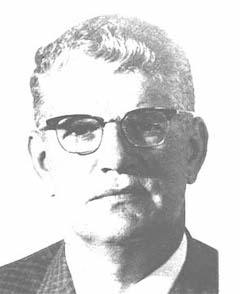
Brazil is where Mitrione made his bones over the course of the 1960s, years when the CIA trained some 100,000 Brazilian cops. But his mission was as universal as the toenails he ripped off and by 1969 he’d been reassigned to neighboring Uruguay further to that state’s suppression of a growing leftist revolutionary movement, the Tupamaros.*
One recruit named Manuel Hevia Cosculluela — who notoriuosly gave Mitrione’s mission statement as “the precise pain, in the precise place, in the precise amount, for the desired effect” — recalled the “trainings” these Uruguayan pupils received in his now-out-of-print 1978 book Pasaporte 11333: ocho años con la CIA.
As subjects for the first testing, they took beggars, known in Uruguay as bichicones, from the outskirts of Montevideo, along with a woman from the border with Brazil. There was no interrogation, only a demonstration of the different voltages on the different parts of the human body, together with the uses of a drug to induce vomiting — I don’t know why or for what — and another chemical substance.
The four of them died.
(There’s a good deal more stomach-turning stuff about the Mitrione program in this pando.com article.)
Heightened repression also heightened the response of the Tupamaros, who had not previously shown themselves a particularly bloodthirsty bunch. The Uruguayan Chief of Police Intelligence Alejandro Otero gave an embarrassing-to-Washington interview to a Brazilian paper revealing Mitrione’s work, complaining that “The violent methods which were beginning to be employed, caused an escalation in Tupamaro activity. Before then their attitude showed that they would use violence only as a last resort.”
In their day the Tupamaros managed to take a pound of flesh from their persecutors by kidnapping Mitrione as a hostage to the release of 150 political prisoners. Mitrione was executed when Uruguay refused the exchange, although in later years Tupamaros founder Raul Sendic would reveal that the guerrillas had intended to hold Mitrione in indefinite captivity, but were spooked into conducting the execution when early-August police raids on revolutionary cadres broke the lines of communication between leadership and kidnappers ahead of a threatened drop-dead date: thus, “when the deadline came the group that was left with Mitrione did not know what to do. So they decided to carry out the threat.”** He was shot in the early hours of August 10 and his body deposited in a car for easy discovery.
Mitrione’s death met with great umbrage on his native soil; his VIP-rich funeral in his native Richmond, Ind. saw the Uruguayan ambassador vow that his killers would “reap the wrath of civilized people everywhere.” So civilized people “in the aftermath of Dan Mitrione’s death … unleashed the illegal death squads to hunt and kill insurgents.”
As for the OPS, that program wound down in 1974 as exposes made its work increasingly untenable … but the same project of barely-veiled anti-Communist suppression transitioned seamlessly to the Drug Enforcement Agency and a host of other alphabet-soup agencies around Washington.
* They were named for executed Andean revolutionary Tupac Amaru. The Tupamaros were violently suppressed over the course of the 1970s but when the dictatorship ended in 1984 its remaining prisoners were amnestied. The remnants of the movement eventually folded into the Frente Amplio center-left party, which is today Uruguay’s ruling party; Jose Mujica, President of Uruguay from 2010 to 2015, was a former Tupamaros guerrilla who served 13 years in prison.
** Sendic is obviously an interested party in the affair but there’s some corroboration to his account in that the movement held several other hostages whom it could not exchange for months, only to release them unharmed in the end. (e.g. American agronomist Claude Fly, British diplomat Geoffrey Jackson)
On this date in 1630, a ludicrous disease panic sent two innocent men to the scaffold in Milan.
Terrified as their family and neighbors dropped dead around them of a raging bubonic plague outbreak, the surviving Milanese sprouted buboes on their brains.
Just days before the executions marked in this post, a city official named Guglielmo Piazza was noticed by some busybodies “strolling down the street writing from an ink-horn at his belt and wiping his ink-stained fingers on the walls of a house.” They promptly reported him not for misdemeanor property damage but for spreading plague poison, whatever that would be.
Investigators to their shame gave this accusation enough credence to interrogate Piazza under torture, a decision which obviously was tantamount to the execution itself. He broke he sealed his own fate when he broke and confessed, and sealed same for a misfortunate barber named Giangiacomo Mora whom Piazza was made to accuse.
Milan was proud enough of this obvious injustice to stand up an colonna d’infamia (“column of infamy”) denouncing both “poisoners” until a storm finally knocked the lying marble down in 1788. It read,
Here, where this plot of ground extends, formerly stood the shop of the barber Giangiacomo Mora, who had conspired with Guglielmo Piazza, Commissary of the Public Health, and with others, while a frightful plague exercised its ravages, by means of deadly ointments spread on all sides, to hurl many citizens to a cruel death. For this, the Senate, having declared them both to be enemies of their country, decreed that, placed on an elevated car, their flesh should be torn with red-hot pincers, their right hands be cut off, and their bones be broken; that they should be extended on the wheel, and at the end of six hours be put to death, and burnt. Then, and that there might remain no trace of these guilty men, their possessions should be sold at public sale, their ashes thrown into the river, and to perpetuate the memory of their deed the Senate wills that the house in which the crime was projected shall be razed to the ground, shall never be rebuilt, and that in its place a column shall be erected which shall be called Infamous. Keep afar off, then, afar off, good citizens, lest this accursed ground should pollute you with its infamy.
August, 1630.
Prior to the column’s overturning, the Milanese Enlightenment intellectual Pietro Verri wrote a meditation upon it titled Sulla tortura e singolarmente sugli effetti che produsse all’occasione delle unzioni malefiche, alle quale si attribui la pestilenza che devasto Milano l’anno 1630. Italian speakers can enjoy it here.


 He’s the patron of actors and to judge by his career he was the earliest and greatest pioneer of
 In their day the Tupamaros managed to take a pound of flesh from their persecutors by kidnapping Mitrione as a hostage to the release of 150 political prisoners. Mitrione was executed when Uruguay refused the exchange, although in later years Tupamaros founder
