“You will be hanged by the neck, Billy, until you are dead, dead, dead!”
“You can go, Judge, to hell, hell, hell!”
We have no source for whether William Bonney’s reply to the judge who sentenced him to hang was vindicated by the Almighty. But the judge’s sentence, due to be executed this day, assuredly never came to pass: two weeks before, Billy the Kid effected the last of his famous escapes.
The exploits of this legendary gunfighter — and his legend rather exceeds his exploits — are exhaustivelychronicled online. The Manhattan-born Kid, a pup of 21 at his death, was a gunfighter in the Lincoln County War, a fight between two frontier magnates. Billy counted himself among the Regulators, a deputized posse (so it claimed, by way of legality) that was the armed militia of a murdered rancher.
Here’s how Emilio Estevez played the crime in Young Guns:
On April 28, in a building that still stands in Lincoln, New Mexico, Bonney got the drop on one of his guards and high-tailed it out of town.
Though spared the ignominy of the gallows, Billy the Kid would not long outlive his judicially appointed hour. Lincoln County sheriff Pat Garrett found and killed the fugitive a few months later.
Ironically, this transaction darkened the reputation of the successful officer of the law — the circumstances of the killing were ambiguous, and seem less than honorable to some — while helping valorize the young outlaw who by all rights should long since have been at the end of a rope. And for this, maybe Billy’s shade has stood Garrett’s a drink or two, because a shadowy and youthful disappearance from the scene helped catapult Billy into folklore that has long outlasted the forgotten Lincoln County War.
Billy the Kid — even the name evokes the American self-image with perfect pitch — has come to so fully embody the floating signifiers of the Wild West, of America in its adolescence, that around the same time Bob Dylan composed “Knockin’ on Heaven’s Door” for the clip above (the 1973 film Pat Garrett and Billy the Kid), Billy Joel took the gunslinger for an all-purpose western motif in “The Ballad of Billy the Kid”. Joel’s song’s describes a life that seems to be just what the listener thinks it ought to be while remaining factually untrue of its titular character in almost every particular, including, in his version, a picturesque death by hanging:
The ballad form of romanticized narrative poetry suits our elusive subject well. Skip music and cinema a generation ahead and we have Guns n’ Roses covering “Knockin’ on Heaven’s Door” and power balladeer par excellence Jon Bon Jovi climbing the charts with this signature hit from the Young Guns II soundtrack:
On this date in 1818, on the authority of a military tribunal of doubtful legality, a general who would become a president hanged two British citizens for aiding America’s Indian enemies.
You don’t get to be the $20 bill guy without knocking a few heads.
The First Seminole War saw the ambitious General Andrew Jackson appropriate for himself authority considerably beyond that authorized by Washington to escalate border conflicts around Spanish Florida into an outright invasion.
Though both Spanish and British interests had a foothold on the peninsula, neither was ever formally drawn into war; the conflict pitted Jackson’s armies against Seminole Indians who were also known to take in escaped slaves from over the border. Regardless the immediate casus belli, the war’s eventual effect was to force the Spanish to cede Florida, fitting it unmistakably into America’s evolving pattern of imperial conquests. But Europeans proved not to be exempt from Jackson’s fury.
The elderly Scottish trader Alexander Arbuthnot and the young British ex-marine Robert Ambrister were swept up as Jackson pillaged through Florida. Both had friendly relations with the natives, and somewhere amid personal pique, deliberate provocation, and squelching their knowledge of white Americans’ provocations against the Seminoles lay sufficient reason to string them up.
Due process
Jackson, who would win the White House himself on a populist platform in a decade’s time, has had many advocates in history; few of them would deny the man’s authoritarian streak.
A decidedly unsympathetic — arguably corrective — study of Jackson’s conduct in the Southeast during this period unravels Jackson’s reasoning as to how British citizens in Spanish territory were capitally liable in the eyes of a third country that neither state was at war with:
As soon as [Jackson] reached St. Marks, he set into motion the wheels of his personal justice system to punish Alexander Arbuthnot and Robert Ambrister for crimes against the United States.
Jackson appointed a military court of twelve voting officers, Edmund Pendleton Gaines presiding, to hear charges that Arbuthnot and Ambrister had aided and abetted the enemy of the United States in the Seminole War. Of the panel, five were Volunteer officers whom Jackson had personally recruited for the campaign. Even though partially stacking the board and conducting the proceeding as a court-martial in the Florida wilderness obviated the need for precise legal punctilio, Old Hickory ruminated over just how to go about the business. His original idea of charging his two prisoners with piracy had appeal because it allowed him to take action against these subjects of a neutral power for aiding one nation against another nation. Yet the similarities of such a circumstance to that of the Marquis de Lafayette’s Revolutionary War service nagged at Jackson as an embarrassing comparison. By the time he convened the court-martial, Jackson had hit upon the solution. “The laws of war did not apply to conflicts with savages,” he solemnly intoned, and thus was he able to dispense with not only the laws of war, but virtually all laws altogether. The court would charge Arbuthnot and Ambrister with assisting and encouraging the Seminoles. In Jackson’s legal universe, these were capital offenses.
The specific charges accused Arbuthnot of inciting the Creeks to make war on the United States, of spying for the Seminoles, and of inciting the Seminoles to kidnap, torture, and kill William Hambly and Edmund Doyle. Charges against Ambrister stated that he had aided and abetted Seminoles and had led Seminoles against the United States.
Arbuthnot requested counsel, and the court obliged him by appointing one, but he apparently managed most of his own defense. Some describe his efforts as eloquent, but both he and Ambrister must have realized that their part in this show was already scripted to its conclusion. Ambrister, in fact, finally abandoned all pretense of due process simply to throw himself on the mercy of the court.
(The original minutes of the trial are available from Google books here.)
Jackson’s justification of himself, essentially placing the condemned men outside the law by stripping them of their whiteness, will not much flatter his latter-day partisans:
These individuals were tried under my orders by a special court of select officers, legally convicted as exciters of this savage and negro war, legally condemned, and most justly punished for their iniquities … I hope the execution of these two unprincipled villains will prove an awful example to the world … that certain, though slow retribution awaits those unchristian wretches who, by false promises, delude and excite an Indian tribe to all the horrid deeds of savage war.
… although a further point takes a tack the modern reader may find more familiar:
The moment the American army retires from Florida the war hatchet will be again raised, and the same scenes of indiscriminate massacre, with which our frontier settlers have been visited, will be repeated, so long as the Indians within the territory of Spain are exposed to the delusion of false prophets and poison of foreign intrigue; so long as they can receive ammunition, munitions of war, from pretended traders and Spanish commandants, it will be impossible to restrain their outrages. … The savages, therefore, must be made dependent on us, and cannot be kept at peace without being persuaded of the certainty of chastisement being inflicted on the commission of the first offence.
Even at the end of his life, this day’s hanging was still flung against Jackson: “By the Eternal! You old Hags! If I get hold of you, I’ll hang you all up under the 7th section as I did Arbuthnot and Ambrister!” (click to see the entire cartoon)
(The letter is as read by a friendly congressman here.)
Jackson’s own popularity essentially carried the day against a measure of Congressional censure, but the affair caused him ongoing political annoyance; for Jackson’s enemies, it would forever impugn the man’s motives and behavior. (See the cartoon, which dates to the incipience of a later generation’s own imperial war.) The success that sufficed to exonerate him to his peers might seem rather less compelling to posterity.
* A 2004 Congressional Research Service report (pdf) on military tribunals also touches the Arbuthnot and Ambrister affair and hints, in its neutral way, at the Napoleonic direction Jackson’s legal reasoning would mark out:
Experts in military law have differed on the legitimacy of Jackson’s action. William Winthrop, writing toward the end of the nineteenth century, noted that if any officer ordered an execution in the manner of Jackson he “would now be indictable for murder.” To William Birkhimer, in his 1904 treatise, Jackson had asked the special court only for its opinion, both as to guilt and punishment, and the delivery of that opinion could not divest Jackson of the authority he possessed from the beginning: to proceed summarily against Arbuthnot and Ambrister and order their execution. Birkhimer’s analysis would allow generals to execute civilians without trial or to dispense with the fact-finding and judgment that results from trial proceedings.
It bears remembering that this incident was in fact only three years removed from Bonaparte’s last hurrah, and some few of Jackson’s countrymen saw such a figure in Old Hickory.
On this date in 1792 — a surprisingly late date, just nine months before the king himself would die under its blade — debuted the iconic symbol of the French Revolution, the guillotine.
Today, it turned a thief and killer named Nicolas Pelletier from thug to trivia. Much more illustrious names would follow, and anon.
Though predecessors of the grim machine had been used centuries before in Scotland, Italy and Switzerland, the guillotine ushered in a distinctly modern era of technological application to capital punishment informed by egalitarianism — prior to the French Revolution, nobles and commoners had different modes of execution — and by legal and medical expertise aimed at minimizing pain.*
In fact, the device’s namesake, physician Joseph-Ignace Guillotin, opposed the death penalty altogether; he approved scientific and “painless” execution as a stopgap measure.**
For his troubles, the humane doctor’s name became synonymous with terror, enough so that his descendants changed their handle. One wonders how the doctor judged his own legacy; certainly better for any condemned person to die on the guillotine than the breaking wheel, but the mechanical efficiency of the “French razor” and the depersonalization of the condemned in relation to the headsman and the witnesses also made possible the mass executions the French Revolution is known for.
Singular Guillotin, respectable practitioner: doomed by a satiric destiny to the strangest immortal glory that ever kept obscure mortal from his resting-place, the bosom of oblivion! … “With my machine, Messieurs, I whisk off your head (vous fais sauter la tete) in a twinkling, and you have no pain;”–whereat they all laugh. (Moniteur Newspaper, of December 1st, 1789 (in Histoire Parlementaire).) Unfortunate Doctor! For two-and-twenty years he, unguillotined, shall near nothing but guillotine, see nothing but guillotine; then dying, shall through long centuries wander, as it were, a disconsolate ghost, on the wrong side of Styx and Lethe; his name like to outlive Caesar’s.
* Pain reduction was distinctly not the order of the day under the ancien regime. Often, quite the opposite.
** It was still another physician, Antoine Louis, who actually designed the decapitation machine; for a time, it was known as the Louisette. The working model was built from Louis’ design by a piano maker — and it may be more than coincidence that the science of constructing this mechanically complex musical instrument was also bursting with creativity on the cusp of the Industrial Revolution.
At twilight this date in 1794, the most magnetic and perhaps most statesmanlike politician of the French Revolution mounted the scaffold at the Place de la Revolution in the revolution — as described by the poet Arnault:
In the dying light of day the great leader seemed to be rising out of his tomb as much as preparing to descend into it. Never was anything more bold than that great athlete’s countenance, never anything more formidable than the look of that profile which seemed to defy the knife. That great head, even as it was about to fall, appeared to be in the act of dictating laws.
The famously ugly revolutionary had been the moving spirit overthrowing the monarchy of Louis XVI in 1792; as the firmest public minister holding up against the ensuing military collapse he was for a few weeks something close to the head of the government.
Some credit him with saving Paris from military rout or internal anarchy during this time; some implicate him in the horrific September Massacres — and it may well be that neither view is mistaken.
He was destroyed by his sometime ally Robespierre — Danton had returned from semi-retirement on his farm late in 1793 to engage this losing power struggle — and the two are easily, albeit simplistically, read as yin and yang in the Revolution.
Danton’s earthy, all-too-humanjoie de vivre — his carnality, profanity, arrogance, venality — opposed to cold-blooded, sexless Robespierre, “the Incorruptible”; Danton’s (arguable) far-seeing vision of Revolutionary France’s place in the wider world opposed to Robespierre’s bloodthirsty peccadilloes of “virtue”. For most observers, though by no means all, the comparison profits Danton. (Just see if France ever names a warship for Robespierre.)
“We must dare, and again dare, and forever dare.”
Like many before him, most especially the Girondins who had (fatally to both parties) scorned an alliance with the Dantonists, Danton sought to arrest the revolution where he stood. The confrontation that finished him was precipitated by Danton’s attempt — with the assistance of his longtime confederate Camille Desmoulins, the most notable of the other men to lose their heads this day — to apply the brake to the excesses of Robespierre’s Committee of Public Safety, that lethal organ he himself established as a pillar of order for a time of peril now abated. With the worst of the very real dangers to the Revolution checked, Danton in the Convention and Desmoulins in his fiery journalistic writings proposed to rein in the bloodbath and overturn the power of the sans-culottes.
The time was not yet ripe for the former, although the far-left Hebertist party preceded Danton to the guillotine by a few weeks. In this clip from the 1983 film Danton (review | another | still another (pdf)), Robespierre — who had long resisted denouncing Danton, but did it with characteristic gusto once he committed to the course — turns the terrified Convention against the title character:
Danton’s action in those last days seems vacillating, uncertain; fate devours him. For Georg Buchner in Danton’s Death (here it is free in the original German), he’s paralyzed by the contradictions and uncertainties of an unknown new world in its birth pangs, despairing as all his good-natured philosophies drench themselves in gore.
He roused himself one last time for a ferocious and hopeless defense before the Revolutionary Tribunal, coming near enough to swinging the mob in his favor that the Convention felt obliged to vote a measure to gag him.*
He went to his death this day in full character, making the most of his last turn on that stage — strutting, jesting,** boastful to the very end, prophesying (accurately) Robespierre’s imminent demise. He was the last to lose his head, having seen Desmoulins and his fellows die before him, “with such coolness as does not belong to man,” the headsman Sanson recalled. His last words were an instruction to the executioner: “Show my head to the people. It will be worth it.”
* Later codified into a regulation preventing any prisoner mounting a defense, the law would boomerang against its authors when Robespierre’s cadre was hailed before the Tribunal and condemned without a hearing.
** Another in the doomed party, Fabre d’Eglantine, was a writer who on the day of the execution complained of the loss of his verses, vers, a French word also meaning “worms.” Danton observed that he’d soon be making plenty more vers.
On this date in 1936, a German immigrant went to New Jersey’s electric chair for kidnapping and murdering the infant son of famed aviator Charles Lindbergh.
Snatched
The kidnapping of the Lindbergh boy in 1932 had touched off an outpouring of public compassion matched only by the clumsiness of the investigation. The circus that formed around a father desperate to retrieve his boy — and prone to rash decision-making thereto — pulled in underworld figures, military intelligence officers (including the founder of the CIA’s forerunner and the father of Gulf War General Norman Schwartzkopf), a meddlesome schoolteacher, and queer characters like “Cemetery John,” who somehow managed two meetings with Lindbergh’s intermediaries, making off with a box full of ransom cash without anyone so much as tailing him, much less having to fork over the hostage.
The boy, in fact, was dead, and would be discovered weeks later, a few miles from the Lindbergh house, in such a state of decomposition as to suggest that, by accident or intention, he had suffered a fatal head injury almost at the moment of his abduction.
Two years’ fruitless investigation ensued, with leads that frustratingly faded away and at least two suspects who committed suicide. The police job had been a hash from the start, between amateurish cock-ups like failing to measure footprints found on the scene and security breaches in the chaotic weeks following the kidnapping. Most damagingly, a newspaper laid hands on an early ransom note and printed it, making it impossible subsequently to positively discern the kidnapper’s real notes from hoaxes.
But John Law had done one thing right: paid the ransom in soon-to-be-obsolete gold certificate. As they’d hoped, someone was finally caught spending this distinctive currency: Bruno Hauptmann.
Hauptmann actually went by “Richard”, but with its unerring sense of the Zeitgeist, the press played up his menacing alien moniker. After two and a half years, the public was ready to hate someone, and an illegal immigrant with a criminal record* from the late war’s great enemy was pretty much made to order.
Trial of the Century
The one thing Hauptmann didn’t do was confess — and that necessitated the “Trial of the Century,” or in Mencken’s coinage, “the greatest story since the Resurrection.”
It was O.J. before 24-hour cable. Journalists packed the small-town courtroom of Flemington, N.J.; for six weeks early in 1935, an aggressive prosecutor vied with a flamboyant (but cripplingly dissolute) defense attorney hired for the penurious defendant by the Hearst newspaper empire in exchange for inside information.
This newsreel footage of the trial consists mostly of Hauptmann’s own testimony, and even at seventy-plus years’ distance it crackles with drama — and with the persecutorial atmosphere that sealed Hauptmann’s fate, guilty or not. (The defendant often sounds uncertain and evasive in these clips — it cannot have helped his standing with the jury, but it is worth recalling that English was not his native language.)
History’s Verdict
The case was circumstantial, the most powerful circumstance, of course, being Hauptmann’s possession of ransom money — thousands of dollars worth, as it turned out, stashed in his garage. Hauptmann said a friend had left it when returning to Germany; the alibi didn’t convince many, but Hauptmann stuck to it to the end, even refusing to accept a commutation in exchange for a confession. This audio of a convicted Hauptmann still maintaining his innocence comes from the New Jersey Star-Ledger blog.
[audio:Bruno_Hauptmann.mp3]
Much other evidence against him — shaky eyewitness testimony, doubtful courtroom forensics — seems less damning, especially from the perspective of time. Unexplored problems — why would a professional carpenter build such a shoddy ladder? How could he have known the (rare) night the Lindberghs would actually be home? — gesture emptily towards other suspects never pursued, though they are very far from authoritatively exonerating Hauptmann. Ultimately, it’s a case with many unclear data points, whose importance and configuration invite dispute. (Here‘s a site dedicated to Hauptmann’s innocence, including this article (.pdf) outlining the main arguments his partisans make.)
Even the verdict’s defenders, and there are many, concede that portions at trial were exaggerated or outright perjured in an atmosphere hardly conducive to dispassionate review. Whether that makes Hauptmann “guilty but framed” or plausibly innocent (of the kidnapping, if not of opportunistic extortion) has been the subject of far more rumination than this blog can hope to assay.
On an uncertain date in the spring of 325, the Roman Emperor Constantine the Great had his onetime co-emperor — and now prisoner — Licinius executed for a purportedly treasonable plot.
In the system of tetrarchy whereby the Roman world was divided in two, each half governed by an Augustus with a lieutenant Caesar, Constantine and Licinius had established themselves as masters of the west and the east, respectively.
History, which records Constantine as the vessel of Christianity’s political triumph, recommends religious faction as the cause of the strife between them: the two had jointly promulgated the Edict of Milan establishing religious toleration, but their realms had become poles of the two hostile religions — rising Christendom gathering under Constantine’s banner; the pagan world it would supplant dominant under Licinius. The latter is said to have reneged his toleration, though not necessarily to the extent of a full persecution.
Whether we can accept religious policy as a cause sufficient to throw the Roman world into civil war, or suspect more prosaic rivalries over land and power, the two were at one another’s throats before long. Conflicts, invariably won by Constantine, and truces stabilizing an increasingly one-sided balance of power, punctuated the fraying relationship during the decade before Licinius’ decisive defeat.
Upon his deposition, Licinius was allowed to live, courtesy of the offices of his wife, Constantine’s half-sister — legacy of bygone imperial marital politics — but his confinement in Thessalonica didn’t last long.
Fifth-century Greek historian Socrates Scholasticus describes the former emperor’s allegedly treasonable end:
Accordingly he having taken him alive, treated him with the utmost humanity, and would by no means put him to death, but ordered him to take up his abode and live in tranquillity at Thessalonica. He having, however, remained quiet a short time, managed afterwards to collect some barbarian mercenaries and made an effort to repair his late disaster by a fresh appeal to arms. The emperor being made acquainted with his proceedings, directed that he should be slain, which was carried into effect. Constantine thus became possessed of the sole dominion, and was accordingly proclaimed sovereign Autocrat.
[Licinius’] confinement was soon terminated by death, and it is doubtful whether a tumult of the soldiers, or a decree of the senate, was suggested as the motive for his execution. According to the rules of tyranny, he was accused of forming a conspiracy, and of holding a treasonable correspondence with the barbarians; but as he was never convicted, either by his own conduct or by any legal evidence, we may perhaps be allowed, from his weakness, to presume his innocence. The memory of Licinius was branded with infamy, his statues were thrown down, and by a hasty edict, of such mischievous tendency that it was almost immediately corrected, all his laws, and all the judicial proceedings of his reign, were at once abolished. By this victory of Constantine, the Roman world was again united under the authority of one emperor, thirty-seven years after Diocletian had divided his power and provinces with his associate Maximian.
It was upon Licinius’ tomb that Constantine built that legacy so fundamental to the western world down to the present day. That same pregnant year of 325, he would summon the Council of Nicea, establishing Christian orthodoxy in a pact with temporal power; soon after, he built up Constantinople, to which he then relocated his court and transferred to the future Byzantine Empire such brio as still persisted in the listing hulk of Rome.
On this date in 1944, Nazi troops occupying Italy avenged a partisan attack by executing 335 Italian hostages in the Ardeatine caves outside Rome.
Part of the cave complex where the massacres took place, barred by a decorative gate.
It was six months since Germany had invaded her onetime ally, eliminating those fascists who had deposed Mussolini. Now an occupied country — an increasingly tenuous occupation as the Allied war effort bore down on Germany — Italy’s partisans multiplied.
On March 23, some of them bombed a German army column, killing 33.
The Germans ordered an immediate reprisal, although there were administrative debates over how many hostages to shoot for each casualty. Hitler initially ordered a staggering 100:1 ratio, the sort of boundary-pushing command that makes 10:1 look like the choice of moderate, reasonable mass-murderers.
A motley collection was hastily assembled to fill the quota: regular prisoners, captured partisans, men from the neighborhood and from the Jewish community rounded up randomly,* even a young Italian diplomat (the link is in Italian) being held as a political suspect. So hastily was it done, the killers miscounted the harvest — as one later explained in a deposition:
Q. It was discovered that the number of people killed was more than intended, five extra. Can you explain that to us?
A. [At the Ardeatine,] Priebke was there with the copy of the list. He got the people down [off the trucks] and canceled out their names. At a certain point, one of the prisoners was not on Priebke’s list. At the end, in fact, there were five extra men. That was when Kappler said, “What do I do with these five? They’ve seen it all.”
For much of this day, in groups of five in these manmade caves that form part of the ancient catacomb network, German soldiers went about their sanguinary business. The bodies were stacked; some of the caves dynamited — as surely many Germans realized it would not be many months before the less that was known of such crimes, the better.
But publicity is the point of reprisals, after all, and the five extra men were far from the only ones who had seen the awful business. The butchery was known from the very next morning.
Intended to alienate leftist partisans from the general populace, the massacre instead united Italians of every stripe in disgust. Even the Italian fascists were horrified; according to Richard Lamb’s War in Italy 1943-1945, Mussolini ordered all political prisoners released to safeguard them from a repeat performance.
Like many wounds of the Second World War, this infamous war crime is far from healed over.
For one thing, the Pope was notably — outrageously — silent about a crime in his own back yard and directed largely against his own flock, feeding charges of Vatican collaboration.
For another thing, there was far from a complete accounting for its authors after Italy’s liberation. An American investigative series famously caught one of the massacre’s perpetrators, onetime Gestapo officer (and little apologetic about it) Erich Priebke, living in Argentina — in 1990.
And finally, the affair, or more particularly the partisan bombing that precipitated the massacre, has been the subject of postwar critique and revisionism, especially given the years of terrorist tit-for-tat between far-right and far-left factions that followed the war. Just last year, an Italian court intervened in the historical dispute, ruling against a Berlusconi newspaper’s campaign to smear the resistance with responsibility for this day’s executions.
* Notorious informer Celeste di Porto, “the black panther,” reputedly helped fill up the rolls by fingering Jews. A childhood friend of hers, Lazzaro Anticoli, scribbled before his execution, “If I never see my family again, it is the fault of that sellout Celeste di Porto. Avenge me.” According to Susan Zuccotti, the informer had had Anticoli’s name added at the last minute to bump her own brother off the list; di Porto’s Italian Wikipedia page charges her with responsibility for 26 of the Ardeatine victims. She was almost lynched at one point after the war for collaborating; she spent seven years in jail.
A Catholic man with the name Giovanni Battiste (“John the Baptist”) Bugatti could hardly have had a more ironic role in church history than the man who, on this date in 1796, dispatched his first victim as official executioner of the Papal State. Nicholas Gentilucci was hanged for killing a clergyman and his coachman, then robbing two friars while on the lam; Gentilucci’s corpse was subsequently quartered.
Little is known about Gentilucci, but much is known of his then-17-year-old executioner, for Bugatti, who would become known simply as Mastro Titta, turned out to be the most individually prolific taker of life in turn-of-the-19th century Rome.
Bugatti was born in Rome in 1779 and, even while putting criminals of the state to death, lived and worked on the west side of the Tiber River as an umbrella painter. Executions were a side job, and these ghastly deeds were recognized as such by the church, which compensated him a paltry three cents of a Roman lira for each body.
“Minister of Justice”
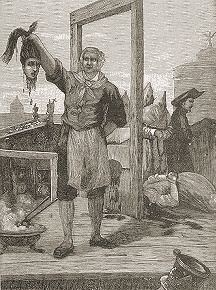
Mastro Titta brandishes an executed woman’s head.
The original Mastro Titta — the titular corruption of the “Minister of Justice” — took responsibility for each of his “patients” (as he called them, and as they were notoriously referred to by others), dutifully noting each of the 516 in his memoir. He stood for 69 years as the primary administrator of the death penalty in papal Rome, killing variously by beheading, hanging, and use of the mallet. Some were charged with murder, others with conspiracy, others with more petty crimes, but all were found guilty by the court of judges chosen by the Church’s bishops and cardinals.
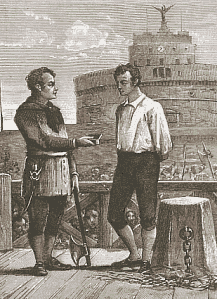
The Minister’s performances were not without an (increasingly practiced) flair, heavy on the religious symbolism. Bugatti’s residence on the west side of the river meant that, when he was to carry out a punishment, he had first to cross the river.
Initially, the executions were carried out in the Piazza del Popolo, but that location was retired in the 1820’s; it’s not clear how consistent the location was after this, but at least one later execution occurred near San Giovanni decollato, home to the group of monks dedicated to comforting the condemned even when the final blow didn’t occur at its doorstep. Regardless of the locale, a spectacle soon arose surrounding that crossing and the parade which followed, as documented by Italian dialect poet G.G. Belli in 1835 (presumably for the execution of Giovanni Orioli di Lugo on July 11 of that year):
The Dilettante at the Bridge
They approach: Attention: the ceremony is brief.
Behold the condemned, neck bare and stretched.
He is the first man of the opera, the Patient,
The Ace of Spades, lord of the fesitval.
And behold the professor that will soon be
The surgeon acting for the people
For three pence, the community,
He will cure the ills of their pained head!
But not the man on the left: the other, to the right.
He in the second place is the Assistant.
The proceedings wait for Mastro Titta.
Do you want the usual from me, who takes the head?
I who never miss it: I am consistent;
And I know him as well as I know the Pope.
The translation is largely mine, with help on some difficult sections from a well-written and complete description of Mastro Titta’s life and work here and here.
Just a Job
A pinch of snuff before I snuff you?
Bugatti was known for playing the role of executioner in a manner which left no doubt as to his feelings towards the act: it was his job, his service to the Church itself, undisturbed by any personal animus towards the condemned — particularly early in his career.
He often offered snuff to his victims and spoke briefly and quietly with them prior to the execution, likely ploys to ease the victim into his role in the spectacle. Dickens viewed one of Mastro Titta’s beheadings on 8 March 1845*, and, in his Pictures From Italy, he remarked on the callousness of the event.
In keeping with this attitude, most of the entries in Mastro Titta’s memoir are fewer than 20 words. They reflect a man who seeks to distance himself from the crowd’s bloodlust. A selection:
“Tommaso Tintori, guilty of homicide, 28 February 1810″ (The first using the “new edifice for beheading from the French government” — that is, the guillotine)
“Pecorari Angel, of Poli, aged 29. Peasant guilty of premeditated homicide of one woman, condemned to «death as an example» in Poland on 21 January 1847.” (There were a number of prisoners sentenced in other Catholic parts of Europe sent to Rome for Titta’s ministrations.)
“Sabbatino Proietti, aged 25, «decapitated» in Rieti for petty theft and highway robbery and murder on 20 August 1853, died converted, executed through administration of justice at the public square at the Bridge.”
“Angelo Lisi di Alatri, found guilty of premeditated highway robbery and murder in Frosinone, «dead» on 30 April 1862.”
An Anomalous Man
Bugatti was born just seven years prior to the Grand Duchy of Tuscany becoming the first of the Italian states to abolish the death penalty. There, Leopold II barred torture and punishment of death, a decision heavily influenced by Cesare Beccaria’s On Crimes and Punishments and a desire to distance his nation from Rome.
In the neighboring Papal State, however, the practice continued, the embodiment of the church’s power over its people in matters earthly and spiritual. Executions of the time performed for various reasons, but with a handful of exceptions, they were almost exclusively performed on persons in the lower class. Many relied on the use of torture or testimony from confessionals. Papal executions were carried out until the 1870s and only declared unnecessary (though not banned by the Church) by Pope John Paul II in the 1990s.
A complete discussion of the role of executions in the Catholic Church is too much for this space,** but a man like Bugatti serves usefully to exemplify the absurdity endowed in these killings by the Catholic Church. Where the half-dozen popes who served over Bugatti thought such executions to be necessary for the control of the masses, they had no such ideas about nobles who committed crimes.
The execution itself consisted of a parade with masked priests, banners, scriptural readings, and sermonizing, culminating in the death of the condemned. John L Allen of the National Catholic Reporter described the treatment of these executions in that day as “a liturgy”, and descriptions from writers such as Lord Byron show a scene which could only be described as a mix of Catholic Mass and town festival.
Such ritualized killing came to contrast starkly with the Italian celebration of an anti-death penalty position, and the two stood at odds for over a century. In 1909, the topic was hot enough that a plaque glorifying two Italians executed by Bugatti in 1825 was erected; a dozen years later, its contents were concealed out of deference to Rome until after the Second Vatican Council. The commemorated, Angiolo Targhini and Leonida Montanari (here’s their Italian Wikipedia page), were convicted essentially of riling the people, and they were summarily beheaded; their story was the inspiration for Luigi Magni’s 1969 classic Nell’anno del Signore:
“So ends the long list of Bugatti.”
Mastro Titta was given an official residence, and at the end of his term, he was handsomely rewarded with a pension for his service — 30 scudi per year. His final executions were carried out on 17 August 1864, wearing his traditional red cloak (now on display at the Criminology Museum of Rome): Antonio Olietti of Rome and Domenico Antonio Demartini were beheaded for homicide.
The Minister of Justice was 85, four and some years from the end of his life, and the final line in his memoir reads, “So ends the long list of Bugatti. May that of his successor be shorter.”
Indeed it was.
The final executions in Rome occurred on 24 November 1868 at the hands of Antonio Balducci, Bugatti’s long-time apprentice; the event was marked by Pope Pius IX famously intoning in response to calls for a stay, “I can’t, and I don’t want to.” The last execution in the Papal State was of Agatino Bellomo on 9 July 1870, in Palestrina, shortly before the nascent unified Italy absorbed Rome.
Mastro Titta is still known in Italy,† but, adrift amid a particularly violent period of revolution, his legacy as papal executioner is largely lost to the rest of the world.
* The day’s guillotinee was Giovanni Vagnarelli, 26, from Augustine; he killed Bavarian Anna Cotten and robbed her, and her wife’s statement at confessional was used to convict Vagnarelli. Such confessional convictions were not uncommon, as Bugatti’s own memoir confirms.
** There’s surprisingly little reading out there about this topic, though it would seem ripe for a book or two. Here’s what I can find:
“Fear and Loathing in Bologna and Rome: The Papal Police in Perspective”, Steven Hughes, Journal of Social History, 1987.
“Capital Punishment: The Curious History of its Privileged Place in Christendom”, James J. Megivern, Proceedings of the American Philosophical Society, 2003.
† A half dozen kilometers from the bridge that Mastro Titta crossed on his way to carry out Papal justice now stands the Mastro Titta Pub. It is reportedly “tastefully done” and serves mostly Belgian beers.
Ten years ago today, in Taliban-controlled Afghanistan, 30,000 people witnessed an alleged murderer shot to death by the victim’s brother at Kabul’s national stadium.
The Taliban had held Kabul for little more than a year at this point, and this sort of ostentatious shari’a execution was still a novelty. Amnesty International reported that loudspeakers summoned people to the stadium expressly to witness the execution (and the subsequent flogging of an accused rapist), and that the victim’s family refused the pleas of the crowd to spare Khan’s life.
Amnesty also excerpted a translated Taliban Radio report of the event.
The occasion of applying Shari’a law to a murderer in Kabul Stadium today was attended by a number of high ranking officials of the Islamic Emirate of Afghanistan and thousands of Kabul people. First some verses from the Koran were recited .. Deputy Court Martial .. Mawlawi Sayd Abdul Rahman Agha .. in turn spoke about the implementation of Allah’s order on Allah’s earth to criminals in order that other criminals should take an example from it. .. Subsequently Esteemed Abdul Nasir Nastier, an official of radio television introduced the criminal and read out the court martial’s decision. After reading out the court martial’s decision Bahram Khan, son of Mohsin Khan, citizen of Bagrami district of Kabul Province, who had killed Asadullah, son of Neck Mohammad on the night of 28th-29th of Sonbola [19th-20th September] this year .. was executed before thousands of Kabul people.
A convicted murderer was executed in a Kabul football stadium Friday — shot in the head and chest by the victim’s brother — despite a plea for mercy from a crowd of thousands. It was the 3rd public execution under the new Taliban regime, whose harsh brand of justice makes many Afghanis uneasy. That opposition was reflected Friday by the fact that even the judge in the case joined the effort to spare Bahram Khan’s life.
“Let him live!” the crowd shouted as Khan’s hands were bound behind his back and he was removed from the pickup truck that carried him into the arena. But the victim’s father, Nek Mohammed, strode to the microphone. “We won’t forgive him. If we let him live he will kill again. We know this man.”
While executions took place in Afghanistan before the Taliban’s takeover last year, the army of former Islamic seminarians has added several new twists. For example, it has curtailed defendants’ right to appeal rulings and gives the families of murder victims the option of carrying out a court-imposed death sentence or granting mercy.
It wasn’t immediately clear Friday whether the crowd’s intervention on behalf of Khan stemmed from general objections to such forms of punishment or was based on the particulars of the case. At any rate, it was fruitless. Khan’s executioner jumped up onto the truck and quickly dispatched one bullet into Khan’s head and another into the 29-year-old’s chest. Khan crumpled to the ground.
Khan’s body was carried and another man was pushed onto the field and given 100 lashes for raping a woman last year. In addition to the executions, the Taliban has also begun public amputations of hands and feet, an Islamic punishment for theft.
The Taliban religious militia overran the capital of Kabul in 1996 and now controls 85% of the country. Afghanistan’s former president, Burhanuddin Rabbani, heads an anti-Taliban alliance of minority ethnic groups that is fighting the Islamic army on several fronts.
On this date in 1953, Polish Home Army General Emil August Fieldorf was hanged at Warsaw’s Mokotow Prison by the Polish Communist government as a “fascist-Hitlerite criminal.”
The officer suffered a hard fate for the geopolitical jostling of great powers in its neighborhood. He had escaped German detention to become a Brigadier General and the second-in-command of the Polish Home Army, the occupied country’s resistance movement answerable to its government in exile.
Polish-Russian animosity is an ancient and fragrant vintage, just the sort of intoxicant to lend an especial bloodthirstiness to the ample brutality of politicking under Stalin’s sway.
As the Red Army threw back the Wehrmacht, the rivalry between the government in exile, (organically descended from the less-than-liberal prewar Polish government) and Poland’s Communist soon-to-be occupiers escalated.
Diplomatically, the government in exile engaged a (losing) joust with Stalin over the postwar Polish state’s borders and political structure; on the ground, Polish and Russian forces nominally united against Hitler maneuvered against one another — and at least one researcher has characterized their enmity as an outright dirty war.
Fieldorf had been detained by the NKVD at the war’s end, but he passed under an assumed name and therefore survived an internment in the Soviet Union. Shortly after his return, a sham offer of “amnesty” to Home Army survivors induced him to reveal himself under his true identity. He was convicted in a show trial of authorizing the killing of Soviet partisans. The post-Communist Polish government posthumously pardoned him.
It would be safe to say that “forgive and forget” is not a governing principle in the current memory of Soviet-Polish relations. Fieldorf’s fate is one more bill on the indictment, and in his case, quite literally so: spurred by the general’s daughter, Poland has doggedly pursued the extradition of Fieldorf’s prosecutor, Helena Wolinska Brus, now an octogenarian pensioner in Britain.
The years-long legal duel between these two women has ballooned into a sort of proxy fight over the still-sensitive definition of heroism and victimhood in the Poland of Hitler and Stalin.
The Jewish* Brus, who narrowly escaped the Nazis to join a leftist partisan unit, is contemptuous of the charge. To some, she is shamelessly exploiting her Jewishness to escape her own culpability. To others — aided not a little by the general’s daughter’s own remarks — the charge springs from a Polish polity whose own insistence upon victimhood (of Communism) has authorized historical forgetfulness over its complicity in genocide.
Someday soon — in a year or two, or five or ten; in England or Poland or some other spot — Helena Wolinska Brus will follow the man she hanged into the clay that awaits all us wretches. So will the general’s daughter, only a few years the junior of her foe. The bitter specter of wrongs that can never be righted is sure to long outlive their passing.
* Jewish partisans form a distinct population whose membership will make all-too-predictable appearances in these pages. Communist units were generally happy to have them, while Catholic Poles fighting for the anti-Semitic ancien regime were generally not — although in some instances, all-Jewish partisan bands organized outside these two forces.


 The
The 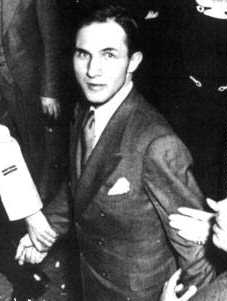 But John Law had done one thing right: paid the ransom in soon-to-be-obsolete gold certificate. As they’d hoped, someone was finally caught spending this distinctive currency:
  History, which records Constantine as the vessel of Christianity’s political triumph, recommends religious faction as the cause of the strife between them: the two had jointly promulgated the
 Mastro Titta was given an official residence, and at the end of his term, he was handsomely rewarded with a pension for his service — 30 scudi per year. His final executions were carried out on 17 August 1864, wearing his traditional red cloak (now on display at the

