2011: Ahmed Ali Hussein, enemy cleric

On this date last year, the Islamist Somali al-Shabaab publicly shot a man named Ahmed Ali Hussein in Mogadishu.

The 44-year-old, reportedly an ecclesiastic member of the rival al-Ictisam sect, was allegedly induced to confess that he’d been working with American intelligence. He was chained up and riddled with hundreds of bullets while neighbors were made to watch.

“In the documents we have, Ahmed Ali Hussein has worked with United States’ Federal Bureau Investigation (FBI) for 16 months,” an al-Shabaab spokesperson explained. Hussein was not permitted to defend himself.

So, extrajudicial killing of cleric on uncontested secret evidence of aiding the enemy. Put Somalia down for the cutting edge of jurisprudence.

On this day..

2006: Clarence Ray Allen, “beyond rehabilitation”

(Thanks to Meaghan Good of the Charley Project for the guest post. -ed.)

On this day in 2006, Clarence Allen was executed by the state of California for his role in the murders of three people.

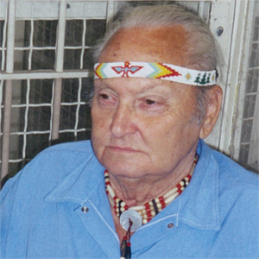
Clarence Ray Allen packing heat and bravado in the 1970s (top); and, as a geriatric condemned man (bottom).

He could be seen as a kind of poster child for the death penalty: Allen was already serving a life sentence in prison for murder when he had the witnesses against him killed. As the Ninth Court of Appeals noted,

Given the nature of his crimes, sentencing him to another life term would achieve none of the traditional purposes underlying punishment. Allen … has proven that he is beyond rehabilitation.

The California Attorney General’s office provides a detailed account of his crimes here. (pdf) Crime Magazine ran a detailed piece on Allen in 2009. For Executed Today, a summary will suffice:

Allen, a father of two, presented an outward appearance of respectability (in fact, he ran a thriving security business) while organizing a gang of young people to help him commit many burglaries. In June 1974, Allen, his son Roger and other accomplices burglarized a Fresno supermarket and stole, among other things, $10,000 in money orders. Roger’s seventeen-year-old girlfriend, Mary Sue Kitts, later told Bryon Schletewitz, whose parents owned the supermarket, who had committed the burglary.

Allen had warned his gang that “snitches” would be put to death, and when he found out what Kitts had done he ordered her murder. Another member of the gang, Eugene Farrow, actually committed the deed, strangling Kitts and dumping her body in a canal. Her body has never been found.

Allen was convicted of the burglary and Kitts’s murder in 1977 and sentenced to life. Farrow pleaded guilty to second-degree murder.

After his conviction, Allen ordered the murders of eight of the witnesses who had testified against him at the trial, including Schletewitz and his parents. His other son, Kenneth (lovely family they are), supplied weapons and transportation to Billy Ray Hamilton, a recently paroled prisoner who had been offered $25,000 to commit the murders, and Hamilton’s girlfriend, Connie Sue Barbo. In 1980, Hamilton and Barbo broke into the supermarket and shot Schletewitz as well as Douglas Scott White and Jacqueline Rocha, two teenagers who were just in the wrong place at the wrong time.

Fortunately, Barbo was caught at the scene and Hamilton was arrested just a few days later, before he could get on with the hit list.

In 1982, Allen was sentenced to death for the three murders. Hamilton was also sent to Death Row, where he remains. Barbo got a life term. Kenneth accepted a plea agreement that offered minimal prison time in exchange for his testimony, but when he recanted his original statements the agreement was canceled and he got a life sentence.

Already fifty years old at the time of the supermarket murders, Allen had to wait a further twenty-six years for his date with death. While he was on Death Row his health deterioriated markedly.

By the time he was executed he was diabetic, nearly deaf, legally blind and confined to a wheelchair. He also had a heart attack in 2005 and had to have bypass surgery.

Given the circumstances of his crimes, his advanced age and poor health were the only mitigating circumstances his attorneys could think of to argue for a reprieve. The Ninth Court of Appeals didn’t agree that this constituted cruel and unusual punishment.

Writing for the panel of judges, Judge Kim Wardlaw said,

His age and experience only sharpened his ability to coldly calculate the execution of the crime. Nothing about his current ailments reduces his culpability and thus they do not lessen the retributive or deterrent purposes of the death penalty.

For the same reasons, California Governor Arnold Schwarzenegger refused to intervene to stop the execution, saying, “His conduct did not result from youth or inexperience, but instead resulted from the hardened and calculating decisions of a mature man.”

On the day of Allen’s execution, he had to be lifted from his chair onto the gurney. His last words were: “It’s a good day to die. Thank you very much. I love you all. Goodbye.” It took eighteen minutes and an extra dose of potassium chloride for him to die.

On this day..

2011: Ryu Kyong, Kim Jong-un rival

Sometime in early January — nobody seems to know quite when — North Korean intelligence official Ryu Kyong disappeared, apparently executed.

The number two man, and perhaps de facto number one man, in the State Security Department and a longtime Kim Jon-il ally, Ryu was reportedly “summoned by Kim Jong-il in early January and on his way to Kim’s residence, was arrested by members of the General Guard Bureau. He was interrogated and secretly executed.”

Speculative reason: the Leader viewed Ryu as having grown too powerful, and therefore as a potential rival to a clean succession for Kim Jong-un.

“With Ryu, many others were purged at the State Security Department,” a Seoul analyst said. “We can say that as he gained control of the department, Kim Jong-un needed to give jobs to people loyal to him.”

On this day..

2011: Two leaflet-readers

South Korean activists have in recent years taken to balloon-lifting propaganda leaflets over the DMZ into North Korea — including on the occasion of the recent leadership succession.

North Korea is not amused by this tactic and has pressured — and even militarily threatened — South Korea to clamp down on it. But that’s nothing next to the clampdown within North Korea.

On this date in 2011, according to an activist whose father is a North Korea abductee, two were publicly shot for the crime of handling these leaflets.

An army officer who pocketed dollar bills enclosed with the leaflets was shot along with a 45-year-old woman who concealed one of the flyers, said Choi Sung-Yong.

He said the executions were carried out on January 3 at Sariwon, 45 kilometres (27 miles) south of Pyongyang, in front of 500 spectators following a special ideological session on the leaflets.

Choi, citing a source in Sariwon, told AFP that six members of the victims’ families had been sent to a camp for political prisoners.

“North Korea apparently carried out the executions to teach a lesson to its people,” Choi said.

He said the regime appeared to have tightened ideological control as it grooms the youngest son of leader Kim Jong-Il as eventual successor to his father.

Those dollar bills that cost the army officer his life are, very sadly, enclosed with some leaflets to induce North Koreans to pick them up despite the risk to life and limb.

On this day..

2006: Lu Dongming and Lu Kuan, Internet bombers

Who says China oppresses Internet users?

On this date in 2006, the People’s Republic avenged the bombings of two Hefei Internet bars with the execution of Lu Dongming and his nephew Lu Kuan.

Two young men were killed, and four others wounded, in the May 2006 attacks, which occurred just minutes apart.*

Extortion — which was formally on Lu Dongming’s charge sheet — of other cafe owners was the apparent motive: though the stakes in the Hefei cybercafe business might be a little lower than for the lords of industry, Chinese capitalism has a distinct gangster component.

On this day..

2010: Two Iranian political prisoners

Two politically sensitive cases, otherwise unrelated to one another, were joined in hanging at Iran’s Evin Prison on this day last year, possibly in a tit for tat following the November assassination of a nuclear physicist.

Ali Saremi

Ali Saremi cut the highest profile of the two, a 63-year-old member of the People’s Mujahedin of Iran (PMOI, aka MEK or MKO).

The PMOI/MEK/MKO, originally a Marxist revolutionary group opposing the dictatorship of the Shah, split with the theocratic Iranian Revolution.

It’s led an interesting life since then.

After creating the still-extant National Council of Resistance of Iran, the PMOI set up camp in Saddam Hussein‘s Iraq, which readily deployed it in the Iran-Iraq War.

Camp Ashraf was still there when the U.S. invasion rolled into Baghdad in 2003. (As of this writing, it’s only just now being closed.) While MEK has long been considered a terrorist organization, including by the U.S. State Department,* Iraq’s new occupiers also found this nest of exiles a convenient ally for its own campaign against Iran’s mullahs.

The organization has been much in the news of late both as a bargaining chip in regional diplomacy, and for lavishly bankrolling a lobbying campaign to get off everybody’s official terrorism lists — positioning itself as simply an Iranian opposition group. (It claims to have renounced violence.)

From Tehran, of course, there’s much less gray shading: the MEK is an enemy.

Saremi, a longtime member, was arrested four times for his association with the group.

The first time was in 1976; the last, and ultimately fatal, in 2007. He had just returned from Camp Ashraf to visit his son and commemorate the anniversary of Iran’s late-1980s mass execution of prisoners, an atrocity that claimed a large share of MEK sympathizers in apparent retaliation for the organization’s aforementioned wartime aid to Baghdad.

Saremi got the all-purpose mohareb death sentence — roughly, “waging war against God,” which can potentially compass any resistance to the Islamic Republic — basically for having a going association with PMOI. According to NCRI, Saremi’s prosecutor alleged that

[h]e visited Ashraf and during that he received necessary trainings and returned to the country … and eventually he was arrested in August 2007 for his repeated activities and participation in counter revolutionary ceremonies and gatherings in support of PMOI and dispatching reports to this grouplet (PMOI). During a search in his house some CDs, films, pictures from PMOI and hand written organizational documents linked to the grouplet were found and confiscated.

Iran carried out the execution without notice.**

Ali Saremi’s portrait and memory are now powerful props for the MEK terrorism de-listing campaign.

Ali Akbar Siadati

Also hanged this day was a man named Ali Akbar Siadati, about whom only sketchy information appears to be available.

Siadati was condemned for spying for Israel from 2004 until his arrest in 2008, allegedly supplying Iran’s foe a wide range of sensitive military information — a crime to which Siadati confessed, according to the state news agency IRNA.

Who Siadati was, how he had access to military intelligence, and why (apart from money) he might have betrayed it seems to be publicly obscure.

* In fact, the charge of sheltering MEK — guilty of “terrorist violence against Iran” — even appears on the Bush administration’s justification for war with Iraq.

** Iranian law requires 48 hours’ notice of an imminent execution be given to a defendant’s lawyer. This rule is routinely ignored.

On this day..

2009: Mosleh Zamani, because sex kills

On this date in 2009, Mosleh Zamani was hanged in Iran for making the beast with two backs.

And you thought you’d seen sexual hangups.

Twenty-three at the time of his execution, Zamani was all of 17 years old when he committed the “crime” that earned him the rope.

That crime: abducting and raping a 24-year-old woman.

So, okay, one might say: pretty rough punishment but also pretty serious misbehavior.

Save for a few minor details. Like, that the “raped” woman was actually Zamani’s girlfriend. And that she said the sex was consensual. Apparently this testimony from the mere victim was superseded by three random village prudes willing to complain about what the licentious youth get up to these days.

Given his cruel treatment, it will not surprise that Zamani was an ethnic Kurd and that his legal representation fell somewhere between poor and nonexistent.

Persian speakers (I am not one) can take in this interview with the young man’s family.

On this day..

2009: Yang Yanming, hedge fund manager

On this date in 2009, China executed a rogue securities trader for disappearing around $10 million.

The first person executed for securities corruption in China, Yang used his position as a trader for Galaxy Securities to embezzle some 65 million yuan for personal gain.

He never disclosed the money’s whereabouts, presumably taking the secret with him to the grave. (Or to the organ donor market.)

As gangster capitalists go, Yang could hardly be considered exemplary either by scale or by ruthlessness. His peculation undoubtedly harmed many people, but there’s no known whiff of violence about him; he was caught after attempting suicide.

But by the same token, the occasional sacrifice of such middling malefactors potentially helps discharge some of the tension generated by the structural inequality accompanying China’s new oligarchy. What to do in such a world?

“Preserve your moral integrity and don’t set too much store by business results,” Yang told a newspaper prior to his execution. You said it, brother.

On this day..

2010: Shahla Jahed, the footballer’s lover

At 5:00 a.m. this date last year, Shahla Jahed was hanged at Iran’s Evin prison for murdering the wife of Iranian footballer Nasser Mohammadkhani.

An international human rights cause celebre from the time of her 2004 conviction in a sordid televised trial, Jahed was also Mohammadkhani’s wife under a “temporary marriage” arrangement that was secret from his “real” wife Laleh Saharkhizan. So you might say, his mistress.

Both these women’s last day of liberty was the one in 2002 that Saharkhizan turned up knifed to death while Mohammadkhani was in Europe on soccer business. Jahed was arrested immediately, beginning a “taboo-breaking” legal odyssey.

After months of refusing to talk, she confessed to the murder in prison, even re-enacting the crime.

But by the time of her trial — in which an emotional, combative Jahed conducted her own defense — she very plausibly claimed that the confession had been extracted by torture. Here’s a bit of it, from the documentary Red Card (banned in Iran) that can be enjoyed in full on YouTube:

While Jahed herself made for can’t-look-away TV, the appearance of a onetime champion athlete in a feet-of-clay turn has led this affair to be compared to the O.J. Simpson murder case.

Like the Juice, Mohammadkhani was temporarily in some danger of death penalty charges himself; he spent several months in prison. Ultimately, he avoided jeopardy to his neck as a potential accessory or instigator by Jahed’s repudiated I-did-it-myself confession — possibly another reason why Jahed confessed in the first place — but the former striker did endure 74 lashes for the revelation that he and his temporary wife enjoyed chilling out with opium. Strictly verboten in Iran, of course.

And Mohammadkhani’s brush with the law scarred his honor even more than his backside. Beyond the possibility that she took the heat for him, the celebrity athlete potentially in a position to use his pull to save a woman’s life clammed up as her case progressed and deferred to his late wife’s family’s decision whether or not to give Jahed mercy. Reportedly, Mohammadkhani even attended the hanging — where Jahed again sobbed and begged for mercy until one of Saharkhizan’s relatives personally kicked the chair out from under Jahed’s feet.

The case itself had an unusually long lifespan in the judiciary; Jahed had been imprisoned well over eight years by the time she died. In 2008, the gears were even stopped by Ayatollah Hashemi Shahroudi, a figure known in Iran for his support of de-escalating capital punishment generally.

Shahroudi’s ordering a new investigation provided fodder for critics like Amnesty International who considered the trial unfair.

Iranian journalist Fereshteh Ghazi, who as a political prisoner in 2004 briefly shared a cell with our principal, made an even stronger critique.

Even if Shahla had committed the crime, which she didn’t, Shahla and the murdered wife are both victims of a male-dominated society, a system that gives all the rights to men. Shahla, Laleh [the murdered wife], and all other women like them are all victims of flaws in the Iranian judicial system and Iran’s unequal judicial system. Even the person who pulled away the chair today in her execution is a victim of the system.

Apropos of the women-in-the-judicial-system theme, Jahed’s case and even her execution were to some extent overshadowed by the simultaneous headline-grabbing matter of Sakineh Mohammadi Ashtiani, an Azeri woman who was at the time fighting a repugnant sentence of stoning for adultery. By December 2010, Iran had backed off the stoning bit without quite agreeing that Ashtiani wouldn’t be executed in some other way; in January 2011, it remitted Astiani’s death sentence altogether.

On this day..

1880: Ned Kelly

On this date in 1880, legendary bushranger Ned Kelly hanged at Melbourne Gaol.

The Dick Turpin of Australian outlawry — in the sense that he’s the first name on the marquee — Kelly was the son of an Irishman shipped to Van Damien’s Land on the British convict transportation plan.

Setting down in Greta, Victoria the Kelly family cultivated a keen reputation for criminality (e.g., see this 1880 newspaper article; also, here).

When Ned was all of 11, pa died doing a six-month prison stint at hard labor for stealing a neighbor’s cow, and it wasn’t much longer before young master Edward was making the acquaintance of the law himself: arrested for assault in 1869 at age 14; arrested once again the following year as an accomplice to the bushranger with the pornstar name, Harry Powers; imprisoned later in 1870 for three years for receiving stolen goods … and then he got into the family horse-rustling racket upon his release. Crime and gaol were just part of Ned’s world.

So was police antagonism.

The man’s famous last years started with what reads as a trumped-up run-in with a cop who turned up at a station complaining that the Kellys had shot him. (The Kelly story is that he got fresh with Ned’s sister and got whacked by a shovel.) Whatever the facts of the matter, it sent Ned and his brother Dan into the bush as fugitives.

At Stringybark Creek, the “Kelly gang” got the drop on the police posse sent to arrest them, and three officers died in the firefight. Now there was real trouble.

An 1878 “Felons Apprehension Act” immediately proscribed the men, making it “lawful for any of Her Majesty’s subjects whether a constable or not and without being accountable for the using of any deadly weapon in aid of such apprehension whether its use be preceded by a demand of surrender or not to apprehend or take such outlaw alive or dead.”

The ensuing two-year saga was a captivating cycle of dramatic robberies, escalating government bounties, state hostage-taking in the form of imprisoned family and friends, and Kelly’s own Joycean self-vindication.

he would be a king to a policeman who for a lazy loafing cowardly bilit left the ash corner deserted the shamrock, the emblem of true wit and beauty to serve under a flag and nation that has destroyed massacreed and murdered their fore-fathers by the greatest of torture as rolling them down hill in spiked barrels pulling their toe and finger nails and on the wheel. and every torture imaginable more was transported to Van Diemand’s Land to pine their young lives away in starvation and misery among tyrants worse than the promised hell itself all of true blood bone and beauty, that was not murdered on their own soil, or had fled to America or other countries to bloom again another day, were doomed to Port Mcquarie Toweringabbie norfolk island and Emu plains and in those places of tyrany and condemnation many a blooming Irishman rather than subdue to the Saxon yoke Were flogged to death and bravely died in servile chains but true to the shamrock and a credit to Paddys land.*

The hunt culminated in a cinematic shootout at the Glenrowan Inn, Kelly an accomplices entering the fray clad in bulky but effective homemade body armor they’d literally hammered out of ploughshares. (It’s thanks to the armor’s protection of his head and trunk that Ned Kelly survived the Glenrowan siege so he could be hanged instead.) Now on display at the State Library of Victoria, it’s the most queer and recognizable artifact of an era that was already then slipping into the past.

Ned Kelly in his armor (left), and the logo of the Victoria Bushrangers cricket club patterned after it (right).

I do not pretend that I have led a blameless life or that one fault justifies another; but the public, judging a case like mine, should remember that the darkest life may have a bright side, and after the worst has been said against a man, he may, if he is heard, tell a story in his own rough way that will lead them to soften the harshness of their thoughts against him and find as many excuses for him as he would plead for himself.

-Ned Kelly, during his trial

This cut no ice with the men who judged him guilty of murder, but the brawler, cop-killer, bank-robber Kelly seems to have found a way to tell that story to posterity and its thoughts have softened very much indeed.

Everything from his hardscrabble upbringing to his romantic man-against-the-world criminal career to his iconic robot-suit armor to his existentially heroic last words “such is life” equips his image for posthumous appropriation. He seems one-half charming anachronism, one-half hirsute postmodern avatar, especially when you go sculpt a mailbox out of him.

131 years dead today, Ned Kelly remains very much alive in memory. To this day, descendants and supporters lay flowers at the Melbourne Gaol where he hanged, and the recent decision to release his remains for reburial (as Kelly himself requested) made national headlines.

As to Kelly in the wider culture … well, you can’t escape him.

* All this Celtic stuff because the cop whose allegation started the trouble was named Fitzpatrick.

On this day..