1650: Four condemned and one reprieved on appeal from the Wiltshire Assizes

From the Journals of the House of Commons

Die Mercurii, 21 Augusti, 1650

PRAYERS.

A LETTER from Henry Roll, Lord Chief Justice, and Robert Nicholas, one of the Justices of the Upper Bench, from Taunton, of the Fourteenth of August 1650; and a Certificate from them of the whole State of the Matter, and Cause of Condemning of Nicholas Westwood, Samuel Cowdry, and Walter Goff, at the last Assizes, in the County of Wiltes, were this Day read; viz.

In Obedience to the Vote of the honourable Parliament, on Thursday the Twenty-fifth of July last; whereby we were required to certify the whole State of the Matter concerning the Condemning of Nicolas Westwood, Samuel Cowdry, and Walter Goffe, at the last Assizes held in the County of Wiltes, for the Murdering of one Joel Swettingham (a very honest Man, and had been a Soldier and Drummer in the Service of the Parliament), at the Town of the Devises, in the said County of Wiltes, and continued faithful unto the Parliament until his Death;

We humbly certify, that the Evidence appeared before us to be thus:

That the said Westwood, Cowdry, and Goff, amonst divers other Soldiers, and new-raised Men, for Ireland, were quartered at Cannyngs, some Two Miles from the Devises: And some of the said Soldiers coming to the Devises, some Three Days before the said Murder committed, and offering some Incivilities unto the People of the Town, they were questioned for it by the Constable and Officers of the said Town; and were detained in Custody for some time; but were the same Day released; and so went back to their Quarters at Cannyngs; and from thence, within a Day or two after, the said Soldiers removed their Quarters to Bromham, about Two Miles likewise distant from the said Town of the Devizes: And, the next Day, being the Day when the Murder was committed, the said Westwood, Cowdry, and Goff, amonst divers other Soldiers, came to the said Town of the Devises, and expressed some Dislike against the said Townsmen, for Imprisoning of some of their Company, the Day or Two before: And the said Goff, coming into the Mayor’s Shop of the Devises, and talking with John Imber his Apprentice, cast out some Words of Dislie concerning the Imprisoning of the Soldiers a Day or Two before; and then asked of the said Apprentice, whether there were not a fat Constable in the Town; meaning one Fitzell, a very honest Man and who had been ever faithful to the Parliament: And the said Goff expressed himself to be much discontented with the said Constable, for Imprisoning of the Soldiers some Two Days before: Then, saying, That he would be revenged to the Death of the said Constable, calling the said Constable Rogue: And, shortly after, the same Day, the said Goff, meeting with one Thomas Street, a Youth of the Devises, asked the way to some Place in the Town: The said Street told him, He might go which way he would: And the said Goff presently drew his Sword, and run the said Street into the Thigh: Whereupon the said Street’s Brother took the said Goff’s Sword, and endeavoured to break it; but, could not: Yet he bended it very muh: Whereupon the said Goff run after the said Street’s Brother, with his Sword in his Hand: And, the said Street’s Foot slipping, he fell: And the said Goff laid on the said Street with his Sword very much: Which some of the Townsmen seeing, came to rescue the said Street from Goff: Whereupon the said Goff, Westwood, and Cowdry, and Two or Three Soldiers more unknown, fell on the said Swettingham, who had nothing to do with them, being then Gathering up of Monies for the Rent of the Butcher’s Shambles; and, having only a wooden Hilt of a Hatchet in his Hand, defended himself as well as he could; but, in short Space, he was run into the Groin by the said Goffe; and received another Wound in the Buttock, by the said Cowdry: And, feeling himself so wounded, run away very feebly, from them, into a House: And they all Three followed him: And there the said Westwood gave the said Swettingham a great Wound on the Shoulder: But Swettingham got into the House, and shut the Door, to keep out the said Westwood, Goff and Cowdry; for that they thrust very hard at the Door, to come in after him: But the said Swettingham, and some others, which were in the House, kept the Door fast, and kept them out: But the said Swettingham was so mortally wounded by them, that, within a short Time after, the same Night, he died. Upon which Evidence the Jury found them all guilty of the Murder: Upon which, Sentence of Death was given on all Three, in regard they were all Three present and Actors in the said Murder.

All which we humbly submit to the Consideration of the Honourable Parliament.

Taunton, 14 Augusti 1650.
Hon. Rolle, Robert Nicholas

Resolved, by the Parliament, That the Sheriff of the County of Wiltes be, and is hereby, required to proceed to the Execution of Nicholas Westwood, Samuel Cowdry, and Walter Goff, according to Law; notwithstanding the Order of Parliament of the Twenty-fifth of July last, for respiting their Execution.

A Certificate from Henry Rolle, Lord Chief Justice, and Robert Nicholas, one of the Justices of the Upper Bench, of the whole State of the Matter, and Cause of Condemning of Thomas Dirdo, at the Assizes for the County of Wiltes, was this Day read; viz.

In Obedience to the Vote of the Honourable Parliament, dated the Twenty-fifth of July last; whereby we were required to certify the whole State of the Matter concerning the Condemning of one Thomas Dirdo, at the last Assizes held in the County of Wiltes;

We humbly certify, that the Evidence appeared to be thus:

That the said Dyrdo, with some other Persons, came to the House of one John Pitt, an Innkeeper in Wiltes, somewhat late in the Night: and desired Entertainment; and, having set up their Horses, and prepared something for their Suppers, finding most Part of the People gone to Bed, set on the rest of the People of the House, and bound them: And then the said Dirdo, as the said Pitt affirmed, on his Oath, to be one of the said Robbers, took, of the Goods of the said Pitt, a Sack and Three Shillings Eight-pence in Money: And the said Pitt affirmed further, That the said Dyrdoe, and the rest of the Company, went into a Chamber in the said House, where one Matthew Kynton, a Carrier then lay, with their Swords drawn; and demanded of the said Kynton his Money: And thereupon the said Kynton delivered them a Bag of Money, wherein, he said, was Ten Pounds: And then the said Dirdoe, and the rest of the said Company, cut the Packs of the said Carrier, and took thence certain Broad Cloths; a Part of which said Cloth one Coombes sold to one Blake, who shewed the said Cloth, in a Suit on his Back, at the Tryal of the said Dirdoe, and the said Coombe, and one Hussey; and also took his oath, That the said Coombes affirmed he had the said Cloth, at the time of the said Robbery: And he also affirmed, on his Oath, That the said Coombes and Hussey told him, That they did the said Robbery: Upon which Evidence, the Jury found them all Three guilty of the said Robbery: And thereupon, Sentence of Death was given against the said Dirdoe and the said Coombes and Hussey: And we further certify, That we were credibly informed, That the said Dirdoe was burnt in the Hand, at the Sessions at Newgate, for a Felony by one Levendon Blisse and him committed.

All which we humbly submit to the Consideration of the Honourable Parliament.

Taunton, 14 Augusti 1650.
Hon. Rolle, Robert Nicholas

Resolved, That the Sheriff of the County of Wiltes be, and is hereby, required to proceed to the Execution of Thomas Dirdo, according to Law, notwithstanding the Order of Parliament of the Twenty-fifth of July last, for respiting his Execution.

The humble Petition of Edward Hussey, now a condemned Prisoner in the Gaol at Sarum, lately a Soldier in the Service of the Parliament, was this Day read.

The Certificate from the Justices of Assizes, upon the former Order, touching Thomas Dirdo, was again read.

Resolved, that Edward Hussey, who stands condemned at the Assizes for the County of Wiltes, be reprieved, until the Parliament take further Order: And that Mr. Speaker do issue a Warrant to the Sheriff for that Purpose.

Ordered, that the Judges of Assizes for the County of Wiltes be required and enjoined to make Certificate to the Parliament of the whole State of the Matter of Fact touching Edward Hussey, who was condemned at the last Assizes in the County of Wiltes.

On this day..

1648: Sultan Ibrahim the Mad

On this date in 1648, the once-debauched and now-deposed Ottoman sultan Ibrahim I “the Mad” was strangled to make way for his seven-year-old son.

He’s fondly remembered as a debauched madman at the helm of state but you’d go crazy too with his upbringing. He was locked up by his famously brutal brother Sultan Murad in the palace Kafes — literally, “cages”, where potentially dangerous rival claimants lived under constant surveillance — and could not but dwell on the Damoclean sword constantly dangling at his throat. Justifiably nervous about the ever-present danger of a coup — Murad owed his own throne to the Janissaries deposing and murdering a prior sultan in 1622 — Murad had three of his caged brothers put to death. Ibrahim woke each day from the ages of 8 to 25 in his gilded cage knowing that Murad was one foul mood away from ordering his own death, too.

So paranoid was he that when informed that he was to come to the throne as sultan, he suspected a trick meant to implicate himself in treason. Only the combined assurance of his and Murad’s mother and the Grand Vizier* plus a personal inspection of the late Murad’s corpse convinced him to accept rulership of the Ottoman Empire.

And once he did so, he was able to unite in his person the pathologies of imprisonment with those of absolutism.

Freed from the terror of his cell, he gave himself to sensuality that was noted for both volume and transgressiveness: forcing himself on the Grand Mufti’s daughter, scouring his empire for the fattest woman he could find and elevating her to the pinnacle of his harem, and pony playing a virile stallion in his gardens to virginal women who were made to disrobe and act his mares. But don’t forget the wild mood swings! Becoming convinced that his harem was indulging in sub-imperial frolics, he once had 278 of them drowned in the Bosporous.

We will leave to wiser observers of the Porte than we just where among these legends we enter into the calumnies of the enemies who eventually toppled him. That happened in 1648 and had more to do with his profligacy in matters financial, for he gobbled jewelry and expensive furs as voraciously as maidenheads, and then put the Ottoman economy under a fearful strain by launching a ruinous war of choice against Venice that would drag on for 24 years and result in the Venetian navy blockading his capital.

Pitiably, his last days were spent back in the Kafe after he was displaced by rebelling Janissaries driven to fury by the growing tax burden required to support a war that brought only immiseration. Maybe it was a mercy that he had not years thereafter to pace the gardens under the eyes of burly minders with unknown orders, but for 10 days** that quarter of the palace redounded with his wails until

on August 18, the executioners entered the “Cage”. With the Koran in his hand, Ibrahim cried out: “Behold! God’s book! By what writ shall you murder me?” and “Is there no one among those who have eaten my bread who will take pity on me and protect me? These cruel men have come to kill me. Mercy! Mercy!”

* In 1644, Ibrahim would have this same Grand Vizier executed.

** We would be remiss on this grim site not to mention the fate that befell his Grand Vizier on August 8, when Ibrahim fell: torn apart by an angry mob for attempting to impose a heavy tax, he gained the posthumous nickname “Hezarpare” (“thousand pieces”).

On this day..

1681: Donald Cargill, Covenanter rebel

Scottish Covenanter Donald Cargill ascended his Edinburgh gallows on this date in 1681 with the undaunted last words, “The Lord knows I go on this ladder with less fear and perturbation of mind, than ever I entered the pulpit to preach.”

This Cameronian radical had been a fugitive for many years, ever since he darkened a thanksgiving service for King Charles II’s restoration by voicing from the pulpit of his Glasgow parish what many feared in their hearts: that Presbyterians were about to get the rough end of the restoration pineapple.

We are not come here to keep this day upon the account for which others keep it. We thought once to have blessed the day wherein the king came home again, but now we think we shall have reason to curse it; and if any of you come here in order to the solemnising of this day, we desire you to remove.

That was the end of Cargill’s career as a licensed preacher. His remaining years were illicit services, ducking arrests, and a flight to the Netherlands; he was wounded in service of the Covenanter cause at the 1679 Battle of Bothwell Bridge.

Back in Scotland by 1680, Cargill’s Queensferry Declaration* dared an open case for rebellion in pursuit of “the overthrow of the kingdom of darkness, and whatever is contrary to the kingdom of Christ,” for

now it cannot be called a government, but a lustful rage, exercised with as little right reason, and more cruelty than beasts; and they themselves can no more be called governors, but public grassators, and public judgements, which all ought to set themselves against, as they would do against pestilence, sword and famine raging among them.

The grassators finally got him the following year.

There’s a short biography of our man, The Life of Donald Cargill, available in the public domain which remarks (discount accordingly for hagiographical perspective), that Cargill was memorialized by an associate as

affectionate, affable, and tender-hearted to all such as he thought had anything of the image of God in them, sober and temperate in his diet, saying commonly, ‘It was well won that was won off the flesh,’ generous, liberal, and most charitable to the poor; a great hater of covetousness, a frequent visitor of the sick; much alone, loving to be retired, but when about his Master’s public work, laying hold of every opportunity to edify; in conversation still dropping what might minister grace to the hearers. His countenance was edifying to beholders; often sighing with deep groans; preaching in season and out of season upon all hazards; ever the same in judgment and practice. From his youth he was much given to the duty of secret prayer for whole nights together wherein it was observed that, both in secret and in families, he always sat straight upon his kneesk with his hands lifted up; and in the posturel as some took notice, he died with the rope about his neck.

* The thrust of this militant manifesto is similar to the Sanquhar Declaration issued by Cargill’s ally Richard Cameron, also in 1680.

On this day..

1661: Antonius Hambroek, defying Koxinga

Missionary Antonius Hambroek was put to death on this date in 1661 as the warlord Koxinga wrested control of Formosa (Taiwan) from the Dutch.

In the 1620s, the running Dutch-Spanish war as projected into both countries’ colonial extrusions had resulted in the two dividing that South China island: the Dutch in the south, based at Fort Zeelandia, and Spain in the north. In 1641 the Dutch conquered Spanish Formosa to establish themselves as the apex predators on a rough and lawless island.


Fort Zeelandia.

But that’s before they ran into Koxinga.

Simultaneous with the Dutch advance on Formosa, China’s Ming dynasty was in the process of collapsing. From the 1640s, civil wars between the advancing Manchus (eventually victorious as the incoming Qing dynasty) and the remnants of the Ming would tear at the mainland.

Koxinga was the last great Ming commander. He’d been born on a Nagasaki beach to a Japanese mother. His family ran a commercial concern stretching across the South China Sea as far as Vietnam and the Philippines; its dubious legality confers the romantic sobriquet “pirate” upon Koxinga but think corporate raider here. “Some people call him a pirate, but he was a businessman,” said present-day Taiwan historian Chu Cheng-yi.

And in both commerce and war, Koxinga could flex.

The author of this book about Koxinga’s victory over Dutch Formosa describes his book in this video.

Paradoxically the Ming’s collapse launched Koxinga; his very name as history knows it derives from a title (“Lord of the Imperial Surname”) conferred by the executed Longwu Emperor in gratitude for staying loyal when even Koxinga’s own dad had gone over to the Qing. In one cinematic moment, with the Ming looking toast, Koxinga torched the scholarly robes he had earned studying for a respectable court career and swore he would don nothing but armor until he’d expelled the Manchus from China.

This “Badass of the Week” post chronicles his scintillating military career; in the twilight of the Ming, Koxinga’s victories gave the foundering dynasty its last legitimate cause for hope and in the course of the 1650s his sword-arm established a Qing-defying state in the southerly province of Fujian. From this base in 1659 he launched a proposed history-altering attack on Nanjing that only narrowly failed.

Win or lose on terra firma, the pirate was nails on the waves. “Never before nor since was a more powerful and mighty fleet seen in the waters than that of Koxinga, numbering more than 3,000 junks,” Jesuit missionary Vittorio Ricci wrote of the armada he had once assembled to attack Xiamen. (Source) “The sight of them inspired one with awe. This squadron did not include the various fleets he had, scattered along neighboring coasts.”

In his reduced circumstances post-Nanjing, Koxinga managed “only” 400 ships to launch from Fujian with 25,000 souls … to arrive at Formosa and set up shop there. “Hitherto this island had always belonged to China, and the Dutch had doubtless been permitted to live there, seeing that the Chinese did not require it for themselves,” he remarked. “But requiring it now, it was only fair that Dutch strangers, who came from far regions, should give way to the masters of the island.”

To make the argument persuasive, Koxinga delivered his ultimatum via this post’s principle, Antonius Hambroek (English Wikipedia entry | Dutch), a missionary whom Koxinga cautioned not to return with a displeasing answer at the risk of his life.

On May 25, 1661, Koxinga sent Hambroek to Fort Zeelandia with one of the Chinese leader’s letters demanding surrender. Hambroek had to leave his wife and children behind as hostages to assure his return. When Coyett refused to surrender, Hambroek was urged to stay at the fort as he and his family were bound to be killed because of the failure of his mission. The emotional pull to remain was intensified by the discovery that two of his daughters from whom the family had been separated during the chaos of the invasion were among the refugees in the fort. But Hambroek decided his duty was with his wife and other children. The two daughters, says, the fort daybook, “hung about his neck, overwhelmed with grief and tears to see their father ready to go where he knew he must be sacrificed by the merciless enemy.” The fate of Hambroek is recorded by Caeuw, the commander of the relief fleet. Two native boys got into the fort in October and said they had seen Koxinga fly into a rage the previous month and order the decapitation of all the Dutch male prisoners, Hambroek among them. The wives were given to Koxinga’s captains as concubines and the small children were sent to China. Koxinga himself took one of Hambroek’s teenage daughters — “a very sweet and pleasing maiden” according to Caeuw — as one of his concubines. In August there was also a killing of captive Dutch from the hinterland and Fort Provintia [a lesser outpost opposite Fort Zeelandia -ed.]; Koxinga believed they had been inciting the aborigines against the Chinese. The Dutch reports say five hundred men were either beheaded or “killed in a more barbarous manner.” Many women and children were killed too, but others were “preserved for the use of the commanders, and then sold to the common soldiers. Happy was she that fell to the lot of an unmarried man, being thereby freed from vexations by the Chinese women, who are very jealous of their husbands,” says the fort’s daily journal.

The results of these incidents are still evident in some parts of southern Taiwan. There are areas where the people have decidedly European features and even occasionally the red or auburn hair common among seventeenth century Dutch.

-Jonathan Manthorpe, Forbidden Nation: A History of Taiwan

Koxinga’s siege delivered him Fort Zeelandia by February of the following year.


Antonius Hambroek taking leave of his daughters, by Jan Willem Pieneman (1810)

The fate of Hambroek, Zeelandia, the women, and all the rest make for literary pathos in Joannes Nomsz’s Anthonius Hambroek (1775). Koxinga lives on as an iconic hero celebrated in China and Taiwan and Japan, which is a complicated trick indeed. (A refugee prince from the ancien regime setting up a holdout state on Taiwan made him an obvious propaganda reference for Chiang Kai-shek.) For all his legend, his life remains a bit of a what-might-have-been: a few months after taking Fort Zeelandia, Koxinga died suddenly, perhaps of malaria, still well shy of his fortieth year. His son Zheng Jing, whom the violent-tempered Koxinga had nearly executed in his last hours, maintained an independent Formosa-Fujian kingdom that held out against the Qing until 1683.


Statue of Koxinga at the present-day remains of Fort Zeelandia.

On this day..

1683: Two lynched during the Ottoman siege of Vienna

Our “execution” this date is of the mob justice variety — said mob being panicked Viennese bracing for Ottoman investiture.

As is generally the case one has many ways to read this particular lynching; at least one victim has even been situated as a trans martyr. John Stoye in his The Siege of Vienna: The Last Great Trial between Cross & Crescent gives us the thread of causation, and it turns out that these two unfortunates owed their death to Vienna’s urban planning.

The military architecture of this period was designed to keep the besieger at a distance as long as possible. The ground in front of the main defences would be cleared of buildings, and even levelled — this was the ‘glacis’; along the outer rim or ‘counterscarp’ of the moat a well-protected walk, the covered way, was constructed — usually of timber spars and palisades — from which detachments of the garrison could command with their fire the open ground in front of them; and the covered way had to be laid out so that they could command it from a number of angles … Attackers on the glacis, those who reached the counterscarp, those even who got as far as the main wall, were all exposed to fire from artillery and marksmen on the bastions …

Clamped within the walls but expanding in numbers, the citizens of Vienna had tried to build upwards. They added an extra storey to some 400 out of 1,100 houses in little more than a century. But inevitably the suburbs also grew, spreading out into the countryside — and in towards the city. By 1680 there were large settlements in Leopoldstadt on the Prater island, by the right bank of the Wien on the east, round the hamlets of Wieden and St Ulrich south and south-west, and on the western side. Particularly here the new building approached very close to the fortifications. The government had over and over again ordered the demolition of dwellings within a given distance of the walls, but to little effect. If a maximum estimate of Vienna’s total population brings it to nearly 100,000 people, a sizeable proportion must have lived in these suburbs, which would in due course give accommodation and protection to a besieging army.

The foremost Ottoman raiders now appeared, and in the distance the smoke of burning villages in the neighbourhood rose skywards. [Vienna military governor Count Ernst Rudiger von] Starhemberg did not dare delay in performing one of his most disagreeable duties: the speedy and forcible clearing of the glacis. Since earlier demolition orders had not been obeyed, he began — on 13 July — to burn down everything in the area outside the counterscarp which would obviously hamper the garrison. Most of all he wanted to clear the ground west of the city, where suburbs came closest to the moat. More smoke rose skywards. The sparks flew. They flew over the walls as far as the roof of the Schotten monastery by the Schottengate, where a fire broke out in the afternoon of Wednesday, the 14th; and it almost altered the course of history. The wind blew sparks against the neighbouring buildings, an inn, and from the inn to a wall of the Arsenal, where supplies of every kind were stored, including 1,800 barrels of powder. Nearby, other powder magazines adjoined the New-gate. If the defence-works here were seriously damaged by explosion, or the stores lost, resistance to the Turks was hardly thinkable. The flames moved along a wooden gallery into the Arsenal. Townsmen and soldiers gathered, there was a muddle about keys which could not be found, but soldiers broke through a door and cleared the points of greatest danger. A hysterical mob, looking on, smelt treason at once and lynched two suspects, a poor lunatic and a boy wearing woman’s clothes. It also destroyed the baggage which an inoffensive mining official from Hungary, then in Vienna, was trying to get out of a second inn near the Arsenal; and it panicked at the sight of a flag flying unaccountably from a roof close to the fire, fearing some kind of a signal to the enemy. More effectively, the wind then veered. Flames swept towards and into aristocratic properties on the other side, away from the Arsenal, and proceeded to burn out the Auersperg palace where the ruins went on smouldering for days. The crisis had passed before the arrival of the Turks; but the danger of yet more fires, set off by Turkish bombs or by traitors and spies inside the walls, was to be a constant nightmare in Vienna later on.

Despite the nightmare, Vienna — scorched glacis, crazed mobs, and all — withstood the siege. It was indeed the siege’s Turkish military commander who was executed for his command failure before the year was out, after failing to complete the conquest.

On this day..

1681: Archbishop Oliver Plunkett, the last Catholic martyr in Great Britain

Archbishop Oliver Plunkett earned the last Catholic martyr’s crown in Britain on this date in 1681.*

Product of County Meath blood and Italian seminary, Plunkett had been back floating around Ireland as its chief prelate since 1670. In this decade, the English-imposed laws burdening Catholics had been relaxed; Plunkett was able to minister his flock, openly at first and after 1673 as a fugitive whom Irish authorities did not much wish to pursue.
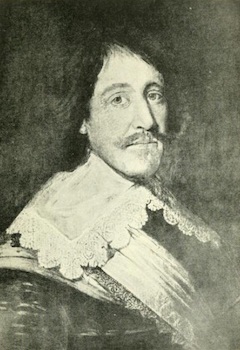
Plunkett’s safety speedily expired with the emergence in England of the Popish Plot, a security panic catalyzed like its modern-day analogues by equal parts bad faith and malice.

The concoctions of an opportunistic fabulist caused the English populace to become convinced in 1678 that a vast and treasonable Catholic conspiracy menaced the land; in its day, it was a delusion held so widely and deeply as to cow into silence and compliance all skeptics, even King Charles himself. Charles’s Lord Lieutenant in Ireland, the Earl of Essex, cynically leaned into the hysteria by whipping fears of a Plunkett-hatched invasion of Ireland by the French, although he well knew that Plunkett was “of a … peaceable temper & … comforable to ye Government.”

Plunkett spent months in hiding, refusing to flee Ireland, until he was finally arrested in December 1679. After proceedings in Ireland collapsed, the prelate was moved to London for a more manageable show trial, the entire transcript of which can be perused here.

In it, the Lord Chief Justice Sir Francis Pemberton chastises Plunkett for soliciting time to collect his witnesses, and concludes with a denunciation of the enemy religion that would not look far out fo place in many a present-day comments section.

truly yours is Treason of the highest Nature, ’tis a Treason in truth against God and your King, and the Country where you lived. You have done as much as you could to dishonour God in this Case; for the Bottom of your Treason was, your setting up your false Religion, than which there is not any Thing more displeasing to God, or more pernicious to Mankind in the World. A Religion that is ten Times worse than all the Heathenish Superstitions; the most dishonourable and derogatory to God and his Glory, of all Religions or pretended Religions whatsoever, for it undertakes to dispense with God’s Laws, and to pardon the Breach of them. So that certainly a greater Crime there cannot be committed against God, than for a Man to endeavour the Propagation of that Religion; but you to effect this, have designed the Death of our lawful Prince and King: And then your design of Blood in the Kingdom where you lived, to set all together by the Ears, to destroy poor innocent People, to prostitute their Lives and Liberties, and all that is dear to them, to the Tyranny of Rome and France.

Now tormented that his opportunistic fear-mongering was actually going to lay the archbishop in his grave, Essex implored the Catholic-sympathetic King Charles to spare Plunkett. “Then, my lord, be his blood on your own conscience,” snapped Charles, politically constrained from a beneficence he would have dearly loved to grant. “You could have saved him but would not, I would save him and dare not.”

On the first of July, he was drawn to Tyburn (a stained glass depiction of it can be found in this post), where he was hanged and quartered. (The strange Anglo-Irish plotter Edward Fitzharris preceded Plunkett on the scaffold, as an undercard attraction.) “He won more credit and repute, as well for himself as for his country, by one hour of suffering, than he could have acquired perhaps by hundreds of years of life,” one observer wrote.

This might very well be so. Aside from being the last Catholic martyr in the Isles, Plunkett is among the most warmly remembered, as evidenced by his recent remit as the patron saint of peace and reconciliation in post-Troubles Ireland — not to mention the loving preservation of his relics at St. Peter’s cathedral in Drogheda.

Readers might enjoy this 68-minute lecture on Plunkett’s life and times.


St. Oliver Plunkett’s head preserved in a shrine at Drogheda, Ireland. Photo by DAVID ILIFF. License: CC-BY-SA 3.0

* July 1 by the Julian calendar still then employed in England; by the Gregorian calendar adopted in most Catholic countries at this point, the date was July 11 — and some Catholic primary sources use the latter date.

On this day..

1685: Richard Rumbold, owner of the Rye House

On this date in 1685, Roundhead militant Richard Rumbold — known affectionately to his comrades from the English Civil War as “Hannibal”, since he shared with the great Carthaginian general the distinction of an eye lost on campaign — was beheaded at Edinburgh‘s Mercat Cross.


J.M.W. Turner watercolor of the Rye House circa 1793.

Rumbold was the owner of the Rye House in Hertfordshire, the manor which in the 1680s would become famous as a regicidal adjective: the titular epicenter of the Rye House Plot. Hannibal Rumbold had intended to station a force of armed men on his grounds with the intent to kidnap/assassinate King Charles II and his Catholic brother and heir presumptive, James as they returned to London from horse races at Newmarket. When fire struck Newmarket, the royal party’s plans changed and the plot never came off … but it was discovered some weeks later and yielded an ample harvest of heads. Rumbold escaped to the continent for a time but was none repentant about it when taken, saying “he did not neither durst repent for it, but on the contrair that if all the hair of his head were men, he would venture them all for the cause.”

In this instance, it also yielded some edifying scaffold oratory, and this man’s parting sentiment that “this is a deluded generation, veiled with ignorance … for none comes into the world with a saddle on his back, neither any booted and spurred to ride him” was of interest to British Whigs and American revolutionaries a century later. It plays much better lo these many years later with ellipsis in place of the “popery” stuff which occurs between, but judge for thyself: here follow Rumbold’s erudite owns in context via an open source volume which has the address titled “Against Booted and Spurred Privilege”

Gentlemen and Brethren: —

It is for all men that come into the world once to die; and after death the judgment! And since death is a debt that all of us must pay, it is but a matter of small moment what way it be done. Seeing the Lord is pleased in this manner to take me to himself, I confess, something hard to flesh and blood, yet blessed be his name, who hath made me not only willing, but thankful for his honoring me to lay down the life he gave, for his name; in which, were every hair in this head and beard of mine a life, I should joyfully sacrifice them for it, as I do this. Providence having brought me hither, I think it most necessary to clear myself of some aspersions laid on my name; and, first, that I should have had so horrid an intention of destroying the King and his brother … It was also laid to my charge that I was antimonarchical. It was ever my thoughts that kingly government was the best of all where justly executed; I mean, such as it was by our ancient laws; — that is, a King, and a legal, free-chosen Parliament, — the King having, as I conceive, power enough to make him great; the people also as much property as to make them happy; they being, as it were, contracted to one another! And who will deny me that this was not the justly-constituted government of our nation? How absurd is it, then, for men of sense to maintain that though the one party of his contract breaketh all conditions, the other should be obliged to perform their part? No; this error is contrary to the law of God, the law of nations, and the law of reason. But as pride hath been the bait the devil hath caught most by ever since the creation, so it continues to this day with us. Pride caused our first parents to fall from the blessed state wherein they were created, — they aiming to be higher and wiser than God allowed, which brought an everlasting curse on them and their posterity. It was pride caused God to drown the old world. And it was Nimrod‘s pride in building Babel that caused that heavy curse of division of tongues to be spread among us, as it is at this day, one of the greatest afflictions the Church of God groaneth under, that there should be so many divisions during their pilgrimage here; but this is their comfort that the day draweth near where, as there is but one shepherd, there shall be but one sheepfold. It was, therefore, in the defense of this party, in their just rights and liberties, against popery and slavery —

[Being here interrupted by drum beating, he said that they need not trouble themselves, for he should say no more of his mind on that subject, since they were so disingenuous as to interrupt a dying man. He then continued: –]

I die this day in the defense of the ancient laws and liberties of these nations; and though God, for reasons best known to himself, hath not seen it fit to honor us, as to make us the instruments for the deliverance of his people, yet as I have lived, so I die in the faith that he will speedily arise for the deliverance of his Church and people. And I desire of all you to prepare for this with speed. I may say this is a deluded generation, veiled with ignorance, that though popery and slavery be riding in upon them, do not perceive it; though I am sure there was no man born marked of God above another; for none comes into the world with a saddle on his back, neither any booted and spurred to ride him; not but that I am well satisfied that God hath wisely ordered different stations for men in the world, as I have already said; kings having as much power as to make them great and the people as much property as to make them happy. And to conclude, I shall only add my wishes for the salvation of all men who were created for that end.

After hanging, they quartered his parts and pinned them up as a warning.

On this day..

1697: The Paisley Witches

On this date in 1697, the Paisley, Renfrewshire Gallow Green played stage for the strangling and burning of six “witches.” They’re known as the Paisley witches, the Renfrewshire witches, or the Bargarran witches, and are sometimes acclaimed the last mass-executed witches in western Europe.

This book posits a more than incidental resemblance between Salem and Renfrewshire, given that the “possessed child” figure was not a usual ornament for Scottish witchcraft cases.

In a setup bearing a disturbing similarity to the Salem witch trials,* an 11-year-old brat named Christian Shaw, the daughter of a local laird, got a tongue-lashing from the family servant and then turned around and accused her a sorceress.

The psychological mechanisms at play make interesting speculation in such cases. Was she merely a spiteful little monster, or did she believe in accordance with the superstitions of her time that the servant’s curses had effect, and suffer real afflictions that ensued upon this belief? Can we see her in the end as a creature necessarily produced by her nation in its troubled hour, unmoored as it was by the political and religious dislocations of the Glorious Revolution, gnawed by famine, and hurtling towards an unwilling union with England? (The bizarre execution of an Edinburgh university student for blasphemy also unfolded in 1696-1697.)

We leave such speculations to the reader as we plunge into the onset of supernatural doings in these environs almost a year before the consequent executions — via a 1698 pamphlet titled “A True Narrative of the Sufferings and Relief of a Young Girle Strangely Molested, by Evil Spirits and their Instruments, in the West”

August 22 [1696], the Child went to Bed in good health; but so soon as she fell asleep, began to struggle and cry, Help, Help: And then suddenly got up, and did fly over the top of a Resting-bed, where she was lying (her Father, Mother, and others being in the Room, and to their great Astonishment and Admiration) with such violence, that probably her Brains had been dasht out, if a Woman, providentially standing by, and supported by a Door at her back, had not broke the force of the Childs motion, who being laid in another Bed, remained stiff and insensible as if she had been dead, for the space of half an Hour; but for Fourty eight Hours thereafter could not sleep, crying out of violent Pains thorow her whole Body, and no sooner began to sleep or turn drowsie but seemed greatly affrighted, crying still Help, Help.

These frightening spasms continued for days, contorting her body and robbing her of speech; helpless doctors bled her to no effect.

Some dayes thereafter was an alteration in her Fitts, so far, that she got speaking, during the time of them; and while she was in the fits, fell a crying, that Katharine Campbel and Agnes Naismith were cutting her side, and other parts of her Body; Which parts were in that time violently Tormented. And when the fit was over she still averred, that she had seen the same Persons doing the same things which she complained of while under the fit (it being remarkable that in the intervals she was still as well and sensible as ever) and would not believe but that others present saw them as well as she!

Katharine Campbell was servant who had chewed her out. Agnes Naismith was an old lady with a witchy reputation. In time they would headline the execution that occasions this post.

We must here pause to remark that the decision of the adults around Christian Shaw to steer this crisis in the girl’s life towards a judicial witch hunt was by no means predetermined. While capital statutes against bewitchment remained on the books, they were fading in practice; according to the invaluable Survey of Scottish Witchcraft database, there had been only a single witchcraft prosecution in Scotland since 1683, and that one did not result in execution. The sudden eruption of a dormant and vanishing cosmology, with sufficient force to devour seven humans, shocks the eye.

Credit must go to Shaw for a rare commitment to the performance, as her symptoms continued intermittently for months, and accumulated a growing roster of accused supernatural tormentors. She was taken to Glasgow for treatment, and taken again; she went on regimens of prayer and fasting; at one point she began pulling debris out of mouth like a prestidigitator, in such number and variety that her doctor remarked that “Were it not for the hairs, hay, straw, and other things wholly contrary to human nature, I should not despair to reduce all the other symptoms to their proper classes in the catalogue of human diseases.”

Although modernity will doubt that they bewitched the child, the accused women, Agnes and Katharine, knew exactly what was up when they were brought to confront their accuser. They addressed their common peril with opposite strategems. Agnes, “did (tho not desired) pray for her, viz. that the Lord God of Heaven and Earth might send the Damsel her health,” which prayer cured Christian Shaw of continuing to accuse Agnes of muddling her (“upon the contrary, as she apprehended, defending her from the fury of the rest” of the witches) — whereas the saltier Katharine “could by no means be prevailed with to pray for the Damsel, but upon the contrary when desired by some, cursed them and all the Family of Bargarran, and in particular the Damsel and all that belonged to her, withal adding this grievous Imprecation; The Devil let her never grow better, nor any concern’d in her, be in a better condition than she was in, for what they had done to her.” I like this Katharine, but Laird Bargarran had the sheriff throw her forthwith into the dungeon; the reader may recall from our foreshadowing that Agnes’s more diplomatic approach did not ultimately serve her any better.

By January, five months after Christian’s first fits, the doctors and ministers had been defeated and the Privy Council appointed a tribunal to investigate the matter and shoo away the hags bothering Christian Shaw. The annals of their actions makes for repellent reading, even by the standards of judges. Readers with strong eyeglass prescriptions can enjoy the full pdf here, but most will probably prefer this lucid summary by Undine, a onetime Executed Today guest blogger. We also have a Victorian compilation of records related to the affair here.

The hunt swept up a 14-year-old boy and his 11-year-old brother, a 17-year-old girl who was made to furnish accusations that incriminated still more people besides. One can see in our credulous 1698 account the enspelled little shit begin to revel in her theatrics and the power she held over her neighbors.

February 12. Margaret Laing and her Daughter Martha Semple, being delated by the three Confessants, and accused by the Girl to have been active instruments in her Trouble, came of their own accord to Bargarran’s House, and before they came up Stairs the Girl said, she was now bound up, and could not accuse Margaret Laing to her face: And accordingly the Girl’s Mother having desired somer of those who were sitting by her to feel some parts of her Body, and they having done it, found her Body so stiff and inflexible, that there was no moving of it, and immediately again found some parts of her Body contracted and drawn hard togethe [sic], as if by Cords; after this Margaret Lang and her Daughter, having gone to the Chamber of the Girle, did in presence of the Ministers and others, desire the Damsel to come to her; for she would do her no Harm, and laying her Arms about her, spake very fairly to her, and question’d her if ever she had seen her other Daughter among her Tormentors, to which the Girle did positively reply, she had frequently seen her Daughter; but declined thorow fear to accuse herself, saying faintly No, after which Margaret and her Daughter returning into the Hall, and the Minister enquiring at her why she said No, seeing she had accus’d her before, she answered, take me contrar, upon which she was seiz’d with a grievous Fit; yet after her recovery being urg’d again by those present to tell her Mind freely, whether or not Margaret Lang was one of her Tormentors the Child thereupon Essaying to say Yes, and having half-pronounced the Word, was cast into unexpressible Anguishes; and again in the interval of the Fit, she Essay’d to express the same thing, and saying only the word Tint (that is soft) was on a sudden struck with another fit, and when the fit was over, and the Child returned to the Chamber, Margaret Lang who was sitting near the Hall door, spoke these words after her. The Lord bless thee, and ding (that is beat, or drive) the Devil out of thee. A little after which words, Margaret going down stairs, the Damsel came to the Hall and said, her Bonds were now loos’d, and that now she could accuse Margaret Lang to her Face, and declar’d the occasion of her being so Restrain’d and Bound up while Margaret was present, was her letting fall a parcel of Hair at the Hall door as she came in; being a Charm made by her for that end, which also had been the occasion of her uttering the word Tint in the former fit: And accordingly a parcel of Hair had been found at the Hall-door, after Margaret Lang had gone straight from the Hall to the Chamber, which immediately was cast into the Fire and burnt. And its remarkable, that it could be attested that there was no Hair, or any other thing else in that place before Margaret Lang came in, and the Girle being enquired, what way she knew Margaret Lang had laid the forementioned Charm upon her, replyed, something speaking distinctly to her as it were above her Head, had suggested that to her.

In the end — and posterity unfortunately lacks the original trial record — there were seven condemned to death and although their names in the surviving accounts “are not very distinctly stated” they appear to comprise our two original accused, Katharine Campbell and Agnes Naismith, the aforementioned Margaret Lang, the 14-year-old child James Lindsay and an apparent kinsman named John Lindsay, and also John Reid and Margaret Fulton. (Some accounts more mawkishly make it little James Lindsay with his 11-year-old brother Thomas, but that’s not indicated by the primary sources which repeatedly note that Thomas is “under the age of pupilarity.”)

John Reid managed to hang himself in prison and cheat the executioner. Katharine Campbell did him one better by fighting her persecutors all the way to the stake, and deservedly showering everyone in earshot with curses. The legend has it that Campbell’s malediction lurks behind any civic setback endured by Paisley down the years, such as the 1810 Paisley canal disaster. A horseshoe placed over the embittered sorceress’s grave to keep ill fortune at bay was lost in the 1960s; in 2008, a brass horseshoe plaque was installed in its place at the intersection of Maxwellton and St. George Streets — the memorial admitting the injustice done to all the Renfrewshire witches.

As for the witches’ accuser, Christian Shaw mirrored in her own life’s story the epochal shift that transformed witches from a legally recognized threat to a ridiculous superstition — as she grew up to become essentially the founder of Paisley’s distinctive (and still to this day important) thread industry by creating the “Bargarran Thread” .

* Coincidentally, the first execution of the Salem trials also occurred on June 10.

On this day..

1639: The Duke of Valette, in effigy

On this date in 1639, the Duke of Valette was beheaded in Paris as a traitor. Having anticipated this cruel stroke, however, he was happily away in England at the time.

Valette (later the Duke of Epernon, like his dad) outlived his execution by 22 years.

Valette‘s father, the Duke of Epernon, was a rival of the realm’s mighty consigliere, Cardinal Richelieu, which was a dangerous thing to be. The rivalry had already impacted the duke’s second son: Valette was married to Richelieu’s niece in 1634, in a vain bid for detente. (Valette preferred his mistress.)

Valette’s military reversal at the French Siege of Fuenterrabia in 1638 set him up for the revenge of his scheming in-law. Blamed for refusing to lead an ill-conceived charge, he got the Iraq War critic treatment when that charge turned into a debacle as he had warned.

But rather than face Richelieu’s summons to answer a charge he obviously had no odds of defeating, Valette crossed the channel and chilled in the exile court of another defeated Richelieu foe, Marie de’ Medici.

The Cardinal de Richelieu not contented with his having left the Kingdom, caus’d a Process to be commenc’d against him,” outrageously fixing the verdict.

Just as Valette lost his head only ceremonially, he lost his homeland only temporarily. When Louis XIII died in 1643, Valette — by this time become the Duke of Epernon — was able to return and re-enter the ranks of respectable nobility, unimperiled by the headsman’s blade for the remainder of his days. He died in 1661.

On this day..

1661: Archibald Campbell

On this date in 1661, Presbyterian lord Archibald Campbell, the first Marquess of Argyll, lost his head at Edinburgh.

Once a privy councilor to King Charles I, “Red Argyll” had been in the 1640s a great champion of Scottish national liberty and a leader of the Presbyterians in the many-sided wars that tore apart the British Isles.
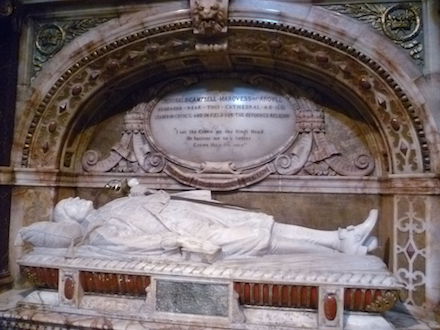
Scotland’s Presbyterians — who favored bottom-up church governance as opposed to the crown-controlled selection of bishops that’s known as episcopacy — made an initial alliance with English Parliamentarians to support one another in their mutual hostilities with King Charles I. And in Scotland’s civil war in the mid-1640s, Argyll’s Presbyterians defeated the Earl of Montrose‘s royalists.

But the failure of Oliver Cromwell‘s similarly victorious Parliament to deliver on its covenant fractured the Presbyterian party and drove Argyll to the political sideline.

Argyll’s own opposition to other Presbyterians’ attempted engagement with the imprisoned Charles I became untenable when, to the horror of his countrymen, Charles was beheaded by Parliament. As his entry in the Dictionary of National Biography notes, Charles’s execution “completely upset his calculations, which had all along been founded on a close union between the parliaments of Scotland and of England … the results of his safe and prudent policy were ruthlessly annihilated … [and] Argyll lost his presence of mind, and therefore his control of events in this stupendous conjuncture, and became as much a puppet in the hands of contending factions as was Charles II.” His growing ranks of foes derisively nicknamed him the “Glaed-Eyed Marquis”, attributing an obvious metaphorical import to his imperfect eyesight.

“Myself encountered so many difficulties that all remedies that were applied had the quite contrary operation,” he later wrote of those years when his influence waned. “[I was] a distracted man of a distracted subject in a distracted time wherein I lived.” It did not wane all at once: Argyll had the honor of crowning King Charles II at Scone on the first of January, 1651, and even tested the king with dynastic marriage inquiries for his daughter. (No dice.)

But as events ran away from him he fell into debt, disgrace, and irrelevancy.

When Charles II resumed the throne in 1660, Argyll presented himself at the court of his would-be father-in-law, and was surprised to find himself immediately thrown in the Tower. Like the Presbyterian cause itself, he was permanently and tragically alienated from both factions of the English Civil War: Cromwell always suspected Argyll a royalist for that whole crowning-the-king thing, and Charles always resented Argyll for his part in the destruction of his father.

The Glaed-Eyed Marquis found himself shipped off to Edinburgh to stand trial for treason. Although records of the trial are lost, it’s said that he was on the verge of total acquittal when Cromwell’s former commander in Scotland, George Monck, delivered a packet of incriminating letters. This story might be apocryphal but Argyll lost his head all the same, on Edinburgh’s distinctive Maiden.

Peruse here Argyll’s tart and downright comical last will and testament, satirizing many of the surviving figures of the day and bidding his heirs to lay his body “so shallow, that at the next trump of sedition, it may by the same raise-devil directory [i.e., Parliament] be conjured up again, and meet my exalted head, that bound-mark of Presbytery, its ne plus ultra, ‘Hitherto shall you go and no further.'”


Memorial to Archibald Campbell in Edinburgh’s St Giles’ Cathedral with the epitaph “I set the Crown on the King’s Head. He hastens me to a better Crown than his own.” (cc) image from Kim Traynor.

Argyll’s son and heir, also named Archibald Campbell, was himself executed in 1685 for organizing a Scottish “Argyll’s Rising” against King James II in alliance with the Duke of Monmouth. Their descendants still maintain the rank of Duke of Argyll to this day.

On this day..