On this date in 1536, Italian nobleman Sebastiano de Montecuccoli was torn apart at the Place de la Grenette in Lyons for poisoning the dauphinFrancis, heir to the French throne.
Sebastiano de Montecuccoli was a knight from Ferrara who had arrived in France in the train of the Catherine de’ Medici when she was married off to the no. 2 French prince Henri. He was fast friends with the royal princes, but his proximity to the family horribly turned against him when the 18-year-old Francis played a game of tennis, then caught ill and dropped dead. The last thing poor Francis had done was ask Montecuccoli for a glass of water.
In an era of forensics-by-guesswork, a sudden and unexplained death inevitably drew suspicions of poison — all the more so in a France gone security bonkers in the wake of the Affair of the Placards.
So just was in that glass of “water,” eh?
Sebastiano, upon his arrest, was found to possess a tome of poisons. This was a common enough interest among his class. (Catherine de’ Medici also had an interest in poison.) Nevertheless, it was great material for tunnel-vision investigators, and the young Italian soon provided a corroborating self-incrimination under torture: Sebastiano had offed the crown prince on orders from France’s longtime rival Charles V, who also just happened to be fighting a war with France over the duchy of Milan at that very moment.
Sebastiano attempted to recant this confession once he was off the rack, but to no avail. Many 16th century contemporaries could descry the eventual consensus of posterity that Sebastiano was a naif, and not an assassin. (Francis likely died from a disease.) Less generous by far was the judgment of the Lyonnaise citizenry who fell upon and ravaged Sebastiano’s body after it had been torn apart by horses.
Thanks to the unexpected death of the heir that triggered this horrible punishment, Francis’s brother Henri advanced to the crown prince seat and eventually became Henri II of France (until Henri’s own unfortunate sporting mishap) … and that Italian bride Catherine de’ Medici became Queen of France.
The city of Vienna only has one documented execution for witchcraft to its illustrious history. It occurred on this date in 1583.
Elisabeth Plainacher (English Wikipedia entry | German) was a miller’s daughter from Mank who had lived most of her 70 or so years during the Protestant Reformation and the Catholic Counter-Reformation, that social conflict so productive of witchcraft accusations.
It would factor very specifically in Elsa’s case, since she herself was a Protestant in a very Catholic place.
Elsa’s daughter Margaret died in childbirth, and Elsa took all four of the surviving children into her own care while Margaret’s widower went his own way. Three of these children would die in her care; the fourth became an epileptic in her teens, finally leading Margaret’s (Catholic) former husband to accuse his mother-in-law of bewitching everybody.
The accusation was ill-timed for the “witch”: Jesuit zealot Georg Scherer got hold of the case and put the epileptic teenager through a gantlet of exorcisms that he claimed expunged 12,652 infernal spirits. Scherer’s accounting must have been as rigorous as his faith.
“Scholars and men of understanding know that devils have neither flesh nor limbs, but are spirits, and therefore need no place or space as do our bodies,” Scherer later wrote by way of explaining the crowded tenancy. “A hundred thousand legions of spirits could all be collected together on the point of a needle.” Scherer preached, and later published, a sermon this holy combat, titled “A Christian remembrance of the most recent deliverance of a young woman who was possessed by 12,652 devils.”
This was a relentlessness which Elsa Plainacher was not formed to resist. She was a humble miller with some family drama, and then suddenly she was under torture (German link) in the imperial capital with the day’s headline pulpit-basher at her throat. She soon admitted whatever devilries her torturers demanded of her: giving the epileptic over to the devil, desecrating the Host, all that sort of thing.
On September 27, 1583, she was drug by a horse to an open field where she was burned at the stake. Her ashes were consigned to the Danube. Plainacherin even persisted (more German) in the local vernacular for a time as a dirty word.
Posterity’s apology for this horrible fate comes in the form of a small Vienna street, Elsa-Plainacher-Gasse, named after her. (There’s also a Plainachergasse in her native Mank.)
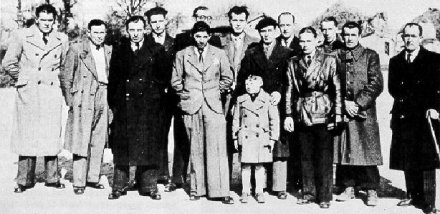
On this date in 1997, Taiwanese airman Chiang Kuo-ching was shot for the rape-murder of a five-year-old girl the previous September.
Chiang was nominated as a suspect by a fellow enlistee just a day after the little girl’s body was found in a privy gutter.
So, he and three other early suspects were given “lie detector” tests. Because Chiang was the only one of these who “failed” to acquit himself by this ludicrous mummery, he became the subject of implacable official tunnel vision.
The case was referred — illegally and arbitrarily — to the country’s intelligence services, who subjected Chiang to 37 hours of torture in order to extract a confession: beatings, threats, sleep deprivation, and private screenings of “his victim’s” autopsy.
Chiang broke, and admitted to the crime.
That admission was the star witness against him in his ensuing military trial. Chiang had retracted it by then — but that was much too late to help himself, especially since potentially exculpatory forensic evidence was intentionally withheld from his defense.
As it turned out, the bloody handprint and the DNA trace recovered from the scene didn’t match Chiang at all. No evidence connected him to the crime, except the evidence of truncheons.
The latter-day reversal of the sentence was so sensational that Taiwan’s legislature enacted a special law to increase the compensation Chiang’s family received. The family also got an extraordinary televised apology from President Ma Ying-jeou, who bowed three times before an image of the wrongfully executed man.
Edison was a proponent of direct current (DC), where the electricity flows in one direction from source to receiver. Westinghouse, one the other hand, favored AC, alternating current, where the electrical current will reverse direction from time to time and electricity doesn’t flow from the source to the receiver so much as in between them.
In the late 1800s, as electrical systems were spreading all over America, Westinghouse’s company and Edison’s company were duking it out as to which system would prevail over the other. Westinghouse’s AC, being far more efficient, was usually the system of choice for providing electricity to houses, businesses and streetlights, which was where most of the profits lay. (DC was better for things like batteries.)
Desperate to hold onto eroding market share, Edison saw an opportunity to do Westinghouse dirty when New York State adopted the electric chair as their means of execution. Some notable botches had rendered hanging unpalatable, but industrial electrification was still such a newfangled concept that at the time the law was passed, the chair had yet to be built. Edison figured that a propaganda blitz to make sure the device used AC would help convince the public that the rival current was too deadly to be used in private homes and city streets.
In private experiments, Brown and his assistant, Arthur E. Kennelly, “attached electrodes to dozens of stray dogs and tried various combinations of volts and amperes before announcing that it took only 300 volts of alternating current to kill a dog, but 1,000 volts of direct current.”
Seriously?*
Satisfied that they were ready to go public, Brown scheduled a demonstration at Columbia on July 30, inviting electricians, scientists and the press to watch. Kennelly and Dr. Frederick Peterson, a member of the Medico-Legal Society of New York, assisted him.
Brown opened his demonstration by insisting that he had been drawn into the controversy not out of any self-interest but because of his concern that alternating current was too dangerous to be used on city streets. He denied charges that he was in the pay of any electric light company and had “no financial or commercial interest” in the results of his experiments. Of course, the fact that he was using Edison’s equipment and was assisted by Edison’s chief of research spoke of itself.
Brown then brought in the first experimental subject: a 76-pound Newfoundland dog in a metal cage. The dog had been muzzled and had electrodes attached to one foreleg and one hind leg.
Brown connected the dog to the DC generator that Edison had loaned him and starting with 300 volts gradually increased the voltage to 1,000 volts. As the voltage increased, the observers noted, the dog’s yelping increased but it remained alive.
Having proven the safety of DC current, Brown disconnected the suffering animal from the DC generator and connected it to the AC generator with the remark, “We shall make him feel better.” (No word on whether he was twirling his mustache as he said so.)
Brown turned the voltage to 330, and the dog collapsed and died instantly.
The viewers were impressed, but Brown wasn’t done yet and brought in another dog. He said he was going to connect this one to the AC generator first. This, he said, would prove that the animal didn’t die because the shocks from the DC generator had weakened it.
Before he could accomplish this, however, an agent from the American Society for the Prevention of Cruelty to Animals arrived and asked Brown to stop the experiment and spare the poor dog’s life. It took some convincing, but in the end Brown agreed to stay of execution. The second dog would die another day.
Although the regular newspapers loved this bit of theater, the trade magazine The Electrical Engineer claimed the experiment was unscientific. The magazine offered a terrible little poem about the proceedings:
The dog stood in the lattice box,
The wires around him led,
He knew not that electric shocks
So soon would strike him dead…
At last there came a deadly bolt,
The dog, O where was he?
Three hundred alternating volts,
Had burst his vicerae
Although the ASPCA might have brought his first experiment to a premature end, Brown was not deterred. He toured New York State for months, giving dog and pony shows before fascinated crowds, where he would electrocute cats, cows, calves, and well, dogs and ponies, using both direct and alternating currents. He paid young boys twenty-five cents apiece to round up stray animals to get fried.
The public watched — but wasn’t fooled, and continued to use alternating currents. Even the 1890 execution of William Kemmler in New York’s brand-spanking new AC electric chair failed to convince anyone that they were going to drop dead if they installed AC electricity in their homes. (Brown helped design the chair.) AC won the War of Currents hands-down.
The poor Newfoundland, having laid down its small life for the greater prosperity of Edison’s investors, died, unmourned, in vain.
* This shock-a-dog diagram is from “Death-Current Experiments at the Edison Laboratory,” an article that Harold Brown published in the New York Medico-Legal Journal, vol. 6, issue 4. He remarks therein, just by the by, on alternating current’s “life-destroying qualities,” and how the august committee carrying out these electrocutions “were not a little startled when I told of them results of recent tests for leakage made by me not long since on the circuit of one of the alternating current stations in this city.” Brown was, he said, indebted to “Mr. Thos. A. Edison, through whose kindness I was allowed the use of apparatus.”
As noted, the thorough Brown put said apparatus to use on a variety of fauna. In the interest of science, he also includes in this same article diagrams on the electrocution of a calf and a horse; we enclose them here for your edification.
On this date in 1979, Saddam Hussein executed a terrifying purge of the Ba’ath party.
Hussein had come to power just six days before by forcing out his cousin Ahmed Hassan al-Bakr.
On this date, some 400-plus Ba’ath party leaders were summoned to a pavilion near the Iraqi presidential palace. The secret police locked the doors behind them.
As film rolled, a man named Muhyi Abdel-Hussein came to the stage. Until just days prior, he had been the general secretary of the Revolutionary Command Council, the executive committee that ran the state. For opposing Saddam Hussein’s accession, he’d been arrested and endured God knows what. It was enough to break him, and make him the star in a drama worthy of the old Soviet show trials.
Speaking deliberately, Muhyi Abdel-Hussein* stood at the podium and accused himself of involvement in a Syrian plot against the regime. He had, moreover, been joined in his treason by a number of men in that very room. And then as the names were read off to the stunned audience, Mukhabarat men arrested them and dragged them out of the hall. Colleagues gaped as their ranks were culled around them, each paralyzed with the same panicked thought: am I next? Realizing their vulnerability, some began to chant feverishly their loyalty: “Long live Saddam Hussein!”**
All the while, the emerging dictator — younger and trimmer than we remember him at the end — sat steps away at a simple little table, coolly puffing his cigar. He would be the unquestioned master of Iraq for the next 24 years.
In all, 68 people were hauled out of the room; they were tried immediately and sentenced within minutes: 22 to die, the rest to the dungeons.† The condemned were shot that very day: in a diabolical twist, a number of their former, as-yet-unpurged Ba’ath Party colleagues were detailed for firing squad duty.
Nor was this the end. A wider purge of potential rivals with potential influence — party members, union leaders, intelligentsia, businessmen — unfolded throughout that week; by August 1, several hundred (the exact figure will never be known) had been condemned to die. Muhyi Abdel-Hussein, whatever they promised him, was among them.
* “Al-Khalil gives the last name of Muhyi Abdel-Hussein as Rashid. Matar gives it as Mashhadi. Since Mashhad is a place in Iran, one can only assume that this name was bestowed on the unfortunate Abdel-Hussein posthumously, after it had been discovered that ‘he had reached his position through devious means and that he was originally Persian.'” (Source)
** The entire liturgy of terror was stage-managed by Taha Yasin Ramadan, who became Iraq’s vice president (and, like his president, was eventually hanged for his trouble). Also making an appearance: Barzan al-Tikriti, who was likewise destined to hang during the American occupation; on July 22, 1979, he was one of the judges on the kangaroo court that issued the death sentences.
† Different sources produce slight variations on the counts of 68 arrests and 22 executions.
June 29, 1944, saw several noteworthy mass executions around Axis western Europe.
France: Seven Jewish hostages for the assassination of Philippe Henriot
Poet and journalist Philippe Henriot (English Wikipedia entry | French), the “French Goebbels”, was the Vichy government’s able chief propagandist.
On June 28, 1944, Henriot was assassinated by Maquis operatives disguised as milice paramlitaries.
Incensed, the real milice this morning gathered seven Jews already held in prison as hostages at Rillieux, drove them to the cemetery, and shot them one by one.
(Paul Touvier, who orchestrated this retaliatory execution, managed to stay underground until 1989. At his 1994 war crimes trial, he claimed that the Germans wanted 30 hostages killed, and therefore what he actually did was “save 23 human lives.” Touvier was convicted on the charge of crimes against humanity.)
Italy: Massacres in San Pancrazio, Cornia, and Civitella
As dawn broke this date, German soldiers retreating from liberated Rome fell upon several Tuscan villages.
German columns had been beset by partisans on the way, and standard operating procedure was to retaliate against partisans indirectly, by killing civilians — as in the notorious massacre in the Ardeatine caves. This vengeance was visited on the three towns: over 200 civilians were summarily executed on June 29, 1944.
“My mother later said she went to speak to my father,” remembered one San Pancrazio man. “A soldier turned her back and told her they were taking him to be tortured. She and my father both cried.” The father and those taken with him were shot in the basement of a farmhouse.
Caution: Graphic video.
The towns themselves have kept this date in remembrance, but the massacres were swept under the rug in the postwar settlement as Italy, Germany, and their former western enemies realigned for the Cold War. Only in the 21st century have they come to wider attention, when the discovery of secret archives documenting the atrocities enabled an Italian court to convict an aged German soldier in absentia.
There’s a CNN documentary on these events focusing particularly on San Pancrazio. Called “Terror in Tuscany”, it may be viewable here or here, depending on your location.
On this date in 1944, Jakob Edelstein, his wife Miriam, their twelve-year-son Arieh and his mother-in-law Mrs. Olliner were shot to death at the Auschwitz Concentration Camp in Poland. They had been inmates in Auschwitz since the previous December; Jakob had been in an isolation cell the whole time while the others stayed in the so-called “Family Camp.”
For two years prior they’d lived in Theresienstadt (also known by its Czech name, Terezin), a the former Czech fortress town that had been turned into a city just for Jews. Jakob Edelstein was named Eldest of the Jews and was nominally in charge of the place, but in practice he had no choice but to cater to the whims of the Nazis. He was assisted by a deputy and a council of twelve.
Edelstein, a Czech Jew born in 1903, had been a leader within the Jewish community in Prague and had had papers for himself and his family to emigrate to Palestine. But when the Nazis took over Czechoslovakia, Edelstein and the other Zionist leaders decided it was their duty to stay and do what they could for the community during this time of crisis.
He became a liaison between the Germans the Jewish community and tried to facilitate immigration to Palestine. From 1939 to 1941 he made several trips back and forth between Czechoslovakia and Palestine, with permission from the Germans, trying to find ways for more Jews to emigrate.
Theresienstadt was a strange place: neither concentration camp nor ghetto but something in-between, it was billed as a “paradise” and a “gift” from Hitler to the Jewish people.
Elderly Jews were sent there, as well as Jews who were “prominent” for some reason or had Aryan connections (such as Jews who had a non-Jewish spouse). It was advertised as a luxurious resort community where they could live out the rest of their lives in ease and plenty.
Residents were allowed to receive food packages from the outside, and send postcards (one per month, limited to 30 words, and censored).
Many people believed the propaganda and were persuaded to go there voluntarily, signing all their possessions and assets to the German government in exchange for what they thought would be a comfortable and peaceful retirement.
The 500-ish Danish Jews who weren’t evacuated to Sweden by the Danish Underground right after the Nazi invasion of Denmark were ultimately sent to Theresienstadt. Many talented artists, actors, musicians and scholars lived there. The Nazis would ultimately make a propaganda film about how wonderful life was in Theresienstadt, and a Red Cross delegation toured the place and came away satisfied.
As you might have guessed, living conditions within the fortress city didn’t exactly live up to what it said in the brochures.
It’s true that it was possible to survive in Theresienstadt for an extended time period, even for the duration of the war. There were no gas chambers and relatively few executions. Certainly it was worlds apart from, say, Auschwitz or Treblinka. But that was as close to “paradise” as it got.
Yes, there were stores, more than a dozen of them, but their stock consisted of “goods the Nazis had originally confiscated from the residents and later found they didn’t need or want.”
Theresienstadt, like the Lodz Ghetto, had a bank and its own money, but there was nothing to spend it on. “The ghetto crowns,” Berkley says, “were used mostly like Monopoly money in playing cards and other games. Still, the bank staff kept themselves busy balancing their books, and auditors arrived regularly from Berlin to ensure the accuracy of the bank’s essentially fictitious accounts.”
Theresienstadt’s population, at its peak, was 58,497, in a town which before the war had a population of less than 10,000. Nearly everyone had lice, toilets and taps were scarce, and disease was rampant.
Families were separated, with husbands, wives and children each residing in different barracks.
“Horrendous as Theresienstadt housing conditions may have been,” Berkley says, “they were not the residents’ chief source of daily suffering. Food, or rather, the lack of it, weighed on them much more heavily.” The menu, he explains,
consisted chiefly of bread, potatoes, and a watery soup. Some margarine and sugar — about two ounces a week of the former and less than one and one-half ounces of the latter — were sometimes included. The residents were also to receive up to four ounces of meat, mostly horseflesh, and up to eight ounces of skim milk a week, though many a week would see less or none of those foodstuffs available. No fruits were ever officially distributed, and turnips were the only vegetable to show up with any regularity.
Estimates of total per capita calories provided daily ranged from 1300 or less, to 1800, with the lower figure being more frequently mentioned. This should be compared with the “Special Regime” given the worst offenders in the Soviet labor camps which provided about 2,000 calories.
According to modern nutritional guidelines, to maintain a healthy weight, the average adult with an average level of physical activity needs 2,000 to 2,500 calories a day. At Theresienstadt all inmates between age 14 and 70 had to work long hours, many of them at strenuous jobs. In addition to being calorie-deficient, the Theresienstadt rations lacked essential vitamins and minerals. It’s no wonder that one survivor later recalled, “After three months in Theresienstadt, there was only one feeling left in my body: hunger.”
Six months after his arrival, Edelstein and the Council of Elders made a difficult decision about the food problem, as Berkley records:
It became apparent that an even distribution of the food supply would not allow the ghetto to survive. Those doing heavy work needed more than those doing normal work, and the latter needed more than nonworkers. In addition, children required extra rations, for they represented the Jewish future…
Thus, heavy workers … began to receive a little over 2,000 calories of food a day. Children were to get 1,800 and regular workers a little over 1,500. But the daily intake for nonworkers, which included most of the elderly, fell to less than 1,000 calories.
This terrible choice, however necessary to the population’s long-term survival, consigned thousands of people to death.
But even though starvation and disease took many lives, the most deadly aspect of life in Theresienstadt was deportation.
Contrary to what the propaganda messages said about people living out their lives in Theresienstadt, it was largely a transit camp. Most people who arrived would be sent on “to the east” sooner or later; some of them lasted only a few days in the fortress city before being deported.
Although certain classes of people, such as decorated World War I veterans, “prominent” people and those over 65, were in theory exempted from deportation, in practice anyone could be sent away and just about everyone ultimately was.
Approximately 145,000 denizens passed through Theresienstadt during the course of its existence, most of them from Czechoslovakia, Germany, and Austria. About a quarter of these inmates died within Theresienstadt itself. Another 88,000 were deported to Auschwitz and other camps in the East, almost all of them dying there. Out of about 15,000 children who passed through Theresienstadt, less than 2,000 survived, and some estimates put the number in the low hundreds.
When the camp was liberated, it had a population of about 17,000, and most of those had arrived in the during the final months of the war.
Jakob Edelstein didn’t know about the gas chambers when he became Eldest of the Jews at Theresienstadt in December 1941, but he knew that conditions in the East were very bad and realized that, in order for the community to sustain itself, as many people as possible had to remain within Czechoslovakia.
As a committed Zionist, he hoped that the young people in the camp would survive and go on to colonize Israel. Like most otherleaders of Jewish communities throughout Nazi-occupied Europe, he made the decision to cooperate with the occupiers in hopes of saving lives.
And as far as that goes, he failed, as the numbers quoted above indicate. But if he failed, so did everyone else.
Unlike many Jewish officials in the Nazi ghettos, he wasn’t corrupt and he wasn’t a toady to the Germans. It’s worth noting that he had many opportunities to flee the country with his family, even after the war started: all he had to do was not come back to Europe after one of his trips overseas.
But he stayed, because he felt he had a responsibility to his beleaguered people.
Edelstein did the best he could with what he had to work with, which is all you can say for anybody. He worked tirelessly, making himself available at all hours, and under his leadership the camp developed a welfare system as well as many cultural and sports activities.
His job as Eldest of the Jews in Theresienstadt, trying to play the balancing act between advocating for his people and not pissing off the Germans, was always extremely stressful, difficult and dangerous.
But things really started to go downhill for him after the city’s first commandant, Siegfried Siedl, got reassigned to Bergen-Belsen in July 1943.
Siedl’s replacement, Anton Burger, hated Czechs and took an immediate dislike to Edelstein as a result. He replaced Edelstein with Paul Eppstein [German language link, as is the next], a German, and demoted Edelstein to first deputy to Eppstein. Benjamin Murmelstein, an Austrian, became second deputy.
This wasn’t enough for Burger, however, as George Berkley records:
As leader of the Czech Jews, [Edelstein] naturally bore the brunt of Burger’s hatred for them. The new commandant had not only deported many of his countrymen and his chief aide … but had also moved Germans and Austrians into key positions formerly held by Czechs. Burger had apparently also stirred up his own superiors against him for during the fall some bakery workers, looking out the window, saw and heard Eichmann sharply dressing down Edelstein and even threatening to have him shot.
The incident alarmed Edelstein’s many loyal followers and the next day the leaders of Hechalutz, the largest Zionist organization in the camp, met with him to urge him to flee. They said they could help him escape … But though he suspected a Nazi scheme to get rid of him, Edelstein refused to run away.
In the end, the Nazis didn’t need to trump up any charges of insubordination or sabotage against their former Eldest of the Jews: they found some real “crimes.” It seems that Edelstein had been saving people from deportation by allowing them to remain in Theresienstadt, off the books, and adding the names of dead people to the transport lists to make the numbers match up.
He was immediately arrested. It was November 9, 1943, the fifth anniversary of Kristallnacht.
Edelstein was kept in custody in Theresienstadt until December 18, when he and his mother-in-law, his wife, and his young son were sent to Auschwitz with a transport of 2,500 others. The transport became part of the Auschwitz “Family Camp”, joining 5,000 Czech Jews who’d arrived there from Theresienstadt in September.
Edelstein’s family was allowed to join the Family Camp. Edelstein himself was put in the punishment block and subjected to interrogation although not, apparently, tortured. He gave nothing away.
In March 1944, the residents of the Family Camp who’d arrived in September were gassed. The December group was allowed to stay alive for the time being.
On June 20, an SS officer went to Edelstein’s cell and told him he’d been sentenced to death. While the condemned man (who’d become quite popular in jail) was taking leave of his fellow inmates, the SS officer got impatient and snapped, “quickly, quickly.”
Edelstein replied, “I am the master of my last movements.”
He was driven to the execution site and then the car went away to fetch Miriam, Ariah and Mrs. Olliner. Miriam had measles and had to be brought on a stretcher. The Nazis forced Jakob Edelstein to watch as his wife, child and mother-in-law were shot to death. He was the last of them to die.
The remaining residents of the family camp were gassed in early July 1944.
Paul Eppstein was executed in Theresienstadt in September. Murmelstein became Eldest of the Jews in his place and actually managed to survive the war. Because he had lived, he spent the rest of his life under a cloud of distrust and suspicion as a possible collaborator.
Siegfried Siedl was hanged for war crimes in 1947. Anton Burger escaped Allied custody (twice) after the war, assumed a new identity and died of natural causes in Essen in 1991. His true identity wasn’t discovered for years after his death.
After the war, the city of Theresienstadt reverted to its former name of Terezin, and the fortress became an internment camp for ethnic Germans, who found themselves quite unpopular in the newly liberated Czechoslovakia and were expelled from the country in droves. The internment camp closed in 1948.
The modern town of Terezin has a population of 3,500 and is noted for its manufacture of knitwork and furniture. Tourists from all over the world come to learn about its important role in one of the most tragic events in modern history.
You can read all about this hecatomb and its aftermath on this very thorough and impressive website dedicated to the atrocity, from which much of the information in this account is drawn.
The tiny village, which you could walk through in all of ten minutes, had been the victim of mistaken identity.
Twenty miles away was a somewhat larger town with a similar name, Oradour-sur-Vayres, which was known for its Resistance activity. Adolf Diekmann, commander of the SS battalion, had been informed that the French Resistance had captured an SS officer (possibly the kidnapped Waffen-SS Sturmbahnfuhrer Helmut Kampfe, who had been executed by the Resistance earlier that same day) in Oradour-sur-Vayres and decided reprisals were needed, but he got the two villages mixed up and went to Oradour-sur-Glane instead.
When the SS arrived in the village at lunchtime, they ordered all the inhabitants to assemble in the fairground to have their papers checked. Everyone had to come, including children and the sick. Six people who were not residents but happened to be in the village at the time were also sent to the fairground.
Twenty villagers who had some compelling reason to avoid the Nazis, or merely had a bad feeling about the whole thing, hid or left the village as soon as the SS division showed up. These twenty survived. One seven-year-old boy, Roger Godfrin, was spotted and shot at, but survived by playing dead. He was the only survivor in his family, and the youngest survivor from the town.
The women and children were locked in the village church, and the men were lead to barns and sheds where the machine guns were set up. They were shot in their lower bodies and legs, in order to prolong their deaths. One of the men, who’d lost a leg in World War I, supposedly cried out, “Those bastards! They have cut my other leg off!”
After the shooting, as the men of Oradour-sur-Glane lay helpless, the SS men locked the sheds and set them on fire.
Only six men were able to escape. They hid in some rabbit hutches for several hours before attempting to escape the village. Five of them made it, but Pierre-Henri Poutaraud was spotted later that day and shot dead. The SS man who shot him then tethered a horse to Poutaraud’s outstretched hand.
In all, 190 men were killed.
The SS division then went back to the church, set off a smoke bomb inside it, and set the building on fire. Anyone who tried to get out of the church was machine-gunned. One woman cried out that she was German, not French, and begged to be released, but the SS shoved her back into the flames.
47-year-old Marguerite Rouffanche was able to slip out the back window, and another woman followed her with her seven-month-old baby, but all three of them were shot and only Marguerite survived, hiding in a garden for more than 24 hours until help arrived. Her two daughters were killed. (Marguerite refused to leave Oradour after the massacre. She remained there for the rest of her ninety-one years and is now buried in the village cemetery.)
The church fire and shootings claimed the lives of 247 children and 205 women.
Children from the village’s girl’s school, in the 1942-1943 school year. All of these girls were killed in the massacre.
Unbeknownst to the Nazis, there were several Jews living in the village, among them five children between the ages of eight and fifteen. Twelve of them were killed. In the case of a Jewish family called Pinede, the parents decided to present themselves for inspection but told their three children to hide. The children survived; their parents did not. One of those three Jewish survivors was still alive as of 2004.
Several days passed for the 26 survivors were permitted to bury their dead. Only 52 of the bodies could be identified; the other ones were burned too badly to be recognizable.
Collective punishment in reprisal for the actions of others was par for the course in Nazi-occupied Europe, and Adolf Diekmann had directed his unit to commit a number of mass shootings. Even so, he didn’t have authorization for the bloody events at Oradour-sur-Glane and his commanding officer requested for a court-martial, saying, “I cannot allow the regiment to be charged with something like this.” Field Marshal Erwin Rommel supposedly volunteered to preside over the court-martial himself.
But before that could happen, the war took care of Diekmann: he was killed on the Normandy front on June 19, hit in the head with shrapnel, a mere nine days after his last atrocity. The front, in fact, took care of most of his unit: only 65 of the 200 members survived the war.
In 1953 in Bordeaux, a military tribunal convened to hear the case against the surviving members of the 2nd Panzer Division. Only 22 of them were present in the courtroom; the others were in East Germany, which refused to extradite them. All but one said they’d been conscripted into the SS; one of them admitted he’d joined voluntarily to fight Communism.
To further complicate matters, 15 of the defendants present were actually French nationals of German descent, from Alsace-Moselle, and 14 of them claimed they’d been drafted against their wishes.
(After they conquered France, Germany declared inhabitants of Alsace to be German citizens whether they wanted to be or not, and drafted the region’s men. The conscripts were known in France as Malgre-nous, meaning literally “despite ourselves.”)
In addition, eight of the French defendants had been under the age of 18 when they were drafted into the SS, making them minors under French law. Many French people, including some of the survivors of Oradour-sur-Glane, viewed the Alsatian conscripts as fellow-victims of Nazi Germany and didn’t believe they should be held responsible for their actions.
Most of the defendants were cagey.
They implicated each other, but not themselves, admitting to some specific offenses but denying other, far more serious ones. One man, for example, said he’d been part of an execution squad that shot 20 men, but insisted he’d only helped load the machine guns and hadn’t personally shot anyone. Another said he hadn’t been in Oradour-sur-Glane at all, but was stationed as a sentry outside the village to prevent escapes. Only one of the defendants had admitted to killing anyone at all prior to the trial.
Twelve members of the victims’ families came to watch the trial proceedings, including an eight-year-old girl whose father and grandfather had been killed. Marguerite Rouffanche was ill at the time of the trial and very weak, but she showed up anyway and testify about her experience. Roger Godfrin, the little boy who played dead, also testified.
The tribunal’s judge demanded the defendants view photographs of the charred corpses of the victims, saying, “Let them look at the glorious work of the valiant Third Company of Der Führer Regiment.”
When the prosecutor summed up the case, he referred to the defendants’ evasive statements and said, “You might as well say despite the heaps of ashes and ruins, that the massacre never took place. But the people of Oradour are dead.”
The tribunal deliberated for thirty-two hours before returning its verdicts. One of the defendants was able to prove he hadn’t been in Oradour-sur-Glane the day of the killings, and was acquitted. The rest were convicted.
The 46 members of the SS unit who hadn’t shown up for trial were sentenced to death in absentia, as was one of the German nationals and one of the French. The others got various prison sentences, mostly between five and eight years, none exceeding twelve years. The Germans tended to get longer prison terms than the French. In addition, the Germans were prohibited from residing in France for at least twenty years.
Survivors of the Oradour-sur-Glane massacre.
No one in France was happy with the tribunal’s ruling: some said the sentences were too harsh, others, too lenient. In the face of widespread protests from the Alsace area and threats to secede from France, the French National Assembly passed a bill granting amnesty to all Malgre-nous (at a vote of 319 to 211, with a whopping 83 abstentions) and 13 of the 14 Frenchmen were released only eight days after the verdict was rendered. (One of them, the one who had volunteered for the SS, got no sympathy from anyone and no such leniency.)
Germany was upset, saying it was unfair to pardon the French SS but not the Germans. But within five years, everyone had been freed. No one was actually executed.
In 1981, East German authorities tracked down Heinz Barth, a second lieutenant in the 2nd Panzer Division, and put him on trial in their country for his role in the Oradour-sur-Glane Massacre.
He never tried to deny his participation in the attack, and used the old “just following orders” defense, saying, “In war one acts harshly and with the means available.” Barth admitted he helped round up the village men and personally shot fifteen times into the crowd. He also acknowledged responsibility for the deaths of nearly 100 people in Czechoslovakia.
Barth was convicted in 1983 and sentenced to life in prison. In 1991, still behind bars, he was awarded a pension as a “war victim” because he’d been wounded in Normandy in August 1944 and lost a leg. The resulting howls of protest led the government of a newly reunited Germany to pass a law stripping convicted war criminals of their pensions.
Barth was released from prison in 1997, and managed to finagle his war pension back somehow. He died of cancer ten years later, at the age of 86.
Marguerite Rouffanche died in 1988. Her fellow-survivor Roger Godfrin died in 2004.
The survivors of Oradour-sur-Glane created a new village after the war, but the burned-out ruins of the old village remain, with rusted cars, sewing machines, bicycles and other personal items lying in plain sight on the street, a grim testimony to what happened there nearly seventy years ago.
On this date in 1942, two Jewish men were hanged in the city of Sosnowiec (pronounced sos-no-vitz) in Nazi-occupied Poland, and two more were hanged in the nearby city of Bedzin (pronounced ben-jin).
These executions were witnessed by thousands of people and carefully choreographed, as historian Mary Fulbrook records in her book A Small Town Near Auschwitz:*
The hangings in Bedzin and Sosnowiec had been orchestrated in advance, in meticulous detail, by the Police President in Sosnowiec. The execution in Bedzin was to take place one hour later than the one in Sosnowiec. As much thought was given by the police authorities to questions of security and seating arrangements as might be appropriate for a modern open-air musical concert: this was not to be a simple punishment for an individual offense, as had happened innumerable times, but rather a mass spectacle, intended to have a major impact on the audience…
The identities of the executed Jews in Bedzin have been lost to history. (Correction: Per Yad Vashem, they were Jehuda Warman and “Feffer” (no first name).) They were hanged at the old Jewish cemetery on the corner of Zawale Street, before a crowd of about 5,000, at 5:00 p.m. Jewish workers in the Bedzin Ghetto had their work identity cards confiscated that day and were let out of work early, at 4:00 p.m., and ordered to watch the hangings. Only after they witnessed the executions did they get their work cards back. The bodies remained hanging on the scaffold until 7:30 p.m.
The condemned men in Sosnowiec were 30-year-old Mayer Kohn and his father, Nachun or Nahum.
Nachun (left, with wife) and Mayer.
They’d been caught trading on the black market, probably trying to feed their families, as no one could live long on the official rations. But as Fulbrook points out, the actual offense didn’t matter much to the Nazis:
These coordinated public spectacles of mass hangings do not seem … to have been in direct response to a particular crime; it seems there was a policy of ‘any Jew will do’, although infringements of German rules (including not only black market dealings but also very trivial ‘offenses’) were adduced as the ostensible ‘reason’ for these executions.
Thousands of people, both Jews and Germans, watched Mayer and Nachun Kohn die, then quietly went home.
Although virtually the entire Kohn family perished at the hands of the Nazis, Mayer and Nachun Kohn can claim a bit of immortality by virtue of being mentioned in Maus, Art Spiegelman’s famous graphic novel about the Holocaust: the author’s father, Vladek, hailed from Sosnowiec.
We wish well the restive shades of Patrick Rena, Thomas Dobbings, Thomas Walker, and Arthur Gibbons; the former two died for a violent robbery upon the roads, and the latter two for a violent robbery upon the Thames.
But our attention for this date is to the fifth man. Richard Coleman also drew the attention of those present, both for the monstrous crime he was accused of, and for his steady assertion of innocence. The minister assigned to salvage these wrongdoers’ souls, which was also a not entirely reputable marketing business in selling scaffold exclusives, knew a lead story when he saw one.
Coleman was executed for being part of a gang of three men who raped to death a woman named Sarah Green on the night of July 23, 1748. He was in no way implicated in this horrific crime for well over a month, a time when the victim lay precariously in hospital.
But by the next April, well … he was the man as far as the law was concerned. Coleman protested his innocence in vain, via Rev. Wilson; the latter’s hanging-day chapbook made Coleman the distinct feature attraction.
The following Paper was delivered to me at the Place of Execution, by Richard Coleman, which he earnestly desired I would publish.
To all Christian People.
The dreadful Sentence passed upon me, I shall meet with Cheerfulness, being in no Degree conscious of the least Guilt of that most inhuman and most unnatural Crime that I have been found guilty of.
I am very sensible that it is not in my Power to make the incredulous World believe me innocent. I leave the following Account with the Rev. Mr. Wilson, who I am very greatly obliged to, and return him my hearty Thanks, for the comfortable Relief I have received from him in a Preparation for a future State of Bliss, and I hope he will cause it to be published for m Satisfaction, that it may pass the impartial Examination of all Persons.
Here Coleman proceeds to give a detailed, almost hour-by-hour account of his activities on the night of the murder … and the activities of those around him.
Coleman was at pains to do this not only to assert his own innocence, but to decry a particular witness who ought to have supported his alibi but instead made it known “that if he was subpoenaed he should do me more Harm than Good … The Occasion of expressing himself in that severe Manner, I suppose, was owing to his being unluckily found by me with Mrs. B—t in very indecent Actions soon after her Husband’s Death; and having been often detected by me in the same Manner, it has caused ill Blood between us.”
Whether this man’s testimony would have made the difference one can only guess. At any rate, Coleman insisted,
On Monday the 25th of July I heard that a Woman had been used very ill by three of our Men, but no-body was taken up for it till a Quarrel happened between me and one [Daniel] T[rotma]n, at the Queen’s Arms Alehouse in Bandy-Leg Walk, which was as follows:
— On the 27th of August last … I was very much in Liquor; we had a Pint of Bumbo in the publick Room; and as I was stirring it with a Spoon, Trotman, an entire Stranger to me, very abruptly asked me what was done with the Pig, (meaning a Pig that our Men had taken and killed belonging to a Neighbour, and had been in Custody for it.) … I said to Trotman, Damn the Pig, what is it to me. He damn’d me, and I him; we gave each other very bad Language, and because it had been reported that three or four of our Men committed the Cruelty on Sarah Green, he made use of the following aggravating Words, namely (says he) Don’t you know Kennington Lane. I reply’d yes, I do, damn you, what of that? He said again don’t you know the Woman that was so cruelly treated, Yes, said I, Damn you what of that? Said he, was not you one of the Persons concerned in doing it; I reply’d if I was, you Dog what then, and immediately threw the Spoon at him. He returned it in the same Manner at me, and had it not been for the Persons present we should have fought.
…
The Morning after the Quarrel happened I called at the Queen’s Arms Alehouse; and Mr. C—t, who keeps the House, said to me Mr. Coleman you was silly last Night … and he repeated the Discourse aforesaid, and told me I did not consider what Advantage bad People might make of such unguarded Expressions. I reply’d that I was much in Liquor, and did not remember what I said.
But as prophesied, the offended Daniel Trotman and a woman in the pub who witnessed the exchange did indeed proceed on the basis of this “admission” to swear out an oath against Coleman who
was carried to the poor Woman in St. Thomas’s Hospital, to see if she knew any Thing of me; and when I came before her I was particularly pointed out by Mr. C— P—e, who laid his Hand on me, and said, is this one of the Men; which was not fair, for she should [not] have fixed upon me without being dictated. Upon that she said I believe he is one. I said to her consider well what you say, for my Life is at Stake. Will you swear I am one of the Persons. She reply’d, No I won’t, and likewise said if I was one of them we walked a good Way, and talk’d of indifferent Things, and you behav’d much like a Gentleman; but when she was assaulted, I ran away, which was not behaving like a Man.
Coleman’s story was that he wasn’t with Sarah Green as friend or foe at all that night. The justice of the peace clearly thought little enough of Green’s sketchy witness guesstimate that Coleman was released on his own word to return for more questioning.
The next scene at Sarah Green’s bedside begins with Coleman outside the room, and the victim asked
what sort of a Man Mr. Coleman was. She reply’d that he wore his Hair, and had a Carroty Beard. As to having my own Hair she was mistaken, for I have not wore it these 14 Years.
His Worship asked the Deceased if she could swear that I aided or assisted in the Assault. She said No, I cannot, for it was dark.
I was called in, and she made the following Information.
This Informant on her Oath says, that on Saturday Night the 23rd of July last between the Hours of 11 and 12 o’Clock, as she was going thro’ Newington Church-Yard to her Lodging in Bandy-Leg-Walk, she was assaulted and cruelly beaten by two Men to her unknown, and that R. Coleman was present in her Company at the Time she was assaulted and cruelly treated.
Coleman would say in his last publication that he believed Sarah Green was coached. Being conscious of innocence — we’ll come to that — the evidence aligning against him must have struck the young man as the product of an evil hand. Maybe it was just a lot of circumstantial stuff and half-mistaken witnesses falling into a terrible pattern.
The next mischance to befall the accused was that his victim/accuser succumbed to her injuries prior to the formal September 19 hearing.
This made the charge against him murder. Well, rape was already a capital crime, so no real change for Coleman … except that he had now lost the chance to confront openly a witness whose testimony sounds from the hospital interviews like it was eminently impeachable. Now, Green’s last affidavit was going to her final word on the matter.*
Coleman fled the warrant consequently taken out for him, which was read as evidence of guilt by neighbors who had the luxury of not reckoning their own survival odds upon a jury-box. Coleman says he tried to place an advertisement which a lily-livered editor rejected, reading
I, Richard Coleman, seeing myself advertised in the Gazette as absconding on Account of the Murder of Sarah Green, knowing my self not any ways culpable, do assert, that I have not absconded from Justice, but will readily and willingly appear at the Assizes, knowing my Innocence will acquit me.
Ha.
From some combination of partiality, malice, and groupthink, some additional eyewitness testimony — people who think they might have seen him that night, people who swear they talked to Coleman and Green together but never thought to bring it up to the authorities until he was arrested, and alibi witnesses of his own whom jurors disbelieved — Coleman was judged guilty and doomed to the noose.
Basically, the evidence against him was that he’d popped off to Daniel Trotman while in his cups, Sarah Green (mostly) ID’d him, and some people thought he’d been seen with her in the dark that night while some of Coleman’s own friends and relatives claimed otherwise. There isn’t exactly going to be crime lab evidence here, nor was there an explicit threshold for jurors to require near-certainty to convict. It probably looked to the court like a pretty darn good case.
Coleman had no recourse but to commit his futile self-vindication to posterity.
I do also most solemnly protest, that I am not in any Manner of Degree guilty of that most inhuman Murder of Sarah Green, neither was I at Newington, or in Kennington-Lane that Night that the cruel Fact was committed on Sarah Green.
This I declare as a dying Man, and I sincerely believe (as the Rev. Mr. Wilson told me several Times) if I was either directly or indirectly guilty of that Murder, and should go out of the World with denying it, that eternal Damnation would be my Portion.
… I have the Satisfaction to declare myself to the World (as I have often done to the Rev. Mr. Wilson) that I never was so serene in Mind, or so easy in my Conscience in my Life, as I am at this Time, and I heartily wish that every wicked Sinner may have the Opportunity of so good a Divine as the Rev. Mr. Wilson has been unto me, which must be a great Means to the Enjoyment of eternal Bliss.
It is an inexpressible Pleasure to me, that I am soon to leave this very wicked World; and I hope that GOD Almight of his infinite Mercy and Goodness, will, through the Merits and Intercession of my blessed Redeemer, his only Son our Saviour Jesus Christ, pardon all my Sins, and receive my Soul into eternal Happiness …
There is nothing that gives me so much Concern as the Distress that I leave my poor Wife and two Infants in. She has been very good to me under my unhappy Misfortune and so have my poor afflicted Brothers. I hope that the Almighty will be the Guardian of my Wife and Children.
Oops
We’ve been speaking of Coleman as categorically innocent but presented only conflicting and doubtful witnesses.
The resolution of the matter did not come until two full years after Coleman serenely strangled to death. The rest of the story was incautiously blabbed by a gentleman named James Welch to a companion as they walked the road to Newington Butts.
“Their conversation,” says the Newgate Calendar, “happened to turn on the subject of those who had been executed without being guilty; and Welch said: ‘Among whom was Coleman. Nichols, Jones and I were the persons who committed the murder for which he was hanged.'”
Maybe he should have chatted about the weather.
In the course of conversation Welch owned that, having been at a public-house called Sot’s Hole, they had drunk plentifully, and on their return through Kennington Lane they met with a woman, with whom they went as far as the Parsonage Walk, near the churchyard of Newington where she was so horridly abused by Nichols and Jones that Welch declined offering her any further insult.
Welch’s companion informed on him, but upon arrest there was no better evidence against Welch, Nichols, and Jones than there had been against Coleman. Actually, this later case was much weaker: one guy’s alleged hearsay statement.
In a classic prisoner’s-dilemma scenario, John Nichols was finally persuaded to turn crown’s evidence on the other two before they turned on him, and his testimony to the vile end of Sarah Green got his former mates hanged.
“The poor woman was treated in a manner too shocking to be described,” our correspondent relates. And “it appeared that at the time of the perpetration of the fact the murderers wore white aprons, and that Jones and Welch called Nichols by the name of Coleman — circumstances that evidently led to the conviction of the unfortunate man of that name.”
Mistakes Happen…
The hangings in the case of Sarah Green — both the right ones and the wrong one — occurred at the acme of Britain’s “Bloody Code” days.
It’s instructive to note that the reality of wrongful executions seems to have been widely accepted. In the case at hand, the Newgate Calendar does not mince words in describing Richard Coleman as innocent.
And while doubt about individual defendants’ guilt often led jurors to acquittals or the ad hoc “pious perjury” downgrading of potentially capital charges, the existence of this or that wrongful execution in no way imperiled the capital statutes as a whole. It was merely another risk in a brutal world all too full of them.
Just a few months after Welch and Jones went to the gallows, another woman controversially on trial for her life received from one of her correspondents a lament that “We see nothing more frequent than Persons confessing the Crimes that others had suffer’d for before.”
* Although Green’s case was a bit different since she actually had time to swear a statement, the legal footing of “dying declarations” vis-a-vis the usual right of a defendant to confront an accuser has long remained a jurisprudential sticky wicket.

 Chiang was nominated as a suspect by a fellow enlistee just a day after the little girl’s body was found in a privy gutter.


 For two years prior they’d lived in