1758: Francois Macandal, forgotten black messiah

(Thanks to Mark Davis of macandal.org for the guest post on a remarkable historical parallel to today’s inauguration of Barack Obama. -ed.)

The world was astounded when Barack Obama was elected to the Presidency in 2008 knowing the cultural barriers minorities have faced for hundreds of years. The date of inauguration, January 20, also happens to be the anniversary of the burning at the stake of a virtually unknown man, Francois Macandal,* whose epic war against cultural barriers has been buried for centuries.

Read some of his story and judge if the historic election of Barack Obama could have occurred without the man they called “Macandal.”

The parallels with Barack Obama’s journey are numerous, but the life of Macandal was perhaps even more remarkable, reaching great heights and falling into the darkest chasms of despair, yet succeeding in spite of staggering odds. Macandal’s travails may be about finding one’s purpose and dreaming of victory even when condemned by a majority, as he was relentlessly pursued by soldiers and hounded by countless naysayers.

251 years ago on January 20, 1758, Macandal was chained to a post on a platform before thousands of slaves brought together to witness his brutal torture and execution. Because of his importance, the French gathered slaves from hundreds of plantations throughout the colony of St. Domingue (now Haiti and the Dominican Republic). They believed such a horrific spectacle would quash Macandal’s Revolution, which he began to end French rule and abolish slavery, 12 years before.

Around 1746 Macandal escaped his plantation, united thousands of escaped slaves along with many still enslaved, and proclaimed that he would lead them all to independence and freedom. This declaration, from someone who had only six years before been taken from his home in the Congo, was unprecedented, since no slave colony had ever defeated a European nation. Then Macandal mobilized tens of thousands and may have inspired millions to end slavery and defeat colonial hegemony in the Haitian Revolution consummated decades after his death.

But ironically even the famous, black Marxist writer C.L.R. James, attributed one of the greatest revolutions in history to something akin to ‘spontaneous rioting’ by 500,000 black slaves in 1791. Since 1791 almost every historian has reduced the “Haitian Revolution,” the only successful overthrow of a colonial power by black slaves, to a ‘collective rage,’ inspired by the whites of the “French Revolution.” Yet it may have been Macandal’s Revolution, not the starving peasants of France, that inspired their uprising in 1789.

The true story of Macandal represents obscure but recorded testimonies about his life and explains why the slave revolt of 1791 was in fact, “Macandal’s Revolution,” almost 50 years in the making. Macandal foretold the end of slavery, then planned it, plotted it and began it. His story shatters a myth that has gone unchallenged for over 200 years: that the Haitian Revolution of 1791 was a spontaneous slave uprising inspired by the French peasants who had charged the Bastille Prison in Paris two years earlier.

The Haitian Revolution ultimately ousted the French, defeating Napoleon and numerous French generals. It also succeeded against the vaunted British army and established a new government run by former slaves. It was the first domino in a series of colonial defeats and changes in law that led to the end of institutional slavery; and Macandal started it all.

Correcting the Historical Record

Macandal is rarely the focus of historians and when mentioned only his insignificance is noted. But the popular version of his story was immortalized by the original French writers themselves, in the interest of bolstering a self-image of innate superiority as a nation and a race. To have recognized Macandal’s brilliance would have acknowledged slavery’s illegitimacy, so Macandal’s real story had to be trivialized and buried.

This telling of Macandal’s journey from a free child in Africa to slavery and then revolution, relies less on popular writings and more on a review of all of the records in context. For example French writers claimed Macandal broke free because he was tied with ropes and the post was made of rotted wood that fell apart when he was set ablaze. Historians have repeated this without scrutiny. The French on St. Domingue regularly burned slaves to death at the town square of the capital, “Cap Francais.” At Macandal’s execution they gathered thousands of slaves as witnesses, to insure a humiliating defeat and halt his widely supported rebellion. Yet, despite this grandiose staging, we are supposed to believe Macandal was insignificant. And we must accept that the French military was so inept they forgot how to execute and did not know that ropes burn and untreated, rotted wood is flammable. Many such dubious “facts,” are still repeated blithely about Macandal and few Westerners grant him his bravery, genius or impact.

Interestingly, the U.S. Bill of Rights guaranteeing equality for all was also adopted in 1791, but it would be more than seven decades before slavery was outlawed in the U.S. and almost two centuries before equal opportunity laws were passed and enforced. For one tiny nation, Macandal enabled this to occur over 200 years ago.

Background

I began researching the life of Macandal 20 years ago, startled and inspired by one chapter in Wade Davis’ popular book The Serpent and the Rainbow, which focused on secret societies, Voodoo and Zombification. His version of Macandal’s story was dictated to him by Rachel Bouvoir-Dominique, a Haitian Anthropologist I interviewed in 1997, at her office in Cap Haitien. Working under the tutelage of well-known author and expert on Haitian history Michel Laguerre, a professor at U.C. Berkeley, I received grants for a field study and documentary on the subject of Macandal.

Anthropologists often allocate greater weight to oral history, informal observer accounts, burial remains, maps and gravures, re-evaluating more accepted published works historians rely on, and so this account reflects my perspective and research as an Anthropologist. I examined European gravures (illustrations) and colonial records cited commonly more skeptically, because they were clearly burdened by religious, sexist and racial paradigms of the day. For example illustrations portrayed slaves with happy smiles and sanguine facades, enjoying their lives in idyllic settings on the plantations. Yet slaves faced torture, rape, separation of family and death from over-work, every day. Blacks were often drawn with monkey features (toes, ears etc.) and other demeaning caricatures.

Western writers were fiercely loyal to provincial rhetoric, including the gender and racial bias then considered crucial foundations of Christian theology. Western scholars dehumanized natives and women to rationalize slavery, prejudice and justify the infamous “hierarchy of being,” which granted “white men” a closeness to God that no one else could approach. This endowed them with the right to use others as they saw fit.

There were many reasons colonial authorities destroyed or buried the noteworthy exploits of slaves. Few accounts of courageous acts from among the ranks of millions of Africans during 400 years of slavery were recorded and preserved, primarily to maintain the perception that slavery was justified, necessary and Nubian Africans were not truly human but beasts of burden. There are literally thousands of articles, books and films about individuals among the six million Jews who died during the holocaust but only a scant few from among the 100-200 million indigenous peoples killed during the colonial expansion; all the more reason to re-evaluate slaves like Macandal.

A Brief History of Macandal

During the early 18th century, around the age of 12, Macandal was taken from the west coast of Africa, probably the Loango Kingdom in the Congo. I claim the date of his birth was 1728 primarily because oral historians in Haiti I interviewed believed him to be 30 when he was fastened to a post before thousands and set on fire in 1758.

The French called him Macandal which may derive from a city in the Congo called “Makanda.” The town of Makanda no longer exists due to civil war but could have ancient roots and slaves were often named after the places they came from. His name may have been taken from the term makanda (plural form of “kanda”) referring to African societal groups. Some written accounts report that Macandal claimed to be descended from a ranking societal group and the son of a Chief or King.

Amazingly, Macandal could speak, read and write Arabic fluently. Some believe this is because he was raised Muslim, yet the Congo was Christianized long before Macandal was born. Portuguese mercenaries, missionaries and armies had combed every square inch of the Congo beginning in the late 1400’s, searching for gold, diamonds and slaves, forcing conversion to Christianity. However Macandal’s words and actions reveal a unique knowledge of both Christianity and Islam. His ancestors may have emigrated from the east coast where Muslims and Asians had allied with Swahilis to build beautiful cities and schools before the Portuguese invasion. His family may have then hidden themselves for centuries.

Conversion to Christianity was also a requirement for slaves on colony plantations but Macandal defied the French by learning the underpinnings of Christianity, to understand the roots of slavery and challenge newly acquired doctrines. Despite many influences the adult Macandal claimed no affiliation with Christianity, Islam, Voodoo or Animism.

As a child Macandal was educated and known to be accomplished in both music and art, including painting and sculpture. His dedication to learning was apparent throughout his life. He displayed a vast knowledge of plants, became a doctor on the plantation he was taken to and was sought by even the French themselves for treatment of diseases and ailments. Yet the vegetation on St. Domingue was completely different from that of the Congo; therefore, Macandal had to study his new environment and learn the properties of perhaps hundreds of plants. He secretly taught himself French and became so eloquent that the French aristocrats remarked that he could speak it better than they themselves, though education was strictly forbidden for slaves.

Based on historical records and interviews, it appears that Macandal was first sentenced to death on his plantation, around 1746 at the age of 18, for falling in love with the plantation owner’s favorite lover, a young and beautiful house slave. He underwent a scene of heinous torture intended to culminate in his death in front of many witnesses, but escaped mysteriously and fled into the hills. The French replaced this account with a tale about Macandal becoming handicapped from losing a hand in a sugar mill and then being left unguarded. His escapes were always attributed to poor guard oversight.

Though Macandal probably began his new life of freedom with the intention of bringing vengeance to his former owner Lenormand de Mezy and rescuing his true love, for some reason his objective evolved. Perhaps because of the totality of his traumatic experiences or because of the influence of Maroons (ex-slaves already living in the distant mountains) Macandal met after escaping, he began working for a new goal of freedom for all.

Macandal led a sweeping and unwavering revolution during the 12 years after his escape from the plantation. Unlike other escaped slaves, Macandal actually made the end of slavery his stated mission. He became the first to unite thousands of disparate Maroons who were living free but divided by tribal affiliation and known to be ardently dedicated to the destruction of each other. His uniting of these groups was an extraordinary accomplishment and he is the first known black leader and ex-slave to do so.

He began calling himself the “Black Messiah” and gave rousing speeches in secret locations to recruit slaves. He made dangerous and daring appearances on plantations during the night to urge loyalty and inspire hope. The name “Black Messiah” had great meaning to Macandal as evidenced by one of his famous speeches at a secret recruitment meeting. The words exposed Macandal’s understanding of Islam and Christianity and their link to institutional slavery. The term was a powerful catalyst he used to preempt religious and ethical indoctrination of blacks and free them from the ideological bonds of slavery. He had to usurp the authority of the Church and French government to convince slaves they deserved equality, freedom, family sanctity, education and self-government.

Macandal became a brilliant strategist and had a large, organized camp with lieutenants, captains and other ranks. He led countless attacks and escaped capture mysteriously many times. His tactics were unique and devastating. They were known to be carried on after his disappearance despite the brutal efforts of the French to extinguish illegal grassroots activity. During his reign as a Maroon leader he may have recruited half or more of the 100,000 slaves living on the plantations as secret agents of his revolution.

Maroons and slaves apparently employed his tactics for decades after his disappearance in 1758. During the decade before the final thrust for overthrow in 1791, and despite harsh measures to thwart rebellion, Maroon activity greatly increased. This activity was so secret that virtually nothing is known about this period and is one reason historians assume the war for independence was unplanned, even though the first massive attack was led by Boukman Dutty, formerly a cruel black overseer who was a contemporary of Macandal. His gathering, which launched the war, was convened at a hidden location where Macandal formerly gave his speeches, the symbolism of which cannot be denied.

Generals that followed Boukman used ingenuity and unique strategies to win the 13-year war and Toussaint L’Ouverture is given most of the credit for the victory. But Toussaint refused to support the war until after it had begun; its inevitability certain. He was 13 when Macandal was sentenced to death in 1758. A voracious reader and student of warfare he was well aware of Macandal but content as a slave under a liberal planter.

It is my thesis the “Macandal Revolution” continued through the three decades preceding the Haitian Revolution. No other slave is known to have prophesied and promised the end of slavery yet Macandal predicted that blacks would defeat the French, become free and independent of colonial rule and control the colony of St. Domingue. His rally cry and pronouncement repeatedly rang throughout the colony despite opposition and betrayal from many slaves who greatly feared the French and did not believe victory was possible.

The Haitian Revolution remains the only successful movement by black slaves to defeat a colonial power and achieve complete independence. It stands alone as a towering victory against incalculable odds. Though it is characterized as a ‘riot’ that generated its own momentum, 500,000 slaves and free blacks mysteriously rose up in unison, using sticks and stones, against over 50,000 heavily armed soldiers, landowners and henchmen.

The Fall of Colonialism

As Macandal’s victories mounted I propose that word of his revolution spread to Europe and bolstered many anti-colonial movements. For example one of his closest secret allies was a French Jesuit priest and the Jesuits along with other religious leaders in Europe began fomenting rebellion during this period. Before news of Macandal’s revolt spread, many in Europe believed the slave trade was not only profitable but philanthropic. It had long been heard in the churches that slaves were heathens being brought to Christ and treated well in the process. His uprising no doubt made many Europeans aware that slaves were not being treated well and were desperate. Macandal’s shocking victories may have provoked Europeans to finally condemn colonialism and slavery. His fearless attacks and disregard for colonial might may have also seeded the French Revolution.

What really happened on January 20, 1758? Macandal endured great agony during an intense and excruciating punishment. He did this so that slaves everywhere might become free. The French claim Macandal was burned alive at the town square in Cap Francais.** Admitting he broke free and leaped out of the fire, they wrote that soldiers reclaimed Macandal and threw him back in. However some observers claimed Macandal broke his chains and fled, never to be seen again. How he broke free during any of his escapes despite being surrounded by guards and soldiers, is not known. It is interesting to note that his remains were never found and there is no burial site. Given the French proclivity for making examples of slaves to increase fear and enforce discipline, a successful execution should have been commemorated by another French monument.

For most historians, January 20, 1758, came and went with barely a mention in official memorandums. Yet a detailed search of documents reveals a massive cover-up, confusion and consternation. Macandal’s Revolution was not quashed or even slowed; instead it was impelled and sent wildly rumbling down a path of manifest destiny. Plantation owners later discovered their most trusted slaves were working for the revolution. New restrictions were put on all blacks throughout the colony and 4-5 rebels were burned at the town square every month to strike fear into the rest. Intense interrogation and torture revealed ever more depth to the conspiracy. Macandal’s execution day inflamed slaves and intensified their commitment to him and they became more united and fervently bent on winning freedom. Jesuits were banned from St. Domingue five years later.

As the first U.S. President with African roots is inaugurated on January 20, no one will speak of Macandal or Macandal’s Revolution, which led to equal rights in 1804 for one small nation. January 20, 1758, the day the French sought to secure colonialism and slavery in perpetuity, became a day of victory for Macandal and a watershed event which brought colonialism down. Though Macandal has been denied his place, his actions may have ended slavery and paved the way for people like Barack Obama to make history.

Mark Davis received his Bachelor of Arts degree in Anthropology from U.C. Berkeley and a Master’s in Anthropology from the University of Hawaii. He is the foremost authority on Macandal and his one hour documentary The Black Messiah was broadcast on PBS in 1997. He publishes information through his website at www.macandal.org.

* The man’s true name is lost to us; the one he was given by the French can be alternately spelled “Mackandal” or “Makandal” or “Mackendal”.

** Renamed Cap Haitien after Haiti won its independence.

On this day..

1922: Seven Republican guerrillas in the Curragh of Kildare

(Thanks to author and historian James Durney for the guest post, an excerpt from On the One Road: Political Unrest in Kildare 1913-1994. -ed.)

Seven men were executed in the Glasshouse, in the Curragh Camp on December 19 in the biggest official executions of the Civil War. They were Patrick Bagnall and Patrick Mangan, Fairgreen, Kildare; Joseph Johnston, Station Road, Kildare; Bryan Moore and Patrick Nolan, Rathbride, Kildare; Stephen White, Abbey St. Kildare and James O’ Connor, Bansha, Co. Tipperary. These seven men, along with Comdt. Thomas Behan were found in a dug-out at Mooresbridge, on the edge of the Curragh, on the night of December 13. They were under the command of Comdt. Bryan Moore, 38, a veteran IRA officer, and comprised a section of the 6th Battn. Column. They were armed with rifles bought from a soldier stationed in Naas Barracks.

A detachment of troops from the Curragh searching a farmhouse at Mooresbridge, about one-and-a-half miles from the Curragh Camp, “found the proprietress in possession of a fully loaded Webley revolver.” A subsequent search disclosed a dug-out underneath a floor. The dug-out was surrounded by National soldiers who called on the men to come out. Eight men were in the dug-out, which was also found to contain 10 rifles, a quantity of ammunition, one exploder, a roll of cable and food supplies. When they surrendered Tom Behan was struck with a rifle butt and had his arm broken. When the captives were ordered into the back of a truck Tom Behan could not climb aboard because of his broken arm. He was struck again on the head with a rifle butt and died at the scene. Behan was a veteran IRA man and at the time of his death was Intelligence Officer, 1st Eastern Division. The Free State authorities claimed that Behan was shot while trying to escape through a window in the Glasshouse (so called because of its roof), issuing a statement saying: “One of the party of men arrested when trying to make his escape from the hut in which he was detained at the Curragh, ignoring the warning of the sentry to desist, was fired on and fatally wounded.” Mick Sheehan was in the Glasshouse at the time and thought it highly unusual that an experienced volunteer like Tom Behan would try to escape through such a small window. It was only years later that he found out the truth. The Glasshouse was a small stone and brick military prison up the hill where the military usually housed their own prisoners. It consisted of two floors enclosed within a twelve foot high walled enclosure with cells for 64 prisoners. During the Civil War, and after, it was used as a punishment block for Republican prisoners.

The remaining seven men were executed by firing squad on the morning of December 19. The following official report was issued from Army Headquarters, GHQ, on that evening: “Stephen White, Abbey Street, Kildare, labourer; Joseph Johnson, Station Road, Kildare, railway worker; Patrick Mangan, Fair Green, Kildare, railway worker; Patrick Nolan, Rathbride, Kildare, railway worker; Brian Moore, Rathbride, Kildare, labourer; James O’Connor, Bansha, Tipperary, railway worker; Patrick Bagnel, Fair Green, Kildare, labourer who with others, were arrested at Rathbride, Co. Kildare, on the 13th inst., were charged before a Military Committee with being in possession, without proper authority, of – 10 rifles, 200 rounds of ammunition therefor, 4 bomb detonators, 1 exploder.

“They were found guilty and sentenced to death. The sentence was duly executed this morning, 19th inst., at 8.30 a.m.”

This stone at Grey Abbey commemorates the seven IRA men. Image courtesy of Mario Corrigan.

They were all veteran IRA men and belonged to a column of ten which operated against railways, goods trains and some shops in the vicinity of Kildare. Five of them were on the derailment of engines at Cherryville on December 11 when they made a serious attempt to dislocate the whole railway service on the Great Southern and Western Railway Line. Two engines were taken out of a shed at Kildare and sent down the line by Cherryville. One engine ran out of steam and did no harm, while the other overturned and blocked the line for a considerable time. The column was also responsible for an ambush on National troops at the Curragh Siding on November 23 when a large party of troops were returning to Dublin after escorting prisoners to the Curragh Internment Camp. On their return journey the troops were fired on at the Curragh Siding and two were wounded. In the confusion a policeman was accidentally shot by a National soldier. Father Donnelly, chaplain to the troops, administered to the seven volunteers before their executions. They were shot one by one and were buried in the yard adjacent to the Glasshouse.

The last letters from the seven men were printed in the Republican paper Eire. /The Irish/ /Nation/. James O’Connor of Bansha wrote to his mother: “I am going to Eternal Glory tomorrow morning with six other true-hearted Irishmen.” Patrick Mangan wrote to his mother: “I am to be shot in the morning. I fought for Ireland and am sorry I could not do more… I have made my peace with God and was never so happy as tonight.”

On March 31 1923 Eire (The Irish Nation) printed the last poignant letters from Bryan Moore, Patrick Bagnell and Paddy Nolan under the title ‘Last letters of “executed” soldiers of the IRA.’*

Letter of Bryan Moore to his Brother.

Hare Park Prison, 18-12-22.

Dear Pat, – I am about to die for the Cause of Ireland as many did before. Pray for me and get the children to pray for me. I’ve just had the priest and will see him again in the morning at 6.30 and receive Holy Communion. He says we are to be envied the deaths we are about to meet, as we shall go straight to Heaven.

Do all you can for Father and Mother. Tell Mary and Kathleen to say a prayer for me every night,

Bryan.

Letter of Bryan Moore to Mother and Father.

Hare Park Prison, 18-12-22.

Dear Mother and Father, – I am about to be executed in the morning and I wish to bid you good-bye, and to ask you to pray for me and the rest of the boys.

I had the priest this evening and will see him again to night. I am resigned to die. God comfort you both.

Tell Johnny to pray for me. – Your loving Son.

Bryan.

Letter of Bryan Moore.

Hare Park Prison, 18-12-22.

Dear Johnny, – Good-bye, and be good to Father and Mother. Pray for me. – Bryan.

P.S. – You can do a man’s part by looking after Father and Mother. Tell them not to worry for me, as I am better off. God bless you.

Dear Annie, – Good-bye. God bless you. Pray for me.

Bryan.

Letter of Patrick Bagnall to his Uncle.

Hare Park Prison, 18-12-22.

Dear Jimmy, – I hope you and Willie are well. Tell all the boys and girls I was asking for them. I am writing to my sister and father. I am to be shot in the morning, 19th December, at 8.15. Mind Mary and do what you can for her. I know this will nearly kill her. We had a priest who heard our confessions. We are all here, seven of us – Johnston, Mangan, White, Moore, Nolan, Connor, and I. We are all to go “West” together, so don’t forget to pray for us. I know you and Willie will be sorry, but it is all for the best, and I hope it sets old Ireland free. We are not afraid to die.

Tell them all in Kildare I was asking for them. Don’t forget Harry Moore. We are dying happy anyway. So good-bye old Kildare, good-bye Jimmy and God bless you. I will meet you in Heaven. Tell Tom Byrne I was asking for him. – Your loving nephew, Paddy Bagnall.

The priest’s name and address is Father_____, Curragh Camp, a very nice man: you can write him if you want to. He said we will die like men anyway.

Letter of Paddy Nolan to his Father and Mother.

Curragh Camp Prison, 18-12-22.

Dear father and Mother, – I am writing my last few lines to you. I am to be executed to-morrow morning, and I hope you will bear it with the courage of an Irish Father and Mother. I am proud to die for the Cause I loved and honoured, and for which I give up my young life.

Six more of my comrades are to be executed. We have all been to confession and Holy Communion. Father ______ told us we would go straight to Heaven, so do not worry.

Dearest Mother, there are a few pounds in my suitcase, you can have them, or anything else in the house belonging to me.

Loving Father and Mother , good-bye for ever, – Your fond and faithful Son.

Paddy.

Father _____, Curragh Camp, sends his sympathies and prayers.

Letter of Paddy Nolan to his Elder Brothers and Sisters.

Curragh Camp Prison, 18-12-22.

My Dear Brothers and Sisters.

Now that I’m about to part from this world, I ask you for one favour – be kind and good to Father and Mother, and never dishonour the Cause for which I die – a Free and Independent Ireland. I bear no ill will to any person. Fond Sisters and Brothers, pray for me. Good-bye forever.

Paddy.

Letter to his Young Brothers and Sisters.

My Dear little ones, – I, your fond brother about to pass out of this world, ask you loving little ones to offer up your innocent prayers for me and my comrades on Christmas morning. Be good children, and always obey your parents and do everything in your power to make them happy. God bless you little ones. Good-bye for ever. – Paddy.

The executions caused a lot of bitterness locally. Both Mick Sheehan’s uncles, who had taken the pro-Treaty side, left the National Army. One, Capt. Patrick Kelly, who had served in the Republican Police, resigned his commission and went to the Civic Guards.

* The last letter of 18-year-old Stephen White, which seems not to have been printed at the time, can be read on this history of the day’s executions. -ed.

On this day..

1796: Jose Leonardo Chirino, Venezuelan slave revolt leader

On this date in 1796, insurrectionary Jose Leonardo Chirino was hanged in Caracas for leading a slave revolt in Spain’s oppressive New World sugar plantations.

Nearly all the information readily available online about Chirino is in Spanish, and all the links in this post are to Spanish pages.

The influence of the Haitian Revolution, and the philosophical precepts of the French Revolution that had helped spawn it, sent waves through the Caribbean washing up on every shore it touched.

Most of those lands had a ready audience under the lash of European colonial masters; the eastern Venezuelan city of Coro, home to the sugar aristocracy and the groaning underclass that crop implied, must have had one of the readiest.

On May 10, 1795, Chirino — a Zambo of mixed African and Amerindian blood who was himself a free farmer — led an uprising of the Congolese slaves in the area who worked the sugarcane and declared a Republic under the “Law of the French,” with slavery and white privilege abolished.

Forcibly.

The rebellion’s attempt on Coro itself failed, and it was swiftly put down by the colonial authorities. Though many involved were killed summarily, the Spanish took their sweet time after capturing Chirino in August 1795: only the following year was he transferred to Caracas for execution, after which his body was dismembered and his head set in an iron cage displayed on the road to Coro. (For good measure, they sold his family into slavery.)

[flv:https://www.executedtoday.com/video/Jose_Leonardo_Chirino.flv 440 330]

(Video from here)

Of course, Chirino was on the right side of history. The city square in Caracas where Chirino hung is now Plaza Bolivar, named for Latin America’s eponymous liberator.

Coro itself is today served by Jose Leonardo Chirino airport, and for the African diaspora in Venezuela, Chirino is a special inspiration.

[audio:Jose_Leonardo.mp3]

Like any worthwhile symbol, he’s also contested territory — claimed as a forerunner (if a questionable one) of socialism by the “Bolivarian Republic” now governed by Hugo Chavez.

On this day..

1815: Michel Ney, the bravest of the brave

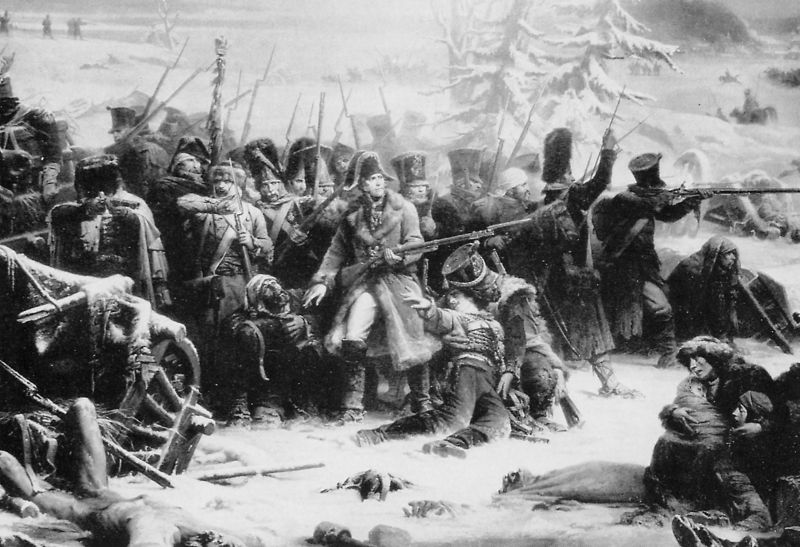
On this date in 1815, Napoleonic Marshal Michel Ney faced a squad of French troops un-blindfolded and gave them the last order of his wild career:

Soldiers, when I give the command to fire, fire straight at my heart. Wait for the order. It will be my last to you. I protest against my condemnation. I have fought a hundred battles for France, and not one against her… Soldiers Fire!

The carrot-topped commander, just seven months Napoleon’s senior, had like the Corsican distinguished himself at arms during the French Revolution.

He shone thereafter as a ballsy* cavalry officer in the Napoleonic Wars — Bonaparte called him le Brave des Braves (“the bravest of the brave”).

Hitching your star to Napoleon’s was a good career move, for sure.

Until right about …


Michel Ney was named Prince de la Moskowa after the Battle of Borodino 1812. Things kind of went downhill from there.

“[W]e are told of the greatness of soul of the marshals, especially of Ney — a greatness of soul consisting in this: that he … escaped to Orsha abandoning standards, artillery, and nine-tenths of his men.” -Leo Tolstoy, War and Peace

Ney was able to keep things cool with Louis XVIII, but when Napoleon returned from Elba and Ney marched out to capture him, both Marshal and army deserted to the old emperor.

Ney often takes a rap for fouling up the reunion tour with a characteristically reckless cavalry charge during the Battle of Waterloo.

But his real problem was that he couldn’t make up his mind or stir his spirit or just plain read the writing on the wall well enough to get out while the getting was good. Though the Bourbons gave him every opportunity to blow town and spare the new-look ancien regime the embarrassment of having to try him, Ney didn’t do it — causing the king to fume,

By letting himself be caught, he has done us more harm than he did [defecting to Napoleon] on the 13th of March!

A vengeful Chamber of Peers, full of radical more-royalist-than-the-king types, gave him no quarter.

The near-unanimous conviction and death sentence were agreed by the Peers around midnight as December 6 became December 7, and the Bravest of the Brave led out near the Luxembourg Garden that very morning to suffer the sentence passed upon him.

The Bravest of the Brave, a 19th-century general history of the man, is available free on Google Books, as are two volumes of memoirs (1, 2) published posthumously by his family.

French speakers can find other free 19th century texts on Ney linked here.

* His reputation for unshakable courage notwithstanding, John Elting says Ney was also a deft hand at executing a cavalry retreat.

On this day..

1859: John Brown’s body starts a-moulderin’ in the grave

That line between “martyr” and “terrorist” is often a matter of historical perspective or even accident.

Were the person’s actions justified?

If not justified, were they at least historically significant?

If not historically significant, did they at least inspire some really great songs?

Or, movies?

John Brown, abolitionist, father of 20 children, advocate of armed insurrection as a direct means of ending slavery, is just such a figure. Before looking at how his actions influenced history, however, it is instructive to consider how history influenced him.

Born into a devout family opposed to slavery on religious and moral grounds, Brown grew up in a vehemently anti-slavery district of Ohio and, as a young man, began training in New England to become a Congregationalist minister.

When money ran out, he returned to Ohio and began a series of variously successful business ventures and married his first wife, with whom he would have seven children. When his businesses failed, he moved to Pennsylvania, buried his wife, married his second, and started a tannery, which began to founder as one of his sons died and Brown fell ill. He moved his family –- now with more than a dozen children –- back to Ohio, where he was hit hard by the economic crisis of 1839 (PDF link). In 1842, he was declared bankrupt; the following year, four more of his children died of dysentery.

In spite of these setbacks, Brown remained dogged in his pursuit of ventures to get himself out of debt, becoming a seasoned expert among small sheep farmers and acting as a self-appointed crusader for their empowerment against the encroaching interests of manufacturers. While this backfired and Brown remained impoverished into the 1850s (thought not as much as when he was declared bankrupt), it solidified his interest in helping the underdog.

Bleeding Kansas

Moral and religious interest in the abolition of slavery had been part of Brown’s upbringing, but it wasn’t until 1855, when five of Brown’s adult sons began sending word of often violent pro-slavery machinations in the Kansas territory, that Brown first became committed to drastic action on behalf of the cause. His strategy wasn’t at first overtly violent, but was rather convinced that the anti-slavery cause could win by the ballot box; over the course of the next year, however, he became convinced that the only sure way of preserve Kansas as a free territory was by “fighting fire with fire” (historical opinion as to the precise extent of the pro-slavery violence in relation to Brown’s later actions is divided).

In 1856, with tensions reaching a boiling point, Brown, four of his sons, and a band of other abolitionists killed five pro-slavery settlers in Franklin County, Kansas in what became known as the Pottawatomie Massacre. No legal retribution was possible or likely; Brown and his party escaped handily (although one of his sons was killed the following August), and Brown spent the next three years using various aliases to travel among abolitionists raising funds to launch an all-out assault on slaveowners back East.

“The crimes of this guilty land will never be purged away but with blood.”

That he chose the federal arsenal in Harpers Ferry, Virginia (now West Virginia) for his historic attack was no accident; it “evinced federal power stained by slavery.”

Brown believed his actions would be the start of a lasting insurrection in which slaves would rise up against their owners in an insurrection that would quickly spread to neighboring counties and throughout the South. While violence was expected, it was to be minimized, and, after the initial raid, used only in self-defense.

Twenty-one men, in total, took part in the raid; Brown’s expected hundreds of recruits never materialized. The slave population never got a chance to rise up against their masters, as townspeople promptly began firing on the raiders; by the morning after the start of the raid, the invaders were surrounded by a company of US Marines.* Brown was captured, along with seven of his men; ten were killed, and four escaped.

Tried in Virginia for murder, treason and conspiracy, Brown was convicted on November 2, just weeks after his failed insurrection, and sentenced to be hanged within a month. His often-cited speech in Court in response to this sentence would become a rallying cry for the abolitionist movement:

This court acknowledges, as I suppose, the validity of the law of God. I see a book kissed here which I suppose to be the Bible, or at least the New Testament. That teaches me that all things whatsoever I would that men should do to me, I should do even so to them. It teaches me, further, to “remember them that are in bonds, as bound with them.” I endeavored to act up to that instruction… Now, if it is deemed necessary that I should forfeit my life for the furtherance of the ends of justice, and mingle my blood further with the blood of my children and with the blood of millions in this slave country whose rights are disregarded by wicked, cruel, and unjust enactments, I submit; so let it be done!

“Make the gallows glorious like the Cross.”

During his last month on Earth, Brown seemed well-aware that he was on his way to be a martyr. Refusing rescue by a supporter who had managed to infiltrate the prison, he wrote letters of valor and conviction which were increasingly picked up by the Northern abolitionst press, and attracted pleas of clemency from sources as removed as Victor Hugo.


Christ-like: The Last Moments of John Brown, by Thomas Hovdenden.

John Brown hanged at Charles Town, Virginia (present-day West Virginia — another thing Virginia lost during the Civil War). This 19th-century drawing is from the Virginia Military Institute archive of the event, which includes eyewitness accounts of soldiers who attended the hanging, including Thomas “Stonewall” Jackson.

Hanged in the mid-morning of December 2, 1859, Brown stated ominously: “I, John Brown, am now quite certain that the crimes of this guilty land will never be purged away but with blood. I had, as I now think, vainly flattered myself that without very much bloodshed it might be done.”

Brown’s dramatic enactment of an attempted armed insurrection –- even an abortive one –- stoked longstanding Southern fears of slave rebellions, leading the South to reorganize and equip its outdated militias, and the Union to increasingly valorize a man who held, with sheer and utter clarity, the very convictions in which they must needs believe to fight and win the coming War Between the States.

Called a “misguided fanatic” by the man who would lead that war, Brown’s actions nonetheless both hastened the inevitable schism already drawn so dramatically across a nation in which one out of every ten human beings was held in legal bondage, as well as gave moral and spiritual courage to those who would ultimately rise to eradicate it.

“His soul goes marching on…”

Or in the words of Frederick Douglass:

Did John Brown draw his sword against slavery and thereby lose his life in vain? And to this I answer ten thousand times, No! No man fails, or can fail, who so grandly gives himself and all he has to a righteous cause. No man, who in his hour of extremest need, when on his way to meet an ignominious death, could so forget himself as to stop and kiss a little child, one of the hated race for whom he was about to die, could by any possibility fail.

Did John Brown fail? Ask Henry A. Wise in whose house less than two years after, a school for the emancipated slaves was taught.

Did John Brown fail? Ask James M. Mason, the author of the inhuman fugitive slave bill, who was cooped up in Fort Warren, as a traitor less than two years from the time that he stood over the prostrate body of John Brown.

Did John Brown fail? Ask Clement C. Vallandingham, one other of the inquisitorial party; for he too went down in the tremendous whirlpool created by the powerful hand of this bold invader. If John Brown did not end the war that ended slavery, he did at least begin the war that ended slavery. If we look over the dates, places and men for which this honor is claimed, we shall find that not Carolina, but Virginia, not Fort Sumter, but Harpers Ferry, and the arsenal, not Col. Anderson, but John Brown, began the war that ended American slavery and made this a free Republic. Until this blow was struck, the prospect for freedom was dim, shadowy and uncertain. The irrepressible conflict was one of words, votes and compromises.

When John Brown stretched forth his arm the sky was cleared. The time for compromises was gone – the armed hosts of freedom stood face to face over the chasm of a broken Union – and the clash of arms was at hand. The South staked all upon getting possession of the Federal Government, and failing to do that, drew the sword of rebellion and thus made her own, and not Brown’s, the lost cause of the century.

For more John Brown:

* Under the command of future Confederate General Robert E. Lee.

On this day..

1922: Robert Erskine Childers, for carrying the gun of Michael Collins

On this date in 1922, Robert Erskine Childers was shot by the Irish Free State for carrying a gun its founding colossus had gifted him.

Many Irishmen were executed on either side in this terrible time, but Childers cuts a unique figure among them.

To begin with, he wasn’t all that Irish — “that damned Englishman,” fellow Republican turned Civil War enemy Arthur Griffith called him. The London-born son of a British scholar and an Irish mother, Childers was a lifelong Protestant, itself an anomaly since Irish nationalism mapped (and still maps) strongly to Catholicism.

You’d think he’d be a loyal man of the empire. Early on, that’s just what he was.

In his twenties, Childers volunteered for the Boer War, and he would later say the rank savagery and underlying injustice of England’s war “changed the whole current of my life and made me a Liberal and a Nationalist.” (Source.)

Laying down the sword, Childers took up the pen and wrote several books of military history. (Long since into the public domain, at least two can be read free online: War and the Arme Blanche, German Influence on British Cavalry.) He also wrote a novel, The Riddle of the Sands, that has a (debatable) claim as the first spy novel. Riddle has never gone out of print since it was published in 1903, though it is also available free online.

Both in fiction and nonfiction, Childers’ warnings against the German challenge to British hegemony were prophetic, but he was himself becoming a man divided. 1914 saw him running German guns to Irish nationalists aboard his yacht Asgard … and then signing up for the royal navy when World War I erupted.

The British crackdown on the Easter Rising during the war completed his radicalization; he moved to Dublin and turned his eloquence against the British.

Here, Childers was swept into the tragedy of the Irish War of Independence, and the civil war that followed it; though both were in the delegation that produced the contentious Anglo-Irish Treaty, Childers broke with Michael Collins over it and backed the IRA nationalists who fought the Irish Free State.

After Collins’s assassination, emergency laws promulgated the death sentence for anyone caught armed without authorization. Childers was a writer, not a partisan, but he was arrested in early November with a small sidearm — a gift Michael Collins had given him, back when they were on the same side. It was a time of bloody justice, and they threw the book at him.

Childers knew as well as Collins had that the internecine conflict would have to end. He checked out with awe-inspiring forgiveness; summoning his 16-year-old son to prison the night before his execution, Childers extracted a promise that the boy would find everyone who signed his death warrant … and shake their hands. (Young Erskine Hamilton Childers eventually became President of Ireland.)

Childers himself likewise shook the hands of his own firing squad, one by one. His last words (reported in a number of slightly different variations) were lightheartedly addressed to them:

Take a step or two forwards, lads. It will be easier that way.

On this day..

1924: Daisuke Namba, for the Toranomon Incident

On this date in 1924, just two days after his sentencing, Japanese student Namba Daisuke was hanged for attempting to assassinate the the future emperor Hirohito.

Namba (or Nanba) was a 24-year-old Communist and son of a Japanese parliamentarian.* Inflamed by reports of Japanese atrocities in Korea and by the execution years earlier of leftist agitator Shusui Kotoku, Namba fired a pistol at the 22-year-old Prince Regent in a Tokyo intersection.**

It was a pretty simple case: no doubt he’d done it, and no sympathy for the assailant. The act shook Japan so deeply that Namba’s prosecutors stuck to the story that the offender must be deranged — even though he clearly was not. Under the circumstances, that wouldn’t cut enough ice to mitigate the sentence anyway.

In the words of the judge who sentenced him:

Daisuke has made a blot upon Japanese history. He believed in violence and had determined to kill the Prince Regent. He committed a great crime in attempting to injure the imperial family, which has never oppressed the poor.

To which Daisuke had a direct reply:

Long live the Communist Party of Japan!

As is often the case, the gesture of violence against the established order provoked a still more repressive crackdown. The Prime Minister resigned for the security lapse, to be replaced a more conservative government that pushed through the radical-hunting measures of the Peace Preservation Law.

And the award goes to …

Simple enough as far as the assassin goes.

Let’s take a sideways turn into a digression from the blog’s macabre daily fare to ponder a strangely pleasant ripple effect of this young man’s shot.

According to Ben-Ami Shillony’s Politics and Culture in Wartime Japan, the incident forced the resignation of a senior police official charged with keeping an eye on subversives.

You’re welcome, Ichiro. (The Major League superstar won the Matsutaro Shoriki Award twice during his Japanese professional career, in 1994 and 1995.)

This gentleman, Matsutaro Shoriki, transitioned into a career as a media mogul, building up one of the country’s most prominent papers. In that capacity, he took to promoting baseball in Japan.

Though this imported sport had an existing — and growing — popularity from the first decades of the century, Shoriki became the father of Japanese baseball by sponsoring American all-star teams to play on Japanese tours and creating the country’s first professional baseball team.

Shoriki even survived an assassination attempt of his own, at the hands of a nationalist who thought bringing Babe Ruth to the Land of the Rising Sun was treasonable.

Today, he’s remembered generously and his name adorns one of Japanese baseball’s major awards. But if not for Daisuke Namba’s shot, he might have served those years moving paper in the tokko, trying to ferret out dangerous elements.

* The father had to resign his seat in the Diet, of course; not only his immediate family but his former schoolmasters and his whole hometown were put under the pall. According to Time, Namba’s relatives were formally released from their debt of shame by Hirohito in 1926, and took the unblemished name Kurokawa.

** Hirohito did not become Emperor until his father’s death in 1926.

On this day..

1817: Policarpa Salavarrieta, Colombian independence heroine

This morning in 1817, a Colombian seamstress was shot in Bogota for spying on the Spanish forces fighting to quell South America’s Bolivarian independence movements.

Policarpa Salavarrieta — it was the name her brother used for her; her legal given name and origin are romantically lost — was infiltrated into Bogota during the reconquista, when a Spain recovering from Napoleon’s intrusion deployed in force to quash the separatist aspirations of its New World colonies.

It was the day of Simon Bolivar, but Spain had completed its apparent pacification of New Granada* in 1816, and established a stronghold in Bogota. Subversives had to mind their P’s and Q’s.

Although she was a known agitator in the city of Guadas, “La Pola” could slip into Bogota without drawing attention.

There, she used her skills as a domestic to hang around royalist households, sewing up clothes while snooping around, and helping revolutionaries recruit soldiers.

She was arrested when the Spanish busted the network, (the link is in Spanish) and shot publicly with her lover, Alejo Sabarain, and a number** of others — all men, none of them half so well-remembered or beloved as Salavarrieta. She was supposed to have ignored the priests murmuring te deums in her ear on the scaffold in order to exhort the onlookers to resistance.

Over the years to come, she would become an emblematic martyr of independence; just see how many times her theme is visited in this history of Colombian painting (Spanish again). She’s also the only historical (not mythological/allegorical) woman ever used on Colombian currency.

As will be readily surmised, of course, she merits her tribute because the movement in whose service she died soon rallied and carried the day.

* The Spanish territory of New Granada encompassed most of the ice cream of the South American cone.

** Various numbers are given for the day’s total execution count. This site (Spanish) says a total of nine — Policarpa Salavarrieta and eight men, including Alejo Sabarain — and persuasively names all of them.

On this day..

1887: Parsons, Spies, Fischer and Engel, the Haymarket Martyrs

On this date in 1887, the Chicago political machine hanged four at Cook County Jail to defend civilization from the eight-hour day.

The Haymarket martyrs, as they would be remembered ere the hysterical atmosphere of their sentencing had passed, were four from a group of eight anarchist agitators rounded up when a never-identified person threw a bomb at Chicago police breaking up a peaceful rally. The bomb killed one cop; the indiscriminate police shooting that followed killed several more in friendly fire, plus an uncertain number of civilians.

The incident occurred just days after nationwide strikes began on May 1, 1886, in support of the eight-hour day. Nowhere were the tensions greater than Chicago, an epicenter of militant organizing. When tens of thousands poured into the streets on May 1, the Chicago Mail darkly said of high-profile radicals Albert Parsons and August Spies,

Mark them for today. Hold them responsible for any trouble that occurs. Make an example of them if trouble does occur.

Sure enough …

Most of the eight hadn’t even been present at the time the bomb was thrown, but the state put anarchism itself on trial under the capacious umbrella of “conspiracy,” in a proceeding so absurdly rigged that a relative of a slain cop was on the jury. Quoth the prosecutor,

Law is upon trial. Anarchy is on trial. These men have been selected, picked out by the grand jury and indicted because they were leaders. They are no more guilty than the thousand who follow them. Gentlemen of the jury; convict these men, make examples of them, hang them and save our institutions, our society.

That was the argument for hanging them. And right-thinking burghers applauded it.

Seven of the eight were condemned to die; two had their sentences commuted, but the other five refused to ask for clemency on the grounds that, innocent, they would “demand either liberty or death.” One of those five, Louis Lingg, painfully cheated the hangman by setting off a blasting cap in his mouth the night before his execution. (Lingg might have made, though seemingly not thrown, the mysterious bomb.)

The others — Parsons and Spies, along with Adolph Fischer and George Engel — hanged together, with their epitaphs upon their lips — literally so for Parsons, whose parting remark is at the base of the Haymarket Martyrs Monument*

“The time will come when our silence will be more powerful than the voices you are throttling today.”

“Throttle” was right, as the Chicago Tribune reported the next day, taking up when the trap was sprung:

Then begins a scene of horror that freezes the blood. The loosely-adjusted nooses remain behind the left ear and do not slip to the back of the neck. Not a single neck is broken, and the horrors of a death by strangulation begin.

Six years later, Illinois Gov. John Altgeld granted the free pardon the hanged men had demanded to the three surviving Haymarket anarchists. There is no institutional mechanism to determine erroneous executions in American jurisprudence — a fact that occasionally leads to smugly circular avowals that nobody recently executed has ever been “proven” innocent — and death penalty researchers Michael Radelet and Hugo Bedau believed as of this 1998 paper (pdf) that Altgeld’s executive statement flatly asserting the injustice of the Haymarket convictions was the most recent official acknowledgment of a wrongful execution in U.S. history. If true, its uniqueness would be understandable: the gesture cost Altgeld his political career.

Long gone as all these principals are, the legacy of Haymarket remains very much with us, and not just as a magnet for digital archives like this, this and this (don’t miss the brass gallows pin).

May 1, now rich with the symbolism of the Haymarket Passion, was soon selected by the international labor movement as the date to resume the eight-hour-day push — thus becoming the global workers’ holiday it remains to this day.

* Opposing interpretations of the Haymarket affair — which can be the “Haymarket riot” or the “Haymarket massacre,” depending on where you line up — were marked by opposing memorials. The police memorial was itself eventually bombed by the Weather Underground, and subsequently squirreled away from easy public view. Paradoxically, the Haymarket Martyrs Monument has been federally dignified as a National Historic Landmark.

On this day..

1841: Hermano Pule and his surviving followers

On this date in 1841, Apolinario de la Cruz was shot at Tayabas for leading a revolt against Spanish occupation of the Philippines.

Known to history as Hermano Pule, the young de la Cruz had dreamt of entering the priesthood — but finding that most barred native Filipinos, he founded the Cofradia de San José (Confraternity of St. Joseph).

Organizing secretly and outside of the approved channels, it gained the enmity of both civilian and religious authorities, though it doesn’t on the surface look like a seditious entity; rather, it attracted Filipinos (and Filipinas) excluded from the official organs. Suddenly, that looked like trouble to Spain.

Condemnation helped the Confradia’s numbers burgeon, and forced its programme towards radicalism: where freedom of religion was forbidden, worship was a revolutionary act.

Matters came to a head when a government raid precipitated armed resistance by Pule and his followers, with the inevitable closing act postponed by an inspiring but short-lived rebel victory at arms. Pule and his followers were overrun on Nov. 1, rounded up as fugitives by the next day, and put to death outside the Tayabas courthouse — with Pule’s head, hands and feet cut off for salutary public display in his adjacent hometown of Lucban (or Lukban).

On this day..