1943: Mildred Fish-Harnack, an American in the German Resistance

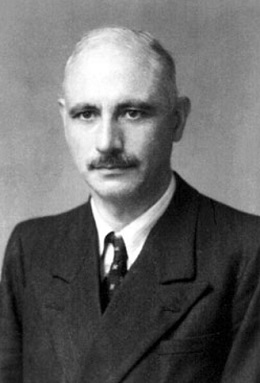
On this date in 1943, the Milwaukee-born translator and historian Mildred Fish-Harnack was beheaded at Plotzensee Prison — the only American woman executed by Hitler’s order.

A graduate student at the University of Wisconsin Milwaukee,* she met German jurist Arvid Harnack when the latter was a visiting scholar at the university’s sister campus in Madison.

In 1929, the couple moved to Germany where they worked as academics: Mildred, a teacher of language and literature; Arvid, of economics and foreign policy.

Both watched the rise of Third Reich with growing horror, and soon began converting their circles of academics, artists, and expats into a hive of opposition doing what they could to aid the many classes of excommunicate humans Berlin was busily proscribing. As the Nazi enterprise intensified, that opposition demanded ever more dangerous — more treasonable — extremities.

Good friends with American diplomats, the Harnacks for a time used Arvid’s placement in the Reich economic ministry to pass information to the United States. In 1940, they made contact with Soviet intelligence and from that time until the Gestapo snatched them in September 1942 the so-called** Red Orchestra sent furtive coded radio transmissions to Moscow reporting war preparations, economic data, and whatever else their circle could lay hands on among their various posts.

We have treated the fate of the Red Orchestra elsewhere in these pages; Mildred Harnack did not go to the meathook-nooses with her husband Arvid and others on December 22 because she was sentenced initially only to a term of years. These judgments came down at just the same time as the USSR was drowning the Wehrmacht in blood at Stalingrad, so there might have been a bit of personal pique when the Fuhrer personally quashed Mildred’s lenient sentence and demanded a, ah, reconsideration.

“And I have loved Germany so much,” she murmured as she was thrown under the fallbeil.

There’s a Mildred-Harnack-Schule in Berlin (also a Mildred-Harnack-Straße); her birthday, September 16, is observed every year in Wisconsin schools — although Mildred’s red associations meant that widespread recognition in her native country had to await the end of the Cold War.


Trailer for a Wisconsin Public Television documentary that can be viewed in full here.

* Then known as the Milwaukee State Normal School.

** Though this is the name history remembers them by, Red Orchestra (Rote Kapelle) was conferred by the German intelligence working to stop them. Confusingly, the name was applied to multiple different, and unrelated, spy networks.

On this day..

1970: Nineteen in Baghdad

From the Jan. 23, 1970 Times of India:

Damascus, January 22.

Iraq’s execution mill worked without let-up today with 36 people put to death in 24 hours — all but seven of them accused of plotting to overthrow the Government.

Seven of the men, not connected with the plot, were convicted in November of spying for the U.S., Radio Baghdad said.

It identified one of them, Albert Nounou, as a Jew.

The 29 people who were accused of trying to overthrow the leftist regime of President Ahmed Hassan al Bakr on Tuesday night and early yesterday faced firing squads or hangmen.

Mr. Bakr addressed crowds outside the Presidential palace, saying that any plot against his Government would “only lead to the cutting of the plotters’ throats,” Radio Baghdad said.

DETAILS GIVEN

The executioners worked past midnight yesterday, carrying out death sentences given to 22 persons convicted of the coup attempt.

Then at dawn, the seven people convicted in November were put to death. A few hours later, Radio Baghdad said six Army officers and a civilian were doomed by a special court for taking part in the attempted coup. Shortly thereafter, the military men were shot by firing squad and the civilian was hanged.

The Government newspaper, “Al Thawra,” said firing squads were using the plotters’ own weapons for the executions.

The Baghdad broadcast said that in addition to the six military men and civilians executed this morning, the court had sentenced three other people to life imprisonment. –U.N.I.

From the Jan. 23, 1970 London Times, under the headline “Toll of executions in Iraq reaches 41”:

Baghdad, Jan. 22. — The abortive coup d’etat in Iraq on Tuesday was engineered with the assistance of the Israel, American, and Iranian secret services, the Iraq news agency said tonight. It made the accusation after the executions of two more soldiers and three civilians, bringing to 41 the total number of alleged plotters executed in Baghdad either by firing squads or hanging since yesterday morning.

Two more men were waiting execution after sentence.

Some 3,000 sub-machineguns, 650,000 rounds of ammunition, and a mobile radio transmitted had been seized, the agency stated.

Earlier today Iraq accused the Iranian Ambassador and four members of his Embassy staff of being implicated in the coup attempt, and ordered them to leave the country within 24 hours.

In Teheran, Iran retaliated by giving the Iraq Ambassador, the military attache, and his three assistants 24 hours to leave Iranian soil. It also ordered the closure of all Iraq consulates in Iran. — Agence France Presse and Reuter

Part of the Daily Double: Saddam Hussein crushes a coup.

On this day..

1864: James Utz, St. Louis spy

Confederate agent James Morgan Utz had a blue Christmas indeed in 1864, awaiting his December 26 execution for espionage.

The Missourian had been captured traveling with a small band out of St. Louis disguised in Union uniforms and carrying supplies and ciphered messages for the invading Confederate army of General (and former governor) Sterling Price.

The federals handled Utz as a spy and a military court sentenced him to hang — a sentence that had already been carried out by the time President Lincoln’s grant of executed clemency arrived.

Tuesday morning last I was horrified at the announcement by a friend that Jas. Utz, Paul’s companion and leader in their attempt to go South, had been executed, being hung on Monday, the day after Christmas, in the jail yard.

It plunged me in a stupor or excitement from which my mind was not free for the entire day. The sentence barely issued and the punishment instantly carried out! The hurry, the suddenness was most revolting. No time given for taking leave of family, friends! No time for appealing for mercy or for a reprieve. No time allowed for composing himself for death!

Diary of a family member of Paul Fusz, one of Utz’s secret party. (Fusz, only 17 when captured, was pardoned after serving six months at hard labor.)

On this day..

1954: Karli Bandelow and Ewald Misera, in the Gehlen-Prozess

On this date in 1954, railway official Ewald Misera and civil engineer Karli Bandelow were beheaded in Dresden as West German spies.

They had been recruited to inform for the West German Gehlen Organization, an intelligence apparatus directed, as its name implied, by former Third Reich spymaster Reinhard Gehlen.

Gehlen had the honor to be dismissed by Hitler in the war’s closing days for his accurately defeatist reports on the overwhelming strength of the advancing Red Army, but for the western Allies — to whom he savvily surrendered — his expertise on and contacts in eastern Europe were very well worth having as the Cold War took shape.

His organization, the precursor to Germany’s present-day intelligence service, naturally set about penetrating East Germany — which was far simpler to do in those early years, before the East all but sealed the border.

East Germany, of course, was equally keen to undermine the Gehlen network’s moles and after the alarm of the June 17, 1953 rising it implemented a concerted effort to bring root out western spies known as Operation Arrow (Pfeil). Mass arrests beginning in October of 1953 swept up hundreds of suspected agents not only for Gehlen but for British, French, and American intelligence.

The consequent trials, or more particularly those targeting West German assets, are collectively known as the Gehlen-Prozess. We have indeed encountered some of its victims already: Elli Barczatis and Karl Laurenz, who would be executed a year after the principals in this post for their own work in Gehlen’s service.

Barczatis and Laurenz had alarmingly close access to the Prime Minister himself, and their trial was a secret one. Bandelow and Misera, by contrast, were civil servants fit for the sort of show trial that the Communist bloc was in these years raising to an art form.

In an orchestrated juridical performance piece from November 1 through 9, Communist Germany aimed “to expose the Gehlen organization as a gang of war criminals, fascists and revenge-seekers that threaten the peace of Germany and the world.”* Five other Gehlen informants besides Bandelow and Misera were convicted at the same proceedings, and sentenced to various prison terms.

Vainly playing for the mercy of the court, Bandelow offered to the spectacle that classic Stalinist flourish, the auto-denunciation of the doomed.

My Judge! I do not wish to speak a last word on my behalf … only to remark that I deeply regret my actions and I am ready for the harshest punishment. …

I call upon all those who like me have betrayed the nation and state to put an end to their criminal activity which threatens to unleash an insane war — call upon them to accept the leniency offered by the government and turn themselves in at once. I wish to cry out to them, take this generous offer so it does not go for you like has gone for me! (Source, in German)

Having done their last duty by the state, Bandelow’s frightened, penitent lips were closed by the fallbeil within 48 hours.

* The words of Anton Plenikowski.

On this day..

1944: Jacques Stosskopf

For most prisoners at the Netzweiler-Struthof concentration camp in Alsace, the fall of 1944 marked a time of disbursement to other detention sites — a clear sign that Allied forces were close at hand.

But both the disbursement order (in mid-September) and the Allied arrival at Struthof (in November) were just a little too late for Jacques Stosskopf, who was executed by the Nazis on Sept. 1 that year, even as the Germans were beginning preparations to disband the camp. How he was executed is unclear; stories from witnesses differ about whether prisoners at the camp were hanged, shot or gassed.

But it isn’t Stosskopf’s end that catches attention; rather, it is how he spent the war years, and his involvement, as a Frenchman, in the German U-boat war.

A native of Paris (born Nov. 27, 1898, in the City of Light), Stosskopf was of Alsatian heritage and spoke fluent German. He joined the French artillery in 1917 and received the French Croix de Guerre for his actions in World War I.

After the war, he entered the Ecole Polytechnique and earned a degree in marine engineering. As World War II approached, Stosskopf was appointed to lead the naval construction unit at Lorient, on the French coast. He eventually was promoted to the rank of Chief Engineer, 1st Class.

In June 1940, the German army took control of Lorient and began using the naval facility there to repair and resupply their U-boats. When they realized that the U-boats were vulnerable to attack by Allied air forces, the Germans set about fortifying the base as a refuge for their submarines.

Stosskopf worked with the Germans to design the new U-boat station, creating one of the most famous and impenetrable naval bases of the war: the double roof over the bunkers allowed them to withstand even a direct bomb hit, so even though the city of Lorient itself was almost 90% destroyed by Allied bomb raids, the bunkers continued to stand.

Between 1940 and 1944, the Germans built three such bunkers, capable of sheltering more than 25 submarines; from these fastnesses, German U-boats carried out relentless attacks against both military and civilian targets.

Because of his involvement with the naval station, Stosskopf was considered a collaborator by the local French citizenry. So when he disappeared in February 1944, they assumed that he had been promoted by his German compatriots and had been called to work in Germany.

In fact, all the while he was working on the U-boat port, Stosskopf had been collaborating not with the Germans but with the Alliance Reseau, a French resistance group headed by Marie-Madeleine Fourcade. Each week, he met with his resistance contact, providing information about boats going out to sea, the names of their captains, and the location of the missions. Because of these reports, many U-boats were intercepted at sea and their captains killed in Allied attacks.

In the end, Stosskopf was given up by a captured member of the Resistance, and he was caught up in the German Nacht und Nebel (Night and Fog) program. This roundup of suspected resistors of the Reich was undertaken by the Germans as a last-ditch attempt to regain some control over a war they could see slipping away; Nacht und Nebel abductees were spirited away at night and disappeared “into the fog” — never to be heard from again.

Stosskopf’s ultimate fate lay at Natzweiler-Struthof, a small concentration camp in the Vosges Mountains, in the Alsace region. Struthof, as it was called, was the only camp built on French territory, and it was the primary holding place for captured members of the French Resistance.

It was also the first camp liberated by the Allies (on Nov. 23, 1944), but by that time, most of the detainees had been evacuated. (For more detailed information on this camp and its prisoners, go to www.scrapbookpages.com/Natzweiler. Or, for a different perspective, read Night and Fog, by Arne Brun Lie, a prisoner’s account of life at Struthof, or the novel Necropolis, by Boris Pahor, a story based on his own experiences at the camp.)

At war’s end, the citizens of Lorient were amazed to learn the truth of Stosskopf’s activities, which were made public when he posthumously received the French Legion of Honour (1945). In 1946, the submarine base at Lorient was renamed in his honor. Today, visitors can tour the base at Lorient and see how it was operated.


Submarine Base Chief Engineer Stosskopf
Arrested and deported by the Gestapo Feb 21, 1944, for his activity in the resistance.
Disappeared.

To get a personal look at Jacques Stosskopf, read Jacques Camille Louis Stosskopf 1898-1944, a book of documents and testimony about his life compiled by his children, Francois Stosskopf and Elizabeth Meysembourg-Stosskopf.

On this day..

1797: David McLane, an American traitor in Quebec

On only one occasion has the sentence of hanging, drawing and quartering been executed on the soil of the (eventual) United States.

But on this date in 1797, that terrible death was visited on American citizen David McLane in Quebec for attempting to topple British authority in that Canadian province.

David McLane, a Rhode Island merchant, was arrested in the suburbs of Quebec City in May of 1797 and accused of conniving with French diplomats to recover their former colony by dint of an invasion of raftborne pikemen across the St. Lawrence to support a planned French landing. This tome claims it to be Quebec’s first treason trial under British rule; the Attorney General prosecuting it thought it the first in the North American colonies since Nicholas Bayard‘s in 1701. (Cobbett’s State Trials has the entire trial transcript.)

The Quebecois spectators crowded the courts in dread of hearing the ancient English punishment pronounced. They were not disappointed.

Writing many decades later about an execution he had witnessed as a 10-year-old boy, Philippe Aubert de Gaspe recollected its grisly particulars — and the surprising (to the audience) fact that McLane was hanged to death before the emasculating-and-disembowelling portions of the sentence were visited on him.*

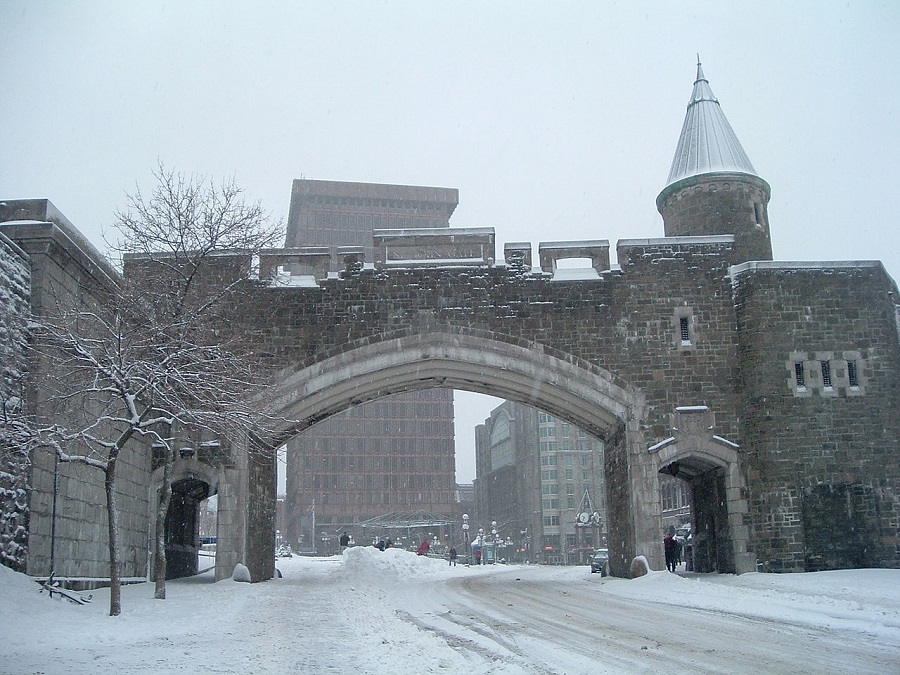
The government having little confidence in the loyalty which the French Canadians had proved during the war of 1775, wished to strike terror into the people, by the preparations for the execution. From the early morning was heard the noise of the pieces of aitillery that were being dragged to the place of execution outside St. John’s gate; and strong detachments of armed soldiers paraded the streets. It was a parody on the execution of the unfortunate Louis 16th and all to no purpose.

I saw McLane conducted to the place of execution, he was seated with his back to the horse on a wood-sleigh whose runners grated on the bare ground and stones. An axe and a block were on the front part of the conveyance. He looked at the spectators in a calm, confident manner, but without the least effrontery. He Was a tall and remarkably handsome man. I heard some women of the lower class exclaim, whilst deploring his sad fate:

Ah if it were only as in old times, that handsome man would not have to die! There would be plenty of girls who would be ready to marry him in order to save his life!

And even several days after the execution, I heard the same thing repeated.

This belief then universal among the lower class must, I suppose, have arisen from the fact that many French prisoners, condemned to the stake by the savages, had owed their lives to the Indian women who had then married them.

The sentence of McLane, however, was not executed in all its barbarity. I saw all with my own eyes, a big student named Boudrault, lifted me up from time to time in his arms, so that I might lose nothing of the horrible butchery. And Dr. Duvert was near us, he drew out his watch as soon as Ward, the hangman, threw down the ladder upon which McLane was stretched on his back, with the cord round his neck made fast to the beam of the gallows; thrown sideways by this abrupt movement the body struck the northern post of the gallows, and then remained stationary, with the exception of some slight oscillations.

“He is quite dead,” said. Dr. Duvert, when the hangman cut down the body at the end of about twenty-five minutes; “he is quite dead, and will not feel the indignities yet to be inflicted on him.” Every one was under the impression that the sentence would be executed in all its rigor, and that the disembowelled victim, still alive, would see his own entrails burnt but no; the poor unhappy man was really dead when Ward cut him open, took out his bowels and his heart which he burnt in a chafing dish, and cut off his head which he showed all bloody to the people.

The spectators who were nearest to the scaffold say that the hangman refused to proceed further with the execution after the hanging, alleging “that he was a hangman, but not a butcher,” and it was only after a good supply of guineas, that the sheriff succeeded in making him execute all the sentence, and that after each act of the fearful drama, his demands became more and more exorbitant. Certain it is that after that time Mr. Ward became quite a grand personage; never walking in the streets except with silk stockings, a three-cornered hat and a sword at his side. Two watches, one in his breeches pocket, and the other hanging from his neck by a silver chain, completed his toilet.

I cannot refrain, in parting from this doer of worthy deeds, from relating a fact which I have never been able to account for. When I arrived in Quebec in order to go to school, at about nine years of age, people seemed to regret a certain good hangman named Bob; he was a negro, whom every one praised. This Ethiopian ought to have inspired the same horror which is always felt towards men of his calling; but, on the contrary he visited at all the houses like the other citizens, enjoyed a name for unimpeachable honesty, ran errands, in fact was a universal favorite. As well as I can remember, there was something very touching in Bob’s history; he was a victim of circumstances, which compelled him to become a hangman in self-defence. He used to shed tears when he had to perform his terrible task. I do not know why my memory, generally so tenacious concerning all I saw and heard in my early childhood, fails me in the matter of explaining the reason of the universal sympathy extended to Bob.**

Now I return to McLane. Such a spectacle as I have described could not fail to make a great impression on a child of my age; hence it arises that I have thought a great deal about the fate of a man, whom many people looked upon as a victim to the politics of the day. I have tried to satisfy myself as to his greater or less guilt. I could say a great deal on this subject; but I will be silent. Suffice it to say, that if in these days a boasting Yankee were to proclaim to all comers, that with five hundred able men, armed with sticks hardened in the fire, it would be easy to take the town of Quebec, the young men would crowd round him to humor him and encourage him to talk, and then giving him lots of champagne to drink, would laugh heartily at him, without the government dreaming of having him hung, drawn and quartered.

It has been said that McLane was an emissary of the French government; I do not myself believe so; the French republic, at war with all the European powers, had too much work on its hands to concern itself about a little colony, containing some millions of acres of snow; to use an expression not very flattering to us.

The policy of our then rulers was crafty and hence cruel. Every where they thought they discovered emissaries of the French government. There were two Canadians banished from the country, their crime being that they had been to Martinique in, I believe, an American vessel, to transact some commercial business: they granted them the favour of allowing them to take with them their wives and children.

* Actual complete hung, drawn, quartered sentences were already passe in Great Britain.

** Colonial Quebec had several black executioners; the best-known was Martinican slave Mathieu Léveillé from 1733 to 1743. (There an interesting .pdf about Leveille and his world here.)

The identity of the affable “Bob” our narrator half-remembers is a bit of a mystery; he has been identified with George Burns, a black man who held the job in the early 1800s, but the timetable isn’t quite right relative to de Gaspe’s admittedly distant memories. (The diarist thinks Bob was the former executioner by the time concerned with our post.) Frank Mackey in Done with Slavery: The Black Fact in Montreal, 1760-1840 suggests we take the name at face value and identify this executioner as either or both of “Bob a Nigro man” jailed as a felon in 1781 (we don’t know that Bob a Nigro man became a hangman), or “Robert Lane the Hangman” who was charged with a crime in 1789 (we don’t know that Robert Lane the Hangman was African). Mackey suspects that these are one and the same man.

On this day..

1584: Francis Throckmorton, plotter

Francis Throckmorton (Throgmorton), was executed at Tyburn on this date in 1584 for his plot to make Mary, Queen of Scots the Queen of England, too.

The son of a prominent Warwickshire family — his father’s monumental tomb still adorns the church at Coughton, while London’s Throgmorton Street is named for our guy’s uncle NicholasFrancis was a staunch Catholic who as a 20-something man on the make did a continental tour where he huddled with papist exiles cogitating how to win England back for the faith.

Naturally many a plot centered on the Catholic Queen of Scotland Mary, who as Henry VIII’s great-niece stood well within the scope of consanguinity necessary to rule England with legitimacy. (Mary’s son James VI of Scotland and James I of England would do justice that.)

On his return to London in 1583, the subtle agents of Elizabeth’s spymaster Francis Walsingham sniffed out his project to establish a line of communication from Mary to the Duke of Guise who contemplated a pro-Mary invasion.

“I have seen as resolute men as Throckmorton stoop, notwithstanding the great shew he hath made of a Roman resolution,” Walsingham prophesied of the obdurate young man whose fidelity to his project was to be tested by torture in the Tower. “I suppose the grief of the last torture will suffice, without anye extremity of racking, to make him more comformable than he hath hitherto showed himself.”

Indeed Throckmorton did succumb.

The ensuing bust-up of his plot forms a station on Queen Mary’s own path to Calvary: the treasonable design empowered Walsingham successfully to impel creation of the Bond of Association, a sort of legal pledge to execute anyone who attempted to usurp Elizabeth. That “bond” was called in two years later by Mary’s connection to the Babington Plot, leading directly to the Scots queen’s own trial and execution.

* Throckmorton’s plot also resulted in the expulsion of Spanish ambassador Bernardino de Mendoza, an energetic spy for the Catholics’ overseas allies.

On this day..

2014: Amin Abdullah Mohammed Al-Mu’alimi, an American spy in the Arabian peninsula

On this day last year, Al-Qaeda’s Ansar Al-Sharia group (Partisans of Islamic Law) executed an alleged American spy in the town of Shahr, in southeast Yemen.

Al-Qaeda also released a video (titled “An American Spy in the Arabian Peninsula”) in which a man calling himself Amin Abdullah Mohammed Al-Mu’alimi denounced himself as a spy and saboteur, who had placed tracking chips that enabled the U.S. to target militants with drones.

His bullet-riddled body was found lashed to the goalposts on a dirt football pitch.

On this day..

1979: Julio Vargas Garayar, the last executed in Peru

This date in 1979 saw the last use of capital punishment in Peru. An Air Force sergeant named Julio Vargas Garayar was shot for selling classified information under the military junta of Francisco Morales Bermudez.

Peru abolished the death penalty later that same year as part of its uneasy transition to civilian rule: the country’s 1979 constitution restricted the death penalty to state offenses during wartime: treason, genocide, crimes against humanity, terrorism, war crimes, and murder.

Although Peru in subsequent years has had its share of conflict and extrajudicial executions, it has never since conducted an official execution — notwithstanding Alan Garcia‘s mid-2000s rumblings about amending the constitution to reintroduce the death penalty for child rape.

On this day..

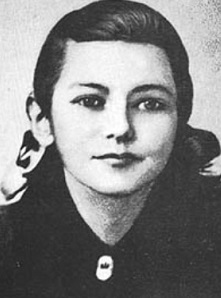
1944: Zinaida Portnova, Komsomol hero

On this date in 1944, Soviet partisan Zinaida Portnova was executed by the Germans occupying Belarus.

The youngest-ever female Hero of the Soviet Union (she was posthumously decorated in 1958), the Leningrad-born Portnova had a rude start in insurgency when the German blitz swept past her summer camp in Belarus and trapped her behind lines.

Said to have been radicalized when occupying soldiers struck her grandmother, the girl joined the youth arm of the local resistance, dubbed the “Young Avengers”.

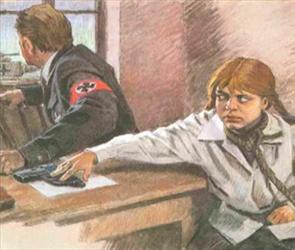
From surveilling enemy troop deployments and assembling weapons caches, Zinaida Portnova graduated to sabotage and ambushes … and capture. Even then she pulled off an action hero escape by snatching a gun and shooting her way out of custody, only to be re-arrested shortly thereafter.

She was shot a month shy of her 18th birthday.

A large number of Pioneer youth groups were subsequently dedicated to Zinaida Portnova, as was a museum of the Komsomol underground and a public monument in Minsk. She remains to this day an honored martyr of the Great Patriotic War.

On this day..