1499: Edward, Earl of Warwick, the last Plantagenet claimant

On this date in 1499, the Plantagenet prince Edward, Earl of Warwick lost his head — and his once-mighty house lost its last direct male successor to its claim upon kingship.

A lagging casualty of the Wars of the Roses, little Ted was only three when he lost his old man to a treason charge and a butt of malmsey. The same blade dangled close to Edward’s neck throughout his few years, for he became a potential royal claimant after his young cousins, the Princes in the Tower, were killed off in 1483.

Warwick was all of eight years old at that moment. When he was 10, he was shut up in the Tower of London by Henry VII, never really to leave it again.* “Being kept in the Tower from his tender age, that is to say from his first year of the king [i.e., of Henry VII’s reign] to this fifteenth year, out of all company of men and sight of beasts, in so much that he could not discern a goose from a capon,” in the words of chronicler Edward Hall. Some historians have taken that to mean that Edward was was mentally disabled, but under the circumstances, who wouldn’t be?*

It was cold and eminently practical mistreatment, for this boy however innocent in his own person was the potential champion of the Yorkists. In 1487, an abortive rebellion arose in Warwick’s name, with a 10-year-old kid named Lambert Simnel presented as a faux-Edward. Henry crushed the rebellion and was obliged to make his proofs to the populace by parading the real Edward around London which was at least a rare excursion outside the Tower walls for the tween hostage.**

Pretenders tossed the boy prisoner hither and yon on the currents of fortune. The next one to have a go at Henry, a Low Countries twerp named Perkin Warbeck who claimed to be one of the lost Princes in the Tower, mounted landings in the mid-1490s, vainly hoping to spark a general revolt. After he was finally captured in 1497, he wound up in the Tower with poor Warwick. Warbeck persuaded the desperate youth upon a desperate course — or was it by the intentional policy of that scheming king to dispose of a threat and thereby cinch that famously ill-fated Spanish marriage so productive of clientele for our grim annals? A century-plus later, Francis Bacon described in History of the Reign of King Henry VII the popular suspicion that had attached to this convenient tying up of loose ends:

it was ordained, that this winding-ivy of a Plantagenet should kill the true tree itself. For Perkin, after he had been a while in the Tower, began to insinuate himself into the favour and kindness of his keepers, servants to the lieutenant of the Tower Sir John Digby, being four in number; Strangeways, Blewet, Astwood, and Long Roger. These varlets, with mountains of promises, he sought to corrupt, to obtain his escape; but knowing well, that his own fortunes were made so contemptible, as he could feed no man’s hopes, and by hopes he must work, for rewards he had none, he had contrived with himself a vast and tragical plot; which was, to draw into his company Edward Plantagenet earl of Warwick, then prisoner in the Tower; whom the weary life of a long imprisonment, and the often and renewing fears of being put to death, had softened to take any impression of counsel for his liberty. This young Prince he thought these servants would look upon, though not upon himself: and therefore, after that by some message by one or two of them, he had tasted of the earl’s consent; it was agreed that these four should murder their master the lieutenant secretly in the night, and make their best of such money and portable goods of his, as they should find ready at hand, and get the keys of the Tower, and presently let forth Perkin and the earl. But this conspiracy was revealed in time, before it could be executed. And in this again the opinion of the King’s great wisdom did surcharge him with a sinister fame, that Perkin was but his bait, to entrap the earl of Warwick.

… Howsoever it were, hereupon Perkin, that had offended against grace now the third time, was at the last proceeded with, and by commissioners of oyer and terminer arraigned at Westminster, upon divers treasons committed and perpetrated after his coming on land within this kingdom, for so the judges advised, for that he was a foreigner, and condemned, and a few days after executed at Tyburn; where he did again openly read his confession, and take it upon his death to be true. This was the end of this little cockatrice of a King, that was able to destroy those that did not espy him first. It was one of the longest plays of that kind that hath been in memory, and might perhaps have had another end, if he had not met with a King both wise, stout, and fortunate.

And immediately after was arraigned before the Earl of Oxford, then for the time high steward of England, the poor Prince, the Earl of Warwick; not for the attempt to escape simply, for that was not acted; and besides, the imprisonment not being for treason, the escape by law could not be treason, but for conspiring with Perkin to raise sedition, and to destroy the King: and the earl confessing the indictment, had judgment, and was shortly after beheaded on Tower-hill.

This was also the end, not only of this noble and commiserable person Edward the earl of Warwick, eldest son to the duke of Clarence: but likewise of the line male of the Plantagenets, which had flourished in great royalty and renown, from the time of the famous King of England, King Henry the second. Howbeit it was a race often dipped in their own blood. It hath remained since only transplanted into other names, as well of the imperial line, as of other noble houses. But it was neither guilt of crime, nor treason of state, that could quench the envy that was upon the King for this execution: so that he thought good to export it out of the land, and to lay it upon his new ally, Ferdinando King of Spain. For these two Kings understanding one another at half a word, so it was that there were letters shewed out of Spain, whereby in the passages concerning the treaty of marriage, Ferdinando had written to the King in plain terms, that he saw no assurance of his succession, as long as the earl of Warwick lived; and that he was loth to send his daughter to troubles and dangers. But hereby, as the King did in some part remove the envy from himself; so he did not observe, that he did withal bring a kind of malediction and infausting upon the marriage, as an ill prognostic: which in event so far proved true, as both Prince Arthur enjoyed a very small time after the marriage, and the lady Catharine herself, a sad and a religious woman, long after, when King Henry the eighth his resolution of a divorce from her was first made known to her, used some words, that she had not offended, but it was a judgment of God, for that her former marriage was made in blood; meaning that of the earl of Warwick.

* The situation reminds of little Tsar Ivan VI in the 18th century, although that Russian prince was held from an even younger age, under even more oppressive conditions.

** Being only a figurehead, the pretend Warwick ironically enjoyed great mercy compared to the real one. Simnel was installed in Henry’s kitchens instead and lived out a comfortable life in the royal household.

On this day..

1954: Jonas Žemaitis, Lithuanian Forest Brother

Lithuanian anti-Soviet partisan Jonas Žemaitis was shot in Moscow’s Butyrka prison on this date in 1954. He’s one of the big names in the Forest Brothers movement that kept up a hopeless fight against Moscow from 1944 into the 1950s.

An artillerist of Polish ancestry who deserted the retreating Red Army and surrendered himself the Wehrmacht arriving in the summer 1941, Žemaitis is breezily credited in state histories (and as of this writing, both English and Lithuanian Wikipedia pages) of essentially taking the war years off because “he did not want to serve the Nazis.” That was sure considerate of the Nazis! Instead the fellow just mined peat since he preferred not to get involved.
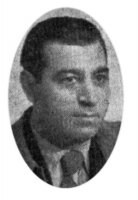
Now, peat production was and is an important economic sector in Lithuania; indeed, even this seemingly innocuous activity hints at exploitation of Jewish slave labor. But there is circumstantial and even eyewitness evidence that Žemaitis’s participation in one of the Reich’s most thorough exterminations was quite a bit more nefarious than vegetation management.

One could turn here to Joseph Melamed, a survivor of the Kovno Ghetto who collected witness testimonies and published thousands of names of alleged Lithuanian “Jew-Shooters” (zydsaudys). Melamed has charged that Žemaitis put his Polish fluency to use facilitating genocide and “having proved his efficiency and diligence in murdering Jews, was rewarded by the SS and promoted to the rank of Colonel” in the Police Battalions, Lithuanian paramilitaries that worked hand in glove with Nazi executioners.*

Or alternatively, one could rely on the plain fact that Žemaitis was a trained, early-30s officer in a desperate war zone where everyone was being pressed into action, and that anti-Soviet fighters afterwards treated him as a General. That’s not the profile of a figure who simply kept his head down while the Great War raged past him.

The post-USSR independent state of Lithuania, which has not been shy about whitewashing Holocaust collaborators, absolutely rejects such inferences and has retroactively elevated Žemaitis to its officially recognized head of state during his postwar resistance; there’s a Vilnius military academy that’s named for him.

* Melamed is now deceased but during his latter years Vilnius accused him of slander. Modern Lithuania is ferociously determined about apotheosizing the Forest Brothers; officially, the Venn diagram between wartime genocidaires and the postwar anti-Soviet resistance consists of two different shapes on two different planets.

On this day..

1939: Manuel Molina, Valencia socialist

Spanish trade unionist Manuel Molina Conejero was shot in Paterna on this date in 1939. Expect Spanish-language links throughout this post.

A longtime labor activist and (in 1910) co-founder of the mechanical sawmills union, Molina won election as a deputy of the Spanish Socialist Workers Party (PSOE) in 1936 — the left-wing electoral victory that triggered General Francisco Franco’s rebellion and the start of the Spanish Civil War.

Molina was part of PSOE’s moderate faction, led by Indalecio Prieto, and was appointed civil governor of Valencia when Prieto’s rival Francisco Largo Caballero was forced to resign the presidency during the chaotic Barcelona May Days.

He was arrested by the Francoists upon their victory in the civil war.

There’s a street named for him in his home city.

On this day..

1663: Volkmar Limprecht

Volkmar Limprecht, a pedagogue and city councilor of Erfurt in Thuringia, was beheaded on this date in 1663. Almost all the links in this post are in German.

“A Mephistophelian mixture of reckless egoistic ambition and restless energy, worldly agility, and unfettered frivolity,” our man Limprecht was a pedagogue turned demagogue who won election to the city council and briefly rode his acumen to control of the city and the absurd prospect of asserting leadership of the Electorate of Mainz.

The Elector, Johann Philipp von Schoenborn, dispatched an army to Erfurt to put it in its place, leading the city’s other grandees to overthrow Limprecht for self-preservation and have him condemned a traitor. He was beheaded the day after his sentence, and his head mounted on a spike as a gesture of submission to the Elector.

Google Books has digitized a public domain blackletter summary of the man’s fall here.

On this day..

1863: Angel Vicente Peñaloza, “Chacho”

Angel Vicente Peñaloza — “Chacho” to friends and to history — was stabbed and shot to death on this date in 1863.

This caudillo was a casualty of Argentina’s long, long conflict between unitarians looking to centralize the state and federalists looking to hold power devolved to their own provinces. Chacho (English Wikipedia entry | Spanish) stood in the latter camp.

A career officer from a prosperous ranching family, Peñaloza had become the caudillo of his native La Rioja province by the 1850s — meaning he was also its key military leader when unitarian-federalist hostilities turned kinetic from 1858.

His skirmishes with the unitarian president Bartolome Mitre saw Chacho hopelessly outgunned, but an attempt between the rivals to conclude a peace treaty turned sour over a prisoner exchange — whose quota Mitre allegedly met with corpses rather than living fighters. Chacho rose again, for the last time, in March 1863, writing angrily to Mitre that his

governors are become the executioners of the provinces … they banish and kill respectable citizens without trial solely because they belong to the federal party.

That is why, Mr. President, that the people, tired of a despotic and arbitrary domination, have proposed justice, and all men who have nothing to lose would rather sacrifice their existence on the battlefield, defending their liberties and their laws and their most precious interests trampled by vile perjurers.

It was just the invitation Mitre needed to crush him: Peñaloza’s several thousand followers were simply outlawed, giving soldiers and militia carte blanche to murder them at discretion. Captured at the village of Olta, he was summarily killed later that same day by the commander in the field and they didn’t stop there: Chacho’s head was nailed up in the town square, and his widow made to sweep the streets of San Juan, manacled in disgrace.

His doomed rebellion has seen him to a heroic posthumous reputation, buttressed by the verse homage of poet Olegario Victor Andrade. There’s also a rampant equestrian monument to the martir del pueblo near Olta.


(cc) image by masterrp.

On this day..

1919: Wesley Everest lynched during the Centralia Massacre

A century ago today, an Armistice Day parade turned the Pacific Northwest logging town of Centralia, Washington into a battlefield. By the time night fell on the Centralia Massacre* four American Legionnaires had been shot dead … and then the cover of darkness was used to revenge them with the lynching that evening of Wobbly labor agitator Wesley Everest.

Before Amazon and Starbucks and Microsoft and even before Boeing, the economic engine of early Washington state consisted of cutting down its mighty ancient trees.

The spruce and fir trees were torn from the verdant Northwest by rough men working dangerous jobs in brutally exploitive conditions. “Loggers dealt with adulterated food, fleas and other vermin in their overcrowded housing, straw for bedding, the smell of disgusting wet socks drying near the bunkhouse’s one heater, latrines located directly next to the dining hall so that they could smell feces when they sat down to eat, etc.,” writes labor historian Erik Loomis. “They were paid next to nothing for their work and frequently ripped off by a collusion of timber operators and employment agencies.”

Small wonder that this part of the world yielded ready soil for radical labor organizers. The syndicalist labor union Industrial Workers of the World (IWW, familiarly nicknamed “Wobblies”) made notable inroads there.


Section of the map of the Northern Pacific rail network (rail lines in red), circa 1900.

In the town of Centralia, inland and convenient to the continent-straddling Northern Pacific Railway which whisked away the produce of her logging camps, Wobblies’ presence dated back at least as far as 1914.

They’d been the locus of violence previous to the events in this post: in 1918, a Red Cross parade addled on wartime jingoism turned into the sack of the IWW’s union hall. Vowing that they’d not suffer invasion again the Wobblies armed themselves, and they were on guard for the large parade Centralia had scheduled for the first anniversary of the Great War’s end — suspiciously routed to pass right in front of the new IWW hall.

Every history of the Centralia Massacre says at this point that the facts are in dispute as to who started what on that day, but it can be fairly said that a deliberate provocation deliberately provoked and before you knew it war veterans of the then-newformed American Legion were storming the Wobblies, under gunfire.

Ere the hive of radicalism was overrun, three Legionnaires had been shot dead.

Meanwhile, fleeing via an adjacent alley as he reloaded his .44 pistol went one of the hall’s armed defenders, Wesley Everest. The enraged mob pursued him, and as the IWW’s (obviously partisan) official site observes, this fact likely saved other Wobblies in the hall from summary execution. Instead they were bundled into jail where they’d soon be joined by Mr. Everest.

Running pell-mell down the alley the mob gave a shout of exaltation as Everest slowed his pace and turned to face them. They stopped cold, however, as a number of quick shots rang out and bullets whistled and zipped around them. Everest turned in his tracks and was off again like a flash, reloading his pistol as he ran. The mob again resumed the pursuit. The logger ran through an open gateway, paused to turn and again fire at his pursuers; then he ran between two frame dwellings to the open street. When the mob again caught the trail they were evidently under the impression that the logger’s ammunition was exhausted. At all events they took up the chase with redoubled energy. Some men in the mob had rifles and now and then a pot-shot would be taken at the fleeing figure. The marksmanship of both sides seems to have been poor for no one appears to have been injured.

DALE HUBBARD

This kind of running fight was kept up until Everest reached the river. Having kept off his pursuers thus far the boy started boldly for the comparative security of the opposite shore, splashing the water violently as he waded out into the stream. The mob was getting closer all the time. Suddenly Everest seemed to change his mind and began to retrace his steps to the shore. Here he stood dripping wet in the tangled grasses to await the arrival of the mob bent on his destruction. Everest had lost his hat and his wet hair stuck to his forehead. His gun was now so hot he could hardly hold it and the last of his ammunition was in the magazine. Eye witnesses declare his face still wore a quizzical, half bantering smile when the mob overtook him. With the pistol held loosely in his rough hand Everest stood at bay, ready to make a last stand for his life. Seeing him thus, and no doubt thinking his last bullet had been expended, the mob made a rush for its quarry.

“Stand back!” he shouted. “If there are ‘bulls’ in the crowd, I’ll submit to arrest; otherwise lay off of me.”

No attention was paid to his words. Everest shot from the hip four times, — then his gun stalled. A group of soldiers started to run in his direction. Everest was tugging at the gun with both hands. Raising it suddenly he took careful aim and fired. All the soldiers but one wavered and stopped. Everest fired twice, both bullets taking effect. Two more shots were fired almost point blank before the logger dropped his assailant at his feet. Then he tossed away the empty gun and the mob surged upon him.

The legionaire who had been shot was Dale Hubbard, a nephew of F.B. Hubbard, the lumber baron. He was a strong, brave and misguided young man — worthy of a nobler death.

“LET’S FINISH THE JOB!”

Everest attempted a fight with his fists but was overpowered and severely beaten. A number of men clamoured for immediate lynching, but saner council prevailed for the time and he was dragged through the streets towards the city jail. When the mob was half a block from this place the “hot heads” made another attempt to cheat the state executioner. A wave of fury seemed here to sweep the crowd. Men fought with one another for a chance to strike, kick or spit in the face of their victim. It was an orgy of hatred and blood-lust. Everest’s arms were pinioned, blows, kicks and curses rained upon him from every side. One business man clawed strips of bleeding flesh from his face. A woman slapped his battered cheek with a well groomed hand. A soldier tried to lunge a hunting rifle at the helpless logger; the crowd was too thick. He bumped them aside with the butt of the gun to get room. Then he crashed the muzzle with full force into Everest’s mouth. Teeth were broken and blood flowed profusely.

A rope appeared from somewhere. “Let’s finish the job!” cried a voice. The rope was placed about the neck of the logger. “You haven’t got guts enough to lynch a man in the daytime,” was all he said.

At this juncture a woman brushed through the crowd and took the rope from Everest’s neck. Looking into the distorted faces of the mob she cried indignantly, “You are curs and cowards to treat a man like that!”

There may be human beings in Centralia after all.

Wesley Everest was taken to the city jail and thrown without ceremony upon the cement floor of the “bull pen.” In the surrounding cells were his comrades who had been arrested in the union hall. Here he lay in a wet heap, twitching with agony. A tiny bright stream of blood gathered at his side and trailed slowly along the floor. Only an occasional quivering moan escaped his torn lips as the hours slowly passed by.

Dead in the fray outside the union hall were three World War I soldiers: Arthur McElfresh, Ben Cassagranda, and Warren Grimm, the last of whom had the distinction of participating in the unsuccessful American invasion of Bolshevik Russia — plus Dale Hubbard, the man shot dead while attempting to apprehend Everest. All four were Legionnaires who have been honored as martyrs by that organ ever since.**

The IWW, conversely, says the same for Everest, for once night fell he was hauled from his cell and lynched to Mellen Street Bridge: “Hangman’s Bridge” as it was later known — although the present-day bridge dates only to 1958, replacing Everest’s gallows.

And even though anyone involved is long dead by now the affair has remained a charged topic for the hundred years from that day to this; a local newspaper marked the centennial by noting that memorial events by the respective factions’ descendants brought “confrontation even now, even about how to memorialize the dead and imprisoned.” (Although Everest was the only Wobbly lynched, a number of his comrades tossed into prison for years on trumped-up charges, prey to the Red Scare run amok in those years; even the union’s lawyer was prosecuted, albeit unsuccessfully. It goes without saying that nobody ever answered for the lynching.)

There has been for many decades a memorial in Centralia’s George Washington Park commemorating the dead Legionnaires; more recently, Centralia’s cityscape was also enhanced by a rival mural celebrating Everest.


“The Resurrection of Wesley Everest” by activist muralist Mike Alewitz (1997). (cc) image by Richard Colt.

* Also sometimes called the “Centralia Tragedy”. It’s not to be confused with the U.S. Civil War’s Centralia Massacre — which occurred in 1864 in a town of the same name in the bloody border state of Missouri. North America has numerous settlements called Centralia including several with no massacre at all, yet.

** Four Legionnaires plus Wesley Everest make five victims for Armistice Day. There’s a sixth man whose death can be attributed to the affair: a sheriff’s deputy who was mistakenly shot dead a couple of days later when he was unable to give the countersign to a paranoid posse.

On this day..

1657: Gian Rinaldo Monaldeschi, Queen Christina betrayer

On this date in 1657, the Italian marchese Gian Rinaldo Monaldeschi was put to summary death by the command of Queen Christina of Sweden, at her court in Fontainebleau.

Make that ex-Queen, for the singular sovereign had abdicated in 1654 so that she could convert to Catholicism and go gallivanting about Europe.

After a spell in Rome, 1656 finds her turning up in Paris to astonish high society by her forward, masculine presentation; the king’s cousin took Christina to the ballet where the visiting dignitary “surprised me very much — applauding the parts which pleased her, taking God to witness, throwing herself back in her chair, crossing her legs, resting them on the arms of her chair, and assuming other postures, such as I had never seen taken but by Travelin and Jodelet, two famous buffoons … She was in all respects a most extraordinary creature.”

She kept her own court here, which was both a tribute to her stature and a court in waiting for her intended installation by French arms upon the Neapolitan throne. This rethronement never came to pass, and one reason among several was that the event marked in this post destroyed her stature in Italy.

Our man the Marquis Monaldeschi was Christina’s master of horse but to the eyes of the queen better resembled a snake. Why? That part, we don’t quite know.

The details of Monaldeschi’s treason are tangled and obscure. One knows that he confessed; but one does not know what he confessed. One knows that he forged letters; but one does not know what was in the letters. One knows that he tried to throw the blame for his own misconduct on Francesco Santinelli; but the precise nature of that misconduct is wrapped in mystery, as are also the precise grounds of Santinelli’s quarrel with him. All that is clear is that neither of the two men merits much sympathy, and that the proceedings of both of them were tortuous …

[Seeking to implicate his rival Santinelli in some malfeasance, Monaldeschi] tried to make out too good a case by forging Santinelli’s handwriting, and offering the letters as proofs that Santinelli was a “traitor.” … What first led her to suspect Monaldeschi is uncertain. In any case, “information received” induced her to intercept and open his letters; and their contents seemed to her to furnish full proofs of his perfidy. The nature of that perfidy is not disclosed in her own account. (Source)

What is not obscure, for it shocked all of Europe, is the punishment she visited for said perfidy — for Christina gave it over to that very Francesco Santinelli, Monaldeschi’s greatest rival in the court whom he had intended to stitch up, to deliver the penalty on the spot and with his own hand. She had the entire right to pronounce such a sentence in her court, but the Game of Thrones-like barbarism of being summarily put to an adversary’s blade right on the palace stones was widely abhorred. When she returned to Rome the following year, the French were quite done with her and the Italians who would be her grudging hosts for most of her remaining years nowise pleased to welcome her.

On this day..

1716: Maria of Curacao, slave rebel

On this date in 1716, a woman named Maria was burned for leading a slave rebellion on the West Indies island of Curacao.

Maria was a cook owned by the Dutch West India Company itself who apparently instigated the slaves on her plantation to rise up and slaughter the white staff in September of 1716.

Whether Maria herself was Curacao-born or a recently captured import is not known, but her plantation of St. Maria held many of the latter category; Curacao was a major shipping nexus for the Dutch slave trade. It’s possible that this meant Maria’s newly-arriving peers were more liable to harbor that cocktail of hope and desperation needed to wager their lives on rebellion.

Whatever the case, the rising was quickly put down. Another slave named Tromp, Maria’s lover, told his torturers that she had sought revenge on a white overseer named Muller for killing her husband.

On this day..

1675: Boyarina Morozova, Old Believer

Boyarina Feodosia Morozova starved to death in the early hours past midnight on the night of November 1-2, 1675.

This wealthy “Old Believer” noblewoman (English Wikipedia entry | Russian) is one of art history’s most famous religious dissidents thanks to Vasily Surikov‘s iconic painting of her being hauled away by the authorities, defiantly making the outlawed two-fingered sign of the cross.

This was big game hunted by Orthodoxy’s controversial reform movement: Boyarina Morozova’s brother-in-law was Boris Morozov, who during Tsar Alexei‘s minority had wielded the power behind the throne; her confessor was the protopope Avvakum Petrov, whose eventual martyrdom at the stake in 1682 rates an appearance on the Executed Today playing cards.

But her writ of privilege had long since run out, for she had been arrested and tortured back in 1671 together with her sister Evdokia Urusova and a fellow-travelling friend, Boyarina Maria Danilova. (This is the event captured by Surikov’s painting.) Perhaps her position saved her from outright execution — which all-grown-up Tsar Alexei reportedly contemplated — but not from being done to death by the state.

After all three women were arrested and so dramatically dragged away, they were locked up in the cellars of a small-town monastery where their guards were eventually ordered to permit them to waste away by deprivation.

Her movement did not carry its contest for religious primacy and was violently persecuted for many years thereafter, but Old Believers still exist to this day — thought to number about one to two million worldwide. As of the 20th century, Old Believers are longer anathema to mainline Orthodoxy, and a fearless martyr such as Boyarina Morozova cannot but inspire respect no matter how many fingers you use to make the blessing. She’s still well-known in Russia and is the subject of a 2006 choral opera.

On this day..

1974: Walkiria Afonso da Costa, the last Araguaia guerrilla

Walkiria (or Walquiria) Afonso Costa was summarily executed on this date in 1974.

Sickly and emaciated, the 27-year-old was the last guerrilla left in the field after the two-year campaign of the Brazilian dictatorship to suppress the Communist insurgency in Araguaia — or at least she was the last who was taken into custody.

A pedagogy student at the University of Minas Gerais, she had learned to shoot on forest rambles with her father and so perhaps came better prepared for the wilderness life than some comrades.

According to her sister, the sociology professor Valéria Costa Couto, the military had all but wiped out the guerrillas in a Christmas 1973 ambush, with only Walkiria and a couple of others managing to escape and hold out a few months longer.

There is a street named for her in her home city of Belo Horizonte, and an epigraph from her deceased father awaits if her remains are ever located for proper burial: “Do you think they killed me? They raised an ideal. Do you think they buried me? They planted a seed.”

On this day..