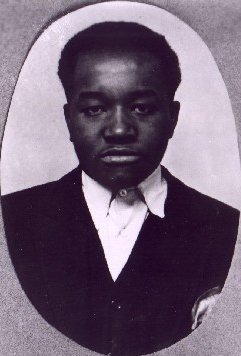
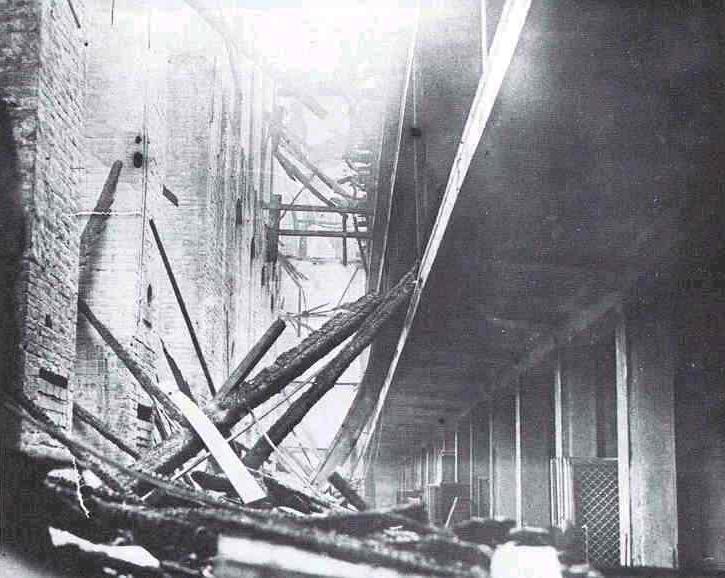
1944: George Stinney, Jr., age 14

(Thanks to Meaghan Good of the Charley Project for the guest post. -ed.)

On this date in 1944, a five-foot-one-inch, ninety-pound prisoner walked into the death chamber of the Central Correctional Institute in Columbia, South Carolina and was executed in the electric chair.

He was so small that the guards had trouble strapping him into the chair and fitting the electrodes on. When the first jolt of electricity hit him, the mask fell off his face, revealing an expression of horror.

His name was George Junius Stinney Jr., and at fourteen years, seven months and twenty-six days, he was the youngest person to be legally executed in the U.S. in the 20th century. In spite of this startling distinction, his death went practically unnoticed in the press.

Stinney, a black youth from a poor family in the town of Alcolu, was condemned for the double murder of two white girls he knew: Betty June Binnicker, age 11, and Mary Emma Thames, age 8. The girls had gone out on their bicycles on March 23, 1944, and along the way they saw Stinney and his sister and asked where to look for flowers. The Stinneys said they didn’t know.

The next day, the two girls’ bodies were found in a muddy, water-filled ditch. They had both sustained severe head injuries; their skulls were shattered. A fifteen-inch railroad spike was found nearby.

A few hours later, Stinney was arrested and locked in a room with several police officers and no one else. According to later testimony, at first he claimed the girls had suddenly attacked him and he hit them with the railroad spike in self-defense. However, a short time later he gave a second statement confessing to premeditated murder.

Stinney allegedly stated he had wanted to have sex with Betty June, but he couldn’t do so until the younger girl was out of the way, so he killed Mary Emma with the railroad spike. Betty June ran away, but Stinney caught up with her. When she resisted his sexual advances, he killed her too and dragged both bodies into the ditch. That’s the story.

When the townspeople found out that Stinney had confessed and would be charged with murder, a lynch mob formed outside the jail. Authorities took the boy to another jail in Columbia, fifty miles away, for his own safety; fearing for their own lives, Stinney’s family also fled town.

The trial took place on April 24, one month and one day after the murders, beginning at 2:30 p.m. Virtually the only evidence against Stinney was the testimony of the sheriff who heard the confession: there was no written record of the confession. Stinney’s defense attorney, who planned to run for state office, did not contest the confession and called no witnesses, but only claimed his client was too young to be held responsible for the murders. However, under South Carolina law at the time, a fourteen-year-old was legally an adult.

The jury was sent out at 5:00 p.m. and returned with a guilty verdict just ten minutes later.

There was no appeal.

Some local churches and the NAACP asked the governor for a commutation, citing Stinney’s age — but the governor allowed the execution to proceed. The entire drama from homicides to execution spanned less than 90 days.

One of Betty June Binnicker’s sisters reflected fifty years later, “Everybody knew that he done it, even before they had the trial they knew that he done it. But I don’t think that they had too much of a trial.”

More than sixty-five years after Stinney died, a community activist called for the case to be reopened, suggesting Stinney may have have been innocent. The evidence against him was absurdly slight. He had no history of violent behavior, and it seems unlikely that this short, slender boy would be strong enough to overpower two girls and beat them to death. Stinney’s brother, now a pastor in Brooklyn, said the family always believed in his innocence. Both his brother and his sister recalled that he had been a smart boy, a good student and artistic, and their family had been a close and loving one.

As one article noted, “Stinney’s trial and subsequent execution were suspicious at best and a miscarriage of justice at worst … This was South Carolina in 1944, with a black male defendant, two young white female victims, and an all white, male jury. Stinney never stood a chance.”


Stinney-inspired scene from the TV movie Carolina Skeletons.

On this day..

1915: 20 Hunchakian gallows

On this date in 1915, twenty activists of the Armenian Hunchakian political party were publicly hanged in Istanbul’s Beyazit Square.


A couple of other very grainy (newspaper?) images are here.

These unfortunates had participated in a 1913 convention that resolved — secretly, so they thought — upon treating to a programme of political assassinations of the nationalist Young Turks then driving belligerent policy against Armenians.

Unfortunately for them, the Sublime Porte had sublime ears.* It pounced on the prospective terrorists at the first opportunity, and gave them a couple of years in a dungeon before a wartime show trial days just days after Armenian genocide had commenced.

Paramaz, who’s probably the most individually famous of the twenty, has a recently-erected monument in Meghri. He’s also credited with a movingly humane exchange with an Ottoman judge, each reflecting on their respective impasse vis-a-vis nationhood and self-determination.

“The attributes of history in our reality are arranged in such a way that what constitutes ‘patriotism’ for one is viewed as destructive treason by the other,” quoth the judge (!!!) to the defendants.

And thus the mutual relations between nations living together amount to the negation of international law and social concepts. Today is the last session of these trials … There was something unusual and unqualifiable in these trials. Unqualifiable because neither you nor us had enough wisdom to penetrate each other’s [worlds].

You cannot imagine, effendis, that it is with such grief that I will pronounce the depth of my conviction regarding the patriotism accumulated in you. What can be more heartbreaking tht warm blooded beings like you full of life have sacrificed logic to sentiments … What great deeds vigorous individuals like you could have accomplished, if the ideal of a common welfare had been pursued under one banner … What benefits could have been borne from a mutual understanding that eluded [us], the other end of which is sad and dark. You languished with the idea that you are struggling against injustice; while have felt, every minute, that the rules of the world are abasing higher tendencies under the weight of cruel necessities.

This reflection led Paramaz, who today is an Armenian national hero for his martyrdom at the Turks’ hands, to reciprocate:

I, who has never cried in my life … I am not ashamed to say that I was deeply moved by the sincerity of [the judge] Khurshid Bey’s speech … and I cried, I, Paramaz, because Khurshid Bey put his finger on the wound when he stated, ‘What good deed could have been accomplished …’ I cried because in those words I found the brilliance of truth.

[Yet] we would be asking the same question, and add, What was left that we did not do for the welfare of this country. We accepted such sacrifices, we spilled so much blood and spent so much energy to bring about the brotherhood of Armenians and Turks; we lived through such suffering to elevate each other through trust. And what did we see? Not only did you condemn our gigantic efforts to sterility but also consciously pursued our annihilation …

Gentlemen, judge people by their work, by their traditions, within the realm of their ideas. I am not a separatist from this country. On the contrary it is [this country] that is separating itself from me, being incapable of coming to terms with the ideas that inspire me.

(Both quotes are as cited by Gerald Libaridian’s chapter exploring the Hunchak party’s history and doctrine, from A Question of Genocide: Armenians and Turks at the End of the Ottoman Empire.)

Mutual empathy notwithstanding, the end for these twenty was indeed sad and dark.

* An Armenian informant named Arshavir Sahagian attended the conference and finked out its design. He was killed for his troubles on December 25, 1919, according to Raymond Kevorkian.

On this day..

2001: Jay Scott, trend-setter

Not Ohio’s first execution in the “modern” era — that distinction belongs to Wilford Berry, who voluntarily waived his appeals to hasten a 1999 execution — Jay Scott, who was put to death by lethal injection on this date in 2001, stands at the headwaters of Ohio’s 21st century death penalty binge.

Prior to Scott’s death, Ohio had carried out only that one execution, Berry’s, in all the previous 48 years.

But it’s made up for lost time with another 45 executions in the eleven years since Scott died.

A paranoid schizophrenic and career criminal, Scott entered an East Cleveland deli in May 1983, ordered bologna and crackers, and then shot the 74-year-old proprietess at point-blank range after she served him. Then he went for the restaurant brace by gunning down a security guard at another restaurant. (That death sentence was eventually reversed; technically, Scott died for the first murder only.)

By the time he paid for the crimes, Scott had gotten to know the fledgling Ohio execution process pretty well.

Scheduled death dates on April 17 and May 15 had both been stayed at the last moment over legal appeals around his mental competency — on that latter date, he was three minutes from execution with the shunts that would carry the lethal chemicals already stuck in his arms.

Laborious as it was to finally consummate, Scott’s was the only Ohio execution in 2001.

But the state conducted three the next year — and it’s never carried out fewer than two in any year since then.

Part of the Themed Set: Ohio.

On this day..

1930: Lee Akers, after the Ohio Penitentiary Fire

On this date in 1930, Lee Akers was electrocuted in Ohio for murdering a Cleveland man at a gas station stickup.

Akers had been held at the death house at the Ohio Penitentiary bound in the end for a May 2, 1930 execution.

The “lucky” break that bought him six extra weeks of life was just the deadliest prison fire in history. (n.b. — Recently surpassed in Honduras)

Already a century old and packed to triple its 1,500-soul capacity, the penitentiary had a fire break out* shortly after supper on April 21 in Section “I”. This fire

licked along dry timber into Section “H”, from Section “H” to Section “G”, and thence upward to where 300 prisoners, trapped like caged animals, tore futily [sic] at steel bars that became their pyre.

It was a twilight of indescribable horror.

Some 320 perished from burns, suffocation, and smoke inhalation. Most of the casualties were those who never got out of their locked prison cells, and couldn’t move a meter as death enveloped them.


20th century literary great Chester Himes also happened to be serving a sentence for armed robbery at this prison:** indeed, it was during that sentence that he began to write at all, setting him on a path towards his life’s work.


1991 cinematic adaptation of Himes’s A Rage in Harlem.

Himes’s novel from his time in the Ohio penitentiary was only published well after his death, in 1998 … the same year the disused Ohio Penitentiary was finally torn down.

One of Himes’s first published works was a short story in Esquire in 1934, written while Himes was still incaracerated. Titled “To What Red Hell” (an allusion to Oscar Wilde’s meditation on prison and death row, The Ballad of Reading Gaol: “For none can tell to what red Hell / His sightless soul may stray.”), this story follows the experience of the Ohio prison inferno through the fictional inmate “Blackie”, who beholds tormented prisoners like “condemned souls jumping flame pots in the ante room of Hell” … but also notices the ironic safety of death row, where the literal condemned souls remained un-burned.

From where he stood he could see the death house, a low, red brick building at the end of the cell block. Just above it was a wall parapet. A guard stood on the cat-walk with a sub-machine gun cradled in his arm. Two searchlights shone in opposite directions down the sides of the gray, stone wall. The green door of the death house looked black in the vague light.

The end of the parade! The last mile! What a joke! The death house was on the other side of the yard tonight, he was thinking. It was quiet over here in the shadows with the scared ghosts of the executed men.

In fact, someone had managed to spring the death house doors, momentarily “liberating” the doomed men. As militia arrived on the scene, they attempted to forestall any general uprising or wholesale prison break by setting up machine gun emplacements on prison towers, with orders to shoot to kill.

When the death row prisoners were collared — they hadn’t actually gone anywhere or tried anything** — they were offered transportation to the city jail for their own safety against these potentially itchy trigger fingers. While three of them took the refuge, the others (Akers included) refused, on the sensible grounds that they could hardly be much worse off being shot dead than being electrocuted.


The inmates — reported to have labored heroically alongside guards, firefighters, civilian nurses, virtually without incident — were understandably incensed at the disaster, charging that guards had allowed most of the victims to die out of needless reticence over releasing anybody as the fire began to spread — and that the refusal to turn the keys went straight to the top. William Wade, “a big Negro prisoner” who had sledgehammered a cell open to save 25 men, was quoted in the next day’s New York Times saying simply, “They could have saved these men. They let human beings burn to death.”

Warden Preston Thomas, who comes off in the story as an unmitigated shit,† was the focus of the prisoners’ ire … and when he showed himself, the focus of their raucous jeers (Thomas tried to dump the blame on lower-level guards, who in turn claimed that they’d been directed by their superiors not to open cells). The Ohio governor’s refusal to dismiss Warden Thomas soon triggered a riot in the prison and the arrival of the National Guard for several tense days of teargas-punctuated negotiations.

This mutiny was only just being settled when Akers’s original May 2 execution date came up. The charred prison clearly had some other priorities at that moment than orchestrating an execution, so Akers and another man, John Richardson, both got a gubernatorial reprieve until things were peaceful enough for orderly killing.

The inferno, meanwhile, opened space for some humanitarian reforms: since overcrowding (which had been fretted in internal reports in the years preceding the fire, and had also contributed to several other prison disturbances) was widely understood to be part of the disaster, a parole board was formed in 1931 that released 2,300 prisoners. “Mandatory minimum” sentences that stuffed minor offenders into these dungeons were widely rolled back.


According to the Justice Policy Institute (pdf), the total United States prison population in 1930 was a mere 180,889.

Although we may have made some provisions to avoid spectacular catastrophes like the Ohio Penitentiary fire in our present-day overcrowded prisons, the routine catastrophe of imprisonment itself — “the moral scandal of American life” — has grown more than twelvefold since 1930.

* The mysterious fire was eventually found to have been started by some (non-death row) prisoners in an abortive breakout bid: two of them later hanged themselves in remorse. However, and rather amazingly, there were no reported escape attempts during the nighttime chaos.

** Himes wasn’t the Ohio penitentiary’s only noteworthy litterateur. The facility’s prison yard was named in honor of the pseudonym that a previous scribbling inmate had concocted there in order to get published while doing his time: O. Henry.

† e.g., a committee formed by the legislature to investigate the fire took testimony from convicts that Warden Thomas was a tyrannous martinet even apart from the disaster, even as Thomas was publicly threatening the angry inmates who were demanding his ouster: “If these prisoners don’t quiet down pretty quick, I’ll use forceful methods against them if it takes a soldier to every man.”

Part of the Themed Set: Ohio.

On this day..

1857: Return Ward, dismemberer

Headline: Shocking Murder of a Female - The Body Burned: Arrest of her husband!

On this date in 1857, a “hulking lout” with the unusual handle of Return Jonathan Meigs Ward was hanged in Toledo for Sylvania, Ohio’s most shocking murder.

Ward makes his notorious entry in the annals of Ohio crime by killing his wife after which, in the words of a wire story, he “sits up nights, with his door locked, cuts her into small pieces, and burns up her remains in the stove. This process occupied several days, in which time he drew largely on the shops around for shavings, and the unsavory scent went forth from the chimney, and filled the nostrils of those who happened to be in that vicinity.”

That’s from the April 2, 1857 Lowell (Mass.) Daily Citizen and News, and indicates that this itinerant character had become a national story. Ward, indeed, appears to have perpetrated a couple of theretofore unsolved homicides in his past, and the experience of dislimbing a previous murder victim to box him in a crate is just the sort of thing to give a man the sang-froid to dice up and incinerate his late spouse.

Anyway, the neighbors being unsatisfied with Ward’s accounts of his wife’s absence, they started poking around his place and turned up the bone fragments he hadn’t been able to completely burn away. Though the evidence against him was circumstantial, it was pretty overwhelming — and a jury took less than a half-hour in a standing-room-only courtroom to convict.

Ward went with the old “accidentally killed her during a domestic fight and cut her all to pieces in my panic” story. You know, the classic. In a post-conviction quasi-confession to the Toledo Blade, he took that tack while giving a stomach-churning description of how he annihilated the corpse (here reprinted by the Newark Advocate, April 15, 1857). Warning: Skip this if detailed descriptions of human dismemberment aren’t your thing.

I tore the clothes open, from the throat down. I then took a small pocket knife and opened the body, took out the bowels first, and then put them on the stove, upon the wood; they being filled with air would make a noise in exploding, so I took my knife and pricked holes through them to prevent the noise; then took out the liver and heart, and put them in the stove; found it very difficult to burn them; had to take the poker and frequently stir them before they could be destroyed; found the lungs very much decayed. I then took out the blood remaining in the cavity of the body, by placing a copper kettle close to the same and scooping it out with my hands. I then dipped portions of her clothing in the same, and burnt it together, fearing if I put the blood in the stove alone, that it might be discovered. I then made an incision through the flesh, along down each side, broke off the ribs and took out the breast bone, and throwing it into a large boiler, unjointed the arms at the shoulders, doubled them up and placed them in the boiler; then severed the remaining portions of the body, by placing a stick of wood under the back and breaking the back bone over the same, cutting away the flesh and ligament with a knife. Then tried to sever the head from the body; it proving ineffectual, I put the whole upper portion of the body into the boiler. Then took a large carving knife and severed the lower portion of the body, unjointed the legs at the knee, and again at the hip joint; cut the thighs open and took out the bones and burnt them up; they burned very rapidly.

On Thursday night, I commenced burning the body, by placing the upper and back portions of the same, together with the head, in the stove. On Friday morning, finding it had not been consumed, I built a large fire by placing wood around and under it, and in a short time it was wholly consumed, except some small portions of the larger bones and of the skull. The remaining portions of the body were kept in the boiler and in tubs, under the bed, covered up with a corded petticoat, and were there at the time the first search was made on Saturday, by Constable Curtis. — Hearing on Saturday evening that the citizens were not satisfied with the search made by Mr. Curtis, I proceeded on Sunday morning to destroy the remainder of the body by burning the same in the stove, cutting the fleshy parts of the thighs in small strips, the more readily to dispose of them. On Monday morning I took up the ashes in a small bag, sifting out the larger pieces of bone with my hands, placing the same in my overcoat pockets, which I scattered in various places in the fields, at different time. Also took the major portion of the trunk nails, together with the hinges, and scattered them in different places. I then burned her trunk and every vestige of her clothing, disposing of small portions at a time, to prevent their creating too much smoke.

Though the hanging itself occurred behind prison walls — and just as well, since the jittery Ward was unmanned and incoherent — Toledo was reportedly thronged with curiosity-seekers on the day of the execution.

That curiosity hasn’t disappeared in the intervening years.

Just in time for the 150th death-iversary of Return Ward in 2007, Gaye Gindy recaptured the case for these latter days in her Murder in Sylvania, Ohio: As Told in 1857.

Part of the Themed Set: Ohio.

On this day..

1782: William Crawford, expeditioneer

On this date in 1782, Col. William Crawford was burned to death by Delaware Indians after being captured leading a punitive expedition to Ohio’s Sandusky River.

Originally an Atlantic coast peoples — “Manhattan” is a Delaware word, although “Delaware” itself isn’t — the Delawares or Lenape had with other native peoples removed to an Ohio territory supposed to be reserved against white settlement. It was the fruit of a deal that kept them on the British side (or at least, off the French side) in the Seven Years’ War.

But staying out of it would be a nonstarter during the American Revolution, because said territory was situated right between the British in Detroit and the westward American settlements in the Ohio Valley. Our man William Crawford was on hand to sign the colonists’ 1778 Treaty of Fort Pitt making nice with the Delawares: it’s the first written treaty between the United States and any Native Americans, and like most of that genre it didn’t last long.

The Delawares were okay with letting colonists march through their territory to attack Detroit, but when the U.S. pushed for them to get into the fight themselves — and when frontiersman murdered the pro-neutrality chief — it pushed many Delawares over to the British side. Opinion among their neighbors, the Shawnee, Wyandot and Mingo, likewise tended to range from “hoping to stay out of it” to “allying with the British,” and the latter sentiment was further encouraged by a kindling sentiment among peoples all along the frontier that uniting their efforts was their only hope of holding back imminent Anglo expansion.

Back east, the colonists beat the British at Yorktown in October 1781, more or less clinching independence. Hostilities around the eastern seaboard settled down in the run-up to the war’s formal diplomatic conclusion in 1783.

“Quite otherwise,” said M.M. Quaife in a 1930 address to Ohio’s Wittenberg College* “was the situation west of the Alleghenies. In this area the war was prosecuted with increased vigor and fury throughout 1782, which thereafter acquired the significant designation, the Bloody Year.” It was not a clean fight by any party.

In March of 1782, an expedition by colonials hunting settler-killing Indian raiders resulted in the Gnadenhütten massacre, the wholesale butchery of a settlement of noncombatant Delawares — Christian converts, no less.

In May of that same year, finding Indian raids not deterred, the Crawford Expedition finally set out: a party of officially-blessed volunteer frontiersmen whose object was “to destroy with fire and sword (if practicable) the [Delaware] Indian town and settlement at Sandusky, by which we hope to give ease and safety to the inhabitants of this country; but, if impracticable, then you will doubtless perform such other services in your power as will, in their consequences, have a tendency to answer this great end.” (General William Irvine)

Crawford had come out of retirement for this great end. And he made out his will before he departed.

The expedition came to grief within days, as an attempt to fall back by nightfall from a spot called Battle Island (actually a copse of trees in an open space, not an island in a river) deteriorated into a disordered rout. And though most of the expedition was able to flee safely back to their point of departure, Crawford himself and a few subalterns became separated, and lost.

When Indians picked them up, with Gnadenhütten still on their minds … well, Crawford made out that will for a reason. Most of the lesser prisoners were simply tomahawked and disposed of, but Crawford and a Dr. John Knight were reserved for more fearful treatment.

Knight — who would escape before his own execution — left this blood-chilling description** of his compatriot’s end, under the eyes of the British agent Simon Girty. (Knight later also composed a ballad about the expedition.†)

When we went to the fire the colonel was stripped naked, ordered to sit down by the fire, and then they beat him with sticks and their fists. Presently after I was treated in the same manner. They then tied a rope to the foot of a post about fifteen feet high, bound the colonel’s hands behind his back and fastened the rope to the ligature between his wrists. The rope was long enough for him to sit down or walk round the post once or twice, and return the same way. The colonel then called to Girty, and asked if they intended to burn him? Girty answered, “Yes.” The colonel said he would take it all patiently. Upon this Captain Pipe, a Delaware chief, mae a speech to the Indians, viz., about thirty or forty men, sixty or seventy squaws and boys.

When the speech was finished they all yelled a hideous and hearty assent to what had been said. The Indian men then took up their guns and shot powder into the Colonel’s body, from his feet as far up as his neck. I think not less than seventy loads were discharged upon his naked body. They then crowded about him, and to the best of my observation, cut off his ears; when the throng had dispersed a little, I saw the blood running from both sides of his head in consequence thereof.

The fire was about six or seven yards from the post to which the Colonel was tied; it was made of small hickory poles, burnt quite through in the middle, each end of the poles remaining about six feet in length. Three or four Indians by turns would take up, individually one of these burning pieces of wood and apply it to his naked body, already burnt black with the powder These tormentors presented themselves on every side of him with the burning fagots and poles. Some of the squaws took broad boards, upon which they would carry a quantity of burning coals and hot embers and throw on him, so that in short time he had nothing but coals of fire and hot ashes to walk upon.

In the midst of these extreme tortures he called to Simon Girty and begged of him to shoot him; but Girty making no answer, he called to him again. Girty then, by way of derision, told the colonel he had no gun, at the same time turning about to an Indian who was behind him, laughed heartily, and by all his gestures seemed delighted at the horrid scene.

Girty then came up and bade me prepare for death. He said, however, I was not to die at that place, but to be burnt by the Shawanese towns. He swore by G-d I need not expect to escape death, but should suffer it in all its extremities …

Col. Crawford, at this period of his sufferings, besought the Almighty to have mercy on hi soul, spoke very low, and bore his torments with the most manly fortitude. He continued in all the extremities of pain for an hour and three-quarters or two hours longer, as near as I can judge, when at last, being almost exhausted, he lay down on his belly; they then scalped him, and repeatedly threw the scalp in my face, telling me that “that was my great captain.” An old squaw (whose appearance every way answered the ideas people entertain of the devil) got a board, took a parcel of coals and ashes and laid them on his back and head, after he had been scalped; he then raised himself upon his feet and began to walk round the post; they next put a burning stick to him, as usual, but he seemed more insensible to pain than before.

The Indian fellow who ha me in charge now took me away to Capt. Pipe’s house, about three-quarters of a mile from the place of the colonel’s execution. I was bound all night, and thus prevented from seeing the last of the horrid spectacle. Next morning, being June 12, the Indian untied me, painted me black [signaling his imminent execution -ed.], and we set off for the Shawanese town, which he told me was somewhat less than forty miles distant from that place. We soon came to the spot where the colonel had been burnt, as it was partly in our way; I saw his bones lying among the remain of the fire, almost burnt to ashes: I suppose, after he was dead, they laid his body on the fire. The Indian told me that was my big captain, and gave the scalp halloo.


Detail image (click for the full view) of an illustration of Crawford’s torture and execution. Here’s another.

Counties in both Pennsylvania and Ohio bear Crawford’s name; several historical markers in Ohio chart the course of the ill-starred Sandusky campaign … including a phallic monument at the approximate spot of the burning, just north of the tiny town of Crawford, Ohio. (Map)

* Printed as “The Ohio Campaigns of 1782” in The Mississippi Valley Historical Review, March 1931.

** Here’s another description by another white eyewitness (alleged, anyway), who was taken in an unrelated raid some weeks before.

† A recent mp3 rendition of “Crawford’s Defeat by the Indians” is available for a 99-cent download.

Part of the Themed Set: Ohio.

On this day..

1896: Amelia Dyer, baby farmer

(Thanks to Meaghan Good of the Charley Project for the guest post. -ed.)

On this date in 1896, Amelia Elizabeth Dyer was hanged at Newgate Prison in London. At 58 years old, she was the oldest woman hung in Great Britain between 1844 and 1955.

Amelia was a baby farmer, one of many from that time and place. Baby farmers would, for a fee, take an infant or toddler if its mother was unable or unwilling to care for it. The idea was that the baby farmer would either become the baby’s foster parent, or find someone else to foster or adopt the child.

In the days when illegitimacy carried a heavy social stigma, this was an attractive option — indeed, often the only option — for single or impoverished mothers, and likewise for communities facing the burden of an orphaned newborn. Young Oliver in Charles Dickens’s novel Oliver Twist grew up on a baby farm after his mother died in childbirth and his father disappeared.

In many cases, everyone benefited from the transaction: the mother would go back to her life knowing her baby was all right, a childless couple would have a baby to love, and the baby itself would grow up in a secure home.

Unhappily, however, many other cases produced horrendous results: the baby was not necessarily safe once the mother had handed it over and paid money in advance for its care. Unscrupulous and greedy women realized that, once they got the lump sum payment, they could make a profit if the baby died, the sooner the better.

Victorian Britain was rife with baby farmers who would quietly do away with their helpless charges, or simply starve and neglect the infants until they expired. Authorities made unavailing, ill-enforced attempts to control the problem by, for example, requiring women who adopted or fostered more than one infant at a time to register. (And by doling out a few sporadic, but high-profile, executions.)

It was a widespread and well-known problem, as Alison Rattle and Allison Vale note in their biography, Amelia Dyer: Angel Maker:

It was impossible for newspapers of the day to keep count of the numbers of bodies found strewn about the towns and cities. Scarcely a day passed without yet another report of the corpse of some young innocent being found abandoned beneath the seat of a railway carriage, under an archway, in a sewer grating or just carelessly dumped in one of the open spaces of a city suburb. Many cases were not even reported …

Amelia Dyer was the worst of the worst.

She was convicted of a single murder, but they’d found the bodies of half a dozen more, and by the time she was caught she’d been operating for for twenty years or more. Her victims may well have numbered in the hundreds, making her a mass killer of Harold Shipman-like proportions.

Amelia was born in Bristol to a respectable working-class family. Unlike most children of the time, she was able to attend school until age fourteen, and her four siblings. But there was tragedy in her family: her mother went insane (apparently brain-damaged by the effects of typhus), and died when Amelia was eleven years old.

In 1861, at age 24, Amelia married George Thomas, a 57-year-old widower. They had a daughter together before his death in 1869. Three years later, she married William Dyer and they had a daughter and a son, as well as several children who didn’t survive infancy. Eventually she left him.

She was a qualified nurse and did work in that field off and on for several years, but for most of her life after her first husband’s death, her primary occupation was baby farming. At first, Amelia acted only as an intermediary, taking babies from their mothers for a fee and, for another fee, handing them over to other baby farmers who, often as not, let them die. She also kept pregnant women in her home and nursed them until delivery, and the newborns were reported stillborn as often as they survived.

It isn’t known just when she started murdering the infants herself, but by 1879 she came to the attention of the authorities: four nurse-children in her care had died within two weeks of each other.

They wanted to get her for manslaughter, but there was insufficient evidence. Amelia was found guilty of criminal neglect and served the maximum, six months at hard labor. She tried to go straight, working a variety of low-paying jobs.

Inevitably, however, she returned to what she was best at.

She had learned an important lesson from her previous brush with the law: don’t bring in a doctor to sign the death certificate, don’t leave a paper trail. Instead, she started disposing of the bodies herself.

Like her colleagues she put out notices in the newspapers, advertising herself as a respectable married woman who wanted to adopt or foster a baby in exchange for money. Sometimes there was an understanding that the mother would be permitted to visit the child, or take it back once she was in a position to care for it.

However, a mother usually never saw either Amelia or child again after handing over her infant.

Amelia kept herself constantly on the move and used a number of alias names to avoid attention. At times she was receiving as many as six babies a day. Her youngest daughter, Polly, grew up helping her mother take care of the babies; for her, it was a way of life.

When she married and moved away from home, she and her husband, Arthur Palmer, ultimately set themselves up as baby farmers too, sometimes working alongside Amelia. The Palmers habitually neglected and abandoned their charges, and at least two of their babies died.

Amelia started showing signs of mental illness after her release from prison: she had violent fits, claimed to hear voices, made at least one serious suicide attempt and ultimately was admitted four times to three different asylums. Her mental illness may have genuine, possibly caused or exacerbated by her substance abuse (she was addicted to both laudanum and alcohol), or she may have been malingering: her breakdowns tended to happen after the authorities or parents seeking to reclaim their babies started poking their noses around in her business.

The end came on March 30, 1896, when a bargeman pulled the body of fifteen-month-old Helena Fry out of the River Thames. She’d been strangled with dressmaking tape, which was still tied around her neck. When the police closely examined the paper she was wrapped in, they were able to make out an address: 26 Piggotts Road, Reading.

When the authorities searched that home, they found numerous items of interest including more dressmaking tape, piles of baby clothes and pawn tickets for more clothes, and letters from mothers asking about their children. The house reeked of human decomposition.

The police set up a sting to catch Dyer, using a young woman to act as a decoy. But on April 4, the day they were supposed to meet to talk business, she found herself arrested instead and charged with the murder of Helena Fry. Shortly thereafter, her daughter and son-in-law, Arthur and Polly Palmer, were charged as accessories.

Investigators dragged the Thames and found four more bodies, three boys and one girl. All of them had white dressmaking tape knotted around their throats. Two of the victims were later identified as Harry Simmons, thirteen months, and Doris Marmon, four months. They had been killed only a few days before Amelia’s arrest, stuffed into a carpetbag together and thrown off a dock. Later, two more bodies turned up: another girl and another boy.

The investigation determined that at least 20 children had been given over to Amelia Dyer’s care in the few months prior to her being caught. During the previous year, between thirty and forty bodies had been pulled from the Thames. Almost all of them were of infants and authorities suspected most of the deaths were the work of one person.

Within a few days, Amelia had confessed everything, but denied that Polly and Arthur had any guilty knowledge of the murders, and the Palmers also maintained their innocence. Amelia confirmed that she’d dumped most of the babies’ bodies in the river. “You’ll know mine,” she said, “by the tape around their necks.”

The charges against Arthur Palmer were dropped for lack of evidence just before Amelia went to trial. Polly, anxious to save herself, became the main witness against her mother and claimed she had had no inkling of the murders of Doris Harmon and Harry Simmons, although they’d been killed in her house within a day of each other and she’d been present at the time. Her statements were contradicted by other witnesses.

Amelia was first tried for the murder of little Doris; the idea was that if she was acquitted, they could try her in the other cases one by one. She pleaded insanity, emphasizing her own mother’s madness and her own stays in insane asylums — but two of the three doctors who examined Amelia did not believe she was mentally unsound.

The jury deliberated four and a half minutes before finding her guilty.

Polly’s trial was supposed to take place on June 16, and her mother was summonsed to testify, in spite of the fact that she was due to be executed a week beforehand. Amelia appears to have really loved her daughter and was focused solely on saving her from suffering the same fate. In a letter she wrote on June 5, she said,

I was glad to see her looking so well dear child. God only knows how grieved I am to know she is suffering for no fault of her own. She did nothing, she knew nothing.

If only Amelia’s concern for her own child had extended to other people’s, too.

On the eve of her mother’s execution, the case against Polly was dropped. Amelia expressed great relief about this in her final letter to her daughter. But Polly and Arthur didn’t give up baby farming and in 1898 they were caught after they abandoned a (living) baby girl on a train.

On the scaffold, when asked for a last statement, Amelia answered, “I have nothing to say.” She was hanged at 9:00 a.m.

In the aftermath of her trial and execution, Parliament enacted more laws in order to protect helpless infants from suffering the same fate as Amelia’s nurse-children. Nevertheless, during the next ten years, three more baby farmers would suffer the ultimate penalty for infanticide.

On this day..

1944: Johanna Kirchner, Frankfurt antifascist

“Keep Goethe‘s words in mind. ‘Die and become’. Don’t cry for me. I believe in a better future for you.”

-Johanna Kirchner’s last letter to her children

On this date in 1944, former social worker Johanna (“Hanna”) Kirchner was beheaded in Plotzensee Prison for treason.

(cc) image from Fran Behnsen of a Kirchner commemoration plaque in Frankfurt’s St. Paul’s Church.

Kirchner English Wikipedia entry | German) co-founded with Marie Juchacz after World War I the still-extant Workers’ Welfare organization: Arbeiterwohlfahrt, or “the self-help of the workers.”

These self-helping workers — both members of the socialist Social Democratic Party; Juchacz was a Reichstag member — had to flee to League of Nations-administered Saarland with the rise of the Nazi dictatorship … and from there, soon enough, on to France.

There the Vichy government arrested her in 1942 (Juchacz got out to the United States), and deported Kirchner to Germany to answer as a traitor.

She had a sentence of “only” ten years at hard labor, but the case was unexpectedly reopened in 1944 so that the cartoon villain of fascist jurisprudence, Roland Freisler, could give her a spittle-flecked death sentence for having “treasonably rooted herself in the evilest Marxist high-treason propaganda.”

Kirchner’s native Frankfurt has a Johanna-Kirchner-Straße, and in the 1990s awarded a Johanna-Kirchner-Medaille to anti-fascists.


View Larger Map

On this day..

1693: Elizabeth Emerson

(Thanks for the guest post to Robert Wilhelm of the Murder By Gaslight historic crime blog, and author of the book Murder And Mayhem in Essex County. Executed Today readers are sure to enjoy Wilhelm’s detailed investigations into long-lost historic crime. -ed.)

The Emersons of Haverhill, Massachusetts, were the kind of family that just could not stay out of trouble. Death was a common feature in the Emerson household; only nine of their fifteen children survived infancy. Michael Emerson’s first child, Hannah, would marry Thomas Duston and, become famous for escaping Indian captivity by murdering and scalping ten of her captors.

The sixth child was a daughter named Elizabeth, born in 1664. Twelve years later, Michael was brought to court “for cruel and excessive beating of his daughter with a flail swingle and for kicking her, and was fined and bound to good behavior.” Corporal punishment was not considered wrong in and of itself, but Michael’s beating of Elizabeth was criminally excessive. There is no way to know why Elizabeth was being punished, but the impression is, that she was a rambunctious, strong-willed child living in a violent household.

Another of Elizabeth’s sisters, Mary Emerson, was married in 1683 to Hugh Mathews of Newbury. Though there is no record of premature offspring, Hugh and Mary were both brought to court and found guilty of fornication before marriage. They were sentenced to be “fined or severely whipped.”

Perhaps with her sister as an example, Elizabeth also engaged in premarital sex. In 1686, Elizabeth Emerson gave birth to an illegitimate daughter she named Dorothy. It is not clear whether Elizabeth was ever punished for this, but court records indicate that Michael Emerson accused a neighbor, Timothy Swan, of being the father. Timothy’s father, Robert Swan, vehemently denied that Timothy was the father because he “… had charged him not to go into that wicked house and his son had obeyed and furthermore his son could not abide the jade.” He further threatened to “carry the case to Boston” if Timothy was formally accused. Michael did not pursue the charges and little Dorothy remained fatherless.

Five years later, with Elizabeth and her daughter still living at her parents’ house, Elizabeth became pregnant again. She somehow managed to keep this a secret from her parents, but the neighbors were suspicious. Sometime during the night of May 7, 1691, Elizabeth, who slept at the foot of the bed where her mother and father slept, gave birth to twins without waking her parents. The twins were either stillborn or murdered by their mother. She hid the bodies in a trunk for three days then sewed them into a sack and buried them in the backyard.

The following Sunday, while her parents were at church, the neighbors who had suspected Elizabeth’s pregnancy, came to the house with a warrant from the magistrates of Haverhill. While the women examined Elizabeth, the men went to the backyard and found the bodies buried in a shallow grave. Elizabeth was arrested for murdering her bastard infants.

Elizabeth maintained that she had kept the pregnancy and birth a secret out of fear. Her mother had been suspicious, but whenever asked about it, Elizabeth denied she was pregnant. Michael claimed he had no idea that Elizabeth was pregnant but this time put the blame on Samuel Ladd, age 42, a married man, nine years older than Elizabeth. Elizabeth also named Samuel Ladd as the father, saying that the “begetting” had taken place at an inn house. She also stated that Ladd was the only man with whom she had ever slept, implying that Dorothy was Ladd’s daughter as well.

Although Samuel Ladd had been previously found guilty of a misdemeanor and fined for an earlier episode involving sexual advances on a younger woman, Ladd was never questioned in Elizabeth Emerson’s case. Elizabeth was already the mother of a bastard child, and Samuel Ladd was the son of an early settler — her story was not believed.

Elizabeth Emerson was sentenced to hang and remanded to the custody of the Boston prison on May 13, 1691. An accompanying letter explained the facts and said that she had been examined for “whore-dom.” By English law, concealment of the death of a bastard child had been punishable by execution. Though this law had been repealed in England, it was still on the books in Massachusetts. It did not matter whether Elizabeth Emerson had murdered her babies or merely concealed their death — she would be hanged.

The hanging was scheduled for 1693. Elizabeth was imprisoned during the height of the Salem witch trials, and though he played an active role in the trials, Reverend Cotton Mather found time to take an interest in her case. Mather worked on her soul and before her execution Elizabeth confessed that “when they were born, I was not unsensible, that at least one of them was alive; but such a Wretch was I, as to use a Murderous Carriage towards them, in the place where I lay, on purpose to dispatch them out of the World.” But Mather believed she had more to confess and held little hope for her salvation.

Elizabeth Emerson was hanged in Boston on June 8, 1693, along with a black indentured servant named Grace. Before the execution Cotton Mather preached a sermon during which he read the following declaration written by Elizabeth:

I am a Miserable Sinner; and I have Justly Provoked the Holy God to leave me unto that Folly of my own Heart, for which I am now Condemned to Dy … I believe, the chief thing that hath, brought me, into my present Condition, is my Disobedience to my Parents: I despised all their Godly Counsils and Reproofs; and I was always an Haughty and Stubborn Spirit. So that now I am become a dreadful Instance of the Curs of God belonging to Disobedient Children.

Get Murder and Mayhem in Essex County here.

On this day..

2011: Yao Jiaxin, road rager

On this date last year, a young pianist turned public enemy number one was executed in China for a notorious roadside murder.

Yao Jiaxin, a 21-year-old student at Xi’an Conservatory, hit a waitress on her bike while driving in October 2010.

Seeing her taking down his car’s license plate and fearful that she would revenge herself with financial demands for her minor injuries, an infuriated Yao stabbed her to death there at the scene.

“Yao stabbed the victim’s chest, stomach and back several times until she died,” in the words of one court. “The motive was extremely despicable, the measures extremely cruel and the consequences extremely serious.”

Appropriately, the execution took place on the very day that Chinese students were facing grueling university entrance exams, like the ones Yao himself had passed a few years before.

This event sparked massive national outrage, and Yao — the ivory-tickling son of a well-off couple who worked for the defense industry but didn’t have the pull of true elites — proved to be perfectly cast for the role of public pariah in a country undergoing the cataclysmic social displacements of internal migration, urban proletarianization, social stratification, and uneven capitalistic growth. He reportedly told police in his confession that he feared that his victim, a “peasant woman[,] would be hard to deal with.”

So-called “netizens” thrilled to the scandalous murder and bombarded online communications spaces with demands for Yao’s condign execution — an offering to the hollow bromides of legal egalitarianism that people in China as everywhere else see flouted every day. Yao’s family even fed that in a backhanded way by offering the victim’s family a larger compensation than that demanded by law if they would back off their demand for execution. Those “peasants” spurned the bribe.

Despite the familiar spectacle of public bloodlust over an infamous crime, Yao’s case also had an unsettling effect for at least some. He was, after all, a promising young man undone by a moment of madness and moral frailty: his downfall was distinctly tragic, in the classical sense, and not such a stretch to read as symbolic of China’s challenges and transformations.

Palpably grief-stricken and contrite about it — his parents took him to the police station to turn himself in, and cameras tracked the frail-looking youth through his few months of legal calvary all the way to a pitiably sobbing spectacle in his final court appearance as he pleaded in vain for his life — Yao could inspire pity as well as loathing.

The nature of Yao’s crime makes him an unlikely poster-boy for ending capital punishment per se. Yet there was also something discomfiting about authorities’ theatrical and foreordained compliance with a bloodlust that they had arguably stoked.

And in a China which has moved towards dialing down executions in recent years, even Yao’s individual culpability met some overt challenge: academics and legal professionals prepared to frame it as a crime of passion or something akin to “temporary insanity,” meriting a lesser punishment.

“A lot of people felt shocked,” a Chinese death penalty opponent told a western reporter. “They felt shocked by the process. Some people thought the netizens pushed the court into giving Yao the death penalty.”

On this day..