The U.S. Army hanged five German civilians as war criminals at Bruchsal Prison on this date in 1945. Their crime: lynching the crew of a downed American bomber, the day after Allied bombing raids devastated the manufacturing town of Rüsselsheim.
The lynching is known as the Rüsselsheim Massacre, and it claimed the lives of six of the nine flyers of a B-24 Liberator cheekily christened Wham! Bam! Thank You, Ma’m!. One of their number survived thanks to his shrapnel wounds, which saw him safely to hospital while his comrades were being transported.
The other two were simply lucky to survive the beatings administered by a mob of enraged civilians who caught sight of the Americans under the escort of only two German soldiers. On the night of August 25-26, Britain’s Royal Air Force had dumped more than 1,600 tons of explosives on Rüsselsheim to destroy the Opel factory and rail lines there. It was only the latest, and ultimately the largest, of several raids on the town dating back to July. A later U.S. study reckoned 315 Opel workers killed and 277 injured during the July-August raids, to say nothing of the devastation on other townspeople and on Opel’s slave labor.* A POW, Frenchman Pierre Cuillier, recorded of the August 25-26 attack that “a bomb fell on the dug-out for Russian women. We hear of 119 victims, a number that in reality is surely much higher.”
Under the circumstances, the good folk of Rüsselsheim were not pleased on the morning of the 26th to see Allied airmen in their town being marched to a train transfer … even if, and surely the distinction must fail to impress amid the smoldering rubble of one’s own hometown, this particular American crew had not been part of this particular British bombing. (The Americans had been shot down two days earlier en route to do a similar thing to Hanover.)
“There are the terror flyers. Tear them to pieces! Beat them to death! They have destroyed our houses!” cried Margarete Witzler and Käthe Reinhardt. As the Americans protested, the crowd overpowered the guards and took its rough revenge with whatever bludgeons were ready to hand.
At last, Joseph Hartgen, an air raid warden, finished them off with his pistol … or at least, finished off six before his chamber went empty.
Spoiler alert: it will not go well for Herr Hartgen.
Somehow the two un-shot men, Sgt. William M. Adams, and Sgt. Sidney E. Brown, still drew enough breath by the end of the ordeal to sneak away when they were being dumped into a mass grave. Captured again a few days later, they survived the war in a POW camp.**
Eleven Rüsselsheimers stood trial in Darmstadt for these Lynchmorde by July, when war was still raging in the Pacific: it was the very first war crimes proceeding under U.S. occupation.
The defendants tried out a pre-Nuremberg version of the “only following orders” defense, blaming Nazi propaganda against bomber crews for inciting the murders. The U.S. prosecutor† scoffed: “They were all grown men and women. If they are called on to commit the murder and they do, they are just as responsible as any other murderers.”
Harten and six others of the 11 caught death sentences, but the two women — Witzler and Reinhardt — both had their sentences reduced.
Warning: Although not graphic, this is a video of actual hangings.
** Brown lived long enough to return to Rüsselsheim at official invitation in 2001 for a formal apology. However, at the time of the trial, it was still mysterious how there came to be only six exhumed bodies from eight lynched airmen: Adams and Brown only emerged out of the mass of returning POWs after convictions had already been secured.
† The army prosecutor at the proceeding was one Lt. Col. Leon Jaworski, but he’s better known for hunting larger game later in his career as the special prosecutor during the Watergate investigations. (Jaworski is the guy embattled President Richard Nixon appointed after firing Archibald Cox in the Saturday Night Massacre.) Jaworski’s eventual legal victory over the White House in United States v. Nixon obtained the incriminating Watergate tapes in late July of 1974, forcing Nixon’s resignation just days afterwards, on August 9, 1974.
We have several times guest-reblogged a few of the many feature articles to appear on this site; its copious archives are also a regular research stop for the Headsman and anyone else interested in death penalty history.
They’ve upped their Facebook game recently with daily anniversary-of posts frequently about individual cases from their annals.
In the summer of 1946 King George II of Greece had rented a house at 45 Chester Square, Belgravia. He required a house keeper and Elizabeth was appointed. She gave references which were found to have been written by Boyce. Although the property was being renovated, she lived in, alone. She invited Boyce to move in and he did so on the 1st of June, 1946.
Someone winds up on the gallows by November 1 of that same year. Read on to find out, and give the page a follow if you routinely thumb the book of faces.
He was decorated for his service on the Axis’s Eastern Front during World War II, but this same credential got him expelled from the army in the postwar Red takeover.
Nothing daunted, Dabija and some like-minded comrades** formed an armed anti-communist militia a few dozen strong in Transylvania’s Apuseni Mountains named the National Defense Front, Haiducian Corps — a nod to the Balkans’ historical outlaws/rebels. The Securitate reduced them over the course of 1948-1949 months, culminating in a March 3-4, 1949 forest battle that brought Dabija et al into custody.
* Ioan Scridon, Traian Mihaltan, Titus Onea, Augustin Ratiu, Gheorghe Oprita, Silvestru Bolfea. (Source)
Left-wing athlete Werner Seelenbinder was executed by the Third Reich on this date in 1944.
An Olympic Greco-Roman wrestler, Seelenbinder’s plan to scandalize patriots by refusing to make the Nazi salute from the podium at the 1936 Berlin games was scratched when he came in fourth in the event.
Nevertheless, Seelenbinder (English Wikipedia entry | German) had already by then given more material aid to Hitler’s foes by using his sportsman’s travel itinerary as cover to act the courier for the banned Communist party.
Arrested in 1942 during the smash-up of the Robert Uhrig resistance ring, Seelenbinder was tortured horrifically in prison but died with courage — as he had pledged in a last letter to his father.
The time has now come for me to say goodbye. In the time of my imprisonment I must have gone through every type of torture a man can possibly endure. Ill health and physical and mental agony, I have been spared nothing. I would have liked to have experienced the delights and comforts of life, which I now appreciate twice as much, with you all, with my friends and fellow sportsmen, after the war. The times I had with you were great, and I lived on them during my incarceration, and wished back that wonderful time. Sadly fate has now decided differently, after a long time of suffering. But I know that I have found a place in all your hearts and in the hearts of many sports followers, a place where I will always hold my ground. This knowledge makes me proud and strong and will not let me be weak in my last moments.
As a visible public person who died in resistance to fascism, Seelenbinder made for ready national-icon material in postwar Germany … but because of his red affiliations he was honored in this fashion mostly in East Germany. (Indeed, even a sports club that had been named for him weeks after the war’s end, in the American-occupied sector, stripped his name right off a few years later to keep with the times. The stadium was reverted to its Seelenbinder christening in 2004.)
Mao Zemin, younger brother of Communist leader Mao Zedong, was executed on this date in 1943.
A party cadre since 1921, the non-chairman Mao served a variety of economic leadership posts for the Red Army.
As of early 1941, Mao (English Wikipedia entry | the far more voluminous Chinese) was detailed to the western province of Xinjiang, where the warlord Sheng Shicai maintained friendly relations with the neighboring Soviet Union.
To Mao’s grief, this “King of Xinjiang” saw in the unfolding global war an opportunity to realign.
After the German invasion of the USSR in 1941, Sheng boldly flipped his affiliation from Moscow to the nationalist Kuomintang government with which he had theretofore maintained only the frostiest of relations. Crackdowns on Communists ensued too, and both Mao Zemin and Chen Tanqiu were both arrested, tortured, and executed as a result.
Needless to say this KMT-Xinjiang axis did not hold the Celestial Empire’s destiny and the whole decision to fade Moscow looks pretty dumb in retrospect. Sheng, however, surely did not much regret the gambit since he was able to follow the nationalists to Taiwan and spend a comfortable retirement writing memoirs like Sinkiang: Pawn or Pivot?
Mao’s son Mao Yuanxin, a still-living pensioner as of this writing, was a political figure in the 1970s who was jailed post-Gang of Four.
Besides the obvious consequences — national humiliation, political executions — the occupation brought terrible economic hardship to ordinary Norwegians. Most of Norway’s western-facing trading relationships were severed by the wartime takeover, and the lion’s share of national output was appropriated by Berlin. Norway’s GDP fell by nearly half during the war years.
“There was a real risk of famine,” Wikipedia advises us. “Many, if not most, Norwegians started growing their own crops and keeping their own livestock. City parks were divided among inhabitants, who grew potatoes, cabbage, and other hardy vegetables. People kept pigs, rabbits, chicken and other poultry in their houses and out-buildings. Fishing and hunting became more widespread.”
And people got more and more pissed off.
On September 8, shipyard workers protesting the withdrawal of their milk rations triggered a large, but brief, labor disturbance. The Milk Strike was violently quashed by September 10 with a declaration of martial law in Oslo and nearby Aker and the arrests of a number of labor leaders, five of whom were condemned to death.
Two of those five sentences were actually carried out:* those of lawyer and Communist Viggo Hansteen (English Wikipedia entry | Norwegian), and labor activist Rolf Wickstrom (English | Norwegian).
* Generous commutations awarded to Ludvik Buland and Harry Vestli permitted them to die in prison before the war was out. Their comrade Josef Larsson survived the war and chaired the Norwegian Union of Iron and Metalworkers until 1958.
In the early morning hours on this date in 1943, Jarmila Zivcova, her husband Vaclav Zivec, and their friend Ruzena Kodadova were beheaded in Berlin. These Czechoslovakians had been condemned for complicity in the assassination of Reinhard Heydrich.
Their deaths were part of the mass of executions ordered by the Reich after Allied bombing damaged Berlin’s Plotzensee Prison, but we notice them via this thread on the information-dense Axis History Forum, thanks to the unusual circumstance of having their “last letters to their families” — a palliative exercise whose product was often destroyed rather than delivered — rescued by Karel Rameš. In his Zaluji: Pankracka Kalvarie, he gives the text of Jarmila Zivcova’s heartbreaking last missives, as translated by a forum poster:
9 September 1943:
Dear Mrs Taskova:
We are here with Ruzena in the preparation cell and at 4:30 we will be executed – us two, and my husband. We believed till the last moment that this would not happen, but unfortunately this morning we had to hear the awful truth that we must die. You were deceived if they promised you that we will be saved. Ruzena is very devastated, her hands shake, so she cannot even…
… and, scrawled on the back of a photograph of Vaclav and Jarmila’s son:
9/9/43, from your mom and dad:
My dear Jiri, keep this picture, kissed thousand times, in memory of your mother who found solace in it even in the saddest moments.
These aren’t names rich with search hits, but a German volume called Berufswunsch Henker contributes this letter from friends on the harrowing experience of proximity to the fallbeil:
We have seen our best friends go — Rosa Kodakova, Jarmila Zivcova, and many others. We can hear the severed heads crash onto the floor. We hear every detail in the vicinity of our cell. We hear the gate of the preparation cell open, then the executioner’s footsteps to the door; we hear his helpers grab the victim, shove her on the wooden bench, and cut off the head. Then they carry the body away without a head. They place the body in a rough coffin, their chopped-off head thrown between the dead man’s legs. The whole thing is then transported away somewhere for burning. By now we all know the whole story by heart.
Henri Honoré d’Estienne d’Orves, the “first martyr of Free France”, fell to German guns at the Fort du Mont Valerien on this date in 1941, along with two companions.
A Catholic nationalist naval officer, d’Estienne d’Orves found himself in Egypt in June 1940, when his government capitulated to the devastating German blitz.
Eschewing the accommodationist crowd, d’Estienne d’Orves made his way first to a fleet in Somaliland, and then around the Cape of Good Hope and up to London, to link arms with de Gaulle’s Free French government-in-exile. By December of 1940, he’d infiltrated himself into German-occupied France to set up a spy network. By January of 1941, most of the network had been arrested by the Gestapo.
He and eight others were death-sentenced on May 13 and although the German brass entertained the possibility of clemency as their tribute to an honorable fellow-troop, the growth of partisan attacks against the Reich throughout that summer* eventually dictated a more punitive course. D’Estienne d’Orves, Maurice Barlier, and Jan Doornik were fusilladed together, disdaining blindfolds.
Proclamation in German and French announcing the August 29, 1941 executions of Henri Louis Honore d’Estiennes d’Orves, Maurice Charles Emile Barlier, and Jan Louis-Guilleaume Doornik.
* Germany’s invasion of the USSR in June 1941 forced European Communist parties — and very notably the formerly reticent French Communists — into violent anti-Nazi resistance.
There, a crowd of 20,000-25,000 protesting for independence in the restive Punjab city of Amritsar were wantonly fired upon by Raj authorities — an atrocity remembered as the Jallianwala Bagh massacre. British authorities acknowledged a staggering 379 dead; Indian accounts run much higher than that.
The massacre’s principal immediate author was the army commander Reginald Dyer, who fired on the crowd without warning and with so much premeditation as to bar exits from the Jallianwala Bagh garden for maximum bloodshed — his acknowledged intent “not to disperse the meeting but to punish the Indians for disobedience.” but Punjab Lieutenant Governor Michael O’Dwyer, for many years a noted rough hand in the suppression of national militancy on the subcontinent, had his back. “Your action correct,” read an O’Dwyer-to-Dyer telegram on the morrow of the bloodbath. “Lieutenant Governor approves.”
British opinion was not quite so approving; indeed, many Britons were outraged and both Dyer and O’Dwyer ended up sacked. But as is usual for a horror perpetrated under the flag they also never faced any sort of punishment.
Until Udham Singh, avenger, entered the scene.
A survivor of that horrific day — when he’d been dispatched from the orphanage that raised him to serve drinks to the protesters — Singh had unsurprisingly thrilled to the revolutionary cause. A Sikh by birth, the name he adopted, Ram Mohammed Singh Azad, gestures to his movement’s now-remote spirit of unity across sect and nation.
Come 1934 Singh had made his way to London, where he worked as an engineer and quietly plotted revenge against O’Dwyer, pursuant to a vow he had taken many years before. (Dyer escaped justice in this world by dying in 1927.) And on March 13, 1940, he had it when the retired colonial hand addressed a joint meeting of the East India Association and the Royal Central Asian Society at Caxton Hall. As proceedings concluded, Singh produced a concealed pistol and fired six shots at the hated O’Dwyer, killing him on the spot.
Like many (not all) of his countrymen, Singh gloried in his long-awaited triumph in the few weeks remaining him.
I did it because I had a grudge against him. He deserved it. He was the real culprit. He wanted to crush the spirit of my people, so I have crushed him. For full 21 years, I have been trying to seek vengeance. I am happy that I have done the job. I am not scared of death. I am dying for my country. I have seen my people starving in India under the British rule. I have protested against this, it was my duty. What greater honour could be bestowed on me than death for the sake of my motherland?
Many countrymen shared his exultation, even if those in respectable leadership positions had to disapprove of assassination. Nevertheless, a few years after the subcontinent’s Union Jacks came down for the last time, PakistanIndia independence leader-turned-president Jawaharlal Nehru publicly “salute[d] Shaheed-i-Azam Udham Singh with reverence who had kissed the noose so that we may be free.”

 McKinney had caught a ride westward across the state on Highway 50 with 2nd Lt. Raymond Fisher and his wife.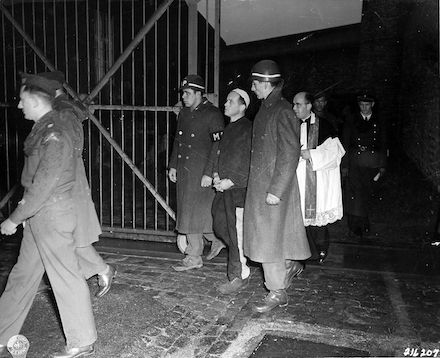
 Although cousin to Romania’s pre-
 An Olympic Greco-Roman wrestler, Seelenbinder’s plan to scandalize patriots by refusing to make the Nazi salute from the podium at the 1936 Berlin games was scratched when he came in fourth in the event.
 A party cadre since 1921, the non-chairman Mao served a variety of economic leadership posts for the Red Army.
 A Catholic nationalist naval officer,

 A survivor of that horrific day — when he’d been dispatched from the orphanage that raised him to serve drinks to the protesters — Singh had unsurprisingly thrilled to the revolutionary cause.