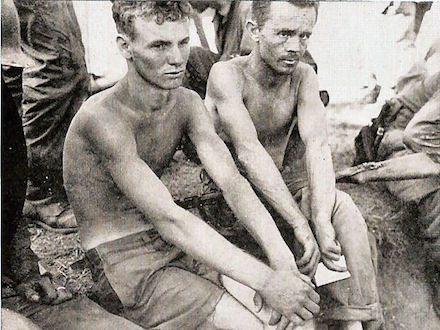
1950: Rosli Dhobi, Sarawak patriot

On this date in 1950, Rosli Dhobi or Dhoby was hanged by the British for assassinating the governor of Sarawak.

The scene of events lies in the present-day state of Malaysia, which gained independence in 1957. As a glance at the atlas will show, Malaysia oddly comprises two principal chunks of territory lying hundreds of kilometers apart across the southern reaches of the South China Sea: the end of the Malay Peninsula, reaching south from Thailand and the Eurasian landmass — and the northern third of the island of Borneo, which Malaysia shares with Indonesia and Brunei.

Dhobi’s passion is a story of the Borneo side — from what is today the largest of Malaysia’s 13 constituent states, Sarawak.

The British presence at Sarawak dated to the mid-19th century when the Kingdom of Sarawak began as a series of personal concessions extracted from the Sultan of Brunei by an ex-Raj officer turned adventurer named James Brooke. Casting about for a vocation in the mother country back in the 1830s after resigning his commission, Brooke had plunked his £30,000 inheritance down on a schooner, sailed it to southeast Asia, and made such a timely and effective intervention against pirates plaguing Borneo that the Sultan put him in charge of parts of Sarawak.*

The man proved to have a deft hand for diplomacy and governance and steadily grew his fiefdom, eventually establishing his own dynastic monarchy, the White Rajahs.

In 1946, the third and last of Brooke’s dynasty, Vyner Brooke,** ceded his family’s interest in Sarawak to the British Colonial Office — changing it from a crown protectorate to a crown colony and setting Sarawak on the path to transit the era of decolonization tied to the British colony of Malaysia instead of, say, independent statehood. No surprise, this backroom arrangement among Anglo suits played to many in Sarawak as a wanton abnegation of self-determination, spurring a widespread anti-cession movement.

Thus aggrieved, our man Rosli Dhobi (English Wikipedia page | Malaysian) became deeply involved with an anti-cession group called the Sibu Malay Youth Movement.

Out of this body, 13 particularly radical members eventually formed a secret terrorist cell called Rukun 13 (“13 Pillars”). Balked of their plan to murder the British governor Charles Arden-Clarke by the latter’s timely transfer to Ghana, they instead greeted his successor Duncan Stewart just days after arrival — with Dhobi fatally daggering the new guy when he appeared at a photo op at the town of Sibu. Dhobi was only 17 years old at the time.

In time the British successfully suppressed the anti-cession movement, but Dhobi’s execution was so politically sensitive when it occurred that he was buried in an unmarked grave within the walls of Kuching Central Prison. The judgment of posterity in Sarawak has been quite a bit more generous: on March 2, 1996, the forty-sixth anniversary of his hanging, he was reburied in the Sarawak Heroes’ Mausoleum in Sibu. A school in that town is also named for him.

* Another noteworthy example of an intrepid private individual redrawing the colonial map for his mother country occurred decades later with Germany’s presence in Tanzania.

** Vyner Brooke’s nephew and his heir apparent as the prospective next White Rajah, Anthony Brooke, bitterly opposed the cession, so much so that British intelligence initially considered him a possible suspect in Duncan’s murder. Anthony Brooke formally ceded all his own potential claims to the rule of Sarawak in 1951.

On this day..

1952: Alfred Moore

On this date in 1952, poultry farmer and burglar Alfred Moore hanged at Leeds (Armley) Prison for shooting two Huddersfield policemen dead. Many believe he was wrongly convicted.

Suspected (accurately) of robbing several rural domiciles around Kirkheaton in West Yorkshire, Moore’s farmhouse had been staked out late one night in 1951 by ten plainclothes cops hoping to catch the guy coming or going.

Near midnight, two of their number challenged someone approaching. Was this the master criminal?

Several shots rang out in the gloom, and the midnight rambler fled into the night. By the time their comrades reached them, Duncan Fraser lay dead while Gordon Jagger was mortally wounded.

The latter man would live on several more hours, enough to provide a deathbed identification of Moore as the shooter. That was damning enough to hang Moore at the time.

But years later, Moore’s claims of innocence in the shootings have returned to headlines: we’re far more conscious now of the unreliability of eyewitness identifications — of a stranger seen in the dark — made amid medical duress. And there was never any other evidence implicating Moore save the circumstantial inference following from the fact that it was Moore’s house that was being surveilled. But no ballistics evidence, no blood (the shooting occurred at near point blank range), and no other witness. Investigators even have the name of an alternate suspect. (It’s Clifford Mead, who committed several armed robberies in the area, was known to receive Moore’s stolen goods, and allegedly boasted of shooting two policemen.)

These innocence claims, latterly supported by some Yorkshire police officers, have been welcome news to Moore’s descendants; however, as of this writing, the official reviews of the Criminal Cases Review Commission which could potentially queue Moore up for formal posthumous exoneration have failed to persuade authorities.

On this day..

1959: Joaquin Casillas Lumpuy, Batista regime soldier

Joaquin Casillas Lumpuy, an officer of Cuba’s defeated Batista regime, died on this date in 1959 — either executed, or killed in a struggle trying to escape his executioners. (Both reports, amounting to the same thing, went abroad.)

Casillas most “distinguished” himself by carrying out the Batista dictatorship’s 1948 murder of trade unionist Jesus Menendez.* He served a token jail sentence for his trouble.**
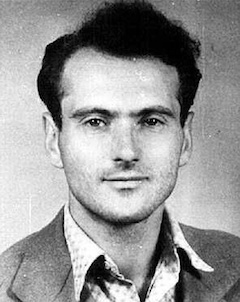
Restored to his situation, Casillas was called upon to defend Fulgencio Batista once again in the last days of 1958 at the Battle of Santa Clara — what would prove to be the decisive battle clinching the triumph of the Cuban Revolution. The battle was won on New Year’s Day, and Casillas captured that day by revolutionary commander Che Guevara.

“The sources contradict each other concerning names and numbers,” writes Paco Ignacio Taibo in Guevara, Also Known as Che, “but there is no doubt that in the hours following the liberation of Santa Clara, Che signed death warrants for several of Batista’s policeman whom the people accused of being torturers and rapists … including Casillas Lumpuy.”

Quoting Che now, Taibo continues: “‘I did no more and no less than the situation demanded — i.e., the death sentence for those twelve murderers, because they had committed crimes against the people, not against us.'” They would scarcely be the last.

Meanwhile,

the crowds in Havana were exacting a long-delayed justice. A sort of reasoned and selective vandalism took hold of the crowds, who attacked the gas stations belonging to Shell, which was said to have collaborated with Batista by giving him tanks. They also destroyed the casinos belonging to the American Mafia and the Batista underworld, trashed parking meters — one of the regime’s scams — and attacked houses belonging to leading figures in the dictatorship.

* Casillas carried out the murder in a law enforcement guise: sent on some pretext to arrest Menendez, Casillas shot his man dead when Menendez flexed his parliamentary immunity and told the cop to pound sand.

** Casillas’s defense lawyer in the Menendez proceeding was Jose Miro Cardona, who briefly became Prime Minister of post-Batista Cuba but had a much longer career as a prominent anti-Castro exile. As chair of the Cuban Revolutionary Council, he was the potential head of state had the 1961 Bay of Pigs invasion succeeded.

On this day..

1958: Istvan Angyal, Hungarian revolutionary

On this date in 1958, Angyal Istvan was hanged for the failed 1956 Hungarian revolution.

A working-class Jew who survived Auschwitz as a boy — his mother and sister were not so fortunate — Angyal was a convinced leftist who became disaffected with the Hungarian regime not because of its Communism but because of its failure to realize the democratic and egalitarian aspirations of that ideology.

A fixture on the youthful intellectual ferment in Budapest in the early 1950s, he was one of the leaders of street protests against Soviet domination during the doomed Hungarian Revolution of 1956, even conferring personally with Prime Minister Imre Nagy during its last days. In a gesture that not all of his comrades would have supprted, he set out the hammer and sickle along with the Hungarian national flag on November 7, the very eve of the revolution’s defeat, arguing to Soviet troops that they were fighting against true communism.

He’s commemorated today at an Angyal István Park in Budapest; it’s evidently “a modern social place with free Internet” and a nifty paper plane art installation.

On this day..

1956: Melvin Jackson, by calculus

This day’s post arrives to us via George Wallace: American Populist, and it concerns not the pugilistic Wallace but a previous Alabama governor, Big Jim Folsom.

Folsom, as we see here, was a man who had to choose his exercises of executive mercy very carefully due to the fraught racial politics of his state.

“I admit that we have got the worst penal system in the world, including Dark Africa,” Folsom said two years later* in the course of commuting the death sentence of a man whose crime was stealing $1.95.

What made Folsom most vulnerable to abandonment by even those deeply committed to his social programs was his demonstrative concern about the plight of Alabama’s blacks. He freely pardoned and paroled black convicts, believing they had been wrongly jailed or punished excessively because of their race. He harbored deep misgivings about the death penalty, especially in Alabama because use of the electric chair seemed reserved almost exclusively for blacks. In 1956, at a time of growing racial tension in the state, two black men were scheduled to die in Kilby Prison’s electric chair on the same night, one for murdering his wife and the other for raping a white woman. Folsom commuted the murderer’s sentence to life in prison, but he allowed the young rapist (who had been nineteen at the time of the crime) to die and said that he “just couldn’t” commute the sentence of a black man convicted of raping a white woman. “I’d never get anything done for the rest of my term if I did that,” he said. “Hell, things are getting so bad, they’re even trying to take Black & White Scotch off the shelves.” (It was true. The government of Alabama, which controlled the sale of liquor in the state, seriously considered barring that brand of Scotch whisky because of the name and because its label showed two Scottish terriers — one white and one black — joyfully playing together.)


The miscegenating spirit urges you to get in the holiday spirit.

* Folsom said that in 1958, the same year he let Jeremiah Reeves go to the electric chair.

On this day..

1952: Mustafa Khamis and Muhammad al-Baqri, Egyptian labor activists

On this date in 1952, Egypt’s revolutionary military government sent a gallows warning to the labor movement.

The towering political figure of the whole Arab world until his death in 1970, Gamal Abdel Nasser led a coup that toppled Egypt’s monarchy just weeks prior to the execution we mark here. (On July 23, 1952; it’s known for that reason as the July 23 Revolution.)

They had bold plans for their countrymen, these young officers: egalitarian land reform, pan-Arabism, release from the hated grip of colonialism.

But don’t mistake that for an invitation to present just any grievance.

the Free Officers were not willing to tolerate a militant, independent trade union movement. The armed forces and workers clashed in Kafr al-Dawwar, 15 miles south of Alexandria. On August 12 and 13, 1952, the 9,000 workers at the Misr Fine Spinning and Weaving Company conducted a strike and demonstration seeking a freely elected union (a pro-company, yellow union had been established in 1943), removal of several managers considered particularly abusive, and the satisfaction of economic demands. Despite the workers’ proclaimed support for the new regime, the army quickly intervened to crush them. A rapidly convened military tribunal convicted 13 workers. Eleven received prison sentences; Mustafa Khamis and Muhammad al-Baqri were sentenced to death and executed on September 7. (Source)

Nasserite Egypt quashed independent labor organizing in these early years, eventually banning all union activity outside of the state-controlled Egyptian Trade Union Federation.

On this day..

1950: The Hill 303 massacre

North Korean regulars on this date in 1950 committed a notorious mass execution upon 41 U.S. prisoners during the Korean War.

The Hill 303 massacre took place upon a 303-meter hill guarding the northern approach to Waegwan. In mid-August of 1950, said hill was defended by the U.S. Army’s 2nd Battalion, 5th Cavalry Regiment, 1st Cavalry Division, which narrowly escaped encirclement there by the advancing North Koreans.

Most of them escaped encirclement.

It’s a barely remembered atrocity in a war that America has consigned to forgetfulness; the massacre has seemingly never had anything like a thorough investigation. An indelible horror to the five men* who lived to tell the tale, its narrative outline is crude timelessness itself: holding these 42 U.S. POWs for two days, the North Koreans were themselves pummeled by a counterattack on the fiercely-fought hill;** unable to continue guarding the Americans, their captors fusilladed them.

This indiscriminate mass firing mere minutes ahead of the American approach was far from a thorough affair — hence the survivors, who were subsequently able to point out some of the captured Koreans who took part.


Massacre survivors James Rudd and Roy Day.

As a result of this and other summary battlefield executions, U.S. Gen. Douglas MacArthur addressed a threatening leaflet that was heavily dropped behind North Korean lines, threatening to “hold you and your commanders criminally accountable” according to the recent Nuremberg precedent.

There’s a monument to this gratuitous bloodbath that’s been recently installed, at the site of the shooting which is also nearby to a still-extant U.S. Army base called Camp Carroll. (The stone displays the date “June 25, 1950” — which denotes the start of the war, and not the day of the massacre.)

* Even the exact figures involved are a bit slippery. I believe we have 37 humans killed out of 42 captured, leaving five survivors. Some sources give it as 41 (attempted) executions with four survivors. A private named Frederick Ryan apparently was given last rites and declared dead on the scene but miraculously survived, possibly accounting for the variance.

** Hill 303 changed hands at least seven times.

On this day..

1951: Arno Esch, liberal

On this date in 1951, liberal East German activist Arno Esch was shot in Lubyanka Prison outside of Moscow.

Plaque at the University of Rostock honoring Esch. (cc) image by Schiwago.

Just 17 when World War II ended, Esch emerged as a leading student activist for the Liberal Democratic Party in the postwar Soviet Occupation Zone — a pacifist who advocated political liberalization and civil rights.

These weren’t times for any common fronts: “a liberal Chinese is closer to me than a German communist,” Esch remarked, denoting a clear and present danger in the communist zone: his party attempted in vain to form a coalition across the nascent Iron Curtain with its like-minded brethren in the western zones.

Esch was arrested in 1949 and prosecuted as a spy and counterrevolutionary by a Soviet military tribunal.

On this day..

1955: Gerhard Benkowitz and Hans-Dietrich Kogel, of the KgU

Anti-Communist resistance fighters Gerhard Benkowitz and Hans-Dietrich Kogel were executed by East Germany on this date in 1955.

Benkowitz

The two Weimar civil servants — respectively a teacher and a municipal statistics analyst — Benkowitz and Kogel both affiliated with the Kampfgruppe gegen Unmenschlichkeit (KgU) which you could translate as Combat Group Against Inhumanity, a western-backed spy/sabotage network harassing the Communist regime.

The KgU’s resistance ran more to the informational rather than the kinetic, but Benkowitz and Kogel both admitted to scouting a railroad bridge in Weimar for a potential bombing target. They were induced by the promise of sparing their lives to play the desired role of penitent auto-denunciator for their joint show trial; the promise, as will be inferred by their presence in these annals, was not honored.

Although the KgU’s West Berlin brain trust was safe from the vengeance of the Stasi, arrests and infiltration of its informer network in east put an end to this organization before the 1950s were out.

On this day..

1951: William Watkins, one man’s life and death

On this date in 1951, William Watkins hanged for drowning his eleventh child.

An execution that was barely noticed in its time and would be nigh-forgotten today, it’s revived in all its messy humanity in a book titled Execution: One Man’s Life and Death. John Mervy Pugh, the son of one of Watkins’s prosecuting barristers, watched Watkins’s two-day trial as a young man and was still so troubled by it many years later that once “it all came tumbling back into my mind” he decided that he “could not let it rest.” Pugh’s empathetic book plumbs the trial and police records, supplemented by interviews with Watkins’s surviving family and even Watkins’s executioner, the ubiquitous Albert Pierrepoint.

“This was one case I never expected would have taken place,” Pierrepoint told Pugh. “In my opinion many men have been reprieved for a lot worse crime than this.” According to Pugh, many others involved the case, from prison warders to court officials, were equally shaken by the unexpected denial of clemency. Watkins’s guards, who had a good feel for how these things played out, had confidently reassured the convict that he would surely never hang.

Forty-nine years old at his death, which was barely ten weeks after the death of the infant for which he was condemned, Watkins was a factory worker who scrabbled an honest if impecunious living with his second family. Once he was charming and gregarious, but an advancing congenital deafness and the strains of Britain’s hard years through Depression and war had left him taciturn and “prematurely old; his once black hair was now steel grey and his face permanently looked as though he needed a shave.” (His vanishing hearing also robbed him of his longtime driving profession.) He’d had nine children with his first wife but had left her for their former boarder whom Pugh anonymizes as “Maisie”. Though never married, the two lived as man and wife in a run-down home at the back of 79 Clifford Lane in Birmingham. They had a four-year-old son together. Then Maisie got pregnant again.

By both parents’ own admissions it was a child that they did not want and could not afford. (Bill still continued dutiful maintenance payments to the family he had deserted; the last one arrived after his arrest.) Maisie gave birth at home — she’d had no medical attention at all during her pregnancy — on the night of January 20, 1951. Minutes after she delivered, the baby was drowned, and Watkins’s fate was sealed.

Bill and Maisie lived cheek by jowl with their neighbors and Maisie’s condition had been obvious; it was no more than a couple of days before their observable comings and goings (specifically, Maisie’s not coming and going) had generated the inference of a birth … and Bill’s evasiveness generated rumors that demanded investigation.

When men arrived bearing papers and sharp questions, Bill’s answers were not very coherent or consistent. His excuses for that — panic in the moment, and the weariness of repeated police questioning later on — did not quite seem equal to the gravity of a dead infant, which he made no effort to hide when pressed. Minutes after the birth, the father said, he was washing the bloody newborn off and “it fell in the bowl.” So … scoop it out? He didn’t, and even said he couldn’t, for no satisfactory reason: alternately because his wife was shouting or, as he once allowed, “I suppose I panicked and we did not want the child.” It’s a disordered story for what in that moment seems for all the world a disordered soul. Quite disturbingly, the child was also found stuffed head-first in a pillow slip; was this because Bill had socked away the corpse in a vain attempt at concealment, or was it because he had callously stuffed the still-living creature inside the sack before “bathing,” intending all along to asphyxiate it?

This last interpretation surely carries an outrage beyond “mere” infanticide, perhaps the very margin by which Watkins swung. In notes before he recommended Home Secretary Chuter Ede against a reprieve (in effect, this recommendation was the decision) Permanent Under-Secretary of State Frank Newsam recorded the view that “this is a shocking case of the massacre of an unwanted infant by drowning as if the infant were a kitten.”

To Pugh’s eye, it seemed Watkins barely helped his own attorneys at all; he remarks that in revisiting the transcripts years later it is obvious how fragmentary was Watkins’s understanding of events, so hard of hearing was he. His near-deafness led others to take him for vacant and stupid; he’s repeatedly referred to as simple-minded by figures who encounter him, even his own barrister, although he was nothing of the sort. Yet Pugh also wonders whether the “prematurely old” Watkins had not indeed simply given up, somewhere along the line. The hangman Pierrepoint shared the same impression when he first spied the prisoner, as he later told Pugh: “he looked so dejected and slightly stooped, as though he couldn’t care less; suddenly I felt sorry seeing a man looking so sad and just waiting to die.”

At 8.00 a.m. the Chaplain arrived and gave Bill communion. Together they said the Lord’s Prayer and in the name of the Christ he served, the Chaplain forgave Bill for what he had done. The two prison officers found themselves affected by the scene and wished that time would not linger; the last hour always seemed the longest.

At 8.40 a.m. Mr Blenkinsop (the Undersheriff) arrived, and was quickly taken to the Governor’s office. Dr John Humphrey (the Prison Doctor) was already there. At 8.55 a.m., Pierrepoint and his assistant stood outside the door of the condemned cell and were joined within a minute by the Governor, the doctor and the Chief Prison Officer.

Within the cell Watkins was now seated with his back to the door, and seconds before the door opened, looked up, sobbing, and said to the Chaplain, “I have never met so many kind people in my life as I have met since I have been here. Why did I have to come to prison before people are so kind?” The Chaplain had to turn away for fear of showing his own emotion. Already the Under-Sheriff had given the signal: it was 30 seconds past 8.59 a.m. The door opened; Pierrepoint was behind Watkins: “Come on, old fellow,” he said in his soft northern voice. He pinioned his arms, and with an officer either side, Bill was escorted through the now opened doors to the scaffold and Pierrepoint remembers that he walked steadily into the chamber. The assistant was down on his knees pinioning his legs, Pierrepoint put a hand under his drooping chin, placed a white hood over his head and then the noose, stepped back and pulled the lever. Since Pierrepoint had entered the room, twelve seconds had passed: William Arthur Watkins was dead.

On this day..