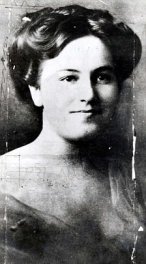
On this date in 1951, Eliseo (sometimes rendered “Elisio”) Mares was shot in Utah for murder.
He was condemned for the 1946 murder of an Ohio sailor en route to California for his marriage. (Mares claimed self-defense.) The wait for his execution — “five long years,” Mares told a reporter* after he lost his last appeal — was unusually protracted for the time.
By the time his case had wended its way through the courts, county-managed executions had been consolidated at the state prison at Point of the Mountain. Mares was the first put to death there.
Not until 25 years later, in a reminiscence by one of the witnesses, Salt Lake Tribune reporter Clark Lobb, was it disclosed that Mares “died silently and horribly.” Two of the four bullets fired from 15 feet away struck Mares in the hip and abdomen. It was several minutes before the prisoner was declared dead.
This source speculates that the poor marksmanship was intentional, but whether intentional or not, it must have been an appalling spectacle.
The sheriff directing the proceedings immediately began pushing for a switch to away from the error-prone firing squad to the gas chamber. (No dice, although the 1955 legislature did approve a switch to electrocution that fell through for want of funding.)
* UP wire report quoted in the New York Times, Sept. 9, 1951.
On this date in 1999, Arkansas went retro with the double execution of Mark Gardner and Alan Willett.
Time was that the multiple-execution format was one of the standard guises of capital punishment in America as elsewhere in the Anglo world back to the Tyburn tree and well before.
For whatever reason, Arkansas really cottoned to this format in the Nineties. It carried out a double execution on May 11, 1994, and two separate triple executions on August 3, 1994 and January 8, 1997. Volume packages account for nearly half of the 21 Arkansan executions in that decade.*
But the operational efficiency of killing people in multiples inevitably bowed in the more deliberate modern era to the overriding inefficiency of its supporting judicial process. Rare would be the day — especially for a smaller state like Arkansas — when more than one prisoner exhausted remedies at the same time, even if they’d begun their legal journey as parties to the same crime.
In this late degenerate age, whatever rationales may once have existed for group executions have faded well away. The double execution this date in 1999 was at best a minor public relations flourish, and there wasn’t any symbolic import at all. The two culprits were completely unconnected:
Mark Gardner, a career criminal out on parole who had slaughtered a family in order to rape their daughter and steal their valuables (last meal: fried shrimp, grilled salmon, garden salad, and chocolate cake with a Coke);**
Alan Willett, a guy who killed his own son and mentally impaired brother, then dropped appeals to volunteer for execution (last meal: beef jerky, barbecue-flavored potato chips, onion dip, garlic dip, buttered popcorn, and Pepsi)
The volunteer aspect helped make the twofer scheduling happen, but to what end? A “double execution” here really means two individual executions back-to-back, each one with its own witness room, its own set of last-minute appeals, its own dose of poison. So why bother coordinating execution dates when there are already so many other moving pieces in the machinery of death? It’s just bad engineering
So this date’s exercise was the last multiple execution in the United States save one. In 2000, the absolute high-water mark for execution pace in the country’s busiest death chamber, Texas injected Oliver Cruz and Brian Robertson on the same day, Aug. 9. That’s the last multiple-execution to date in the U.S.
** Gardner piously anticipated “a never-ending feast” at “the Lord’s supper” in his last statement, but his worldly appetites were less transcendental. He was accused of rape by his neighbor on death row: Damien Echols.
Echols was one of the West Memphis Three convicted for a supposedly occult triple homicide during the late gasps of America’s infantile Satanism panic. This case became a cause celebre (literally so: Eddie Vedder, Johnny Depp, and other glitterati were among his vocal supporters), and the convictions were debunked to such an extent that Echols and his two friends (both serving prison terms) were all released earlier this year.
Echols is not offically “exonerated” since ass-covering prosecutors negotiated an Alford plea as the price of his liberty. He remains a convicted killer in the eyes of the state and among some holdout defenders of the original verdict. This polarizing case is the subject of the HBO documentary Paradise Lost: The Child Murders at Robin Hood Hills and its sequel Paradise Lost 2. A third installment of the series is in post-production as of this writing.
Birkes was unquestionably part of the three-man team that had knocked over the Ketchum Bank the summer prior, laying poor Frank Pitts, Sr. in his grave. The robber’s potential “innocence” turned on the question of which miscreant actually put him there.
This “non-triggerman” stuff is not necessarily legally or morally compelling in the best of circumstances, but right or wrong it was dispositive in this case: his accomplices both drew life terms.
This generic Prohibition-era bandit was so perfectly a creature of his time that his dear mum Eliza trekked over from Siloam Springs, Ark. to make a tearful eleventh-hour clemency plea, maternally (and mistakenly) certain that “the governor will surely spare my boy’s life.”
That executive’s thoughts ran to different plans.
Alarmed at the rash of bank jobs by brazen outlaws like Birkes who could strike and then escape over county lines in their period Studebakers, twirling their villainous mustaches, said unmerciful Gov. Martin E. Trapp the next year created a statewide law enforcement agency, the Oklahoma State Bureau of Invesigation.
This bureau’s effective intervention in the Sooner gangland scene (bank robberies fell … ) heralded a long and fruitful life that still continues to this day. They’re the people you’re gonna call when some local police pathologist gets caught systematically cooking forensic results to order for the state’s prosecutors.
Puking her guts out, little Shirley was raced to the hospital where Earle Dennison had her day job as a nurse. But while the child lay dying, the aunt slipped away so that she could make a payment on a $5,500 life insurance policy she had taken out on the kid — a policy that would have expired the very next day.
This whole affair could hardly fail to cast an incriminating light on the death two years prior of Shirley’s older sister … whose body, upon exhumation, also showed traces of arsenic.
Dennison was indicted but never tried for that previous possible murder; Shirley Weldon’s case would more than suffice to secure the landmark visit to Yellow Mama. The main question was really whether Dennison had been, juridically speaking, plum off her rocker.
Not far enough off it to help her.
Shirley’s parents subsequently won a $75,000 judgment against the insurance company for issuing the policy to an in-law with no insurable interest in the young victim, thereby “plac[ing] the insured child in a zone of danger, with unreasonable harm to her and … the defendants in issuing the alleged illegal contracts.”
But that was a different era. As of today, vast tranches of collateralized policies among suspicious parties with no insurable interest, issued by bankers as rich as Croesus and implicitly guaranteed too big to fail, might well constitute a forward-thinking investment opportunity for troubled economic times.
* There had been only one woman of any racial category electrocuted in Alabama full stop, according to the Espy file of historical U.S. executions: African-American Silena Gilmore in 1930. Prior to that, Alabama had not executed a woman at all since the Civil War.
Khai, the most famous of the Indochinese Wars’ vast ranks of women fighters, would marry fellow revolutionary Le Hong Phong, the chairman of the party, who died in prison in 1942. Khai’s sister’s marriage made Khai sister-in-law to the revolution’s military lion Vo Nguyen Giap.**
But her prominent position also made her a target.
Arrested by the French late in 1940, she was tortured and condemned to death. She was shot with other cadres, shouting last words that the decades yet to come would pretty well vindicate.
Long live the Communist party of Indochina. Long live the victorious Vietnamese revolution. (Source)
Readers whose Vietnamese is stronger than mine — i.e., extant in any form whatsoever — might get something out of this video:
As a national heroine, Nguyen Thi Minh Khai is the namesake of any number of public spaces in Vietnam, like schools and roads.
Paradoxical historiography: the street address visible to the right of the photo brands a revolutionary name onto an upscale coffee shop in Ho Chi Minh City. (cc) image from Lawrence Sinclair.
* Some sources give an April 1941 execution date, particularly April 25. I believe this may actually be the date Khai was condemned. There are also some sources indicating a guillotine execution; though the guillotine was certainly available, the bulk of the sources seem to say that Khai was shot.
** Giap is still going strong after all these years; he just turned 100 a few days ago. Khai’s sister was not as lucky; she died in French custody at the prison American pilots would later refer to as the “Hanoi Hilton”.
During the purges of the 1930s, Josef Stalin showed a particular relish for eliminating the Old Bolsheviks whose red credentials predated the revolution. (And potentially, outshone his own.)
Zinoviev
On this date in 1936, one of the oldest of them, Grigory Zinoviev, was shot with his longtime ally Lev Kamenev.
These guys had been major movers and shakers among the early Bolsheviki, adherents of Lenin during the first decade of the century when the aspiration for a Communist Russia seemed hopelessly far-fetched. Zinoviev rode with Lenin from Switzerland to Petrograd in the famous sealed train after the February Revolution toppled the tsar. (Not so Kamenev: he was serving time in Siberia, but was freed by the revolution.)
In the years that followed, both played leading roles in the Soviet government despite their impolitic opposition to the Bolshevik coup in October.
Kamenev was briefly head of state in 1917, and he married Leon Trotsky’s sister. Zinoviev was the longtime head of the Communist International, in which capacity he showed Moscow’s public face for communist movements in other countries. Bela Kun was another ally of Zinoviev’s.)
In this capacity, he’s known in British history for the “Zinoviev letter”, a purported summons to Anglo agitation that was actually a dirty trick dropped before an election to help the Tories sweep to power.*
Those were the good old days — when Lenin was fading away and Zinoviev, Kamenev, and Stalin were the “troika” running things. They should have checked with the Romans how triumvirates work out.
Because of their alliance, Zinoviev and Kamenev provided the decisive support that enabled Stalin to remain General Secretary of the party after the public airing of Lenin’s Testament warning against him. Without Zinoviev and Kamenev at this crucial moment, Stalin probably could not have survived politically; the name Koba might have gone into history books as little more than a terror to the paperwork of some forgotten bureau. (And the pre-revolutionary Caucasus!)
Having been helpfully maintained in his position against Lenin’s dying wish, Stalin soon marginalized these formerly useful creatures. Their last decade was doomed to a spiral of failing power struggles, sinking rank, furtive dissension, and craven submission to party discipline.
Stalin at length destroyed them at the first great Moscow show trial, the Trial of the Sixteen — which hyped a “Trotskyite-Zinovievite” plot in a nicely Orwellian twist. (Despite Kamenev’s marital connection, Trotsky was actually a political rival.) The charge sheet must have reminded the defendants on every one of their dwindling days of the alliance with Trotsky they could have made back when they mattered.
The Trial of the 16 defendants would help to write the script for succeeding acts of this awful theater: after fighting the allegations, Zinoviev and Kamenev agreed to plead guilty on private assurances that their lives would be spared.
But once he had their “admissions” on the record, Stalin altered the deal.
Not only Zinoviev and Kamenev, but all 16 from the trial of the 16 were shot shortly after midnight this date.
From exile, their “conspirator” Trotsky called it the “end of an epoch”.
His obituary for Zinoviev and Kamenev minces no words about the men’s personal shortcomings (“they lacked sufficient character”), but still achieves a certain elegaic sympathy for these former fellow-travelers and their shared movement, now swallowed by Stalinism.
I have had the occasion to hear tranquil petty bourgeois tell me in the days between the beginnings of the trial and my internment: “It’s impossible to understand Zinoviev … He is so lacking in character!” And I would reply: “Have you yourselves experienced the full weight of the pressure to which he has been subjected for a number of years?” Unintelligent in the extreme are the comparisons, so widespread in intellectual circles, of the conduct in court of Danton, Robespierre and others. These were the instances of revolutionary tribunes who found the knife of justice suspended over them, directly in the midst of the arena of struggle; at a time when they were in the full flower of their strength, with their nervous system almost untouched and, at the same time, when they despaired of all hope of salvation.
…
[By contrast] For ten years they [Zinoviev and Kamenev] had been enveloped by clouds of slander paid for in heavy gold. For ten years they had swayed between life and death, first in a political sense, then in a moral sense, and lastly in a physical sense. Can one find in all past history examples of such systematic, refined and fiendish destruction of spines, nerves and all the fibers of the soul? Zinoviev or Kamenev would have had more than ample character for a tranquil period. But the epoch of grandiose social and political convulsions demanded an extraordinary firmness of these men, whose abilities secured them a leading place in the revolution. The disproportion between their abilities and their wills led to tragic results.
The Partisans were Tito’s Communist guerrilla movement against the Nazi occupation and while they were up against it at this early date, they would in due time wind up on the winning side and help birth the postwar government.
Their legacy remains in every European sports page as the namesake of the Belgrade sports association Partizan founded immediately after the war. It’s the umbrella entity for the frequent Serbian football and basketball champions as well as a variety of other sports. (Current world tennis no. 1 Novak Djokovic played for Partizan, for instance.)
On this date in 1949, Syrian President Husni al-Za’im and his Prime Minister Mohsen Berazi were seized in a military coup, conducted to a court martial, and immediately put to death.
An ethnic Kurd, al-Za’im had cut his teeth in the armed forces of two different empires — the Ottoman and the French — before Syria attained independence following World War II.
The ambitious al-Za’im had got out from under a Vichy-era prison sentence for corruption and established himself as army chief of staff in time for the 1948 Arab-Israeli War.
Syrian forces’ underwhelming performance in this campaign set the stage for what would follow — both for al-Za’im and, arguably, down to the present day.
Syria actually sported an open and democratic polity; it had a successful election in 1947. But the civilian leaders were essentially wealthy landowners who, having successfully led the movement for independence, had scant agenda for actual governance save enriching themselves and their allies. It was “an edifice of nepotism and mismanagement … [a] creaking network of family patronage and administrative venality.”
A stagnant economy, kleptocratic elite, and political malaise came into sharp focus with the debacle of the Arab-Israeli War. Arab commander Fawzi al-Qawuqji would charge that feckless Arab elites ran the war “from behind their office desks, and in accordance with their own personal interests, ambitions, and whims.”
Encouraged by the United States — just then breaking into the growth industry of short-sighted oil patch coups — al-Za’im overthrew the civilian government to “put things right and restore this nation its honour, its dignity and its freedom.”
This undergraduate thesis makes a case for the Za’im coup as the turning point normalizing and privileging military intervention in Syrian politics. This was the fear of a young American diplomat in Syria, who reckoned American support for the coup “the stupidest, most irresponsible action a diplomatic mission like ours could get itself involved in … we’ve started a series of these things that will never end.”
So it was that on this date the next domino toppled, a counter-coup that ended al-Za’im’s installment of the dictatorship series most abruptly.
Colonel Sami Hinnawi, an officer who had served under Husni Zaim, then sat as president of a “higher war council” of 12 senior officers, which tried the President and Prime Minister and condemned them to death. Sentence was carried out at once at the Mezza fortress near Damascus. Mohsen Berazi was shot first. He protested, although Husni Zaim, who stood by waiting his turn, urged him to be quiet.
–London Times, Aug. 15, 1949
Hinnawi last another year before a relative of Mohsen Berazi assassinated him in revenge, and on it went. It was during Syria’s sequence of unstable military juntas in the 1950s that the young Hafez al-Assad earned his stripes in the Syrian air force.
Assad would eventually execute a much more permanent takeover, rule the country for 30 years, and upon his death in 2000, bequeath leadership to his son Bashar — a fellow who, as of this writing, stands in some danger of winning an entry of his own in these pages should his ruthless crackdown against pro-democracy protesters prove unavailing.
On this day in 1915, serial uxoricide George Joseph Smith was hung by the capable John Ellis at Maidstone Prison in the UK.
Smith had committed three murders and various forms of larceny as well; he’d earned his noose several times over.
Two things tend to trip people up when they’ve seemingly committed the perfect crime: either they brag about it to impress others, or they repeat the crime using the same methodology as before, since it worked so well the first time. Either of those actions greatly increases the risk of the criminal’s getting caught.
Smith made the latter mistake. He was in a sense a victim of his own success.
Smith was born on January 11, 1872. His criminal record began when he was sent to a reformatory at nine and served a seven-year sentence. In young adulthood he was in and out of prison on theft- and fraud-related convictions.
His complicated marital career began when he married Caroline Beatrice Thornhill, a domestic servant, in 1898. Smith persuaded her to steal from her employers. Caroline served time in prison as a result, and implicated her husband, who got two years for his role in the thefts.
After George Smith’s release, Caroline thought it wise to put a few thousand miles between herself and her estranged husband, and so she left the UK for Canada. She never filed for divorce, however.
Smith remained legally married to her for the rest of his life, so none of his numerous other marriages were legal.
Unlawfully Wedded …
The guy wasn’t good-looking, but he could charm like any good con artist. A year after his marriage to Caroline, Smith bigamously married another woman. He cleaned out her saving account and then deserted her.
Between 1908 and 1914, he married no fewer than seven additional women, usually under an alias, and deserted most of them after a short time, sometimes only a matter of days — but not before he helped himself to their possessions and bank accounts.
Smith initially limited himself to scamming gullible spinsters out of their life savings by luring them into bigamous marriages … The moment Smith had his hands on his new bride’s money, he would disappear. Usually telling her he was going out on an errand — to pick up a newspaper or buy a pack of cigarettes — he would never return. On one occasion, he brought his newlywed wife to the National Gallery of Art and, after viewing some paintings, excused himself to go to the bathroom. She never saw him — or her life savings — again.
That particular bride was named Sarah Faulkner. Smith had already plundered £350 in cash from her and her jewelry as well, and while she was waiting for him to return from the loo he was back at their hotel, swiping her clothing and the rest of her money.
The only wife that didn’t fit this pattern was Edith Pegler.
Smith was away from her side for months at a time on “business trips” and when he returned it was always to ask for money, but he never left her for good and they remained together for seven years. As to whether he actually harbored some form of affection for her or whether he just didn’t want to kill his cash cow while it was still milkable, we can only speculate.
Yet all these women were, in a sense, lucky.
Smith may have broken their hearts and taken their cash, but he left them their lives.
… ‘Til Death Do Us Part
The first unlucky wife was Bessie Mundy, whom Smith murdered on July 13, 1912.
They’d married in August 1910, but he left her after persuading her to give him £150 in cash. On the way out the door, he accused her of giving him a venereal disease.
Eighteen months later, Bessie ran into Smith on the street. Somehow, the charmer got his ex to forgive him and resume their relationship.
In fact, Smith wanted to get his hands on Bessie’s £2,500 inheritance, but it was in trust and he couldn’t touch it.
After their reunion, the couple drew up mutual wills, naming each other as beneficiaries. Bessie willed her husband £2,579. Less than a week later, she was mysteriously dead.
Smith rented a house for them in Herne Bay and had a new cast-iron bathtub installed. Tragically, Bessie drowned in the bath. Her husband said he’d been out buying dinner and returned to discover the body.
Since Smith claimed his bride suffered from epilepsy and that she’d had a seizure the day before she died, it was easy to believe she’d simply had an unfortunate accident.
In spite of his newfound wealth, Smith had Bessie consigned to a pauper’s grave and even returned the slightly-used bathtub to the ironmonger for a £1 17s. refund.
This, perhaps, is where Smith might have counted himself lucky and checked out of the homicide business — or at least thought about a different m.o. Instead, hubris and habit got him hanged.
The Brides of Bath murder victims: from left to right, Bessie Mundy, Alice Burnham, and Margaret Lofty.
Next to go was Alice Burnham, who was making a goodly living as a nurse. Smith married on November 4, 1913, and became her widower on December 13.
Alice and her new husband were honeymooning at a seaside boardinghouse in Blackpool when she drowned in the bathtub while he was supposedly out getting eggs.
Smith, who claimed she had a weak heart, had insured her life for £500. She too was buried on the cheap.
Margaret Elizabeth Lofty died in her London home a little over a year later, on December 18, 1914. Newspapers reported she had drowned in the bathtub while her husband — identified as Robert Lloyd — was out buying tomatoes. He and the landlady found the body. Lofty and “Lloyd” had married only the day before and, appropriately enough, the ceremony was performed in the city of Bath.
Although it was initially classified as death by misadventure, Margaret’s murder ultimately lead to Smith’s downfall.
Rotten luck, it was: Alice Burnham’s father read an account of her death in the newspaper and, even though the husband had a different name, he couldn’t help but notice that Margaret’s death was suspiciously similar to his daughter’s.
Joseph Crossley, who was the couple’s landlord at the time of Alice’s death, noticed the same thing. Since both the Burnhams and Crossleys had taken a dislike to Smith from the get-go, they both wrote the police, asking them to open an investigation.
Authorities quickly determined that George Joseph Smith and Robert Lloyd were the same man. They sure had the same playbook.
Margaret had made out a will just hours before she died, naming her husband the sole heir to her estate. She had also withdrawn her life savings from the bank the same day, and three days before she had taken out a £700 life insurance policy on herself, with her husband as the beneficiary. Ka-ching.
When the grieving widower showed up at the insurance office to collect on Margaret’s policy, he was arrested. Lloyd/Smith was initially charged with putting a false name on a marriage certificate, but bigamy and murder charges would follow fast.
When news of the arrest was published, a police chief from Kent read the story and told the London police about Bessie Mundy’s death, which was strikingly similar to the other two.
Forever Hold Your Peace
But how could he could have drowned the women in the tub, without leaving marks of violence on their body?
Margaret had only a small bruise on her elbow. For answers, the police turned to renowned pathologist Bernard Spilsbury. The first thing he did was exhume the bodies to determine whether the women had, in fact, drowned. They had.
After experimenting with the very same bathtub Margaret Lofty died in, he determined how it might have happened. John Brophy, a crime writer, describes it chillingly:
With honeymoon playfulness he would enter the room where his bride was already in the bath, admire her naked beauty, bend over her fondly, and, still murmuring endearments, hold her feet. Suddenly, he would tug her feet upward, jerking her head at the end of the bath, below the water, so that in a few moments she would be drowned with no bruises on the body or other signs of assault or resistance.
Effective. Actually, you can see why he stuck to his system.
When Smith went to trial, it was only for the murder of Bessie; British law didn’t permit him to be tried for multiple murders in one go. However, the prosecution wanted to bring evidence in the Lofty and Burham deaths into the trial, arguing that they indicated a criminal “system.”
The judge allowed it, setting a precedent that would be used in later criminal cases.
In pretrial investigations later described in court, Spilsbury demonstrated his murder theory using Bessie’s bathtub and a female police officer in a bathing suit. It worked all too well: she lost consciousness immediately and they had to drag her out of the tub and perform artificial respiration to revive her.
No wonder the jury was only out for twenty-two minutes before it delivered a guilty verdict.
Caroline Thornhill, Smith’s legal wife, returned to Britain for his trial. She married a Canadian soldier the day after his execution.
The “Brides in the Bath” case has remained vividly alive in British memory.
The historian Harold Nicholson compared Smith’s behavior to Adolf Hitler’s in his 1939 book, Why Britain is at War; Smith was mentioned in novels by Evelyn Waugh, Agatha Christie and Dorothy Sayers, and in 1952 the case was made into an episode for the true-crime radio show The Black Museum.
At dawn fifty years ago today, Jose Isaias Constante Laureano was shot in Saltillo, Coahuila for murder — the last application of capital punishment in Mexican history.
Since past performance is no guarantee of future returns, nowhere is it written that the next five decades will also remain death penalty-free in Mexico. In fact, given the country’s wave of destructive drug war crimes, calls to restore the ultimate sanction have been heard from Coahuila’s own governor as well as from such unexpected quarters as Mexico’s Green Party.
Green Party pro-death penalty billboard in Mexico. (cc) image from Randal Sheppard.


 Khai (


 An ethnic Kurd, al-Za’im had cut his teeth in the armed forces of two different empires — the Ottoman and the French — before Syria
 On this day in 1915, serial uxoricide