1962: Georges Kageorgis, assassin

On this date in 1962, Georges Kageorgis* was shot at Usumbura (now Bujumbura) for assassinating the charismatic national figure seemingly destined to lead the country into its postcolonial age.

“It was a bit like what could have happened in South Africa if Nelson Mandela was murdered before assuming the presidency in 1994,” said one pol later.

A prince, a pro-independence nationalist, a Tutsi who had married a Hutu and spurned a tribal leadership position lest he cast too sectarian a profile, Louis Rwagasore became prime minister in the fall of 1961 on the strength of his party‘s comprehensive electoral victory.

Rwagasore admired Patrice Lumumba. He was destined to share Lumumba’s fate.

Two weeks after his election, “the one truly popular national figure” was gunned down by Kageorgis, a Greek mercenary drawing pay from Belgian settlers who reckoned a better situation (French link) for themselves with Hutu governance. A revolution of (Belgian- and Catholic-backed) Hutu in Rwanda had had a “neo-colonial” character, according to Rene Lemarchand … and it had heightened ethnic tensions in Burundi.

With the murdered prince went ethnic cohesion; the bloody Kamenge riots of January 1962 presaged worse to come as leadership in the Rwagasore-less party collapsed. Ethnic conflict sharpened through the 1960’s, with a Tutsi-dominated dictatorship ultimately gaining control of the country and setting the stage for intermittent massacres (two classed as genocides) that haunt Burundi to this day and form part of the context for the Rwandan genocide.

Rwagasore Day — October 13, the anniversary of the prince’s assassination — is still observed in Burundi. Kageorgis’s execution date is notable for other reasons: it was the last day before Belgian authority in Ruanda-Urundi officially ended.

* This Greek newspaper gives the killer’s name as Ioannis Karagiorgis.

On this day..

1574: Gabriel de Lorges, accidental regicide

On this date in 1574, Gabriel de Lorges was beheaded in Paris for treason.

Known by the time of his death as the Comte de Montgomery (English Wikipedia entry | French) — though the title was punitively stripped from the man and his heirs, causing him to spit at the scaffold, “tell my children, if they are not able to reclaim their position, I curse them from the grave” — Lorges’ treason was going Protestant and fighting for the Huguenots in the wars of religion ravaging France.

But his claim to fame, and indeed (if quite unjustly) one of the explicit charges laid against him, was a regicide that fueled those wars and helped bring down the Valois dynasty.

The ol’ lance-in-the-eye

The vigorous 40-year-old French king Henri II seemingly had the Valois in good shape and anti-Huguenot policy firmly in the saddle.

In 1559, though, the sporting monarch put his own butt in the saddle at a joust with our day’s principal, then a captain of Henri’s Scots Guards (and a Catholic).

Gabriel’s shattered lance somehow found a chink in the king’s visor and managed to tolchock the royal gulliver just beside the eye.* After a week and a half in agony, Henri succumbed to the injury.**

Henri’s sudden death was bad news for France, because the oldest† of his seven children was only 15 years old, and feeble. He died the next year.

As the widowed Italian queen Catherine de’ Medici struggled over the ensuing decades to find a stable Valois heir among her brood, the aggressively Catholic House of Guise‡ flexed its political muscle to the resentment of the Bourbons and the Huguenot lords, and pitched France towards civil war.

Our errant knight, meanwhile, although forgiven by the dying Henri II, had despairingly retired and hurled himself into study that soon converted him to the Protestant party.

Quickly distinguishing himself as perhaps the ablest Huguenot commander, Montgomery was in Paris in 1572 during an ostensible truce for interparty dynastic nuptials when the Catholic faction sprang the St. Bartholomew’s Day massacre.

Though Montgomery was a specific target for assassination that day, he somehow managed to escape. He gave the Catholics fits for the two years left him, enough that the crown tried to buy him off. (Like most Protestants, he was distrustfully defiant after the horrors of St. Bartholomew’s Day.)

He was finally overcome in 1574; as Henri’s second son had just kicked the bucket without an heir, Catherine assumed the regency while a third boy was fetched from Poland, and got herself some gratifying but untoward revenge on the inadvertent author of her family’s unfolding ruin.

No time was lost in condemning [Montgomery] to the penalties of high treason; he was beheaded at the Greve, his body quartered, and his family degraded from their nobility. Previous to his execution, he was cruelly tortured to make him confess the existence of the late admiral‘s conspiracy, but the pain drew no such acknowledgment from him, and mangled and wounded as he was, he went to the scaffold with remarkable serenity. We have an account, given by a contemporary, of his steady attachment to his principles: “He would not confess to the Archbishop of Narbonne, who went to him in the chapel to admonish him; nor would he take or kiss the crucifix, which is usually presented to those who are being led to execution; nor in any way attend to the priest, who had been placed in the cart by his side. A cordelier thinking to draw him out of error, began to speak to him, and said that he had been abused. Looking at him steadily, he answered, ‘How! abused? and if I have been it is by those of your order: for the first person who ever handed me a Bible in French, and made me read it, was a cordelier like you; and therein I have learned the religion which I hold, which alone is the true religion, and in which, having since lived, I wish now by the grace of God to die.'”

(Some sources place Montgomery’s execution on May 27, which I believe confuses his date of death with his date of capture.)

Just like Montgomery himself, the Huguenot cause proved resistant to every policy of Catherine or the Guises; this day’s execution only screwed up the nerve of a party that had been given notice on St. Bartholomew’s Day that their lot must be to conquer or die. Since Henri II’s boys could neither, over 30 years’ time, produce an heir nor master their foes at arms, the Huguenots conquered when the throne finally passed to a Bourbon.

A public-domain biography of Gabriel de Lorges, comte de Montgomery, can be enjoyed by French-speakers here. For the English-speakers, Alexandre Dumas’ fictionalized treatment, The Two Dianas, is freely available in translation.

* French surgeon Ambroise Pare attended the dying monarch. Pare’s grim description of the king’s injuries appears in this biography of the physician, which also reports that Henri’s caregivers

secured the heads of four criminals that had been beheaded and experimented upon them with a lance in order to ascertain the probable course of the splinters.

** The fatal joust is alleged to be one of the vindicated prophecies of Nostradamus. Prophecy or no, the family had bad luck with sports; Henri came in line for the throne when his older brother dropped dead after playing tennis.

† Henri II’s immediate heir Francis II was married to Mary, Queen of Scots. After the death of her husband, she unhappily shipped back out to Scotland to contest the English throne, with unsatisfactory results.

‡ More about the House of Guise before, during and after this period from this public domain text.

On this day..

1920: Dennis Gunn, hanged by a fingerprint

On this date in 1920, Dennis Gunn’s fingerprints made history by hanging their owner for murder.

“You’ll have a job to prove it,” said Dennis Gunn when police charged him with murder.

Use of the fingerprint in forensic science had been developing over the decades preceding, and already begun to earn its bones with criminal convictions.

Dennis Gunn’s conviction marked a watershed in the mainstreaming of the youthful science, especially in New Zealand and the British Empire/Commonwealth: the first execution that hung — so to speak — on a print.

The 25-year-old was tied to the murder of Ponsonby postmaster Augustus Braithwaite because a smudge left on a stolen cashbox matched the prints Gunn had contributed to the nascent New Zealand fingerprint library when he had been convicted of evading military service two years before.

Armed with this connection, a police search of Gunn’s environs turned up the apparent tools of the crime — a revolver (with yet another matching print), a thieves’ kit, and more pilfered proceeds of the postal strongroom.

Gunn attempted to indict the reliability of the fingerprint evidence at trial, and according to the London Times (Apr. 20, 1920) he had the support in this endeavor of “public demonstrations of sympathy, men and women rushing to shake hands with Gunn.”

But it didn’t fly with the jury.*

Gunn’s condemnation, read the official report,

disposes of all attempts to question the conclusiveness of this class of evidence, and proves the truth of the remark of the Chief Justice of Australia, that a man who leaves a clear fingerprint on an object leaves there an unforgettable signature.

Law enforcement organs around the world rapidly accepted the principle.

Too rapidly? Some think so; and, in the train of a new century’s bulletproof identification technology, DNA, wrongful convictions founded on purported fingerprint matches have drawn some renewed scrutiny (pdf) to the technique that put Dennis Gunn on the Mount Eden Prison gallows this date in 1920.

* Playing for time after conviction, Gunn copped to the robbery and tried to pin the murder on a supposed confederate. No dice.

On this day..

1962: Marthinus Rossouw, for services rendered

On this date in 1962, Marthinus Rossouw was hanged in Pretoria after an unusual defense strategy failed to repel a headline-grabbing murder charge.

Rossouw shot dead Baron Dieterich Joachim Gunther von Schauroth, a rich farmer (dude was born in a castle) who had been forced into city living by a long run of drought and was known for the life expectancy-compromising habit of toting around large sums of cash.

Rossouw insisted at trial that the killing had been at Von Schauroth’s own instigation, so freighted with care was the victim’s life that he implored his younger friend to end it. The defendant hoped thereby to mitigate the sentence as a case of murder by consent.*

Whether telling the truth or not, Rossouw didn’t make a very credible witness; caught in several lies and omissions, and naturally lacking any corroborating witness to the alleged murder pact, the jury gave him no slack.

Neither did the noose.

* The proper legal handling of a case where the victim of a homicide has freely desired to die is a longstanding salami-slicing juridical problem — witness a whole chapter in an 1897 British primer on consent issues in the law.

On this day..

1867: Emperor Maximilian I of Mexico, “Archdupe”

On this date in 1867, a firing squad disabused a Habsburg heir of his pretensions to the throne of Mexico.

A little bit loopy, a little bit liberal, and fatally short of common sense, Ferdinand Maximilian Joseph* decamped from the easy life at his still-under-construction dream palace outside Trieste for an exalted title that really meant playing catspaw for Napoleon III‘s Mexican land grab.

(To assuage the pangs of imperial adventurism upon our tender-headed hero, Maximilian had been “invited” to assume the Mexican throne by a convention handpicked to do just that.)

There the puppet emperor with the silver spoon in his mouth found himself pitted in civil war against the Amerindian peasant from the school of hard knocks: Benito Juarez, one of Mexico’s great liberal statesmen.

As the tide turned in favor of Juarez and the liberals, and Napoleon’s attention increasingly fixated on problems closer to home, the French threw in the towel.

But Maximilian had too much honor or too little sense to heed his patron’s advice to get out while the getting was good; sticking it out with “his people,” he was captured in May, 1867.

Juarez desiring to give any future bored European nobles second thoughts about New World filibustering, Maximilian got no quarter.**

While Louis Napoleon emceed a world’s fair on the other side of the planet, Maximilian was shot with two of his generals, Miguel Miramon and Tomas Mejia.


Manet’s The Execution of Maximilian, showing an obvious compositional debt to Goya’s Executions of the Third of May. Further analysis: written English; video Spanish.

Maximilian’s widow Charlotte — “Carlota”, when trying to blend with her adoptive subjects — descended into a long-lived madness back in the Old World, but was rumored to have borne with one of Maximilian’s French officers an illegitimate child who would go on to become an infamous Vichy collaborator.

Books about Emperor Maximilian

This sensational affair attracted plenty of coverage in the ensuing years; as a result, there is a good deal of topical material from near-contemporaries now in the public domain. Maximilian in Mexico: A Woman’s Reminisces of the French Intervention 1862-1867 (Gutenberg | Google Books) is a zippy read.

* Brother to Austrian Emperor Franz Joseph.

** Spanish trial records are here. European appeals for clemency poured in, but Maximilian had doomed himself with the “Black Decree” of 1865, ordering summary executions of captured Republicans.

The time for indulgence has gone by: it would only encourage the despotism of bands of incendiaries, of thieves, of highwaymen, and of murderers of old men and defenseless women.

The government, strong in its power, will henceforth be inflexible in meting out punishment when the laws of civilization, humanity, or morality demand it.

Juarez answered the clemency appeal of Princess Salm-Salm with solemn words:

If all the Kings and Queens in Europe [pled for Maximilian] I could not spare that life. It is not I who take it; it is the people and the law, and if I should not do their will the people would take it and mine also.

On this day..

1947: Shigematsu Sakaibara, “I obey with pleasure”

In the evening of June 18, 1947,* six convicted Japanese war criminals were hanged** by the U.S. Navy War Crimes Commission on Guam.


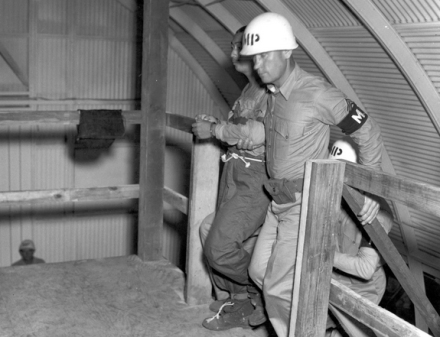
An unidentified Japanese prisoner ascends the gallows on Guam.

The most lastingly notable of the six was Rear Admiral Shigematsu Sakaibara, who was hanged for ordering (and perhaps in one instance, personally conducting) an infamous mass execution on Wake Island that has already appeared in these pages.

According to Judgment at Tokyo:

For some, the hanging of one of these six men had been a horrible tragedy and perhaps even a mistake. Rear Adm. Shigematsu Sakaibara had enjoyed the reputation of “gentleman soldier” and protector of the common man. Hailing from a wealthy family near Misawa in Tohokhu province, some 450 miles north of Tokyo, Sakaibara never forgot his roots. Forever poking fun at the fast-paced Tokyo lifestyle, the rear admiral touted the value of rural living, the integrity and honesty of those who lived in Japan’s rugged north country, and Tokyo’s need to recognize their great contributions to the war effort. Contemplating a postwar political future, he would be following in the footsteps of his politically influential family in northern Japan. That future was linked to championing the rights of returning veterans and other have-nots. Misawa had indeed had a heroic reputation as an important navy town and base for years. Sakaibara had assisted in the training exercises held there for the Pearl Harbor attack plan in late 1941. His future seemed golden no matter who won the war. But what some in his command called “The 1943 Incident” changed all that.


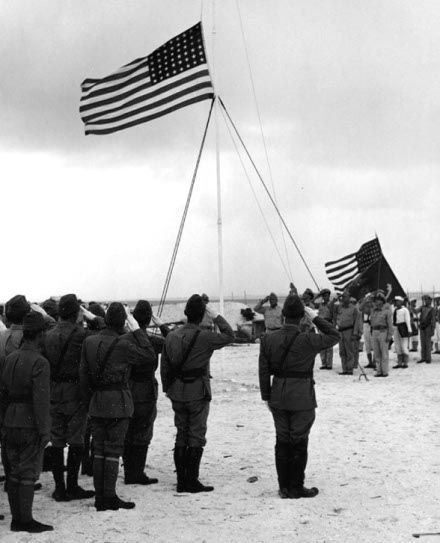
Shigematsu Sakaibara (right foreground) surrendering Wake Island on September 4, 1945.

These events, Sakaibara admitted in his trial, had taken place in an atmosphere of near starvation and impending doom. The defense counsel especially emphasized that point, asking the commission to understand and respect the pressures and strains on Sakaibara at the time of the incident. But the commission was not in a forgiving mood. In the chaos of retreat or not, innocent civilians had been murdered.

… Unfortunately for Sakaibara, several members of his former command expressed surprise on the witness stand when asked about the desperate situation on Wake in 1943. These men insisted that Sakaibara and his defense team’s description of a starving, chaotic Wake was an exaggerated one. There had been no unexpected miseries, confusion, or sense of peril, they said. Sakaibara’s fate was sealed.

True to form, defendant Sakaibara offered a very literate final statement to the commission. In contrast to so many of his colleagues on trial in Tokyo, on Guam, or elsewhere, Sakaibara, albeit with carefully picked words, admitted he was guilty of rash and unfortunate actions. He appeared especially convincing when he noted that he wished he had never heard of Wake Island. But his most memorable comments involved his own view of morality in war. A nation that drops atom bombs on major cities, the rear admiral explained, did not have the moral authority to try so many of his countrymen. With Hiroshima and Nagasaki in mind, Sakaibara claimed there was little difference between himself and the victors over Japan. With that statement a legend grew, particularly in his home town, of Sakaibara, the victim of American revenge.

… As late as the 1990s, some people there, not necessarily of the World War II generation, still bowed in reverence to Sakaibara family members out of respect for the “sacrificed” gentleman soldier.

His last words:

I think my trial was entirely unfair and the proceeding unfair, and the sentence too harsh, but I obey with pleasure.

* Some sources places the executions on June 19; the U.P. wire story, dated June 19th, referred to the hangings occurring “last night,” and the preponderance of evidence I have been able to locate appears to me to support the 18th rather than the 19th.

** An interesting bit of interservice-rivalry color on proceedings in Guam, courtesy of Prisoners of the Japanese:

The United States Navy had hanged fewer than a handful of men in more than a hundred years … Now on Guam they had all kinds of Japanese to try and sentence to death … They had to requisition an Army executioner to show them how to hang. He was a lieutenant with silver-rimmed glasses, a leading-man moustache, and a paunch. He used the traditional British drop formula, but he was an innovator as well: He invented a method of lowering the dead body to the stretcher without having to cut the rope.

On this day..

1944: Marc Bloch, French historian

On this date in 1944, the Gestapo shot French historian Marc Bloch among a batch of Resistance members.

When war broke out between France and Germany in 1939, the 52-year-old professor spurned advice to get out of the country. Driven by his love of France, he resigned his post at the Sorbonne to join the reserves.

I was born in France, I have drunk the waters of her culture. I have made her past my own. I breathe freely only in her climate, and I have done my best, with others, to defend her interests.

(Bloch had won the Legion of Honor for his brilliance and bravery in World War I, “always ready to March and give example.”)

High-profile intellectuals of Resistance proclivities and Jewish extraction, needless to say, had a problem in those terrible years.

The remarkable Bloch almost made it through the whole of the war in the French Resistance, but was arrested a few weeks before the Allied landing at Normandy, tortured, and shot. Comrades in arms remembered his death as an unusually sobering loss.

We couldn’t, no we couldn’t bear that image: Marc Bloch, our “Narbonne” of clandestine life, turned over to the Nazi beasts; this perfect exemplar of French dignity, of exquisite and profound humanism, this spirit become a prey of flesh in the vilest hands. We were there, a few of us, in Lyons, his friends, his comrades in the clandestine struggle, when we learned of the arrest, when we were immediately told that, “They tortured him.” A detainee had seen him in the offices of the Gestapo, bleeding from the mouth (that bloody trail in the place of the last malicious smile he had left me with on a street corner before being caught up in the horror). I remember: at those words, “He was bleeding,” we broke out in tears of rage. The most hardened lowered their heads despondently, as we do when things are just too unfair.

For months we waited, hoped. Deported? Still in Montluc? Transferred to another city? We didn’t know anything until the recent day when we were told, “There’s no more hope. He was executed at Trévoux on June 16, 1944. His clothes and papers were recognized.” They killed him, alongside a few others who he inspired with his courage.

For we know how he died. A kid of sixteen trembled not far from him. “This is going to hurt.” Marc Bloch affectionately took his hand and simply said, “No, my boy, it doesn’t hurt,” and fell first, crying out: “Vive La France!”

Marc Bloch, commemorated at this French site, bequeathed 20th century scholarship one of its great intellectual legacies. His The Historian’s Craft,* a composition halted short of completion by the Nazi firing squad, was posthumously published and remains one of the classic texts of historiography; the journal he co-founded in 1929 gave its name to a whole school of thought in the field. (Bloch’s own name also adorned a school in a more literal sense, the Marc Bloch University, now subsumed by the University of Strasbourg.)

Works By and About Marc Bloch

* The blog To The Roots is in the midst of a series of posts exploring The Historian’s Craft.

On this day..

1987: Jimmy Glass, electrocution appellant

On this date in 1987, Jimmy L. Glass died in Louisiana’s electric chair — having come one vote short of having the device declared unconstitutional by the Supreme Court.

The 20-year-old Glass escaped from a parish jail with fellow inmate Jimmy Wingo on Christmas Eve, 1982, robbing and murdering an elderly couple in the process. Each blamed the other; both got the chair.*

But should they have?

Glass would lend his name to a landmark 1985 Supreme Court decision contesting Louisiana’s method of execution.

By a 5-4 decision, the high court held that electrocution, still at that point the country’s prevailing method of execution despite its medieval reputation for grisly botches, remained a constitutional method of inflicting death.

Liberal Justice William Brennan‘s vigorous dissent from that judgment is not for the squeamish. (For readability, I’ve added emphasis and removed the many citations in the original.)

[E]vidence suggests that death by electrical current is extremely violent and inflicts pain and indignities far beyond the “mere extinguishment of life.” Witnesses routinely report that, when the switch is thrown, the condemned prisoner “cringes,” “leaps,” and ” ‘fights the straps with amazing strength.’ ” “The hands turn red, then white, and the cords of the neck stand out like steel bands.” The prisoner’s limbs, fingers, toes, and face are severely contorted. The force of the electrical current is so powerful that the prisoner’s eyeballs sometimes pop out and “rest on [his] cheeks.” The prisoner often defecates, urinates, and vomits blood and drool.

“The body turns bright red as its temperature rises,” and the prisoner’s “flesh swells and his skin stretches to the point of breaking.” Sometimes the prisoner catches on fire, particularly “if [he] perspires excessively.” Witnesses hear a loud and sustained sound ” like bacon frying,” and “the sickly sweet smell of burning flesh” permeates the chamber. This “smell of frying human flesh in the immediate neighbourhood of the chair is sometimes bad enough to nauseate even the Press representatives who are present.” In the meantime, the prisoner almost literally boils: “the temperature in the brain itself approaches the boiling point of water,” and when the postelectrocution autopsy is performed “the liver is so hot that doctors have said that it cannot be touched by the human hand.” The body frequently is badly burned and disfigured.

The violence of killing prisoners through electrical current is frequently explained away by the assumption that death in these circumstances is instantaneous and painless. This assumption, however, in fact “is open to serious question” and is “a matter of sharp conflict of expert opinion.” Throughout the 20th century a number of distinguished electrical scientists and medical doctors have argued that the available evidence strongly suggests that electrocution causes unspeakable pain and suffering. Because ” ‘[t]he current flows along a restricted path into the body, and destroys all the tissue confronted in this path . . . [i]n the meantime the vital organs may be preserved; and pain, too great for us to imagine, is induced. . . . For the sufferer, time stands still; and this excruciating torture seems to last for an eternity.‘ ” L.G.V. Rota, a renowned French electrical scientist, concluded after extensive research that

“[i]n every case of electrocution, . . . death inevitably supervenes but it may be very long, and above all, excruciatingly painful . . . . [T]he space of time before death supervenes varies according to the subject. Some have a greater physiological resistance than others. I do not believe that anyone killed by electrocution dies instantly, no matter how weak the subject may be. In certain cases death will not have come about even though the point of contact of the electrode with the body shows distinct burns. Thus, in particular cases, the condemned person may be alive and even conscious for several minutes without it being possible for a doctor to say whether the victim is dead or not. . . . This method of execution is a form of torture.”

At least neither the juridical near miss nor Brennan’s graphic description of his impending manner of death dented Jimmy’s sense of humor. Asked for his last words, the “swaggering” inmate, already strapped in the chair, replied

Yeah, I think I’d rather be fishing.

Luckily for Carlisle United, he’s not the same guy as journeyman goaltender Jimmy Glass, who in 1999 improbably struck home one of the greatest goals in English football history.

* Wingo was put to death four days after Glass.

On this day..

1942: The village of Lidice, for the assassination of Reinhard Heydrich

On this date in 1942, the Germans visited upon the Czechoslovakian village of Lidice one of the most notorious butcheries of World War II: the physical destruction of the town, and the execution of most of the adult population, in revenge for the assassination of Reichsprotektor Reinhard Heydrich.

Heydrich had power of life and death in Nazi-occupied Bohemia and Moravia, and did not scruple to use it.

“The Hangman of Prague” was no mere functionary, but a Nazi grand wizard from way back, who’d had a hand in the Third Reich’s most terrifying greatest hits — the Night of the Long Knives, Kristallnacht. Just four months before this date, Heydrich had chaired the Wannsee Conference.* (Watch Kenneth Branagh as Heydrich ride herd over a gaggle of bureaucrats to get the Final Solution up and running in Conspiracy.) Hitler called him his “man with the iron heart.”

So he was a natural target for the Czechoslovakian army-in-exile and their British handlers, made more so by his lordly disdain for common-sense security safeguards.

Zipping along a predictable route in an open car, he was a sitting duck for a hit squad, who gave the Nazi bastard a mortal shrapnel wound from a grenade that had him lingering painfully at death’s door for several days before he finally died of blood poisoning.

The 1964 Czechoslovakian film Atentat (“Assassination”) chronicles the plot to kill Heydrich and its aftermath.

For this effrontery, Czechoslovakians would pay a dreadful price.

Naturally, the Nazis mercilessly hunted down and slaughtered those with any connection to the plot.

But the Reich also exacted collective reprisals to make plain that the entire “protectorate” could be considered hostage against such plots in the future.

Special transports of Jews marked “Attentat auf Heydrich” were shipped to the camps, and 152 were executed on the day Heydrich succumbed. But then, the Nazis were brutalizing Jews anyway. Something more headline-grabbing would be needed.

Enter Lidice.

After gaudy funerals for the slain Reichsprotektor, the Reich settled upon the small town of Lidice north of Prague — trumping up a few connections to resistance to “justify” collective punishment.

On this date, German troops stormed it, summarily executed all the men and boys** old enough to bear arms and a fair number of women, deported the others, and then physically destroyed and buried the town.

Lidice was intended as a demonstration — boldly published to the world as proof against a repeat,† it became the byword of Nazi cruelty towards subject nations. Though not by quantitative standards the greatest crime of the occupation, not even the greatest crime in reprisal for Heydrich, its three syllables distill all the evil of Hitler’s conquest for Czechoslovakia.

Lidice did live, and does yet, as an emblem par excellence those terrible years.

Less alive: Heydrich’s right-hand man Karl Hermann Frank, who was hanged in Prague after the war for engineering this monstrous crime. Those survivors of Lidice able to make the trip enjoyed priority seating.

* Heydrich’s aide at the Wannsee Conference, and taker of cleaned-up minutes, was Mr. Banality of Evil himself, Adolf Eichmann.

** Only three men of Lidice survived the destruction: two who were in England at that time, and one who was imprisoned in Prague for killing his son. The sentence for this crime, it turned out, was life.

† An effective proof — the calculated wholesale slaughter apparently did cool both the conquered populace and the enemies of Germany on enthusiasm for further assassinations.

On this day..

1862: William B. Mumford, flag desecrator

On this date in 1862, a 42-year-old gambler hanged at the New Orleans mint where, six weeks before, he had pulled down the Stars and Stripes of the arriving Union occupiers to the delight of a Confederate mob.
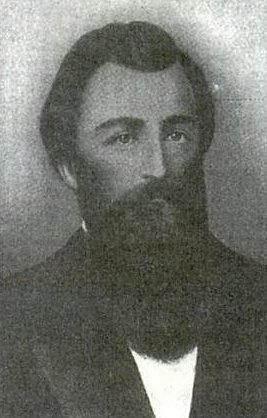
Moving to secure the Mississippi, Northern forces had the Big Easy encircled and about to surrender when, an advance team landed in the undefended city and pulled down the Stars and Bars over the mint on Esplanade Avenue.

William Bruce Mumford was among the Confederate loyalists who took exception to the Yankee flag, so he chopped it down and dragged it through the street (provoking a cannonade from a Union warship). The flag was little but tatters by the time he had through with it.

Although the city was not officially occupied at the time of this incident, the mint was a federal building. Army General Benjamin Butler resolved to make a salutary example out of the incident to quell any possible civil unrest.

I find the city under the dominion of a mob. They have insulted our flag — torn it down with indignity. This outrage will be punished in such a manner as in my judgment will caution both the perpetrators and abettors of the act, so that they will fear the stripes, if they do not reverence the stars of our banner.

Butler, it should be allowed, had some reason for this conclusion. The Picayune exulted the act as, well, a call to resistance.

The names of the party that distinguished themselves by gallantly tearing down the flag that had been surreptitiously hoisted, we learn, are W. B. Mumford, who cut it loose from the flag-staff amid the shower of grape. Lieutenant N. Holmes, Sergeant Burns and James Reed. They deserve great credit for their patriotic act. New Orleans, in this hour of adversity, by the calm dignity she displays in the presence of the enemy, by the proof she gives of her unflinching determination to sustain to the uttermost the righteous cause for which she has done so much and made such great sacrifices, by her serene endurance undismayed of the evil which afllicts her, and her abiding confidence in the not distant coming of better and brighter days — of speedy deliverance from the enemy’s toils — is showing a bright example to her sister cities, and proving herself, in all respects, worthy of the proud position she has achieved. We glory in being a citizen of this great metropolis.

This free book argues that Butler’s clemency a few days before to a group of condemned southern enlisted men made mercy politically impossible in the Mumford case, lest the citizenry interpret executive weakness as an invitation to lawlessness.

If that was Butler’s calculus, Confederate die-hards did not appreciate it.

Accordingly, when Mumford was “hung … from a flag-staff projecting from one of the windows under the front portico” of the mint, he won promotion into the pantheon of southern martyrs.

Confederate President Jefferson Davis issued an order condemning General Butler, and even his officers, to death, along with some outsized bluster about embargoing prisoner exchanges that the Confederacy had not the manpower to seriously intend:

William B. Mumford, a citizen of this Confederacy, was actually and publicly executed in cold blood by hanging alter the occupation of the city of New Orleans by the forces under the command of General Benjamin F. Butler when said Mumford was an unresisting and non-combatant captive, and for no offense even alleged to have been committed by him subsequent to the date of the capture of the said city …

the silence of the Government of the United States and its maintaining of said Butler in high office under its authority for many months after his commission of an act that can be viewed in no other light than as a deliberate murder, as well as of numerous other outrages and atrocities hereafter to be mentioned, afford evidence only too conclusive that the said Government sanctions the conduct of said Butler and is determined that he shall remain unpunished for his crimes:

Now therefore I, Jefferson Davis, President of the Confederate States of America, and in their name do pronounce and declare the said Benjamin F. Butler to be a felon deserving of capital punishment. I do order that he be no longer considered or treated simply as a public enemy of the Confederate States of America but as an outlaw and common enemy of mankind, and that in the event of his capture the officer in command of the capturing force do cause him to be immediately executed by hanging; and I do further order that no commissioned officer of the United States taken captive shall be released on parole before exchange until the said Butler shall have met with due punishment for his crimes.

And whereas the hostilities waged against this Confederacy by the forces of the United States under the command of said Benjamin F. Butler have borne no resemblance to such warfare as is alone permissible by the rules of international law or the usages of civilization but have been characterized by repeated atrocities and outrages

… (examples of atrocities omitted) …

I, Jefferson Davis, President of the Confederate States of America and acting by their authority, appealing to the Divine Judge in attestation that their conduct is not guided by the passion of revenge but that they reluctantly yield to the solemn duty of repressing by necessary severity crimes of which their citizens are the victims, do issue this my proclamation, and by virtue of my authority as Commander-in-Chief of the Armies of the Confederate States do order-

1. That all commissioned officers in the command of said Benjamin F. Butler be declared not entitled to be considered as soldiers engaged in honorable warfare but as robbers and criminals deserving death, and that they and each of them be whenever captured reserved for execution.

2. That the private soldiers and non-commissioned officers in the army of said Butler be considered as only the instruments used for the commission of the crimes perpetrated by his orders and not as free agents; that they therefore be treated when captured as prisoners of war with kindness and humanity and be sent home on the usual parole that they will in no manner aid or serve the United States in any capacity during the continuance of this war unless duly exchanged.

3. That all negro slaves captured in arms be at once delivered over to the executive authorities of the respective States to which they belong to be dealt with according to the laws of said States.

4. That the like orders be executed in all cases with respect to all commissioned officers of the United States when found serving in company with armed slaves in insurrection against the authorities of the different States of this Confederacy.

The Confederates never got a chance to enforce the order; he resumed his colorful political career and died in 1893 hailed as Massachusetts’ greatest citizen-soldier. Complain (pdf) as they might of his iron-heeled rule, the residents of New Orleans had good cause to appreciate the relatively early and orderly occupation of their city, which spared it the flames visited on more recalcitrant rebel strongholds.

For the South, the loss of its largest city and the gateway to the Mississippi was a severe blow. As the rebel position crumbled in the months to come, Jefferson Davis must have had a worry for his own neck.

Somehow, he and every other Southerner escaped execution for their treasonable design, which leaves William Bruce Mumford, the riverboat gambler who tore down Old Glory, as the only American since at least the War of 1812 to be put to death for treason against the United States.*

* Anti-slavery rebel John Brown was hanged for treason in 1859, but it was treason against the state of Virginia — not against the U.S. Julius and Ethel Rosenberg were electrocuted for espionage, not treason.

On this day..