On this date in 1772, straw effigies of the (in)famous French libertine Marquis de Sade and his servant Latour were executed in Marseilles for sodomy.
“It is always by way of pain one arrives at pleasure.”
The aristocrat christened Donatien Alphonse François (even the name would become taboo for later use among his family) was at this point just 32 years old, but already cultivating the reputation that would make his name a byword for violent sex. He had in 1768 got the boot from Paris in view of the many courtesans who complained of his mistreatment.
Five more would do so for the incident that triggered his “execution”: de Sade took his baroque pleasure from these “very young girls” obtained by his manservant Latour (who also took part in the bisexual debauch). The whole scene was spiced with liberal dosage of the poison/aphrodisiac* spanish fly.
“Cruelty, very far from being a vice, is the first sentiment Nature injects in us all.”
One of these working girls seriously overindulged on the the love potion and spent the next week puking up “a black and fetid substance.” The authorities got interested, and de Sade and Latour bolted to Italy.**
Back in Marseilles, proceedings against the fugitives saw them sentenced for (non-fatal) poisoning and sodomy
for the said Sade to be decapitated … and the said Latour to be hanged by the neck and strangled … then the body of the said Sade and that of the said Latour to be burned and their ashes strewn to the wind.
This was duly carried out against straw effigies of de Sade and Latour on September 12, 1772.
“Lust is to the other passions what the nervous fluid is to life; it supports them all, lends strength to them all: ambition, cruelty, avarice, revenge, are all founded on lust.”
Although the Marquis eventually got this sentence overturned, it did in a sense mark an end to his life as it had been. Later in 1772, he’d be arrested in Italy; though he escaped and went back on the orgy circuit, most of the four-plus decades left to his life would be spent imprisoned or on the run — an ironic situation for the man Guillaume Apollinaire would celebrate as “the freest spirit that has yet existed.”
(Astonishingly, de Sade also avoided execution during the French Revolution: he was supposed to have been in the last batch guillotined before Robespierre fell; either through bureaucratic bungling or efficacious bribery, he avoided the tumbril.† De Sade also cheated death when a man whose daughter the marquis had outraged attempted to shoot him point-blank … only to have the gun misfire.)
“My manner of thinking, so you say, cannot be approved. Do you suppose I care? A poor fool indeed is he who adopts a manner of thinking for others!”
From this latter half of the infamous satyr’s life — when he often had time on his hands not available to dispose in more corporal pursuits — date the pornographic/philosophic writings that would stake de Sade’s disputed reputation for posterity.
** With another lover, his sister-in-law Anne … who was also a Benedictine canoness.
† It was on some firsthand authority, then, that de Sade took a dim view of capital punishment: “‘Til the infallibility of human judgements shall have been proved to me, I shall demand the abolition of the penalty of death.” This and other pithy de Sade quotes in this entry are from here.
On this date in 1437, Hussite marshal Jan Rohác z Dubé was hanged in Prague.
The Bohemian commander had upheld throughout the Hussite Wars the cause of its namesake heretical priest. (There’s a Czech biography of Rohac here.)
The Hussites had a nice run in the 1420s — no less a personage than Joan of Arc took time out from French battlefields to dictate an anti-Hussite jeremiad threatening to “remove your madness and foul superstition, taking away either your heresy or your lives” — but eventually succumbed to repeated papal onslaughts.
They were decisively crushed at the 1434 Battle of Lipany … but Rohac survived it, and “emerg[ed] from the ashes” like “a phoenix”, the last champion of the forbidden sect.
Rohac rallied the remnants of his partisans to a fortress named Sion* near Kutna Hora, where they were besieged and ultimately overwhelmed.
The people of Prague, as an act of intimidation directed at dissenters, were forced … to watch the gruesome display. Clad in his red baronial robes, with a sign draped around his neck stating his condemnation, Rohac was hung by a gold chain from the top of a three-story gallows. Beneath him hung the bodies of the Sion garrison.
Present-day Jan Rohac appreciation is best done Czech.
This bio is available reprinted from a public domain source. There’s also a 1947 Czechoslovakian film (appropriately titled Jan Rohác z Dubé, but also known in English as Warriors of Faith) celebrating Rohac’s exploits.
* No truth to the rumor that the Hussites’ doings in doomed Sion inspired the techno rave scene in the city of the same name in The Matrix.
[S]trife* [between Manila archbishop Hernando Guerrero and the Spanish governor Don Sebastián Hurtado de Corcuera] being greatly inflamed … became entangled with one of the most memorable disputes that have occurred in the islands — a necessary occasion for the sharpest encounter between the two jurisdictions, and one from which Don Fray Hernando Guerrero could not excuse himself, as it concerned the most sacred part of the ecclesiastical immunity. That was a matter in which the archbishop could not neglect to sally out with all his might, in order to comply with the obligation of a true prelate. The case was as follows: There was an artilleryman in Manila, named Francisco de Nava, who had a female slave with whom he had illicit communication, as came to the ears of the archbishop. The archbishop ordered him to remove from himself this occasion [for sin] by selling the slave-girl to another person; and had the latter placed, for that purpose, in the house of a lady who was related to Doña María de Francia, who became fond of her and arranged to buy her from the artilleryman. The latter was so beside himself over the loss of the said slave that he refused to sell her at any price, saying that he wished, on the contrary, to marry her. But Doña María de Francia so arranged matters that the slave was sold, and came into her possession with very slight effort. The artilleryman, grieved and regretful for what had happened, almost became mad, and, it having been given out that he was mad, certain violence was shown him; and on one occasion he had received a sound beating at the house of Doña María de Francia, because he had gone there to request that they should give him the slave, as he had resolved to make her his wife.
Aggrieved and rendered desperate in this way, he saw the girl pass one day in a carriage with Doña María de Francia. Going to her he asked her whether she knew him, who was her master. The slave answered him with some independence, whereupon he, blind with anger, drew his dagger in the middle of the street and killed her by stabbing her, before anyone could prevent it. All the people, both those in the carriage and those in the street, ran tumultuously [after him]; but the artilleryman escaped them all, and took refuge in the church of our convent in Manila. The governor heard of what had happened, and ordered Don Pedro de Corcuera, his nephew (who was then sargento-mayor of the camp), to take the artilleryman from the church, saying that he could not avail himself of the sanctuary of the church, as he had committed a treacherous act — although it was only a homicide, and the settlement of this question did not concern the governor. However, his action arose mainly from the anger that he felt that what had happened was in the presence of his nephew, Don Pedro de Corcuera — who, also being angered at what concerned his wife, made use of his commission with less prudence than he ought to exercise in executing such orders from his superiors. He caused the church and convent to be surrounded; and, going inside, examined everything, not excepting even the sacristy; and it is even said that he declared that, if he found the artilleryman there, he would take him out a prisoner. But not having been able to find him then, Don Pedro left the church and convent surrounded by a double guard. The governor added to that that he would not allow the religious to enter or leave, until he had hold of the refugee. The latter was finally found, and taken from the sacristy, and surrendered to the commander of artillery, in order that he might proceed with the trial as his competent judge; and he, either carried away by flattery, or in obedience to the commands of the governor, proceeded so hastily that in a very short time he condemned the artilleryman to death.
The archbishop’s provisor, Don Pedro Monroy,** bore himself on this occasion with the prudence that was fitting, and proceeded against the commander of artillery, requesting him to deliver his prisoner and return him to the church. Having been informed that the commander of artillery was a mere instrument, and that all his actions were according to the impulses of the governor, he sent three lay priests to the palace to intimate to the latter that the judge should deliver the refugee to him. The priests entered, without anyone hindering them; and finding that the governor had already retired, as it was then an advanced hour of the night, they started to withdraw in order to return next morning; but the soldiers of the guard would not permit them to leave, saying that such was the order of the governor.
The sentence against the artilleryman having been given — which it is said that the governor sent ready made out to the judge, to sign — they proceeded to execute it,† notwithstanding that the provisor proceeded to threaten censures, and to impose an interdict and suspension from religious functions [cessatio de divinis]. The governor ordered a gallows to be erected in front of the very church of St. Augustine, and the criminal was hanged thereon — to the contempt of the ecclesiastical immunity, for the [proper] place assigned for such punishments was very distant from there. The governor, seeing that the sentence was already executed, and that he had now obtained the chief object of his desire, wrote to the archbishop, requesting him to have the censures removed and the interdict raised, and the churches opened on the day of the nativity of our Lady. The archbishop, recognizing the duplicity of the governor, refused to answer that letter without first consulting the orders; and, after consulting with some of them, decided that he would not raise the interdict, since there was less inconvenience in having it imposed [even] on so festive a day, than there would be in his yielding on an occasion so inimical to the ecclesiastical immunity. However, the requests of the Recollect fathers of our father St. Augustine, who had charge of the advocacy of the nativity, had so much influence that the archbishop ordered the interdict to be removed, and it was done.
The commander of artillery was condemned to some pecuniary fines, from which he appealed to the judge of appeals, who was the bishop of Camarines. The ecclesiastical judge refusing to admit the appeal, he threatened the royal aid of fuerza; and this question having been examined in the royal Audiencia (which at that time consisted of but the governor and only one auditor, Don Marcos Zapata), it was declared in his favor, and the appeal went to the bishop of Camarines. The latter — namely, Don Francisco Zamudio, of the order of our father St. Augustine, and a son of the province of Méjico — declared the commander of artillery to be free from the sentence given by the ecclesiastical judge. The trial of the commander of artillery had its second hearing. On that account there did not fail to result certain charges against the governor, such as his having ordered the secular priests to be detained in the guard-house; his declaration that he could not be excommunicated by anyone except the pope; and that if an order were given to him to arrest the pontiff, he would arrest him, and even drag him along by one foot (which he was proved to have said by several persons). The governor freed himself from all these charges by excuses in a manifesto which he published; but as it is not a part of my duty to examine their adequacy, I shall not do so. I shall refer the reader to the reply made to him by a learned ecclesiastic of the university of Méjico; for there is no liberty in Filipinas to enable any one to complain, or to speak his mind against what the government manipulates
* “The underlying reason for this public dissension was racial,” says this source.
The rivalry between Spaniards born in the peninsula and those born in the colonies, the creoles or americanos, affected not only the clergy but also the lay population. The Augustinians, and the Hospitaller Orders of San Juan de Ojos, San Hipolito and Guadalupe, whose members were creoles, were opposed by the Carmelites and the apostolic colleges in that country. “While legally they [both factions] were on complete equality,” writes Dr. Domingo Abella, Philippine ecclesiastical historian, “class distinctions were apparently encouraged as much as possible by the Spanish colonial policy, because the principle of divide et impera of every aristocratic system was the leading idea for the permanent subjection of the colonies.”
The rivalry reached such an extent that in 1627 the Dominican Order in Mexico refused to admit creoles into its ranks, an act which the Spanish king disapproved. In the Philippines the situation had not openly reached that extreme. The insular hierarchy managed to keep the number of creoles, mestizos and indios who were embracing the religious life down to a minimum. But the racial discrimination rankled among those born in the colonies. Archbishop Guerrero and Bishop Zamudio were both Augustinians, but the former was a peninsular, while the latter was a creole, and this was probably the reason for their taking opposite sides.
Yesterday at 12 o’Clock, Vernham and Harding, were carry’d from Newgate to the Place of Execution on St. Michael’s hill, attended by the Under-Sheriff, and his Officers, and the Constables of the City, (in a Cart, with Halters about their Necks;) the Divine who attended them, having finish’d his last Office, the Cart drew away: But to the Surprize of every one, after hanging the usual Time, and being cut down, Vernham was perceived to have Life in him, when put into the Coffin; and some Lightermen and others, who promis’d to save his Body from the Surgeons, carried him away to a House; and a Surgeon being sent for, immediately open’d a Vein, which to recovered his Senses, that he had the Use of Speech, far up, robb’d his knees, shook Hands with divers persons that he knew, and to all seeming Appearance, a perfect Recovery was expected.
Appropriately metaphorical image of a gateway on St. Michael’s Hill in Bristol, (cc) Daniele Sartori.
The Rumour of this, soon came to the Under-Sherif’s Ears, who, with Mr. Legg, and several Officers armed, went to know the Truth, and finding it certain, were about to remove him to a proper Place, in order to have him again under their Care for a second Execution,and finishing the Law; which we hear would have been done in a private Manner, without any Ceremony: But whether any secret Method was used to dispatch him, or not, he died about Eleven o’ Clock, in great Agony of Pain, his Bowels being very much convls’d, as appeared by his rolling from one Side to the other, and often on his Belly.
{He was bout 20 Years of Age; while [under] Sentence of Death he behaved very penitent, laying the whole of his Misfortune upon a fatal Companion,* particularly as to the breaking open Mrs. Atherton’s House. Harding behaved very unconcerned, charging his Wife with being the chief Inset to his Misfortunes, and even curs’d her just before he received the Sacrament that Morning.}
And to our second Surprize, Joshua Harding is also come to Life again, and is actually now in Bride-well, where great Numbers of People resort to see him, Particularly Surgeons, curious of Observations. He lies in his Coffin, covered with a Rug, has Pulsation, breathes freely, and has a regular Look with his Eyes; but he has not been heard to speak, only motions with his Hand where his Pain lies. ‘Twas thought he would be executed a second Time {to the finishing his unhappy Fate by a private Execution, at the same Tree he was cut down from}; but we are now told, he is to be provided for in some convenient House of Charity, with Restraint, he being to all Appearance defective in his Intellects. Two such Resurrections happening at one Instant in the World, was never heard of in the Memory of man.**
–The Virginia Gazette, Dec. 24, 1736. {Curly-braces portions from an otherwise largely identical report in The South Carolina Gazette, Jan. 15, 1737.}
Coverage from The Daily Gazetteer is available here. The London Magazine adds the detail that all those curiosity-seekers visiting Harding “give him Money” and “are very inquisitive whether he remembers the Manner of his Execution: to which he says, he only can remember his being at the Gallows, and knows nothing of Vernham’s being with him.”
* This Annals of Bristol says that Vernham nearly refused to plead until the prospect of judicial pressing caused him to chicken out. (And ironically, to the extent it forwarded his execution date to this evidently felicitous occasion, almost saved his life.)
** Two hanged men reviving at once is remarkable indeed, but it was not so strange at this time for individual prisoners to survivetheirexecutions.
This date in 1923 was the passing of an era: the last legal public hanging in Texas.
The Texas of legend — the rough and vast frontier — fits the public hanging tableau (and its dark cousin, the lynching) like a hemp necktie.
And up until 1922-23, Texas executions had indeed been hangings administered by county sheriffs. But that newfangled killing technology, the electric chair, beguiled the legislature here as elsewhere. Oil wells popping up all over the state were rewriting its economic future … so why not a futuristic way of killing wrongdoers, too?
A 1923 bill centralized future executions in Huntsville, where they still remain today.
Denouncing countyseat [sic] executions as a barbaric relic of the frontier past, L.K. Irwin launched a one-man campaign to bring Texas in tune with the times. The state legislator converted many to his cause with the argument that public hangings harmed society almost as much as the condemned.
Irwin insisted executions usually degenerated into bloodthirsty carnivals that did nothing to instill in spectators a respect for the law. All too often untrained local officials made the spectacle even more gruesome, when the drop failed to snap the victim’s neck. On those occasions, he slowly strangled in full view of females and impressionable children.
In the 1923 session of the Lone Star legislature, Irwin introduced the Electric Chair Bill. In addition to doing away with the gallows, the proposal relieved county sheriffs of the responsibility of the carrying out death sentences. Future executions would be held behind closed-doors inside the Texas Department of Corrections.
That law took effect on Aug. 14, even though the electric chair hadn’t even been built yet. The hanging of one Roy Mitchell in Waco on July 30 figured to be the last, and thousands packed the public square to witness it. It’s still sometimes cited as the Lone Star State’s last hanging.
Grandfather Clause
But on that very same date in the Gulf town of Angleton, Nathan Lee, an illiterate middle-aged black sharecropper, was condemned to die for shooting his white employer dead in a dispute over money. (The Ku Klux Klan sent flowers to the funeral.)
A month later, he did so — albeit in an area whose public access had intentionally been curtailed, to chill out any potential carnival scene.
On this date in 1679, the Jesuit David Lewis was hanged, drawn and quartered.
Lewis suffered just days after a fellow priest and fellow victim of Titus Oates’ “Popish Plot” concoctions, John Kemble.
Lewis was arrested at the Wales town of Llantarnam where he was Tad y Tlodion, “father of the poor”; hauled to London’s Newgate Prison, he was returned to Usk, also in Wales, for execution.
As with Kemble, Lewis “discover the plot I could not, as I knew of none; and conform I would not, for it was against my conscience.” Where terroristic plotting could not be established, taking Holy Orders in the church would do just as well.
Lewis is not actually the last Catholic martyr in Britain* — Oliver Plunkett earned that distinction in 1681 — but at this late date he goes down as the last Welsh martyr, which is also the title of an energetic Catholic blog all about the man and his milieu.
Seems that site has a virtual pilgrimage to go along with the annual meatspace tradition that takes place this year on Sunday, August 29. The faithful might also enjoy friendsofsaintdavidlewis.co.uk.
* An inventory of martyrs for the faith in the Isles is here.
A recording of Zare’s voice in what turned out to be his last call with his lawyer, pleading “I want to stay alive. Please, please I want to stay alive,” was used to open a 2008 documentary against executing juvenile offenders.
That attorney who represented Zare (and created the documentary) was Mohamad Mostafaei — an activist lawyer who described various forms of official harassment for his unwelcome work. Mostafaei has recently been in the news for his representation of Sakineh Mohammadi Ashtiani, the woman who made international headlines for receiving a sentence of stoning to death. (Mostafaei also represented cause celebre Delara Darabi, hanged in 2009.)
(Also of interest: Mostafaei’s gut-wrenching description of another child offender’s hanging in October 2009, and the desperate attempts to beg for mercy from the victim’s parents. StopChildExecutions.com has regular coverage of the juvenile death penalty in the Islamic Republic.)
On this date in 1679, 80-year-old Catholic priest John Kemble was martyred for the faith at Hereford.
Kemble had been discreetly performing the offices of his faith — still illicit, but less liable to get you killed at this late date — for over five decades since ordination.
Unhappily, Titus Oates and his tall tales of a Popish Plot to assassinate King Charles II came along at the end of that run. In the ensuing anti-Catholic spasm, Kemble was one of the unlucky ones rousted.
Even in the hysteria of the times, nobody could make an actual conspiracy charge stick against this ancient cleric, but in the hands of a sufficiently hostile judiciary, his demonstrable exercise of the priesthood could be enough to make him a traitor. And at his age, the opportunity to buy his life at the cost of his conscience didn’t look the bargain:
According to the course of nature I have but a few years to live. It will be an advantage to suffer for my religion and therefore I will not abscond.
He got the mild consolation of hanging to death before the unpleasant drawing-and-quartering bits were executed upon him, and calmly puffed a pipe and shared a bowl of wine with the sympathetic representatives of the law before it all happened. As a result, Herefordshire long called the comforts enjoyed before a parting a “Kemble pipe” and “Kemble cup”.
He’s been elevated to sainthood on the strength of his posthumous miracles, like healing the jailer’s daughter of throat cancer; the holy man’s severed hand, held at St. Francis Xavier’s in Hereford, is supposed to have saved a man from death as recently as 1995.
(The rest of St. John Kemble reposes at Welsh Newton, and is venerated at an annual pilgrimage.)
Kemble was among the last of the Forty Martyrs of England to die for the Catholic faith; a fellow-inmate, David Lewis, paid his own penalty just five days later.
The Admiralty’s most notorious mutiny this side of the Bounty was actually a far bloodier affair. Dig the description from one of the conspirators who later turned state’s evidence.
“The captain,” said he, “was very severe with the men, who were all good seamen, and they were determined to either run the ship on shore and desert, or else take her by force. This had been in their minds for months before it happened. At last,” said he, “on a dark night, when the young lieutenant had the watch, our minds were made up. A party went to the cabin-door, knocked down the sentry, and entered it. The captain was in his cot, and he was soon overpowered. We threw him out of the cabin-window. Another party threw the officer of the watch over the larboard quarter, but he, being young and active, caught hold of the hammock-stanchion, when one of the men cut his hands off, and he soon dropped astern. The first lieutenant had been ill and keeping his cot, but on hearing the noise, he came up the hatchway in his shirt, when one of the carpenter’s crew cut him down with an axe, and he was sent overboard with several others.”
(There’s a fine audio lecture about this mutiny in the context of maritime class violence at the Bristol Radical History Group, which reminds that in a context where most of a ship’s manpower was marshaled with the violence of involuntary conscription, mutiny bids were a regular feature of Old Blighty’s maritime empire. London Times archives are available from 1785, and searches on the word “mutiny” in those early years reveal dozens of episodes — and those were just the reported ones.)
After making sharkmeat of that tyrannical captain, 27-year-old Hugh Pigot, the Hermione mutineers got drunk, and then delivered the frigate to the Spanish.
A Royal Navy vessel aptly named the Surprise* was able to surprise the wayward warship and cut her out of the Venezuelan harbor Puerto Cabello. The Hermione was then aptly renamed the Retaliation (and later, Retribution). Then, the British put the ominous word into action with a global manhunt for the mutineers.
Nearly thirty men ultimately hanged for the affair, though that meant that most of those involved escaped the noose.
And so we come at last to our day’s protagonist, one of the Hermione mutineers who was at length recognized in the breakaway former British colonies now constituting themselves the United States of America.
Upon catching this intelligence, British envoys demanded the extradition of this character — who now claimed to be an American citizen by the name of “Jonathan Robbins” — under the terms of the recent and controversial Jay Treaty. After several months under lock and key without any American charge against him, Robbins/Nash eventually had a habeas corpus hearing before Judge Thomas Bee, who decided† that this “American citizen” was no such thing. With an okay from the Adams administration, Bee had the man delivered to the crown.
Nash was immediately shipped down to the British colony of Jamaica, put on trial on Aug. 15 (he had no defense), and hanged on Aug. 19.
Little could the Waterford-born seaman imagine the legacy he bequeathed his fake-adopted country.
I know my rights, man
The Nash extradition became a political firestorm in the U.S., with anti-British Jeffersonian Democratic-Republicans decrying the Federalist administration’s handling of the case. For the infant republic, formulating juridical precedent on the fly, this played as a separation-of-powers issue: was it within the president’s power to fulfill the treaty unilaterally, absent executing legislation passed by Congress? Was it within a judge’s purview to approve an extradition request without the constitutionally assured right to trial by jury?
Sounding eerily contemporary, New York Rep. Robert Livingston denounced a system whereby “a citizen of the United States might be dragged from his country, his connections and his friends, and subjected to the judgment of an unrelenting military tribunal.” Less measured, a Philadelphia Aurora headline announced: “BRITISH INFLUENCE threatens destruction of these United States!” (Source of both quotes)
Though it was surely not decisive, this issue provided great fodder in the 1800 elections swept by the Democratic-Republicans and standard-bearer Thomas Jefferson. Jefferson’s home state of
Virginia, the stronghold of inimical feeling to Great Britain … passed a law forbidding under heavy punishment a magistrate to be instrumental in extraditing any person out of the state. Thus desertions from British ships in a Virginian port became a regular event. Captains of British vessels sailing to United States ports in no long time would meet their men strolling in the streets, furnished with naturalization papers, who set them at defiance, for their arrest was impossible.
“This passage of history,” the otherwise hostile-to-Nash source is obliged to concede, “tells unfavourably on the character of the treatment of British seamen … the Discipline was harsh and oppressive, one of pure repression. The consideration of others, enforced by benevolence and duty, was often regarded as weakness.”
Hard to imagine why anyone would want to mutiny! It calls to mind, at the end of this passion play as at its start, the words supposed to have been hurled at the Hermione‘s doomed Captain Pigot as he pled with his assailants for mercy: “You’ve shown no mercy yourself and therefore deserve none.”
A real reactionary
Despite the electoral slam dunk, the real last word on the case ultimately belonged to the administration’s defenders.
Among these rose in Congress a first-term — for he would only serve a single such term — member of the House of Representatives also from the Old Dominion, John Marshall.
Just months later, Marshall would be one of outgoing President Adams’s “midnight judges” appointed to the federal courts: in Marshall’s case, to the U.S. Supreme Court, where his epochal 34-year term as Chief Justice would shape the future evolution of American jurisprudence.
Rising on March 7, 1800, in defense of President Adams’s conduct in the Nash case, Representative Marshall gave a preview of the strong federalist perspective that would define his time on the bench. (Read it in full here.)
The President is the sole organ of the nation in its external relations, and its sole representative with foreign nations … He possesses the whole Executive power. He holds and directs the force of the nation. Of consequence, any act to be performed by the force of the nation is to be performed through him.
This passage was exhumed from Congressional archives for citation in a 1936 Supreme Court case on federal supremacy, and has proceeded thence into a go-to bullet point for every latter-day defender of any arbitrary executive authority.
Of consequence (as Marshall might put it), Marshall’s speech about Nash gets an approving reference in Bush administration lawyer — and possible future extradition subject? — John Yoo‘s September 25, 2001 memorandum on “The President’s Constitutional Authority to Conduct Military Operations Against Terrorists and Nations Supporting Them”.
Supreme Court Justice Clarence Thomas, too, quotes this phrase in his Hamdi v. Rumsfeld dissent, further to the doctrine that a man consigned to a presidential oubliette has no recourse to the courts; Justice John Harlan used it (with the rather grandiosely exaggerated qualifier that “from that time, shortly after the founding of the Nation, to this, there has been no substantial challenge to this description”) in his dissent in the Pentagon Papers case to claim that Richard Nixon could prevent the New York Times and Washington Post from publishing the embarrassing classified history of the Vietnam War.‡
So in this imperial age, Thomas Nash is more with us than ever he was. Who knows but what noxious monarchical theories are even now being buttressed with footnotes resolving to the vindictive execution of that obscure mariner two centuries past?
Given the vessel’s centrality in this popular series, there’s a book all about the colorful history of the Surprise. In reality, the Surprise — actually a captured French ship herself — was sold out of the service in 1802, prior to the notional 1805 setting of both the cinematic Master and Commander: The Far Side of the World and the book in the series when Jack Aubrey first commands her.
† Rightly, it’s generally presumed; “Robbins” is alleged (albeit by his self-interested executioners) to have confessed to being Nash before his execution. This entry garners the Wrongful Execution tag on the basis of its contested American jurisprudence.
‡ The limited aim of Marshall’s speech in context, and its subsequent (mis)appropriation, is the subject of an interesting and accessible-to-laypersons law review article here. (pdf) This tome gets a bit more into the weeds on the way the separation of powers operated practically as the Nash case unfolded in Judge Bee’s court.
On this day in 1775, Thomas Jeremiah, a free black man in the then-colony of South Carolina, was hung after being convicted of attempting to a slave insurrection.
The case against him was extremely weak, but he was tried/framed under the Negro Act of 1740 (in a slave court, although he was not a slave), wherein the defendant was considered guilty until proven innocent. South Carolina’s own royal governor, William Campbell, called it a case of “judicial murder.”
Very little is known about Jeremiah. He left no diary or letters behind, and most of his trial records have been lost. We know he was married but we know nothing about his wife, whether she was a slave or a free black like himself, or whether they had any children. We don’t know how he became free or how he learned his trade. He is, in fact, so obscure that he doesn’t even have his own Wikipedia entry.
What little we do know, however, suggests that he was a most extraordinary man: a fisherman and ship’s pilot, one of less than 500 free blacks in the city of Charles Town (now called Charleston), Jeremiah had somehow managed to claw his way up and amassed a net worth of £1,000, or about $200,000 in today’s money. He was one of the wealthiest free black men in North America, and certainly the wealthiest self-made one.
Jeremiah was basically a victim of his own success. He had risen too high; he made the local white elites uncomfortable. As Harris noted, Jeremiah “did not need to gather arms or preach revolution to undermine slavery, because his whole life was a refutation of whites’ basic justification for slavery.”
Henry Laurens, a wealthy businessman, future Continental Congressman, slaveowner, and contemporary of Jeremiah’s, stated he was “a forward fellow, puffed up by prosperity, ruined by Luxury & debauchery & grown to amazing pitch of vanity & ambition.” He needed to be smacked down and he was, most severely.
In the spring and summer of 1775, revolution was fomenting everywhere. White “Patriots” wanted an opportunity to get out from under England, but they feared their slaves would use the conflict to try and get out from under them.
Nat Turner and Charleston’s own Denmark Vesey — these immortal rebels lay years into the future, but their very prospect made slave rebellions an omnipresent fear among the white populace. It was jumpy. And when two slaves accused Jeremiah of trying to persuade them to rebel, it jumped.
Only a few months passed between Jeremiah’s arrest and his execution. By that time he was a broken man, welcoming death. After he was hung, his body was cut down and burned to ashes.

 The aristocrat christened Donatien Alphonse François (even the name would become taboo for later use among his family) was at this point just 32 years old, but already cultivating the reputation that would make his name a byword for violent sex. He had in 1768 got the boot from Paris in view of the many courtesans who complained of his mistreatment.
 The Bohemian commander had upheld throughout the Hussite Wars the cause of

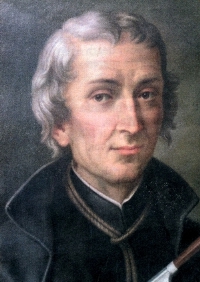 Lewis suffered just days after a fellow priest and fellow victim of Titus Oates’ “Popish Plot” concoctions,
  On this date in 2008, Behnam Zare (or Zareh) was hanged in Shiraz for murdering, at the age of 15, another youth during a fight about a bird.
 Kemble had been discreetly performing the offices of his faith — still illicit, but less liable to get you killed at this late date — for over five decades since ordination.
