It was the best of intentions. It was the worst of intentions.
As the 19th century gave way to the 20th, the forefathers’ standard means of dispatching an evildoer — a length of rope or a shot of lead — were under re-examination by a technophilic nation convinced its science could find a way to kill a man without inconveniencing him.
Out west, grossed out by electrocution and inspired by the pestilent fogs that had lately enveloped World War I trenches, the Nevada legislature cottoned to the brainchild of one Dr. Allen McLean Hamilton to say it with cyanide.
Unfortunately, the logistics of billowing a plume of lethal gas directly into the prisoner’s cell to take the condemned asleep and unawares — another ostensible mercy that would have opened a path towards a Japan-like system of perpetual apprehension followed by sudden execution — proved insoluble; so, they had to build a little airtight room and give the procedure all the familiar ceremonial trappings.
That little airtight room was used for the first time ever on this date in 1924.
Its occupant was Gee Jon, a Chinese-born resident of San Francisco’s Chinatown who had gunned down a member of a rival tong in the railroad town of Mina not far from the California border.
A minute or two after the sodium cyanide pellets hit the sulphuric acid to release a toxic cloud of hydrogen cyanide gas, Gee Jon fell unconscious. He remained in the chamber, shrouded in gas, for half an hour to make sure: later, the apparatus improved with the addition of a stethoscope to enable a doctor to declare death from outside the cell.
However, the gas chamber’s questionable “humaneness” — including some stomach-churning dying panics by suffocating prisoners, and the paranoia of prison staff that a leak in the seals could give them a snort of HCN — never matched the dream of the zipless kill, and the Zyklon-B associations Nazis later provided did not boost public relations. With the onset of the (seemingly) more humane and (definitely) much cheaper method of lethal injection, the gas chamber vanished from the scene in the 1990’s.
Around noon of February 1, 1968, in the opening days of the communist Tet Offensive, South Vietnamese General Nguyen Ngoc Loan summarily executed a Viet Cong prisoner on the streets of Saigon — and photographer Eddie Adams captured perhaps the war’s most unforgettable image.
An American cameraman also captured it in on celluloid. Caution: This clip shows … well, a man being shot in the head at point-blank range.
The general killed the Viet Cong; I killed the general with my camera … photographs do lie, even without manipulation.
For Adams, the lie was the omission of context — that the plainclothes Lem had allegedly just been caught having murdered not only South Vietnamese police but their civilian family members; that Loan was a good officer and not a cold-blooded killer.
Adams’ editor has said that many such summary executions were taking place during the Battle of Saigon — a broader context to the image no matter its specific fairness to the executioner.
But of course, the shot gained its deeper resonance from the growing disgust with the Vietnam War … and from its concise tableau of a century’s brutality. Here is a frozen image of Orwell’s boot stamping on a human face, forever.
Like any great work of art, Adams’ serendipitous photograph took on a life of its own … and a tapestry of meanings richer than its creator could ever have intended.
On January 31, 1945, Private Edward Donald “Eddie” Slovik became a curious outlier of World War II: he was executed by firing squad by the U.S. Army for desertion. He is the only person to have been so punished for that crime since the Civil War.
Pvt Slovik was, by all accounts, quiet and helpful, by no means a coward, and more than willing to aid in the effort of World War II, traits which would have put him among a large class of that war’s veterans. Unfortunately, he was also immobilized by shelling. Equally unfortunately, he knew it, and he decided to do something about it.
Slovik and a friend, Pvt John F. Tankey, first separated from their detachment under artillery fire in late August 1944, shortly after being shipped to France. The pair hooked up with a Canadian unit and spent six weeks pitching in. Having recused themselves from the hard shelling others were experiencing on the front line, they opted to rejoin their regular U.S. unit: Slovik and Tankey sent a letter to their commanding officer explaining their absence and returned on Oct. 7.
But the front lines were not a place for Pvt Slovik.
After his assignment to the rifle unit, which would face imminent danger during shelling, Slovik asked to be placed in the rear guard, indicating he was too scared to remain in front. His request was refused. He then reportedly asked whether leaving the unit again would be considered desertion, was told it would be, and opted for the seemingly safer route of, well, deserting. One day later, Slovik was back at a U.S. camp, this time turning himself in to the camp cook. He had drafted a letter explaining his actions and indicating that he knowingly deserted, permanently recording his guilt on paper.
It’s not clear whether Pvt Slovik was acting on principles or out of an understanding of the U.S. military judicial system. He was by no means the only soldier without affinity for the conditions of war, particularly on the allied side. During the war, thousands of soldiers were tried and convicted in military courts for desertion, but up to then, all had received only time in the brig. What is clear is that Slovik was repeatedly offered opportunities to return to the line, and he equally repeatedly refused.
The case was adjudicated on Nov 11 by nine staff officers of the 28th Division, none of whom had yet been in battle. One of those judges, Benedict B. Kimmelman, wrote a stark and intriguing account of his role in the story of Pvt Slovik, capturing the scene thusly:
Five witnesses were heard. The cross-examinations were perfunctory. The defense made no closing argument. The court recessed for ten minutes, resumed, and retired almost immediately afterward. Three ballots were taken in closed court, the verdicts unanimously guilty on all counts. In open court once more, the president announced the verdict and the sentence: to be dishonorably discharged, to forfeit all pay and allowances due, and to be shot to death with musketry. The trial had begun at 10:00 A.M.; it was over at 11:40 A.M.
As with all court martial cases, Slovik’s was sent to a judge advocate for review. His criminal record, including everything from destruction of property to public intoxication to embezzlement, did not endear him to the reviewer. More importantly, though, the advocate felt Slovik could be made an example:
He has directly challenged the authority of the government, and future discipline depends upon a resolute reply to this challenge. If the death penalty is ever to be imposed for desertion, it should be imposed in this case, not as a punitive measure nor as retribution, but to maintain that discipline upon which alone an army can succeed against the enemy.
Strangely, Pvt Slovik was the only person who would be exemplified this way.
Though the military tried 21,000 desertion cases and passed down 49 death sentences for desertion during the war, it carried out only Slovik’s. And in the war’s final battles, with Germany collapsing, his execution seemed like a surreal throwback. As Kimmelman notes, hundreds if not thousands of soldiers were strictly guilty of dereliction of duty and desertion in the waning days of 1944.
They’re not shooting me for deserting the United Stated Army — thousands of guys have done that. They’re shooting me for bread I stole when I was 12 years old. (Source)
Three weeks after his conviction and three weeks before the Battle of the Bulge, Slovik’s execution order was confirmed by the 28th Division’s commander, Major General Norman “Dutch” Cota. Cota was disturbed by Slovik’s forthrightness in confessing to the desertion, and, as a front line commander who had sustained severe casualty rates in the Battle of Hurtgen Forest, had no sympathy for the crime.
After an appeal to the deaf ears of Dwight Eisenhower shortly before the sentence was to be carried out, Slovik was out of options. He was taken to the courtyard of an estate near the village of Sainte-Marie-aux-Mines and shot by 11 Army marksmen* at 10 a.m. By 10:04, as they were reloading, he was declared dead. His body was interred at a French cemetery, and after decades of lobbying the U.S. government, his remains were returned to Michigan in 1987.
Because he was dishonorably discharged, Slovik was not entitled to a pension, and his wife, Antoinette, stopped receiving payments. Curiously, though the Army managed to communicate this to her, they omitted the bit about the execution. She found out in 1953 from William Bradford Huie.
Huie was a journalist who took immediate interest in Slovik’s story, popularizing it with his book The Execution of Private Slovik, which was released in 1954. Twenty years later, the book and title were requisitioned for a well-received TV movie starring Martin Sheen.
Perhaps more interesting than this film was its never-produced predecessor, which is entitled to a place in the history of the Hollywood Blacklist. Frank Sinatra acquired rights to The Execution of Private Slovik and in 1960 announced that he would produce it as his directorial debut — with the script of this inherently political story to be written by “Hollywood Ten” blacklistee Albert Maltz. Maltz and other blackballed writers had continued working pseudonymously during the anti-Communist blacklist, but Sinatra’s openly announcing an intent to hire and credit Maltz constituted a significant crack in the wall — even though commercial and political heat eventually forced Sinatra to abandon the project. This event has treatment in a recommended episode of the magnificent cinema-history podcast You Must Remember This.
* The firing squad included 12 marksmen, but one was given a blank. Despite their skill, the 11 remaining shooters did not manage to kill him instantaneously.
On this date in 1781, George Washington quelled a dangerous mutiny in his starving Continental Army with a couple of salutary summary executions.
Weeks before, the Pennsylvania Line had mutinied for better pay — successfully. (When approached by British agents offering hard currency should they turn coat, the mutinous troops patriotically arrested the agents.)
General Washington had cause to fear widespread discontent in his chronically undersupplied army, however. He circulated to Congress and to several state governors an urgent appeal (.pdf) for more aid to hold up morale.
The aggravated calamities and distresses that have resulted from the total want of pay for nearly twelve months, the want of clothing at a severe season, and not unfrequently the want of provisions, are beyond description … it is vain to think an army can be kept together much longer under such a variety of sufferings as ours has experienced … unless some immediate and spirited measures are adopted to furnish at least three months’ pay to the troops in money, which will be of some value to them, and at the same time ways and means are devised to clothe and feed them better … the worst that can befall us may be expected.
Washington vowed in the meantime to “continue to exert every means I am possessed of to prevent an extension of the mischief.”
The mischief, however, extended.
The New Jersey line at Pompton imitated — and the imitation was reportedly explicit — the Pennsylvania line. They had legitimate grievances, like nearly everyone in the Continental Army, and that was precisely the problem: if mutiny became the means to resolve grievances, Washington wouldn’t have a Continental Army much longer.
Sir: You are to take the command of the detachment, which has been ordered to march from this post against the mutineers of the Jersey line. You will rendezvous the whole of your command at Ringwood or Pompton as you find best from circumstances. The object of your detachment is to compel the mutineers to unconditional submission, and I am to desire you will grant no terms while they are with arms in their hands in a state of resistance. The manner of executing this I leave to your discretion according to circumstances. If you succeed in compelling the revolted troops to a surrender you will instantly execute a few of the most active and most incendiary leaders.
Dr. Sir: I have the pleasure to inform your Excellency, that the measures concerted for quelling the mutiny in the Jersey line were this morning carried into full execution. The mutineers were unexpectedly surrounded and awed into an unconditional surrender with little hesitation and no resistance. Two of the principal actors were executed on the spot, the rest pardonned. The spirit of mutiny seems now to have completely subsided and to have given place to a genuine repentance. This was very far from being the case previous to this step, notwithstanding the apparent submission which the assurances of redress had produced; they still continued insolent and refractory and disobedient to the commands of their officers.
A general pardon was promised by Colonel Dayton, on condition of an immediate and full return to duty. This condition was not performed on the part of the mutineers and of course they were not entitled to the benefit of the promise; besides which the existence of the Army called for an example. I have the honor etc.
That second paragraph of the letter hints at a bit of ass-covering from Washington. The officer on the scene, Elias Dayton, had, according to Charles Patrick Neimeyer, already smoothed the disturbance by promising that a state commission would adjudicate discharge claims.
The placated “mutineers” were therefore surprised to be roused from their beds at Ringwood, N.J., by Howe’s forces and forced to form a firing squad to execute their own sergeants. (Neimeyer also claims that the first six-man squad intentionally missed.)
On this date in 1937, Isidore “Beansy” Zimmerman spent the day preparing for death in New York’s electric chair … but was spared by an 11th-hour clemency from New York Governor Herbert Lehman.
Here’s the scene, as laid in the anti-death penalty tome of wrongful convictions In Spite of Innocence:
As dawn broke over Sing Sing Prison, Beansy Zimmerman had every reason to think it would be his last day.
Zimmerman numbly went through the pre-execution rituals. The last meal (choose whatever you want), and music (you get to choose that, too) played on the wind-up phonograph. The barber shaves your scalp so the electrodes can fit snugly against your bare skin. The tailor slits one of your trouser legs for another electrode. Officials treat you with unaccustomed politeness. A final family visit — how do you say good-bye when you know it is forever? What should your last words be? Beansy’s mother stayed away, unable to face such finality.
Two hours before execution, Gov. Lehman commuted his sentence.
In this blog, we lay aside each story day by day, but for those affected, it’s rarely so easy — which is why the mothers of the five men condemned today put in their personal clemency appeals to the governor.
For Zimmerman and a fellow “accomplice” named Philip Chaleff whose respective roles in a robbery/murder were doubted, it had the desired effect. (Dominick Guariglia, Arthur Friedman and Joseph O’Loughlin weren’t so lucky.)
Chaleff, a diabetic being kept alive just for execution, soon succumbed. For Zimmerman, the execution that did not happen was to define the rest of his 66 years. He was alive, but to what end?
“I wasn’t dead, no,” he remembered. “But every day from now on they’d bury me a little more.”
Zimmerman fought, by becoming a skilled jailhouse lawyer and in 1962 finally winning exoneration from the New York Supreme Court, which held that the testimony against him had been perjured with the connivance of the prosecutor.
He’d spent nearly a quarter-century in prison. Now, he was just another ex-con scrabbling after dead-end employment.
For years thereafter, Zimmerman fought for a special bill that would allow him to sue the Empire State for wrongful imprisonment, finally winning approval in 1981.
His suit asked for $10 million. The judge reckoned Zimmerman’s time and trouble were worth a tenth of that.
Expenses deducted, Zimmerman walked away with $660,000 — that, and sweet vindication.
Ted Bundy is obviously one of the most iconic, written-about serial killers in history. Why a book about Ted Bundy? What’s the untold story that you set out to uncover?
The desire, or drive, if you will, to write an article about Ted Bundy and then create a 120,000 plus word book about the murders, was born out of my crossing paths with his infamous murder kit. Had Jerry Thompson [a key detective on the Bundy case -ed.] left Bundy’s stuff in Utah that May of 2005, well, it would have been an enjoyable meeting with the former detective, but I’m certain it would have all ended quietly there. Indeed, I doubt if I’d even considered writing an article for Snitch [a now-defunct crime magazine -ed.], much less a book about the killings. But it was having all that stuff in my hands, and in my home, and then being given one of the Glad bags from Ted’s VW that made it very real (or surreal) to me, and from this, a hunger to find out more about the crimes led me forward.
Ted Bundy’s gear, right where you want it — image courtesy of Kevin M. Sullivan. (Check the 1975 police photo for confirmation.)
Believe me, in a thousand years, I never would have expected such a thing to ever come my way. I can’t think of anything more odd or surreal.
ET: You mentioned that you think you’ve been able to answer some longstanding questions about Bundy’s career. Can you give us some hints? What don’t people know about Ted Bundy that they ought to know?
I must admit, when I first decided to write a book about the crimes, I wasn’t sure what I’d find, so the first thing I had to do was read every book ever written about Bundy, which took the better portion of three or four months.
From this I took a trip to Utah to again meet with Thompson and check out the sites pertaining to Bundy and the murders in that state. Next came the acquisition of case files from the various states and the tracking down of those detectives who participated in the hunt for the elusive killer.
Now, no one could have been more surprised than me to begin discovering what I was discovering about some of these murders. But as I kept hunting down the right people and the right documents, I was able to confirm these “finds” at every turn. And while I cannot reveal everything here, It’s all in the book in great detail. Indeed, you could say that my book is not a biography in the truest sense, but rather an in-depth look at Bundy and the murders from a vantage point that is quite unique. I wish I could delve further into these things now , but I must wait until it’s published.
The Bundy story has a magnetic villain and a host of victims … was there a hero? Was there a lesson?
The real heroes in this story are the detectives who worked day and night for years to bring Ted Bundy to justice. And if there’s a lesson to be learned from all of this, it is this: It doesn’t matter how handsome or articulate a person might be, or how nicely they smile at you, for behind it all, there could reside the most diabolical person you’ll ever meet! We need to remember this.
But how can you act on that lesson without living in a continual state of terror? Bundy strikes me as so far outside our normal experience, even the normal experience of criminality, that I’m inclined to wonder how much can be generalized from him.
Actually, (and I might say, thank God here!) people as “successful” as Ted Bundy don’t come our way very often. I mean, the guy was a rising star in the Republican Party in Washington, had influential friends, a law student, and certainly appeared to be going places in life. Some were even quite envious of his ascension in life. However, it was all a well-placed mask that he wore to cover his true feelings and intentions. On the outside he was perfect, but on the inside a monster. He just didn’t fit the mold we’re used to when we think of a terrible killer, does he?
Now, there are those among us — sociopaths — who can kill or do all manner of terrible things in life and maintain the nicest smile upon their faces, but again, just beneath the surface ticks the heart of a monster, or predator, or what ever you might want to call them. Having said that, I’m not a suspicious person by nature, and so I personally judge people by their outward appearance until shown otherwise. Still, it’s difficult (if not impossible) to see the “real” individual behind the person they present to us on a daily basis.
You worked with case detectives in researching your book. How did the Ted Bundy case affect the way law enforcement has subsequently investigated serial killers? If they had it to do over again, what’s the thing you think they’d have done differently?
They all agree that today, DNA would play a part of the investigation that wasn’t available then. However, in the early portion of the murders, Bundy made few if any mistakes, as he had done his homework so as to avoid detection. As such, even this wouldn’t be a panacea when it came to a very mobile killer like Bundy who understood the very real limitations sometimes surrounding homicide investigations.
I can’t help but ask about these detectives as human beings, too. Clearly they’re in a position to deal with the heart of darkness in the human soul day in and day out and still lead normal lives … is a Ted Bundy the kind of killer that haunts or scars investigators years later, or is this something most can set aside as all in a day’s work?
They are, first of all, very nice people. And you can’t be around them (either in person, or through numerous phone calls or emails) for very long before you understand how dedicated they are (or were) in their careers as police officers. They are honorable people, with a clear sense of duty, and without such people, we, as a society, would be in dire circumstances indeed.
Even before Bundy came along, these men were veteran investigators who had seen many bad things in life, so they carried a toughness which allowed them to deal with the situations they came up against in a professional manner. That said, I remember Jerry Thompson telling me how he looked at Ted one day and thought how much he reminded him of a monster, or a vampire of sorts. And my book contains a number of exchanges between the two men (including a chilling telephone call) which demonstrate why he felt this way
How about for you, as a writer — was there a frightening, creepy, traumatic moment in your research that really shook you? Was there an emotional toll for you?
Absolutely. But the degree of “shock”, if you will, depends (at least for me) on what I know as I first delve into each murder. In the Bundy cases I had a general knowledge of how Bundy killed, so there wasn’t a great deal that caught me by surprise, as it were. Even so, as a writer, you tend to get to know the victims very well through the case files, their family members or friends, and so on. Hence, I’ll continue to carry with me many of the details of their lives and deaths for the remainder of my life. And so, lasting changes are a part of what we do.
However, I did a story a few years back about a 16 year old girl who was horribly murdered here in Kentucky, and this case did cause me to wake up in the night in a cold sweat. Perhaps it was because I have a daughter that was, at the time, only a few years younger than this girl, and that some of what transpired did catch me off guard, so to speak, as I began uncovering just what had happened to this very nice kid.
Watch for Kevin M. Sullivan’s forthcomingThe Bundy Murders: A Comprehensive History from McFarland in summer or fall of 2009.
* In fact, the term “serial killer” was coined in the 1970’s by FBI profiler Robert Ressler, as an improvement on the sometimes inaccurate category of “stranger killer”.
Additional Bundy resources from the enormous comment thread:
A mentally ill man who had been refused treatment because his condition had not yet turned him violent suffered lethal injection in Texas eight years ago today for finally turning violent.
Larry Robison was diagnosed with paranoid schizophrenia at the age of 21, three years before the murders for which he was sentenced to die. He began hearing voices and acting strangely as a teenager, claiming to have secret paranormal mental powers and the ability to read people’s minds and move objects from a distance. He joined the Army but was discharged after only a year.
Robison’s parents sought help and warned mental health authorities of their son’s erratic and increasingly aggressive behavior, but were told that the state could offer no resources unless he turned violent. He was shuffled in and out of mental hospitals, admitted after aggressive behavior and released after a period of medicated passivity. He received no regular, ongoing treatment. Robison was not covered by his parents’ insurance, nor did he have his own.
Robison claimed that voices in his head, which came through the clocks in his room, spewed out warnings about Old Testament prophecies of the Apocalypse and told him to murder, behead, and mutilate his roommate, Bruce Gardner. Robison then went next door and murdered four of his neighbors. When authorities arrested him, he told them that he had committed the murders in order to “find God.”
The four prosecutors developing the case against Larry Robison recognized his past history of mental illness and were willing to accept an insanity plea in exchange for life in a mental institution. The Tarrant County district attorney overruled them, however, and ordered them to seek a death sentence. In the courtroom, most evidence of Robison’s mental illness was ruled inadmissible, so the jury heard little of it. None of the three doctors who had diagnosed Robison before the crime as suffering from paranoid schizophrenia were called to testify at his trial. The jury rejected his plea of not guilty by reason of insanity.
Once in prison, evidence of Robison’s mental illness continued to accumulate. The Texas Court of Criminal Appeals stayed his execution at one point, doubtful as to whether or not he was competent to be executed. When asked what the execution would be like, Robison replied that he felt like “a little kid at Christmas time waiting for Santa Claus to come.” Eventually, he demanded that his lawyers cease filing appeals based on his mental illness, but only if the state agreed to execute him on the night of a full moon. Despite protests from mental health organizations and concerned citizens throughout the world, the state complied.
Larry Robison’s case drew attention largely as a result of the tireless efforts of his own family, taking a public profile unusual for the family of the condemned. CBS News’ 48 Hours profiled the Robisons shortly before Larry’s execution. They continue to maintain a website, larryrobison.org; mother Lois Robison remains a vocal critic of executing the mentally ill, and delivered this address to a Murder Victims’ Families for Human Rights conference last fall.
On this date in 1879, two Molly Maguires hanged in Mauch Chunk, Pa., while their reprieve waited for them just outside the door.
John Kehoe may have been the symbolic last chapter in the Mollies‘ suppression, but Pennsylvania didn’t intend to forego its mopping-up operation.
James McDonnell and Charles Sharpe (or Charles Sharp) had been convicted of murdering George Smith in 1863; like other Molly Maguire crimes, this one either (take your pick) languished for 13 years until the criminal enterprise that authored it was toppled, or was plucked from obscurity as a pretext on which to condemn the men on rather doubtful evidence.
It was on the strength of “snitch” testimony from admitted murderers that McDonnell and Sharpe were sentenced to die — McDonnell, a hirsute Irishman straight from barbarian central casting, even tried turning informer himself to save his own life, just as his accusers had done. (He continued to deny responsibility for the Smith murder, including on the gallows in his last statement.)
But as Maguire cases go, these were small fry … and it’s the sad circumstances of their end and the evocative description of the scene under the gallows that attracts our attention today.
An execution which it was thought would be one of the quietest hangings that ever took place in Mauch Chunk has proved the most exciting. A reprieve from Gov. Hartranft arrived here one-half minute after the drop fell — just 30 seconds too late to save the lives of the condemned men.
…
A scene of great excitement took place in the jail; but, although the condemned men had been hanging only a few minutes, there was no movement made toward cutting them down. The telegraph messenger reached the jail door before the drop fell; but no attention was paid to his knocking and ringing, the wife of one of the men having previously been extremely violent outside. When the drop fell the knocking and ringing continued, and the Sheriff sent out a man to arrest the persons whom he imagined to be creating a disturbance. It was then found to be the telegraph messenger with a reprieve. A brother of McDonnell, who had been kneeling by the scaffold, arose and excitedly charged the Sheriff and the bystanders with the murder of his brother. The excitement spread, and the Sheriff appealed to one of the priests, who exonerated him from blame. Amid this excitement and the reproaches of the maddened brother of McDonnell and the wailings of the bereaved families outside, the hanged men were forgotten, and their bodies remained suspended for 30 minutes after the drop fell. There is no reasonable doubt, however, that both were dead when the reprieve came.
It should be noted that the reprieve was not an outright commutation, only a stay of the sentence for a few more days. Nevertheless, the melodramatic affair led the Times to wax lyrical.
“The evil of this whole case,” it began, clearly not speaking from the point of view of McDonnell and Sharpe, “is that the gallows in Pennsylvania is invested with great uncertainty.”
[F]rom this time out the condemned man at the foot of the gallows may not only hope that a reprieve may arrive for him at any moment, but he may take off his thoughts from the certain doom before him and be agonized with the reflection that the boon which he waits for may come when his life has gone past recall. If a stay of proceedings is to be granted at all, it should be granted while the condemned man’s life may be said to keep the case open. It is a refinement of cruelty to keep hope alive and quivering at the foot of the gallows.
“Ruthless Ruth,” as the press inevitably called her, was on the wrong side of 30 and married to a wet blanket on the wrong side of 40 from whom she couldn’t even get away during the day because they worked for the same boating magazine.
The banal hell of the bourgeoisie.
Ruth had a banal solution: commence affair with handsome, limp-willed corset salesman (also married) from New Jersey.
Given a large enough metropolis with a large enough pool of adulterous data points, it must be statistically inexorable that a certain proportion will resolve the love triangle by throttling the cuckold with a wire.
But only that remorseless calculator in the sky can compute why these two, of all those thousands, were the ones not to run off together, or let the affair fizzle, or just continue to rendezvous indefinitely into the future. They certainly weren’t constitutionally cut out for crime; they set up the room in a poor simulacrum of a robbery, and told of a couple of unknown Italians* who’d broke in and done poor Albert Snyder to death.
For their poor judgment and for the speedy collapse of their crummy alibi, journalism owes them a debt of gratitude.
The execution of a woman was quite sensational; Ruth Snyder was to be the first electrocuted since 1899.
For the occasion, The New York Daily News hired a Chicago Tribune journalist to witness the execution … and at the moment the current struck, Tom Howard hoisted his pant leg and secretly snapped with a one-use camera one of the most indelible images the death chamber offered the 20th century, to be splashed in a few hours’ time on the Daily News‘ cover under the headline
DEAD!
The Snyder-Gray adulterous melodrama and its violent conclusion inspired novelist James Cain‘s Double Indemnity, and the noir film of the same title with Barbara Stanwyck as the black widow at the center of the web.
It also inspired the state of New York to begin searching official witnesses to its electrocutions.
* Blame-the-Italians here is a Roaring Twenties Queens version of fingering the black man. The murder was committed in May 1927, just as the Sacco and Vanzetti case was approaching its climax.
Six years ago today, a scandal-plagued governor of Illinois cleared out the state’s death row.
Republican George Ryan, in a speech two days before the end of his term, announced a mass commutation for anyone under sentence of death in Illinois — 157 people plus 10 others with pending legal challenges to vacated sentences, and four condemned men pardoned outright.
Once a pro-death penalty legislator, Ryan grew increasingly discomfited with the state’s administration of the error-prone ultimate sanction.
That “demon of error” was dramatically unveiled for Ryan by Anthony Porter, a mentally retarded death row inmate who fortuitously avoided execution by two days on a legal technicality, and was subsequently exonerated by Northwestern University journalism students.
Seen as part of a pattern of wrongful convictions — like that of Rolando Cruz, who was cleared in the early 90’s despite the dogged efforts of then-Attorney General (and present-day quasi-Senator) Roland Burris to execute him in the face of exculpatory DNA evidence.
The governor imposed a moratorium on conducting executions for most of his term, culminating with this day’s controversial (though it did score him a Nobel Peace Prize nomination) announcement. Maybe there’s just something in the water at the Springfield governor’s mansion that attracts its residents to impolitic death penalty interventions.
Successor Rod Blagojevich called Ryan’s blanket clemency “a big mistake”, and his formal continuation of the Ryan moratorium on actual executions has been a dead letter since inheriting a vacant death row meant that no capital case reached the end of its appeals on his watch.
For the favor of sparing Blagojevich the burden of handling a death warrant — although one doesn’t get the sense that Blago is the type for a troubled conscience — George Ryan has been unkindly repaid.
That petition is addressed to an outgoing executive oppositely inclined on the death row commutation question. Ryan authorized one actual execution early in his term, and spared this day’s host; George W. Bush, his virtual mirror image, has issued one commutation and carried out 155 executions during his time as chief executive of Texas and of the United States.
George Ryan is reportedly skeptical of his prospects for receiving a pardon.

 That little airtight room was used for the first time ever on this date in 1924.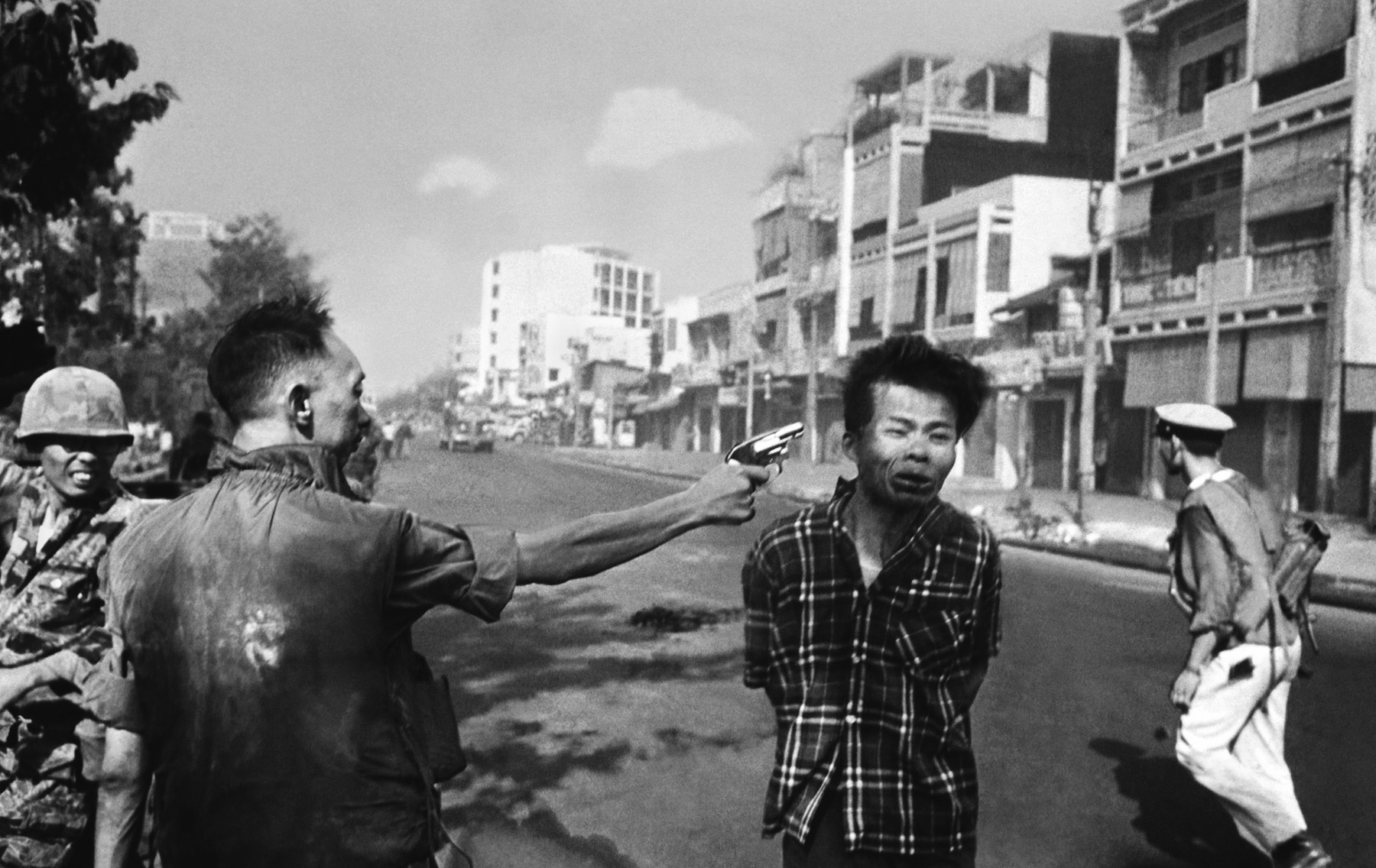
 Pvt Slovik was, by all accounts, quiet and helpful, by no means a coward, and more than willing to aid in the effort of World War II, traits which would have put him among a large class of that war’s veterans. Unfortunately, he was also immobilized by shelling. Equally unfortunately, he knew it, and he decided to do something about it.
 In this blog, we lay aside each story day by day, but for those affected, it’s rarely so easy — which is why the
 Larry Robison was diagnosed with paranoid schizophrenia at the age of 21, three years before the murders for which he was sentenced to die. He began hearing voices and acting strangely as a teenager, claiming to have secret paranormal mental powers and the ability to read people’s minds and move objects from a distance. He joined the Army but was discharged after only a year.


