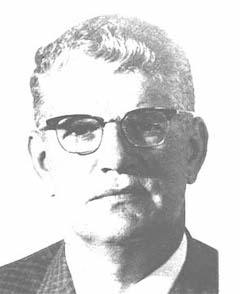
1937: The Parsley Massacre begins

On this date in 1937, Dominican Republic soldiers commenced the dayslong “Parsley Massacre” of Haitians.

Cooperstown-worthy evil dictator Rafael Trujillo hailed on his mother’s side from Haiti’s privileged French caste and espoused a virulent form of DR’s rife anti-Haitian racism. “As if personifying the antiblack myth of Dominicans,” Robert Lawless noted, “‘Trujillo used cosmetics to disguise the phenotypical features that he inherited from his [black] Haitian grandmother.'” (Source)

Taking power in a military coup in 1930, Trujillo had spent those early years building up a cult of personality, as was the style at the time — and he put it to use conjuring a bloodbath that some shamefaced soldiers confessed they could only conduct with the numbing aid of alcohol. The hypothesized underlying reasons range from El Jefe‘s particular virulent bigotry to prerogatives of statecraft for a zone that had tended towards sympathy for Trujillo’s opponents.

The massacre followed an extensive tour of the frontier region by Trujillo that commenced in August 1937. Trujillo traveled by horse and mule through the entire northern half of the country, both the rich central Cibao region and the northern frontier areas. Touring these provinces, traditionally the most resistant to political centralization, reflected Trujillo’s concerns with shoring up control in the region at the time. The Cibao was the locus of elite rivalry with Trujillo in those years. And because the northern frontier had been a traditional area of autonomy and refuge for local caudillos, the U.S. legation in Santo Domingo assumed that the August 1937 tour was intended to “cowe [sic] opposition.” Much like earlier frontier tours and his travels in other rural areas, Trujillo shook hands and distributed food and money; attended dances and parties in his honor; and made concerted efforts to secure political loyalty in many heretofore intractable lands. Yet the conclusion of this tour was entirely unexpected. During a dance in Trujillo’s honor on Saturday, October 2, 1937, in Dajabon, Trujillo proclaimed:

For some months, I have traveled and traversed the frontier in every sense of the word. I have seen, investigated, and inquired about the needs of the population. To the Dominicans who were complaining of the depredations by Haitians living among them, thefts of cattle, provisions, fruits, etc., and were thus prevented from enjoying in peace the products of their labor, I have responded, “I will fix this.” And we have already begun to remedy the situation. Three hundred Haitians are now dead in Banica. This remedy will continue.

Drawing on the regime’s prevailing antivagrancy discourse and support for peasant production, Trujillo explained his ordering of the massacre as a response to alleged cattle rustling and crop raiding by Haitians living in the Dominican Republic. This was the first of a series of shifting rationalizations that misrepresented the massacre as stemming from local conflicts between Dominicans and Haitians in the frontier.

Some Haitians heard Trujillo’s words and decided to flee. Others had already left following news of the first killings, which occurred at the end of September. A few recalled clues that something ominous was brewing. Most were incredulous, however, and had too much at stake to abandon their homes, communities, and crops — established over decades or even generations — for what sounded, however horrible, like preposterous rumors …

A few Dominicans from the northern frontier recalled that at first Haitians were given twenty-four hours to leave, and that in some cases Haitian corpses were hung in prominent locations, such as at the entrance of towns, as a warning to others. And during the first days of the massacre, Haitians who reached the border were permitted to cross to Haiti over the bridge at the official checkpoint [at the border city of Dajabon]. But the border was closed on October 5. After that, those fleeing had to wade across the Massacre [River]* while trying to avoid areas where the military was systematically slaughtering Haitians on the river’s eastern bank.

In the towns, victims were generally led away before being assassinated. In the countryside, they were killed in plain view. Few Haitians were shot, except some of those killed while trying to escape. Instead, machetes, bayonets, and clubs were used. This suggests again that Trujillo sought to simulate a popular conflict, or at least to maintain some measure of plausible deniability of the state’s perpetration of this genocide. (From Foundations of Despotism: Peasants, the Trujillo Regime, and Modernity in Dominican History)

“Haitian” in this context meant a question of ethnicity rather than simply one of citizenship, for like many border regions the world over that of the Massacre River was (and is) locally permeable. Some Haitians lived in Haiti but crossed into the Dominican Republic routinely for school, work, life; others had border-straddling families and DR birth certificates and citizenship. But even the firmest of bureaucratic documentation meant nothing to the death squads, who bequeathed the distinctive sobriquet “Parsley Massacre” by demanding potential victims buy their lives by pronouncing the word for that garnish, perejil … as an infelicity with the trilled Spanish “r” denoted a Francophone.** (It’s also sometimes known simply as the Haitian Massacre.)

The slaughter raged on until about October 8, give or take; estimates of the number of victims run from 12,000 to north of 30,000. The affair remains a source of tension to this day.

The massacre has literary treatment in the 1998 Edwidge Danticat historical novel The Farming of Bones.

* The river’s shocking name was not obtained from this slaughter, but from a Spanish-on-French bloodbath in colonial times.

** The term “shibboleth”, originally a Hebrew word for grain, was borrowed to English thanks to a similar test imposed in the Book of Judges (12:5-6):

And the Gileadites took the passages of Jordan before the Ephraimites: and it was so, that when those Ephraimites which were escaped said, Let me go over; that the men of Gilead said unto him, Art thou an Ephraimite? If he said, Nay; Then said they unto him, Say now Shibboleth: and he said Sibboleth: for he could not frame to pronounce it right. Then they took him, and slew him at the passages of Jordan: and there fell at that time of the Ephraimites forty and two thousand.

On this day..

1943: Amos Pampaloni, Captain Corelli’s Mandolin inspiration

Italian artillerist Amos Pampaloni, the real-life model for the title character of the novel and film Captain Corelli’s Mandolin, miraculously survived execution on this date in 1943.

It occurred at the outset of the Cephalonia Massacre on September 21, 1943, which began a dayslong slaughter on that Greek island by German soldiers of their former Italian comrades. With some 5,000 victims, it’s one of the largest POW massacres of the Second World War.

Captain Pampaloni was among 500-odd officers deployed with the 12,000-strong Acqui Infantry Division. This formation had been part of fascist Italy’s invasion of Greece in 1940-41; after victory in that campaign, the Acqui Division occupied several Greek islands over the succeeding years, where German troops were also stationed.

The Pact of Steel uniting these powers melted abruptly in early September of 1943, when the Allies forced Italy into an armistice. For Italian forces standing in the field cheek-by-fascist epaulette, this forced a sudden and dangerous reckoning. Some units had barely even heard of the new situation before they were under German guns; in a best-case scenario, they had to decide within a few hours or days between radically different attitudes towards their up-to-now comrades-in-arms.

The Acqui on the Ionian island of Cephalonia (Kefalonia) was a case in point. In the days following the Italian armistice, the much larger German force presented its commanders an ultimatum to decide among three alternatives:

  1. Continue fighting alongside the Germans
  2. Fight against the Germans
  3. Surrender, disarm, and repatriate

While the last of these might seem the obvious course, disarming was contrary to the Italian high command’s ambiguous order neither to initiate hostilities with Germans, nor to cooperate with them. Moreover, the Cephalonia division got some reports in those confused days that the Germans weren’t always repatriating units that surrendered. The soldiery was polled on the options, and went for resistance.

Unfortunately the Italians were thoroughly outgunned in this fight, and the Allies refused to permit dispatching reinforcements from Italy that might easily be captured by the Germans. Within days the Acqui had been roughly brought to heel.

Outnumbered and suffering under accurate mortar fire, Pampaloni decided to surrender. The captain protested that it was against the rules of war when his men were systematically robbed of their wallets and watches, only to be told by the German commanding officer that those rules applied to prisoners, not to traitors.

The officer then shot the captain through the back of the neck, and the rest of his men, including the wounded, were mown down with machine gun fire. Miraculously still alive, Pampaloni remained conscious as a German soldier removed his own watch from his apparently lifeless body.

Captain Pampaloni was not, in fact, the only soldier from his company to survive. “The mule handlers were spared, because every mule responds best to his own master,” he said. “Ten minutes after the massacre the German soldiers left, singing.”

Captain Pampaloni went on to fight for a year with the Greek resistance on the mainland. Having witnessed the brutality of the conflict on Cephalonia, he was still shocked by the sight of partisans slitting the throats of German prisoners with their daggers — ammunition was too precious to be wasted on executions.

Cefalonia – crimine di guerra 1 from Va.Le. Cinematografica 78 on Vimeo.

Cefalonia – crimine di guerra 2 from Va.Le. Cinematografica 78 on Vimeo.

Numerous summary executions disgraced the German victory. (There’s a monument to the victims in Verona.) Our man Amos Pampaloni faced his on the first day of the general massacre; according to a 2001 profile in the Guardian,

Outnumbered and suffering under accurate mortar fire, Pampaloni decided to surrender. The captain protested that it was against the rules of war when his men were systematically robbed of their wallets and watches, only to be told by the German commanding officer that those rules applied to prisoners, not to traitors.*

The officer then shot the captain through the back of the neck, and the rest of his men, including the wounded, were mown down with machine gun fire. Miraculously still alive, Pampaloni remained conscious as a German soldier removed his own watch from his apparently lifeless body.

Captain Pampaloni was not, in fact, the only soldier from his company to survive. “The mule handlers were spared, because every mule responds best to his own master,” he said. “Ten minutes after the massacre the German soldiers left, singing.”

Captain Pampaloni went on to fight for a year with the Greek resistance on the mainland. Having witnessed the brutality of the conflict on Cephalonia, he was still shocked by the sight of partisans slitting the throats of German prisoners with their daggers — ammunition was too precious to be wasted on executions.

In the novel Captain Corelli’s Mandolin, Pampaloni’s fictional imitator survives thanks to a noble comrade who hurls his body in front of the fusillade.

Pampaloni didn’t appreciate Mandolin all that much, owing to its hostile depiction of the Communist partisan movement that he joined after surviving his execution. For those seeking alternative literatures, there’s also a 1960s novelization of the Greek resistance on Cephalonia by Marcello Venturi; written in Italian (as Bandiera bianca a Cefalonia), it’s long out of print in English as The White Flag.

* Prior to the Italian armistice, the Italian forces on the island were working on an arrangement to obey German command structures; hence, the brutal treatment of Italian prisoners who could be conceived as not merely prisoners of war, but traitors or rebels unprotected by any law of war. A German directive had explicitly demanded as much: “because of the perfidious and treacherous behaviour on Kefalonia, no prisoners are to be taken.”

On this day..

1973: Charles Horman, American journalist in the Pinochet coup

Horman was interrogated at the military school and then transferred to the national stadium for further questioning. He was ordered shot and killed the evening of September 19. According to [redacted] the authorities at the stadium did not know that Horman was an American … the body was taken from the stadium and left at a location to create the idea that he had been killed in a firefight with the military. However, in the confused days following the coup, and after it was known that he was an American, the military sought to hide the fact that he was dead.

Declassified informant’s report (pdf) of the death of Charles Horman

On this date in 1973,* American journalist Charles Horman was extrajudicially executed by the Chilean coup junta of Augusto Pinochet.

Horman was a prizewinning U.S. journalist and filmmaker from the heyday of crusading, adversarial journalism: stateside, he’d made a documentary about napalm use in Vietnam and protested that war at the 1968 Democratic convention in Chicago.

With his wife Joyce, Horman had been living in the Chile of socialist president Salvador Allende since the spring of 1972, reporting freelance while working as a screenwriter. He was right there in the capital on September 11, 1973, to see Allende’s vision ground under tank treads when the Chilean military with U.S. support overthrew the elected civilian government and initiated a litany of horrors.

One of the most emblematic atrocities of Pinochet in his earliest hours was his regime’s commandeering the Santiago football stadium as a makeshift concentration camp for leftists whose blood would desecrate the facility’s recreational purpose.**

The putschists did not fear to extend their terror to subversive Yanks like Horman and (a few days after him) a fellow-journalist named Frank Teruggi — their murders secretly okayed by Pinochet’s CIA comrades.†

There’s a 1978 book investigating this affair, titled The Execution of Charles Horman; the book, and Horman’s fate, inspired the 1982 Costa-Gavras film Missing.

* There are some citations out there for September 17 (the date of Horman’s arrest) or September 19, and a good many general punts to only “September 1973” for this extrajudicial execution/murder. We’re depending for our part on the firm published findings of Chilean judge Jorge Zepeda:

the following day, September 18, 1973 at around 1:35 p.m., military officials took the remains of an unidentified male to the Servicio Medico Legal [Medical Legal Department], and this individual was later fingerprinted and identified as Charles Edmund Horman Lazar, in accordance with Protocol No. 2663/73; the Medical Legal Department concluded that his death had occurred on September 18 at approximately 9:45 a.m. The corresponding death certificate was issued on October 4, 1973 by Doctor Ezequiel Jimenez Ferry of the aforementioned Department.

** In November 1973, the Soviet Union honorably refused to set boots on this boneyard to contest a World Cup playoff and was disqualified as a result — although not before the hosts were made to take the pitch unopposed in a sham “match”.

Thanks to Chile’s consequent advance to the 1974 tourney, a Chilean player holds the distinction of being the first footballer red-carded at the World Cup finals.

† Post-Pinochet Chile unsuccessfully sought the extradition of the former American military mission commander for permitting these murders, when he as the delegate of the coup’s sponsor-empire presumably would have had the juice to forbid them.

On this day..

1619: Melchior Grodziecki, Istvan Pongracz and Marko Krizin, Jesuits

Jesuits Melchior Grodziecki, Istvan Pongracz, and Marko Krizin earned martyrdom at the hands of the Calvinists 400 years ago today.

A Pole, a Hungarian, and a Croat, respectively, they were emissaries of their vast polyglot empire’s official religion who were unlucky to be in the wrong place when theological differences went kinetic and helped launch the Thirty Years War.

That wrong place was the Hungarian city of Kassa (today the Slovakian city of Košice) which was captured by Protestant Transylvanian prince Gabriel Bethlen on September 5, 1619. Confined to the Jesuit residence, these three were assailed by a mob of soldiers who broke in on the morning of September 7 and demanded their immediate apostasy, putting them to summary torture and eventual beheading when they refused.

All three were canonized in the 20th century.

On this day..

2013: Sushmita Banerjee, Escape from the Taliban author

On the night of September 4-5, 2013, Afghan author Sushmita Banerjee was kidnapped and summarily executed by the Taliban.

Born Hindu to a Bengali Brahmin family in Kolkata, India, Banerjee secretly married a Muslim businessman named Janbaz Khan and moved with him to Afghanistan, converting to Islam in the process.

She ran a women’s clinic there until goons from the rising Taliban movement beat her up and held her prisoner in 1995. In danger of being executed by her captors, she managed to escape and return to Kolkata.

She made her mark publishing a memoir of her harrowing experience. Kababuliwalar Bangali Bou (A Kabuliwala’s Bengali Wife) was the nondescript title; Bollywood punched it up for the silver screen as Escape from the Taliban.

This was Banerjee’s claim to fame or — Taliban perspective — infamy, and it’s possible it was the eventual cause of her murder.

“She had no fear,” a sister remembered of her. Fearlessly, or even recklessly, she returned to Afghanistan in 2013 — daring even to live in the militant-dominated border province of Paktika and refusing to wear the burka.

A Taliban splinter group disavowed by the Taliban itself ultimately claimed responsibility for kidnapping Banerjee on the night of September 4, 2013 and depositing her bullet-riddled body to be discovered the following morning; their charge was that Banerjee was an “Indian spy”.

On this day..

1996: Rodolfo Soler Hernandez, burned on video

On this date in 1996, the people of the Veracruz town of Playa Vicente visited an orderly extrajudicial lynching on an accused rapist and murderer.

This “illegal execution” (in the words of the Veracruz Attorney General) made the airwaves around Mexico and abroad thanks to horrifying video showing the suspect — obviously beaten — lashed to a tree and agonizingly consumed in flames. Warning: Although this is an edited and narrated version of the video, it’s still extremely disturbing.

According to an Associated Press wire report, Hernandez’s “execution” was only the most visible of a spate of vigilante justice around that time, authored by people infuriated by the corruption and inaction of official law enforcement.

Saturday [apparently the same day, August 31 -ed.], residents of Motozintla in southern Mexico overran the town jail, seizing three men and burning two of them alive on lampposts, Mexico’s official Notimex news agency reported. The men were suspects in several assaults, including the rape of a young girl.

On Monday in Puebla state, police saved two other criminal suspects from being taken from their cells and killed, Notimex said.

Residents in the Mexico state town of Tolman recently beat and then held for more than a day in their town square a man suspected of a robbery and shooting. They vowed to kill him if any of his victims died of their wounds.

On this day..

2012: Seventeen Afghan civilians

Via Radio Free Europe/Radio Liberty:

Officials in Afghanistan say that 17 civilians, including two women, have been beheaded in the southern Helmand Province‘s Kajaki district.

The discovery comes on a particularly grim day, with 10 Afghan troops killed and two NATO soldiers shot dead in separate attacks, also in Afghanistan.

The civilians, including two women, were apparently beheaded overnight on August 26 near the village of Zamindawar in southern Helmand Province, a Taliban stronghold.

Helmand provincial government spokesman Daud Ahmadi told RFE/RL’s Radio Free Afghanistan that the insurgents appeared to have been seeking to punish the villagers for allegedly urging local people to stage an uprising against militants.

“These 15 civilian [men] and two women were killed allegedly for having contact with the government,” Ahmadi said. “The enemy is afraid, because people are increasingly rising up against them and people want them to leave their areas. I think [the people’s] plans were discovered.”

Ahmadi said it remained unclear who was behind the slayings.

Motive Uncertain

Some news agencies quoted local officials as saying the victims were punished for holding a mixed-gender music party.

Nematullah Khan, chief of nearby Musa Qala district, said the villagers had organized a party with music, and one local official said he suspected the two women had been dancing.

The Taliban, who are active in the area, have in the past been blamed for decapitating local villagers, mainly over charges of collaborating with Afghan and NATO forces.

News agencies quoted a tribal elder as saying the area has seen a surge in beheadings in recent months, and that at least three villagers were beheaded during the Muslim holy month of Ramadan.

On this day..

1217: Eustace the Monk, turncoat outlaw

On this date in 1217, the pirate Eustace the Monk was defeated in battle and summarily beheaded, scuppering an ongoing invasion that nearly seated a French dauphin on the English throne.

This colorful outlaw commenced life as the younger son of a Boulogne lord, but his conventional path into the Abbey Saint-Wulms was aborted by the murder of his father — leading Eustace to abandon his cowl for a vain attempt at vengeance.

“From a black monk becoming demoniac” — in the words of one chronicle — the man’s career thence proceeded, first rejoining the secular economy as a seneschal and then pivoting to outlawry when his former master turned against him.

His exploits in banditry are greatly embellished and romanticized in the medieval French verse titled Eustache the Monk (peruse in full here; helpful introduction here), including a number of charming and imaginary vignettes that double as moral parables and medieval slices-of-life.

Eustache spotted the Abbot of Jumièges as he was coming down the road. “Sir Abbot,” he said, “stop where you are! What are you carrying? Come now, don’t hide it.” The Abbot answered: “What’s it to you?” At this, Eustache was ready to hit him, but instead replied: “What’s it to me, fat-ass? Upon my word, I’ll make it my business. Get down, fast, and not another word out of you, or I’ll let you have it. You’ll be beaten up so badly you won’t be worth a hundred pounds.” The Abbot thought the man was drunk, and said, more politely this time: “Go away. You won’t find what you are looking for here.” Eustache responded: “Cut the bullshit and get off your horse fast, or you’ll be in for a lot of trouble.” The Abbot got down, frightened now. Eustache asked how much money he had with him. “Four marks,” said the Abbot, “in truth I only have four marks silver.” Eustache searched him immediately and found thirty marks or more. He gave back to the Abbot the four marks he claimed to have. The Abbot became duly furious; for, had he told the truth, he would have got back all his money. The Abbot lost his money only because he told a lie.

Around this time Eustace set up as a freelance English Channel pirate and was regularly employed by the English King John from about 1205 until 1212, when he switched his allegiance back to Philip II of France. Eustace tormented his former English patrons during the civil war in that country that led to the Magna Carta; the rebel barons in this war offered the English throne to the French heir Louis, and Louis invaded and held London and about half the realm, merrily aided by Eustace’s channel buccaneers.

Things went sideways for Louis and for Eustace in 1217; the former suffered a devastating reversal at the Battle of Lincoln.* Our man Eustace, attempting to reinforce Louis’s camp, was intercepted at sea and trounced at the Battle of Sandwich.**

Run-of-the-mill French knights were captured for ransom as per usual;

With Eustance, however, the case was different. When the ship was captured, the English instituted a search for him, and he was at length discovered down in the hold (Matthew Paris says in the bilge-water) by ‘Richard Sorale and Wudecoc’. Then Eustace offered a large sum of money for a ransom, ten thousand marks, as the writer of the Guillaume le Marechal puts it; ‘but it could not be.’ His addition offer (so Wendover) to serve the king of the English faithfully thereafter, if actually made, would have been only a reminder of his previous injuries. It was Stephen Trabe (or Crave) [or Crabbe -ed.], one of the mariners, ‘who had long been with him,’ that executed him, so the Histoire des Ducs de Normandie tells us; or as the poem of Guillaume le Marechal narrates it: ‘There was one there named Stephen of Winchelsea, who recalled to him the hardships which he had caused them both upon land and sea and who gave him the choice of having his head cut off either upon the trebuchet or upon the rail of the ship. Then he cut off his head.’ The head was subsequently fixed upon a lance and borne to Canterbury and about the country for a spectacle. The Romance concludes with the sentiment: ‘Nor can one live long who is intent always upon doing evil.’ (Henry Lewis Cannon


13th century illustration: Eustace gets the chop over the side of the boat.

Eustace’s defeat completely undermined Louis’s position, and the chancer was obliged to retreat to his homeland — where he’d become king in 1223. He’s known as Louis the Lion, which is pretty good, but he was rather convincingly surpassed by his son Saint Louis.

* Known to history as the “Lincoln Fair” for all the looting that occurred afterwards.

** The English maneuver on this occasion was to use an advantageous wind to hurl lime onto the French ships, blinding the enemy crews.

On this day..

1335: Prince Moriyoshi, imperial martyr

On this date in 1335,* imperial power in Japan received the executioner’s decisive verdict.

The three-year Kenmu Restoration (1333-1336) makes an interregnum sandwiched between two different eras of samurai-backed feudal shogunates, but if you were an heir to Japan’s ancient imperial house you might call the Kenmu era a plain-old regnum: the briefest of moments when the emperor actually exercised his purported authority.

It would not recur for another five centuries, during Japan’s 19th century Meiji Restoration.

Our older restoration saw Emperor Go-Daigo attempt to seize autocratic powers for his family, appointing his own sons successively as shogun. One of those sons was our date’s principal, Prince Moriyoshi (English Wikipedia entry | the more robust Japanese).

And one of those outside lords aggrieved at being cheated of the shogunate was Ashikaga Takauji, a samurai lord who would rebel against Go-Daigo. It says here that the subsequent period in Japanese historiography was the Ashikaga Shogunate, so that gives you an idea why you’re reading about Prince Moriyoshi on an execution blog. In the midst of his civil war, the upstart shogun-to-be captured Moriyoshi and sent him to a brother, who held the prince prisoner in a cave and had him beheaded at the provocation of some setback to the family cause.

Upon the re-establishment of the imperial house all those centuries later, the Meiji emperor had a Shinto shrine erected in veneration of this martyred ancestor at the place of his sufferings; the Kamakura-gu remains a popular pilgrimage and tourist site to this day.

* As best I can determine, August 12 is the consensus translation of the date from the Japanese lunisolar calendar; a date of “July 23” can also be found in some citations, which apparently reflects the 23rd day of the 7th month. However, the first day of the Japanese year occurred a few weeks after the Julian calendar’s January 1.

On this day..

1970: Dan Mitrione, an American torturer in Uruguay

United States torturer Dan Mitrione was executed on this date in 1970 by Uruguayan guerrillas.

A onetime Indiana beat cop, Dan Mitrione graduated to an agent of empire via a USAID program called the Office of Public Safety.

This organ headlined the putatively amicable mission of extending training to foreign police officers, both in their home countries and in the American capital. OPS’s real purpose, according to A.J. Langguth‘s Hidden Terrors: The Truth About U.S. Police Operations in Latin America, was

allowing the CIA to plant men with the local police in sensitive places around the world; and after careful observation on their home territory, bringing to the United States prime candidates for enrollment as CIA employees

The foreign policemen themselves understood why they were being sent to Washington. Even before the coup d’etat, in July 1963, one Brazilian officer described the academy program to the governor of Sao Paulo as “the latest methods in the field of dispersion of strikes and striking workers.” He would learn, he said, how to use dogs and clubs and “to modernize the mechanism of repression against agitators in Sao Paulo.”

Brazil is where Mitrione made his bones over the course of the 1960s, years when the CIA trained some 100,000 Brazilian cops. But his mission was as universal as the toenails he ripped off and by 1969 he’d been reassigned to neighboring Uruguay further to that state’s suppression of a growing leftist revolutionary movement, the Tupamaros.*

One recruit named Manuel Hevia Cosculluela — who notoriuosly gave Mitrione’s mission statement as “the precise pain, in the precise place, in the precise amount, for the desired effect” — recalled the “trainings” these Uruguayan pupils received in his now-out-of-print 1978 book Pasaporte 11333: ocho años con la CIA.

As subjects for the first testing, they took beggars, known in Uruguay as bichicones, from the outskirts of Montevideo, along with a woman from the border with Brazil. There was no interrogation, only a demonstration of the different voltages on the different parts of the human body, together with the uses of a drug to induce vomiting — I don’t know why or for what — and another chemical substance.

The four of them died.

(There’s a good deal more stomach-turning stuff about the Mitrione program in this pando.com article.)

Heightened repression also heightened the response of the Tupamaros, who had not previously shown themselves a particularly bloodthirsty bunch. The Uruguayan Chief of Police Intelligence Alejandro Otero gave an embarrassing-to-Washington interview to a Brazilian paper revealing Mitrione’s work, complaining that “The violent methods which were beginning to be employed, caused an escalation in Tupamaro activity. Before then their attitude showed that they would use violence only as a last resort.”

In their day the Tupamaros managed to take a pound of flesh from their persecutors by kidnapping Mitrione as a hostage to the release of 150 political prisoners. Mitrione was executed when Uruguay refused the exchange, although in later years Tupamaros founder Raul Sendic would reveal that the guerrillas had intended to hold Mitrione in indefinite captivity, but were spooked into conducting the execution when early-August police raids on revolutionary cadres broke the lines of communication between leadership and kidnappers ahead of a threatened drop-dead date: thus, “when the deadline came the group that was left with Mitrione did not know what to do. So they decided to carry out the threat.”** He was shot in the early hours of August 10 and his body deposited in a car for easy discovery.

Mitrione’s death met with great umbrage on his native soil; his VIP-rich funeral in his native Richmond, Ind. saw the Uruguayan ambassador vow that his killers would “reap the wrath of civilized people everywhere.” So civilized people “in the aftermath of Dan Mitrione’s death … unleashed the illegal death squads to hunt and kill insurgents.”

Costa-Gavras fictionalized the Mitrione story in the 1972 French classic State of Siege.

As for the OPS, that program wound down in 1974 as exposes made its work increasingly untenable … but the same project of barely-veiled anti-Communist suppression transitioned seamlessly to the Drug Enforcement Agency and a host of other alphabet-soup agencies around Washington.

* They were named for executed Andean revolutionary Tupac Amaru. The Tupamaros were violently suppressed over the course of the 1970s but when the dictatorship ended in 1984 its remaining prisoners were amnestied. The remnants of the movement eventually folded into the Frente Amplio center-left party, which is today Uruguay’s ruling party; Jose Mujica, President of Uruguay from 2010 to 2015, was a former Tupamaros guerrilla who served 13 years in prison.

** Sendic is obviously an interested party in the affair but there’s some corroboration to his account in that the movement held several other hostages whom it could not exchange for months, only to release them unharmed in the end. (e.g. American agronomist Claude Fly, British diplomat Geoffrey Jackson)

On this day..