1823: Rafael Riego, Spanish liberal

On this date in 1823, Rafael Riego was hanged in Madrid.

Riego was a leading exponent of the supine cause of Spanish liberalism during the 1810s reign of the feckless Ferdinand VII, who had reversed Spain’s extraordinarily progressive 1812 constitution.
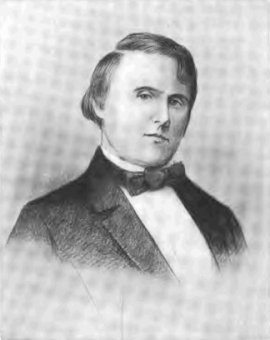
On the first day of the 1820s, he led an army mutiny that forced the king to restore that constitution.

Feckless Ferdinand went along with the new sheriff, and the result was a three-year interregnum of constitutional government — the Trienio Liberal.

But the Bourbon king was only too pleased to solicit the aid of Europe’s counterrevolutionary monarchs.

In 1823, a French expedition — the “hundred thousand sons of St. Louis — invaded Spain at Ferdinand’s invitation and swiftly crushed Riego’s liberals. Then Ferdinand crushed Riego himself.

Induced like Cranmer to sully his reputation by recanting in the vain hope of a pardon (and by starvation and other coercions), Riego was instead stripped of military honors, given a summary trial, and ignominiously drug to the gallows in a basket.


Text of a propaganda leaflet that circulated in England following Riego’s execution. (Source)

Post-Riego, Spain’s liberal and absolutist factions still had years of bloody fighting and martyr-making yet to go.

And we’re not just talking 19th century. There’s a Himno de Riego, which was also the anthem of the 1930s Spanish Republic that Franco laid low.

On this day..

1816: Camilo Torres, Manuel Rodriguez, and other leaders of independent New Granada

On this date in 1816, Spain hanged the leaders of a breakaway former New World possession in a vain effort to maintain control of what is now Colombia.

The United Provinces of New Granada was la Patria Boba, the “foolish fatherland” of Colombia: a welter of rival provinces and municipalities which capitalized on the mother country’s fall to Napoleon to declare independence and immediately commence fratricidal civil war.

The United Provinces had leave of several years for this foolishness before the Peninsular War ended with the restoration of Ferdinand VII, who promptly dispatched a massive expedition under the notorious command of Pablo Morillo to bring these disobedient satellites to heel … and to hemp.

The gentlemen whose death-day we commemorate today were the ones at the seat of government when the music stopped playing. Those positions, and even the forms of government itself, had been regularly reshuffled in the Patria Boba as federalist and anti-federalist, republican and royalist, threw their respective weights (and armies) around.

Morillo, who is still infamous in Colombia for his cruelty, had the most weight of all.

As Morillo’s reconquista invaded the Provinces, Camilo Torres (English Wikipedia page | the much more detailed Spanish) resigned the presidency. Torres is best-remembered now as the author of the Memorial de Agravios (Spanish link; it translates as “Memorial of Grievances” or, more Office Space-ishly, “Memorandum of Grievances”).

This incendiary document prophetically insisted that

the union between America and Spain [rest on] the just and competent representation of its people, without any difference among its subjects that they do not have because of their laws, their customs, their origins, and their rights. Equality! The sacred right of equality. Justice is founded upon that principle and upon granting every one that which is his.

-Memorial de Agravios, as translated in The Independence of Spanish America, by Jaime Rodriguez

Stuff like this was liable to get you on Morillo’s enemies list political office or no; cowing — or killing — seditious intellectuals was part of his whole project.

Torres, his predecessor and vice president (same guy) Manuel Rodriguez, and several other ministers of state were nabbed together trying to make an escape to sea.

Morillo had them subjected to a snap trial, and Torres and Rodriguez were executed this date along with Pedro Felipe Valencia (Spanish link) and Jose Maria Davila; simultaneous property confiscation left the men’s survivors penniless. (Later, Simon Bolivar would personally support the widow Torres.)

Once hemp got through with the necks this day, old-fashioned blades did their redundant work: Torres’s head was hewed off and mounted in Bogota for public viewing.

It’s noteworthy that the author of this sort of nasty warning to the public would later sign his name opposite his New World antagonist Simon Bolivar in a Treaty of Armistice and Regularization of War (more Spanish) undertaking to stop murdering prisoners and non-combatants and fight only “as do civilized peoples” — one of the seminal documents in the development of human rights and the law of war.

Spanish speakers may appreciate this timeline site on the life and times of Camilo Torres.

* Torres, that Colombian Tom Paine, took some overt inspiration from the recent American Revolution, arguing that “to exclude the Americas from such representation … would forever alienate their desires for such a union.” After all,

If the English government had taken such an important step, perhaps today it would not rue the separation of its colonies. But a feeling of pride and a spirit of vanity and superiority led to the loss of those rich possessions.

On this day..

1851: Col. William Logan Crittenden, nephew of the Attorney General

“An American kneels only to his God, and always faces his enemy,”* declared William Logan Crittenden, refusing to kneel before his executioners in Havana this date in 1851.

This well-bred** Kentuckian veteran of the Mexican-American War ditched a New Orleans customs-house gig when Narciso Lopez formed a private filibustering expedition to try to steal Cuba from the Spanish.

Placed at the head of one of Lopez’s three battalions, Crittenden’s force was cut off and overwhelmed by the Spanish. (The detailed progress of the campaign is described here.)

He and 50 of his command captured with him were all ordered for immediate execution, six at a time, as pirates, with just a few hours’ allowance to take down official statements and scribble their hasty goodbyes. With “not the heart to write to any of my family,” Crittenden sent one to a friend giving his farewells … then, just before the end, dashed off another addressed to the Attorney General of the United States — his uncle, John J. Crittenden.†

Dear Uncle: In a few moments some fifty of us will be shot. We came with Lopez. You will do me the justice to believe that my motive was a good one. I was deceived by Lopez — he, as well as the public press,‡ assured me tat the island was in a state of prosperous revolution.

I am commanded to finish writing at once.

Your nephew,
W.L. Crittenden

I will die like a man

(Some other affecting last letters from Crittenden’s party can be perused here.)

All this scene, including a post-mortem mutilation by the enraged mob of onlookers, became a bloody banner for U.S. Southerners — since expanding the slave power was core to the entire filibustering project.

When word of the shootings reached New Orleans, a crowd sacked the Spanish consulate.

But in the international relations game, the U.S. had disavowed filibustering and its raiders enjoyed no special diplomatic protection. When a number of the later prisoners were returned in chains to Spain, the Millard Fillmore administration asked their release, but had no grounds to demand it. It was a touchy diplomatic situation … one that our late Crittenden’s uncle, as a member of cabinet, was right in the middle of.

Fillmore eventually secured the captives’ release, atoning the insult to the European power’s agents by causing the Spanish colors to be saluted in New Orleans in honor of the birth of the Infanta Isabella.

All this mincing instead of brawling struck a certain variety of hothead as distinctly unmanful.

Our flag has been wantonly insulted in the Caribbean sea … captured citizens of our country [were] sent in a slave ship to the coast of Spain, fettered, according to the custom of that inhuman traffic, and released, not as an acknowledgement of wrong on demand of our government, but as a gracious boon accorded to a friendly suit … Whilst the dying words of Crittenden yet rung in the American ear, and the heart turned sickening away from the mutilated remains of his liberty-loving followers; whilst public indignation yet swelled at the torture which had been inflicted on our captive countrymen, even then we were called upon to witness a further manifestation of the truckling spirit of the administration …

Jefferson Davis (yes, that one)

* An alternative version has Crittenden declaring that Kentuckians kneel only to their God.

** According to this public domain book (pdf; it’s also on Google books) of the Lopez expedition, William Crittenden’s cousin George Bibb Crittenden — eventually a Confederate general — was among the Texan filibusters to survive the Black Bean Lottery.

William Crittenden’s brother Thomas Theodore Crittenden fought on the Union side of the Civil War, and became Governor of Missouri in 1881. He’s noteworthy for having issued the bounty on outlaw Jesse James that led to the latter’s assassination by Robert Ford.

† Family in the president’s cabinet was just no guarantee of preferential treatment, abroad or at home; just a few years before, a son of the sitting Secretary of War had been hanged at sea for mutiny.

‡ The Spanish press likewise excoriated American yellow journalism in terms that no few present-day scribes would also deserve.

New Orleans papers, there is your work! There is the result of your diragations, of your iniquitous falsehoods, of your placards with large black letters, and your detestable extras … This blood must flow, drop by drop, upon your heads — this blood will torment you in your sleep, for they have lost their lives when you were in security in your houses.

On this day..

1516 and 1530: Autos de fe in the Spanish Canary Islands

From The Inquisition in Spanish Dependencies, available free from Google books here:

That Columbus, on his first voyage, took his departure from Gomera indicates the importance assumed by the Canaries in the development of trade with the New World and this, conjoined with their productiveness, as they became settled and cultivated, rendered them a centre of commerce frequented by the ships of all maritime nations, as well as an object of buccaneering raids, in an age when trade and piracy were sometimes indistinguishable. Their proximity to Morocco and the Guinea coast moreover exposed them to attacks from the Moors and gave them an opportunity of accumulating Moorish and negro slaves, whom the piety of the age sought to convert to Christians by the water of baptism. In various ways, therefore, there came to be abundant material for inquisitorial activity, although the Judaizing New Christians, who furnished the Spanish tribunals with their principal business, appear to have been singularly few.

There was no haste in extending the Spanish Inquisition to the Canaries … It is not until the time of Diego de Muros [Spanish link], who was consecrated in 1496, that we have any evidence of such action … [and even then] every act, from the preliminary arrest to the final decision, was regulated from Seville …

Irregular and imperfect as may have been the organization of the tribunal, it yet managed to accomplish some convictions. In 1510 there was held an auto de fe in which there were three reconciliations for Judaism and one, of a Moorish slave, for reincidence in Mahometan error, while a fifth culprit was penanced for Judaism. Then in 1513 occurred the first relaxation, that of Alonso Fatima, a native Morisco, who had fled to Barbary. This was always deemed sufficient evidence of relapse to former errors, and he was duly burned in effigy. It was probably also to 1516* that may be attributed the first relaxation in person — that of Juan de Xeres of Seville, for Judaism. It shows that the tribunal was indifferently equipped that, when he was sentenced to torture, the physician whose presence was obligatory on such occasions, Doctor Juan Meneses de Gallegas, was required personally to administer it. It was exceedingly severe, extending to eleven jars of water; the accused was unable to endure it; he confessed his faith, was sentenced to relaxation as a relapsed and for fictitious confession, and was executed on Wednesday, June 4th. …

on June 4, 1530, another oblation was offered to God, in an auto celebrated with the same ostentation as the previous one [in 1526, with seven executions]. This time there were no relaxations in person, but there were six effigies burnt of as many Moorish slaves, who had escaped and were drowned in their infidelity while on their way to Africa and liberty. There were also the effigy and bones of Juan de Tarifa, the husband of the Ynes de Tarifa who had denounced herself in 1524; he was of Converso descent and had committed suicide in prison, which was equivalent to self-condemnation. There were three reconciliations, of which two were for Judaism and one for Islam and five penitents for minor offences.

This use of religious terror in service of slavery — the burning of those effigies who had been “drowned in their infidelity on their way to Africa and liberty” — was an overt policy of the tribunal.

Pious zeal for the salvation of these poor savages led to their baptism after capture; they could not be intelligent converts or throw off their native superstitions, and no one seemed able to realize the grim absurdity of adding the terrors of the Inquisition to the horrors of their enslaved existence. When a negro slave-girl was bemoaning her condition, she was kindly consoled with the assurance that baptism preserved her and her children from hell, to which she innocently replied that doing evil and not lack of baptism led to hell. This was heresy, for which she was duly prosecuted.

Under the inquisitorial code the attempt to escape from slavery thus was apostasy, punishable as such if unsuccessful, and expiated if successful by concremation in effigy. This is illustrated in an auto, held by Zayas and Funez, June 24, 1576, in which among sixteen effigies of absentees were those of eight slaves, seven negroes and one Moor. They had undergone baptism, had been bougt by Dona Catalina de la Cuevas and were worked on her sugar plantation. They seized a boat at Orotava and escaped to Morocco, for which they were duly prosecuted as apostates and their effigies were delivered to the flames — a ghastly mockery which does not seem to have produced the desired impression in preventing other misguided beings from flying from their salvation.

Related: Jews in the Canary Islands: Being a calendar of Jewish Cases extracted from the records of the Canariote inquisition in the collection of the Marquess of Bute.

* A footnote in the text of our source notes that “in the record concerning Juan de Xeres, the year is omitted, but as Wednesday fell on June 4 in 1511, 1516, 1533 and 1539, the probable date is 1516.”

On this day..

1894: Six anarchists in Barcelona

On this date in 1894, on the very day that anarchist terrorist par excellence Emile Henry was guillotined in Paris, six more anarchists were executed by firing squad outside Barcelona’s Montjuich Fortress.

Mariano Cerezuela, Bernat Siveval, Jaime Sogas, Jose Codina, Villarubbia, and Manuel Archs were condemned just weeks prior by a military court for complicity in the attempted assassination earlier that year of Spanish Marshal Arsenio Martinez Campos. Some had originally been rounded up in the general anti-anarchist crackdown after the bombing of the Liceu theater … although another man would be put to death for authoring that crime later in 1894.

Only one of their number, Sogas, died penitent.

In the report of the London Times (May 22, 1894),

[t]he condemned men were conveyed from the chapel, where they had spent the night, to the place of execution by an underground passage, the first two to appear being Sogas and Cerezuela. The former, who confessed last night, joined in the prayers offered by the priest, and he and Cerezuela walked quietly to their doom. The other prisoners, however, shouted all kinds of revolutionary cries. The convicts were placed in line, and at the first shot they all fell to the ground. It was found, however, that in the case of Sogas and Codina the bullets had not taken effect, and a second shot was necessary.

On this day..

1815: José María Morelos, Mexican revolutionary

On this date in 1815, the Catholic priest turned revolutionary leader Jose Maria Morelos was shot for rebellion.

Morelos was born in New Spain — the town of his nativity was posthumously named in his honor — and entered adulthood a humble agricultural laborer* before engaging the career in letters necessary to undertake Holy Orders.

Designated to save his countrymen’s souls, he proposed instead to save their liberties and ungratefully joined up with fellow-priest Miguel Hidalgo when the latter sounded the tocsin for the Mexican War of Independence.

Morelos distinguished himself rapidly in the revolutionary army, and upon Hidalgo’s capture attained its leadership, complete with Generalissimo status.

Upon capture, he was handled first — and rather meticulously — by the Inquisition, which defrocked him in an auto de fe before relaxing him to the secular authority for the inevitable punishment.

Without a dissentient voice it [was] agreed that … [Morelos] be declared guilty of malicious and pertinacious imperfect confession, a formal heretic who denied his guilt, a disturber and persecutor of the hierarchy and a profaner of the sacraments; that he was guilty of high treason, divine and human, pontifical and royal … his property should be confiscated to the king … His three children were declared subject to infamy and the legal disabilities of descendants of heretics.

Source

Nobody said being a national hero was easy.

* “His morals were those of his class,” remarks our source on the Inquisition. “He admitted to having three children, born of different mothers during his priesthood, but he added that his habits, though not edifying, had not been scandalous, and the tribunal seemed to think so, for little attention was paid to this during his trial.”

On this day..

1930: Captains Fermin Galan and Angel Garcia Hernandez

On this date in 1930, two Spanish soldiers were shot for an abortive mutiny against the crown.

Fermin Galan (Spanish Wikipedia entry; most of the available online material about him is in Spanish) earned his military spurs in the Rif War in Morocco, and earned his revolutionary spurs participating in an attempted 1926 rising evocatively named La Sanjuanada. The resultant prison term shoulder to shoulder with Barcelona anarchists only radicalized Galan further. (It also gave him a chance to write.)

After an amnesty, Captain Galan was back in his fatigues commanding the garrison at Jaca.

And he was positively a firebrand; other left-leaning activists who knew he was cooking up a mutiny struggled to restrain him knowing the time was not ripe. When strikes swept Spain in November, followed by violent police suppression, Galan forced the issue, wanting waffling “revolutionaries” to commit themselves.

Galan, as he expressly stated during those feverish days, was fed up with the failures of 1926 and didn’t want to rely on pseudo-revolutionary generals in the style of Blazquez, or on the opportunistic politicians … The majority of the Jaca soldiers adored him and would follow him wherever he led. (Quoted here)

One will discern that that commitment was not forthcoming. Galan’s rising Dec. 12 was quashed; a more general rebellion slated for Dec. 15 fizzled, and Galan and one of his fellow-officers were court-martialed and quickly put to death.

According to Robin Warner,*

If authorities’ intention had been to discourage Republican support by making an example of Galan, the burgeoning legend of his self-sacrifice achieved quite the opposite effect. In the context of a well organised campaign for the release of imprisoned Republican leaders, the dead officer was given the status of a martyr. Clandestine journals and street ballads were quick to provide details of the bravery of his last moments and blame his death on royal intervention … With the accession to power of the provisional Republican Government on 14 April the figure of Galan had a place of honour at the official — and unofficial — celebrations. One of the first acts of the new regime was solemnly to honour the memory of the December martyrs and order a revision of their trial …

Galan had few illusions about the nature of the broad Republican movement which was to exploit his death. He roundly denounced “la ficcion hueca y pomposa que constituye la democracia moderna”, whose rhetoric serves to conceal the aim of perpetuating traditional privileges and blocking genuine change.

Opportunistic is as opportunistic does: that Republican movement exploited Galan’s martyrdom right into conquest of state power by the following April — inaugurating the second Spanish republic, the one that summoned Orwell and all those other starry-eyed multinational leftists (and Fermin Galan’s brother Francisco) to war to defend it against Franco.

* “The Legend of Fermin Galan,” Forum for Modern Language Studies, October 1984 XX(4).

On this day..

1539: Don Carlos Ometochtzin, Aztec heretic

On this date in 1539, the Spanish Inquisition had Aztec noble Don Carlos Ometochtzin (or Don Carlos Chichimecatecuhi, or Don Carlos Ahuachpitzactzin) burned at the stake for reverting to the pre-Columbian indigenous religion.

Just another Mesoamerican depredation?

Surprisingly, this execution stands out as an exception in the first generations of its conquest. It even cost the first bishop of Mexico, Juan de Zumarraga, a reprimand for his excess severity. Why?

Certainly any European Christian would have had trouble with the Inquisition if, like Don Carlos (Spanish Wikipedia entry | English), he had been caught with idols of Xipe Totec in his place.

But it was precisely the point that these weren’t Europeans. In 16th century “New Spain,” syncretisms of Christianity and the native Mexican cults still in living memory were the norm, a scenario recalling early Christianity co-opting the pagan rites it supplanted.*


Respect Xipe Totec’s authoritah!

And that created for the Spanish a problem: how stringently to insist upon an alien orthodoxy for its new subjects? The problem was pragmatic at least as much as it was theological, because the business of winning converts for Christ had to coexist with the business of running an empire. No sense provoking civil war just because the newest souls in the fold don’t have the Te Deum down; Cortes himself, in his initial conquest, had prohibited human sacrifice but not risked closing native temples.* That wasn’t done until 1525.

Over the 1530’s, a campaign unfolded to pare down the many holdover native behaviors — polygamy, idolatry — and cement Christianity. Of particular concern were the “converted” elites who had both means (their social position) and motive (privileges lost to the Spanish) to use nostalgia for the old ways to make trouble.

So, a powerful indigenous priest who “converted” and then went about preaching heretically was investigated by Zumarraga, wielding the Inquisitorial authority, in 1536.

But even that didn’t draw a death sentence.

In Zumarraga’s 19 Inquisitorial trials involving at least 75 suspects, the one and only instance of an Indian being “relaxed” to the secular authorities for execution came in 1539, when Zumarraga was tipped that the hereditary ruler of one of the Aztec Triple Alliance‘s principal city-states was a secret idolator, and a public declaimer of treasonable utterances like this:

Who are those that undo us and disturb us and live on us and we have them on our backs and they subjugate us? … no one shall equal us, that this is our land, and our treasure and our jewel, and our possession, and the Dominion is ours and belongs to us.

Don Carlos was ultimately acquitted of the idolatry stuff, but convicted of heretical dogmatizing.

So far, so good, right? Executions for heresy might be horrible in general, but if you live in a world where they’re routine, surely having your colonial satrap out there calling the empire parasitical, and telling the unwashed masses to go ahead and take multiple wives (Aztec elites seem to have been especially piqued by the lifestyle austerity preached by Franciscan missionaries) is the sort of thing that’ll get you burned at the stake.** And there were plenty more like him out there.

But though the Christianizing campaign of the 1530’s would continue in many forms for decades still to come, the bloodletting which Don Carlos figured to presage was abruptly canceled.

According to Patricia Lopes Don’s “Franciscans, Indian Sorcerers, and the Inquisition in New Spain, 1536–1543,” in Journal of World History, Vol. 17, No. 1,

[a] holocaust was most probably at hand in the spring of 1540. However, when the Council of the Indies in Spain learned of Don Carlos’s execution, they reprimanded Zumárraga, sent a visitador, an inspector-auditor, to New Spain to take away the bishop’s inquisitorial powers, and left him in a state of some humiliation until his death in 1548. All indications were that they feared further such executions would lead to widespread indigenous rebellion in New Spain. As was the case with the Muslims in the Old World, although orthodox Christianity was central to the concept of Spain and the monarchy, when the imperial Spanish needed to choose between religious orthodoxy and the security of the state, they could learn very quickly to be flexible and politique, yet express their concerns in judicious language. In a letter of 22 November 1540, Francisco de Nava, bishop of Seville, explained to Zumárraga that while he understood that he had executed Don Carlos “in the belief that burning would put fear into others and make an example of him,” the Indians, he suggested, “might be more persuaded with love than with rigor.”

When the Inquisition was formally instituted in New Spain in 1571, the native populace was explicitly outside its jurisdiction: its job was to monitor the European population for covert Protestants, Muslims, and Jews.

Although this development has to count as a break for the locals, it’s interesting to note that the theological superstructure of the Spanish policy tension between religious conformity and practical colonialism turned at least in part on a condescending dispute over the “capacity” of Indians to truly become Christian. In that dispute, Zumarraga and his Franciscan order were the ones who thought more highly of the indigenous “capacity”, as against the more skeptical Dominicans; the logical consequence of the Franciscan position was to impose upon those capacious natives the fullest severity of God’s law.

* Though not to be underestimated is the persistence within the citadel of Christendom of everyday folk beliefs, and occasional social movements, at odds with ecclesiastical dogma.

** Treasonous quote and details about the investigation and trial from Richard E. Greenleaf, “Persistence of Native Values: The Inquisition and the Indians of Colonial Mexico”, The Americas, Vol. 50, No. 3 (Jan., 1994)

On this day..

1769: Nicolas de Lafreniere and four others for the Louisiana Rebellion

On this date in 1769, five French Creoles were shot in New Orleans for a revolt the previous year against a Spanish takeover.

This date’s story begins with the French King Louis XV getting his French clock cleaned in the French and Indian War. This conflict blew an ill wind all over Francophone North America, much of which was taken by the British. Result: a quarter-millennium later, this blog is in English.

Even what France kept, she did not keep. In a secret pact, France ceded to wartime ally Spain “the country known as Louisiana, as well as New Orleans and the island in which the city is situated.”

This projection onto New World colonists of Old World diplomatic horse-trading was rife with potential hostility among the traded horses. In this instance, Louisianans were widely dismayed when they were finally informed that they’d become Spaniards.

When they did get the memo — and Louis XV declined to reconsider — they launched the Louisiana Rebellion of 1768, expelling the new Spanish govenror Antonio de Ulloa.*

These weren’t mere rabble who showed Ulloa “insubordination … a sense of liberty and independence,” but elites of French New Orleans. Nicolas de Lafreniere was the attorney general.

“The name of Lafreniere deserves rank with those of foremost American patriots,” Americans later reckoned. O’Reilly’s reputation did not fare as well in the patriotic literature, but he perhaps had the best of the law.

Between a rock and a hard place, the leftover French adjutant Charles-Philippe Aubry refused to support the rebels, but also refused to fire on fellow Frenchmen. Meanwhile, Ulloa refused to provide his credentials to the uppity colonists. Louis XV refused to receive the delegations sent to implore him to keep Louisiana.

All these refuseniks found the matter adjudicated by immigrant Irish officer Alejandro O’Reilly, plucked out of Cuba to replace Ulloa and lay down the law. He spoke softly when he landed, but the amnesty he offered was followed a few months later by the surprise arrest of the chief rebels.

Lafreniere, Joseph Milhet, Jean-Baptiste Noyan, Pierre Caresse, and Pierre Marquis were ordered hanged on this date. Noyan, nephew of the city’s founder and a young man just married, was offered his pardon, but melodramatically refused.

It was found that there was no hangman in the colony, so the condemned prisoners were ordered to be shot. When the day of execution came, hundreds of people left the city. Those who could not leave went into their houses, closed the doors and windows and waited in an agony of sickening dread to hear the fatal shots. Only the tramping of soldiers broke the deathlike stillness which brooded over the crushed and helpless city. At three o’clock on a perfect October afternoon in 1769, the condemned men were led to the Spanish barracks. Lafreniere, it is said, gave the order to fire. A volley of muskets broke out on the still air, and five patriots went to their death, — the first Louisianians to give their blood for the cause of freedom.

A History of Louisiana

The details and historiography of this event are the subject of this 146-page master’s thesis. (pdf)

Whether or not all that stuff about Louisiana planters as freedom-loving patriots trod down by the barbarous Spanish has any real merit to it, that’s the way they’ve been memorialized.

Lafreniere Park in Metairie, La. — home of anti-death penalty VIP Sister Helen Prejean — is named for Nick Lafreniere.

When next visiting the Louisiana State House, keep an eye out for this day’s victims on the frieze to the right of the main entrance. And when next visiting New Orleans, keep an ear out for the ghost of the priest that buried them.

* Ulloa was also a scientist and gave his name to the Ulloa Halo, a “physical illusion consisting of a white luminous ring or arch that can sometimes be seen in mountainous regions, typically in foggy weather, while facing an area opposite the Sun.”

On this day..

1565: Jean Ribault and the Huguenot colonists of Fort Caroline

On this date in 1565, the French Huguenot New World settlement plan was nipped in the bud when Spaniards executed en masse the inhabitants of Fort Caroline in present-day Jacksonville, Fla.

Jean Ribault.

During the late 16th century’s fractious French Wars of Religion, far-sighted Protestant admiral Gaspard de Coligny sponsored this like-minded colony in Florida — a sort of side bet on a satellite Protestant presence overseas, while the party in the mother country fought for its life.*

Jean Ribault (or Ribaut) was the loyal naval aide chosen to lead this colony. After an abortive attempt to plant a settlement in Charlestown, S.C., Ribault set up Fort Caroline and claimed greater Jacksonville for France.


Historical marker of Jean Ribaut/Ribault’s landing place, in Jacksonville, Fla. (cc) image from POsrUs.

French colonial projects further north enjoyed better success.

Down in Florida, both geopolitical and religious rivalry set Fort Caroline up for trouble. Ponce de Leon, questing for the Fountain of Youth, had planted the Spanish flag in Florida half a century before, and that country was none too pleased to find its continental rival jumping its claim. That it was Calvinist Frenchmen doing the usurping would prove downright intolerable to more-Catholic-than-the-Pope Spanish ruler Philip II.

The Spaniards attacked [Fort Caroline], hanged the colonists, and fastened above the heads of the corpses a placard on which was written, “Not because they were Frenchmen, but because they were heretics.” A French Catholic, de Gourgues, moved with righteous indignation, fitted out a ship and avenged this act by hanging their murderers, over whose bodies he put a similar placard, bearing the inscription, “Not because they were Spaniards, but because they were assassins.” But Coligny’s efforts failed, and he had to leave to the English race the realization of his dream of a great American Protestant state. (Source)

That great Protestant state, of course, eventually gobbled up Florida, and still owns it today.

There, it maintains Fort Matanzas National Monument, which takes its name for the Spanish term for what went down there on this date: matanzas, or slaughter.**

* It’s another country, another creed, and another century, but it reminds of the traffic between English New World settlements and England proper during the English Revolution.

** A different historical monument commemorates the failed South Carolina colony.

On this day..