1999: Andrew Kokoraleis, the last ever in Illinois?

There was certainly no cause when killer Andrew Kokoraleis suffered lethal injection at 12:34 this afternoon to suppose that his would be the last execution in the illustrious history of Illinois.

Against all odds, however, it was the last.

Illinois has had plenty of poster boys for death penalty foes — Rolando Cruz; the Ford Heights Four — but Andrew Kokoraleis was hardly among them.

As a member of a satanic murder cult branded the Ripper Crew, he’d participated in abducting, raping, mutilating, murdering, and cannibalizing prostitutes under the charismatic sway of one Robin Gecht.*

The exploits of Gecht, Edward Spreitzer, and brothers Andrew and Thomas Kokoraleis in the Dark Lord’s services are nauseatingly recounted at trutv.com and the spellbinding true-crime book Deadly Thrills.

By the time Andrew Kokoraleis’s appeals had wended their way through the courts, it was high tide for capital punishment in the United States: a modern record 98 executions were carried out in 1999; a Texas governor best-known to the general public for his prodigious execution output was lining up the White House bid that would hurl America into much deadlier pastimes; a law stripping condemned prisoners of federal appellate avenues had just been passed with overwhelming support. Even liberal Democrats dared not touch the divisive issue of capital punishment for fear of appearing soft on crime.

Though sub-Texan in its gurney output, the Land of Lincoln was cranking out a consistent 1 to 2 executions per year in the late 1990’s. It had just inaugurated a Republican governor who as a lawmaker had voted to reinstitute that state’s death penalty statute. Illinois held well over 100 death row prisoners, including one of Kokoraleis’s own confederates from the Ripper Crew.

So the 21st century figured to present an ample harvest for the Illinois death chamber.

Even as Ryan’s graft-plagued term was beginning, however, the executioner’s swan song was underway.

Just days into Ryan’s term, a man named Anthony Porter, who had avoided execution by the narrowest of margins the year before, walked out of Illinois death row a free man — exonerated by the efforts of a Northwestern University journalism class.

“I turned to my wife, and I said, how the hell does that happen? How does an innocent man sit on death row for 15 years and gets no relief? And that piqued my interest, Anthony Porter.”

-George Ryan

Ryan okayed the execution of Kokoraleis six weeks later, but the piqued governor would soon impose an executive moratorium on further executions.

Ryan’s personal journey on the death penalty during his four years in the governor’s office, as linked to his state’s journey over the past decades, must be one of the rare operatic sagas in modern American political life.

Days before he left office (bound for trial on federal corruption charges, and thence to prison), George Ryan emptied death row in Illinois — including a commutation to Ripper Crew member Edward Spreitzer.

Because our three year study has found only more questions about the fairness of the sentencing; because of the spectacular failure to reform the system; because we have seen justice delayed for countless death row inmates with potentially meritorious claims; because the Illinois death penalty system is arbitrary and capricious – and therefore immoral – I no longer shall tinker with the machinery of death.

I cannot say it more eloquently than Justice Blackmun.

The legislature couldn’t reform it.

Lawmakers won’t repeal it.

But I will not stand for it.

I must act.

Our capital system is haunted by the demon of error, error in determining guilt, and error in determining who among the guilty deserves to die.

This move drew plenty of criticism, but the George Ryan death penalty moratorium persisted through the terms of his successors.

Finally, legislators did repeal it.

Early in 2011, longstanding efforts to push that moratorium into formal abolition finally bore fruit in the state legislature. After a protracted silence on the matter, Gov. Pat Quinn** finally — just eight days ago as of this posting — signed that legislation into law, simultaneously commuting all the state’s then-existing death sentences.

Naturally, no government can bind its successors, and laws eliminated today might be reinstated tomorrow. But for now and for the foreseeable future, this date in 1999 marks the final destination not just for Andrew Kokoraleis — but for the Illinois executioner.

* To magnify this troupe’s outsized crime-tabloid appeal, Gecht, the leader, had actually worked for legendary serial sex-killer John Wayne Gacy.

** In earlier years, Quinn was a political rival of George Ryan.

On this day..

Unspecified Year: Bigger Thomas

The main character of Richard Wright’s Native Son was condemned to a March 3 electrocution by the state of Illinois.

In Number 666-983, indictment for murder, the sentence of the Court is that you, Bigger Thomas, shall die on or before midnight of Friday, March third,* in a manner prescribed by the laws of this state.

The Court finds your age to be twenty.

The Sheriff may retire with the prisoner.

Readers are not treated to the actual execution scene, but the hopelessness of Bigger Thomas’s situation is the book‘s whole context and theme. There is little room to entertain a reprieve.

“In the first draft I had Bigger going smack to the electric chair,” the author remarked. “But I felt that two murders were enough for one novel. I cut the final scene.”

The first Book of the Month club selection by an African American author was an instant best-seller, but hardly easy reading. Wright tackles the catastrophic “hatred, fear, and violence” suffusing negro life.

Inspired in part by a real-life Windy City murderer, Bigger Thomas grows up wretched and impoverished in Depression-era Chicago and eventually commits an accidental homicide, then rapes and murders his girlfriend. Wright took some heat for staging a character seemingly written to whites’ darkest fears of African-Americans, but it was his object to force the reader to relate to a violent man whose brutality is conditioned by the world he inhabits.

Bigger Thomas’s trial has his lawyer present an overt indictment of structural oppression as the true cause of Bigger’s crime.

“I didn’t want to kill,” Bigger shouted. “But what I killed for, I am! It must’ve been pretty deep in me to make me kill! I must have felt it awful hard to murder … What I killed for must’ve been good!” Bigger’s voice was full of frenzied anguish. “It must have been good! When a man kills, it’s for something … I didn’t know I was really alive in this world until I felt things hard enough to kill for ’em. It’s the truth …”

Whether Wright truly broke out of the existing literary genres may be a matter of debate.

James Baldwin considered Native Son to be of the Uncle Tom’s Cabin tradition, “self-righteous, virtuous sentimentality … the one uttering merciless exhortations, the other shouting curses.”

All of Bigger’s life is controlled, defined by his hatred and his fear … elow the surface of this novel there lies, as it seems to me, a continuation, a complement of that monstrous legend it was written to destroy … Bigger’s tragedy is not that he is cold or black or hungry, not even that he is American, black; but that he has accepted a theology that denies him life, that he admits the possibility of his being sub-human and feels constrained, therefore, to battle for his humanity according to those brutal criteria bequeathed him at his birth. But our humanity is our burden, our life; we need not battle for it; we need only to do what is infinitely more difficult — that is, accept it. The failure of the protest novel lies in its rejection of life, the human being, the denial of his beauty, dread, power, in its insistence that it is his categorization alone which is real and which cannot be transcended.

“Everybody’s Protest Novel” (pdf)

“Protest novel” or otherwise, Native Son‘s mainstream success extended to the stage, where Orson Welles — fresh from the debut of Citizen Kane — directed a Wright-written adaptation in 1941. Less successfully, Wright himself played the title role in a 1951 Argentinian film.

“Bigger Thomas” is also the name of a long-running ska band.

Though the novel is not yet public domain in the United States, it is in some countries — and can be perused free here.

* For the finicky chronologist: Native Son was published in 1940. At that point, the most recent occasions March 3 had fallen on a Friday were 1939 and 1933.

On this day..

1896: Fred Behme, evangelical Methodist

On this date in 1896, McLeansboro, Ill. hosted its only hanging.

German emigre Fred Behme was settled into married life when he converted from Catholicism to Methodism.

Unfortunately — so Behme saw it — his wife Mary didn’t hew to the old cuius region, eius religio principle where the man of the house was concerned, and stuck with the bishop of Rome for the salvation of her immortal soul.

And there’s just something about the zeal of a convert.

Fred Behme’s domestic missionary work grew more violent (pdf), and eventually his battered spouse moved out; when Fred coaxed her back, and found out that she’d baptized their infant son into idolatrous Catholicism while living apart from him, he chose Easter Sunday to commit what one newspaper called “one of the most hideous and blood-thirsty crimes that ever stained the good name and honor of McLeansboro”: Fred got the other kids out of the house, he attacked Mary with an axe,

drug her by the hair into the yard, and beat in the side of her head. He covered the body with corn fodder. He then took the little boy [whom Mary had baptized] to the barn and hanged him by the neck until he died. (Source)

Though the hanging was invitation-only, it was visible from McLeansboro’s public square and large crowds gathered to witness the hirsute Protestant check out with a short speech in German.

Wikipedia alleges (without a clear source indication) that one G. Phil Hanna was among this multitude, and that seeing Behme strangle to death on an inexpertly deployed rope launched a lifelong interest in the hangman’s craft that would culminate when Hanna pinch-hit on the execution team that carried out America’s last public hanging 40 years later. Others of less august accomplishment no less vividly recalled their (and their town’s) one-time walk through the valley of death.


The family that prays together … (The perp is the bearded man; the victims are the woman seated next to him, and the child in her lap.)

On this day..

1920: Frank Campione, “are they really going to hang me?”

(Thanks to Robert Elder of Last Words of the Executed — the blog, and the book — for the guest post. This post originally appeared on the Last Words blog here. Fans of this here site are highly likely to enjoy following Elder’s own pithy, almanac-style collection of last words on the scaffold. -ed.)

“Are—they—really—going—to—hang—me? Don’t— let—them. Save me. Jesus—Mary—Joseph. My little baby! My wife! . . . I’m—going—my—rest. Take— care—me. Where are you, Mr. Meisterheim [his jailer]? Talk to me.”

Meisterheim: “Be brave, Frank. It’ll be over in a minute.”

“Shake hands once more then. Are they—really going—to hang me?”

— Frank Campione, convicted of robbery and murder, hanging, Illinois.
Executed October 14, 1920

Part of the Cardinella Gang, Campione and company were responsible for more than four murders and 250 holdups and burglaries, according to authorities. The gang killed Albert Kubalanzo for $6.30.

During the months he was in jail and on trial, Campione sang lullabies to his pillow night and day. Even when admitting that he had been feigning madness, Campione held the pillow. “I’ll die happy if you let me keep this pillow with me,” he said. “It reminds me of my baby son.”

On this day..

1995: Girvies Davis, framed?

On this date in 1995, Illinois executed Girvies Davis for murdering 89-year-old Charles Biebel in Belleville, Ill.

A small-time African-American hood reared in an alcoholic home, Davis was not linked to the murder by any physical evidence, or even any eyewitnesses. There was only one piece of evidence against him: his signed confession.

Unfortunately, the source lacked all credibility.

Davis copped to some 20 crimes under police interrogation. Officially, he did this when he voluntarily wrote out a list of evildoings and spontaneously passed it to a guard, which would be hard to believe even if the guy weren’t nearly illiterate. (Even the official story later became that Davis must have dictated the confession to someone else, like a cellmate.)

According to Davis’s later account, he signed statements the police had prepared for him … at gunpoint. The police logs say that he was taken out for a drive that night (“for evidence”), and conveniently confessed in the small hours of the morning.

Even though our man’s involvement in most of these “admitted” crimes (anything outstanding in the area that was still unsolved, it seems) was disproven, he couldn’t get traction in the courts once his conviction by an all-white jury was secured. Paradoxically, because there was no other evidence in the case to discredit, that “a-ha!” exoneration moment became all but impossible to secure despite the other holes in the case.

More action was had in the court of public opinion, where the usual suspects enlisted any number of pro-death penalty prosecutors and Republicans with serious misgivings about the case.

Time magazine lodged a naive early entrant in the “wait, wrongful confessions happen?” genre. The New York Times also covered the Davis clemency campaign:*

“The public sees the Bundys and the Gacys executed and they cheer,” said Gary V. Johnson, a former Kane County, Ill., prosecutor, who sought the death penalty in the past but opposes the execution of Mr. Davis. “The public doesn’t see the Girvies Davises.”

What savvy pols like Illinois Gov. Jim Edgar could see was that in the 1990s, all the political upside was in denying clemencies. So that’s what he did.

Years later, Davis’s last appellate attorney still believes “that the State of Illinois executed Girvies Davis for a crime I am sure he didn’t commit.”

Northwestern University journalism professor David Protess was also convinced of Girvies Davis’s innocence, and led a team of students researching the case back before he was famous for doing exactly that sort of thing. His work did not yield success on this occasion, but to judge by his account (pdf) of a last conversation he and his students had hours before Davis was put to death, it helped lead to the school’s later headline-grabbing wrongful conviction exposes.

Protess put [Davis] on the speakerphone, and the group gathered around. “Try not to mourn for me,” Davis said. “Move on with your lives. Just try to help people like me who get caught up in the system.” …

Davis had a final request: He wanted Protess and the students to promise that this wouldn’t be their last crusade in a capital case.

The room fell silent. “Of all the guys you know on the Row, who do you think most deserves help?” Protess asked.

Buck Williams,” Davis answered without hesitation. “I’m certain he’s innocent.”

Protess … vowed that he and his next group of students would leave no stone unturned for Williams.

Protess was as good as his word.

In less than a year, Williams along with Verneal Jimerson, Willie Rainge and Kenneth Adams were free men after a generation in prison.** These men, known as the “Ford Heights Four”, would win the largest civil rights lawsuit payment in U.S. history for their wrongful imprisonment.

* Davis may also have been the first death-row prisoner in the U.S. with his own Internet site and online clemency petition, although these interesting artifcats have long since vanished into the digital oubliette. Gov. Edgar reportedly received 1,200 emails asking him to spare his prisoner’s life … testament even then to elected officials’ disregard for online advocacy.

** Williams and Jimerson were on death row; Rainge and Adams were serving life sentences.

On this day..

1909: Will James, “the Froggie”, lynched in Cairo

One hundred years ago today, Will James was lynched as a murderer in Cairo, Illinois.

“The Frog” or “The Froggie” was a black man implicated in the murder of a white girl, captured in nearby Belknap and

taken to the most prominent square in the city and strung up. The rope broke and the man was riddled with bullets. The body was then dragged by the rope for a mile to the scene of the crime and burned in the presence of at least 10,000 rejoicing persons. Many women were in the crowd, and some helped to hang the negro and to drag the body.

Part of the mob then sought other negroes. Another part, at 11:15 o’clock, after battering down a steel cell in the county jail, took out Henry Salzner, a white man charged with the murder of his wife last August, and lynched him.* (New York Times, Nov. 12, 1912)


Other pictures related to the Will James lynching are at the Without Sanctuary site here (images 41 through 47).

The grey lady’s dim view of this jubilant scene prompted a letter to the editor in defense — the author’s disclaimer notwithstanding — of the lynching, which paints a grim and striking portrait of the town where it occurred.

CAIRO’S NEGROES.

Former Resident Says They Are Spoiled by Coddling and Are a Menace.

As a former resident of Cairo, Ill., where I was the editor of a daily newspaper for three years, I crave a word, not in defense of the double lynching which occurred there a few days ago, but in explanation of it. Cairo, at the extreme southern point of Illinois, at the junction of the Ohio and Mississippi Rivers, is peculiarly located. Across one river is Missouri; across the other is Kentucky, and Tennessee is only fifty miles away. Cairo thus becomes a buffer between the North and the South. It is probably the only town in the North which has a true race problem to deal with. … Out of a population of 13,000 in 1900, 5,000 of the inhabitants of Cairo were negroes. Of the 100,000 negroes in the State of Illinois 5 per cent are massed in this one little town. Aside from this, the floating colored population is unusually large, and Cairo, at some time or other, harbors most of the “bad niggers” from St. Louis, Cincinnati, Louisville, Memphis, Vicksburg, and New Orleans. It is these whom citizens fear the most, and for whom the police are constantly alert. Murders by negroes either of white men or negroes are alarmingly frequent, but the murderer usually escapes either to Kentucky or Missouri, and is never heard of again. Thus crime after crime is recorded against the name of Cairo, with no recompense in the name of the law. On the other hand, there is hardly a time when there are not forty or fifty Cairo negroes in the Southern Illinois Penitentiary, all convicted of theft or burglary.

The white people of Cairo have always dealt indulgently with the negro. For years it has been the policy to keep two negroes on the small police force, and there have been negro Justices of the Peace. A negro physician once came near being elected a member of the Board of Education. While they pay but little taxes, the negroes are provided with three public schools. The Sumner was the first colored High School ever established in the United States. Yet this negro population, coddled as it is, is a constant menace to the town. No white woman dare venture outside of the house at night alone for fear of assault. Many outrages of which the world has never heard have been attempted. This is why, as Mayor Parsons says, the effect of the recent lynching will be “salutary.”

Altogether it is not surprising that a lynching took place in Cairo. The only wonder is that one did not take place long ago.

W.L. CLANAHAN
New York, Nov. 14, 1909

That electric arch and celebratory mob are now long gone from Cairo: in the century since Will James was butchered, Cairo, Ill., has withered — striken in part by its own poisonous legacy of racism. (Also by flooding from the adjacent rivers, the routing of transportation corridors elsewhere, and the general deindustrialization of the heartland.)

During the civil rights struggle as played out in Cairo in the 1960’s and 1970’s (more in this pdf), the town’s white business owners made a name for themselves by refusing to integrate their workforces in response to black boycotts … preferring to go out of business and/or leave town.

Cairo today is a near ghost town at one-quarter of its previous population, and generally appalling quality-of-life indicators.

* Salzner’s lynching occurred after midnight, according to the same article; hence, his absence from this article’s marquee.

On this day..

1994: John Wayne Gacy, scary clown

This date in 1994 was the last on earth for Pogo the Clown — better known as John Wayne Gacy.


Hello, children.

The local small businessman and closeted pederast filled his crawlspace with the remains teenage boys he’d either kidnap off the street, or hire in his capacity as an independent contractor.

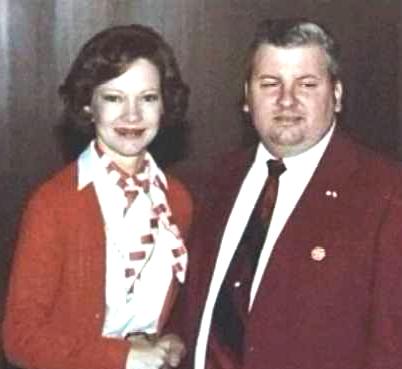
When he wasn’t raping and murdering, he kept up appearances as a Democratic machine operative (once photographed with First Lady Rosalynn Carter) and amateur block party harlequin.

Gacy was a notable “serial killer artist” in the years he spent awaiting lethal injection.* In that capacity, the clown motif continued to inspire him.


* The lethal injection was botched with a clogged IV tube. It took 18 minutes.

On this day..

2003: Nobody in Illinois

Six years ago today, a scandal-plagued governor of Illinois cleared out the state’s death row.

Republican George Ryan, in a speech two days before the end of his term, announced a mass commutation for anyone under sentence of death in Illinois — 157 people plus 10 others with pending legal challenges to vacated sentences, and four condemned men pardoned outright.

[flv:https://www.executedtoday.com/video/George_Ryan_clemency_announcement.flv 300 225]

Once a pro-death penalty legislator, Ryan grew increasingly discomfited with the state’s administration of the error-prone ultimate sanction.

That “demon of error” was dramatically unveiled for Ryan by Anthony Porter, a mentally retarded death row inmate who fortuitously avoided execution by two days on a legal technicality, and was subsequently exonerated by Northwestern University journalism students.

Seen as part of a pattern of wrongful convictions — like that of Rolando Cruz, who was cleared in the early 90’s despite the dogged efforts of then-Attorney General (and present-day quasi-Senator) Roland Burris to execute him in the face of exculpatory DNA evidence.

The governor imposed a moratorium on conducting executions for most of his term, culminating with this day’s controversial (though it did score him a Nobel Peace Prize nomination) announcement. Maybe there’s just something in the water at the Springfield governor’s mansion that attracts its residents to impolitic death penalty interventions.

Successor Rod Blagojevich called Ryan’s blanket clemency “a big mistake”, and his formal continuation of the Ryan moratorium on actual executions has been a dead letter since inheriting a vacant death row meant that no capital case reached the end of its appeals on his watch.

For the favor of sparing Blagojevich the burden of handling a death warrant — although one doesn’t get the sense that Blago is the type for a troubled conscience — George Ryan has been unkindly repaid.

Now residing in federal prison on corruption charges, the ex-governor’s own clemency petition has been complicated by sensational allegations of Blagojevich’s graft.

That petition is addressed to an outgoing executive oppositely inclined on the death row commutation question. Ryan authorized one actual execution early in his term, and spared this day’s host; George W. Bush, his virtual mirror image, has issued one commutation and carried out 155 executions during his time as chief executive of Texas and of the United States.

George Ryan is reportedly skeptical of his prospects for receiving a pardon.

On this day..

1887: Parsons, Spies, Fischer and Engel, the Haymarket Martyrs

On this date in 1887, the Chicago political machine hanged four at Cook County Jail to defend civilization from the eight-hour day.

The Haymarket martyrs, as they would be remembered ere the hysterical atmosphere of their sentencing had passed, were four from a group of eight anarchist agitators rounded up when a never-identified person threw a bomb at Chicago police breaking up a peaceful rally. The bomb killed one cop; the indiscriminate police shooting that followed killed several more in friendly fire, plus an uncertain number of civilians.

The incident occurred just days after nationwide strikes began on May 1, 1886, in support of the eight-hour day. Nowhere were the tensions greater than Chicago, an epicenter of militant organizing. When tens of thousands poured into the streets on May 1, the Chicago Mail darkly said of high-profile radicals Albert Parsons and August Spies,

Mark them for today. Hold them responsible for any trouble that occurs. Make an example of them if trouble does occur.

Sure enough …

Most of the eight hadn’t even been present at the time the bomb was thrown, but the state put anarchism itself on trial under the capacious umbrella of “conspiracy,” in a proceeding so absurdly rigged that a relative of a slain cop was on the jury. Quoth the prosecutor,

Law is upon trial. Anarchy is on trial. These men have been selected, picked out by the grand jury and indicted because they were leaders. They are no more guilty than the thousand who follow them. Gentlemen of the jury; convict these men, make examples of them, hang them and save our institutions, our society.

That was the argument for hanging them. And right-thinking burghers applauded it.

Seven of the eight were condemned to die; two had their sentences commuted, but the other five refused to ask for clemency on the grounds that, innocent, they would “demand either liberty or death.” One of those five, Louis Lingg, painfully cheated the hangman by setting off a blasting cap in his mouth the night before his execution. (Lingg might have made, though seemingly not thrown, the mysterious bomb.)

The others — Parsons and Spies, along with Adolph Fischer and George Engel — hanged together, with their epitaphs upon their lips — literally so for Parsons, whose parting remark is at the base of the Haymarket Martyrs Monument*

“The time will come when our silence will be more powerful than the voices you are throttling today.”

“Throttle” was right, as the Chicago Tribune reported the next day, taking up when the trap was sprung:

Then begins a scene of horror that freezes the blood. The loosely-adjusted nooses remain behind the left ear and do not slip to the back of the neck. Not a single neck is broken, and the horrors of a death by strangulation begin.

Six years later, Illinois Gov. John Altgeld granted the free pardon the hanged men had demanded to the three surviving Haymarket anarchists. There is no institutional mechanism to determine erroneous executions in American jurisprudence — a fact that occasionally leads to smugly circular avowals that nobody recently executed has ever been “proven” innocent — and death penalty researchers Michael Radelet and Hugo Bedau believed as of this 1998 paper (pdf) that Altgeld’s executive statement flatly asserting the injustice of the Haymarket convictions was the most recent official acknowledgment of a wrongful execution in U.S. history. If true, its uniqueness would be understandable: the gesture cost Altgeld his political career.

Long gone as all these principals are, the legacy of Haymarket remains very much with us, and not just as a magnet for digital archives like this, this and this (don’t miss the brass gallows pin).

May 1, now rich with the symbolism of the Haymarket Passion, was soon selected by the international labor movement as the date to resume the eight-hour-day push — thus becoming the global workers’ holiday it remains to this day.

* Opposing interpretations of the Haymarket affair — which can be the “Haymarket riot” or the “Haymarket massacre,” depending on where you line up — were marked by opposing memorials. The police memorial was itself eventually bombed by the Weather Underground, and subsequently squirreled away from easy public view. Paradoxically, the Haymarket Martyrs Monument has been federally dignified as a National Historic Landmark.

On this day..