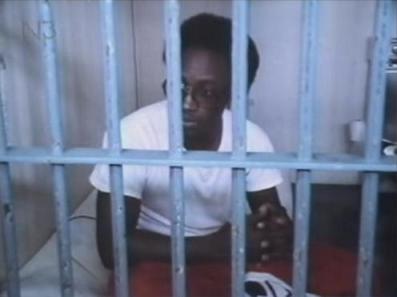
2004: Benjamín Altamirano lynched

On this date in 2004, Bolivian Aymara peasants burned to death the mayor of Ayo Ayo.

Disgruntled residents of his fiefdom had accused Benjamin Altamirano (who was also Aymara) of corruption, and received no redress. Likewise had Altamirano complained to the central government of growing threats against him without receiving protection.

The situation came to a shocking head when Altamirano was kidnapped from the capital city of La Paz the night of June 14 and driven overnight to his home in Ayo Ayo. There, according to wire reports,*

[o]fficials said he was then burned to death inside his house, with his body later dragged through the streets and dumped in the town square. Witnesses said he was tied up, set aflame in the town square and hung upside down from a lamppost.

The Andean Altiplano region to which Ayo Ayo belonged was at this time being riven by the Bolivian gas war, a social conflict that would ultimately force the resignation of neoliberal President Carlos Mesa and lead to the election of leftist** indigenous leader Evo Morales.

From 2003 to 2005, the region (on both sides of the Peru-Bolivia border) was paralyzed with repeated peasant protests and the community expulsion of disagreeable state authorities (other government officials fled Ayo Ayo after Altamirano died).

In the words of one unrepentant Aymara quoted in this Guardian piece,

‘We Aymara carry rebellion in our blood,’ said Ramón Coba, who heads the leading Ayo Ayo peasant organisation. ‘Bolivia is totally corrupt, not just the mayor. All of them should be finished in the same way, if not burnt then drowned or strangled or pulled apart by four tractors… It’s the only way they are going to learn.’

* This one ran in the St. Louis Post-Dispatch on June 16, 2004.

** Morales, in 2009:

After more than 500 years, we, the Quechuas and Aymaras, are still the rightful owners of this land. We, the indigenous people, after 500 years of resistance, are retaking the power. This retaking of power is oriented towards the recovery of our own riches, our own natural resources such as the hydrocarbons. This affects the interests of the transnational corporations and the interests of the neoliberal system. Never the less, I am convinced that the power of the people is increasing and strengthening. This power is changing presidents, economic models and politics. We are convinced that capitalism is the enemy of the earth, of humanity and of culture.

Morales has floated elevating indigenous “communal justice” actions like Altamirano’s lynching into the stature of de jure law.

On this day..

2002: Napoleon Beazley, who threw it all away

On this date in 2002, Napoleon Beazley was executed by lethal injection in Texas.

A high school class president and football hero, Beazley was 3 ½ months shy of his 18th birthday when he made the first entry on his criminal record.

It was a doozy:

Beazley (with two accomplices who later testified against him) shot a Tyler, Texas, couple in their garage to steal their Mercedes Benz.

The wife survived the attack by playing dead.

The husband was not so lucky. He was businessman John Luttig, the father of archconservative federal judge J. Michael Luttig. When Beazley’s appeal reached the U.S. Supreme Court, a third of its justices recused themselves for their own connections to Luttig.

(J. Michael Luttig testified at Beazley’s trial. “Individuals must be held accountable at some point for actions such as this,” he told the media afterward. “I thought this was an appropriate case for the death penalty.”)

Both in the legal arena and in public opinion, Beazley’s case turned in an unusually uncluttered fashion on the principle of executing juvenile offenders.

Beazley was not mentally impaired, nor warped by childhood trauma, nor even generally underprivileged. His had been the black family accepted by the white community in his native Grapeland.

There was no question of Beazley’s guilt in the crime. None of the typical extenuating circumstances applied, save Beazley’s own eventual remorse.

“I don’t blame anybody else for being here but me,” Beazley would say later.

And since he pulled the trigger just weeks shy of his legal adulthood, even his youth was barely in play.

So, the question of whether Napoleon Beazley deserved to die was a pretty close proxy for the question of how bright a line the age of 18 ought to be where the death penalty was concerned.

Beazley lost crucial votes by the closest of margins: one Supreme Court appeal denied him on a 3-3 tie, and the Texas Board of Pardons and Paroles turned him down 10-7.

If these votes reflected uncertainty over the juvenile death penalty as a policy, the matter would soon pass the tipping point to a resolution: Napoleon Beazley was the 19th person put to death in the modern American death penalty regime for a crime committed as a juvenile. Only three more followed before the Supreme Court (consisting of the same nine justices who had rejected Beazley’s appeal a few years before) ruled the death penalty for minors unconstitutional in the 2005 Roper v. Simmons decision.

There’s cinematic treatment of Beazley’s shocking crime in the recent documentary Two Hours to Tyler. There’s also a play about him.

On this day..

1997: Bruce Edwin Callins, in the machinery of death

On this date in 1997, Bruce Edwin Callins was executed in Texas — part of the torrid pace of executions unleashed in Texas in the late 1990s.

This small-timer would hardly rate a notice, but for the fact that Supreme Court Justice Harry Blackmun had chosen this otherwise forgettable murderer’s appeal to announce, in 1994, his belief that the death penalty was irreperably unconstitutional — probably the most famous comment on the death penalty to issue from the bench since capital punishment was reinstated with Blackmun’s concurrence in Gregg v. Georgia.

From this day forward, I no longer shall tinker with the machinery of death.

You’ll see the quote on anti-death penalty placards and apparel from now ’til kingdom come.

But there’s a bit more to it than what fits on a bumper sticker, and Blackmun’s reasoning is worth excerpting at greater length:

Within days, or perhaps hours, the memory of Callins will begin to fade. The wheels of justice will churn again, and somewhere another jury or another judge will have the unenviable task of determining whether some human being is to live or die. We hope, of course, that the defendant whose life is at risk will be represented by competent counsel — someone who is inspired by the awareness that a less-than-vigorous defense truly could have fatal consequences for the defendant. We hope that the attorney will investigate all aspects of the case, follow all evidentiary and procedural rules, and appear before a judge who is still committed to the protection of defendants’ rights — even now, as the prospect of meaningful judicial oversight has diminished. In the same vein, we hope that the prosecution, in urging the penalty of death, will have exercised its discretion wisely, free from bias, prejudice, or political motive, and will be humbled, rather than emboldened, by the awesome authority conferred by the State.

But even if we can feel confident that these actors will fulfill their roles to the best of their human ability, our collective conscience will remain uneasy. Twenty years have passed since this Court declared that the death penalty must be imposed fairly, and with reasonable consistency, or not at all, see Furman v. Georgia, 408 U.S. 238 (1972), and, despite the effort of the States and courts to devise legal formulas and procedural rules to meet this daunting challenge, the death penalty remains fraught with arbitrariness, discrimination, caprice, and mistake. This is not to say that the problems with the death penalty today are identical to those that were present 20 years ago. Rather, the problems that were pursued down one hole with procedural rules and verbal formulas have come to the surface somewhere else, just as virulent and pernicious as they were in their original form. Experience has taught us that the constitutional goal of eliminating arbitrariness and discrimination from the administration of death, see Furman v. Georgia, supra, can never be achieved without compromising an equally essential component of fundamental fairness – individualized sentencing. See Lockett v. Ohio, 438 U.S. 586 (1978).

It is tempting, when faced with conflicting constitutional commands, to sacrifice one for the other or to assume that an acceptable balance between them already has been struck. In the context of the death penalty, however, such jurisprudential maneuvers are wholly inappropriate. The death penalty must be imposed “fairly, and with reasonable consistency, or not at all.” Eddings v. Oklahoma, 455 U.S. 104, 112 (1982).

To be fair, a capital sentencing scheme must treat each person convicted of a capital offense with that “degree of respect due the uniqueness of the individual.” Lockett v. Ohio, 438 U.S. at 605 (plurality opinion). That means affording the sentencer the power and discretion to grant mercy in a particular case, and providing avenues for the consideration of any and all relevant mitigating evidence that would justify a sentence less than death. Reasonable consistency, on the other hand, requires that the death penalty be inflicted evenhandedly, in accordance with reason and objective standards, rather than by whim, caprice, or prejudice. Finally, because human error is inevitable, and because our criminal justice system is less than perfect, searching appellate review of death sentences and their underlying convictions is a prerequisite to a constitutional death penalty scheme.

On their face, these goals of individual fairness, reasonable consistency, and absence of error appear to be attainable: courts are in the very business of erecting procedural devices from which fair, equitable, and reliable outcomes are presumed to flow. Yet, in the death penalty area, this Court, in my view, has engaged in a futile effort to balance these constitutional demands, and now is retreating not only from the Furman promise of consistency and rationality, but from the requirement of individualized sentencing as well. Having virtually conceded that both fairness and rationality cannot be achieved in the administration of the death penalty, see McCleskey v. Kemp, 481 U.S. 279, 313 , n. 37 (1987), the Court has chosen to deregulate the entire enterprise, replacing, it would seem, substantive constitutional requirements with mere aesthetics, and abdicating its statutorily and constitutionally imposed duty to provide meaningful judicial oversight to the administration of death by the States.

From this day forward, I no longer shall tinker with the machinery of death. For more than 20 years, I have endeavored — indeed, I have struggled — along with a majority of this Court, to develop procedural and substantive rules that would lend more than the mere appearance of fairness to the death penalty endeavor. Rather than continue to coddle the Court’s delusion that the desired level of fairness has been achieved and the need for regulation eviscerated, I feel morally and intellectually obligated simply to concede that the death penalty experiment has failed. It is virtually self-evident to me now that no combination of procedural rules or substantive regulations ever can save the death penalty from its inherent constitutional deficiencies. The basic question — does the system accurately and consistently determine which defendants “deserve” to die? — cannot be answered in the affirmative.

Antonin Scalia, never one to let pass an opinion he could just as easily scorn, issued his retort in a concurrence with the 8-1 opinion to execute Callins:

Convictions in opposition to the death penalty are often passionate and deeply held. That would be no excuse for reading them into a Constitution that does not contain them, even if they represented the convictions of a majority of Americans. Much less is there any excuse for using that course to thrust a minority’s views upon the people.

Justice Blackmun begins his statement by describing with poignancy the death of a convicted murderer by lethal injection. He chooses, as the case in which to make that statement, one of the less brutal of the murders that regularly come before us, the murder of a man ripped by a bullet suddenly and unexpectedly, with no opportunity to prepare himself and his affairs, and left to bleed to death on the floor of a tavern.* The death-by-injection which Justice Blackmun describes looks pretty desirable next to that. It looks even better next to some of the other cases currently before us, which Justice Blackmun did not select as the vehicle for his announcement that the death penalty is always unconstitutional, for example, the case of the 11-year-old girl raped by four men and then killed by stuffing her panties down her throat. How enviable a quiet death by lethal injection compared with that!

Scalia’s mention of the “case of the 11-year-old girl” isn’t about Callins at all. The monster Scalia refers to here as obviously execution-worthy for his incendiary crime is Henry Lee McCollum … who in 2014 would be exonerated by DNA evidence after some 30 years on death row.

* Specifically, Callins wasted the patron of a strip bar who was insufficiently prompt at giving up his wallet. The $3 he took from the dying man’s pockets wouldn’t even have been enough to make it rain.

On this day..

1987: Edward Earl Johnson, “I guess nobody is going to call”

On this date in 1987, murmuring “I guess nobody is going to call,”* Edward Earl Johnson was gassed for capital murder in Mississippi’s Parchman Farm prison.

Don Cabana, the prison warden who oversaw Johnson’s gassing, eventually resigned over his misgivings about carrying out executions and wrote this book about it.

Johnson was convicted of raping a white woman and killing the policeman who answered her distress call. These are no-nos for a young person of color in the South.

Johnson fought his execution for eight years on death row, insisting on his innocence even on his last walk to the gas chamber.

And the case against him looks pretty thin — supported, as these things so often are, mostly by a highly suspect confession Johnson miraculously coughed up when he was out on a drive with John Law. (This led the victim, who knew Johnson and had excluded him as the attacker, to decide he did it after all.)

Needless to say, Johnson’s state-appointed public defender was unable to make the most of these gaping lacunae in the state’s case.

Years later, the prison warden Don Cabana — who was on this date overseeing his very first execution, and was deeply shaken by it — recalled his charge’s fearful situation in testimony to the Minnesota legislature:

He insisted to the very end, somewhat oddly, that he did not commit the crime … my experience with condemned prisoners was always that once strapped to the chair, they came around somehow with something, if only something simple as “Tell the victim’s family I’m sorry,” “Tell my mother I’m sorry,” something that indicated something bad had happened, I was there and I was part of it.

But not so with this young man. When I performed my ritualistic function of asking if he had a final public statement, this young man looked me in the eye with tears streaming down his cheeks, and he said: “Warden, you’re about to become a murderer. I did not kill that policeman, and dear God, I can’t make anyone believe me.”

This is a musty old case by now, but with the growing awareness of false confessions as a contributing factor in wrongful convictions, it may soon come in for a long-overdue re-examination.

Johnson, unfortunately, does not have any prospect of an a-ha forensic science win. However, as with Cameron Todd Willingham‘s case, there’s simply no balance of evidence that should point a fair-minded present-day observer to a conviction beyond reasonable doubt, and a good deal that points to an affirmative conclusion of innocence.

As the (admittedly partisan) Wrongful Conviction: International Perspectives on Miscarriages of Justice sums up,

[t]he murder weapon was never connected to Johnson; indeed, no physical evidence linked Johnson to the crime. The case against Johnson is weakened by his claim of inadequate counsel, his immediate recantation of his confession, and his claim that his confession was produced under threat of death. Also, after Johnson’s execution, a young woman came forward claiming to have been with Johnson on the night of the murder, and claiming also that she had come forward during the investigation but was rebuffed by police.

Edward Earl Johnson is the subject of the riveting BBC documentary Fourteen Days in May.

* Quoted in the New York Times, May 21, 1987.

On this day..

1990: Dalton Prejean, cop-killing child

Just after midnight this date in 1990, Dalton Prejean was electrocuted in Louisiana for murdering state trooper Donald Cleveland.

A 17-year-old (at the time of the crime) black youth who tested just this side of mentally disabled, Prejean shot Cleveland during a traffic stop. (He was, at the time, just seven months out of a reform school stint he had served for murdering a taxi driver at the tender age of 14.)

It was a three-day trial with an all-white jury, and not much question as to Prejean’s culpability.

But as he neared the execution of that sentence, his youth and his limited candlepower loomed ever larger. They would generate worldwide attention with some heated rhetoric like this one from Amnesty International’s southern regional director:

“I doubt that in documented recent world history there is an execution” with “such a pile of reasons not to do it.”

The Louisiana board of pardons agreed — it recommended commutation — but Gov. Buddy Roemer did not.

Dalton Prejean’s was the first execution of a juvenile offender in the United States since the Supreme Court upheld the constitutionality of that practice in the 1989 decision Stanford v. Kentucky. That decision was reversed in 2005, and minors are no longer eligible for death-sentencing in the U.S.

On this day..

1995: Girvies Davis, framed?

On this date in 1995, Illinois executed Girvies Davis for murdering 89-year-old Charles Biebel in Belleville, Ill.

A small-time African-American hood reared in an alcoholic home, Davis was not linked to the murder by any physical evidence, or even any eyewitnesses. There was only one piece of evidence against him: his signed confession.

Unfortunately, the source lacked all credibility.

Davis copped to some 20 crimes under police interrogation. Officially, he did this when he voluntarily wrote out a list of evildoings and spontaneously passed it to a guard, which would be hard to believe even if the guy weren’t nearly illiterate. (Even the official story later became that Davis must have dictated the confession to someone else, like a cellmate.)

According to Davis’s later account, he signed statements the police had prepared for him … at gunpoint. The police logs say that he was taken out for a drive that night (“for evidence”), and conveniently confessed in the small hours of the morning.

Even though our man’s involvement in most of these “admitted” crimes (anything outstanding in the area that was still unsolved, it seems) was disproven, he couldn’t get traction in the courts once his conviction by an all-white jury was secured. Paradoxically, because there was no other evidence in the case to discredit, that “a-ha!” exoneration moment became all but impossible to secure despite the other holes in the case.

More action was had in the court of public opinion, where the usual suspects enlisted any number of pro-death penalty prosecutors and Republicans with serious misgivings about the case.

Time magazine lodged a naive early entrant in the “wait, wrongful confessions happen?” genre. The New York Times also covered the Davis clemency campaign:*

“The public sees the Bundys and the Gacys executed and they cheer,” said Gary V. Johnson, a former Kane County, Ill., prosecutor, who sought the death penalty in the past but opposes the execution of Mr. Davis. “The public doesn’t see the Girvies Davises.”

What savvy pols like Illinois Gov. Jim Edgar could see was that in the 1990s, all the political upside was in denying clemencies. So that’s what he did.

Years later, Davis’s last appellate attorney still believes “that the State of Illinois executed Girvies Davis for a crime I am sure he didn’t commit.”

Northwestern University journalism professor David Protess was also convinced of Girvies Davis’s innocence, and led a team of students researching the case back before he was famous for doing exactly that sort of thing. His work did not yield success on this occasion, but to judge by his account (pdf) of a last conversation he and his students had hours before Davis was put to death, it helped lead to the school’s later headline-grabbing wrongful conviction exposes.

Protess put [Davis] on the speakerphone, and the group gathered around. “Try not to mourn for me,” Davis said. “Move on with your lives. Just try to help people like me who get caught up in the system.” …

Davis had a final request: He wanted Protess and the students to promise that this wouldn’t be their last crusade in a capital case.

The room fell silent. “Of all the guys you know on the Row, who do you think most deserves help?” Protess asked.

Buck Williams,” Davis answered without hesitation. “I’m certain he’s innocent.”

Protess … vowed that he and his next group of students would leave no stone unturned for Williams.

Protess was as good as his word.

In less than a year, Williams along with Verneal Jimerson, Willie Rainge and Kenneth Adams were free men after a generation in prison.** These men, known as the “Ford Heights Four”, would win the largest civil rights lawsuit payment in U.S. history for their wrongful imprisonment.

* Davis may also have been the first death-row prisoner in the U.S. with his own Internet site and online clemency petition, although these interesting artifcats have long since vanished into the digital oubliette. Gov. Edgar reportedly received 1,200 emails asking him to spare his prisoner’s life … testament even then to elected officials’ disregard for online advocacy.

** Williams and Jimerson were on death row; Rainge and Adams were serving life sentences.

On this day..

1879: Three botches in three states

America’s weird love-affair with Frankenstein execution technology has been an occasional theme on this blog, but the fact is that the old-school execution methods these ghastly machines replaced were unpleasantly hit-and-miss.

On this date in 1879, three different U.S. states produced botched executions, each blurbed this New York Times article. (pdf)


One is attracted most readily to the firing-squad execution of murderer Wallace Wilkerson in Utah.

Wilkerson appealed the constitutionality of this method of execution, and in 1879’s Wilkerson v. Utah, the U.S. Supreme Court held that “the punishment of shooting as a mode of executing the death penalty for the crime of murder in the first degree is not” cruel and unusual punishment.

This legal precedent has actually been cited* by the present-day Supreme Court in rejecting legal challenges to lethal injection. Which is ironic, because a couple of months after the high court issued Wilkerson v. Utah, Wilkerson suffered a very cruel execution indeed.

The doomed man talked the officials conducting his execution into allowing him to die without being strapped down. With the resultant range of motion, Wilkerson at the last breath before the fusillade hit him drew his shoulders up as he braced for the impact — and pulled the white target pinned to his shirt above his heart.

The volley didn’t kill him — it just knocked him out of his chair to the ground, screaming “Oh, my God! My God! They have missed!”

He bled to death in 27 minutes, prompting the tongue-in-cheek observation by the Ogden Junction that “the French guillotine never fails.”


Meanwhile, on the very same day in Missouri …

ST. LOUIS, Mo., May 16.–A special dispatch from Booneville, Mo., says: “John I. West, who murdered a tramp last October, was to-day hanged at the Old Fair Ground near this city. When the trap was sprung, at 11:41 A.M., the rope broke, and the culprit fell to the ground on his back, but was too weak to rise. His groans and the gurgling sounds of strangulation were terrible to hear. He was picked up and speedily raised to the trap again, and, while being held by four or five men, was dropped a second time. This time he swung, and in 11 minutes was pronounced dead.

After reaching the platform of the gallows, West spoke nearly half an hour to the crowd present, reiterating his confession of the murder of Shinn, reviewing his past life, and appealing to young men and women to take his fate as a warning. There were about 8,000 people present, among whom was the father of West, who had come from Chapin, Ill.
(There’s a great deal more about West’s crime in the Times article, but it’s pretty dull reading for all the column-inches. He was a tramp who committed a semi-random murder, seemingly activating all the crime-freakout circuits so familiar to cable news programmers.)


Hillsboro, North Carolina, held a first-ever triple hanging — of the “Chapel Hill burglars”. As you might guess, these gentlemen burgled, and said burgling occurred in Chapel Hill. It was for housebreaking, not murder, that they were condemned, with the help of a confederate who turned state’s-evidence against them as soon as the lot was arrested.

Each of the culprits proclaimed his innocence to the last moment. [Lewis] Carlton spoke for an hour, and said his salvation was sure. The parting between [Henry] Andrews and his sister on the scaffold was most affecting, and moved the crowd of witnesses to tears. All the doomed men bore themselves firmly, and showed no signs of wavering. The hanging took place at 2:30 P.M., and was very badly conducted. The ropes around the necks of [Henry Alphonso] Davis and Carlton were too long, and their feet rested on the ground. They were raised up and the ropes retied, causing death by strangulation.

(According to this “history of the University of North Carolina” page, one of the burglars’ victims was writer Cornelia Phillips Spencer. Famous as the woman who rang the bell re-opening UNC in 1875, her role in closing the university in the first place in 1870 and her retrograde racial politics have recently been in Tar Heel news. The linked article suggests that her brush with the Chapel Hill burglars might have given Spencer an appreciation for the Ku Klux Klan’s version of order. After all, a white supremacist vigilante is just a liberal who’s been burgled.)

The St. Louis Globe-Democrat of May 17, 1879 adds of our men’s exit (in an addendum to a report primarily about the aforementioned West) that

[t]he execution was romantic in the extreme. Just as the doomed men ascended the platform a murky cloud, which had been drifting around, hung over the crowd and the instrument of death. Alfonso Davis began to speak, and as he opened his mouth the thunder began to peal, and the rain came down in torrents. Not a man, woman or child in the vast crowd moved or seemed to be aware that the rain was falling, so wrapped up in the death scene were they. At times the cloud threw such a dense shadow over the scene that it seemed as though night had enveloped the place. Then the lightning, vivid and intense, lit up the field of blood and cast forward, in bold and statuesque relief, the figures of the doomed and their executor as he stood like an artilleryman, lanyard in hand, ready to send the signal of death forward … the souls of three burglars went out and beyond, forked lightning illuminating their way and the wildest of thunder pealing their requiem.


The Bayou State redeemed this black day for the executioner’s craft by the uneventful hanging one Robert Cheney (black, of course) “for ravishing Amelia Voight in June, 1878.”

All told, four states killed six men on May 16, 1879, but only two of them died “cleanly.”

* The author of the New York Times opinion piece cited here, Gilbert King, has guest-blogged on this site:

On this day..

1723: Major Jean Abram Davel

On this date in 1723, Major Jean Davel was beheaded for an abortive separatist bid in Vaud.

The French-speaking Swiss Canton was at this time under the heavy-handed domination of neighboring Bern(e), part of an oligarchic arrangement of power in Switzerland that would provoke regular unrest.

Davel (German Wikipedia page), a notary turned soldier who had fought at Villmergen, identified with the underdog.

On March 31, 1723, Davel took advantage of a general absence of bailiffs gone to Berne for government sinecures, and marched 600 men to the Vaud capital of Lausanne to pitch the town on breaking away from its Teutonic overlords.

Instead, the city worthies paid him lip service just long enough to betray him.*

“I see well enough,” Davel observed, “I will be the first victim in this affair.”

Yup.

But he held firm under torture to his insistence that the revolt was his doing alone (well, his and God’s), and perhaps thereby saved others from sharing his fate.


The Execution of Major Davel, by Charles Gleyre. A very in-depth analysis of this work by Michel Thevoz titled “Painting and Ideology: A Commentary on a Painting by Charles Gleyre” is available in pdf form here.

Davel is noted for checking out with a unique scaffold speech, discoursing on a topic rarely explored on that platform: the role of music in worship.**

As concerns the praise of God, in what manner is it sung? Is there any sense of orderliness, any real music, anything whatever calculated to excite and sustain the devotion? Yet this part of divine service is one of the most considerable and the one by which is the most effectively demonstrated the lifting up of our hearts to God … Such being the importance of this part of Christian worship, I cannot too much emphasize my exhortation to you to give it a new and serious attention, in order to correct the faults of which you are at present guilty in connection with it.

In a similar vein, the 52-year-old groused at the kids these days, to wit, young divinity students in attendance who, in the immortal tradition of kids these days throughout all days,

neglect your studies for worldly pleasure. You take no pains to learn music, which is so necessary for the singing of God’s praises. The songs of the church form an essential part of divine worship, and have an infinite value in helping us to lift our hearts to God. I pray you, then, to apply yourselves with all possible zeal to your preparation for the holy ministry.

Music in worship was in the Zeitgeist, and 1723 in liturgical composition suggests the (otherwise wholly unrelated to Davel) move by Johann Sebastian Bach that very year to Leipzig. Bach took up his post there just weeks after Davel lost his head, and would spend the remaining 27 years of his life in Leipzig. But it only took him until the very next Easter to lift up his congregation’s heart to God with the Johannes-Passion.

* Better late than never, Lausanne gave Davel a statue.

** According to Percy A. Scholes, “Church Music: A Plea from the Scaffold,” The Musical Times, vol. 78, no. 1136 (Oct. 1937).

On this day..

1969: Sirhan Sirhan condemned

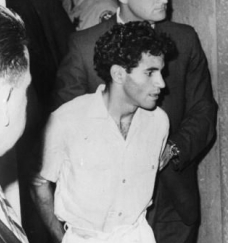
On this date in 1969, Sirhan Sirhan was condemned to the California gas chamber for assassinating Robert F. Kennedy.

The aggrieved Palestinian was not marked by fate to suffer that last extremity of the law, however; instead, his sentence was commuted to life imprisonment when all existing death penalty statutes were invalidated in 1972.*

As a result, Sirhan Sirhan remains alive as of this writing, serving that sentence in the Golden State’s Pleasant Valley State Prison. He’ll be next up for parole in 2011.

(In a parole appeal back in 1982 — he’s been on a bit of a losing streak — the convicted assassin had the chutzpah to complain that “if Robert Kennedy were alive today, I believe he would not countenance singling me out for this kind of treatment.”)

Although the guy was seen in a crowded room pulling the trigger (onlookers tackled him) and he subsequently confessed to the deed, there has long been a conspiratorial counternarrative suggesting that other shooters were there, too. It’s pretty hard to say that the guy who emptied his chamber in front of dozens of witnesses wasn’t involved, but there are versions of this where he’s a Manchurian Candidate-style hypnotized patsy.

Politics: much more interesting in the 1960s.

Precisely because that is so, this particular man’s crime attracts retrospective interest for what followed: the charismatic Democratic frontrunner from Camelot cut down; the sinister Richard Nixon arising in his place to bomb Cambodia, burgle Watergate, and create the Environmental Protection Agency. Sirhan Sirhan “assassinated modern U.S. history.”

That really seems a bit much.

Sirhan Sirhan himself has contributed to the trippy theorizing about his case by being all over the map on it. At one point, he attempted to plead guilty and draw the death penalty; the trial judge forced him to go through with a defense. Subsequently, as noted, he’s whinged for an early release. He’s claimed to have had no memory of the attack, which certainly isn’t what he said after he got arrested.

Ultimately, the most self-evident explanation has always been the first one that he offered: “I did it for my country.”

Sirhan was a Jerusalem-born Palestinian dismayed by Israel’s success in the Six-Day War, and by America’s concomitant foreign policy tilt towards Israel.

Kennedy was a strong advocate of that policy, and his death happened to coincide with the anniversary of war.

Maybe that’s just what they want you to think. But it has to be allowed that the cause in question has claimed more lives than just RFK’s.

* People v. Anderson, decided by the California Supreme Court. Later that same year, the U.S. Supreme Court would issue Furman v. Georgia, which would have had the same effect for Sirhan Sirhan.

On this day..

1520: Gaspar Quesada, Magellan’s expedition mutineer

On this date* in 1520, on his famous voyage of circumnavigation, explorer Ferdinand Magellan ordered the immediate execution of a mutinous captain.

Not to be trifled with.

Having alit just days before at the natural harbor of Puerto San Julien on the Brazilian Argentine coast (Magellan named it) with plans to winter there, the overweening Portuguese explorer faced an uprising of grumpy Spanish officers.

Gaspar Quesada, captain of the Concepcion, along with Luis de Mendoza of the Victoria and recently displaced San Antonio skipper Juan de Cartagena, seized some of the expedition’s ships during the night of April 1-2.

Since you know Magellan’s name five centuries later, you already know he quashed it.

As the sovereign of this fragile floating world, Magellan had little choice but to treat a challenge to his authority mercilessly.**

Though accounts are inconsistent, it seems Mendoza was boldly slain by one of Magellan’s men meeting him under color of “negotiation”.


Mendoza’s assassination. From this site.

Mendoza was then posthumously beheaded and quartered along with Gaspar Quesada. Juan de Cartagena was either executed as well, or else caught a “break”: some sources relate that, instead of executing Cartagena, Magellan had him marooned.

the twentieth of June [1578], wee harboured ourselues againe in a very good harborough, called by Magellan Port S. Julian, where we found a gibbet standing upon the maine, which we supposed to be the place where Magellan did execution upon some of his disobedient and rebellious company.

From a member of the Francis Drake expedition. Just 12 days later and at the very same place, Drake visited a similar penalty for a similar offense upon one of his own crew.

* “‘The authorities’ are divertingly divergent on the precise date of these events,” says O.H.K. Spate in The Spanish Lake, referring specifically to the dates of the mutiny. “Denucé puts them on Easter Sunday and Monday, 1–2 April; Merriman on Easter Sunday and Monday, 8–9 April; Nowell on Palm Sunday and the next day, with the trial verdict on 7 April. By the Julian calendar, in use until 1582, the dates would be 1–2 April; by the Gregorian, ten days later. Pigafetta and Maximilian, who slur over the whole affair, give no dates at all. It is not of vast moment.” Clearly, O.H.K. Spate never had to write an almanac blog.

Anyway, there’s some primary sourcing on this affair here.

** Though Magellan made an example of the leaders, he pragmatically spared about 40 others after keeping them in chains and working the pumps for three months. After all, the man still needed to crew his ships.

On this day..