1937: Desta Damtew, Haile Selassie’s son

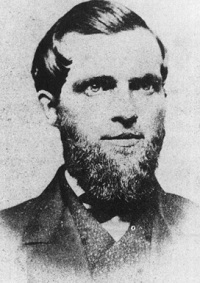
On this date in 1937, Ethiopian prince Desta Damtew — the son-in-law of Emperor Haile Selassie — was captured by the Italian troops occupying his country, and summarily executed.

An aristocrat who married Selassie’s eldest daughter, the Ras* Desta Damtew (English Wikipedia entry | Italian) became governor of the southern Sidamo Province upon his father-in-law’s ascent to the Ethiopian throne in 1930.

When Italy invaded Ethiopia in 1935, it committed a disproportionate quantity of its forces to the northern reaches of its target. Consequently, resistance was stronger in the south — and Ras Desta was one of its chiefs. In January 1936 he led Ethipoian forces at the Battle of Ganale Doria.

Though the two sides had forces of similar sizes, Italy’s was the mechanized, industrial army — and the Ras was routed by Gen. Rodolfo Graziani. It was a milepost for Graziani on his way to lasting infamy in Ethiopia as the conquered realm’s brutal Viceroy for 1937. (He was recalled at year’s end.) Graziani vowed that Italy would dominate Ethiopia “at whatever cost” and threatened “extreme severity towards anyone who resisted.”

On February 19, 1937 — Yekatit 12 by the Ethiopian calendar — two ethnic Eritreans expressed their resistance by pelting Graziani with grenades. He had shown his viceregal person at a hearts-and-minds almsgiving, and having been received with such cordiality, he returned immediately to the Extreme Severity plan.

While doctors dug shrapnel out of Graziani, somehow saving his life, an aide named Guido Cortese condemned untold numbers of humans to punitive death with a dread order:

Comrades, today is the day when we should show our devotion to our Viceroy by reacting and destroying the Ethiopians for three days. For three days I give you carte blanche to destroy and kill and do what you want to the Ethiopians.

For the next several days, Italian forces delivered a punitive rampage to their new subjects, claiming up to 30,000 lives.**

Desta Damtew, who had been lucky to flee the battlefield slaughter after Ganale Doria, was not directly a casualty off this three days’ bloodbath, but when he was captured in the bush along with fellow insurgent commander Beyene Merid, no-quarter treatment was a given. Both men were immediately shot.

The Jamaican Pan-Africanist Marcus Garvey penned a poetic eulogy for our man:

The flow’r of a nation’s strength
Had thrown their valour and their might
Against the charging hordes of death
In history’s most unequal fight!
One man remained — the last of them —
To stand for Ethiopia:
All else surrendered, died or fled
But, he, the lion-hearted-Ras Desta.

Graziani, Italian butcher
Had valiant Desta quickly shot,
To seal his lips and tie his hands
In fear of what he called a plot.
With death of such a noble man,
A reign has passed to history;
But time will bring to us again
More men to fight for victory.

Ras Desta left a number of children. One of them, Iskinder Desta, became a Rear Admiral in the Ethiopian navy and was among the officials slaughtered in the Derg’s 1974 “Black Saturday” purge.

* Ras is a title, literally meaning “Head” and akin to “Prince” or “Duke”. Before he was royalty, Haile Selassie was born Tafari Makonnen, and then eventually known as Ras Tafari … hence, rastafarianism.

** According to Ethiopian figures. Italy’s numbers put the post-Yekatit 12 casualties “merely” in the hundreds.

On this day..

1861: The Bascom Affair hangings, Apache War triggers

The retaliatory executions a U.S. Army lieutenant carried out on this date in 1861 helped set in motion a decade-long war with the Apaches.

Three years out of West Point and brand new to Arizona’s Fort Buchanan, George Bascom in retrospect was probably not the ideal ambassador to send out with orders to retrieve a young half-Apache boy kidnapped from a ranch by an Indian raid. (Along with all the cattle.)

Since nobody was present at the time, the identity of the raiders just wasn’t known — but someone’s suspicions affixed on the wily and dangerous* Chiricahua warrior Cochise. The Chiriachuas were just one group among the Apache peoples; they ranged from Mexico to southeastern New Mexico and southwestern Arizona, and were divided into many small local groups each with their own leader — like Cochise.

Lt. Bascom would be killed in a Civil War engagement a year after the events in this post without leaving posterity his memoirs, so his understanding of Apache society can only be guessed at. But his on-the-make bullheadedness is universal to every time and place where young men can be found. “Bascom was a fine-looking fellow, a Kentuckian, a West Pointer, and of course a gentleman,” Arizona frontiersman Charles Poston later remembered. “But he was unfortunately a fool.”


Lt. Bascom and Cochise.

The greenhorn lieutenant rode out with 54 cavalrymen to Apache Pass and lured Cochise to a confabulation. Cochise showed up with his brother, wife, and children — clearly expecting some sort of social call.

Cochise was entirely unaware of the kidnapping, and unaware that Bascom considered him the kidnapper. He offered to find out about it and retrieve the boy from whomever had him.

Bascom, whose troops had surrounded the tent during the parley, accused Cochise of lying to him. Cochise had twice the impertinent lieutnant’s years and at least that multiple of Bascom’s sense, and must have been affronted by his opposite number’s behavior — but when Bascom announced that he would be taking Cochise and his companions as prisoners pending the return of the raiders’ spoils, the Apache commander whipped a knife out of its sheath and instantly slashed his escape route through the wall of the tent. Bursting past the shocked troops (they were as inexperienced as their officer), Cochise escaped into the twilight. This “Bascom Affair” (to Anglos) is remembered more evocatively by Apaches as “Cut Through The Tent”.

But the tent-knifing was only the start of it.

Cochise’s party did not manage to follow his escape, so Bascom now held Cochise’s brother, wife, son, and two other warriors. The Apache tried to put himself in a negotiating position by seizing hostages of his own — first a Butterfield stagecoach stationmaster named Wallace, and later three white men seized from a passing wagon train.

Nor were the hostages’ the only lives at stake. Cochise’s band, including the soon-to-be-legendary Geronimo, had assembled and their campfires burned menacingly in the hills around the little stage station where Bascom’s force fortified themselves. Bascom could have defused it all with a hostage swap, but the kid had his orders and stubbornly refused to make the trade unless it included the one hostage Cochise didn’t have: that little boy from the ranch.

At length, reinforcements for the beleaguered cavalry began arriving, one such party bringing three other Apaches captured en route and entirely unrelated to Cochise. “Troops were sent out to search for us,” a much older Geronimo recalled in his memoirs. “But as we had disbanded, it was, of course, impossible for them to locate any hostile camp … while they searched we watched them from our hiding places and laughed at their failures.”

Despairing now of seeing his family again, Cochise had his hostages killed and dispersed, leaving the mutilated remains to be discovered by his antagonists with the help of circling buzzards. When they did so, they retaliated in fury — releasing only Cochise’s wife and child, but hanging the six other hostages, including Cochise’s brother. In the narration of Sgt. Daniel Robinson,

After witnessing the fiendish acts committed by the Apaches, the minds of our officers and men were filled with horror, and in retaliation, it was decided in Council, that the captive Indians should die. On the 19th we broke camp to return to our respective posts leaving a Sergeant and eight men to take charge of the station until relieved. We halted about half a mile from the station where there was a little grove of Cedar trees. The Indians were brought to the front with their hands tied behind their backs, and led up to the trees. Noosed picket ropes were placed around their necks, the ends thrown over the limbs of the trees and manned by an equal number of willing hands. A signal was given and away flew the spirits of the unfortunate Indians — not to the happy hunting grounds of Indian tradition. According to their ideas or belief in a hereafter, those who die by hanging can never reach that region of bliss. I was in an ambulance with the other Sergeant, and must confess it was a sad spectacle to look upon. An illustration of the Indians sense of Justice: “That the innocent must suffer for the guilty.” And the white man’s notion — “That the only good Indians are dead ones.” Whatever it may be, I do not think it was much worse than the present policy of penning them up on Reservations and starving them to death. (See Cochise: Firsthand Accounts of the Chiricahua Apache Chief.)

A devastating decade-long war against Cochise and his equally able father-in-law Mangas Coloradas ensued, and right when the army most needed its military resources for the Civil War. The conflict claimed hundreds or thousands of lives, crippled mining and ranching, and depopulated fearful white settlements around Apache country in favor of “gravestones … by the road-side like sentinels, bearing the invariable description ‘Killed by the Apaches'”.

A fort near the Texas border was later named for Bascom. The kidnapped boy was never recovered and grew up in a different Apache tribe.

The events of, and following, the Bascom Affair were depicted on the silver screen in the 1950 Jimmy Stewart western Broken Arrow and its 1952 prequel Battle at Apache Pass — among many other cinematic adaptations.


Tom Jeffords (Jimmy Stewart): “Cochise didn’t start this war! A snooty little lieutenant fresh out of the east started it. He flew a flag of truce which Cochise honored, and then he hanged Cochise’s brother and five others under the flag.”

* Cochise was officially at peace with the Americans at this point and hostile to Mexicans. In “Cochise: Apache War Leader, 1858-1861,” in the Journal of Arizona History (Spring 1965), Barbara Ann Tyler argues that the reality of the situation was that his warband flexibly shifted between temporary peace and opportunistic small raids, moving north and south of the Mexican border as convenient.

On this day..

904: Pope Leo V and Antipope Christopher, at the dawn of the Pornocracy

Around this time in 904, Pope Sergius III allegedly had one or both of his deposed predecessors put to death in prison.

Sergius held the throne of St. Peter for seven years, which was a longer incumbency than achieved by his seven immediate predecessors combined:* they march speedily through the Vatican’s annals like so many third-century Caesars, acclaimed by one faction within Rome’s political vipers’ nest only to offer flesh for their rival factions’ fangs; most are eminently forgettable save when they are utterly insane.

So pell-mell turned the scepter from one pretender to the next that the Church has even waffled in its official histories on just who was legitimate. Officially, Leo V is considered Sergius’s immediate predecessor; in reality, Leo was deposed and imprisoned two months after his July 903 election by a fellow named Christopher who was counted as a pope on canonical papal rolls until the 20th century. Today, he’s considered an antipope who was illegitimately elected.

“Legitimacy” in this period meant little but who had the muscle make their election stick. And though Sergius was the beneficiary, the man doing the flexing in this instance was Theophylact, Count of Tusculum along with his wife Theodora. For the next century the papacy would be a bauble of the Theophylacti family, who liberally plundered its perquisites. It is this Count who is thought to have forced the murder of Pope Leo — and possibly (Anti)pope Christopher, although Hermannus Contractus says Christopher was merely exiled to a monastery.

The resulting stability (relatively speaking) was the ascent with Sergius of the so-called “pornocracy”, or “Harlot State”.** The harlots in question are the Theopylacti women in a vicious bit of historiographical branding sourced ultimately (since there are very few to choose from) to the highly partisan histories of Liutprand of Cremona.

The count’s wife, Theodora, elevated to the unprecedented rank of “senatrix”, was the first voracious woman so designated and the possibly spurious charge that it was she who steered the Count’s hand is of course meant to redound to the detriment of both. Theodora’s daughter, Marozia, is alleged to have become Pope Sergius’s concubine at age 15.

As Marozia grew into womanhood, she would succeed as the de facto ruler of Rome, and become for propagandists the principal Pornocrat: “inflamed by all the fires of Venus,” gaped Liutprand; “a shameless whore … [who] exercised power on the Roman citizenry like a man.” She married the Duke of Spoleto and later the Margrave of Tuscany and was reputed to have manipulated numerous other paramours with her charms.

“A more inquisitive age would have detected the scarlet whore of the Revelations,” mused Edward Gibbon, who speculated that Marozia’s domination of the papacy might have sparked the later legend of a female “Pope Joan”. Our age might better see a ruthless conqueror entitled to indulge a Triumph or two. She made and unmade pontiffs in her own lifetime, and no fewer than six men tracing lineage directly to Marozia were Bishop of Rome in the next century and a half:

  • Marozia’s son (by either Pope Sergius or by the Duke of Spoleto) John XI, whose election Marozia forced in 931 when John was all of 21 years old;
  • Her grandsons John XII and Benedict VII;
  • Her great-grandsons (we’re into the 11th century for these) Benedict VIII and John XIX; her great-great-grandson Benedict IX

* In fact, you have to go back to Nicholas the Great (858-867) to find a longer-serving pope than Sergius.

** Saeculum obscurum, or Dark Ages, is historiography’s less colorful term.

On this day..

1942: Matvey Kuzmin, modern-day Ivan Susanin

On this date in 1942, German troops in Russia’s Pskov Oblast summarily executed 83-year-old peasant Matvey Kuzmin for leading them into an ambush.

World War II’s real-life Ivan Susanin was conscripted as a guide for the occupying Wehrmacht intending to approach a Soviet position at the village of Makino.

Kuzmin cunningly sent his son ahead to Malkino to alert his countrymen of the attack while guiding the Germans circuitously. By the time Kuzmin et al reached the outskirts, a Soviet ambush was waiting for them.

An enraged German officer shot Kuzmin during the ensuing firefight.

Since Kuzmin’s feat of resistance was not at all anonymous, he was transmuted into a parable of national heroism almost immediately. Kuzmin was posthumously honored as a Hero of the Soviet Union; the Moscow visitor to this day can behold his statuary’s valorous stance at the Partizanskaya metro station, opposite the martyred guerrilla Zoya Kosmodemyanskaya.

On this day..

1945: Anacleto Diaz, Philippines Supreme Court Justice

Supreme Court justice Anacleto Diaz and his two sons were among 300 Filipinos machine-gunned by the Japanese on this date in 1945 during the Battle of Manila.

The distinguished 66-year-old jurist had served in his youth in the forces of independence fighter Antonio Luna. Diaz was captured by the Americans, and honed his English so well as a POW that he later built a career as a legal scholar in the American-governed archipelago. He was appointed to the Philippines Supreme Court by U.S. President Franklin Delano Roosevelt.

Diaz and his comrades were far from the only civilians to suffer during the bloody monthlong Battle of Manila: Japanese troops conducted intermittent atrocities both wholesale and retail, collectively known as the Manila Massacre. Japan’s commanding general, Tomoyuki Yamashita, was hanged as a war criminal in 1946 due to the Manila Massacre in a highly controversial case — since the Manila Massacre’s atrocities couldn’t be attributed directly to Yamashita’s own orders. But the U.S. war crimes tribunal found, and the U.S. Supreme Court agreed, that the subordinate troops’ actions redounded to the account of their superiors who “fail[ed] to discharge his duty as a commander to control the acts of members of his command by permitting them to commit war crimes.”

This is one of the foundational cases for that opportunistically observed precedent known as “command responsibility” (indeed, this is the “Yamashita Standard”).

As one might guess by the late date and the juridical aftermath, this Battle of Manila ended in an American victory reconquering a now-devastated Philippines capital, and driving the Japanese from the Philippines — making good Gen. Douglas MacArthur‘s famous promise to return there.

On this day..

2013: A day in the death penalty around the world

United States

The first U.S. execution of 2013 was that of Robert Gleason, Jr. in Virginia last January 16.

Gleason was serving a life sentence for another murder when he conned a fellow-prisoner into letting him tie his hands as part of a supposed escape attempt. Instead, Gleason choked the poor bastard to death with a urine-soaked sponge.

The killer said he did this precisely in order to be executed.

“I murdered that man cold-bloodedly,” he told a reporter in 2010. “I planned it and I’m gonna do it again. Someone needs to stop it. The only way to stop me is to put me on death row.”

He was as good as his word. That summer, he got a necklace around the throat of a prisoner in a neighboring solitary pen and horribly throttled him to death. Virginia obliged Gleason’s heart’s desire with a death sentence that the killer did not contest.

Unusually, Gleason chose to die in the state’s 104-year-old oak electric chair, rather than by lethal injection. Virginia at the time was one of 10 states still allowing an inmate to choose electrocution, but Gleason was the first person to do so since 2010.

His last words: “Well, I hope Percy ain’t going to wet the sponge. Put me on the highway to Jackson and call my Irish buddies. Pog mo thoin. God bless.” As was widely reported after the fact, Pog mo thoin is Gaelic for “kiss my ass.”

His last words — and everything else about him — are remembered here by a reporter who got to know Gleason during his three-year journey to the death chamber.


Somalia

Dennis Allex, an agent of French intelligence held captive for over three years by al-Shabaab militants, was allegedly summarily executed on January 16 following an unsuccessful French raid to free him.

Allex, whose name is thought to be a pseudonym, had been seized in Mogadishu in 2009 and forced during his captivity to broadcast his captors’ demands.

Following the French intervention in Mali last January — an event potentially raising the danger for French hostages throughout the Islamic world — a commando unit attempted to free Allex on January 12.

The French suspect that Allex might have been killed during that operation. His captors, however, claimed that Allex survived it, and that they thereafter “reached a unanimous decision to execute the French intelligence officer, Dennis Allex.

“With the rescue attempt, France has voluntarily signed Allex’s death warrant”


Iran

On this date in 2013, Iran hanged a man in public in the city of Sabzevar.

Also in Sabzevar on the same day, another man suffered a spectacular public lashing.

Still another prisoner was reportedly hanged privately in Mashhad on January 16 in Iran.

On this day..

1944: Zinaida Portnova, Komsomol hero

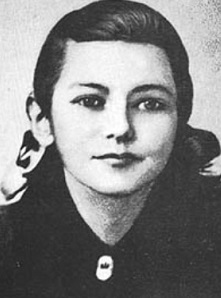
On this date in 1944, Soviet partisan Zinaida Portnova was executed by the Germans occupying Belarus.

The youngest-ever female Hero of the Soviet Union (she was posthumously decorated in 1958), the Leningrad-born Portnova had a rude start in insurgency when the German blitz swept past her summer camp in Belarus and trapped her behind lines.

Said to have been radicalized when occupying soldiers struck her grandmother, the girl joined the youth arm of the local resistance, dubbed the “Young Avengers”.

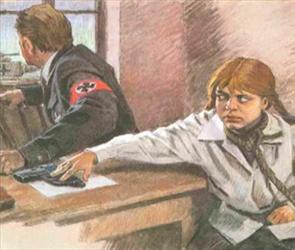
From surveilling enemy troop deployments and assembling weapons caches, Zinaida Portnova graduated to sabotage and ambushes … and capture. Even then she pulled off an action hero escape by snatching a gun and shooting her way out of custody, only to be re-arrested shortly thereafter.

She was shot a month shy of her 18th birthday.

A large number of Pioneer youth groups were subsequently dedicated to Zinaida Portnova, as was a museum of the Komsomol underground and a public monument in Minsk. She remains to this day an honored martyr of the Great Patriotic War.

On this day..

1975: Isobel Lobato, wife of East Timor’s Prime Minister

On this date in 1975, the wife of East Timor’s Prime Minister was publicly executed on the docks of her conquered country’s capital.

By the happenstances of colonial expansion, East Timor, a 15,000-square kilometer half-island in the Lesser Sundas, chanced to have the Portuguese flag planted on its soil instead of (as characterized the rest of its surrounding Indonesian archipelago) the Dutch.

Because of this, Timor-Leste did not walk the same path trod by Indonesia: it did not share in Indonesia’s 1945 revolution breaking away from the Netherlands, nor in the 1965 coup d’etat that put the Suharto military dictatorship in charge of that country.

While these years of living dangerously played out throughout the vast island chains, and even in West Timor, little East Timor remained Portuguese property into the 1970s.

But by that time, colonialism was wearing out its welcome in that onetime maritime empire. A long-running, and ever more unpopular, war against independence fighters in Portugal’s African colonies finally helped to trigger the mother country’s 1974-75 Carnation Revolution and a new regime interested in immediate decolonization.

Abruptly — arguably, too abruptly — Portugal began divesting herself of her onetime empire’s onetime jewels, including not only East Timor but Goa on the coast of India (oops), and the African states of Guinea, Mozambique, and Angola. These would immediately become contested violently by proxies backed by the United States and the Soviet Union.

Though easily the least lucrative and strategically essential of these forsaken colonies, Timor too felt the the Cold War’s hand.

Western-allied Suharto eyed warily the Timorese left-wing insurgent movement turned political party that went so far as to declared Timorese independence in November of 1975. In response, Indonesia gathered the main opposition parties under its own umbrella and had them produce a declaration calling for — wouldn’t you know it? — unification with Indonesia.

By that time, the fall of 1975, it was becoming apparent that such a unification would soon be a fait accompli. Indonesian commandos were penetrating East Timor, even making bold enough to murder western journalists. On December 7, 1975, Indonesia invaded East Timor with the blessing of Washington, D.C.*

The ensuing 24-year occupation was a notorious bloodbath, and Indonesian troops set the standard right from day one … or, in this case, day two.

On December 8, in the now-occupied capital city of Dili, dozens of Timorese elites were marched to the quay under the frightened gaze of their countrymen and -women, and there publicly shot into the harbor. Notable among them was Isobel Lobato, the wife of Nicolau Lobato, who had been the prime minister of Timor’s brief moment of independence in 1975.

Nicolau Lobato himself did not share his wife’s fate, however. He escaped into the bush where he helped lead a remarkably persistent anti-occupation guerrilla movement until he was finally killed in a firefight in 1978. Post-independence, Dili’s Presidente Nicolau Lobato International Airport was re-named in his honor.

* President Gerald Ford and his fell henchman Henry Kissinger flew out of Jakarta hours before the invasion, arriving in Hawaii where they would demur on reporters’ inquiries as to whether they had green-lighted the unfolding incursion. Daniel Patrick Moynihan, who was at that time America’s U.N. envoy, boasted in his memoirs that “The United States wished things to turn out as they did, and worked to bring this about. The Department of State desired that the United Nations prove utterly ineffective in whatever measures it undertook. This task was given to me, and I carried it forward with no inconsiderable success.”

On this day..

1730: Patrona Halil, Ottoman rebel

On this date in 1730, Patrona Halil, the virtual ruler of the Ottoman capital at the head of a popular rabble, was lured to Istanbul’s Topkapi Palace on the pretext of receiving an imperial honorific — and there seized by the sultan’s guards and put to summary death.

An Albanian shopkeep and Janissary, Halil (English Wikipedia entry | Turkish) had been at the fore of an extraordinarily successful rebellion that bears his name in Turkish histories.

Very recently the mortal terror of Europe, the Ottoman Empire was into its midlife crisis by the early 18th century — a long transition, as it would transpire, into its terminal “sick man of Europe” stage.

Incensed at the splendor of the grandees during the so-called “Tulip Period” — elites’ 1720s fad for that flower, which accompanied years of decadent, and perhaps impious, openness towards Europe — struggling* Istanbul artisan guilds revolted in 1730 over taxes imposed to pay for war with Persia.

Not for the last time, the impositions of the taxman only served to catalyze wider grievances that had already been mounting. Janissaries cast a gimlet eye on the sultan’s dalliances with European military innovations — which those feudal infantrymen rightly perceived as an existential threat. Everyday Turks and the ulama alike resented the cultural inroads of the West. In the paroxysm of 1730, these factions combined with the petite bourgeois guilds to shake the Porte far more deeply than some riot ought.

There had been many rebellions in Istanbul before, but this was the first to show a syndrome that was thereafter often repeated: an effort to Westernize military and administrative organization propounded by a section of the official elite, accompanied by some aping of Western manners, and used by another interest group to mobilize the masses against Westernization.*


Jean-Baptiste van Mour, a Flemish painter residing in Istanbul at the time. He’s notable for numerous paintings of the Tulip Era Ottoman Empire, including that of the sword-brandishing Patrona Halil further up this post.

The rebellion forced the execution of the grand vizier, and the abdication of Sultan Ahmed III in favor of his nephew Mahmud. Rioters sacked the estates of the wealthy and put a definitive end to the Tulip Period by trashing the delicate gardens emblematic of their sybaritic lords.

For nearly two months, the impertinent Halil was virtually the master of the capital. He rode with the new sultan to the ceremony investing him with Osman’s sword; he dictated appointments for his rude associates, like a Greek butcher named Yanaki who was to become Hospodar of Moldavia. At Halil’s whim, Mahmud was forced to order mansions put to the torch and (of course) that hated war tax rescinded.

Halil probably ought to have been better on his guard against the maneuver the sultan executed this date — and was always likely to attempt in some form. Then again, what he had already achieved, however briefly, was outlandish, and pointed to weaknesses in the Ottoman state far more durable than Halil himself. By slaying the insurgent chief, Mahmud got himself some breathing space: popular dissatisfaction, however, was too widely rooted to be destroyed at a single stroke, and would resume again with intermittent disturbances and purges well into 1731, with a successor revolt in 1740.†

And over a still longer arc, the parties of the Halil revolt would guard their prerogatives so jealously and effectively over the generations to come as to fatally compromise the capacity of the sultanate to compel the modernization that the Empire required. Patrona Halil’s revenge was two centuries in coming … but it was worth the wait.

* According to Robert W. Olson’s “The Esnaf and the Patrona Halil Rebellion of 1730: A Realignment in Ottoman Politics?”, Journal of the Economic and Social History of the Orient, September 1974, the major beefs of the esnaf (guilds) were a spiral of inflation brought by the devaluing Ottoman currency, the influx of immigrants to the capital, and taxes.

** Serif Mardin, “Center-Periphery Relations: A Key to Turkish Politics?”, Daedalus, Winter 1973.

† See Olson, “Jews, Janissaries, Esnaf and the Revolt of 1740 in Istanbul: Social Upheaval and Political Realignment in the Ottoman Empire”, Journal of the Economic and Social History of the Orient, May 1977.

On this day..

82 BCE: The defeated populares of the Battle of the Colline Gate

On November 1 of 82 BCE, the Roman general Sulla clinched victory in his running civil war against the liberal populares by smashing them at a decisive battle at Rome’s Colline Gate. And on November 2 the victorious dictator* had his captured foes put to death en masse in the Villa Publica while Sulla himself laid out the new order in an address to the cowed Senate.

The roots of this climactic — although not literally final — battle stretch back years, decades even, to the populist Gracchi in the 130s and 120s, and even further than that. Rome’s burgeoning had strained her original social contract past the breaking point. Terms were renegotiated in bloody civil conflicts that saw Sulla emerge this date as master of the Caput Mundi.

The Gracchi all those years ago had tried (until the oligarchs’ faction assassinated them) to rebalance an increasingly stratified Roman society by introducing land reform and an early bread subsidy.

The Gracchi banner would eventually fall to Gaius Marius, a successful general noted among other things for defeating Jugurtha. His “Marian reforms” thoroughly overhauled military organization; crucially for the Roman social crisis, he opened to the propertyless masses service in the legions — formerly the preserve of the very landed citizen-farmer being squeezed out by the empire’s concentrating wealth.**

Marius’s program addressed two problems simultaneously: it gave the Roman poor a vector of upward mobility; and, it professionalized an army whose fighting capacity had slipped behind Rome’s imperial reach.

Because the capstone to a career in the newly-professionalized army would be a grant of land secured by Marius himself, it also introduced a dangerous personal alliance between vaunting commander and his troops, the seed of later centuries’ cycles of incessant rebellion.

During the decade of the 80s, a now-aged Marius was still the populares‘ standard-bearer, but was opposed now by the patrician general Sulla, Marius’s own former lieutenant during the war against Jugurtha.

Marius’s attempt to displace Sulla from command of a planned Roman expedition to the East to punish King Mighridates of Pontus for his abuse of Roman citizens in Asia Minor brought the two to open blows. Calling on his troops’ personal loyalty to him, Sulla broke an ancient taboo by marching on Rome itself.

Marius fled into Africa, a death sentence nipping at his heels. (Various artists have imagined him chilling in the ruins of Carthage.) Once Sulla sailed for Asia, however, Marius allied with the consul Lucius Cornelius Cinna and roared back from exile, seizing the capital and instituting a reign of terror against his political enemies. Plutarch:

whenever anybody else greeted Marius and got no salutation or greeting in return, this of itself was a signal for the man’s slaughter in the very street, so that even the friends of Marius, to a man, were full of anguish and horror whenever they drew near to greet him. So many were slain that at last Cinna’s appetite for murder was dulled and sated; but Marius, whose anger increased day by day and thirsted for blood, kept on killing all whom he held in any suspicion whatsoever. Every road and every city was filled with men pursuing and hunting down those who sought to escape or had hidden themselves. Moreover, the trust men placed in the ties of hospitality and friendship were found to be no security against the strokes of Fortune; for few there were, all told, who did not betray to the murderers those who had taken refuge with them.

He died about the age of 70 in 86 BCE, days into his unprecedented seventh consulship.

While all this transpired, Sulla had been several years detained in fighting Mithridates. By 83, he’d hung up the “Mission Accomplished” banner and made ready to march on Rome for the second time.

Marius was dead; his ally Cinna had also been killed in a mutiny. The populares party was now headed by Marius’s altogether less formidable son Gaius Marius the Younger and a plebeian consul named Carbo — guys nobody today has heard of, which pretty much tells you what happened next.

Attempting to stop Sulla in the south, Marius the Younger was thrashed and forced to retreat to Praeneste, where he would be bottled up harmlessly until he took his own life in desperation. Further north, Carbo was trounced and chased into exile (and eventual execution) by Sulla’s ally Pompey, the future Triumvir who got his possibly-sarcastic honorific “the Great” from his action in Sulla’s civil war.

The populares general Pontius Telesinus made the last stand of his movement hurling a force of Samnites and Roman Marian supporters at the capital where, at the Colline Gate, they momentarily pressed Sulla’s wing dangerously against the city wall before another future Triumvir, Crassus, overcame them from the opposite flank.

The ensuing slaughter on this date in 82 settled the Marius-versus-Sulla civil war: Sulla published a large proscription of former Marius supporters who were put to death by the thousands before the general resigned his dictatorship at the end of the year 81.†

Dan Carlin’s Hardcore History podcast series covers these events in Death Throes of the Republic, episode 3. In the indispensable History of Rome podcast, the relevant episodes are 31a. Marius | 31b. Marius | 32. The Social War | 33. Marius and Sulla | 34. No Greater Friend, No Worse Enemy.

* Sulla would be acclaimed dictator by the Senate a few weeks later, reviving an office that had been unused since Hannibal threatened Rome more than a century before.

** Pliny the Elder, writing in the first century AD:

there is a famous utterance of Manius Curius, who after celebrating triumphs and making a vast addition of territory to 290 B.C. the empire, said that a man not satisfied with seven acres must be deemed a dangerous citizen; for that was the acreage assigned for commoners after the expulsion of the kings. What therefore was the cause of such great fertility? The fields were tilled in those days by the hands of generals themselves, and we may well believe that the earth rejoiced in a laurel-decked ploughshare and a ploughman who had celebrated a triumph, whether it was that those farmers treated the seed with the same care as they managed their wars and marked out their fields with the same diligence as they arranged a camp, or whether everything prospers better under honourable hands because the work is done with greater attention. The honours bestowed on Serranus found [297 B.C.] him sowing seed, which was actually the origin of his surname. An apparitor brought to Cincinnatus his commission as dictator when he was ploughing his four-acre property on the Vatican, the land now called the Quintian Meadows, and indeed it is said that he had stripped for the work, and the messenger as he continued to linger said, ‘Put on your clothes, so that I may deliver the mandates of the Senate and People of Rome’. That was what apparitors were like even at that time, and their name itself a was given to them as summoning the senate and the leaders to put in an immediate appearance from their farms. But nowadays those agricultural operations are performed by slaves with fettered ankles and by the hands of malefactors with branded faces! although the Earth who is addressed as our mother and whose cultivation is spoken of as worship is not so dull that when we obtain even our farm-work from these persons one can believe that this is not done against her will and to her indignation. And we forsooth are surprised that we do not get the same profits from the labour of slave-gangs as used to be obtained from that of generals!

† Surviving the proscription was the son-in-law of the late consul Cinna, one Julius Caesar. He was able to pull strings with Sulla to get himself off the list.

On this day..