1852: Ann Hoag and Jonas Williams

On this date in 1852, a white woman and a black man — no connection between them — were hanged on an upward-jerking gallows in Poughkeepsie, New York.

31-year-old (though she looked 22, said smitten newsmen) Ann Hoag was a foundling who’d been raised by an adoptive family, then married a local farmer in a union that featured at least five children, financial loss, and a good deal of unhappiness. The sequence of causation among those mutually convivial characteristics is left for the reader’s imagination. Eventually — the New York Times (July 31, 1852) is most piquant on this — succumbing to the thrall of a younger lover, “the ill-starred woman plunged into misery and degradation, renounced virtue, reputation, husband, and children, until at last she murdered her husband” with arsenic and eloped with her paramour to Bridgeport.

Luckily for Ann, her brief summer of carnal liberty sufficed to quicken her belly, with the result that her delicate condition bought her a few extra months of life. On April 18, 1852, she gave birth to a baby daughter, and sealed her own fate.

A most interesting scene occurred in the separation of the child from the unhappy mother, which none but a mother’s heart can conceive. It appeared as if the last prop of life, the very cords of the heart were being severed, when, with the most endearing caresses, amid tears and sobs, the mother looked for the last time on that innocent babe, which since its birth had unconsciously shared her solitude and been her solace. As it passed forever from her sight, she exclaimed — “Now let them execute me — I have nothing to live for — one by one they have dragged my children from me.” (Albany Journal, Aug. 5, 1852)

Although the faithless wife left a 70-page statement implicating her lover William Somers, that gentleman was acquitted in October of 1852 on a charge of accessory to murder.

Jonas Williams, Ann Hoag’s partner upon the gallows, was much less the sighed-over. Williams committed a “fiendish outrage” upon his 11-year-old stepdaughter, killing her.

On this day..

1831: Julien Sorel, in The Red and the Black

According to Michel Crouzet,* literary scholar of Stendhal, it was on this date in 1831 that the protagonist of said French author’s magnum opus was guillotined.

“Everything passed simply, decorously, and without affectation on his part,” is the entirety of Stendhal’s death scene for his man.

Julien Sorel, the flawed (or anti-) hero of The Red and the Black (Le Rouge et le Noir), is the intelligent son of a provincial carpenter who puts his wits to use trying to climb Restoration France’s treacherous social ladder.

Ambition, says Stendhal, is “the very essence of his existence,” much as it is for his milieu, and through Julien’s exertions — brilliant and resourceful at times; infuriatingly handicapped by social prejudice against the protagonist’s low birth at others — the author sets down one of the most psychologically forceful works in the canon.

Julien Sorel’s ambition also powers his youthful passion, and his fall: to conquer the mother of the children he tutors, and to likewise conquer the daughter of a nobleman.** This latter conquest has him a made man, married into the aristocracy and set with a plum military assignment that has Julien dreaming of Napoleon … so when the spurned former conquest denounces Julien to the father of that latter conquest as an upstart seducer cynically shagging his way into decent society, the incensed Julien hauls off and shoots that previous conquest. (As she kneels at Mass, no less.)

Is it a mere jealous fit? Even though his victim survives the attack, and forgives her lover, Julien obstinately pleads guilty, and insists on his own maximum culpability. It’s not only an individual criminal culpability, but a culpability of class aspiration.

‘I ask you for no mercy,’ Julien went on, his voice growing stronger. ‘I am under no illusion; death is in store for me; it will be a just punishment. I have been guilty of attempting the life of the woman most worthy of all respect, of all devotion. Madame de Renal had been like a mother to me. My crime is atrocious, and it was premeditated. I have, therefore, deserved death, Gentlemen of the Jury. But, even were I less guilty, I see before me men who, without pausing to consider what pity may be due to my youth, will seek to punish in me and to discourage forever that class of young men who, born in an inferior station and in a sense burdened with poverty, have the good fortune to secure a sound education, and the audacity to mingle with what the pride of rich people calls society.

‘That is my crime, Gentlemen, and it will be punished with all the more severity inasmuch as actually I am not being tried by my peers. I do not see, anywhere among the jury, a peasant who has grown rich, but only indignant bourgeois …’

The Red and the Black is available in its French original here; in English translation here; and as a free French audio book here. And here’s some literary analysis

* The date is not explicit in the text. The Red and the Black was subtitled Chronique de 1830, but several past-tense allusions to the event show that the main action takes place after the July Revolution of 1830 that toppled Charles X and raised Louis-Philippe to the throne. There is, however, a late and seemingly anachronistic allusion to Julien’s lover/victim intending to “throw herself at the feet of Charles X” to appeal for his life. Oh well: ambiguity is the novel’s stock in trade.

** These (fictional) de la Moles are very proud of being descended from the (actual) Joseph Boniface de la Mole, whose signal achievement was his April 30, 1574 beheading.

On this day..

1936: Mary Frances Creighton and Everett Applegate

(Thanks to Meaghan Good of the Charley Project for the guest post. -ed.)

On this date in 1936, onetime lovers Everett C. Applegate (referred to in some accounts as “Edward” or “Earl”) and Mary Frances Creighton, who went by her middle name, were electrocuted in Sing Sing Prison for the murder of Ada Applegate, Everett’s wife.


Mary Frances Creighton (top) and Everett Applegate.

Newspapers of the time referred to Frances as the Long Island Borgia. The murder came about as a result of, depending on your point of view, a Jerry Springer-type sensation or horrific child sexual abuse or both: In 1934, Frances and her husband and their two children were living with the Applegates and their daughter in Nassau County, New York.

By January 1935, Everett Applegate was having an affair with Frances. He was also interested in the Creightons’ blooming teenage daughter, Ruth. By June of that year the thirty-something man was sleeping with her also, with the knowledge of — and in at least one case, in sight of — Ada, whose obesity kept her mostly confined to bed.

Ruth was delighted with her new boyfriend, who drove her anyplace she wanted to go, gave her money and and bought her clothes and other gifts. But when Frances found out about the relationship in July, she was furious and humiliated.

Not only was Everett in the arms of another, but he was making her, Frances, look like a bad mother. Ruth was going to school dressed like a harlot, even wearing lipstick. Suppose she became pregnant? This would bring terrible shame upon the family.

In mid-September, Ada Applegate became violently sick, with diarrhea and bilious vomit. She spent a few days in the hospital and was discharged, without a diagnosis but feeling much better.

Immediately after she got home, however, her symptoms returned, and she died two days later, on September 27. The cause of death was listed as “coronary occlusion” — in other words, a heart attack.

Frances was a bit of a hard case and no stranger to murder. She and her husband John were living with his parents, as well as her teenage brother, Raymond Avery, in New Jersey in 1920 when Anna and Walter Creighton suddenly sickened and died, one after the other.

In 1923, Raymond too became ill with the same symptoms and rapidly expired, and his sister and brother-in-law collected his $1,000 life insurance policy. Frances and John were charged with his murder after the autopsy, held in spite of their objections, found arsenic in young Raymond’s body.

After the autopsy, deeply suspicious investigators exhumed the elder Creightons’ bodies while their son and daughter-in-law were in jail. No arsenic could be found in Walter’s system, but Anna’s contained a lethal dose, and Frances (but not John this time) was charged with murder even before she came to trial for her brother’s death. She’d never gotten along with her in-laws or they with her, and just before Anna became ill, Frances had made ominous statements that the old woman would shortly “destroy herself.”

The Creightons’ four-day trial for Raymond’s murder resulted in acquittal for both defendants. John went home and Frances remained in custody for another two weeks until she faced her next trial, for the death of Anna Creighton. The prosecution was unable to prove she had personally purchased any poison, and the 24-year-old defendant, an attractive nursing mother who was keeping her infant son in her cell with her, presented a sympathetic picture. Once again, she heard a jury announce a murder acquittal.

But she didn’t take warning from her two near escapes.

Twelve years later, Ada Applegate became the third person close to Frances Creighton who died of arsenic poisoning. Goodness knows how many more she might have ventured.

The police knew about Frances’s relatives’ proclivities for mysterious deaths, and were deeply suspicious. An autopsy revealed three times the lethal dose of arsenic in Ada’s corpse, and it didn’t take long for Frances to crack under questioning.

She admitted to poisoning Ada, but also implicated Everett, saying he’d known about the crime all along and had helped her. She also claimed he used his knowledge of her past to blackmail her into having sex with him.

Frances killed Ada, Frances said, so Everett would have a chance to make an honest woman out of Ruth, and because Ada had been gossiping in the neighborhood about her husband’s affair with the girl.

Frances Creighton and Everett Applegate found themselves arrested. Only then did a bewildered John find out about the sexual improprieties that had been going on for months right under his nose. Remarkably, he stood by Frances and said he believed her to be innocent of murder.

He was the only one.

A look into Frances’s past revealed some very additional suspicious incidents apart from the deaths in her family. Relatives of a neighbor she quarreled with got extremely ill after having tea with Frances, and although they pulled through, later on, the neighbor’s house burned down.

The fire was arson and Frances had been the prime suspect, but there was insufficient evidence to arrest her.

As for Everett Applegate, the case against him was far less persuasive.

Frances made three statements: in the first, as told above, she implicated her erstwhile lover. In the second, she said she’d done the murder all on her own and Everett was not involved. The third time she went back to blaming him: he had mixed the poison, and she had given it to his wife.

To this shaky accusation add the ill feeling engendered by Everett’s caddish mores, and it was enough for an indictment. (Everett was also charged with criminally assaulting Ruth. At his arraignment he attempted to plead guilty to this, saying, “I want to marry this girl.” The judge refused to accept the plea.)

By the time of the trial, Frances had gone all-in on blaming Everett. She claimed the lothario had “made” her poison Ada. Her defense portrayed her as a weak woman who had been lead astray by an evil, domineering male. But Everett’s lawyer made sure the jury heard about the deaths of her brother and parents-in-law in New Jersey, and her conviction was a foregone conclusion.

The main evidence against Everett was Frances’s testimony, the fact that he was known to have purchased the rat poison that wound up in Ada’s eggnog, and his despoiling the teenage daughter of his paramour. Everett’s defense attorney agreed their client was a scumbag and a pervert, but denied that he was a murderer.

In his concluding arguments, the attorney asked the jury to acquit Everett of killing his wife and convict him instead of the rape of Ruth. It didn’t work: the jury convicted him on both counts.

While the two condemned awaited their fate, Ruth, who had been sent to a girls’ reform school, would later write a letter to the authorities. She said her mother was innocent and she had heard Everett say he wanted to do away with Ada so he could marry her. No one believed her story.

On the day of their executions, Frances was given the first slot in hopes that she might make a final statement exonerating Everett. Alas, she was in no condition to give any statement at all; suffering from hysterical paralysis, she had to be taken to the chamber on a wheelchair, and some reports state that she was completely unconscious when they strapped her into it. She was the first executee at Sing Sing in 45 years who was unable to walk on their own to their death.

Everett, still protesting his innocence, followed her ten minutes later.

On this day..

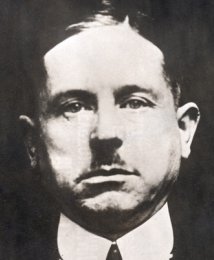
1931: Peter Kürten, the Vampire of Düsseldorf

On this date in 1931, the “Vampire of Düsseldorf” was beheaded for that city’s most infamous serial murder binge.

It was, perhaps, the logical end of a terrible journey.

A factory moulder and World War I deserter in his late forties, Peter Kürten commenced a series of uncommonly bestial rape-murders in early 1929 … the harvest of a lifetime’s twisted brutality.

He’d been the oldest of 11 children stuffed in a hellish one-room apartment with a violent drunk of a father who battered the children and openly raped their mother. Well, “if they hadn’t been married, it would have been rape,” in Peter’s words.

The future vampire took his refuge turning his own abuse on younger siblings and, with the help of a degenerate dogcatcher in the neighborhood, on obliging animals he could lay his hands on — which creatures he was soon learning to torture, and to rape, alongside more conventional human delinquencies like arson and burglary.

Kürten is known to have strangled at least one ten-year-old prior to World War I (he would also claim to have surreptitiously drowned a couple of school chums in his boyhood) but it was on the far side of the Great War — which he’d spent mostly in miserable prisons, nursing increasingly twisted fantasies of vengeance — that the beast truly emerged.

The spree that carried him to these pages began in Febuary 1929, when he slew an eight-year-old, attacked a middle-aged woman, stabbed a mechanic to death. Kürten’s crimes were irregular, but distinguished by a fiendish wrath: he abducted one young woman and hammered her to death in the woods outside town; he stabbed a five-year-old to death with scissors as he achieved his orgasm; he asked a teenager to run off and get him some cigarettes, so he could use her absence to slit her younger sister’s throat; he stabbed strangers randomly.

“I derived the sort of pleasure from these visions” of mayhem and cruelty, he said, “that other people would get from thinking about a naked woman.”

Düsseldorf endured a year of terror, finally aborted when Kürten’s own wife — whom he seems to have loved genuinely — turned him in, at Kürten’s own request, for the reward money.

At a packed trial, the accused’s accumulated hatred for the sadistic world poured out in words just as it had done in deeds over the months preceding.

I said to myself in my youthful way ‘You just wait, you pack of scoundrels!’ That was more or less the kind of retaliation or revenge idea. For example, I kill someone who is innocent and not responsible for the fact that I had been badly treated, but if there really is such a thing on this earth as compensating justice, then my tormentors must feel it, even if they do not know that I have done it …

Never have I felt any misgiving in my soul; never did I think to myself that what I did was bad, even though human society condemns it. My blood and the blood of my victims will be on the heads of my torturers. There must be a Higher Being who gave in the first place the first vital spark to life. That Higher Being would deem my actions good since I revenged injustice. The punishments I have suffered have destroyed all my feelings as a human being. That was why I had no pity for my victims.

-Kürten

Amateurs though we are, we incline to doubt the sufficiency of the tit-for-tat explanation. Kürten might well have believed that about himself, but the “vampire” moniker gets at an essential, organic sensuality about his crimes whose roots go quite a bit deeper than revenge.

“Tell me,” the doomed murderer is supposed to have asked a prison doctor shortly before facing the guillotine, “after my head has been chopped off will I still be able to hear; at least for a moment, the sound of my own blood gushing from the stump of my neck?”

The doctor indeed thought it possible the head might survive a few seconds.

“That,” mused the killer, “would be the pleasure to end all pleasures.”

Kürten is one of several predatory sex-slayers — also see the likes of Fritz Haarman and Carl Grossman — who prospered in interwar Germany, and helped to inspire Fritz Lang’s cinematic classic M. (Kürten is often thought the most direct model for that movie’s murderer, played by Peter Lorre. Lang denied that was the case, but in some countries’ releases it went out under the title not of M, but of The Vampire of Düsseldorf.)

Sources:

Murderpedia

TruTV

On this day..

1944: George Stinney, Jr., age 14

(Thanks to Meaghan Good of the Charley Project for the guest post. -ed.)

On this date in 1944, a five-foot-one-inch, ninety-pound prisoner walked into the death chamber of the Central Correctional Institute in Columbia, South Carolina and was executed in the electric chair.

He was so small that the guards had trouble strapping him into the chair and fitting the electrodes on. When the first jolt of electricity hit him, the mask fell off his face, revealing an expression of horror.

His name was George Junius Stinney Jr., and at fourteen years, seven months and twenty-six days, he was the youngest person to be legally executed in the U.S. in the 20th century. In spite of this startling distinction, his death went practically unnoticed in the press.

Stinney, a black youth from a poor family in the town of Alcolu, was condemned for the double murder of two white girls he knew: Betty June Binnicker, age 11, and Mary Emma Thames, age 8. The girls had gone out on their bicycles on March 23, 1944, and along the way they saw Stinney and his sister and asked where to look for flowers. The Stinneys said they didn’t know.

The next day, the two girls’ bodies were found in a muddy, water-filled ditch. They had both sustained severe head injuries; their skulls were shattered. A fifteen-inch railroad spike was found nearby.

A few hours later, Stinney was arrested and locked in a room with several police officers and no one else. According to later testimony, at first he claimed the girls had suddenly attacked him and he hit them with the railroad spike in self-defense. However, a short time later he gave a second statement confessing to premeditated murder.

Stinney allegedly stated he had wanted to have sex with Betty June, but he couldn’t do so until the younger girl was out of the way, so he killed Mary Emma with the railroad spike. Betty June ran away, but Stinney caught up with her. When she resisted his sexual advances, he killed her too and dragged both bodies into the ditch. That’s the story.

When the townspeople found out that Stinney had confessed and would be charged with murder, a lynch mob formed outside the jail. Authorities took the boy to another jail in Columbia, fifty miles away, for his own safety; fearing for their own lives, Stinney’s family also fled town.

The trial took place on April 24, one month and one day after the murders, beginning at 2:30 p.m. Virtually the only evidence against Stinney was the testimony of the sheriff who heard the confession: there was no written record of the confession. Stinney’s defense attorney, who planned to run for state office, did not contest the confession and called no witnesses, but only claimed his client was too young to be held responsible for the murders. However, under South Carolina law at the time, a fourteen-year-old was legally an adult.

The jury was sent out at 5:00 p.m. and returned with a guilty verdict just ten minutes later.

There was no appeal.

Some local churches and the NAACP asked the governor for a commutation, citing Stinney’s age — but the governor allowed the execution to proceed. The entire drama from homicides to execution spanned less than 90 days.

One of Betty June Binnicker’s sisters reflected fifty years later, “Everybody knew that he done it, even before they had the trial they knew that he done it. But I don’t think that they had too much of a trial.”

More than sixty-five years after Stinney died, a community activist called for the case to be reopened, suggesting Stinney may have have been innocent. The evidence against him was absurdly slight. He had no history of violent behavior, and it seems unlikely that this short, slender boy would be strong enough to overpower two girls and beat them to death. Stinney’s brother, now a pastor in Brooklyn, said the family always believed in his innocence. Both his brother and his sister recalled that he had been a smart boy, a good student and artistic, and their family had been a close and loving one.

As one article noted, “Stinney’s trial and subsequent execution were suspicious at best and a miscarriage of justice at worst … This was South Carolina in 1944, with a black male defendant, two young white female victims, and an all white, male jury. Stinney never stood a chance.”


Stinney-inspired scene from the TV movie Carolina Skeletons.

On this day..

1662: Potter, bugger

“Of Buggery”

by Cotton Mather (as printed in America Begins: Early American Writings)

On June 6, 1662, at New Haven, there was a most unparalleled wretch (one Potter, by name, about sixty years of age) executed for damnable bestialities, although this wretch had been for now twenty years a member of the church in that place, and kept up among the holy people of God there a reputation for serious Christianity. It seems that the unclean devil which had the possession of this monster had carried all his lusts with so much fury into this one channel of wickedness that there was no notice taken of his being wicked in any other. Hence ’twas that he was devout in worship, gifted in prayer, forward in edifying discourse among the religious, and zealous in reproving the sins of the other people. Everyone counted him a saint, and he enjoyed such a peace in his own mind that in several fits of sickness wherein he seemed “nigh unto death,” he seemed “willing to die”; yea, “death,” he said, “smiled on him.”

Nevertheless, this diabolical creature had lived in most infandous buggeries for no less than fifty years together; and now at the gallows there were killed before his eyes a cow, two heifers, three sheep, and two sows, with all of which he had committed his brutalities. His wife had seen him confounding himself with a bitch ten years before; and he then excused his filthiness as well as he could unto her, but conjured her to keep it secret. He afterwards hanged that bitch himself, and then returned unto his former villainies, until at last his son saw him hideously conversing with a sow. By these means the burning jealousy of the Lord Jesus Christ at length made the churches to know that he had all this while seen the covered filthiness of this hellish hypocrite, and exposed him also to the just judgment of death from the civil court of judicature.

Very remarkable had been the warnings which this hellhound had received from heaven to repent of his impieties. Many years before this he had a daughter who dreamt a dream which caused her in her sleep to cry out most bitterly. And her father than, with much ado, obtaining of her to tell her dream, she told him she dreamt that she was among a great multitude of people to see an execution, and it proved her own father that was to be hanged, at whose turning over she thus cried out. This happened before the time that any of his cursed practices were known unto her.

On this day..

1967: Luis Monge, America’s last pre-Furman execution

Forty-five years ago today, Luis Monge was gassed in Colorado for murder — the last execution in the United States before a decade-long lull in capital punishment in the U.S.

Monge, an insurance salesman with no prior history of violence, had a hearty brood of 10 children, but when his wife found out he was having an incestuous relationship with one of them, Monge bludgeoned the wife to death, and killed three of the young children just for good measure.

Monge pleaded insanity, and then when doctors found him sane enough to stand trial, just pleaded guilty — eventually dropping all appeals and asking to be hanged in public at the Denver City and County Building.

Despite the culprit’s preferences, his execution was stayed for all of 1966 while Colorado voters weighed a referendum on continuing the death penalty. They ultimately voted 3-1 in favor. (See this detailed history of the death penalty in the Columbine State.)

Even though Monge himself embraced execution willingly, his seven remaining children (also the children of, and siblings of, his victims: surely a difficult position) still fought for clemency, and shared Monge’s last meal with him.

Had Monge maintained his appeals, he — like four other Colorado inmates whose death dates were also on hold in 1966 — would likely have made it into the nationwide unofficial moratorium on executions that settled in while courts sorted out death penalty standards in the late 1960s and early-to-mid 1970s.* That period led into 1972’s landmark Supreme Court decision Furman v. Georgia, invalidating all existing death sentences in the country and sparing men much more nefarious than Luis Monge.

Instead, this date’s principal went to his death clutching a black rosary (and allegedly, and one must suspect apocryphally, asking if the gas would trouble his asthma)** and became a nigh-forgotten denouement from a closed chapter of death penalty jurisprudence, and the last man put to death in America until Gary Gilmore almost ten years later.

Apart from his milestone status vis-a-vis capital punishment nationwide, Monge is also the last person to die in the Colorado gas chamber.


The gas chamber that killed Luis Monge, now retired to Colorado’s Museum of Prisons. (cc) image from Cowtools, who also has a photo of Monge’s bullet-riddled grave marker.

In fact, Monge is currently still the second-last put to death in Colorado, period. It would be fully 30 years before Colorado executed again — in 1997, by lethal injection. As of this writing, it hasn’t done so again since.

* If Monge had avoided execution, the “last pre-Furman execution” milestone would be held instead by California’s Aaron Mitchell, the only man executed on the authority of California governor (and future U.S. president) Ronald Reagan.

** The man who pulled the lever for Monge’s execution, Canon City penitentiary warden Wayne Patterson, was not enthusiastic about the job. He describes his experience here, saying that “Monge was a guilt-ridden man who was nearly suicidal before he was executed. Those were the [kind of] guys who were executed — not the people I thought belonged in the chamber.”

On this day..

1881: Po’olua, “darkened in my mind”

This date in 1881 saw the hanging of a native Hawaiian named Po’olua for a homicide of domestic jealousy tinged by almost tragic remorse.

This case is described in the 1991 essay “A Short History of Hawaiian Executions, 1826-1947” by Joseph Theroux.

In 1881, the Hawaiian [Po’olua] grew enraged when his when his common-law wife, according to the papers, “paraded her infidelity” before him and slaughtered her with a “big butcher knife.” Then, in a fit of remorse, he draped his house in mourning with black crepe paper.

… The experts of the day — family doctors and preachers — were conducted in to interview the bewildered man. They questioned him and concluded that he was not insane. Po’olua himsel agreed that he was sane but “darkened in my mind.” … the Reverend H.H. Parker explained the man’s actions this way: “A Hawaiian would do many things which a white man would not.”

When it as found that Po’olua had a heart abnormality and that he would likely die soon anyway, letters of clemency were circulated on his behalf. But he was hanged on May 20, 1881. Permission was sought for a post mortem to investigate the state of his heart, but officials denied the request. The Advertiser remarked that it “should have been done. Being attended to, might have laid him quiet in his grave; but being forbidden, his spirit will rise up Banquo-like for many a day to come.”

On this day..

1674: Benjamin Gourd, the last bestiality execution

On this date in 1674, Benjamin Gourd (or Goad) was hanged for bestiality in Puritan Massachusetts.

Six New England colonists (pdf) had died for bestiality up through 1662, but the sentence was falling out of fashion.

Gourd, caught having his way with a mare “at noon day in an open yard” and within sight of the gallows, has the distinction of being the last colonist of the future United States put to death for fauna-philia. And even the jury that sentenced him was noticeably reluctant about dooming the 17-year-old.

Well, preacher Samuel Danforth wasn’t going to have any of this ungodly backsliding on Gourd’s ungodly backsliding.

Danforth’s The Cry of Sodom Enquired Into; Upon Occasion of the Arraignment and Condemnation of Benjamin Goad, for His Prodigious Villany (that’s a pdf of the full spiel; here’s a Cliff Notes version) is regarded as the first published “execution sermon” in American history.

the Earth groans under the burthen of such Wickedness. You pity his Youth and tender years, but I pray pity the holy Law of God, which is shamefully violated; pity the glorious Name of God, which is horribly profaned; pity the Land, which is fearfully polluted and defiled.

We think Corey Robin will recognize Danforth’s indictment of the youth’s “licentious liberty” obtained in defiance of an unnamed Master as the root of all his ruin, and any American with an AM radio dial will recognize the rest.

Being at length, by the good hand of God, brought under the Yoke of Government and Service, (which might have bridled and restrained him from such wickedness) he violently brake away from his Master, and with an high hand boldly and impudently, like a childe of Belial, shook off that Yoke of God, casting reproach and disgrace upon his Master. Having now obtained a licentious liberty, he grew so impudent in his wickedness, as to commit this horrid Villany in the sight of the Sun, and in the open field, even at Noon-day; proclaiming his sin like Sodom. Though he be a Youth in respect of years, yet he is grown old in wickedness, and ripe for Vengeance.

On this day..

1815: Anthony Lingard, the last gibbeted in Derbyshire

On this date* in 1815, Anthony Lingard was hanged for murder and robbery at Derby.

Lingard strangled the widow who operated the Wardlow Miers tollbooth in order to rob her poor possessions and lavish those ill-gotten proceeds upon the girl he had impregnated — “with a view to induce her to father the child upon some other person.” That’s the world without contraception for you.

Lingard’s girl thought this bribe fishy and gave him back the widow’s incriminatingly distinctive shoes after hearing reports that footwear had been taken from the murder scene. Then, she testified against him at the Derby Assizes (Lingard had also confessed the crime). Tried on Saturday the 25th, convicted “after a few minutes,” and strung up in front of the county gaol at noontime Tuesday, Lingard “met his fate with a firmness which would deserve the praise of fortitude if it was not the result of insensibility. He appeared but little agitated or dejected by his dreadful situation.”

Rather than the increasingly standard post-execution coda of anatomization, Lingard’s body was given over to a use of more ancient vintage: gibbeting.

Hung up in chains on the aptly named Gibbot Field in Wardlow near the spot of the murder, Lingard’s bleaching bones provided a grisly object lesson to passersby of the consequences of crime. Or, maybe not: though the novelty at first made a crowd-pleasing spectacle, it soon faded into the scenery.

A few years later, a 16-year-old girl poisoned off a rival in the very shadow of the gibbet, winding up executed for her trouble. A younger fellow named William Lingard eventually drew a death sentence for highway robbery committed near his own older brother’s clanking remains — a sentence commuted to convict transportation.

If what was left of Anthony Lingard failed to overawe his criminal counterparts, it did at least leave an impression on poet William Newton, who penned this sad meditation on the local landmark, found in full here. (It must have helped his perspective that Newton was into his sixties when the young pup hanged.)

“The supposed Soliloquy of a Father, under the Gibbet of his Son; upon one of the Peak Mountains”
TIME — Midnight. SCENE — A Storm.

 Art thou, my Son, suspended here on high? —
Ah! what a sight to meet a Father’s eye!
To see what most I prized, what most I loved.
What most I cherish’d, — and once most approved,
Hung in mid air to feast the nauseous worm.
And waving horrid in the midnight storm!

 Let me be calm; — down, down, my swelling soul;
Ye winds, be still, — ye thunders, cease to roll!
No! ye fierce winds, in all your fury rage;
Ye thunders, roll; ye elements, engage;
O’er me be all your mutual terrors spread.
And tear the thin hairs from my frenzied head:
Bring all your wrathful stores from either pole.
And strike your arrows through my burning soul :
I feel not, — fear not, — care not, — shrink not, — when
I know, — believe, — and feel, — ye are not men!
Storms but fulfil the high decrees of God,
But man usurps his sceptre and his rod.
Tears from his hand the ensigns of his power.
To be the petty tyrant of an hour.

 My Son! My Son! how dreadful was thy crime!
Thy name stands branded to remotest time;
Gives all thy kindred to the eye of scorn,
Both those who are, and those that may be born;
Scatters through ages on thy hapless race
In every stage of life, and death, — disgrace:
In youth’s gay prime, in manhood’s perfect bloom.
Ah! more, — it ends not, dies not, on the tomb!
O woman! woman! choicest blessing given.
If pure; — the highest gift of highest heaven!
If lax, corrupt, deceitful, — worse than hell!
Worse than the worst of demons dare to tell!
It was thy lot, ill-fated Son! to find
Thy doom pour’d on thee by the faithless kind;
Fraudful, and false, their treacherous snares they spread.
And whelm’d destruction on thy thoughtless head.

 To die, to perish from the face of earth.
Oblivion closing on thy name and birth.
Hid under ground from each invidious eye,
From every curious, every rancorous spy,
Was what thy crime deserved: — not more;
The rest seems cruelty. — When heretofore
Our barbarous sires the aweful Gibbet rear’d.
The Gibbet only, not the laws were fear’d:
The untutored ruffian, of an untaught clime,
Fear’d more the punishment than dreaded crime.
We boast refinement, say our laws are mild.
Dealt equally to all, the man, the child: —
But ye, who, argue thus, come here and see,
Feel with a Father’s feelings; — feel with me!
See that poor shrivell’d form the tempest brave.
See the red lightning strike, the waters lave.
The thunders volleying on that fenceless breast! —
Who can see this, and wish him not at rest?

At rest, — vague word! — the immaterial mind
Perhaps even now is floating on the wind: —
Ah! no, — not mind, — not spirit, — but the shell;
The mind ere this has drank of Mercy’s well:
‘Tis not for that I feel, for that I sigh.
But sweltering, putrid, rank mortality.
O! blind to truth, to all experience blind.
Who think such spectacles improve mankind:
Bid untamed youth on such sights feast his eyes,
Harden you may, but never humanise.
Ye who have life, or death, at your command.
If crime demand it, let the offender die.
But let no more the Gibbet brave the sky:
No more let vengeance on the dead be hurl’d.
But hide the victim from a gazing world.

Anthony Lingard was the last person ever gibbeted in Derbyshire. England abolished gibbeting and hanging in chains full stop in the 1830s.

* The date March 8 is widely attributed on other sites, but the primary documentation for March 28 is unambiguous. I want to suspect a seminal typo somewhere that’s been copied a thousand other times over.

On this day..