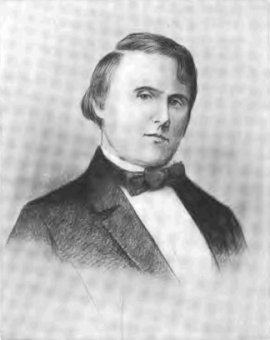
1857: Francis Richeux, witnessed by Tolstoy

On this date in 1857, a robber-murderer named Francis Richeux was publicly guillotined in Paris before a crowd of 12,000 to 15,000 people.

One of those onlookers was a 28-year-old Russian noble, fresh from the Crimean War and abroad on his first European trip: Leo Tolstoy.*

Overcome with curiosity, Tolstoy (as he recorded in his diary; here it is in Russian)

rose at seven o’clock and drove to see an execution. A stout, white, healthy neck and breast: he kissed the Gospels, and then — Death. How senseless … I have not received this strong impression for naught. I am not a man of politics. Morals and art I know, love, and [understand]. The guillotine long prevented my sleeping and obliged me to reflect.

And he developed the impression into a full-on rant that same day, in his running correspondence with Russian litterateur Vasily Botkin. The following is as translated in Dialogues with Dostoyevsky: The Overwhelming Questions.

The spectacle made such an impression on me that it will be long before I get over it. I have seen many horrors in war and in the Caucasus, but if a man were torn to pieces in my presence it would not have been so repulsive as this ingenious and elegant machine by means of which they killed a strong, hale, healthy man in an instant. There [in war] it is not a question of the rational [will], but the human feeling of passion, while here it is a question of calm and convenient murder finely worked out, and there’s nothing grand about it. The insolent, arrogant desire to carry out justice, the law of God. Justice, which is determined by lawyers every one of whom, basing himself on honor, religion, and truth, contradicts each other. With these same formalities they have murdered both the king and Chenier, both republicans and aristocrats.† . . Then the repulsive crowd, the father explaining to his daughter what a convenient and ingenious mechanism it is, and so forth. The law of man — rubbish! The truth is that the state is a conspiracy not only for exploitation, but chiefly to corrupt its citizens. But all the same states exist, and moreover in this imperfect form. And they cannot pass from this system into socialism . . . For my part, I can only see in all this repulsive lie what is loathsome, evil, and I do not want to, and cannot, sort out where there is more and where there is less. I understand moral laws, the laws of morality and religion, binding on no one, that lead people forward and promise a harmonious future; I feel the laws of art which always bring happiness; but the laws of politics constitute for me such an awful lie that I cannot see in them a better or worse. All this is what I felt, understood, and recognized today. And this recognition at least to some extent relieves the burden of the impression for me . . . From this day forward I will not only never go to see such a thing again, but I will never serve any government anywhere.**

He wasn’t kidding about that long insomnia, either: the impression startled him, permanently. Recalling the effect years later in his Confessions, Tolstoy still attributed to it an important confirmation of his egalitarian philosophy.

When I saw the head separate from the body, and how they both thumped into the box at the same moment, I understood, not with my mind but with my whole being, that no theory of the reasonableness of our present progress can justify this deed; and that though everybody from the creation of the world, on whatever theory, had held it to be necessary, I know it to be unnecessary and bad; and therefore the arbiter of what is good and evil is not what people say and do, and is not progress, but is my heart and I.

Tolstoy developed the same theme further a few years later in What Is to Be Done? … the shade of the long-forgotten Francis Richeux still haunting the great man of letters.

Thirty years ago in Paris I once saw how, in the presence of thousands of spectators, they cut a man’s head off with a guillotine. I knew that the man was a dreadful criminal; I knew all the arguments that have been written in defence of that kind of action, and I knew it was done deliberately and intentionally, but at the moment the head and body separated and fell into the box I gasped, and realized not with my mind nor with my heart but with my whole being, that all the arguments in defence of capital punishment are wicked nonsense, and that however many people may combine to commit murder — the worst of all crimes — and whatever they may call themselves, murder remains murder, and that this crime had been committed before my eyes, and I by my presence and nonintervention had approved and shared in it. In the same way now, at the sight of the hunger, cold, and degradation of thousands of people, I understood not with my mind or my heart but with my whole being; that the existence of tens of thousands of such people in Moscow — while I and thousands of others over-eat ourselves with beef-steaks and sturgeon and cover our horses and floors with cloth or carpets — no matter what all the learned men in the world may say about its necessity — is a crime, not committed once but constantly; and that I with my luxury not merely tolerate it but share in it. (PDF source | Original Russian)

* Among Tolstoy’s other activities in Paris was hanging around Turgenev … but the two mostly irritated one another. Nevertheless, they shared a distaste for the guillotine, at least to judge by Turgenev’s repulsion at seeing it in action years later.

** Two days after the execution, Tolstoy left Paris for Geneva. Execution-disgust is a suggestive speculation, although Henri Troyat argues that it merely gave him a “dramatic excuse” to stop putting off travel plans he had already made.

On this day..

1856: Auguste Chapdelaine, saintly casus belli

On February 29, 1856, local Chinese officials in Guangxi beheaded French missionary priest Auguste Chapdelaine — and handed his countrymen a pretext for war.

Chapdelaine (English Wikipedia page | French) had gone illegally to the Chinese interior to proselytize Christianity.

The local mandarin Zhang Mingfeng was no doubt disposed to take such an harsh line against this provocation by virtue of the ongoing, Christian-inspired Taiping Rebellion, which had originated right there in Guangxi and was in the process of engulfing all of southern China in one of history’s bloodiest conflicts.

So Chapdelaine and his associates were snapped up, put to a few days’ dreadful torture, and on this date a Chinese convert and Chapdelaine were both summarily beheaded. (A female convert, Agnes Tsaou-Kong, expired under torture around the same time.)

Pietistic accounts of believers’ last extremes are here and here.


(Images from this French page.)

It took months for word of this martyrdom to reach French consular officials, and many months more for the gears of international diplomacy to turn — but when they did so, France pressed a demand for reparations.

Since pere Chapdelaine had been acting illegally in the first place, the Qing’s obdurate Viceroy Ye(h) adamantly refused to offer Paris satisfaction.

By 1858, this intransigence sufficed to license French entry (alongside Britain) into the Second Opium War, from which the Europeans won by force of arms a noxious treaty guaranteeing their right to push Christianity in China, extracting a couple million silver taels in damages, and (of course) assuring their right to traffic opium into China.

It would be rather ungenerous to hold all the ugly imperial consequences personally against our day’s martyr. August Chapdelaine was canonized by the Catholic Church in 2000 as one of 120 Martyrs of China.

China was not impressed by this celebration of a onetime colonial catspaw, and met the Vatican’s “anti-China” celestial promotion announcement with one of its own — charging that Chapdelaine “collaborated with corrupt local officials, raped women and was notorious in those areas [where he preached].”

On this day..

1852: Jose Forni, the first legal hanging in California

Detail view (click for the full image) of the hanging of Jose Forni (Forner)

“My friends! You have come to see an innocent man die. I die for having killed an assassin. He attempted to rob me; I resisted; he stabbed me and fled. Maddened and smarting from my wounds, I pursued, overtook, and killed him. I am a native of Valencia, Spain. I have but few friends in San Francisco.

I have resided in Cuba, where I have many friends. I was tried by a judge and jury who were utter strangers to me. I could produce no witnesses in my favor. What led to my killing my assailant is known only to God and myself. What I have said is true. After I have spoken these few words I shall never speak more. No doubt those who tried me acted justly according to the testimony. They could not have known the truth. The Americans are good people; they have ever treated me well and kindly; I thank them for it. I have nothing but love and kindly feelings for all. Farewell, people of San Francisco! World, farewell.”

–Jose Forni’s last words (translated from Spanish)

Having so declaimed, Jose Forni (or Forner) dropped through a trap on San Francisco’s Russian Hill and into the history books as the first hanging under color of law in the state of California.

Forni was pretty small potatoes for such a milestone, a Spanish immigrant caught stabbing to death a Mexican in broad daylight a mere three months before.

Despite Forni’s mysterious last statement, everyone was in fact pretty sure they knew what led to the killing.

Forni was found with a sash containing $350. This sash, a Mexican style not popular with Spaniards, had been observed in the possession of the victim Jose Rodriguez earlier that evening, by a gambling-hall dealer who saw Forni follow Rodriguez out the door. (Source)

Forni stuck to the story that it was his, and that Rodriguez had tried to jump him and take it when Forni set the sash down to relieve himself. And that then, after he’d been stabbed in the leg, he chased down the assailant.

Yeah, right.

“It was a proud day for the law,” wrote (doc) historian Hubert Howe Bancroft. “It was a happy sight, I say, this hanging of the moneyless, friendless Spanish stranger.”

If this doesn’t seem like the sort of thing hippy-dippy San Francisco would ordinarily strut about, bear in mind that the previous year, a standing Committee of Vigilance had formed itself and meted out extrajudicial lynchings without waiting on “the quibbles of the law, the insecurity of prisons, the carelessness or corruption of the police, or a laxity of those who pretend to administer justice.” Similar committees operated elsewhere in the state.

So the fact that Forni was suffered to wait on the quibbles of the law was a sort of progress. And it does sound, from the report in the next week’s (December 16) Alta California, as if the populace were jolly pleased to see it.

A continuous line of human beings was pressing up the hill all the morning, until a crowd numbering three thousand at least had gathered together [n.b. – nearly a tenth of San Francisco’s population at this time -ed.] … the assemblage was indeed a singular one — there being at least one-fourth of the number composed of youths, women and children. Women elbowed their way as near as possible to have a full view of the gallows, whilst others were on horseback and in carriages, riding around with as much gaiety as if on a pleasure drive.

But what was most shocking was to see respectable looking parents taking their little sons and daughters into such a heterogenous crowd, to witness such a terrible spectacle. Despite the slight rain, they stood it out with heroical fortitude and patience worthy of a better occasion. Before the prisoner had arrived, the small boys amused themselves with playing marbles, the bigger ones with dog fights, whilst others whiled away the time recounting their experience in such matters.

Reflecting on the homicide that had occasioned all this festivity, the Alta prayed that “our criminal records never be stained again with the history of such a dark and bloody transaction.”

Yeah, right.

On this day..

1859: Danford Balch, inadvertent PDX benefactor

On this date in 1859, five to six hundred folks braved a dreary Portland morning to witness the first execution in the state of Oregon — Oregon having graduated into statehood just that very year, as it says on the flag.

Danford Balch, who would surely merit an entry in these pages for his name alone, had staked out a 345-acre land claim near the small settlement of Portland, but all that money couldn’t buy his daughter’s love.

Anna, the eldest of nine kids at a blossoming 15, was amenable to a suit by the farmhand, one Mortimer Stump — this is a Dickensian roster of characters — and in the face of Papa Balch’s opposition, eloped with him over the Columbia River to Vancouver, Wash.

So Danford Balch stewed, and drank, and was allegedly incited by his shrewish wife Mary Jane — this one has an ironically innocent moniker — until, encountering the Stumps in town for supplies one day, Danford Balch tried to retrieve his daughter and ended up shotgunning his unwanted son-in-law, right in the face.

Ka-blamo.

Bystanders tackled Balch immediately, though it took nine more months to bring the killer to trial: in these sparsely-populated frontier precincts justice was being administered on the old “assize” model of wandering judges who dropped in for a spell to try everything at one go. It was enough time for Balch to bust out of a rain-rotted jail cell once and get recaptured (once on the lam, he returned to his own home).

When court was finally in session, conviction was a mere formality. He’d done the deed in public, after all. But the offended father seemed genuinely bewildered by the outcome: apart from the shooting being accidental (so he said), he clearly expected that a court would uphold the dominion of the family patriarch over his wayward progeny.

Heaven knows what fumes he was fuming by the time he climbed the scaffold and beheld that naughty daughter Anna turned up to witness his hanging — sitting in the front row with the [rest of the] Stump family in what you have to think was a somewhat uncomfortable party for all concerned.

Little more affectionate was the post-mortem behavior of the allegedly un-alienated part of the Balch clan.

That widow Mary Jane, whom Danford hinted gave him quite a goading over their wanton daughter, shafted the remaining rugrats out of inheriting their chunks of the family land and instead routed most of it to her next husand.

Balch Creek in Lower Macleay State Park. (cc) image from Brad Reber.

Though pretty difficult to admire by the yardstick of human decency, that behavior turned out to be Danford Balch’s redeeming legacy.

Having passed through several hands, the lion’s share of his former land was in 1897 donated to the city by its then-owner Donald Macleay, who was sick of paying taxes on the unprofitable parcel. That was the time the famously green PDX received its first land gift designated by the donor for parkland: Macleay Park. (Including a Balch Creek.)

Today, it’s all part of the larger Forest Park, and it’s a lovely hiking space for a city that grooves on its outdoor rec … complete with a gorgeously ruined Depression-era stone ranger station that’s popularly believed to be haunted, maybe by the spirit of poor old Danford Balch himself.


The haunted house … (cc) image from Adam Gaumont.

There’s a Balchipedia for chronicling Balch family notables, so you know the first guy executed in Oregon is going to rate a mention.

On this day..

1851: Two men hanged and one lynched in Sacramento

On this date in 1851, three men were publicly hanged from a scaffold at Fourth and O Street in Sacramento, California: John Thompson* and James Gibson legally, and William Robinson under color of lynch law.

According to Ken Gonzales-Day’s Lynching in the West: 1850-1935, all three had been condemned to death under the brand-new state‘s brand-new Criminal Practices Act, making theft a capital offense.

They had assaulted and robbed a guy on the streets of Sacramento a few weeks previous, and the local vigilance committee had already made plain its impatience with the matter: upon the granting of a legal motion to stay the trial three days in order to allow the defense to actually prepare, an orderly posse had firmly forced the court back into session to proceed with the speediest of trials. Any outcome other than death could scarcely have come to pass.

Nonetheless, California governor John McDougall made bold to stay one of the hangings, that of William Robinson.**

The San Francisco-based Alta California — which had previously (August 1, 1851) editorialized in strong support of the forced trial: “If our courts would in all cases act, the people would have no occasion for assuming the responsibility of ferretting out criminals, and awarding them their proper punishment” — narrated (September 1, 1851) a, er, popular veto of that gubernatorial mercy.

The Executions in Sacramento City

The Sacramento papers of Saturday are filled with accounts of the exciting scenes that have transpired in that city within a few days past.

We condense from the Sacramento Union, a decription [sic] of the occurrences of Friday last.

THE SCENES OF YESTERDAY. — By daylight yesterdat morning, teams, horsemen and pedestrians, were seen pouring into the city from every direction, and at an early hour the city was crowded with miners and strangers from the country, who had come in to witness the execution of the three culprits, Thompson, Gibson and Robinson.

Soon after nine o’clock, a rumor ran through the city, that a respite of Robinson’s sentence had been received from the Governor, and that the day of his execution was to be postponed until the 19th day of September. …

As the hour for the execution drew nigh, the crowd around the Station House became immense, and there was evidently a fixed determination in the minds of the populace that the prisoner, Robinson, should suffer the same penalty as the other two culprits, and that, too, in spite of the Governor’s proclamation …

The Sheriff, after reading the reprieve, ordered the two prisoners, Gibson and Thompson, to be taken to the place of execution, and likewise commanded the “Guards” to convey the prisoner, Robinson, to the Prison brig. The former two were then placed in a wagon, with their arms securely pinioned, and driven rapidly off, in company with the officers, to the scaffold.

The “Guards” then brought out Robinson, and attempted to convey him to the prison brig, but were compelled, on the corner of 2d street, to deliver their prisoner to the people, who placed him in a cart, and thus, surrounded by the “Guards,” were escorted to a grove near the place where the scaffold was erected.

A committee was appointed who were to take charge of the execution of Robinson after the legal authorities had performed their duty.

While these proceedings were going on at the grove, the final peparations for the execution of the unfortunate men, Gibson and Thompson, were progressing. …

The prisoners bore themselves with the greatest fortitude throughout the whole of this tragical scene, and not the slightest agitation was perceptible. At the moment the cord was cut, a cry was heard — “Now for Robinson.” The shout went up from the dense throng, “Hang the scoundrel!” — “Bring him here!” — “Let him hang too!”

The scene which followed was the most terrific we ever witnessed. The thronging crowds rushed for the station house in the greatest excitement, and on all sides was heard the thrilling cry, “Hang the rascal!” In the mean time the Sheriff, having performed his duty efficiently and faithfully, retired from the scene, as did also the officers with whom he was connected.

The muffled drum of the Guards announced that the culprit Robinson was approaching. The crowd gave way, the Committee with their prisoner slowly and solemnly ascended the scaffold, and the Guards formed a hollow square around it below.

Robinson appeared perfectly cool and collected, and on being requested to address the crowd, came forward, and in a clear voice made another confession. He evidently appeared desirous of creating a sensation, and accordingly commenced by alleging the grossest and most unfounded charges against men who stand high in this community … we do not feel ourselves justified on such evidence as this, in proclaiming to the world that officers who have heretofore been deemed perfectly upright and honourable, are no better than felons.

…

After the events of Friday, a portion of the excited populace assembled during the evening, and hung John McDougal in effigy. This proceeding, perhaps, was more the result of a hasty and excited spirit on the part of the few, than the calm reflection of the public mind, although the Union apologizes for the act by observing that persons engaged in it did not desire to cast obloquy on the office, but to exhibit their contempt for its incumbent.

* Thompson’s real name was evidently McDermott. The Espy file of historical American executions calls him “Thornton,” though it’s not clear whether this was yet another alias or simply an erroneous entry in the database.

** According to a different article in the same September 1, 1851 Alta California, the governor’s grounds for clemency were “the conviction of about thirty men … that Robinson was quite guiltless of the offence with which he stood charged. That false testimony had been trumped up to convict him, that he was not a hardened man, had fought the battles of his country, and finally, (as stated in a letter from a clergyman) he was quite a promising youth, of pious education, and possessing a ‘good understanding of the Christian doctrines.'”

On this day..

1851: Col. William Logan Crittenden, nephew of the Attorney General

“An American kneels only to his God, and always faces his enemy,”* declared William Logan Crittenden, refusing to kneel before his executioners in Havana this date in 1851.

This well-bred** Kentuckian veteran of the Mexican-American War ditched a New Orleans customs-house gig when Narciso Lopez formed a private filibustering expedition to try to steal Cuba from the Spanish.

Placed at the head of one of Lopez’s three battalions, Crittenden’s force was cut off and overwhelmed by the Spanish. (The detailed progress of the campaign is described here.)

He and 50 of his command captured with him were all ordered for immediate execution, six at a time, as pirates, with just a few hours’ allowance to take down official statements and scribble their hasty goodbyes. With “not the heart to write to any of my family,” Crittenden sent one to a friend giving his farewells … then, just before the end, dashed off another addressed to the Attorney General of the United States — his uncle, John J. Crittenden.†

Dear Uncle: In a few moments some fifty of us will be shot. We came with Lopez. You will do me the justice to believe that my motive was a good one. I was deceived by Lopez — he, as well as the public press,‡ assured me tat the island was in a state of prosperous revolution.

I am commanded to finish writing at once.

Your nephew,
W.L. Crittenden

I will die like a man

(Some other affecting last letters from Crittenden’s party can be perused here.)

All this scene, including a post-mortem mutilation by the enraged mob of onlookers, became a bloody banner for U.S. Southerners — since expanding the slave power was core to the entire filibustering project.

When word of the shootings reached New Orleans, a crowd sacked the Spanish consulate.

But in the international relations game, the U.S. had disavowed filibustering and its raiders enjoyed no special diplomatic protection. When a number of the later prisoners were returned in chains to Spain, the Millard Fillmore administration asked their release, but had no grounds to demand it. It was a touchy diplomatic situation … one that our late Crittenden’s uncle, as a member of cabinet, was right in the middle of.

Fillmore eventually secured the captives’ release, atoning the insult to the European power’s agents by causing the Spanish colors to be saluted in New Orleans in honor of the birth of the Infanta Isabella.

All this mincing instead of brawling struck a certain variety of hothead as distinctly unmanful.

Our flag has been wantonly insulted in the Caribbean sea … captured citizens of our country [were] sent in a slave ship to the coast of Spain, fettered, according to the custom of that inhuman traffic, and released, not as an acknowledgement of wrong on demand of our government, but as a gracious boon accorded to a friendly suit … Whilst the dying words of Crittenden yet rung in the American ear, and the heart turned sickening away from the mutilated remains of his liberty-loving followers; whilst public indignation yet swelled at the torture which had been inflicted on our captive countrymen, even then we were called upon to witness a further manifestation of the truckling spirit of the administration …

–Jefferson Davis (yes, that one)

* An alternative version has Crittenden declaring that Kentuckians kneel only to their God.

** According to this public domain book (pdf; it’s also on Google books) of the Lopez expedition, William Crittenden’s cousin George Bibb Crittenden — eventually a Confederate general — was among the Texan filibusters to survive the Black Bean Lottery.

William Crittenden’s brother Thomas Theodore Crittenden fought on the Union side of the Civil War, and became Governor of Missouri in 1881. He’s noteworthy for having issued the bounty on outlaw Jesse James that led to the latter’s assassination by Robert Ford.

† Family in the president’s cabinet was just no guarantee of preferential treatment, abroad or at home; just a few years before, a son of the sitting Secretary of War had been hanged at sea for mutiny.

‡ The Spanish press likewise excoriated American yellow journalism in terms that no few present-day scribes would also deserve.

New Orleans papers, there is your work! There is the result of your diragations, of your iniquitous falsehoods, of your placards with large black letters, and your detestable extras … This blood must flow, drop by drop, upon your heads — this blood will torment you in your sleep, for they have lost their lives when you were in security in your houses.

On this day..

1857: Twelve blown from cannons in British Punjab

An account from the February 15, 1862 Harper’s Weekly of a very messy spectacle orchestrated to maintain British control of Punjab.

Another execution of a similar nature took place on the 13th of June, at Ferozepore. All the available troops and public establishments were convened to witness the scene. Some of the mutineers were to be hung, and around the gallows, erected during the night previous, the soldiers were drawn up. The mutineers were then brought into the centre, and the proceedings of the general Court-Martial was read. Upon being informed that if they would become Queen’s evidence they would be reprieved, twelve of the criminals accepted the offer and were marched to the rear. Two were taken to the gallows. They ascended the ladder with firm steps, and to the last moment betrayed no emotion of fear.

The remaining ten were now led away to the artillery guns, and while their irons were being struck off some cried, “Do not sacrifice the innocent for the guilty!” Two others rejoined, “Hold your sniveling: die men and not cowards — you defended your religion, why then do you crave your lives? Sahibs! they are not Sahibs, they are dogs!” Others then began to upbraid their commanding officer. The wretched beings were quickly fastened to the muzzles of ten guns, charged with blank cartridge.

The commanding officer directed port-fires to be lit. “Ready!” “Fire!” and the drama was played out. An eye-witness says: “The scene and stench were overpowering. I felt myself terribly convulsed, and could observe that the numerous native spectators were awe-stricken — that they not only trembled like aspen-leaves, but also changed into unnatural hues. Precaution was not taken to remove the sponge-and-load men from the muzzles of the guns; the consequence was that they were greatly bespattered with blood, and one man in particular received a stunning blow from a shivered arm!“


A lengthier account, no less riveting and we suppose more accurate on account of its primary sourcing, is to be found in this memoir or the British campaign against the Sepoy rebellion.

June 13 The morning of June 13 was fixed upon for the execution. A gallows was erected on the plain to the north side of the fort, facing the native bazaars, and at a distance of some 300 yards. On this two sepoys were to be hanged, and at the same time their comrades in mutiny were to be blown away from guns.

We paraded at daylight every man off duty, and, with the band playing, marched to the place of execution, and drew up in line near the gallows and opposite the native quarter.

Shortly after our arrival the European Light Field Battery, of six guns, appeared on the scene, forming up on our left flank, and about twenty yards in front of the Light Company.

The morning was close and sultry, not a cloud in the sky, and not a breath of wind stirring; and I confess I felt sick with a suffocating sense of horror when I reflected on the terrible sight I was about to witness.

Soon the fourteen mutineers, under a strong escort of our men with fixed bayonets, were seen moving from the fort. They advanced over the plain at our rear, and drew up to the left front of, and at right angles to, the battery of artillery.

I was standing at the extreme right of the line with the Grenadier Company, and some distance from the guns; but I had provided myself with a pair of strong glasses, and therefore saw all that followed clearly and distinctly.

There was no unnecessary delay in the accomplishment of the tragedy. Two of the wretched creatures were marched off to the gallows, and placed with ropes round their necks on a raised platform under the beam.

The order was given for the guns to be loaded, and quick as thought the European artillerymen placed a quarter charge of powder in each piece. The guns were 9-pounders, the muzzles standing about 3 feet from the ground.

During these awful preparations, I watched at intervals the faces of the condemned men, but could detect no traces of fear or agitation in their demeanour. The twelve stood two deep, six in front and six in the rear, calm and undismayed, without uttering a word.

An officer came forward, and, by the Brigadier’s order, read the sentence of the court-martial, and at its conclusion the six men in front, under escort, walked towards the battery.

There was a death-like silence over the scene at this time, and, overcome with horror, my heart seemed almost to cease beating.

Arrived at the guns, the culprits were handed over to the artillerymen, who, ready prepared with strong ropes in their hands, seized their victims. Each of these, standing erect, was bound to a cannon and tightly secured, with the small of the back covering the muzzle. And then all at once the silence which reigned around was broken by the oaths and yells of those about to die. These sounds were not uttered by men afraid of death, for they showed the most stoical indifference, but were the long-suppressed utterances of dying souls, who, in the bitterness of their hearts, cursed those who had been instrumental in condemning them to this shameful end. They one and all poured out maledictions on our heads; and in their language, one most rich in expletives, they exhausted the whole vocabulary.

Meanwhile the gunners stood with lighted port-fires, waiting for the
word of command to fire the guns and launch the sepoys into eternity.

These were still yelling and raining abuse, some even looking over their shoulders and watching without emotion the port-fires, about to be applied to the touch-holes, when the word “Fire!” sounded from the officer in command, and part of the tragedy was at an end.

A thick cloud of smoke issued from the muzzles of the cannons, through which were distinctly seen by several of us the black heads of the victims, thrown many feet into the air.

While this tragic drama was enacting, the two sepoys to be hanged were turned off the platform.

The artillerymen again loaded the guns, the six remaining prisoners, cursing like their comrades, were bound to them, another discharge, and then an execution, the like of which I hope never to see again, was completed.

All this time a sickening, offensive smell pervaded the air, a stench which only those who have been present at scenes such as these can realize — the pungent odour of burnt human flesh.

The artillerymen had neglected putting up back-boards to their guns, so that, horrible to relate, at each discharge the recoil threw back pieces of burning flesh, bespattering the men and covering them with blood and calcined remains.

A large concourse of natives from the bazaars and city had assembled in front of the houses, facing the guns at a distance, as I said before, of some 300 yards, to watch the execution. At the second discharge of the cannon, and on looking before me, I noticed the ground torn up and earth thrown a slight distance into the air more than 200 paces away. Almost at the same time there was a commotion among the throng in front, some running to and fro, while others ran off in the direction of the houses. I called the attention of an officer who was standing by my side to this strange and unaccountable phenomenon, and said, half joking: “Surely the scattered limbs of the sepoys have not been carried so far?”

He agreed with me that such was impossible; but how to account for the sight we had seen was quite beyond our comprehension.

The drama came to an end about six o’clock, and as is usual, even after a funeral or a military execution, the band struck up an air, and we marched back to barracks, hoping soon to drive from our minds the recollection of the awful scenes we had witnessed.

Two or three hours after our return news arrived that one native had been killed and two wounded among the crowd which had stood in our front, spectators of the recent execution. How this happened has never been explained. At this time a “cantonment guard” was mounted, consisting of a company of European infantry, half a troop of the 10th Light Cavalry, and four guns, and two of these guns loaded with grape were kept ready during the night, the horses being harnessed, etc. Half the cavalry also was held in readiness, saddled; in fact, every precaution was taken to meet an attack.

As far as I can recollect, there were but two executions by blowing away from guns on any large scale by us during the Mutiny; one of them that at Ferozepore.

On this day..

1858: Qualchan

“Qualchan came to see me at 9 o’clock, and at 9:15 he was hung.”

–George Wright

It was this morning in 1858 that the gaily dressed Yakama Indian guerrilla Qualchan turned himself in to his Anglo hunter, and was promptly put to death.

Wright was prosecuting the Yakima War in the Pacific Northwest — another characteristic Indian conflict featuring a formerly remote tribe suddenly cursed with valuable land by the discovery of gold.

Qualchan (sometimes “Qualchen”, “Qual-Chen”, or “Qualchien”) was among the Yakima chieftains resisting “encouragement” to give up that part of their territory most desirable to white settlers, and eventually, Qualchan killed encroaching white miners and made himself an outlaw.

For more than two years, the army hunted Qualchan in vain as he harried white settlers around Washington — or, as Wright put it,

Qual-Chen … has been actively engaged in all the murders, robberies, and attacks upon the white people since 1855, both east and west of the Cascade Mountains … committing assaults on our people whenever the opportunity offered.

Late in the game, the American military had been reduced to a Bushian with-us-or-against-us posture:

Kamiakin and Qualchan, cannot longer be permitted to remain at large or in the country, they must be surrendered or driven away, and no accommodation should be made with any who will harbor them; let all know that asylum given to either of these troublesome Indians, will be considered in future as evidence of a hostile intention on the part of the tribe.

The expedient that induced this potent commando to throw his own life away was the capture of Qualchan’s father, Owhi, rather dishonorably effected on an invitation to parley, then parlayed into a threat to execute the hostage lest the wanted Yakima produce himself.

“I thought then the worst that could happen would be a few months’ imprisonment,” remembered Qualchan’s wife (who was also present). “You may imagine my terror and consternation when I saw that they were making preparations to hang my husband. I first thought it was a huge joke, but when I saw the deliberateness of their preparations, the fullness of their treachery and cowardice became apparent.”

And since the U.S. was maintaining that draconian view of Qualchan’s collaborators, Wright followed up his triumph with summary hangings over the next several days of several more Palouse. By the month’s end, he was prepared to declare the Indians “entirely subdued.”

Wright’s rough peace caused the nearby creek in eastern Washington to be christened “Hangman’s Creek”, though there’s been a tendency to steer away from that frightful name in recent times. But what better way to honor an indigenous foe of colonial land conquest than by naming a golf course for him?

The unfolding fate of the Yakimas is further explored in the public-domain book Ka-mi-akin, the last hero of the Yakimas, whose title character was Qualchan’s uncle.

On this day..

1858: James Seale, on the heath with Thomas Hardy

On this date in 1858, an “unusual incident” occurred in the life of then 18-year-old architect’s apprentice Thomas Hardy, as related by Hardy’s second wife, Florence.

He probably could have used a Thomas Hardy’s Ale.

One summer morning at Bockhampton, just before he sat down to breakfast, he remembered that a man was to be hanged at eight o’clock at Dorchester. He took up the big brass telescope that had been handed on in the family, and hastened to a hill on the heath a quarter of a mile from the house, whence he looked towards the town. The sun behind his back shone straight on the white stone facade of the gaol, the gallows upon it, and the form of the murderer in white fustian, the executioner and officials in dark clothing and the crowd below being invisible at this distance of nearly three miles. At the moment of his placing the glass to his eye the white figure dropped downwards, and the faint note of the town clock struck eight.

The whole thing had been so sudden that the glass nearly fell from Hardy’s hands. He seemed alone on the heath with the hanged man, and crept homeward wishing he had not been so curious. It was the second and last execution he witnessed, the first having been that of a woman two or three years earlier, when he stood close to the gallows.


The man in question was James Seale (or Searle), and this was not only to be the last hanging Hardy witnessed — it was the last in Dorset full stop.

The London Times‘ Aug. 11 blurb of the hanging noticed that

the wretched culprit was tried … for the wilful murder of a young woman named Sarah Ann Griffy, at Stoke Abbotts, on the 30th of April last, and also for having set fire to the house in which his victim resided. The prisoner is a very young man, not having reached his 20th year, and had been working as a labourer for some time past in the vicinity … On the day of the murder … when all the parties, who were farm labourers, were at work, excepting the deceased, the prisoner entered the house, and, after maltreating her, inflicted a most fearful gash in her throat, nearly five inches long, with a clasped cheese knife, and other injuries on the hands, arms, and breast, and then set fire to the house.


As implied by Hardy’s ability to remember the hanging at breakfast, find the telescope, and get to his observation point before the trap dropped at 8 a.m., the youth was an early riser. Michael Millgate’s biography of Thomas Hardy notes that

[b]y eight o’clock in the morning, the time when Seale’s execution took place, Hardy would have been up reading for two or three hours before setting off for Dorchester and Hicks’s office: when only candles were available for indoor illumination it was necessary to keep a countryman’s hours and take advantage of all the available daylight. He had now added the study of Greek to his continuing study of Latin: the signature in his first copy of the Iliad is dated 1858, and he seems to have worked persistently through it until some time in 1860, marking the passages that he had read — and that Jude Fawley, much later, would be described as reading in Jude the Obscure.

Part of the Themed Set: Thomas Hardy.

On this day..

1856: Elizabeth Martha Brown, Tess of the D’Urbervilles inspiration

On a drizzly morning this date in 1856, Elizabeth Martha Brown (or Browne) was hanged for murder as a young and fascinated Thomas Hardy looked on.

Brown was born Clark(e), but she took the name of a husband 20 years younger than she, which is how she got into this mess.

Said John Brown was rumored to have made the match for money, though his older wife sure seems to have held her own in the looks department. (More on that in a bit.)

In due time, John afflicted their already-tempestuous wedded life with an affair — courtesy of one Mary Davis, a young woman stuck in her own unhappy May-December marriage.

According to the confession Elizabeth provided two days before her own death, she had a fantastic row with her drunken husband when he came home at 2 a.m. one night and Elizabeth accused him of being

“to Mary Davis’s?”

He then kicked out the bottom of the chair on which I had been sitting, and we continued quarrelling until 3 o’clock, when he struck me a severe blow on the side of the head, which confused me so much I was obliged to sit down.

He then said (supper being on the table at the time) “Eat it yourself and be damned,” and reached down from the mantelpiece a heavy hand whip, with a plaited head and struck me across the shoulders with it 3 times, and every time I screamed out I said “if you strike me again, I will cry murder” He replied “if you do I will knock your brains through the window,” and said hoped he should find me dead in the morning, and then kicked me on the left side, which caused me much pain.

He immediately stooped down to unbuckle his boots, and being much enraged, and in an ungovernable passion at being so abused and struck, I seized a hatchet that was lying close to where I sat, and which I had been making use of to break coal for keeping up the fire to keep his supper warm, and struck him several violent blows on the head – I could not say how many – and he fell at the first blow on his side, with his face to the fireplace and he never spoke or moved afterwards.

Unfortunately, this confession broke a protracted* attempt to stick to an implausible “the horse kicked him dead” story whose maintenance seriously complicated any bid to secure clemency for the woman.

She received, instead, a different kind of life: literary immortality that hardly any in Dorchester that gray morning could have aspired to.

Thomas Hardy, not yet the canonical novelist famous enough for his own Monty Python sketch but a 16-year-old architectural apprentice, was among the three or four thousand who braved the inclement weather to witness Brown’s hanging** — the mandatory sentence then for a circumstance the courts would handle differently today.

Even seven decades later, Hardy could recall the vividly sensual effect of this macabre scene.

I saw — they had put a cloth over the face — how, as the cloth got wet, her features came through it. That was extraordinary.

and

I remember what a fine figure she showed against the sky as she hung in the misty rain and how the tight black silk gown set off her shape as she wheeled half round and back.

Recent film adaptations of Tess of the D’Urbervilles. The book is available free from Gutenberg.org.

In both her tragic life and her hempen death, Brown is thought to have informed Hardy’s title character in the 1891 novel Tess of the D’Urbervilles, slyly subtitled “A Pure Woman Faithfully Presented.”

“Justice” was done, and the President of the Immortals, in Aeschylean phrase, had ended his sport with Tess.

-Thomas Hardy, Tess of the D’Urbervilles

* Everything is relative, of course. In Brown’s instance, less than five weeks separated murder from execution, so she had scarcely had time to be obstinate about withholding the confession.

** Brown was said to have died with great firmness, and the report from the scaffold brings us the classically Victorian detail that executioner William Calcraft, having departed the platform to spring the trap after pinioning his prisoner, was obliged to make a return trip when he realized he’d forgotten to tie down her dress against any immodest billowing.

An ironic precaution, given that we remember this hanging precisely because of Hardy’s captivation with the more refined eroticism of the “wet hanging gown contest” tableau.

Part of the Themed Set: Thomas Hardy.

On this day..