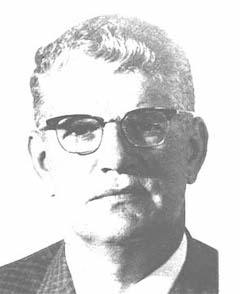
1916: Yakub Cemil, Ottoman putschist

Ottoman officer Yakub Cemil was executed on this date in 1916 as an aspiring putschist.

A Circassian infantryman who served under Enver Pasha in the 1900s, Cemil was an early and ardent supporter of the Committee of Union and Progress. This onetime underground party ascended to national preeminence in 1908, after which Cemil became a sturdy “weapon of the organization”.

He did not shrink to imbrue his hands with blood; allegedly, he assassinated journalist Ahmet Samin Bey in 1910, and on campaign in Libya against the Italian invasion he privately murdered a black lieutenant out of some combination of suspected espionage and racial animus. His implacability was his great asset and his great liability; the eventual father of post-Ottoman Turkeuy, Ataturk is perhaps apocryphally supposed to have mused, “If I one day mount a revolution, Cemil is the first man I want by my side, and Cemil is the first man I will hang afterwards.”

Such provincial homicides were but studies for the main deed of his days when in the 1913 Ottoman coup d’etat when he gunned down War Minister Nazim Pasha on the steps of the Sublime Porte as his CUP comrades barged in to force the resignation of the aging Grand Vizier and take the state firmly in hand.

It was an act that shook capitals around the world.
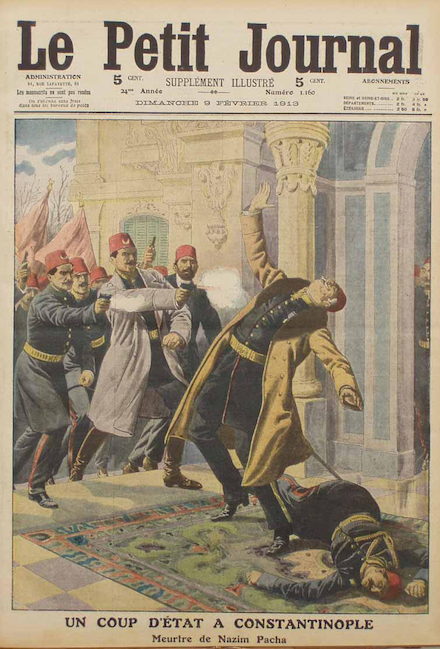

9 February 1913 edition of Le Petit Journal with a cover depiction of “un coup d’etat a Constantinople: muertre de Nazim Pacha”.

Ironically it was a desire for peace that brought his end. A couple of years deep into the catastrophe of World War I, Cemil rightly perceived the need to extricate his state from the conflict, and began making plans to topple the “Three Pashas” of the CUP whom he had helped to bring to power. His old friend Enver Pasha had no intention of approving the resulting death sentence — indeed, he had caught wind of it and tried persuasion to bring Cemil back onside — but when Enver Pasha was summoned to Berlin for a war council the fellow triumvir Talaat Pasha signed off on the execution with dispatch.

Rumors and legends abound concerning his death, such as shouting “Long live the Committee for Union and Progress!” before the firing squad opened up on him, and an agonizing half-hour bleed-out during which the expiring Cemil scrawled a patriotic slogan in the dirt with his own blood.

On this day..

1917: Albin Köbis and Max Reichpietsch, Wilhelmshaven mutineers

On this date in 1917, German sailors Albin Köbis and Max Reichpietsch were shot at the Wahner Heide proving ground near Cologne.

They’d been convicted at court martial of being “ringleaders” of a mutiny of increasingly militant anti-war seamen from the battleship Prinzregent Luitpold, who on August 2 had marched into the port of Wilhelmshaven to resist their continued participation in the futile bloodbath.

“Nobody wanted a revolution, we just wanted to be treated more like human beings,” said one of their number, sentenced by the same military tribunal to 15 years. But this was a bit coy, considering that Kobis wrote his parents that “I die with a curse on the German-militarist state.”

And why not? The Russian Revolution was in full swing at this moment, while the navy had become a center of radicalized anti-war and anti-imperialist sentiment. In a year’s time another sailors’ mutiny would set off the events that finally forced an end to the Great War — and after the armistice, sailors like Rudolf Egelhofer were again prominent in revolutionary ventures like the Munich Soviet. If there is one thing we can state with confidence about the Wilhelmshaven event, it’s that some participants most certainly aspired to a revolution.

Likewise the contemporary left-wing press recognized in Köbis and Reichpietsch heroes and fellow-travelers; they were saluted as martyrs in their own day, and after World War II, East Berlin had a Köbisstrasse appropriately near to the naval headquarters. While some Communist martyrs were persona non grata on the other side of the Berlin Wall, West German television also aired a dramatization in 1969, called Marinemeuterei 1917.


Memorial to Reichpietsch (left) and Köbis (cc) image from Gordito1869.

On this day..

1964: Mohamed Chabani

On this date in 1964 — one day shy of his 30th birthday — Algerian officer Mohamed Chabani was executed as a traitor.

It’s a verdict that posterity has washed its hands of; Chabani (other transliterations include Shabani and Chaabani) was officially rehabilitated in 1984 and his name decorates public spaces in Algeria.

But in 1964, when Algeria was but two years into her post-France independence, this former FLN fighter become Algeria’s youngest colonel was governor of the fourth military district in Biskra when he fell foul of the Defence Minister Houari Boumediene.

Boumediene was in the process in this interim of consolidating power to his own circle; the following year he would overthrow President Ahmed Ben Bella and rule Algeria until his death in 1978. Boumediene allegedly feared that Chabani would form an independent bloc that could oppose him, and attempted to have the young commander assassinated.

“How long is it since you began to travel by short stages and side-tracks?” the Marquise de Merteuil demanded of Valmont in a different context. “My friend, when you want to get somewhere — post horses and the main road!”

Boumediene’s main road was to arrest Chabani for a supposed separatist plot to break away oil-rich southern Algeria and have him shot in Oran.

On this day..

1996: Rodolfo Soler Hernandez, burned on video

On this date in 1996, the people of the Veracruz town of Playa Vicente visited an orderly extrajudicial lynching on an accused rapist and murderer.

This “illegal execution” (in the words of the Veracruz Attorney General) made the airwaves around Mexico and abroad thanks to horrifying video showing the suspect — obviously beaten — lashed to a tree and agonizingly consumed in flames. Warning: Although this is an edited and narrated version of the video, it’s still extremely disturbing.

According to an Associated Press wire report, Hernandez’s “execution” was only the most visible of a spate of vigilante justice around that time, authored by people infuriated by the corruption and inaction of official law enforcement.

Saturday [apparently the same day, August 31 -ed.], residents of Motozintla in southern Mexico overran the town jail, seizing three men and burning two of them alive on lampposts, Mexico’s official Notimex news agency reported. The men were suspects in several assaults, including the rape of a young girl.

On Monday in Puebla state, police saved two other criminal suspects from being taken from their cells and killed, Notimex said.

Residents in the Mexico state town of Tolman recently beat and then held for more than a day in their town square a man suspected of a robbery and shooting. They vowed to kill him if any of his victims died of their wounds.

On this day..

1963: Eddie Lee Mays, the last executed in New York

The last execution in the state of New York occurred on this date in 1963 when Harlem murderer Eddie Lee Mays — who shot a woman dead in the course of a pub stickup — went to the mercy seat at Sing Sing prison.


It was also the last execution in Sing Sing’s notorious electric chair, here elevated to the artistic canon by Andy Warhol‘s 1960s series of electric chair images. Warhol based his arresting view of the apparatus on press photos circulated around the 1953 electrocution of Julius and Ethel Rosenberg in the same device.

New York’s once-robust death penalty statutes and habits disappeared along with the rest of America’s by the late 1960s; her last executioner, Dow B. Hover — the guy who threw the switch on Eddie Mays — committed suicide in 1990.

The Empire State ditched its death penalty laws in 1984, briefly reinstated them in 1995, but executed no prisoners before everything was ruled out constitutionally in 2004.

By coincidence, August 15, 1963 was also the date of the last execution in Scotland.

On this day..

1937: Leslie George Stone, hanged by a fiber

Leslie George Stone hanged at Pentonville Prison on this date in 1937 for a murder that was revealed by the fabric of his trousers.

The naked body of Stone’s ex-flame Ruby Keen had turned up in the Bedfordshire town of Leighton Buzzard — strangled with a scarf after what looked a desperate struggle.

Now, Stone would already be a suspect here because of his relationship, and the fact that they’d been seen drinking together in public the preceding night. But what cinched the noose was Scotland Yard taking a variety of cast impressions of the apparent marks left in the earth by the killer.


Casts of the killer’s footprints taken by Scotland Yard from the murder scene of Ruby Keen. From the collection of Scotland Yard’s “Black Museum”.

Sample pairs of trousers were taken from all the possible suspects in the case. When Spilsbury examined Stone’s brand-new suit trousers he found that the knees had been brushed so hard that the nap had been worn away. Microscopic examination of the trousers showed up particles of sandy soil that matched that from the scene of the crime. There was also found, in the lining of Stone’s jacket, a silk fibre that matched with those taken from the dead girl’s underskirt. (Source)

If we’re being honest, “matches” of fiber even now are basically junk forensics that continue to go routinely, maddeningly overclaimed in courtrooms. But the same quality of incriminatory flimflam that enrolls fiber matches in so many wrongful conviction cases seems here to have been spotlighted the right guy. By the time of his trial Stone had to come off his demonstrable falsehoods about his and Keen’s movements on the night of her death, and submitted unpersuasive testimony that he’d strangled her as an accidental exuberance in a fight, and left her still alive.

On this day..

1970: Dan Mitrione, an American torturer in Uruguay

United States torturer Dan Mitrione was executed on this date in 1970 by Uruguayan guerrillas.

A onetime Indiana beat cop, Dan Mitrione graduated to an agent of empire via a USAID program called the Office of Public Safety.

This organ headlined the putatively amicable mission of extending training to foreign police officers, both in their home countries and in the American capital. OPS’s real purpose, according to A.J. Langguth‘s Hidden Terrors: The Truth About U.S. Police Operations in Latin America, was

allowing the CIA to plant men with the local police in sensitive places around the world; and after careful observation on their home territory, bringing to the United States prime candidates for enrollment as CIA employees

The foreign policemen themselves understood why they were being sent to Washington. Even before the coup d’etat, in July 1963, one Brazilian officer described the academy program to the governor of Sao Paulo as “the latest methods in the field of dispersion of strikes and striking workers.” He would learn, he said, how to use dogs and clubs and “to modernize the mechanism of repression against agitators in Sao Paulo.”

Brazil is where Mitrione made his bones over the course of the 1960s, years when the CIA trained some 100,000 Brazilian cops. But his mission was as universal as the toenails he ripped off and by 1969 he’d been reassigned to neighboring Uruguay further to that state’s suppression of a growing leftist revolutionary movement, the Tupamaros.*

One recruit named Manuel Hevia Cosculluela — who notoriuosly gave Mitrione’s mission statement as “the precise pain, in the precise place, in the precise amount, for the desired effect” — recalled the “trainings” these Uruguayan pupils received in his now-out-of-print 1978 book Pasaporte 11333: ocho años con la CIA.

As subjects for the first testing, they took beggars, known in Uruguay as bichicones, from the outskirts of Montevideo, along with a woman from the border with Brazil. There was no interrogation, only a demonstration of the different voltages on the different parts of the human body, together with the uses of a drug to induce vomiting — I don’t know why or for what — and another chemical substance.

The four of them died.

(There’s a good deal more stomach-turning stuff about the Mitrione program in this pando.com article.)

Heightened repression also heightened the response of the Tupamaros, who had not previously shown themselves a particularly bloodthirsty bunch. The Uruguayan Chief of Police Intelligence Alejandro Otero gave an embarrassing-to-Washington interview to a Brazilian paper revealing Mitrione’s work, complaining that “The violent methods which were beginning to be employed, caused an escalation in Tupamaro activity. Before then their attitude showed that they would use violence only as a last resort.”

In their day the Tupamaros managed to take a pound of flesh from their persecutors by kidnapping Mitrione as a hostage to the release of 150 political prisoners. Mitrione was executed when Uruguay refused the exchange, although in later years Tupamaros founder Raul Sendic would reveal that the guerrillas had intended to hold Mitrione in indefinite captivity, but were spooked into conducting the execution when early-August police raids on revolutionary cadres broke the lines of communication between leadership and kidnappers ahead of a threatened drop-dead date: thus, “when the deadline came the group that was left with Mitrione did not know what to do. So they decided to carry out the threat.”** He was shot in the early hours of August 10 and his body deposited in a car for easy discovery.

Mitrione’s death met with great umbrage on his native soil; his VIP-rich funeral in his native Richmond, Ind. saw the Uruguayan ambassador vow that his killers would “reap the wrath of civilized people everywhere.” So civilized people “in the aftermath of Dan Mitrione’s death … unleashed the illegal death squads to hunt and kill insurgents.”

Costa-Gavras fictionalized the Mitrione story in the 1972 French classic State of Siege.

As for the OPS, that program wound down in 1974 as exposes made its work increasingly untenable … but the same project of barely-veiled anti-Communist suppression transitioned seamlessly to the Drug Enforcement Agency and a host of other alphabet-soup agencies around Washington.

* They were named for executed Andean revolutionary Tupac Amaru. The Tupamaros were violently suppressed over the course of the 1970s but when the dictatorship ended in 1984 its remaining prisoners were amnestied. The remnants of the movement eventually folded into the Frente Amplio center-left party, which is today Uruguay’s ruling party; Jose Mujica, President of Uruguay from 2010 to 2015, was a former Tupamaros guerrilla who served 13 years in prison.

** Sendic is obviously an interested party in the affair but there’s some corroboration to his account in that the movement held several other hostages whom it could not exchange for months, only to release them unharmed in the end. (e.g. American agronomist Claude Fly, British diplomat Geoffrey Jackson)

On this day..

1909: Mir Hashim, Persian monarchist


Photo from here, with the caption “Execution of Mir Hashim (Tabrizi). Mir Hashim and his forces had joined the pro-Mohammad Ali Shah forces in laying siege to Tabriz, fighting against the forces of Sattar Khan and Bagher Khan. Mir Hashim and his brother were executed on 9 August, 1909.” The Persian constitutional revolution that this execution putatively advanced in revolutionary Tabriz also ended with gallows.

On this day..

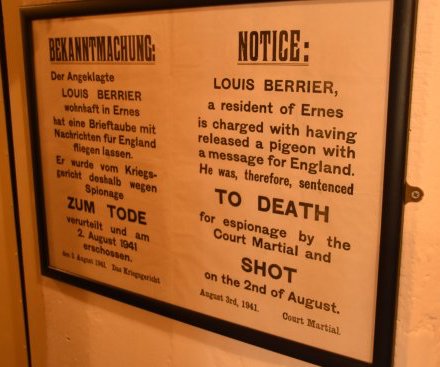
1941: Louis Berrier, messenger pigeoner

Notice: Louis Berrier, a resident of Ernes is charged with having released a pigeon with a message for England. He was, therefore, sentenced to death for espionage by the court martial and shot on the 2nd of August.
From the Channel Island Military Museum on the Channel island of Jersey; image courtesy of Trip Advisor.

On this day..

1948: Ruth Closius-Neudeck

A notoriously brutal guard at the Ravensbrück women’s concentration camp named Ruth Closius-Neudeck was hanged on this date in 1948.

With impeccable timing she exited a life of proletarian obscurity by applying for a gig as a camp warden in July 1944, right when the Third Reich’s prospects for surviving the war went terminal.

That left her scant few months to stack up fodder for the eventual war crimes tribunals but Neudeck had a knack for making hay in the twilight.

Almost immediately earning promotion to barracks overseer, she earned a reputation as one of the cruelest guards at the camp that once cultivated Irma Grese. (They didn’t overlap.) One prisoner would later describe seeing her “cut the throat of an inmate with the sharp edge of her shovel.”

She was subsequently detailed to the nearby Uckermark satellite camp, smaller and more lethal — as it was converted for the Third Reich’s final weeks into a killing center for inmates whose bodies had been broken at slave labor in Ravensbrück or elsewhere. She acknowledged sending 3,000 women to the gas chambers as Uckermark Aufseherin.

She was one of five camp guards charged in the Uckermark trial (also known as the Third Ravensbrück trial) in 1948, and the only one of those five executed.

On this day..