1870: Jacob Wallace, Henry Coston, and Moses and Peter Newby

The Daily Cleveland Herald, September 22 1870

THE VIRGINIA GALLOWS HORROR.

Tortured by a Bungling Hangman — Half Executed with a Rotten Rope — A Monster under the Gibbet.

The four negroes who were hanged on Friday last at the Court House of Isle of Wight county, Virginia, were convicted of the murder, under most brutal circumstances, of Josiah P. Grey, a citizen of that country, in December last. Six negroes were implicated in the crime, named respectively, Guyanetta Mears, Alfred Bunckley, Moses and Peter Newby, alias Lawrence, Jacob Wallace, and Henry Coston, alias East. The last five were immediately arrested, Mears having either effected his escape in a somewhat miraculous manner, or, as it is rumored, having been lynched by his captors. The five taken were tried at the August term of Isle of Wight county. Bunckley having turned State’s evidence, escaped, but by their own confession of complicity in the killing, four of them were condemned to be hanged. The Norfolk Virginian gives this account of the execution:

About 12 1/2 o’clock the officers entered the cell in which the prisoners were confined, and striking off their iron shackles, tied their hands behind their backs, at the same time telling them they could make any communication which they wished. To this no satisfactory answer was returned, and the condemned continued chanting their prayers for mercy from on high. As soon as the pinioning was performed, the condemned were marched out of the jail on the steps and upon the scaffold.

They walked firmly and undoubtedly, with one exception, Moses Newby, who shook as if in an ague fit, and were ranged in the following order: Peter Newby, Henry Coston, Moses Newby, and Jacob Wallace. The fatal nooses were then adjusted, when the Sheriff read the death warrant and sentence of death. The prisoners were informed that they could have an opportunity of saying a few words each.

The feet of the condemned having been pinioned upon their first taking their stand upon the scaffold, as each one ceased to speak the black cap was drawn over his head, and when all had finished, the scaffold was cleared of all but the condemned and at exactly 1 o’clock, at a signal from Deputy Sheriff Ely, the prop was pulled violently away, and the drop fell.

Then ensued a scene the recital of which we would willingly spare our readers, and a repetition of which we earnestly hope it may never be our lot to witness. As the bodies fell in the drop, the two end men, Peter Newby and Jacob Wallace, both large, athletic men, snapped the rope like pack-thread, and fell heavily to the earth, apparently insensible.

The other two remained suspended; but one was hanging by only one strand of the rope, the other two having been broken by the fall. Moses Newby died instantly, his neck being broken, but Henry Coston lived for nearly ten minutes, gasping for breath, and his limbs working convulsively.

The two men on the ground lay still for a few minutes, when Jacob Wallace rose to a sitting posture and broke into prayers and supplications. Peter Newby lay a while longer, when he also sat up, but kept silent, except groans extorted by pain. Their feet were then untied, when both stood up, Newby leaning heavily against the steps of the gallows, while Wallace walked back and forth, praying intently. New ropes were procured and adjusted to the beam, the two men hanging preventing the drop being raised. At the expiration of seventeen minutes the physicians in attendance, Drs. Jordan and Chapman, examined the bodies and pronounced them both dead, when another horror was enacted which made strong men shudder and turn pale.

Instead of lowering the bodies as is always customary, the ropes were cut, allowing the ghastly corpses to fall with a horrible thud at the very feet of the two half-hanged men standing below. Not content with this, the brutal monster who officiated as hangman, an occupation which he dishonored, and who rejoices in the name of the name of [sic] John J. Murphy, descended from the scaffold, and taking hold of the rope attached to the neck of one of the dead men, drew the body by it across the yard, and tumbled it into the coffin, as if it had been a dead dog. He repeated the operation on the next one, and seemed to think that by his disgusting brutality he had done some meritorious action.

During the whole of the time this disgusting scene was transpiring, Wallace and Peter Newby, although suffering horribly from the effects of the rope around their necks, in their fall, betrayed no emotion, save that Wallace used the time in praying loud and fast. Newby looked on apparently as unconcerned as if he was not an actor in the dreadful drama.

The new ropes, which were of stout cotton cord, having been fixed, the drop was replaced and the miserable men mounted the scaffold the second time, this time never to return alive.

The condemned both spoke to the crowd around in the same strain as before, at the conclusion of which the black caps were again drawn over their heads, and at half past one o’clock the drop again fell, and the ropes proving strong enough, they were left struggling in the air. Neither of their necks were broken, and for several minutes they gave painful evidence of life by their forced breathing and the convulsive jerking of their arms and legs. They were allowed to hang for half an hour, when they too were cut down, placed in their coffins, and taken to the court-house graveyard for interment.

[editor’s note: here’s the perfunctory and much less colorful New York Times report of the incident.]

On this day..

1944: Mala Zimetbaum and Edek Galinski

(Thanks to Meaghan Good of the Charley Project for the guest post. -ed.)

On or about this day in 1944, Malka “Mala” Zimetbaum and Edward “Edek” Galinski were executed in the Auschwitz Concentration Camp after a failed escape attempt. Mala was 22 or 24; Edek was 20 or 21.

Mala Zimetbaum.

Mala, a Belgian Jew of Polish descent, had been living in Auschwitz for two years and had a privileged position because of her linguistic skill; she could speak about five languages and worked as an interpreter and courier. The staff trusted her and she had permission to go everywhere in camp. She often used her position to help the inmates.

Mala fell in love with Edek Galinski, a Polish gentile prisoner. He was also a longtime inmate, having been in Auschwitz since 1940. He also had the freedom to go anywhere in the camp in his capacity as a mechanic.

Sometime in the late spring or early summer of 1944, they escaped together. What they planned to do afterward is unclear; there are some stories that Mala carried documents from the camp and planned to tell the world what was happening there. How they were caught is also a bit of a mystery. According to some accounts, only one was arrested and the other went voluntarily so they could die together.

Their subsequent executions have been the subject of legend, and lives large in many memoirs by survivors of the camp. Among those who wrote about it were Primo Levi, Sara Nomberg-Przytyk and Fania Fenelon. A witness, Raya Kagan, also testified about it at Adolf Eichmann‘s 1961 war crimes trial.

All the accounts contradict each other; practically everything about the execution is disputed. Contrary to what the Wikipedia entry says as of this writing, we don’t even know whether it really took place on September 15; other dates have been suggested, including August 22. (Curiously, September 15 is also the date given for Mala’s arrival at Auschwitz in 1942.) Edek was apparently hung in the men’s camp, possibly alongside several other prisoners; Mala was executed in the women’s camp that same day. Edek supposedly tried to jump into the noose before the SS guard could finish reading his sentence, in defiance of protocol. His last words may have been “Long live Poland.” Everyone agrees that Mala slit her wrist with a hidden razor blade as she was standing before the crowd of woman prisoners waiting to be hanged. When the SS guards tried to intervene, she slapped one of them. They bound up her arm to keep her from bleeding to death. She may have been trampled to death at the execution site, but most accounts state the guards ordered some prisoners to cart her to the crematorium and throw her in alive. Several reports state that she either died on the way there, or was shot or poisoned by an SS guard who took pity on her.

According to some accounts, Mala’s last words were directed at the guard she hit: “I shall die a heroine, but you shall die like a dog!” Others say she addressed the crowd of prisoners and told them liberation was in sight, or urged them to revolt. We will never know what her final words truly were, but their meaning is clear enough.

On this day..

2000: Cheng Kejie of the National People’s Congress

Ten years ago today, former Chinese politburo member Cheng Kejie was executed for gobbling up an impressive $5 million in bribes.

The onetime chairman of the Guangxi Zhuang Autonomous Region was (and, as best I can determine, remains) the highest-ranking official judicially executed since the Communists took power in China in 1949. He’d spent the best part of the 1990s soaking up kickbacks from his powerful post, much of it secreted in out-of-country accounts.

The execution was part of a massive campaign against official corruption which has long bedeviled China’s economic surge. Cheng’s own former boss around this time warned that “graft could destroy China”.

Cheng’s execution was announced after the fact, at the same time that China belatedly publicized the arrest of former Vice-Minister of Public Security Li Jizhou in a billion-dollar smuggling scandal. Li somehow managed to duck execution for similarly show-stopping corruption allegations (including scandalous details supplied by his mistress*), a fact which raised eyebrows in the People’s Republic about improper influence.** He “deserves to die ten thousand times over,” opined the Beijing Youth Daily.

Here in 2010, China (whose wholesale execution pace is quietly on the decline) has moved — not without opposition — to drop the death penalty for a number of non-violent economic crimes. That rollback apparently would not apply to bribery, however.

* Cheng’s case also featured the salacious “other woman” hook, which often rounds out modern-day tales of official malfeasance. Cheng and his bit on the side “conspired to amass wealth for their planned marriage after divorcing their spouses”; Cheng’s lover, however, turned state’s evidence on him. She wound up with a life sentence.

** Li had some serious political weight to throw around; his father had helped prosecute the Gang of Four after the Cultural Revolution.

On this day..

1962: Mack Merrill Rivenburgh cheats the executioner

On this date in 1962, just hours before he was to face a firing squad for the murder of a fellow inmate, Mack Merrill Rivenburgh cheated the executioner with a fatal drug overdose.

It was the final escape for a prisoner who had had a lot of them: five previous stays had scotched scheduled executions, sometimes with just hours to spare, back when such stays were anything but routine. The state’s Pardons Board was a long time mulling the case.

Rivenburgh’s own suicide note complained that he was “tired of waiting, tired of the excessive delays,” which is an interesting reason to take one’s own life just before the executioner was going to do it anyway. (Rivenburgh also asserted his innocence.)

Actually, Utah had built wooden execution chairs for two men set for death a September 14 death by musketry, but didn’t manage to seat either inmate.

The other, Jesse Garcia — condemned for helping Rivenburgh slay LeRoy Varner — was granted a commutation on the evening of September 13.

As it turned out, Utah would not put another criminal to death until Gary Gilmore in 1977.

On this day..

1772: The Marquis de Sade and his servant, in effigy

On this date in 1772, straw effigies of the (in)famous French libertine Marquis de Sade and his servant Latour were executed in Marseilles for sodomy.

“It is always by way of pain one arrives at pleasure.”

The aristocrat christened Donatien Alphonse François (even the name would become taboo for later use among his family) was at this point just 32 years old, but already cultivating the reputation that would make his name a byword for violent sex. He had in 1768 got the boot from Paris in view of the many courtesans who complained of his mistreatment.

Five more would do so for the incident that triggered his “execution”: de Sade took his baroque pleasure from these “very young girls” obtained by his manservant Latour (who also took part in the bisexual debauch). The whole scene was spiced with liberal dosage of the poison/aphrodisiac* spanish fly.

“Cruelty, very far from being a vice, is the first sentiment Nature injects in us all.”

One of these working girls seriously overindulged on the the love potion and spent the next week puking up “a black and fetid substance.” The authorities got interested, and de Sade and Latour bolted to Italy.**

Back in Marseilles, proceedings against the fugitives saw them sentenced for (non-fatal) poisoning and sodomy

for the said Sade to be decapitated … and the said Latour to be hanged by the neck and strangled … then the body of the said Sade and that of the said Latour to be burned and their ashes strewn to the wind.

This was duly carried out against straw effigies of de Sade and Latour on September 12, 1772.

“Lust is to the other passions what the nervous fluid is to life; it supports them all, lends strength to them all: ambition, cruelty, avarice, revenge, are all founded on lust.”

Although the Marquis eventually got this sentence overturned, it did in a sense mark an end to his life as it had been. Later in 1772, he’d be arrested in Italy; though he escaped and went back on the orgy circuit, most of the four-plus decades left to his life would be spent imprisoned or on the run — an ironic situation for the man Guillaume Apollinaire would celebrate as “the freest spirit that has yet existed.”

(Astonishingly, de Sade also avoided execution during the French Revolution: he was supposed to have been in the last batch guillotined before Robespierre fell; either through bureaucratic bungling or efficacious bribery, he avoided the tumbril.† De Sade also cheated death when a man whose daughter the marquis had outraged attempted to shoot him point-blank … only to have the gun misfire.)

“My manner of thinking, so you say, cannot be approved. Do you suppose I care? A poor fool indeed is he who adopts a manner of thinking for others!”

From this latter half of the infamous satyr’s life — when he often had time on his hands not available to dispose in more corporal pursuits — date the pornographic/philosophic writings that would stake de Sade’s disputed reputation for posterity.

* Alleged aphrodisiac.

** With another lover, his sister-in-law Anne … who was also a Benedictine canoness.

† It was on some firsthand authority, then, that de Sade took a dim view of capital punishment: “‘Til the infallibility of human judgements shall have been proved to me, I shall demand the abolition of the penalty of death.” This and other pithy de Sade quotes in this entry are from here.

Part of the Themed Set: Executions in Effigy.

On this day..

1764: The Sirven family, in effigy

On this date in 1764, Pierre-Paul Sirven and his wife — who lay beyond the reach of the law, in Switzerland — were burned in effigy at Mazamet, France, for murdering their daughter.

The Sirvens actually had three daughters; the purported victim, Elisabeth, was mentally unbalanced. The Protestant Pierre-Paul Sirven had had a recent run-in with the Catholic hierarchy in his native Castres, when Elisabeth was shanghaied to a convent for Catholic indoctrination under a lettre de cachet.

The Sirvens moved away to Saint Alby, near Mazamet, but when Elisabeth turned up dead in a well there early in 1762, the official presumption was that her schismatic parents had done her in to prevent her returning to the true church. It could have been that she just fell down the well accidentally, or went and committed suicide; as often in such cases, investigations commencing from a suspicion of foul play are liable to find that suspicion self-affirming.

To make matters worse, all this transpired during the dangerous run-up to the execution of Jean Calas in Toulouse, another instance where a doubtful criminal case was pursued against a Protestant.

Wisely, the Sirvens (parents and two remaining daughters) blew town.

They made it to Switzerland, where they holed up with Voltaire. Back in Mamazet, the parents were condemned to death and the other two children to exile for participating in the purported murder of Elisabeth. “This judgment was equally absurd and abominable,” Voltaire wrote.

If the father, in concert with his wife, had strangled his daughter, he ought to have been broken on the wheel, like Calas, and the mother to have been burned — at least, after having been strangled — because the practice of breaking women on the wheel is not yet the custom in the country of this judge. To limit the punishment to hanging in such a case, was an acknowledgment that the crime was not proved, and that in the doubt the halter was adopted to compromise for want of evidence.

The death sentences — further compromised by the absence of their objects — were nevertheless carried out in effigy on September 11, 1764.

Meanwhile, Voltaire turned his pen to the service of the Sirven cause; a French pamphlet he wrote vindicating both the Sirvens and Calas can be perused here. (Deadly religious persecution in France kept Voltaire quite preoccupied in the 1760s.)

After spending the decade trying to clear the family name from abroad, Pierre-Paul Sirven sensed an opening to return and gave himself up in 1769. The anti-Protestant hostility of the early 1760s had cooled by this time; the Calas execution was widely regretted.

Pierre-Paul Sirven was officially tried and exonerated in 1771, leading Voltaire to remark,

It only took two hours to sentence a virtuous family to death and it took us nine years to give them justice.

Part of the Themed Set: Executions in Effigy.

On this day..

1661: Kaj Lykke, in effigy

On an uncertain date in 1661, the Danish noble Kaj Lykke (sometimes Kai Lykke) — safely but penuriously absconded to exile — was “executed” in effigy.

This wealthy roue (Danish Wikipedia page) was famous for his affairs innumerable.

To one of these maids, Lykke addressed a love-note remarking that the unpopular queen consort Sophie Amalie enjoyed queen consorting with her servants.

The sort of salacious rumor-mongering that constitutes many a blogger’s daily bread (and no doubt many a debauched noble’s pillow-talk) was, in Denmark at the dawn of its absolute monarchy, lese-majesty, and a good excuse once it became known to seize the naughty noble’s riches for the crown.

Lykke got himself abroad and didn’t have to face the music in the flesh — though the forfeited estates were no mean loss — and a doll representing the dirty-minded fugitive had its hands and head lopped off in Lykke’s stead in Copenhagen.

Kaj Lykke returned from exile (Swedish link) and died in Denmark in 1699. Centuries later, his skull was unearthed pursuant to eugenics research: the theory was that this bad boy’s sloping forehead showed him to be a primitive Neanderthal-descended type.

Though that particular bit of pseudo-science has long since been buried, Lykke’s skull never has been — and given that it’s out and about anyway, it’s been used to reconstruct the noble’s appearance. (I’ve been unable to locate an image of this reconstruction online.)

Part of the Themed Set: Executions in Effigy.

On this day..

1437: Jan Rohác z Dubé, Hussite marshal

On this date in 1437, Hussite marshal Jan Rohác z Dubé was hanged in Prague.

The Bohemian commander had upheld throughout the Hussite Wars the cause of its namesake heretical priest. (There’s a Czech biography of Rohac here.)
The Hussites had a nice run in the 1420s — no less a personage than Joan of Arc took time out from French battlefields to dictate an anti-Hussite jeremiad threatening to “remove your madness and foul superstition, taking away either your heresy or your lives” — but eventually succumbed to repeated papal onslaughts.

They were decisively crushed at the 1434 Battle of Lipany … but Rohac survived it, and “emerg[ed] from the ashes” like “a phoenix”, the last champion of the forbidden sect.

Rohac rallied the remnants of his partisans to a fortress named Sion* near Kutna Hora, where they were besieged and ultimately overwhelmed.

Days later, he was demonstratively executed in Prague, where all this Hussite trouble had started.

The people of Prague, as an act of intimidation directed at dissenters, were forced … to watch the gruesome display. Clad in his red baronial robes, with a sign draped around his neck stating his condemnation, Rohac was hung by a gold chain from the top of a three-story gallows. Beneath him hung the bodies of the Sion garrison.

Present-day Jan Rohac appreciation is best done Czech.

This bio is available reprinted from a public domain source. There’s also a 1947 Czechoslovakian film (appropriately titled Jan Rohác z Dubé, but also known in English as Warriors of Faith) celebrating Rohac’s exploits.

* No truth to the rumor that the Hussites’ doings in doomed Sion inspired the techno rave scene in the city of the same name in The Matrix.

On this day..

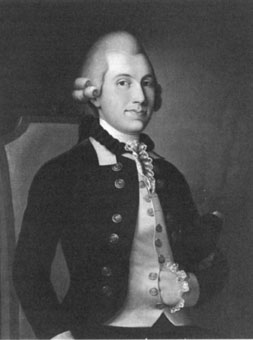
1790: Johan Henrik Hästesko, Anjalaman

On this date in 1790, Scandinavian aristocrat Johan Henrik Hästesko had his head lopped off in Stockholm for his part in the Anjala mutiny.

Named for the town in southern Finland where the conspiracy was cemented, the Anjala mutiny was a bid by disgruntled officers to roll back Swedish King Gustav III‘s ill-conceived* Russian War.

Dissatisfaction worked on multiple planes: nobles were angry at Gustav’s circumventing aristocratic prerogatives (both to launch this war, and elsewhere); those with Finnish estates were especially piqued at the prospect of bearing the burdens of a war and a possible Russian occupation.

The Anjala conspirators pitched Russian Empress Catherine the Great on the prospect of making peace on their authority and withdrawing Finland from Gustav’s control. Catherine demurred, and enough of the army stayed loyal to the crown that the conspiracy collapsed.

While other principals blew town, Hastesko (sketchy Swedish Wikipedia entry | much more detailed English bio on The Sword & The Sea) stuck around to face the music.

Product of an old Swedish-Finnish noble lineage, he might well have expected leniency: for all his executive overreach, Gustav III wasn’t the wholesale-execution type. And indeed, Hastesko was the only conspirator to visit the scaffold.

Cold comfort both to the condemned and to his widow Beata, the latter of whom wore mourning clothes for the remaining 51 years of her life. But she would see in her time the wheel of fortune turn for her late husband’s defeated project quite dramatically.

This particular Russo-Swedish War ultimately amounted to a tempest in a teapot, but not long after it blew over, another tetchy noble assassinated Gustav III.

In 1809, another war between Sweden and Russia did in fact result in Finnish quasi-independence.

* Completely engineered by the Swedish side, the war began with a false flag operation consisting of a staged “attack” by Swedes in Russian uniforms.

On this day..

2000: Lu Cheng, possible wrongful Taiwanese execution

On this date on 2000, Lu Cheng was shot for murder in the Republic of China (Taiwan).

The executed man’s photograph, held by his sister Lu Jing. (Chinese source)

Lu Cheng was condemned in June 2000 for kidnapping and murdering a onetime high school classmate and the sentence executed with dispatch on the eve of the Mid-Autumn Festival.

That was notwithstanding appeals by Lu’s camp against the highly circumstantial case — and a potentially compelling alibi that had been ignored in favor of a potentially torture-induced confession. (More in Chinese here)

Lu’s family has kept up protests posthumously, and even the Minister of Justice who signed Lu’s death warrant later turned against the death penalty himself.

Cases like Lu’s have helped drive a growing anti-death penalty sentiment in Taiwan, where executions declined throughout the 2000s, eventually settling into a five-year moratorium that has only recently been undone.

On this day..