1867: Bridget Durgan, “hardly human”

On this date in 1867, Irish immigrant maid Bridget Durgan (or Durgin, or Dergan) was hanged in New Brunswick, New Jersey for murdering the mistress of the house.

In this instantly sensational case, Durgan at first represented herself the party raising the hue and cry with the neighbors as her mistress was slaughtered by two unknown visitors. (Since it was a doctor’s house, the “unknown visitors” part wasn’t an unusual circumstance.)

Unfortunately our maidservant conducted this office without recognizing that her own dress was bloodstained and would implicate her in the crime — as would the suspicious circumstance that the homicide took place on the very eve of Durgan’s involuntary termination date, the victim having judged her contribution to the household inadequate.

If Durgan’s published confession is to be believed — and many didn’t believe it, since the condemned woman’s stories varied wildly before settling on the rather pat version that none of the other suspected participants were involved — she had come down in the world from a less abject birth in Ireland, transferred upon her victim a hatred conceived for a previous mistress in a previous household, and done the deed in some confused attempt to supplant Mrs. Coriell.

(This confession offers a florid narration — and illustration (pdf) — of the dying woman staying Bridget’s coup de grace long enough to give her infant child one last kiss.)

So, from the standpoint of criminal heinousness and public outrage over same, this was definitely the sort of thing to hang a body.

Difficult questions of weighing the proper level of culpability for offenses committed by those with a seemingly diminished mental capacity were at this time becoming a hot topic in criminology; in a few years, a madman who assassinated a president would make them national news.

Poet and women’s rights activist Elizabeth Oakes Smith, then entering her seventh decade, went to see Bridget Durgan. It was, she said, a habit of hers to “visit the prisons … that I may the better understand my own sex in every aspect.”*

Smith published a study (pdf; the same analysis was also printed in the New York Times) of our unhappy subject for the edification of the popular press. It’s quite an interesting read for a window on the social outlook in the post-Civil War North, doubly so when recalling as one reads that Smith is attempting to argue a case for clemency for her subject, and against the death penalty in general.

In the scale of human intelligence I find Bridget Durgin on the very lowest level. She has cunning and ability to conceal her real actions; and so have the fox, the panther, and many inferior animals, whose instincts are not more clearly defined than those of Bridget Durgin …

Ain’t nothin’ but mammals: left, Bridget Durgan, as illustrated in her confessions (pdf); center, a panther ((cc) image from Iain Purdie); right, a cunning fox ((cc) image from Jakob Newman).

her hair combed close to her head … give the observer an opportunity to notice her strong animal organization. She is large in the base of the brain, and swells out over the ears, where destructiveness and secretiveness are located by phrenologists, while the whole region of intellect, ideality and moral sentiment is small …

Her texture, temperature, all are coarse; hair coarse and scanty, forehead naturally corrugated and low, nose concave and square at the nostrils, leaving a very long upper lip … her eyes wavering constantly. They open across, not below, the ball, and the pupil is uncommonly small; I should say she would be naturally dim-sighted. It is purely the eye of a reptile in shape and expression. The jaws are large and heavy, but the mouth is small … narrow gums, catlike in shape, with pointed teeth.


(cc) image from Jarrod Carruthers.

There is not one character of beauty, even in the lowest degree, about the girl — not one ray of sentiment, nothing genuine, hardly human …

I looked upon Bridget Durgin without prejudice, and I describe her without exageration. She was born without moral responsibility, just as much as the tiger or the wolf is so born;

Tiger ((cc) image from Chris Ruggles); wolf ((cc) image from C. Young Photography).

and the question naturally arises, what is the duty of a wise, humane and just legislator in her case … whether it is right to take an irresponsible, morally idiotic creature, and she a woman, whose sex has had no voice in making the laws under which she will suffer, and hang her by the neck till she is dead, is a question for our advanced civilization to consider.

Durgan, who bore all the public opprobrium of a Casey Anthony — plus points for being unattractive,** and for class-based moral panic, and for actually being convicted — had little chance to avoid her sentence, as Smith herself admitted.

When the time came, she met her fate steadily (in some quarters, this was also held against her insofar as it could support the “dumb animal” narrative) and yanked aloft on an upward-jerking gallows, ushered to the afterlife by a couple thousand people who crowded adjoining buildings for a view into the jailhouse yard. (A spectators’ platform collapsed.) This bit of technological wizardry was poorly engineered and, rather than efficiently snapping Durgan’s neck as was its intent, strangled the murderess to death instead.

“More abominable curiosity, more mawkish sentimentality, more religious affectation, has been expended on this bloodthirsty animal than we remember in the case of almost any other modern criminal,” complained The New York Times.

* Smith had another reason for familiarity with prisons: her son Appleton Oaksmith, late a filibuster in William Walker‘s party, did time during the Civil War for pro-Confederate gun-running and slave trading. His mother helped secure him a pardon.

** The New York Times (May 21, 1867) had simply called our hated Irishwoman “ordinary-looking.” We’ve seen with, for instance, Charlotte Corday that observers are wont to shape perceived feminine beauty according to perceived criminal monstrousness, and vice versa.

Part of the Themed Set: Americana.

On this day..

1941: Nguyen Thi Minh Khai, Indochina Communist cadre

On this date in 1941, Vietnamese Communist cadre Nguyen Thi Minh Khai was shot as an anti-France insurrectionary.*

Khai (Vietnamese Wikipedia page | English) surely fit the description: she was a leader of the Indochinese Communist Party in the 1930’s, working directly with Ho Chi Minh in his Hong Kong exile. She would return in 1936 to the city later named for that redoubtable revolutionary as its ranking agitator.

Khai, the most famous of the Indochinese Wars’ vast ranks of women fighters, would marry fellow revolutionary Le Hong Phong, the chairman of the party, who died in prison in 1942. Khai’s sister’s marriage made Khai sister-in-law to the revolution’s military lion Vo Nguyen Giap.**

But her prominent position also made her a target.

Arrested by the French late in 1940, she was tortured and condemned to death. She was shot with other cadres, shouting last words that the decades yet to come would pretty well vindicate.

Long live the Communist party of Indochina. Long live the victorious Vietnamese revolution. (Source)

Readers whose Vietnamese is stronger than mine — i.e., extant in any form whatsoever — might get something out of this video:

As a national heroine, Nguyen Thi Minh Khai is the namesake of any number of public spaces in Vietnam, like schools and roads.


Paradoxical historiography: the street address visible to the right of the photo brands a revolutionary name onto an upscale coffee shop in Ho Chi Minh City. (cc) image from Lawrence Sinclair.

* Some sources give an April 1941 execution date, particularly April 25. I believe this may actually be the date Khai was condemned. There are also some sources indicating a guillotine execution; though the guillotine was certainly available, the bulk of the sources seem to say that Khai was shot.

** Giap is still going strong after all these years; he just turned 100 a few days ago. Khai’s sister was not as lucky; she died in French custody at the prison American pilots would later refer to as the “Hanoi Hilton”.

On this day..

1500: 18 thieves in Rome

Tourism is pretty essential to the Roman economy, and for as long as there have been dumb foreigners come to gawk, the Caput Mundi has supplied robbers alert to relieve them of their opes mundi.

And as it happens, that’s been for quite a long time. They don’t call it the Eternal City for nothing.


Ponte Sant’Angelo. (Hanged corpses not included.) The bridge was built by Emperor Hadrian in the early second century. (cc) image from Jimmy Harris.

On this date in 1500, a gang of 18 brigands were all hanged (Italian link) along Rome’s Ponte Sant’Angelo for their activities preying on traveling pilgrims.

One of those executed was an orderly at the nearby Ospedale S. Spirito, whose particular specialty was casing the infirmaries for weakened patients

This death penalty venue facing the Vatican’s Castel Sant’Angelo across the Tiber saw plenty of traffic in its day. Bookending the other end of the 16th century, it would host the legendary execution of Beatrice Cenci.

On this day..

1594: Ishikawa Goemon, bandit

On this date in 1594, legendary Japanese outlaw and folk hero Ishikawa Goemon was boiled to death in oil for attempting to assassinate Toyotomi Hideyoshi.

And he’s supposed to have had his son thrown into the kettle* with him, and, boiling to death himself, to have held the boy aloft out of harm’s way.

A 19th-century image painted by Toyokuni III of Goemon in one of the several kabuki plays he features in.

Ishikawa is a sort of Japanese Robin Hood figure, and the (very much) that isn’t offered by the documentary record is helpfully expanded in folklore.

Trained in forbidden ninja ways? Check.

Or maybe a samurai? Why not?

Henchman named “rat boy”? Oh, yes.

Just what his beef with national unifier Toyotomi Hideyoshi might have been is also subject to the exigencies of the story at hand. Let it be oppression or something, good enough for one of those classic outlaw-with-a-heart-of-gold retorts against condemnation for his thieving career.

It is you who are the robber who stole the whole country!

He gets to be the title character of the 2009 film Goemon:

Thanks to the inevitable marketing tie-ins, the world also has a Goemon action figure.

Personally, and especially because I would lose all these nifty accessories, I much prefer the adorable Goemon Cosbaby series.

* As a result of this famous exit, a Goeomon-buro (Goemon bath) in Japanese refers to a large iron kettle-shaped bathtub.

On this day..

1851: Two men hanged and one lynched in Sacramento

On this date in 1851, three men were publicly hanged from a scaffold at Fourth and O Street in Sacramento, California: John Thompson* and James Gibson legally, and William Robinson under color of lynch law.

According to Ken Gonzales-Day’s Lynching in the West: 1850-1935, all three had been condemned to death under the brand-new state‘s brand-new Criminal Practices Act, making theft a capital offense.

They had assaulted and robbed a guy on the streets of Sacramento a few weeks previous, and the local vigilance committee had already made plain its impatience with the matter: upon the granting of a legal motion to stay the trial three days in order to allow the defense to actually prepare, an orderly posse had firmly forced the court back into session to proceed with the speediest of trials. Any outcome other than death could scarcely have come to pass.

Nonetheless, California governor John McDougall made bold to stay one of the hangings, that of William Robinson.**

The San Francisco-based Alta California — which had previously (August 1, 1851) editorialized in strong support of the forced trial: “If our courts would in all cases act, the people would have no occasion for assuming the responsibility of ferretting out criminals, and awarding them their proper punishment” — narrated (September 1, 1851) a, er, popular veto of that gubernatorial mercy.

The Executions in Sacramento City

The Sacramento papers of Saturday are filled with accounts of the exciting scenes that have transpired in that city within a few days past.

We condense from the Sacramento Union, a decription [sic] of the occurrences of Friday last.

THE SCENES OF YESTERDAY. — By daylight yesterdat morning, teams, horsemen and pedestrians, were seen pouring into the city from every direction, and at an early hour the city was crowded with miners and strangers from the country, who had come in to witness the execution of the three culprits, Thompson, Gibson and Robinson.

Soon after nine o’clock, a rumor ran through the city, that a respite of Robinson’s sentence had been received from the Governor, and that the day of his execution was to be postponed until the 19th day of September. …

As the hour for the execution drew nigh, the crowd around the Station House became immense, and there was evidently a fixed determination in the minds of the populace that the prisoner, Robinson, should suffer the same penalty as the other two culprits, and that, too, in spite of the Governor’s proclamation …

The Sheriff, after reading the reprieve, ordered the two prisoners, Gibson and Thompson, to be taken to the place of execution, and likewise commanded the “Guards” to convey the prisoner, Robinson, to the Prison brig. The former two were then placed in a wagon, with their arms securely pinioned, and driven rapidly off, in company with the officers, to the scaffold.

The “Guards” then brought out Robinson, and attempted to convey him to the prison brig, but were compelled, on the corner of 2d street, to deliver their prisoner to the people, who placed him in a cart, and thus, surrounded by the “Guards,” were escorted to a grove near the place where the scaffold was erected.

A committee was appointed who were to take charge of the execution of Robinson after the legal authorities had performed their duty.

While these proceedings were going on at the grove, the final peparations for the execution of the unfortunate men, Gibson and Thompson, were progressing. …

The prisoners bore themselves with the greatest fortitude throughout the whole of this tragical scene, and not the slightest agitation was perceptible. At the moment the cord was cut, a cry was heard — “Now for Robinson.” The shout went up from the dense throng, “Hang the scoundrel!” — “Bring him here!” — “Let him hang too!”

The scene which followed was the most terrific we ever witnessed. The thronging crowds rushed for the station house in the greatest excitement, and on all sides was heard the thrilling cry, “Hang the rascal!” In the mean time the Sheriff, having performed his duty efficiently and faithfully, retired from the scene, as did also the officers with whom he was connected.

The muffled drum of the Guards announced that the culprit Robinson was approaching. The crowd gave way, the Committee with their prisoner slowly and solemnly ascended the scaffold, and the Guards formed a hollow square around it below.

Robinson appeared perfectly cool and collected, and on being requested to address the crowd, came forward, and in a clear voice made another confession. He evidently appeared desirous of creating a sensation, and accordingly commenced by alleging the grossest and most unfounded charges against men who stand high in this community … we do not feel ourselves justified on such evidence as this, in proclaiming to the world that officers who have heretofore been deemed perfectly upright and honourable, are no better than felons.

After the events of Friday, a portion of the excited populace assembled during the evening, and hung John McDougal in effigy. This proceeding, perhaps, was more the result of a hasty and excited spirit on the part of the few, than the calm reflection of the public mind, although the Union apologizes for the act by observing that persons engaged in it did not desire to cast obloquy on the office, but to exhibit their contempt for its incumbent.

* Thompson’s real name was evidently McDermott. The Espy file of historical American executions calls him “Thornton,” though it’s not clear whether this was yet another alias or simply an erroneous entry in the database.

** According to a different article in the same September 1, 1851 Alta California, the governor’s grounds for clemency were “the conviction of about thirty men … that Robinson was quite guiltless of the offence with which he stood charged. That false testimony had been trumped up to convict him, that he was not a hardened man, had fought the battles of his country, and finally, (as stated in a letter from a clergyman) he was quite a promising youth, of pious education, and possessing a ‘good understanding of the Christian doctrines.'”

On this day..

1915: George Joseph Smith, Brides in the Bath murderer

(Thanks to Meaghan Good of the Charley Project for the guest post. -ed.)

On this day in 1915, serial uxoricide George Joseph Smith was hung by the capable John Ellis at Maidstone Prison in the UK.
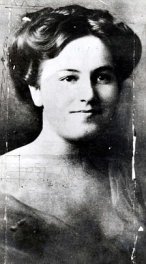
Smith had committed three murders and various forms of larceny as well; he’d earned his noose several times over.

Two things tend to trip people up when they’ve seemingly committed the perfect crime: either they brag about it to impress others, or they repeat the crime using the same methodology as before, since it worked so well the first time. Either of those actions greatly increases the risk of the criminal’s getting caught.

Smith made the latter mistake. He was in a sense a victim of his own success.

Smith was born on January 11, 1872. His criminal record began when he was sent to a reformatory at nine and served a seven-year sentence. In young adulthood he was in and out of prison on theft- and fraud-related convictions.

His complicated marital career began when he married Caroline Beatrice Thornhill, a domestic servant, in 1898. Smith persuaded her to steal from her employers. Caroline served time in prison as a result, and implicated her husband, who got two years for his role in the thefts.

After George Smith’s release, Caroline thought it wise to put a few thousand miles between herself and her estranged husband, and so she left the UK for Canada. She never filed for divorce, however.

Smith remained legally married to her for the rest of his life, so none of his numerous other marriages were legal.

Unlawfully Wedded …

The guy wasn’t good-looking, but he could charm like any good con artist. A year after his marriage to Caroline, Smith bigamously married another woman. He cleaned out her saving account and then deserted her.

Between 1908 and 1914, he married no fewer than seven additional women, usually under an alias, and deserted most of them after a short time, sometimes only a matter of days — but not before he helped himself to their possessions and bank accounts.

As true crime writer Harold Schechter tells it in his book The Serial Killer Files: The Who, What, Where, How, and Why of the World’s Most Terrifying Murderers:

Smith initially limited himself to scamming gullible spinsters out of their life savings by luring them into bigamous marriages … The moment Smith had his hands on his new bride’s money, he would disappear. Usually telling her he was going out on an errand — to pick up a newspaper or buy a pack of cigarettes — he would never return. On one occasion, he brought his newlywed wife to the National Gallery of Art and, after viewing some paintings, excused himself to go to the bathroom. She never saw him — or her life savings — again.

That particular bride was named Sarah Faulkner. Smith had already plundered £350 in cash from her and her jewelry as well, and while she was waiting for him to return from the loo he was back at their hotel, swiping her clothing and the rest of her money.

The only wife that didn’t fit this pattern was Edith Pegler.

Smith was away from her side for months at a time on “business trips” and when he returned it was always to ask for money, but he never left her for good and they remained together for seven years. As to whether he actually harbored some form of affection for her or whether he just didn’t want to kill his cash cow while it was still milkable, we can only speculate.

Yet all these women were, in a sense, lucky.

Smith may have broken their hearts and taken their cash, but he left them their lives.

… ‘Til Death Do Us Part

The first unlucky wife was Bessie Mundy, whom Smith murdered on July 13, 1912.

They’d married in August 1910, but he left her after persuading her to give him £150 in cash. On the way out the door, he accused her of giving him a venereal disease.

Eighteen months later, Bessie ran into Smith on the street. Somehow, the charmer got his ex to forgive him and resume their relationship.

In fact, Smith wanted to get his hands on Bessie’s £2,500 inheritance, but it was in trust and he couldn’t touch it.

After their reunion, the couple drew up mutual wills, naming each other as beneficiaries. Bessie willed her husband £2,579. Less than a week later, she was mysteriously dead.

Smith rented a house for them in Herne Bay and had a new cast-iron bathtub installed. Tragically, Bessie drowned in the bath. Her husband said he’d been out buying dinner and returned to discover the body.

Since Smith claimed his bride suffered from epilepsy and that she’d had a seizure the day before she died, it was easy to believe she’d simply had an unfortunate accident.

In spite of his newfound wealth, Smith had Bessie consigned to a pauper’s grave and even returned the slightly-used bathtub to the ironmonger for a £1 17s. refund.

This, perhaps, is where Smith might have counted himself lucky and checked out of the homicide business — or at least thought about a different m.o. Instead, hubris and habit got him hanged.

The Brides of Bath murder victims: from left to right, Bessie Mundy, Alice Burnham, and Margaret Lofty.

Next to go was Alice Burnham, who was making a goodly living as a nurse. Smith married on November 4, 1913, and became her widower on December 13.

Alice and her new husband were honeymooning at a seaside boardinghouse in Blackpool when she drowned in the bathtub while he was supposedly out getting eggs.

Smith, who claimed she had a weak heart, had insured her life for £500. She too was buried on the cheap.

Margaret Elizabeth Lofty died in her London home a little over a year later, on December 18, 1914. Newspapers reported she had drowned in the bathtub while her husband — identified as Robert Lloyd — was out buying tomatoes. He and the landlady found the body. Lofty and “Lloyd” had married only the day before and, appropriately enough, the ceremony was performed in the city of Bath.

Although it was initially classified as death by misadventure, Margaret’s murder ultimately lead to Smith’s downfall.

Rotten luck, it was: Alice Burnham’s father read an account of her death in the newspaper and, even though the husband had a different name, he couldn’t help but notice that Margaret’s death was suspiciously similar to his daughter’s.

Joseph Crossley, who was the couple’s landlord at the time of Alice’s death, noticed the same thing. Since both the Burnhams and Crossleys had taken a dislike to Smith from the get-go, they both wrote the police, asking them to open an investigation.

Authorities quickly determined that George Joseph Smith and Robert Lloyd were the same man. They sure had the same playbook.

Margaret had made out a will just hours before she died, naming her husband the sole heir to her estate. She had also withdrawn her life savings from the bank the same day, and three days before she had taken out a £700 life insurance policy on herself, with her husband as the beneficiary. Ka-ching.

When the grieving widower showed up at the insurance office to collect on Margaret’s policy, he was arrested. Lloyd/Smith was initially charged with putting a false name on a marriage certificate, but bigamy and murder charges would follow fast.

When news of the arrest was published, a police chief from Kent read the story and told the London police about Bessie Mundy’s death, which was strikingly similar to the other two.

Forever Hold Your Peace

But how could he could have drowned the women in the tub, without leaving marks of violence on their body?

Margaret had only a small bruise on her elbow. For answers, the police turned to renowned pathologist Bernard Spilsbury. The first thing he did was exhume the bodies to determine whether the women had, in fact, drowned. They had.

After experimenting with the very same bathtub Margaret Lofty died in, he determined how it might have happened. John Brophy, a crime writer, describes it chillingly:

With honeymoon playfulness he would enter the room where his bride was already in the bath, admire her naked beauty, bend over her fondly, and, still murmuring endearments, hold her feet. Suddenly, he would tug her feet upward, jerking her head at the end of the bath, below the water, so that in a few moments she would be drowned with no bruises on the body or other signs of assault or resistance.

Effective. Actually, you can see why he stuck to his system.

When Smith went to trial, it was only for the murder of Bessie; British law didn’t permit him to be tried for multiple murders in one go. However, the prosecution wanted to bring evidence in the Lofty and Burham deaths into the trial, arguing that they indicated a criminal “system.”

The judge allowed it, setting a precedent that would be used in later criminal cases.

In pretrial investigations later described in court, Spilsbury demonstrated his murder theory using Bessie’s bathtub and a female police officer in a bathing suit. It worked all too well: she lost consciousness immediately and they had to drag her out of the tub and perform artificial respiration to revive her.

No wonder the jury was only out for twenty-two minutes before it delivered a guilty verdict.

Caroline Thornhill, Smith’s legal wife, returned to Britain for his trial. She married a Canadian soldier the day after his execution.

The “Brides in the Bath” case has remained vividly alive in British memory.

The historian Harold Nicholson compared Smith’s behavior to Adolf Hitler’s in his 1939 book, Why Britain is at War; Smith was mentioned in novels by Evelyn Waugh, Agatha Christie and Dorothy Sayers, and in 1952 the case was made into an episode for the true-crime radio show The Black Museum.

[audio:http://www.archive.org/download/OTRR_Black_Museum_Singles/BlackMuseum-03-TheBathTub.mp3]

More recently, in 2003 the murders were featured into made-for-TV movie called The Brides in the Bath.

Warning: Video contains NSFW naked ladyparts. Oh, and homicide.

At least two plays, Tryst and The Drowning Girls, are based on the story. In 2010, the author Jane Robins published a book about the case, called The Magnificent Spilsbury and the Case of the Brides in the Bath.

Part of the Themed Set: Branded.

On this day..

2008: Leon David Dorsey, the Blockbuster Killer

On this date in 2008, Leon David Dorsey IV died by lethal injection in Texas.

Dorsey was the “Blockbuster Killer.”

No, not Netflix. Just a small-time hood who robbed a Dallas Blockbuster (back when there was such a thing) of $392, and in the process wasted the two employees minding the till.* Something about it — the familiar ubiquity of video rental joints in the 1990s, maybe — really resonated. The Blockbuster murders were immediately notorious.

Though Dorsey was a suspect in this crime — because he told his girlfriend, and she ratted him out — police concluded that the man in the surveillance tapes was too tall. He wasn’t charged.

Dorsey actually got convicted (non-capitally) of a different murder and the Blockbuster homicides went unsolved — until a cold cases unit dug into the surveillance tapes, decided the telemetry fit Dorsey after all, and went knocking on his cell door. The guy was still foolishly willing to gab about it.

“They’re dead,” he would say dismissively of his victims in a pre-trial interview. “That’s over and done with. I could have came in here and been, ‘Oh, I’m sorry, I’m so bad.’ But I don’t feel like that. That’s not being honest with myself.”

One doesn’t doubt that sentiment is shared by many malefactors great and small, but blithe narcissism is not quite the pose calculated to win a lot of sympathy from a jury when you’re on trial for your life.

Dorsey stayed “honest with himself” on death row to the tune of 95 disciplinary violations, including a stabbing attack on a guard, and he vowed to fight the team that came to take him to the gurney. (Texas officials reported that he didn’t actually fight.)

And two years after the Blockbuster killer got his … so did Blockbuster.

* The Blockbuster Corporation’s outreach to the families of its slain employees was considered a model stroke of public relations (Dallas Morning News, Nov. 2, 1994).

Part of the Themed Set: Branded.

On this day..

1828: William Corder, for the Red Barn Murder


This nostalgic emblem of bygone pastoral idylls doubles as a great place to dump a body. (cc) image from boodie131.

This date in 1828, throngs of thousands at Bury St. Edmunds saw the climax of the Red Barn Murder case in the form of the public hanging of William Corder.

This broadside blockbuster got its start in a Suffolk village, where a local ladies’ man and his paramour plotted a rendezvous at the titular shed for the purpose of elopement — she having become pregnant by the young man’s offices.

When the meeting was over, Corder had vanished from town … and Maria Marten had just plain vanished.

Almost a year later, Maria Marten’s stepmother began reporting dreams that the poor girl had been murdered and stashed in the barn. And sure enough, when they searched it, there lay Maria — with William Corder’s handkerchief around her neck. Corder was found in London living with his new wife.

(About the stepmom: she was just a year older than her “daughter”, and considering her essential role in divining the body’s location, has to be considered suspect herself. It’s not too hard to picture her as Maria’s rival for the tomcatting Corder. She never faced any charges, though.)

In a standing-room-only trial that commenced a mere four days before the hanging — papers reported shortages of post-horses owing to the influx of rubberneckers — Corder failed to persuade anyone that he merited the least bit of mercy with his cockamamie story that Marten done shot herself through the eye.* He was doomed by the jury with 35 minutes’ deliberation.

The Red Barn murder is one of dozens in Judith Flanders’ The Invention of Murder (Review)

The London Times (Aug. 11, 1828) waxed unctuously pleased with this circumstance.

We congratulate the country on a manifest improvement in the condition of its moral feeling, since the sickly sensibility of the press, and of the multitude to whose foul taste it ministered, was wont to declare itself on the side of ruthless and treacherous murder, and to stifle at once every movement of honest compassion for the victim, and all reverence for the principles by which justice is vindicated and human society held together.

Another base ruffian has now equalled or exceeded Thurtell in guilt, and is about to follow him in the experience of lawful retribution. To the honour of the people, we have not yet heard one ejaculation of unnatural pity for the miscreant who deliberately butchered the mother of his infant on pretence of accompanying her to the altar. Corder has united in this one deed of horror — if it be his only one — whatever the heart revolts at most in the conduct of man to woman. He seduced — then betrayed — then massacred the wretched creature, in cold blood; and providential were the means of his detection, as his crime was hateful to God and man.

Why will not unhappy females bethink themselves before it be too late, that he who is depraved enough to corrupt their innocence, has already made no small advance in that course which ends too often in his exacting from them the only remaining sacrifice?

Corder left the scaffold just as he had reached it, corrupting females all the way down.

Seated on a wall, which gave a commanding view of the whole scene, were several ladies, dressed in the first style of fashion. I mention this fact because it shows the intense curiosity prevalent in this county respecting every action of Corder: for nothing else could have brought respectables females to behold a catastrophe so uncongenial with the usual kindness and benevolence of the female character.

London Times, Aug. 12, 1828

An account of the trial is long since in the public domain and available free from Google books; especially recommended is the collection of dozens of Victorian-Craigslist notes Corder received when he advertised for a wife upon reaching London.

Also of interest: this journal article comparing popular ballads around the case, and even linking to a recorded performance.

As befits such a magnetic public spectacle, Corder’s body was slated for a long afterlife as a macabre totem of the principles by which justice is vindicated.

His corpse was publicly displayed — some 5,000 people are reported to have filed past it — and the hanging rope sold off in increments. Gruesome relics from the case — Corder’s scalp, his death mask, a book bound in his skin — were harvested for exhibition. (Tourists also poured into Corder’s village of Polstead, stripping souvenirs from the red barn and chipping Maria Marten’s gravestone down to the nub.)

The murderer’s skull was one of these trophies, but its owner became convinced it was cursed and had it buried. The rest of Corder was anatomized, as was the style at the time, and its skeleton remained on public display until just a few years ago with that of 18th century crime lord Jonathan Wild.

While the traditional ballads are to be expected …

this venial crime among commoners has sustained popular memory of sufficient longevity to put the Red Barn Murder onto such unanticipated media as the silver screen

… and Tom Waits’ somber blues/rock.

* Corder confessed before his execution.

Part of the Themed Set: Branded.

On this day..

1888: Hugh Mottram Brooks, for the Trunk Murder

Entomb your mate in a trunk and the Show-Me State will hoist your neck on a rope: Hugh Mottram Brooks found that out on this date in 1888.

This story had made worldwide headlines within hours of the time an employee at St. Louis’s Southern Hotel had opened the door to a guest bedroom emitting a horrible stench and discovered a corpse stuffed in a trunk.


Headline of the St. Louis Daily Globe-Democrat, April 15, 1885. The story occupied the entire front page.

The remains, in life, had belonged to Charles Arthur Preller, an English traveling salesman who had been hanging about the hotel with his impecunious countryman, Brooks.

Those two had been understood on the premises to have been involved, in the Oscar Wilde sense. But the spark for homicide was mere avarice.

The dramatic note left pinned to the late Preller — “so perish all traitors to the great cause” — was almost immediately deemed a red herring, and suspicion descended on Preller’s recent companion, who had absconded with our dead salesman’s money.

A global manhunt pursued the fugitive, who was found to have fled to San Francisco and thence overseas; he was soon arrested in Auckland and extradited back to face a sensational trial — which, by the by, entailed disinterring the corpse to search it for evidence that it had been catheterized. (It hadn’t, and this rubbished the defendant’s alibi that he’d accidentally killed the guy while consensually chloroforming him in the course of a bit of home medicine.)

The wonderful 19th century crime site Murder by Gaslight covers this case and Brooks’s futile defense in meticulous detail. Aptly enough, the Trunk Murderer didn’t have a leg to stand on.

Brooks hanged along with another murderer, Henry Landgraff. The British government did make diplomatic representations on its citizen’s behalf, but they were ignored — prosecutors retorting that London had recently given short shrift to American citizen Patrick O’Donnell.

Part of the Themed Set: Branded.

On this day..

1961: José Isaías Constante Laureano, the last executed in Mexico

At dawn fifty years ago today, Jose Isaias Constante Laureano was shot in Saltillo, Coahuila for murder — the last application of capital punishment in Mexican history.

Laureano, an infantryman, died under military law for getting drunk and shooting dead two of his comrades in arms. (Spanish link; here’s another)

Though only formally abolished in 2005, capital punishment in Mexico simply dwindled away in the middle part of the century. The last civilian execution was all the way back in 1937. Mexico’s closest engagement with the death penalty these days has been protesting the dozens of cases of Mexican nationals condemned in the United States after being denied Vienna Convention rights of consular access.

Since past performance is no guarantee of future returns, nowhere is it written that the next five decades will also remain death penalty-free in Mexico. In fact, given the country’s wave of destructive drug war crimes, calls to restore the ultimate sanction have been heard from Coahuila’s own governor as well as from such unexpected quarters as Mexico’s Green Party.


Green Party pro-death penalty billboard in Mexico. (cc) image from Randal Sheppard.

On this day..