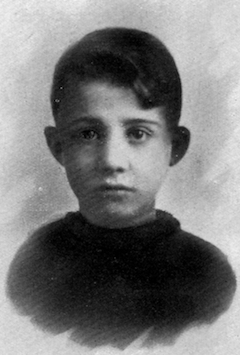
1938: Kasym Tynystanov, Kyrgyz intellectual

On this date in 1938, Kyrgyz intellectual and statesman Kasym Tynystanov was executed during Stalin’s Great Purge.


Kasym Tynystanov, on modern Kyrgyzstan’s 10-som bill.

Born in tsarist Russia’s mountainous frontier with Qing China, Tynystanov (English Wikipedia entry | Russian | Kyrgyz) was blessed by the exertions of his father and a local mullah with literacy — a gift shared by only about one in 40 of his countrymen.

He graduated from the Kazakh-Kyrgyz Institute of Education in Tashkent in 1924 and went on to a career in letters — literal letters, as he’s credited with being the first to regularize the Kyrgyz tongue in Latin characters. He would publish several works on the Kyrgyz language; he also compiled the oral folklore of his people, and wrote verse of his own.

Tynystanov served as People’s Commissariat of Education and chaired the language and literature organ of the Kyrgyz Research Institute of Culture.

In 1938 he received Stalinism’s customary reward for the conscientious public servant and was accused as a counterrevolutionary nationalist and shot. The Soviet Union officially rehabilitated him in the post-Stalin era.

On this day..

2009: Xu Wei, Jilin gangster

China’s state-run Xinhua News Agency reported thusly:

CHANGCHUN, Nov. 5 (Xinhua) — A Mafia ring leader, who is also son of a former high-ranking city official, was executed Thursday by lethal injection in Changchun, capital of northeast China’s Jilin Province, according to a court statement.

Convicted of murder, kidnapping, intentional injury, extortion and other crimes, Xu Wei, 42, was sentenced to death by the Changchun Intermediate People’s Court on Sept. 20, 2007. The Higher People’s Court of Jilin Province ruled against Xu’s appeal and upheld the first-instance verdict on July 10, 2008. The Supreme People’s Court approved the death sentence after reviewing the case.

Xu, deputy manager of Yushu City Thermal Power Co. and son of Xu Fengshan, former deputy mayor of Yushu city, was found to have provided guns to two gangsters who shot dead Xu’s business rival in 1997. Xu even pulled strings through his police complice and bailed out one of the killers, the court was told.

Believing a township head didn’t pay him enough respect, Xu ordered his men to beat him to death in 1998. In the end, the man was struck into coma and died in hospital in 2000 at the age of 49, court verdict said.

In a separate case, the father Xu Fengshan was sentenced to death with a reprieve of two years for taking more than 20 million yuan (2.93 million U.S. dollars) in bribery and harboring criminal organizations.

On this day..

1807: Henry Niles

From the Greenfield (Massachusetts) Gazette, November 30, 1807:

NEW LONDON, (Con.) Nov. 11.

On Wednesday last, Henry Niles, an Indian, was executed in this city, for the murder of his wife, pursuant to the sentence of the Supreme Court.

The day before his execution the prisoner attempted to anticipate his sentence, and with a piece of the blade of a knife opened a vein in his thigh, from which a large quantity of blood issued before his purpose was prevented.

On the day of execution, he was taken from prison by the Sheriff and his Deputies, (the Independent Company acting as guards) and carried to the Presbyterian meeting house, where a sermon was preached by the Rev. Mr. [Abel] M’Ewen.

At the place of execution the prisoner made a short speech to the spectators, and was then launched into eternity.

It is 21 years since the execution of a criminal in this city, and the spectacle of the public death of a human being, though “a poor Indian,” drew together a large concourse of people; the number has, by many observers, been computed at 6, 8, and 10 thousand. The prisoner behaved with much calmness, and when passing from prison thro’ the crowd, his countenance bespoke the magnanimity of the American savage.

The death of his wife was occasioned by a quarrel produced by intoxication, the effects of which are known to be peculiarly mischievous among the aborigines of America.

On this day..

1913: Captain Manuel Sanchez Lopez

On this date in 1913, Spanish Captain Manuel Sanchez Lopez was shot for a scandalous affair of incest and murder.

You’ll need Spanish for most sources on this tawdry tale. Our principal was a vicious lowlife of long repute, having driven his wife away by dint of his ungovernable affection for cheap brothels, gambling dens, and drunken brawls.

His oldest daughter, María Luisa Sanchez Noguerol, would be his semi-willing accomplice in the crime that ended Captain Sanchez’s life, but she had for many years before that been his victim: not only of the blows the father meted out to all his children, but also to his sexual attentions.

Captain Sanchez forced this daughter into prostitution to support his own degeneracy but he had a larger score in mind when he encouraged her to accept an assignation with a wealthy widower, Rodrigo Garcia Jalon. At this rendezvous, the father — who probably would have been better advised to content himself with the rents of blackmail or robbery — sprang from concealment and fatally bludgeoned the gentleman with a hammer.

Father and daughter desperately dismembered the body in hopes of concealing the crime but another of Manuel Sanchez’s oft-thrashed children denounced them to the police, to the very great delight of scandal-mongering newspapers throughout Europe. Everything was rumored: that the father had once or twice impregnated his own progeny, that they had pulled the seduction/murder trick several times before.


The discovery of the victim’s remains.

The father had the privilege of shooting instead of a garrote, thanks to his military rank. The daughter received a long prison sentence.

On this day..

1907: Afanasi Matushenko

On this date in 1907,* revolutionary sailor Afanasi Mat(y)ushenko was executed for his part in tsarist Russia’s Potemkin mutiny.

The son of a liberated serf, the Ukrainian Matushenko (English Wikipedia entry | the more detailed Russian) absconded in his childhood to enter imperial Russia’s industrial economy. After spending the late 1890s — his mid teens to early twenties — on the railroads and the docks he was conscripted into the navy.

The revolutionary year of 1905 finds Matushenko a quartermaster aboard the soon-to-be-famous battleship Potemkin stationed at Sevastopol, already politically radicalized enough to have participated in a revolutionary barracks riot the previous November.

Eisenstein is mandatory where the Potemkin is concerned but the fact is that the mutiny was not spontaneously generated: it had been planned, and Matushenko was a part of the planning.

On the day of the rising, it was he who led brother-sailors in a protest against worm-ridden rations, and he who eventually crossed the rubicon into mutiny by calling them to arms. He personally killed several of the ship’s officers, and with the mutiny’s success he was elected the chair of the ship’s executive committee.

The Potemkin sailed for Odessa where her aspirations to catalyze a wider rebellion ran (metaphorically) aground, and eventually sailed for Romania. Matushenko lived abroad for two years as a political refugee, crossing paths with kindred souls but indistinct in his political outlook, nearly terroristic. The leftist writer Vladimir Posse met Matushenko in Geneva and found him

Matyushenko … did not go into theory. And his practice was to destroy — precisely the destruction, not the elimination, of all the chiefs, all the masters, and above all the officers. For him, the people were divided into masters and subordinates … the lower ranks can free themselves only when the officers are “simply” destroyed. He himself killed two or three of his superiors during a riot on the Potemkin. And it seemed to him that the essence of the revolution lay in such murders. In this spirit, he wrote bloodthirsty proclamations to sailors and soldiers, urging them to kill officers. He thought that with such a program it was easy to attract all the sailors and most of the soldiers to the side of the revolution …

He considered himself to be doomed to die in battle or on the scaffold … He considered living in an emigrant position to be dishonorable, something of a betrayal. In his view, a true revolutionary is one who not only kills, but also dies himself.

In June 1907 he acted on the latter beliefs and returned to Russia — where he was promptly arrested and condemned by a military court to fulfill his prophesied destiny.

Several cities in the Soviet Union, including Sevastopol itself, had streets named for Sailor Matyushenko, and a Black Sea minesweeper received that name in 1969.

* November 2, 1907 per the Gregorian calendar. Tsarist Russia was still hanging on to the Julian calendar at this time.

On this day..

1946: Arthur Robert Boyce, the king’s housekeeper’s lover

To begin the twelfth year of these morbid annals, we’d like to direct readers to another resource for almanac execution-posting: the Facebook page of venerable death penalty resource Capital Punishment UK.

We have several times guest-reblogged a few of the many feature articles to appear on this site; its copious archives are also a regular research stop for the Headsman and anyone else interested in death penalty history.

They’ve upped their Facebook game recently with daily anniversary-of posts frequently about individual cases from their annals.

Here’s a teaser from today’s entry:

In the summer of 1946 King George II of Greece had rented a house at 45 Chester Square, Belgravia. He required a house keeper and Elizabeth was appointed. She gave references which were found to have been written by Boyce. Although the property was being renovated, she lived in, alone. She invited Boyce to move in and he did so on the 1st of June, 1946.

Someone winds up on the gallows by November 1 of that same year. Read on to find out, and give the page a follow if you routinely thumb the book of faces.

On this day..

1926: Anteo Zamboni, Mussolini near-assassin, lynched

Halloween of 1926 was a festival of triumph for the Italian fascists … and they crowned it in a festival of blood.

The occasion marked (not exactly to the day) the fourth anniversary of Benito Mussolini‘s bloodless coup via the October 1922 March on Rome. And as a gift for himself and his populace, Benito Mussolini on that date inaugurated Bologna’s Stadio Littoriale by riding a charger into the arena and delivering a harangue.


Fascist-built and still in service, it’s now known as the Stadio Renato Dall’Ara and it’s home to Bologna F.C. 1909. (cc) image by Udb.

After another address to a medical conference later that afternoon, Mussolini was motorcading down via Rizzoli in an Alfa Romeo when a gunshot whizzed through his collar.*

It had been fired by a 15-year-old anarchist named Anteo Zamboni, vainly and sacrificially hoping to turn history’s tide with a well-placed bullet.

Instead, his act would offer Il Duce a Reichstag Fire-like pretext — there was always bound to be one, sooner or later — for a raft of repressive legislation including the creation of a nasty secret police, the dissolution of political opposition, and (of interest to this here site) reintroduction of the death penalty.**

But Anteo Zamboni would see his penalty delivered summarily after the crowd seized him.†

Zamboni was done to death with blows and blades by Mussolini’s fascist admirers right on the spot. In a turn of heart, Bologna — by tradition a leftist stronghold — now has a street named for the young would-be assassin. (Here is the source for the ghastly Mature Content images below of Zamboni’s brutalized corpse.)

The incident is the subject of the 1978 film Gli Ultimi Tre Giorni.

* Zamboni’s was only one of three assassination attempts on Mussolini in 1926 alone.

** Just days afterwards during the post-Zamboni repressive pall, the great Marxist intellectual Antonio Gramsci was tossed into prison, never to emerge. Gramsci’s Prison Notebooks issued out of his dungeon, before his health succumbed in 1937 to the intentional neglect of his captors.

† It’s reportedly cavalry officer Carlo Alberto Pasolini who first detained the youth: the father of postwar film director Pier Paolo Pasolini.

On this day..

1799: Sarah Clark, a melancholy instance of human depravity

The ensuing poem, titled “Melancholy Instance of Human Depravity” and published in an 1805 collection, laments a serving-girl’s murder by arsenic of the master and mistress of her house. It was a crime of unrequited love: the intended victim of the poisoned bread was not this couple but their daughter, whom Sarah Clark fancied a rival for the affections of a young man in her former household. Sarah Clark hanged for the murders on October 30, 1799, in Carlisle, Pennsylvania, but Miss Isabella Oliver was never punished for her verse.

UPON the bank of a slow-winding flood
The good Alphonso’s modest mansion stood;
A man he was throughout the country known,
Of sterling sense, to social converse prone:
He walk’d the plains with such majestic grace,
When time had drawn its furrows on his face,
‘Twas easy to infer his youthful charms,
When first the fair Maria bless’d his arms:
Maria—Oh! what mix’d emotions rise,
Grief, pity, indignation; and surprise,
At thought of thee! —

Thy sweetness might have mov’d the harshest mind;
Thy kindness taught th’ ungentlest to be kind;
And yet a fiend enshrin’d in female mould
Could thy heart-rending agonies behold;
When by her cruel wiles thy wedded heart
Was basely sever’d from its dearest part.
The lov’d Alphonso’s breathless corpse she view’d,
And yet her harden’d heart was unsubdu’d.
Perhaps, she saw thee sink beside his bed,
Or lean in speechless sorrow o’er the dead;
Or heard thee faintly cry — The knot’s unti’d
Come, gentle death, thou cans’tnomore divide:
But spare our children, our lov’d offspring spare;
They still are young, and life is worth their care.
To me the charm that sweeten’d life is gone;
Weep not, my friends, I cannot die too soon.
Fast through her reins the subtle poison spread,
And join’d with grief, to bow her aged head.
Her children strive her drooping head to stay;
The monster works to rend those props away;
But triumphs not: a greater power sustains
And bears them through excruciating pains.
Oft did Maria, in serener days,
With tender transport on her offspring gaze;
Maternal love was pictur’d in her face,
The happy parent of a blooming race;
Now the fond mother feels at every pore;
Worse than her own, the pangs her children bore.
Yet still herself, sweet, affable, and mild,
The patient sufferer on her murd’rer smil’d;
Who by her bed officiously attends,
Concern and kind solicitude pretends,
Yet still pursues her own infernal ends.

Hence aid medicinal is render’d vain,
By frequent potions of the deadly bane;
While cruel torture rack Maria’s frame,
And by degrees puts out the vital flame.
Now pause, my muse, and seriously enquire,
What could this hellish cruelty inspire!
Why strike at those who no offence had given?
It seems like stabbing at the face of heaven!
In her dark mind what ugly passions breed!
Like gnawing worms, they on her vitals feed.
Without an object, what could malice do?
Alvina’s near, she’s often in her view;
In her polluted soul foul envy’s rais’d;
Because perhaps she hears Alvina prais’d;
A groundless jealousy her breast inflames;
‘Gainst thee, Alvina, she the mischief aims.
The wicked miscreant working in the dark,
Spreads ruin round, but cannot hit the mark:
A power divine restrains the falling blow
Thus far thou may’st, but shalt no farther go.
What deadly venom rankled in that breast!
What worse than poison must the soul infest,
Which still its fatal purpose could pursue,
Tho’ general destruction might ensue!
Oh! sin, prolific source of human woe!
To thee mankind their various sorrows owe;
Thro’ thee our world a gloomy aspect wears,
Ajd is too justly stil’d a vale of tears.
Man was first form’d upon a social plan;
And tie unnumber’d fasten man to man:
None are, howe’er debas’d, in form or mind,
Cut off from all communion with their kind.
Witness the wretched subject of these lines.
Alas! how many suffer’d by her crimes!
Who more detach’d, of less import, than she?
Yet mark her influence on society.
But there are crimes of a less shocking kind,
That find an easy pass from mind to mind:
As fire spreads from one building to another,
The vicious man contaminates his brother;
Why wonder, then, that Adam could deface
His maker’s image in an unborn race?
When his own hand the sacred stamp had torn,
Could he transmit it whole to sons unborn?
In him the foul contagion first began;
From sire to son the deadly venom ran;
Thus poisoning all the mighty mass of man.

The sad effect is dreadful to endure;
But human wisdom could not find a cure:
Thus, Scripture, reason, and experience, tend
To prove, the power that made alone can mend.
Oh! Christ, thou sum and source of every good,
Thou that for sinners shed’st thy precious blood,
In thee our various wants are all suppli’d;
Thy death our ransom, and thy life our guide.
In thee thy followers second life attain;
And man reflects his maker’s face again.
Is sin progressive, spreading every hour?
Has heaven-born virtue no diffusive power?
Our blessed Saviour is a living head;
The streams that issue from him can’t be dead,
But scatter life and fragrance, as they spread.

On this day..

1965: Eighteen prison rioters from Pulau Senang

On this date in 1964, newly-independent Singapore hanged 18 former inmates of the Pulau Senang penal settlement for a deadly 1963 riot.


Pulau Senang. (cc) image by Jnzl.

“Island of Ease” the name means in Malay — but inmates at the experimental prison colony established there in 1960 found it anything but. Singapore’s 1959 elections, its first under self-rule within the British Empire, brought in the People’s Action Party. The PAP still rules Singapore to this day, famously tough on crime.

Ever thus. One of PAP’s objectives in 1959 was to root out a plague of gangsterism in the city, and to that end it instituted the Pulau Senang settlement on the virtually uninhabited 81-hectare coral island. It had a classic penitential vision: hard-core underworld gangsters sweating away their appetite for crime, learning hard work and practical trade skills, emerging reformed — “every violent lawless man could find their own way back to decent society given a proper chance and hard work,” in the words of its superintendent, Irishman Daniel Stanley Dutton.

And it had its moment in the sun: during the colony’s short life, several hundred of its inmates were found sufficiently rehabilitated for release.

But obviously not every resident was a success story, for on July 12, 1963, a confrontation over laboring conditions on the Isle of Ease spiraled into a mutiny that saw the inmates hack Dutton himself to death with the tools he’d given them to save their own souls. Two of Dutton’s assistants were also slain in the rising, and before gendarmes arrived to restore order the inmates had torched and sacked most of the colony infrastructure that they and their predecessors had painstakingly constructed over the preceding three years.

The ensuing mass trials saw a shocking 18 men capitally convicted and eventually hanged on a single date: October 29, 1965. (Twenty-nine others received lesser prison sentences for mere rioting convictions.)

Dutton’s untimely end also meant the end of his project, which was retired from the Singapore penal system in 1964. Today, it’s a military testing grounds and live-fire range.

On this day..

1949: Nicolae Dabija, anti-communist partisan

On this date in 1949, the Romanian anti-communist partisan Nicolae Dabija (English Wikipedia entry | Romanian) was shot at Sibiu, along with six other members* of that resistance.

Although cousin to Romania’s pre-Ceausescu Communist ruler Gheorghe Gheorghiu-Dej, Dabija — not to be confused with the 19th century general of that name nor with the latter-day Moldova M.P. of the same name — charted a distinctly separate ideological course.

He was decorated for his service on the Axis’s Eastern Front during World War II, but this same credential got him expelled from the army in the postwar Red takeover.

Nothing daunted, Dabija and some like-minded comrades** formed an armed anti-communist militia a few dozen strong in Transylvania’s Apuseni Mountains named the National Defense Front, Haiducian Corps — a nod to the Balkans’ historical outlaws/rebels. The Securitate reduced them over the course of 1948-1949 months, culminating in a March 3-4, 1949 forest battle that brought Dabija et al into custody.

* Ioan Scridon, Traian Mihaltan, Titus Onea, Augustin Ratiu, Gheorghe Oprita, Silvestru Bolfea. (Source)

** Brothers with the apt surname Macavei.

On this day..