On this date in 1717 a witch hunt in the Bavarian town of Freising concluded with the beheading of three beggar children as magicians.*
The accusations of other kids in the city against two youths named Andre and Lorenz got the snowball rolling with the aid of adults credulous enough to believe the pubescent warlocks could conjure piglets and mice.
Andre and Lorenz, naturally, then supplied confessions and additional accusations, as a result of which several more children aged 9 to 14 were arrested, all of them cajoled and tortured towards symoptic allegations. Thirteen-year-old Andre eventually hanged himself; Lorenz and two others were put to sword and fire on November 12, 1717.
Notably, two other boys were spared execution but forced to watch their fellows’ fate. One of those, Veit Adlwart, would stand at the center of a second Kinderhexenprozess in Freising that claimed eight boys and three adults in the early 1720s. Veit Adlwart was put to death on December 15, 1721.
* Street children were at great risk of catching the witch stigma given the wrong place at the time.
On this date in 1773, Eva Faschaunerin was beheaded for the arsenic murder of her husband Jakob Kary, mere weeks after their 1770 marriage.
Faschaunerin (English Wikipedia entry | German), who was interrogated on the rack, is distinguished as the last victim in the Austrian empire of official judicial torture: the practice was abolished in 1776 by Maria Theresa.
She’s still well-known in her locale, the Alpine Lieser-Maltatal region and even further afield than that; the town of Gmünd has an Eva Faschaunerin museum in its former jail.
Halloween of 1926 was a festival of triumph for the Italian fascists … and they crowned it in a festival of blood.
The occasion marked (not exactly to the day) the fourth anniversary of Benito Mussolini‘s bloodless coup via the October 1922 March on Rome. And as a gift for himself and his populace, Benito Mussolini on that date inaugurated Bologna’s Stadio Littoriale by riding a charger into the arena and delivering a harangue.
Fascist-built and still in service, it’s now known as the Stadio Renato Dall’Ara and it’s home to Bologna F.C. 1909. (cc) image by Udb.
After another address to a medical conference later that afternoon, Mussolini was motorcading down via Rizzoli in an Alfa Romeo when a gunshot whizzed through his collar.*
It had been fired by a 15-year-old anarchist named Anteo Zamboni, vainly and sacrificially hoping to turn history’s tide with a well-placed bullet.
Instead, his act would offer Il Duce a Reichstag Fire-like pretext — there was always bound to be one, sooner or later — for a raft of repressive legislation including the creation of a nasty secret police, the dissolution of political opposition, and (of interest to this here site) reintroduction of the death penalty.**
But Anteo Zamboni would see his penalty delivered summarily after the crowd seized him.†
Zamboni was done to death with blows and blades by Mussolini’s fascist admirers right on the spot. In a turn of heart, Bologna — by tradition a leftist stronghold — now has a street named for the young would-be assassin. (Here is the source for the ghastly Mature Content images below of Zamboni’s brutalized corpse.)
** Just days afterwards during the post-Zamboni repressive pall, the great Marxist intellectual Antonio Gramsci was tossed into prison, never to emerge. Gramsci’s Prison Notebooks issued out of his dungeon, before his health succumbed in 1937 to the intentional neglect of his captors.
† It’s reportedly cavalry officer Carlo Alberto Pasolini who first detained the youth: the father of postwar film director Pier Paolo Pasolini.
October 14 is the original feast date* and alleged martyrdom date of early Christian saints Gervasius and Protasius.
Reputedly the twin sons of two othermartyrs, their iconographic devices are the scourge, the club, and the sword, all of which implements were rudely employed by Nero’s (or possibly Domitian’s) executioners
Although put to death in Ravenna, their relics repose in macabre magnificence at Milan’s Basilica of Saint’Ambrogio; for this reason, the Roman church considers them patron saints of that city, and keeps their feast date on June 19, the anniversary of their relics’ translation. The Orthodox still mark the October 14 feast, which, being the execution date, is of considerably more interest to these grim annals.
Remains of Gervasius and Protasius at Milan’s Basilica Sant’Ambrogio, along with the remains of the cathedral’s builder and namesake, Saint Ambrose. (cc) image from BáthoryPéter.
(Thanks to John Lothrop Motley for the guest post on the rudely truncated burning of Christopher Smith, an apostate monk turned popular preacher under the name “Fabricius”, at Antwerp on this date in 1564. It originally appeared in Motley’s The Rise of the Dutch Republic: A History. -ed.)
A remarkable tumult occurred in October of this year, at Antwerp. A Carmelite monk, Christopher Smith, commonly called Fabricius, had left a monastery in Bruges, adopted the principles of the Reformation, and taken to himself a wife. He had resided for a time in England; but, invited by his friends, he had afterwards undertaken the dangerous charge of gospel-teacher in the commercial metropolis of the Netherlands.
He was, however, soon betrayed to the authorities by a certain bonnet dealer, popularly called Long Margaret, who had pretended, for the sake of securing the informer’s fee, to be a convert to his doctrines. He was seized and immediately put to the torture. He manfully refused to betray any members of his congregation, as manfully avowed and maintained his religious creed.
He was condemned to the flames, and during the interval which preceded his execution, he comforted his friends by letters of advice, religious consolation and encouragement, which he wrote from his dungeon. He sent a message to the woman who had betrayed him, assuring her of his forgiveness, and exhorting her to repentance. His calmness, wisdom, and gentleness excited the admiration of all.
When, therefore, this humble imitator of Christ was led through the streets of Antwerp to the stake, the popular emotion was at once visible.
To the multitude who thronged about the executioners with threatening aspect, he addressed an urgent remonstrance that they would not compromise their own safety by a tumult in his cause. He invited all, however, to remain steadfast to the great truth for which he was about to lay down his life.
The crowd, as they followed the procession of hangmen, halberdsmen, and magistrates, sang the hundred and thirtieth psalm in full chorus.
As the victim arrived upon the market-place, he knelt upon the ground to pray, for the last time. He was, however, rudely forced to rise by the executioner, who immediately chained him to the stake, and fastened a leathern strap around his throat. At this moment the popular indignation became uncontrollable; stones were showered upon the magistrates and soldiers, who, after a slight resistance, fled for their lives.
The foremost of the insurgents dashed into the enclosed arena, to rescue the prisoner. It was too late. The executioner, even as he fled, had crushed the victim’s head with a sledge hammer, and pierced him through and through with a poniard.
Some of the bystanders maintained afterwards that his fingers and lips were seen to move, as if in feeble prayer, for a little time longer, until, as the fire mounted, he fell into the flames.
For the remainder of the day, after the fire had entirely smouldered to ashes, the charred and half-consumed body of the victim remained on the market-place, a ghastly spectacle to friend and foe. It was afterwards bound to a stone and cast into the Scheld. Such was the doom of Christopher Fabricius, for having preached Christianity in Antwerp.
During the night an anonymous placard, written with blood, was posted upon the wall of the town-house, stating that there were men in the city who would signally avenge his murder. Nothing was done, however, towards the accomplishment of the threat.
The King, when he received the intelligence of the transaction, was furious with indignation, and wrote savage letters to his sister, commanding instant vengeance to be taken upon all concerned in so foul a riot. As one of the persons engaged had, however, been arrested and immediately hanged, and as the rest had effected their escape, the affair was suffered to drop.
The 80 or so guerrillas operating in the eastern Amazon aspired to run that Che Guevara rural-insurgency playbook, as it announced in a May 1972 manifesto. It didn’t work: the Brazilian military successfully suppressed the revolution in a series of campaigns over the next two-plus years. Only about 20 of the guerrillas survived.
One of those lucky ones, Angelo Arroyo,* gave an account of her death:
On September 29, there was an ambush that resulted in the death of Helenira Resende. She, along with another companion, was on guard at a high point in the woods. On that occasion, troops came along the road. As they found the passage dangerous, they sent scouts to explore the side of the road, precisely where Helenira and the other companion were. The latter, when he saw the soldiers, fired the machine gun, which did not work. He ran and Helenira did not realize what was happening. When she saw the soldiers were already in front of her. Helenira fired a 16-round shotgun. The other soldier gave a blast of machine-gun fire that struck her. Injured, she pulled out the revolver and shot the soldier, who must have been hit. She was arrested and tortured to death.
Her bayoneted body was secretly buried by sympathetic campesinos and has never been recovered; officially, she’s still considered a fugitive. Her unit adopted the tributary name Destacamento Helenira Rezende; more recently, the University of Sao Paulo’s postgraduate association has been named in her honor.
* He wasn’t lucky for long: Arroyo was assassinated with a fellow Communist leader by military officials in Sao Paulo in 1976.
Mao Zemin, younger brother of Communist leader Mao Zedong, was executed on this date in 1943.
A party cadre since 1921, the non-chairman Mao served a variety of economic leadership posts for the Red Army.
As of early 1941, Mao (English Wikipedia entry | the far more voluminous Chinese) was detailed to the western province of Xinjiang, where the warlord Sheng Shicai maintained friendly relations with the neighboring Soviet Union.
To Mao’s grief, this “King of Xinjiang” saw in the unfolding global war an opportunity to realign.
After the German invasion of the USSR in 1941, Sheng boldly flipped his affiliation from Moscow to the nationalist Kuomintang government with which he had theretofore maintained only the frostiest of relations. Crackdowns on Communists ensued too, and both Mao Zemin and Chen Tanqiu were both arrested, tortured, and executed as a result.
Needless to say this KMT-Xinjiang axis did not hold the Celestial Empire’s destiny and the whole decision to fade Moscow looks pretty dumb in retrospect. Sheng, however, surely did not much regret the gambit since he was able to follow the nationalists to Taiwan and spend a comfortable retirement writing memoirs like Sinkiang: Pawn or Pivot?
Mao’s son Mao Yuanxin, a still-living pensioner as of this writing, was a political figure in the 1970s who was jailed post-Gang of Four.
On this date in 1714, Geczy Julianna was executed in the marketplace of Gyor as a traitor.
“The White Woman of Locse” — which is also the title of an 1884 romantic novel about her life by Mor Jokai — this woman allegedly betrayed that place* into the hands of imperial Habsburg troops during Hungary’s unsuccessful 1703-1711 rebellion. Sober historians view her as simply a person trusted to serve as the emissary between the garrison and its Habsburg besiegers which role would eventually entail her communicating the defenders’ surrender.
She salvaged her reputation for posterity — and set herself up for torture and execution — by paying the betrayal forward to the empire when she destroyed a number of documents sought by the imperial marshal Janos Palffy that could have incriminated Kuruc nobles in plotting for a renewal of hostilities.
“How can a woman sacrifice her whole country for a kiss, and then sacrifice her handsome head for the same country?” Jokai mused of his paradoxical subject. “What reconciles the heaven and hell in the character of a woman?”
* Formerly part of Hungary’s northern reaches, this town today resides in Slovakia.
The execution of legendary German bandit and mass-murderer Peter Niers took place in Neumarkt on this date in 1581 … or at least, it started on this date.
A veritable bogeyman figure thanks to the reputation-magnifying effects of early print culture, Niers/Niersch (English Wikipedia entry | the cursory German) enjoyed a years-long career in brigandage across the fractured German map, with upwards of 500 murders to his name.*
No matter the plausibility discount we we might reckon for this sensational figure, it is verifiable that Niers was was an early modern public enemy for years before his death. He enters the documentary trail in 1577 when the first of several known crime pamphlets** about him hit movable type upon Niers’s arrest in the Black Forest town of Gersbach. Under torture, he copped at that time to 75 murders … and then he broke out of captivity and into the nightmares of every German traveler wending gloomy highways through the unguarded wilds.
Actually “rather old,” according to an arrest warrant, with crooked fingers and a prominent scar on his chin, the fugitive Niers gained an outsized reputations for disguise and ferocity. As Joy Wiltenburg describes in Crime & Culture in Early Modern Germany, that Niers of fable became like Keyser Soze “assimilate[d to] various supernatural elements” that elevated the crafty gangster into a shapeshifter or magician powered by a demonic patron.
The roving killer Peter Niers and his gang appeared in a number of accounts, several without demonic content. Johann Wick followed Niers’s career with horror; his collection includes three pamphlets on his misdeeds between 1577 and 1582. Niers was arrested and tortured in Gersbach in 1577, confessing to seventy-five murders. According to a song pamphlet from 1577, he learned the art of invisibility from an earlier arch-murderer, Martin Stier. (Wick also owned an account of Stier’s misdeeds and added a note in the margin of the Niers pamphlet, cross-referencing Stier’s 1572 execution in Wurttemberg.) Both Stier and Niers confessed to killing pregnant women. Each had also ripped a male fetus from the mother’s body, cut off its hands, and eaten its heart. Niers evidently escaped in 1577, to be rearrested in 1581 and this time finally executed. According to the pamphlet account, he was caught only because he was separated from the sack containing his magical materials and so could not turn invisible. Here the capture is considered an act of God, but the Devil gets no explicit credit for Niers’s evil magic or his 544 murders, including those of 24 pregnant women. Only the final pamphlet, printed in Strasbourg in 1583, fully explains the diabolical reason for the mutilation of fetuses. Here, the Devil makes an explicit pact with the killers and promises them supernatural powers from the fetal black magic.
He must have been a few fetuses late by the end, for it was his disguise that failed him when he slipped into Neumarkt in August 1581 intending to freshen up at the baths. Instead, he was recognized and arrested.
His body — already put to the tortures of pincers and oil — was shattered and laid on the breaking-wheel on September 16, 1581, but it was two agonizing days before this terror of the roads finally breathed his last.
On this date in 1704, the great Camisard commander Pierre Laporte was publicly burned. He was already two days dead, but the same could not be said by five comrades-in-rebellion who were quite alive as they were broken on the wheel.
Familiarly known by the nom de guerre “Roland”, Laporte (English Wikipedia entry | the far more detailed French) was a whelp of 22 when entrusted with command of about 400 Protestant guerrillas operating around Lassalle, and his native Mialet.
These were rebels in a very dirty regional civil war in France’s heavily Protestant southeast, following the crown’s revocation of tolerance for the heretics. Roland proved himself one of its ablest prosecutors, putting Catholics to fire and sword be they enemy troops or wrongthinking neighbors.
By 1704 the insurgency was circling the drain as Camisard officers were either killed off or bought off. Our self-proclaimed “general of the children of god” was not the type to be had for 30 pieces of silver plus an army commission,* and so only violence would do for him. On August 14, betrayed by an informer who was amenable to purchase, Roland was slain in a Catholic ambush at Castelnau-les-Valence. Five officers escorting him opted not to go down fighting and surrendered instead, which proved a regrettable decision.
But even death could not slake the vengeance of his foes. “On the 16th August, 1704, the body of Roland Laporte, general of the Camisards … was dragged into Nimes at the tail of a cart and burnt, while 5 of his companions were broken on the wheel around his funeral pyre.”
For the unusually interested reader, there’s a 1954 French biography by Henri Bosc — who also authored a multi-volume history of the Camisard war — titled Un Grand Chef Camisard Pierre Laporte dit Roland, 1680-1704. It’s long out of print and appears to be difficult to come by.
* Not long before Roland’s defeat, just such a deal had shockingly induced fellow Camisard commander Jean Cavalier to turn coat.


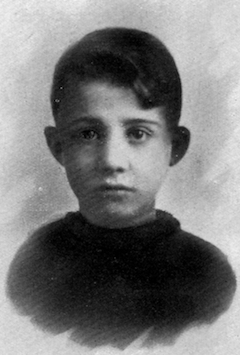 It had been fired by a 15-year-old anarchist named


 “Preta” to her comrades, she was a silver-tongued student activist at the University of Sao Paulo who had been clapped in prison by the
  A party cadre since 1921, the non-chairman Mao served a variety of economic leadership posts for the Red Army.
 “The White Woman of