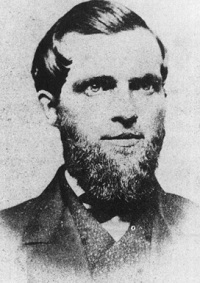
1512: Five young Ottoman princes

For many generations from the 14th to 17th centuries, new Ottoman heirs maintained themselves by the cruel practice of preventive fratricide.

Enforced at varying levels of systematicity, the destruction of the men best positioned to assert a claim of bloodline legitimacy against the new sultan might arguably have been one of the bulwarks of the empire’s prosperity. It insulated the Sultanate from protracted succession crises, civil war, and political fragmentation. With each generation’s passing, power coalesced into one man.

Precedent for this sanguine consanguity policy runs back at least to the 1389 Battle of Kosovo, where the death of the sitting sultan resulted in the soldiers’ enforcing their acclamation of Bayezid I as his heir by putting to death the sultan’s brother Yakub.

The sagacity, if not the humanity, of Bayezid’s action was underscored in 1402 when Bayezid was captured in battle by the Timurids and the ensuing 11-year “Ottoman Interregnum” saw the empire strained near to breaking as brother fought brother for succession until Mehmed I emerged victorious in 1413. Having attained power by killing off three siblings, he got the nickname “Mehmed Kirisci” — “Bowstring Mehmed”, after the implement by which the mighty were strangled out of the Turkish game of thrones.

His grandson Mehmed II, the man who conquered Constantinople, formalized what had been simply wise practice into written law, e.g.:

And whoever of my children manages to reach the throne, it is fitting that he should kill his brothers, for the sake of the order of the world. Most of the ulema permit that. Let them act on that. (Source)

In Mehmed the Conqueror’s day, the child “managing to reach the throne” was the winner among the sons, who were posted to various regional outposts to earn their spurs in governance, in a scramble back to the Porte upon word of the old man’s death. This meant that in life, the boys were in a constant struggle for the privilege of central assignments and to nurture their own palace networks who when the day came could provide speedy notification of the impending succession and smooth recognition of a claim by the state apparatus. “The first son to reach the capital and win recognition by the court and the imperial troops became the new ruler,” Donald Quataert writes. “This was not a very pretty method; nonetheless it did promote the accession of experienced, well-connected, and capable individuals to the throne, persons who had been able to win support from the power brokers of the system.” The sitting sultans naturally put their own thumbs on the scale, too.

We are arriving, ever so circuitously, to the date’s honorees, and as one might suppose they were princes of the blood.

Come 1512, we find Mehmed the Conqueror’s son Bayezid II forcibly deposed by his son Selim. All those incentives favoring experienced, well-connected and capable individuals could also induce such a figure to take his advantage when it presented itself rather than awaiting the mischance of racing messengers. In Selim’s case, the father openly favored a different brother, Ahmet, so Selim and Ahmet were at each other’s throats (and dad’s too) well before Bayezid departed the scene.

Long story short, Selim got the kingmaking Janissaries on his side and lodged himself in the palace but his brother fought on against him. Selim would have to secure his power in 1512-1513 by an unusually thorough purge that set him up to earn the nickname “Selim the Grim”.*

Selim had seven brothers, five of whom were fortunate enough to predecease their father, and these seven brothers had collectively fathered nine sons of their own. Selim had quite a number possible rivals to dispose of.

In the months after his conquest of power, Selim wintered in Bursa, where he had interred five of his young nephews. (The other four nephews were all Ahmet’s sons, and still at large.) Some bout of fresh resistance by Ahmet induced Selim, on November 27, 1512, to do the grim thing:

The eldest of them, Osman, son of Prince Alemshah, was twenty years old; the youngest, Mahomet, son of Prince Schehinshah, was only seven. Selim sent Janissaries to apprehend them, and they were shut up by his orders in one apartment of the palace. On the next morning, the Sultan’s mutes entered to put them to death. A fearful scene ensued, which Selim witnessed from an adjoining chamber. The youngest of the captive princes fell on their knees before the grim executioners, and with tears and childish prayers and promises begged hard for mercy. The little Prince Mahomet implored that his uncle would spare him, and offered to serve him all the days of his life for an aspre (the lowest of all coins) a day. The elder of the victims, Prince Osman, who knew that there was no hope of mercy, rushed fiercely upon the murderers, and fought hard for a time against them. One of the mutes was struck dead, and another had his arm broken. Selim ordered his personal attendants to run in and assist in the execution; and at length the unhappy princes were overpowered by numbers, and strangled. Their bodies were deposited with all display of royal pomp near the sepulchre of Amurath II. (Source)

Six months later, Ahmet — defeated and in his own turn throttled with a bowstring — joined them in the same tomb.

* All told, Selim the Grim ordered something like 30,000 executions in his eight-year reign.

On this day..

1483: Henry Stafford, Duke of Buckingham

On this date in 1483, the Duke of Buckingham was beheaded at Salisbury for rebelling against Richard III.


Shakespeare’s treatment of Buckingham’s death in Richard III:

“Why, then All-Souls’ day is my body’s doomsday.
This is the day that, in King Edward’s time,
I wish’t might fall on me, when I was found
False to his children or his wife’s allies

Come, sirs, convey me to the block of shame;
Wrong hath but wrong, and blame the due of blame.”

Buckingham — Henry Stafford by name — resided firmly in the 1% of the 1% for 15th century England: a dangerous neighborhood since the War of the Roses was afoot, felling noblemen hither and yon. (Henry Stafford became the Duke of Buckingham as a toddler when his father was mortally wounded at the Battle of St. Albans.)

Our Buckingham could count five Kings of England among his close relations; he himself was married right into Edward IV‘s household when he was wed at age 10 to Catherine Woodville, the seven-year-old sister of the commoner-queen Elizabeth Woodville. That made Buckingham uncle to the two sons and possible heirs of Edward IV.

But every family has its black sheep. Buckingham wasn’t keen on the Woodvilles despite his presence on their Christmas card list, and when King Edward died relatively young in 1483, Buckingham backed the succession in power not of the Woodvilles, but of Edward’s brother Richard, Duke of Gloucester — the man who indeed became king as Richard III.

Technically, Richard started out as Lord Protector on behalf of the boy-king Edward V and his little brother Richard, before he had the twerps declared illegitimate and disappeared them in 1483 into the Tower of London. Buckingham himself is one of the lead suspects for the man who urged or even carried out the murder of these Princes in the Tower.

The prospect that Buckingham’s alliance with Richard III extended all the way to regicide makes quite curious the former’s turn later that same year to rebellion — for as Thomas More would write, “hereupon sone after [the murder of the princes] began the conspiracy or rather good confederacion, between ye Duke of Buckingham and many other gentlemen against [Richard III]. Thoccasion wheruppon the king and the Duke fell out, is of divers folks diverse wyse pretended.”

Buckingham’s right to the marquee of the autumn 1483 “Buckingham’s Rebellion” has been doubted, for leadership of the various uprisings in southern England and Wales appears to belong to those “other gentlemen” of the gentry.

“Buckingham’s” rebellion was easily defeated but it augured a much deeper threat to Richard’s crown than one peer’s enmity — for the rebellion declared in favor of Henry Tudor, a last-gasp, exiled Lancastrian claimant descended from a Welsh courtier.

Buckingham himself was captured, condemned as a traitor, and publicly beheaded at Salisbury on November 2, 1483. He was one of numerous principals in the rising to go to the scaffold, but Henry’s cause continued to accumulate adherents — until not two years later, Henry defeated Richard at the Battle of Bosworth Field.

In Shakespeare’s treatment, the ghost of the executed Buckingham aptly appears to Richard III on the eve of this climactic moment of English history to prophesy his former ally’s defeat:

The last was I that helped thee to the crown;
The last was I that felt thy tyranny:
O, in the battle think on Buckingham,
And die in terror of thy guiltiness!
Dream on, dream on, of bloody deeds and death:
Fainting, despair; despairing, yield thy breath!

Buckingham left a five-year-old heir, Edward Stafford, who was spirited into hiding, away from the vengeful King Richard. This third Duke of Buckingham would in the fullness of time grow to to be executed by Henry Tudor’s son, Henry VIII.

The History of England podcast covers this gentleman in detail in episode 189.

On this day..

1284: Tekuder, Mongol sultan

On this date in 1284, the deposed Mongol ruler Tekuder was put to death.

The Mongols had conquered half the world on the back of steppe horses and religious toleration. Mongols variously adopted Nestorian Christianity, Buddhism, and Islam, as well as tribal shamanism; it even sponsored debates among the rival confessions. What counted in the end for the men who commanded its armies was wins and losses.

Our man Tekuder was the son of Hulagu Khan, a grandson of Genghis Khan who exemplified pluralistic competence. The son of a Christian but an eventual convert to Buddhism, Hulagu Khan’s signal achievement in the religious arena was done by his sword-arm: he defeated and destroyed the Abbasid Caliphate.

In time, three of the four large khanates comprising the Mongol ascendancy would declare themselves for Islam … but in the 13th century the doctrine most likely to get you in trouble was simply to be too doctrinaire.

Hulagu’s son and heir Tekuder, though once baptized into his parents’ Christian faith, turned to Mohammed’s faith with a convert’s zeal and demanded the compliance of his military brass. He declared the Ilkhanate of Persia and Mesopotamia a Muslim sultanate, and tilted Mongol diplomacy away from the Franks and towards Mamluk Egypt.

This split Tekuder’s coalition between Muslims on one side, and Christians and Buddhists on the other, and “the whole of the old Mongol party of malcontents, Buddhists and Nestorians alike, rallied to”* Tekuder’s own nephew Arghun.** One may infer from this entry which man prevailed.

Arghun enjoyed a successful seven-year reign with an incidental appearance in the Marco Polo saga: Arghun appealed to his great-uncle Kublai Khan to send him a wife, and Marco Polo was a part of the party that escorted that woman to Persia in 1291-1293.

Marco Polo would proceed back home to Venice after this voyage, laden with Spice Road riches after a quarter-century’s absence.

Arghun Khan of Persia, Kublai’s great-nephew, had in 1286 lost his favourite wife the Khatun Bulughan; and, mourning her sorely, took steps to fulfil her dying injunction that her place should be filled only by a lady of her own kin, the Mongol Tribe of Bayaut. Ambassadors were despatched to the Court of Kaan-baligh to seek such a bride. The message was courteously received, and the choice fell on the lady Kokachin, a maiden of 17, “moult bele dame et avenant.” The overland road from Peking to Tabriz was not only of portentous length for such a tender charge, but was imperiled by war, so the envoys desired to return by sea. Tartars in general were strangers to all navigation; and the envoys, much taken with the Venetians, and eager to profit by their experience, especially as Marco had just then returned from his Indian mission, begged the Kaan as a favour to send the three Firinghis in their company. He consented with reluctance, but, having done so, fitted the party out nobly for the voyage, charging the Polos with friendly messages for the potentates of Europe, including the King of England. They appear to have sailed from the port of Zayton (as the Westerns called T’swan-chau or Chin-cheu in Fo-kien) in the beginning of 1292. It was an ill-starred voyage, involving long detentions on the coast of Sumatra, and in the South of India, to which, however, we are indebted for some of the best chapters in the book; and two years or upwards passed before they arrived at their destination in Persia. The three hardy Venetians survived all perils, and so did the lady, who had come to look on them with filial regard; but two of the three envoys, and a vast proportion of the suite, had perished by the way. Arghun Khan too had been dead even before they quitted China; his brother Kaikhatu reigned in his stead; and his son Ghazan succeeded to the lady’s hand. We are told by one who knew both the princes well that Arghun was one of the handsomest men of his time, whilst Ghazan was, among all his host, one of the most insignificant in appearance. But in other respects the lady’s change was for the better. Ghazan had some of the highest qualities of a soldier, a legislator and a king, adorned by many and varied accomplishments; though his reign was too short for the full development of his fame.

-The Travels of Marco Polo

* Quote from The Empire of the Steppes: A History of Central Asia.

** We have met Arghun Khan in passing in these pages, as the executioner of Georgian prince Demetre II, the Self-Sacrificer.

On this day..

1980: Muhammad Baqir al-Sadr, Muqtada al-Sadr’s father-in-law

Iraqi cleric Muhammad Baqir al-Sadr was hanged on this date in 1980 in Saddam Hussein’s Iraq.

One of the greatest Shia scholars of the 20th century, Sadr laid the groundwork for modern Islamic banking. During the ascendancy of Arab nationalism, Sadr wrote sharp critiques of the rival Cold War systems and helped to found the Islamic Dawa Party.*

As a Shia religious party, Al-Dawa stood starkly at odds with the Sunni-based and secular Ba’ath dictatorship — and Sadr faced state harassment throughout the 1970s. Following the 1979 Iranian Revolution, whose leadership explicitly took inspiration from Sadr, Baghdad eliminated Sadr fearing he might lead a similar uprising in Iraq’s Shia south. (Sadr’s sister Amina al-Sadr — known as Bint al-Huda — was also arrested and executed around the same time.)

And Saddam Hussein may have been quite right to fear this. The name Sadr, of course, will be familiar to any observer of contemporary Iraq — for Muhammad Baqir al-Sadr’s son-in-law Muqtada al-Sadr today holds sway in the south and in Baghdad’s Shia stronghold, Sadr City.

* Iraq’s president from 2006 to 2014, Nouri al-Maliki, represented the Dawa Party. He was known to show off to guests the ring Muhammad Baqir al-Sadr wore when he attained his martyrdom.

On this day..

4 BCE: Antipater, disinherited Herodian

The names of the Roman Empire’s various client kings are, when not utterly lost to history, deeply obscure to a present-day general audience. The best exception bar Cleopatra is surely the Judean ruler King Herod of Biblical villainy.

Christ‘s antagonists were actually two* different men of the same name: the tyrannical Herod the Great, the one whom the Gospel of Matthew accuses of massacring Bethlehem infants in a vain attempt to kill the baby Jesus; and, his son Herod Antipas, the successor credited with beheading John the Baptist and with taking a pass on Jesus’s own case when Pontius Pilate tried to drop it on him.

But for fickle fortune, Herod Antipas’s annual Advent vilifications might belong instead to Antipater, who was put to death around this time in 4 BCE by command of his dying father Herod the Great.

Named for his grandfather who founded the Herodian dynasty, Antipater was Herod the Great’s first-born son and for most of the decade preceding his death had been in Herod’s succession plans.

Like many princes, Herod was cursed with scheming, rivalrous offspring, and the father was forever revising his last will as their fortunes ebbed and flowed. In 7 BCE he had even executed two of Antipater’s half-brothers, Alexander and Aristobulos. Nearly 70 years old, Herod the Great now designated Antipater as his sole successor. The young man’s prospects for lasting Biblical infamy seemed excellent.

But for Antipater, himself already entering his fifth decade, patience did not appear a virtue.

Josephus describes Antipater complaining to his mother that “he had already gray hairs upon his head, and that his father grew younger again every day, and that perhaps death would overtake him before he should begin to be a king in earnest; and that in case Herod should die, which yet nobody knew when it would be, the enjoyment of the succession could certainly be but for a little time; for that those heads of Hydra, the sons of Alexander and Aristobulos, were growing up.”

Upon learning of Antipater’s consequent plot to speed his inheritance, Herod reportedly went on a paranoid security bender “and had many innocent persons led to the torture, out of his fear lest he should leave any guilty person untortured.” Herod lured Antipater back to Jerusalem and had him handed over to the Roman governor of Syria, Varus,** for trial.

The evidence against the heir — including a captured potion that was given to a condemned prisoner and proved thereby to be a lethal poison — was quite extensive, and Antipater was imprisoned and disinherited in 5 BCE.

Just one year later, the inexorable march of time delivered Herod to his deathbed. Had Antipater but waited …

But the would-be king was still alive and in custody, so perhaps he still stood a chance. Impatient as ever, Antipater jumped the gun when he caught premature word that Herod, who was actually still clinging to life, had finally kicked off.

As soon as Antipater heard that, he took courage, and with joy in his looks besought his keepers, for a sum of money, to loose him and let him go; but the principal keeper of the prison did not only obstruct him in that his intention, but ran and told the king what his design was, hereupon the king cried out louder than his distemper would well bear, and immediately sent some of his guards and slew Antipater; he also gave order to have him buried at Hyrcanium, and altered his testament again, and therein made Archelaus,† his eldest son, and the brother of Antipas, his successor, and made Antipas tetrarch.

So Herod, having survived the slaughter of his son five days, died, having reigned thirty-four years.

* There’s also a Herod Agrippa who appears in the Acts of the Apostles, executing St. James the Great. He is still another king of the same line.

** Varus, who seems to have been hated by the Jews for his cruelty, was destined for a specifically Roman notoriety of his own: he led the huge Roman force destroyed by Germanic tribes at the Battle of Teutoburg Forest. “Varus, give me back my legions!” Augustus cried upon hearing that three whole legions had been annihilated.

Archelaus‘s succession did not last long; the emperor Augustus deposed him in 6 AD, leaving Herod Antipas to govern Judea.

On this day..

1937: Desta Damtew, Haile Selassie’s son

On this date in 1937, Ethiopian prince Desta Damtew — the son-in-law of Emperor Haile Selassie — was captured by the Italian troops occupying his country, and summarily executed.

An aristocrat who married Selassie’s eldest daughter, the Ras* Desta Damtew (English Wikipedia entry | Italian) became governor of the southern Sidamo Province upon his father-in-law’s ascent to the Ethiopian throne in 1930.

When Italy invaded Ethiopia in 1935, it committed a disproportionate quantity of its forces to the northern reaches of its target. Consequently, resistance was stronger in the south — and Ras Desta was one of its chiefs. In January 1936 he led Ethipoian forces at the Battle of Ganale Doria.

Though the two sides had forces of similar sizes, Italy’s was the mechanized, industrial army — and the Ras was routed by Gen. Rodolfo Graziani. It was a milepost for Graziani on his way to lasting infamy in Ethiopia as the conquered realm’s brutal Viceroy for 1937. (He was recalled at year’s end.) Graziani vowed that Italy would dominate Ethiopia “at whatever cost” and threatened “extreme severity towards anyone who resisted.”

On February 19, 1937 — Yekatit 12 by the Ethiopian calendar — two ethnic Eritreans expressed their resistance by pelting Graziani with grenades. He had shown his viceregal person at a hearts-and-minds almsgiving, and having been received with such cordiality, he returned immediately to the Extreme Severity plan.

While doctors dug shrapnel out of Graziani, somehow saving his life, an aide named Guido Cortese condemned untold numbers of humans to punitive death with a dread order:

Comrades, today is the day when we should show our devotion to our Viceroy by reacting and destroying the Ethiopians for three days. For three days I give you carte blanche to destroy and kill and do what you want to the Ethiopians.

For the next several days, Italian forces delivered a punitive rampage to their new subjects, claiming up to 30,000 lives.**

Desta Damtew, who had been lucky to flee the battlefield slaughter after Ganale Doria, was not directly a casualty off this three days’ bloodbath, but when he was captured in the bush along with fellow insurgent commander Beyene Merid, no-quarter treatment was a given. Both men were immediately shot.

The Jamaican Pan-Africanist Marcus Garvey penned a poetic eulogy for our man:

The flow’r of a nation’s strength
Had thrown their valour and their might
Against the charging hordes of death
In history’s most unequal fight!
One man remained — the last of them —
To stand for Ethiopia:
All else surrendered, died or fled
But, he, the lion-hearted-Ras Desta.

Graziani, Italian butcher
Had valiant Desta quickly shot,
To seal his lips and tie his hands
In fear of what he called a plot.
With death of such a noble man,
A reign has passed to history;
But time will bring to us again
More men to fight for victory.

Ras Desta left a number of children. One of them, Iskinder Desta, became a Rear Admiral in the Ethiopian navy and was among the officials slaughtered in the Derg’s 1974 “Black Saturday” purge.

* Ras is a title, literally meaning “Head” and akin to “Prince” or “Duke”. Before he was royalty, Haile Selassie was born Tafari Makonnen, and then eventually known as Ras Tafari … hence, rastafarianism.

** According to Ethiopian figures. Italy’s numbers put the post-Yekatit 12 casualties “merely” in the hundreds.

On this day..

1861: The Bascom Affair hangings, Apache War triggers

The retaliatory executions a U.S. Army lieutenant carried out on this date in 1861 helped set in motion a decade-long war with the Apaches.

Three years out of West Point and brand new to Arizona’s Fort Buchanan, George Bascom in retrospect was probably not the ideal ambassador to send out with orders to retrieve a young half-Apache boy kidnapped from a ranch by an Indian raid. (Along with all the cattle.)

Since nobody was present at the time, the identity of the raiders just wasn’t known — but someone’s suspicions affixed on the wily and dangerous* Chiricahua warrior Cochise. The Chiriachuas were just one group among the Apache peoples; they ranged from Mexico to southeastern New Mexico and southwestern Arizona, and were divided into many small local groups each with their own leader — like Cochise.

Lt. Bascom would be killed in a Civil War engagement a year after the events in this post without leaving posterity his memoirs, so his understanding of Apache society can only be guessed at. But his on-the-make bullheadedness is universal to every time and place where young men can be found. “Bascom was a fine-looking fellow, a Kentuckian, a West Pointer, and of course a gentleman,” Arizona frontiersman Charles Poston later remembered. “But he was unfortunately a fool.”


Lt. Bascom and Cochise.

The greenhorn lieutenant rode out with 54 cavalrymen to Apache Pass and lured Cochise to a confabulation. Cochise showed up with his brother, wife, and children — clearly expecting some sort of social call.

Cochise was entirely unaware of the kidnapping, and unaware that Bascom considered him the kidnapper. He offered to find out about it and retrieve the boy from whomever had him.

Bascom, whose troops had surrounded the tent during the parley, accused Cochise of lying to him. Cochise had twice the impertinent lieutnant’s years and at least that multiple of Bascom’s sense, and must have been affronted by his opposite number’s behavior — but when Bascom announced that he would be taking Cochise and his companions as prisoners pending the return of the raiders’ spoils, the Apache commander whipped a knife out of its sheath and instantly slashed his escape route through the wall of the tent. Bursting past the shocked troops (they were as inexperienced as their officer), Cochise escaped into the twilight. This “Bascom Affair” (to Anglos) is remembered more evocatively by Apaches as “Cut Through The Tent”.

But the tent-knifing was only the start of it.

Cochise’s party did not manage to follow his escape, so Bascom now held Cochise’s brother, wife, son, and two other warriors. The Apache tried to put himself in a negotiating position by seizing hostages of his own — first a Butterfield stagecoach stationmaster named Wallace, and later three white men seized from a passing wagon train.

Nor were the hostages’ the only lives at stake. Cochise’s band, including the soon-to-be-legendary Geronimo, had assembled and their campfires burned menacingly in the hills around the little stage station where Bascom’s force fortified themselves. Bascom could have defused it all with a hostage swap, but the kid had his orders and stubbornly refused to make the trade unless it included the one hostage Cochise didn’t have: that little boy from the ranch.

At length, reinforcements for the beleaguered cavalry began arriving, one such party bringing three other Apaches captured en route and entirely unrelated to Cochise. “Troops were sent out to search for us,” a much older Geronimo recalled in his memoirs. “But as we had disbanded, it was, of course, impossible for them to locate any hostile camp … while they searched we watched them from our hiding places and laughed at their failures.”

Despairing now of seeing his family again, Cochise had his hostages killed and dispersed, leaving the mutilated remains to be discovered by his antagonists with the help of circling buzzards. When they did so, they retaliated in fury — releasing only Cochise’s wife and child, but hanging the six other hostages, including Cochise’s brother. In the narration of Sgt. Daniel Robinson,

After witnessing the fiendish acts committed by the Apaches, the minds of our officers and men were filled with horror, and in retaliation, it was decided in Council, that the captive Indians should die. On the 19th we broke camp to return to our respective posts leaving a Sergeant and eight men to take charge of the station until relieved. We halted about half a mile from the station where there was a little grove of Cedar trees. The Indians were brought to the front with their hands tied behind their backs, and led up to the trees. Noosed picket ropes were placed around their necks, the ends thrown over the limbs of the trees and manned by an equal number of willing hands. A signal was given and away flew the spirits of the unfortunate Indians — not to the happy hunting grounds of Indian tradition. According to their ideas or belief in a hereafter, those who die by hanging can never reach that region of bliss. I was in an ambulance with the other Sergeant, and must confess it was a sad spectacle to look upon. An illustration of the Indians sense of Justice: “That the innocent must suffer for the guilty.” And the white man’s notion — “That the only good Indians are dead ones.” Whatever it may be, I do not think it was much worse than the present policy of penning them up on Reservations and starving them to death. (See Cochise: Firsthand Accounts of the Chiricahua Apache Chief.)

A devastating decade-long war against Cochise and his equally able father-in-law Mangas Coloradas ensued, and right when the army most needed its military resources for the Civil War. The conflict claimed hundreds or thousands of lives, crippled mining and ranching, and depopulated fearful white settlements around Apache country in favor of “gravestones … by the road-side like sentinels, bearing the invariable description ‘Killed by the Apaches'”.

A fort near the Texas border was later named for Bascom. The kidnapped boy was never recovered and grew up in a different Apache tribe.

The events of, and following, the Bascom Affair were depicted on the silver screen in the 1950 Jimmy Stewart western Broken Arrow and its 1952 prequel Battle at Apache Pass — among many other cinematic adaptations.


Tom Jeffords (Jimmy Stewart): “Cochise didn’t start this war! A snooty little lieutenant fresh out of the east started it. He flew a flag of truce which Cochise honored, and then he hanged Cochise’s brother and five others under the flag.”

* Cochise was officially at peace with the Americans at this point and hostile to Mexicans. In “Cochise: Apache War Leader, 1858-1861,” in the Journal of Arizona History (Spring 1965), Barbara Ann Tyler argues that the reality of the situation was that his warband flexibly shifted between temporary peace and opportunistic small raids, moving north and south of the Mexican border as convenient.

On this day..

1460: Richard Neville, Earl of Salisbury

On the 31st of December in 1460, the Earl of Salisbury was beheaded the day after the Lancastrians routed the Yorkists at the Battle of Wakefield.

Salisbury — Richard Neville by name — was brother-in-law to the Yorkist claimant (and namesake) Richard Plantagenet, Duke of York, so you can guess which side Neville backed during these Wars of the Roses.

Actually, although your guess is spot on for the instance at hand, overlapping kin networks and cutthroat politicking made for an indistinct border between Lancastrians and Yorkists that some actors willingly crisscrossed. Richard Neville’s cousin Thomas Neville, for example, was a Lancastrian, who switched to the Yorkists, and then switched back to the Lancastrians. All this goes to show the treacherous environment for nobles who could go from the orbit of royal power themselves straight to the headsman’s block with each new battlefield reversal. And Salisbury, he was Team White Rose* right on down the line.

(The Neville family’s running feud with their fellow northern magnates, the Percys, helped to catalyze the York-Lancaster rivalry into open warfare.)

Salisbury led the Yorkist side to a notable early victory at the September 1459 Battle of Blore Heath, cunningly baiting the Lancastrians into a disadvantageous charge across a brook by feigning retreat. Then, runs Hall’s chronicle, “the Earl of Salisbury, which knew the sleights, strategies and policies of warlike affairs, suddenly returned, and shortly encountered with the Lord Audley and his chief captains, ere the residue of his army could pass the water … [and] so eagerly fought, that they slew the [Lancastrian commander] Lord Audley, and all his captains, and discomfited all the remnant of his people.”

The Yorkists didn’t do as well at the Battle of Ludford Bridge three weeks later and their leaders (Salisbury included) had to flee England to regroup.

This 1459-1461 period has especially rapid reversals of fortune for the contending parties in the Wars of the Roses, who seemed to alternate between them the results of the latest battle and with it the leadership of England.

As the most recent losers, Salisbury and his son, the Earl of Warwick — known as the “kingmaker”, this younger Richard Neville was one of the pivotal figures of the dynastic wars — had to flee England with many of the Yorkist leaders. But they mounted a re-invasion from Calais where Warwick was constable and the Nevilles pere and fils led separate columns that overran London, and captured the Lancastrian King Henry VI. Suddenly, the ex-fugitive York was the Lord Protector, England’s de facto ruler, and its de jure successor.

But as had been the case one year before, fickle Fortune abandoned the House of York almost immediately after raising it up. Two months later, their forces ventured battle with a much larger army of the regrouping Lancastrians; as night fell on December 30, 1460, York himself lay dead in his armor while his kinsman Salisbury was a prisoner with just hours left to live.

This was, of course, very far from the end for the Yorkist party, for both men left their causes to capable heirs. York’s 18-year-old son Edward inherited his father’s claims to the throne of England; together with Warwick, they counterattacked and crushed the Lancastrians at Towton on March 29, 1461** — finally deposing Henry VI and enthroning York’s eldest son as King Edward IV.

And they all lived happily ever after.

* The competing Rose devices used by the Yorkists, the Lancastrians, and the eventual Tudors, are one of the four suit markers we’ve used in our unique Executed Today playing card set. Pick up a pack or eight today why don’t you?

** The undercard fight to Towton was February’s Battle of Mortimer’s Cross, which also featured a crushing defeat of the Lancastrians — led on that occasion by a commander whom the Yorkists subsequently put to death, Owen Tudor.

Against any odds one could care to name, it was this Owen Tudor’s descendant who would eventually emerge from the Wars of the Roses as England’s legitimate-ish king, Henry VII — founder of the Tudor dynasty so very fruitful for this here execution blog.

On this day..

1975: Isobel Lobato, wife of East Timor’s Prime Minister

On this date in 1975, the wife of East Timor’s Prime Minister was publicly executed on the docks of her conquered country’s capital.

By the happenstances of colonial expansion, East Timor, a 15,000-square kilometer half-island in the Lesser Sundas, chanced to have the Portuguese flag planted on its soil instead of (as characterized the rest of its surrounding Indonesian archipelago) the Dutch.

Because of this, Timor-Leste did not walk the same path trod by Indonesia: it did not share in Indonesia’s 1945 revolution breaking away from the Netherlands, nor in the 1965 coup d’etat that put the Suharto military dictatorship in charge of that country.

While these years of living dangerously played out throughout the vast island chains, and even in West Timor, little East Timor remained Portuguese property into the 1970s.

But by that time, colonialism was wearing out its welcome in that onetime maritime empire. A long-running, and ever more unpopular, war against independence fighters in Portugal’s African colonies finally helped to trigger the mother country’s 1974-75 Carnation Revolution and a new regime interested in immediate decolonization.

Abruptly — arguably, too abruptly — Portugal began divesting herself of her onetime empire’s onetime jewels, including not only East Timor but Goa on the coast of India (oops), and the African states of Guinea, Mozambique, and Angola. These would immediately become contested violently by proxies backed by the United States and the Soviet Union.

Though easily the least lucrative and strategically essential of these forsaken colonies, Timor too felt the the Cold War’s hand.

Western-allied Suharto eyed warily the Timorese left-wing insurgent movement turned political party that went so far as to declared Timorese independence in November of 1975. In response, Indonesia gathered the main opposition parties under its own umbrella and had them produce a declaration calling for — wouldn’t you know it? — unification with Indonesia.

By that time, the fall of 1975, it was becoming apparent that such a unification would soon be a fait accompli. Indonesian commandos were penetrating East Timor, even making bold enough to murder western journalists. On December 7, 1975, Indonesia invaded East Timor with the blessing of Washington, D.C.*

The ensuing 24-year occupation was a notorious bloodbath, and Indonesian troops set the standard right from day one … or, in this case, day two.

On December 8, in the now-occupied capital city of Dili, dozens of Timorese elites were marched to the quay under the frightened gaze of their countrymen and -women, and there publicly shot into the harbor. Notable among them was Isobel Lobato, the wife of Nicolau Lobato, who had been the prime minister of Timor’s brief moment of independence in 1975.

Nicolau Lobato himself did not share his wife’s fate, however. He escaped into the bush where he helped lead a remarkably persistent anti-occupation guerrilla movement until he was finally killed in a firefight in 1978. Post-independence, Dili’s Presidente Nicolau Lobato International Airport was re-named in his honor.

* President Gerald Ford and his fell henchman Henry Kissinger flew out of Jakarta hours before the invasion, arriving in Hawaii where they would demur on reporters’ inquiries as to whether they had green-lighted the unfolding incursion. Daniel Patrick Moynihan, who was at that time America’s U.N. envoy, boasted in his memoirs that “The United States wished things to turn out as they did, and worked to bring this about. The Department of State desired that the United Nations prove utterly ineffective in whatever measures it undertook. This task was given to me, and I carried it forward with no inconsiderable success.”

On this day..

1925: Shi Congbin, grievance

On this date in 1925 the Chinese warlord Sun Chuanfang had a captured enemy commander beheaded. In so doing, he signed his own death warrant too.

Our scene lies deep into China’s Warlord Era, the chaotic decade-plus after the collapsing empire gave way to a fractured republic: f rom 1916 to 1928, leagues of rival generals cut China into jigsaw pieces.

The chiefs of these shifting statelets, being warlords, fought numerous wars.

Sun Chuangfang, one of the generals of a warlord party known as the Zhili clique, was engaged in the south in 1925 in a campaign whose successful resolution would ultimately install him in Nanking with effective control of five provinces. In the service of achieving such a power base he must have thought little about destroying an enemy commander caught in a counterattack and mounting the man’s severed head on a pike to cow any opposition.

According to Eugenia Lean’s book about the amazing incident,

On October 3, 1925, while leading the Superior Iron Brigade (Tiejia jun), a brigade of mercenary troops, in an attempt to capture Guzhen, Shandong, Shi Congbin was surrounded by Sun Chuanfang’s troops with no support in sight. Shi’s four thousand soldiers were slaughtered, while Shi himself was taken prisoner and beheaded the next day upon Sun’s personal order. Shi Jianqiao [Shi Congbin’s daughter] related in heart-wrenching detail how her family would not have learned the truth except for the bravery and loyalty of one of Shi Congbin’s personal servants. “Only a single servant was able to flee home. When we asked him about news from the front line, he threw himself to the ground in tears. We knew the news was not good.” The servant had been too grief-stricken to speak. Only after he Shi family had gone to Tianjin did they learn all the facts behind Shi Congbin’s death.

The named daughter Shi Jianqiao was about 20 years old when she received this devastating news.

Years elapsed. The general, as we have said, rose to his acme, and then fell, and retired, and like as not he had never in the following decade tarried over the destruction of Shi Congbin.

But Shi Jianqiao did. She nursed her grievance and her sense of filial honor until when she was 30, she at last found her opportunity to strike back at her father’s slayer. Approaching the by-then-long-retired general as he performed Buddhist meditations, the faithful daughter shot him three times.

The supporting cast in Shi’s tale of revenge included the grieving widow and the suffering family her father had left behind. Even though there is little indication that the Shi family underwent any real financial strain, Shi Jianqiao nonetheless insisted that Shi Conbin’s death meant that a poor widow and six children, four of whom were still young, were left to fend for themselves. Sun Chuanfang was directly to blame for her family’s plight. The way in which Shi portrayed her mother was particularly important. Traditionally, dutiful daughters and chaste wives were expected to commit suicide if their fathers o husbands were killed unjustly. Such an extreme gesture was meant as an ultimate expression of loyalty and protest against injustice. But in this twentieth-century tale, Shi Jianqiao did not commit suicide and, moreover, justified her decision to live in terms of her filial piety to her mother. She portrayed her mother as particularly grief-stricken by the affair and argued that she needed to right the wrong committed against her father on behalf of her mother. In her GGRS, Shi declared, “Although all I wanted to do was die, my elderly moter’s illness gave me the will to live.” In her will, she stated, with similar effect, “To my dear mother … what I have been hiding from you for years, I can no longer hide. Our enemy has not yet been retaliated [against]. Father’s death can no longer be obscured … A sacrifice should be made for father’s revenge. In the future, five children will still be able to wait on you. They are all dutiful.” Shi Jianqiao’s act of revenge would be the ultimate gesture of filial piety, while her remaining siblings would be able to wait on her elderly mother in more mundane ways throughout the rest of her mother’s life.

Shi Jianqiao’s family loyalty attracted so much sympathy in China that she received a free pardon and even became a symbol of national resistance against the Japanese occupation. She died in 1979.

On this day..