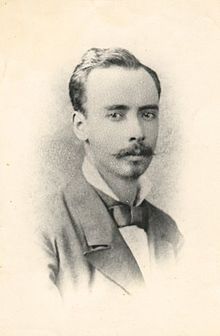
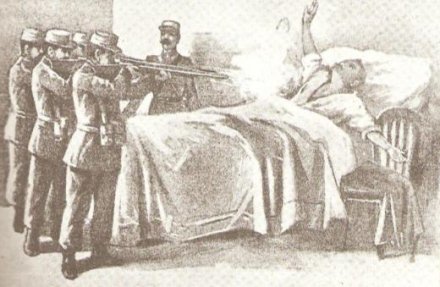
1306: Nigel de Brus, brother of the King

On an uncertain date in September of 1306 — sometime after the mid-September English capture of Kildrummy CastleNigel de Brus was drawn and quartered at the border town of Berwick.


The present-day ruins of Kildrummy Castle. (cc) image from Stu Smith.

As his name indicates, Nigel, Niall, or Neil — as your taste may run — was kin to Robert the Bruce, his brother in fact, and a key supporter of Robert in the latter’s fight for the Scottish crown.

Someone must have put the Bruces under that old Chinese curse about living in interesting times. Though the extremely interesting First War of Scottish Independence would indeed put Robert the Bruce on the Scottish throne, it was achieved in a period of devastation. Not only Nigel, but every single one of Robert’s brothers, died violently: three in all were executed, and a fourth slain in battle.

None of the five had reached his teens when times started getting really interesting with the shock 1286 death of Scotland’s King Alexander III, who got lost in the dark riding to Fife in bad weather and had a fatal fall down an embankment.

All three of Alexander’s children had predeceased him, so the hope of succession settled on a three-year-old* granddaughter, the Norwegian princess remembered as Margaret, Maid of Norway. Margaret now became for several years a chesspiece of diplomacy between the Scottish, Norwegian, and English courts, and was slated for marriage to the crown prince, the future King Edward II.** But we can slide right past the delicacies in all that because Margaret, too, dropped dead — in her case, at sea while en route to Scotland in 1290.† Little Margaret had never once set foot in the country she putatively ruled.

With no clear successor to Margaret, a free-for-all scramble for power ensued with no fewer than 14 noblemen claiming the throne for themselves. This “Great Cause” soon coalesced into John of Balliol (the claimant by primogeniture) vs. Robert the Bruce (the claimant by proximity of blood) — and the Guardians solicited the arbitration of the English King Edward I.

Having been balked of his goal of bringing Scotland into his dynastic thrall by means of the marital arrangements, Edward did not mean to miss the diplomatic opportunity and twisted the candidates’ arms to accept the suzerainty that Edward claimed over them. The disunited Scots had little choice but to do so.

(The Great Cause is covered in this episode of the History of England podcast.)

Edward ruled for Balliol, but his impositions and concomitant Scottish resistance soon brought the situation to open warfare. Incensed at a Scots-French alliance to oppose them, the English invaded in 1296‡ — forcing Balliol’s deposition (he’s known as “Toom Tabard”, or “empty coat”, for the regal insignia torn from his raiments) and provoking the celebrated resistance of William Wallace.

We know what happened to that guy, but Edward’s bloody pacification of the north came undone in 1306.

In February of that year, Robert the Bruce summoned the successor Balliol claimant, his rival John Comyn, to Greyfriars Church in Dumfries and sacrilegiously stuck a knife in him.


19th century illustration of John Comyn’s murder. Since we’re citing the handy History of England podcast, here’s the relevant episode.

In this affray the relative measures of perfidy by Bruce and by Comyn, both of whom were scheming nobles angling for the throne, are down to your choice of parties and sources. The consequences, however, can hardly be mistaken.

Bruce had himself defiantly crowned King of Scotland just weeks after imbruing his hands with Comyn’s blood, but a furious Edward I was smashing up the outclassed Scottish by springtime. The Bruce himself had to flee to hiding, and eventually to Ireland, while many of his supporters wound up hemmed in in Kildrummy Castle, commanded by our man Nigel. The English soon overwhelmed it (legend has it, as legend usually does, that the fortress was treacherously betrayed). Nigel was hauled off to Berwick for more or less immediate punishment; his fellow-commander at Kildrummy, the Earl of Athol, suffered the same in London on November 7.

One could forgive Nigel if, in the midst of having his entrails ripped out of his trunk by the executioner of Berwick, he indulged a moment’s despair for the family’s Great Cause. Robert himself was reduced to feeling out whether any English terms could be had.

But from this nadir of his fortunes, Robert the Bruce gloriously (nigh miraculously) returned to lead a successful guerrilla campaign against the English beginning in 1307, crucially aided by the death that same year of Edward I. He would sting the English repeatedly over the ensuing years before his gathering strength finally forced the English to recognize Scottish sovereignty in 1328.

* Margaret was actually just two years old at the time Alexander died. Alexander’s second wife was thought to be pregnant at the time — that turned out to be a nonstarter — so official succession didn’t settle on Margaret until she was three.

** Though this proposed union, never realized, raised the prospect of uniting English and Scottish realms, the Guardians of Scotland who called the shots while waiting for their sovereign to grow up insisted that the relevant document’s language assure that even if ruled by the same monarch Scotland would “remain separate, apart and free in itself without subjection to the English Kingdom.”

† A “False Margaret” posing as the lost Scottish queen would later turn up in Norway, and be executed for her charade.

‡ Among other things, this invasion seized the previously Scottish city of Berwick — Nigel’s eventual execution-place — for the English. Berwick changed hands repeatedly between the Scottish and the English for several hundred years before settling permanently into English possession in 1482.

On this day..

1654: Gerard the conspirator, and the Portuguese envoy’s brother

On this date in 1654, the gore-soaked annals of Tower Hill added the names of two of Protectorate England’s highest criminals.

John Gerard was only an ensign from the army of the late King Charles I, but he gave his name to a one of the great royalist conspiracies of the 1650s.

Gerard — alternately rendered Gerrard or Gerhard by his contemporaries — led a plot to assassinate Lord Protector Oliver Cromwell. It would ultimately yield some 40 arrests, enough to arouse suspicion that the entire thing was a trap laid as part of the vigorous counterespionage game between the exiled royal heir and the Puritan government.

Initially condemned to hang — which was indeed the fate on this same date of one fellow conspirator, schoolteacher Peter Vowell — Gerard successfully petitioned for beheading instead, where he made a great show of courage and fidelity.

When he came to (or rather leap’d upon) the Scaffold (for he was so far from flagging when to tread that Tragical stage, that many observ’d hos sprightfully he seem’d to skip up the steps to it, as if he had gone to dance there rather than to die) his grim Executioner presented himself to him, to whom with a cheerful smile he said, “Welcom honest friend”; And desiring to see his Ax, he took it into his hands, and kissing it, with a pretty glance of his eye (which was a natural loveliness in him) towards the Minister, he said, “This will do the Deed I warrant it.”

The Sheriff stopped him delivering an address he had scribbled down, rightly expecting that it tended to the seditious. Nothing daunted, Gerard prayed with his minister, and

[t]hen turning himself to the people, and putting off his Hat, he told them, That he was not permitted to speak a few words according to his intention, yet he doubted not but what he would have said would come to their eyes, thought it must not come to their ears: “But this I desire all to take notice of,” and this he spoke (with a double vehemence) “that I die a faithful subject and servant to King Charles the second, whom I pray God to bless and restore to his Rights; and had I ten thousand thousand lives I would gladly lay them all down thus for his service.”

Execution ceremonies of the period tended to the elaborate, and the condemned could not easily be balked of their featured role. Although the Sheriff interrupted him here, and pressed him under a scorching sun to reveal more conspirators, Gerard put him off and “call’d for some small beer” to quench his thirst, which he did indeed receive. Oh for the days when a traitor could kick back with a frosty during his execution.

[Gerard] calls for the Block: and viewing it (as with delight) laid himself down upon it to see how it would fit, and was so far from sinking at the sight of it, that he almost play’d with it: and rising quickly pulls a little paper-book out of his pocket, which he gave to the Minister, willing him to find that particular Prayer which was proper for that occasion, but the crowd being great, he could not quickly find it, so that he kneeled down with the book open a while in his hand as if he had read; but quickly shut it, and prayed with great expressions of fervency by himself.

When he had done, the Lieutenant said something to him (as it seems) concerning his Brother Charles that had witnessed agianst him; (I know not what the Lieutenant said, for he spake low) but Mr. Gerrard spake aloud, and replyed passionately, “O Christ Sir! I love my poor Brother with all my heart, he is but a youth and was terrified, I know how he was dealt with; tell him I love him as well as ever I lov’d him in my life.”

forgiving the Executioner and saluting the Minister with his last embrace and kisses, he bow’d himself to the stroak of death, with as much Christian meekness and noble courage mix’d together, as I believe was ever seen in any that had bled upon that Altar.


Much less the pitied by the Tower Hill crowd was the executioner’s second act that date, don Pantaleon de Sa.

This Iberian noble, in town while his brother the Count of Penaguiao negotiated a treaty, got into a quarrel and escalated it egregiously, descending on the tony New Exchange shopping center on The Strand with a score of armed retainers looking to get his satisfaction.

This would be offense enough but don Pantaleon compounded matters by actually shooting dead some luckless sod who only happened to resemble his recent antagonist. Cromwell had his men invade the diplomatic residence where don Pantaleon tried to claim refuge, an act that perhaps would have been accomplished by an angry mob had he not done so.

International affairs proceeded apace, the commerce of nations proving very much thicker than blood for the Portuguese ambassador. On the very morning of his brother’s execution, the Count signed his treaty and set sail for home from Gravesend, leaving his belligerent brother to pay the forfeit of English justice.

The fruit of such costly statecraft was an English-Portuguese affinity to long outlast the pains of Tower Hill.

The trading relationship cemented in the 1654 treaty set the stage for a political arrangement as well when Gerard’s beloved Charles II was restored to the throne and made a Portuguese princess his queen.

So profitably were English merchants rewarded for moving Portuguese freight that by the next century, long after anyone could remember don Pantaleon or his marketplace quarrel, Portuguese wine displaced French as Britons’ libation of choice.

On this day..

1793: Jean-Jacques Ampère, father of a savant, for Joseph Chalier

(Thanks to Amelia Fedo, a graduate student in French literature, for the guest post.)

He didn’t know it yet, but on this date in 1793, a brilliant adolescent named André-Marie Ampère lost his father to the guillotine. If the name sounds familiar, it’s because it would eventually become the SI unit of electrical current.

Andre-Marie Ampere, one of the founding pioneers of electromagnetism (Ampere called the new field “electrodynamics”) lost his father to the French Revolution’s guillotines.

The father in question was Jean-Jacques Ampère, an intelligent and levelheaded man whose sense of duty outweighed his instincts of self-preservation.

He was determined to do every job he had to the best of his ability — whether the task was educating a son or discharging the office of justice of the peace — and this diligence cost him his life.

A bourgeois silk merchant (a quintessentially Lyonnais occupation), he lived with his wife and son in a tiny village outside of Lyon called Poleymieux-au-Mont-d’Or. It was there that he and his wife, who were one of only five bourgeois families in a primarily peasant population, raised the boy who would grow up to be the father of electrodynamics.

In 1782, he retired and devoted himself full-time to his children’s upbringing — particularly that of his son, whom he soon realized was not an ordinary child. Born partly of necessity (Poleymieux lacked a school) and partly of choice (Jean-Jacques had, after all, opted to move to Poleymieux, and some speculate that he wished to give his son an upbringing like the one advocated by Rousseau in Émile), André-Marie’s unorthodox education resembled what today’s DIY pedagogues might call “unschooling”: he was encouraged to take charge of his own learning, given access to his father’s library, and taught a variety of eclectic subjects according to what most held his interest at the moment.

For most children, this technique is questionable; but when your kid happens to be a genius and a polymath, it works just fine. André-Marie was an audodidact and proactive in his learning, which would be a force for good in his life: as we’ll see, it was what pulled him out of his depression after his father’s death.

When the Bastille fell in 1789, not much changed at first. Jean-Jacques embraced the ideals of the Revolution and even wrote a play called Artaxerxe ou le Roi constitutionnel [Artaxerxe or the constitutional king], which James Hofmann, author of André-Marie Ampère: Enlightenment and Electrodynamics, sees as a parable containing Revolutionary themes.

A month after the fall of the Bastille, he lost his job as local aristocrat Guillin Dumontet’s procureur fiscal (a “judicial and administrative position,” according to Hofmann). Then, in the fall of 1791, he took another bureaucratic job: justice of the peace and “presiding legal functionary for the police tribunal” in Lyon. He may have done it voluntarily, out of sincere political fervor; but he may also have done it to protect his family, since his former boss, Guillin Dumontet, had been beheaded and partially cannibalized by his peasants a few months prior. If he had indeed taken this post for the good of his family, his plan backfired horribly…

As has been detailed in the post on Joseph Chalier, 1793 was not a good year for the Lyonnais.

The Revolution ran counter to the grain of Lyonnais culture for a number of historical reasons (the strong Catholic tradition and the silk trade being two of them). More immediately, famine and taxes had not disposed the people of Lyon towards the local Revolutionary government — particularly the far-left Jacobin faction, which continuously struggled for control of the city.

When the Jacobins seized power in March 1793, they provoked opposition from Girondins and royalists alike, and on May 29 important members of the Jacobin leadership were arrested. Among those apprehended was Joseph Chalier, head of a major Jacobin club known as the “Central Club.” Someone had to open the case against Chalier, and that someone was Jean-Jacques Ampère.

In spite of the Convention’s attempts at negotiation (which quickly turned to threats), Chalier was sentenced to death on July 16 and guillotined the next day. It was not Jean-Jacques who condemned Chalier to death — that does not appear to have been part of his job — but it was he who sent out the warrant for his arrest, and this was more than enough to get him sentenced to death when the political tides turned. (If the judges who actually sentenced Chalier to death — Cozon, Pourret, Régnier, and Maret — were ever punished, I haven’t found any evidence for it.)

Paris responded by placing Lyon under siege on August 9, and two months later, the city surrendered to the Convention. Rather than flee, Jean-Jacques remained in the city, resolved to see his duty through to the bitter end. Throughout the siege, he instructed his wife not to tell their children of the danger he was in. When Lyon was taken, he was immediately arrested, and in the six weeks he spent in prison, he had little doubt about his fate.

Trial and execution

Much of his trial is preserved in court documents. They refer to Lyon as “Ville-Affranchie” — “Liberated City,” the name Bertrand Barère gave to the town before declaring, “Lyon has made war against liberty; Lyon is no more” — so you know they mean business.

During his interrogation, Ampère père was accused not only of having issued the warrant for Chalier’s arrest, but also of having sentenced male and female Jacobin club members to public humiliation and having their eyebrows shaved off, respectively — as well as just generally having been a jerk to Jacobin detainees during interrogations.

The responses he gives show a man resolved to keep both his pride and his honor in the face of certain death, a functionary convinced that he had committed no wrong. Ampère admits to having had Chalier arrested but vehemently denies the other charges. He was also asked if he had left his post and/or sent a revocation to Paris, and responded that he had kept his post and had “no revocation to make.” This probably sealed his fate.

Here’s the full text of his interrogation, from Histoire des tribunaux révolutionnaires de Lyon (take my translations of legalese with a grain of salt; I don’t speak it in any language):

Frimaire 2, Year 2 (November 22)

Interrogation of Jean-Jacques Ampère, 61 years of age, justice of the peace of the canton of Halle-aux-Blés, residing in Lyon, Quai Saint-Antoine, Number 44. — Responses he gave.

I was in Lyon during the siege.

I never had any correspondence with the so-called constituent authorities in Lyon.

Question: You are accused of having filed the whole procedure against the patriots, of having been president of the correctional police during the whole time of the counter-Revolution, and of having judged those who had committed no crime other than belonging to the [Jacobin] club, sentencing the men to be tied to the post [this refers to a punishment formally known as “exhibition,” which was sort of like the pillory] and the women to having their eyebrows cut off; of having condemned, among others, Cadet Rufard, member of the [Jacobin] club, to six months of imprisonment for having sought bread for his brother, put in chains on May 29. You are reproached with having said to all of those whom you interrogated, “You are scoundrels, you people with your clubs; you had agents all the way out in the country, and your plot was the destruction of honest people.” In a word, you are accused of the assassination of the virtuous Chalier, since it was you who filed the first procedure, and it’s thanks to your arrest warrant that he mounted the scaffold.

Response: I never had any part in the judgments against patriots, men or women, which pronounced the sentence of pillory against the men and shaved eyebrows against the women; I admit to having filed the procedure against Citizen Chalier, on the declaration that had been made to me on May 27 by the public prosecutor who had the right to provoke my ministry; I also made several investigations against certain municipal officers after May 29, and in ruling on these procedures, I followed the law in sending back the accused in the presence of the director of the jury, the indictment alone regulating the jurisdiction. I conformed to the investigation of the functions of police officers who are uniformly employed to gather the vestiges of crimes and send the judgment back to the courts who should be informed of them. The circumstances were such that prudence joined with my sense of duty in making me carry out the measure indicated by the law. Before ruling on the procedure against the municipal officers, I had also ruled on the fate of a municipal named Sautemouche. I let him out under an oath to return, and soon after his release, the unfortunate Sautemouche succumbed to the blows of malicious persons. He was murdered, and most of the sections shouted for my arrest, because I had obeyed my conscience and my opinion by delivering an innocent man.

Question: Did you leave Lyon and did you send your revocation to the Committee of Public Safety, according to the law?

Response: I have no revocation to make.

Question: Did you continue your functions during the siege in a city in revolt?

Response: Yes, from May 27 until the beginning of August.

Question: Did you issue the warrant for Chalier’s arrest?

Response: Yes, on June 7.

On November 22, the same day as his trial (other sources give the date as November 23, 24 or 25, but I’m going by the date of execution given in legal documents), he was guillotined in Place Bellecour along with three men who appear not to have been involved in the affair: Étienne Chazottier, a lawyer and the president and secretary of the “permanent section” (a local political office), for “offenses against patriots”; Pierre-Elisabeth Chaponnay, an aristocrat, for “giving considerable sums to, and favoring the plans of, counterrevolutionaries”; and Jean Freidière, a geometer and secretary of the “surveillance committee” — no crime given. Ampère was 61 years old.

Shortly before his execution, he was allowed to write a final letter to his wife. Here’s the most complete version I can find, taken from Portraits Littéraires by Charles-Augustin Sainte-Beuve:

My dear angel, I have received your comforting letter; it was a life-giving balm to the emotional wounds that had been inflicted on my soul by my regret at being misunderstood by my fellow-citizens, who have denied me, through the most cruel separation, a homeland that I have cherished so much and whose prosperity is so close to my heart. I wish for my death to be the seal of a general reconciliation between our fellow-men. I pardon those who rejoice in it, those who caused it, and those who ordered it. I have reason to believe that the national vengeance, of which I am one of the most innocent victims, will not extend to the few possessions that have been sustaining us, thanks to your wise money-saving and our frugality, which was your favorite virtue … After my trust in the Eternal, to whose breast I hope will be taken that which remains of me, my sweetest consolation is that you will cherish my memory as much as I cherished you. That much is owed me. If from my home in Eternity, where our dear daughter has preceded me, I am able to attend to things on earth, you and my dear children will be the object of my care and concern. May they enjoy a better fate than their father and always have before their eyes the fear of God, that salutary fear that makes innocence and justice act on our hearts in spite of the fragility of our nature! … Do not speak to Josephine [André-Marie’s younger sister, then about eight years old] of her father’s misfortune — make sure she does not know about it; as for my son, there is nothing I do not expect of him. As long as you have them, and they have you, embrace each other in my memory: I leave you all my heart.

The author then explains that “There follow a few pieces of advice concerning the household economy, notes about paying off debts, and meticulous scruples regarding antique probity, signed with these words: J.-J. Ampère, husband, father, friend, and forever-faithful citizen.”

He continues with a sentiment shared by most nineteenth-century commentators on this affair: “Thus died, with resignation, with grandeur, and expressing himself almost as Jean-Jacques [Rousseau] would have been able to, this simple man, this reclusive merchant, this justice of the peace from Lyon. He died like so many members of the National Assembly, like so many Girondins, sons of [the spirit of] ’89 and ’91, children of the Revolution, devoured by it, but pious to the end, and not cursing it!”

We are also treated to some of Ampère’s actual notes (it would have been nice if Sainte-Beuve had just reprinted them in their entirety instead of only snatches): “It is impossible, my dear friend, for me to leave you rich, or even moderately comfortable; you cannot attribute this to my bad conduct nor to any spendthrift behavior. My greatest expense was the purchase of books and geometrical instruments which our son could not do without; but that expense was itself a bargain, because he never had any tutor except for himself.”

The Jacobins greatly spun the proceedings against Ampère; in a November 25 letter to the Convention, Collot d’Herbois and Fouché claimed that: “It was liberty that they wanted to assassinate in killing Chalier; his executioners have confessed it; before coming under the blade of justice, they were heard to say that they were dying for the king, that they had wanted to give him a successor.” It goes without saying that there is no reason to believe that Ampère said any such thing on the scaffold—he lived and died a Republican.

Aftermath

To say the execution was a shock to the eighteen-year-old André-Marie would be an understatement.

He never truly recovered from the death of his father, which was neither the first nor the last personal tragedy that would befall him; his older sister Antoinette had died a year earlier, and he would also lose his first wife after only four years of marriage. James Hofmann points out in Enlightenment and Electrodynamics that Jean-Jacques was André-Marie’s only link to the world outside Poleymieux, where he was socially isolated in addition to being intellectually stimulated (his undersocialization did indeed have a permanent effect; he was extremely awkward all his life).

Although André-Marie made a “return to normalcy” through study, he was scarred for life; Hofmann asserts that the event “contributed to the permanently melancholy cast of his adult temperament.”

After hearing the news, André-Marie became catatonic for a year; according to his friend and fellow-scientist François Arago, “The blow was too hard; it was beyond the strength of a young man of eighteen: Ampère was shattered. His intellectual faculties, so active, so intense, so developed, suddenly gave way to a veritable idiocy. He spent his days mechanically contemplating the earth and sky, or making little heaps of sand.”

Yikes. Arago claims that André-Marie was able to snap out of it with the help of Rousseau’s writings on, of all things, botany: “This lethargy of all moral and intellectual feeling had lasted for more than a year, when the letters of J.-J. Rousseau, on botany, came into Ampère’s hands. The limpid and harmonious language of this work entered the soul of the sick young man and partially gave him his nerves back, as the rays of the rising sun pierce the thick fogs of morning and bring life to the heart of plants stiff from the night’s chill.” With that, Ampère’s intellectual life reawakened; he began to study, and eventually became more or less functional — although, according to Hofmann, direct discussion of the event remained a taboo subject.

Indirect references are another matter; he named his son Jean-Jacques, in memory of his father and also, some speculate, as an homage to Jean-Jacques Rousseau.

On this day..

1435: Agnes Bernauer

On this date in 1435, the Duke of Bavaria-Munich had his son’s commoner mistress drowned.

Agnes Bernauer (English Wikipedia link | German) was supposed to have been the daughter of an Augsburg barber, though hard details about her life are hard to come by owing to her social class.

By 1432, she’s demonstrably a part of the Munich court; it’s thought that the prince Albert (the future Duke Albert III) must have met her at an Augsburg tournament in 1428.

The nature of her relationship to the Bavarian heir, too, must largely be guessed at. It’s been widely hypothesized that they might have married secretly.

Such a marriage might explain the shocking end to the Agnes-Albert relationship by situating it as a threat to dynastic succession: Albert was Ernst’s only legitimate son, and the Bavarian patrimony had been subdivided and fought over among Wittelsbach kin over the preceding decades.

Whatever the reason, Ernst took the disapproving (maybe) in-law act quite a lot farther than most. While Albert was out on a hunt, Ernst had Agnes seized, condemned for witchcraft, and executed by drowning in the Danube River on Oct. 12, 1435.

Upon hearing of the death of his beloved, Albert bitterly deserted his father for Ernst’s cousin and rival Louis VII, Duke of Bavaria-Ingolstadt. The prospect of capping domestic homicide with civil war loomed for several months until father and son were reconciled — and one must guess, once again, at how that conversation went. Albert endowed a perpetual mass for Agnes which is still said annually. A Bernauer chapel containing a tomb relief of Agnes, erected as an apology by Duke Ernst, remains a tourist draw in Straubing.

The star-crossed love of Agnes and Albert has proven irresistible to the arts over the centuries, with a special boom in the Romantic era.

King Ludwig I of Bavaria composed a poem in her honor; several 19th century stage tragedies (most notably that of Friedrich Hebbel) explore the story; and Carl Orff made it into an opera, Die Bernauerin.

On this day..

1631: Anna Katharina Spee

On this date in 1631, Bruchhausen vintner Anna Katharina Spee was burned at the stake for witchcraft.

She’s notable for being the remarried widow (German link) of Robert Spee, who was kin to* Friedrich Spee.

Spee is an honorable figure in the sad history of 17th century witch-hunting. This very year of 1631, he published — anonymously at first — his Caution Criminalis (Precautions for Prosecutors). This seminal volume took a heretical-for-the-time stance against the widespread contemporary practice of judicial torture. Spee argued, heatedly, that it was great at extracting confessions but not so reliable when it came to extracting accurate confessions.

Torture chair-illustrated title page of Hetty Kemmerich’s study of German witchcraft prosecutions, with Anna Spee’s plaintive titular cry. Sagt, Was Ich Gestehen Soll! has not been translated from German, but is available from Amazon.de.

“Why do we search high and low for wizards?” Spee jeered his contemporaries. “I will show them to you no matter where. Torture the Capuchins and Jesuits; they will confess … Torture the prelates and canons of the Church; they will confess … If you want still more, then torture you yourselves, and then torture me.”

There’s no known connection between Spee’s work and the fate of poor Anna Katharina, but she could certainly serve as a case in point.

In vain did she deny intercourse with the devil in September 1631 until she could withstand her interrogators no longer and gave them what they demanded of her. A German book about the witch hunts takes its title from Anna Spee’s plea to her tormenters: Sagt, was ich gestehen soll! Tell me what I should say next!

* Robert Spee was either a brother or a cousin of Friedrich Spee. According to the Spee family’s German Wikipedia page, she’s also a distant ancestor of singer Wolfgang Niedecken.

On this day..

1459: Pietro di Campofregoso, former Doge of Genoa, stoned to death

On this date in 1459, the former Doge of Genoa Pietro di Campfregoso was stoned to death by his city’s enraged populace.

This Pietro (English Wikipedia entry | Italian) succeeded his cousin to the merchant oligarchy’s head in 1450. Genoa resided in a crab-bucket of rival peninsular and Mediterranean powers, and Pietro was distinctly out-scuttled in the 1450s.

Genoa unsuccessfully supported the Byzantine Empire when it was decisively conquered by the rising Ottomans in 1453, and the Genoans found themselves consequently rousted from a number of Aegean and Black Sea possessions. Meanwhile, fickle Italian fortune brought Neapolitan troops to the walls of Genoa and eventually forced Pietro to submit to a humiliating French protectorate under Charles VII.*

By this point, Genoa was also in the sights of Francesco Sforza, and when Pietro had to abdicate and blow town he went to the protection of the the great condottiero in Milan. There he joined a Sforza-backed plot to pull Genoa out of the French orbit and into that of the Duke of Milan, which coup utterly failed and got Pietro di Campofregoso lynched/murdered/summarily put to death near the Porta Soprana.

If only he’d been able to avoid that fate, he would have seen the plot come to fruition: when the French-supported Duke of Calabria left Genoa to attempt to re-establish his family’s foothold in Naples, Sforza’s agents got hold of the city and installed yet another Fregoso cousin, Spinetta, as the Milanese puppet.

The Campofregosos (or simply Fregosos) were far from finished with their misadventures in power. Pietro’s predecessor and kinsman Lodovico found his way back into office after Spinetta, but in 1462 the Genoan archbishop Paolo Fregoso (also kin!) arrested the sitting doge, and replaced him in office with his own self. Paolo was doge briefly in 1462, and again 1463-64, and then once again in the 1480s, being repeatedly deposed and exiled in between shifts.

* That’s the king at the end of his life whom Joan of Arc rallied to when he was a mere dauphin.

On this day..

1471: Dmitry Isakevich Boretsky, son of Marfa Boretskaya

Muscovy’s long march to supremacy among the early Russian polities reached a decisive turn on 14 July 1471 when it defeated longtime rival Novgorod at the Battle of Shelon.

Ten days after that defeat, Novgorod’s commander Dmitry Isakevich Boretsky was put to death by the will of Ivan III.

Novgorod the Great had been losing ground to its neighbor for generations. Matters came in the end to the “Mayoress” Marfa Boretskaya, the widow of Novgorod’s former mayor (posadnik) Isaac Boretsky; she emerged in the 1460s as the charismatic leader of the hardline anti-Muscovite types.

Struggling to find a political foothold upon which to resist burgeoning Moscow, Marfa Boretskaya intrigued with the friendly — and similarly Muscophobic — Polish-Lithuanian Commonwealth. This drew Ivan III into what would prove to be the decisive military showdown between these venerable cities.

Marfa’s son Dmitry, our date’s unfortunate executed, would have stood to garner the glory of it had he prevailed.

He didn’t.


Bummer: Klavdy Lebedev‘s 1889 panorama of Marfa Boretskaya surveying the destruction of Novgorod.

Marfa Boretskaya was not put to death herself, but taken prisoner to Moscow upon Novgorod’s formal annexation in 1478 and socked away in a convent.

On this day..

1883: Leoncio Prado, for defending his homeland

On this date in 1883, Leoncio Prado Gutierrez (English Wikipedia entry | the very much more extensive Spanish) was shot by the Chileans during the War of the Pacific.

Prado’s father, Manuel Ignacio Prado, was twice the president of Peru (1865-1868,* 1876-1879).

As a military man (Prado’s first presidency was as outright dictator), the old man naturally had his son on a soldierly track as well. Leoncio was all of 12 years old when he took part in the Battle of Callao in 1866, defending that city against a Spanish bombardment during the Chincha Islands War.

That war saw Peru and Chile cooperating against Spain, after the latter seized a lucrative cluster of guano islands.

But different resource rivalries put the two former allies at loggerheads in 1879. When Peru nationalized saltpeter mining in the border province of Tarapaca — dispossessing Chilean interests — and Bolivia took similar measures, the countries fought the three-way War of the Pacific, also known as the Saltpeter War.

Chile would win the war decisively, dramatically reshaping Latin America in the process. Peru lost most of Tarapaca to Chile, devastating Peru’s saltpeter industry and provoking a generation of instability and social crisis. Bolivia fared even worse, losing its only littoral province to Chile: Bolivia remains landlocked to this day.

So it’s safe to say that there was something at stake worth fighting for as hostilities commenced.

By this time Leoncio Prado was 26, and a veteran of the intervening years’ Cuban war for independence from Spain.

As the Saltpeter War got underway, Prado returned from the United States where he was preparing an expedition to help Philippines separatists, and formed a guerrilla force. Though this corps had its highlight moments, it was overwhelmed in a scrap with Chilean regulars in July 1880 and Prado taken prisoner.

Considering his lineage and his exploits, he was an honored captive for the Chileans who repeatedly offered to release him on his honor not to take up arms again.

Prado refused these offers for some time, but he finally accepted his parole at the start of 1882 — a low ebb for Peruvian fortunes, for his father had been deposed by a coup and 1881-82 saw leadership of the country violently contested. Prado’s only thought, notwithstanding his pledge to Chile, was for the defense of his country and he rallied another party of guerrillas to his banner. “The enemy’s bullets do not kill,” he cried. “For to die for the fatherland is to live in immortal glory!”

That has proved to be the case for Prado, who certainly stood out from the politicians of his time for his patriotic heroism.

Captured during the decisive Chilean victory at the Battle of Huamachuco where a grenade shattered his thigh, the crippled Prado was regretfully executed in his bed for having broken his previous parole by resuming arms in the fight.

“We were all crying — all but Pradito,” recalled the Chilean captain tasked with overseeing the nasty business.

Six years after Prado’s execution, his aged father — the ex-president — sired yet another son, Manuel Prado Ugarteche. That son would also go on to hold the Peruvian presidency. While in office, he christened the Leoncio Prado Military Academy, an institution distinguished in literature as the setting for the Mario Vargas Llosa novel The Time of the Hero

* Prado pere was ousted from his first turn at the helm of state — a dictatorship — by Jose Balta, whose sad fate has adorned these macabre pages.

On this day..

1762: Crown Prince Sado, locked in a rice chest

On this date in 1762, the Korean king Yeongjo had his son and heir Crown Prince Sado immured in a rice chest — where he would die after eight excrutiating days.

This bizarre incident, attested by the memoirs of Sado’s widow Lady Hyegyeong, continues to perplex down to the present day.

In Lady Hyegyeong’s telling, the tyrannical father warped the sensitive son, sending the latter into a destructive spiral of madness. As the 1750s unfolded, Sado’s behavior grew erratic, violent, and delusional. He was prone to sudden fits of rage, stalked and raped court ladies, and wandered Seoul streets in disguise. He eventually murdered numerous servants, eunuchs, and miscellaneous commoners — even his own concubine. The court lived in terror of the mad prince’s impunity; the ruling dynasty itself stood in peril.

Many years later, the prince’s desperate wife in her autobiography remembered Sado’s own mother finally appealing to the king to do the necessary, unthinkable thing:

“Since the prince’s illness has become quite critical and his case is hopeless, it is only proper that you should protect yourself and the royal grandson, in order to keep the kingdom at peace. I request that you eliminate the prince, even though such a suggestion is outrageous and a sin against humanity.

“It would be terrible for a father to do this in view of the bond of affection between father and son; but it is his illness which is to be blamed for this disaster, and not the prince himself. Though you eliminate him, please exert your benevolence to save the royal grandson, and allow him and his mother to live in peace.

Perhaps to avoid spilling the prince’s blood, the royal lunatic was that very day forced into a sturdy chest in a palace courtyard. The ferocious prince entered it placidly, and his living eyes never again beheld the outside of that box: it was nailed shut and buried. (A recently discovered inscription, however, perhaps implies that the king didn’t actually mean for eight days locked in a box to be fatal. If so, it certainly lends credence to the idea that Sado’s mistreatment in childhood lies behind the later psychotic breaks.)

The royal grandson was indeed spared. When that child, Jeongjo of Joseon, finally succeeded to the throne upon his grandfather’s death in 1776, he wasted little time restoring the honor of his dead father.

On this day..

1945: Louis Till, father of Emmett

The Aug. 28, 1955 lynching of Emmett Till and the subsequent acquittal of his murderers by an all-white Mississippi jury were among the American civil rights movement’s pivotal events.

For a certain indecent number of people, however, the passion of the 14-year-old youth — alleged to have flirted with a white woman — was to be mourned only insofar as it confirmed the menace that insatiable Negro libidos posed to southern way of life.

Further to that end, the months following Emmett Till’s death brought to the headlines the formerly obscure* July 2, 1945 hanging of an American G.I. in Italy: Emmett’s father, Louis Till.

The violent Louis Till ruined his marriage to Emmett’s mother Mamie shortly after his son’s birth. Repeatedly violating her restraining order eventually landed Till pere before a judge, who gave him a choice between hard time and enlistment. Till joined the U.S. Army.

In 1945, he was court-martialed for murdering an Italian woman and raping two others. His execution near Pisa — he’s buried in Europe in the Oise-Aisne American Cemetery, the same final resting place as Eddie Slovik — was the no-account end of a no-account man for many years thereafter. Mamie Till said that she wasn’t even told what happened to her ex-husband, and was stonewalled when she sought information.

By the end of 1955, everyone knew.

In Jim Crow’s backlash against nationwide condemnation of the Till lynching, Louis Till came back to life in newsprint all that autumn to visit the sins of the father upon his late son: here was the mirror of the young predator all grown up, violating Italian women. Mississippi’s white supremacist senators used their rank to obtain his army file, and leaked it to reporters.

According to Davis Houck and Matthew Grindy’s study of the Mississippi media’s conflicting reactions to the events of 1955, “Louis Till became a most important rhetorical pawn in the high-stakes game of north versus south, black versus white, NAACP versus White Citizens’ Councils.”

The pawn’s sacrifice did not figure in the endgame.

Crude attempts to impose blood guilt for Louis Till’s crimes aside, Clenora Hudson-Weems argues in her Emmett Till: The Sacrificial Lamb of the Civil Rights Movement that it was Emmett Till’s shocking death that catalyzed the civil rights movement — that the horrifyingly mutilated face at his open-casket funeral and the insouciant confession of his killers once they had been acquitted shook southern blacks and northern whites alike so profoundly as to dispel any confidence that legal briefs or political incrementalism could grapple with America’s race problem. Civil rights lion Joyce Ladner was an 11-year-old Mississippi girl when Emmett Till was lynched; she would tell Hudson-Weems of the shock it delivered in her world coming on the heels of the Brown v. Board of Education ruling desegregating schools.

A very important thing is that it followed the Supreme Court decision in 1954. It’s like the Whites said that they don’t care what rights we were given … So when the spark came in Mississippi to sit in the public library, for example, people who participated had been incensed by the Till incident and were just waiting for the spark to come. The Till incident was the catalyst.

On December 1, 1955, Rosa Parks refused to give up her seat to a white man on a Montgomery, Alabama bus, launching the famous bus boycott. “I thought of Emmett Till and I just couldn’t go back,” Parks said later.

Emmett Till’s body was exhumed for autopsy and DNA testing in 2005, in part to dispel the old story first promulgated by the attorneys who defended Till’s murderers — that the body wasn’t Emmett Till’s at all. On the corpse’s finger was a ring inscribed with the initials of his father: L.T.

* Louis Till did have one small claim to fame prior to his son’s murder: the fascist poet Ezra Pound chanced to be imprisoned with Till; he mentions the later-famous execution in his Pisan Cantos:

Till was hung yesterday
for murder and rape with trimmings

On this day..