1751: Lobsang Trashi and the Lhasa Rebellion leaders

On January 23, 1751 Lhasa … witnessed another horrible example of Chinese justice. Lobsang Trashi and six other leaders of the rebellion were executed by cutting them into pieces. Other people were beheaded or strangled. The heads of the executed were mounted on spikes. The other leaders were exiled and stripped of their property.

Luciano Petech, China and Tibet in the Early XVIIIth Century

China’s domination of Tibet, dating to 1720, has generated resistance, intermittently violent, down to the present day.

The incident at hand here was a November 1750 Lhasa riot sparked by the assassination of Tibet’s prince by China’s plenipotentiary, who had caught wind of the local ruler’s intention to detach his kingdom from Qing domination.

The royal chamberlain, Lobsang Trashi (German Wikipedia entry | Dutch) managed to escape the scene and found himself at the head of a furious rabble that sacked the Qing embassy, looted a treasury, and killed dozens of Chinese soldiers — and dozens more Chinese civilians.

But the popular furor burned itself out within days, most Tibetan elites sagely declining to get involved in the pogrom pending the likely — and soon, actual — overwhelming Qing response. These guys got the fire-eaters arrested (they’d be handed over to the arriving Chinese army) and installed the Dalai Lama as the new secular as well as religious authority.

On this day..

1476: Israel, the last execution of the Trent blood libel trial

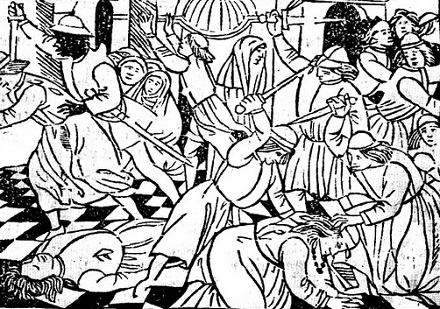
We have covered in these pages the horrific blood libel trial that sent most of the Jews of Trent to execution for the supposed ritual murder of the child Simon of Trent.

The moral panic (and torture-aided interrogation) that broke out when Trent’s Jews were suspected of having killed a Christian child led to a batch of executions in June 1475. But that was only the first act of a drama that would reach all the way to the courts of popes and emperors in the subsequent months … a conflict that would not end even when the last “murderer”, Israel, was broken on the wheel on January 19, 1476.

Trent lay at the southern fringe of the Habsburg Holy Roman Empire,* literally halfway from Vienna to Rome … and Trent’s ambitious prince-bishop Johannes Hinderbach was likewise beholden to both those poles of authority.

The sitting pope, Sixtus IV, was pretty sympathetic to Jews in general and very definitely not okay with Hinderbach’s theater of torture and execution. Sixtus was certainly also feeling plenty of pushback from other Jewish communities in Europe to make sure Trent wouldn’t be a precedent for similar freakouts in the future, and from Christian elites who didn’t want muddleheaded fanatics running around.

In Trent, “the Jews” meant literally three households — a tiny handful of people. By contrast, in cosmopolitan, humanist Rome, Jews were prominent among the intelligentsia and their presence taken for granted. Sixtus had Jewish “advisors and physicians in the papal court. They were teachers of music, theater, and science. Rome was a center of Hebrew literature and publishing … Sixtus IV, like most of his predecessors, took his role as a defender of Jews from violence more or less for granted.”**

Sixtus ordered the proceedings halted “because many and important men began to murmur,” and instituted an apostolic commission to investigate.

But Hinderbach and the Trentini refused to cooperate (Italian link) with the investigation. Hinderbach, for his part, was all-in on the Simonino story: just like today, nobody on the hook for a wrongful execution is going to advance his career by acknowledging that fact.

Resentfully, Hinderbach put his unwelcome papal visitor Battista Dei Guidici up in a crappy room, and “many people, moved more by furor than reason, temerity than devotion, threatened to kill the commissioner in the streets of the city, if he did not confirm the miracles and the asserted martyrdom” of little Simon. If anyone in Trent thought otherwise, he did not dare make it known to the closely-watched investigator.

Trent still had Jews in prison at this point, but Hinderbach resolutely prevented the pope’s agent from interviewing with them. “It was to be feared,” Hinderbach said, “that if he talked to them, he or his men could give some sign to the Jews, who would be rendered more obstinate, since they were always saying, ‘A man will come to free us.'”

Book CoverThese quotes are via R. Po-Chia Hsia’s Trent 1475: Stories of a Ritual Murder Trial, which is likewise our guide for the tense diplomatic battle ensuing over the autumn of 1475.

After having bribed a servant to deliver word to the imprisoned Jewish women that they had an advocate, Dei Guidici relocated to nearby Venetian territory — “where innocent people are not killed, where Christians do not plunder Jews, as it was in Trent” — and papers started flying.

Dei Guidici appealed to — and eventually ordered — Hinderbach to release the remaining Jews in his custody, while the pope sent out directives quashing any preaching on Simon’s “martyrdom.” Italian Jews poured into Dei Guidici’s offices appealing for their fellows and attesting that they could not travel through Trent for fear of mob violence.† A verse from a Veronese rabbi dating to late 1475 curses the nearby city: “Hills of Trent, may you not have rain or dew / Seven times may you fall and not rise.”

Hinderbach, for his part, sent his own envoys to German cities that had persecuted Jews for ritual murder in the past to get his own paper trail establishing that, yes, the Hebrew liked a good drink of Christian blood. More significantly, as a prince-bishop, Hinderbach also sent his own appeals up the Holy Roman Empire’s secular chain of command, objecting to the ecclesiastical meddling.

Hinderbach’s only concession to his apostolic scold was to release the children he had in custody. In October 1475, his political machinations with the Habsburgs yielded authorization from the powerful Tirolean Archduke Sigismund to resume judicial proceedings against “the Jewish men and women you have in prison” and “render justice as it should be, and let the death sentences be carried out.”

Interrogations for six Jewish men still in custody resumed on October 25, again with the aid of the horrible strappado to confirm and elaborate upon the already-determined official story of Simon’s martyrdom.

Denial — or even confessing, but guessing the wrong detail to “admit” — was not an option, as this October 26 interrogation record indicates.

He was asked whether he saw the murdered boy.

JOAFF [one of the Jewish households’ servants]: In the ditch.

PODESTA: Think again.

JOAFF: In the antechamber of the synagogue.

PODESTA: Anywhere else?

JOAFF: No.

He was ordered stripped, tied by the rope, and hoisted up.

JOAFF: Let me down, I’ll speak the truth.

PODESTA: Speak it on the ropes.

JOAFF: I have never done anything evil.

He was hoisted up and dropped.

This continues until Joaff has been dropped enough times to agree that he saw Simon’s body on Saturday night, on a bench in the synagogue. They knew that was the truth because it confirmed what they already wanted to hear.

This would be the end of Trent’s Jewish men in January 1476.

Israel, a 23-year-old copyist, was the last to die, and his fate is particularly poignant.

He had half-escaped the pall of death by accepting baptism the previous spring, and lived freely during the following months under the name Wolfgang. Dei Guidici interviewed him, one of the few productive sessions the pope’s man was able to arrange in Trent, and learned thereby of the details of Hinderbach’s interrogations.

Once Dei Guidici withdrew to Venetian soil, Jews of that principality would begin reaching out to “Wolfgang” in their efforts to communicate with the remaining imprisoned Jews.

This skullduggery came came apart when the persecution fired back up in October, and Israel was re-arrested, and put again and repeatedly to the rope. He was a man bound to be crushed by the legal machinery arrayed against him, but it was not only that. As Israel was well-traveled, he was tortured for information about ritual murders in other German cities; his forced denunciation of 14 named Jews in Regensburg initiated a blood-libel proceeding in that city that was only aborted by intervention from the Emperor himself.

And while Israel struggled to portray himself as a faithful convert and appeal to little Simon for an exculpatory miracle that never came, he at least once threw aside the mask to give his tormenters a piece of his mind.

PODESTA: What did he think of the Christian faith?

ISRAEL: He wants to say the truth. He does not believe in anything of the Christian faith … It is a joke to say that God came down from heaven to earth, walked around and lived among men. He believes only in God and nothing more. He believes also that the Jewish faith is right and holy.

PODESTA: Does he believe that it is right, according to Jewish law, that Jews kill Christian children and drink and eat their blood as he himself had said.

ISAREL: He believes firmly that it is right that Jews kill Christian children and eat their blood. He wants to have Christian blood at Easter, even now that he is baptized he wants to die a Jew.

Four other Jews from Trent died by hanging earlier in January 1476. The last one put to death was Israel on January 19 — “thief, eater and drinker of Christian blood, poisoner, blasphemer, traitor, and an enemy of Christ and Godly majesty.”

Even his death did not finally put a stop to the affair, for the women of the Jewish community were still in prison, and still being tortured as late as March. They would eventually accept baptism as the price of their release.

Meanwhile, Hinderbach and Dei Guidici carried their scrap to the curia. Hinderbach’s dogged advocacy of his burgeoning cult of Simon — and the odd ad hominem against his foe here and there — won some allies against Dei Guidici’s protests against “the peril which would be incumbent on the Christian religion, on account of the dealings in Trent, and the lies that would reach the ignorant.”

In the end, the Church decided it on political grounds. It could not encourage more Trents; neither could it invite the scandal of disavowing the one that had already taken place. It upheld Hinderbach’s conduct while also reiterating standing prohibitions against blood-libel trials or oppressing the Jews.

Hinderbach very naturally took this as vindication and spent the balance of his life propagating the Simonino cult. Artwork throughout northern Italy, some of it still visible in situ today in its original public monuments and chapel frescoes, attested to his success.


The Martyrdom of Simonino, by Gandolfino d’Asti.


The Martyrdom of Saint Simonio, from the Trento school of Nicklaus Weckmann. (Via)

Indeed, the city of Trent itself‡ still has a street-viewable bas-relief depiction of Simonino’s ritual murder, with the Latin inscription:

In the dungeons of these buildings, where once a synagogue stood, and now a shrine, the blessed martyr Simon of Trent, in his 29th month of life, was killed with excruciating pain by the Jews in the deep of the night of April 10, 1475 A.D.

The Simon of Trent cult — never the face of Christianity that the institutional church really wanted to feature — was only officially suppressed in the 20th century with the Second Vatican Council.

* Trent’s position on the frontier of the Italian and German worlds is also the reason the next century’s major anti-Reformation Council of Trent was held there.

** Sixtus wasn’t all good news for Jews. More from political necessity than affirmative desire, he also authorized the Spanish Inquisition and appointed Torquemada.

† During this time, Dei Guidici also managed to extract a Trent resident named Anzelino Austoch. Under Dei Guidici’s torture, Austoch accused the man named der Schweizer, “the Swiss” — the very man who had suggested that the Jewish homes be searched for Simon’s body — of committing the murder. Dei Guidici clearly believed that either the Schweizer, or Austoch, or both, had actually killed Simon and intentionally framed the city’s Jews.

‡ Trent does not, of course, still avow the legitimacy of these proceedings; the city has elsewhere put up plaques apologizing for it.

On this day..

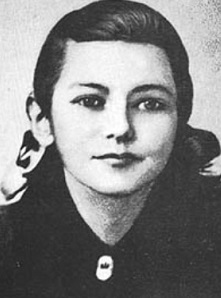
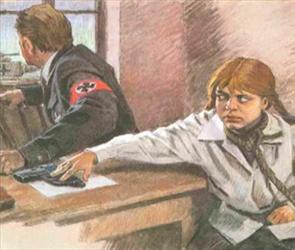
1944: Zinaida Portnova, Komsomol hero

On this date in 1944, Soviet partisan Zinaida Portnova was executed by the Germans occupying Belarus.

The youngest-ever female Hero of the Soviet Union (she was posthumously decorated in 1958), the Leningrad-born Portnova had a rude start in insurgency when the German blitz swept past her summer camp in Belarus and trapped her behind lines.

Said to have been radicalized when occupying soldiers struck her grandmother, the girl joined the youth arm of the local resistance, dubbed the “Young Avengers”.

From surveilling enemy troop deployments and assembling weapons caches, Zinaida Portnova graduated to sabotage and ambushes … and capture. Even then she pulled off an action hero escape by snatching a gun and shooting her way out of custody, only to be re-arrested shortly thereafter.

She was shot a month shy of her 18th birthday.

A large number of Pioneer youth groups were subsequently dedicated to Zinaida Portnova, as was a museum of the Komsomol underground and a public monument in Minsk. She remains to this day an honored martyr of the Great Patriotic War.

On this day..

1477: Gerolamo Olgiati, ducal assassin


Dramatization of events in this post for the video game-derived film Assassin’s Creed: Lineage.

On this date in 1477, the assassins of the Duke of Milan suffered bitter death for fame eternal.

Famous for both his astute political machinations and for cruelty verging on the sadistic, Galeazzo Maria Sforza inherited leadership of Milan in at the age of 22 with the passing of his father, the great condottiero Francesco Sforza.

Francesco, the founder of the Sforza dynasty, had dynastically married himself to one Bianca Maria Visconti, a daughter of Milan’s previous ruling house.* But not all of the Visconti were at home with the Sforza.

A brash young man of that noble family, Carlo Visconti, as full of humanistic idealism as he was of bile for the licentious Duke’s alleged violation of his sister, joined a conspiracy also compassing two other gentlemen, Giovanni Andrea Lampugnani and Gerolamo Olgiati, to do Galeazzo Sforza to death.

At a St. Stephen’s Day service in a basilica christened to Stephen Lampugnani approached the prince feigning supplication for some audience, then produced a hidden blade and stabbed Galeazzo Sforza. Visconti and Olgiati then rushed on Sforza as well and before anyone realized what was happening the Duke, croaking some half-heard invocation of Mary, was falling dead on the church floor.


Illustration of Galeazzo Sforza’s murder on the title page of a 1476 Lament for the Duke decrying the assassination.

Pandemonium ensued, and in the ensuing helter-skelter, Sforza’s bodyguards fell on Lampugnani and killed him on the spot, while Olgiati managed to escape.**

“It now only remains for us to consider those dangers which follow after the execution of a plot,” Machiavelli mused in his “Of Conspiracies” typology of his Discourses. “These in fact resolve themselves into one, namely, that some should survive who will avenge the death of the murdered prince. The part of avenger is likely to be assumed by a son, a brother, or other kinsman of the deceased.”

Well, yeah.

The assassins of the Duke of Milan appear not to have burdened themselves overmuch with advance consideration of this danger, possibly indulging the dream of Brutus that by a dagger’s stroke alone they could restore the lost republic.

Needless to say, this beautiful hope vanished in the bloody revenge carnival that actually ensued the murder. Just a few days after the assassination, having taken refuge with a priest — his justly frightened family had closed its door on him and needed to make theatrical denunciations of his treason for their own safety — Olgiati was captured, put to a torturous interrogation, and publicly butchered. He had outlived the Duke by only a week, and his gashed carcass was hung up in sections around town by way of warning. The rotting heads of the conspirators remained impaled on lances on the city’s bell tower well into the 1490s.

According once again to Machiavelli, Olgiati “exhibited no less composure at his death than resolution in his previous conduct, for being stripped of his apparel, and in the hands of the executioner, who stood by with the sword unsheathed, ready to deprive him of life, he repeated the following words, in the Latin tongue, in which he was well versed

“‘Mors acerba, fama perpetua, stabit vetus memoria facti.'”

That is,

‘Death is bitter but fame is eternal, and the memory of the deed will endure.’

This attempt, quixotic and doomed, to depose an Italian tyrant by murdering him in church might well have formed the blueprint for a similar plot in Florence in 1478, the Pazzi conspiracy. That version was even less successful than its Milanese predecessor: at least Olgiati and company could say that they actually managed to kill their target before everything else hit the fan.

And republic or not, Sforza’s murder did shake up the polity. It put the Duchy of Milan in the hands of his wife, as the unsteady regent of a seven-year-old heir. A few years later, the late duke’s brother Ludovico displaced the regent and effectively bossed Milan until the French imprisoned him in 1500 during the Italian Wars.

While he had the run of the place, Ludovico Sforza commissioned of Leonardo da Vinci a monumental equestrian statue in memory of his brother that da Vinci never finished.† Quite strangely, the master’s notes were plumbed by a 20th century Pennsylvania airline pilot who dedicated the latter part of his life to actually casting “Leonardo’s Horse”.

* The names Visconti and Sforza are also associated with some of the earliest tarot decks and among the first to introduce to playing cards the use of trionfi, or “triumph” cards — that is, “trumps”. One can readily purchase present-day reprints of this historic pack.

** There is a positively maddening inconsistency, thus far irresolvable for this author, between accounts (here’s one example | and another) asserting that Carlo Visconti was slain by Sforza’s bodyguards directly after the assassination, and other accounts (like Gregory Lubkin’s 1994 history of Sforza’s Milan) that put Visconti on the scaffold beside Olgiati.

† Da Vinci’s ponderously slow progress on this high-profile project led Michelangelo to cattily impugn the rival artist’s bronze-casting aptitude.

On this day..

1954: Eugen Turcanu, torturer

On this date in 1954, Eugen Turcanu and 16 other Romanian political prisoners were executed at Jilava prison.

Turcanu et al were noted as the truncheon arm of one of 20th century’s more blood-chilling torture programs, the Pitesti experiment. (Named for the facility where it began, Pitesti prison.)

As if taking Orwell’s 1984 as a paragon instead of a grim dystopian warning, the Pitesti experiment subjected several thousand political and religious dissidents to a savage course of ideological re-engineering. The object was to beat and brainwash undesirables into model Communists.

“Power is in inflicting pain and humiliation,” Orwell’s torturer-apparatchik O’Brien remarks in the novel. “Power is in tearing human minds to pieces and putting them together again in new shapes of your own choosing.”

Turcanu knew from the inside just what that sort of transformation entailed. He was by all appearances a proper Communist and a member of the right clubs thereto when, on the cusp of his 23rd birthday in 1948, he was arrested for a youthful prewar affiliation with the fascist Legionary movement.

He caught a harsh seven-year sentence but found his (short) life’s work in prison. His wheedling convinced wardens of his ideological suitability, and his Herculean physique suggested tasks that could only be entrusted to a co-founder of the Organization of Convinced Communist Detainees.

From late 1949 into 1952, Turcanu and a team of fellow goons were employed dishing out near-lethal thrashings on a wholesale scale to wrongthinkers. One thousand to five thousand souls are thought to have passed through the hands of Turcanu’s team; Soviet gulag survivor Aleksandr Solzhenitsyn called Pitesti “the most terrible act of barbarism in the contemporary world.”

As is customary with torturers, the ordeals extended far beyond brute force to invasive ritual debasement: people forced to eat shit, sexually humiliated, and manipulated into themselves turning torturer on their fellow prisoners and former friends. There’s a video documentary about this program (forcusing especially on its religious persecutions) embedded in its entirety here.

Obviously such practices, enacted on a nigh-industrial scale, were not the freelance initiatives of a few bad apples in the prison system. But no reader of the 21st century will be surprised that it was only the kapos like Turcanu who were punished for it once Stalin’s death relaxed the oppressive ideological terror in eastern Europe. While 22 prisoners were condemned (and 17 ultimately shot), the officers of Romania’s state police who had overseen them “suffered” things like reprimands and amnestied misdemeanor convictions.

On this day..

1937: Titsian Tabidze, poet

On this date in 1937, the Georgian poet Titsian Tabidze was executed in Stalin’s purges.

“Titsiani”, who co-founded the “Blue Horns” symbolist circle in 1916, is the addressee of fellow dissident litterateur Boris Pasternak’s Letters to a Georgian Friend.

“There is as much soul in his poetry as there was in him, a reserved and complicated soul, wholly attracted to the good and capable of clairvoyance and self-sacrifice,” Pasternak would remember of his comrade. “The memory of Tabidze puts me in mind of the country; landscapes rise in my imagination, the waves of the sea and a vast flowering plain; clouds drifting in a row and, behind them in the distance, mountains rising to the same level.”

The problem was their decidedly less sentimental countryman in the Kremlin.

Georgian security chief Lavrenty Beria put the screws to the Georgian writers’ association, driving fellow Blue Horns alum Paolo Yashvili to suicide when he was pressured to denounce Tabidze.

But of course the only difference that made was for Yashvili’s soul.

Arrested as a traitor a bare two months before his death, Tabidze defiantly betrayed to his interrogators the name of only a single fellow-traveler: 18th century Georgian poet Besiki.

On this day..

1578: Kort Kamphues, outlaw judge

Most judges are content to inflict their atrocities with a gavel, but on this date in 1578, a magistrate turned freebooter named Kort Kamphues was beheaded at Bevergern.

Just a few months before his July 1553 death, Prince-Bishop Franz von Waldeck set Kamphues up for his interesting career arc by appointing him Stadtrichter of Coesfeld.

Kamphues’s overbearing presumptions on the perquisites of that sinecure, coming on more than one occasion to physical violence, led other city leaders to petition unsuccessfully for his removal in 1569.

But his attempt in 1572 to assemble a mercenary army on the pretext of getting involved in Spain’s war in the Netherlands led to a definitive break with Coesfeld — which tried to arrest him, and then outlawed him when he escaped with his armed posse into the Westphalian countryside.

For several years, Kamphues and gang marauded merrily until a clumsy bid to frighten a new Coesfeld magistrate led to an arson attack on the city. Kort Kamphues was captured on June 19, 1578, and tortured into confessing to arson, banditry, and breaching the peace — gaining a permanent place in folklore at the small expense of his head.

The Kamphues Dagger, a beautiful 14th century artifact later documented in the Coesfeld treasury, is supposed on sketchy evidence to have been captured from this brigand.


A replica of the Kamphues Dagger, at the city museum in Walkenbrückentor. (cc) image from Günter Seggebäing.

On this day..

1323: Jean Persant, a black cat, and the body of Jean Prévost

From the French Grandes Chroniques. The numbered footnotes within the blockquote are verbatim from this text.

Moreover, it befel in this year [1323] that an abbey of the Cistercian Order was robbed of a marvellous great sum of money.

So they managed by the procuration of a man who dwelt at Château-Landon and had been provost there (for which cause he was still called Jean Prévost) that an agreement was made between him and an evil sorcerer, that they should contrive to discover the thieves and compel them to make restitution, in the fashion here following.

First, the sorcerer made a chest, with the help of the said Jean Prévost, wherein they clapped a black cat; and this they buried in a pit in the fields, right at a cross-way, and set three days’ meat for the cat within that chest, to wit bread steeped and softened in chrism and consecrated oils and holy water; and, in order that the cat thus interred might not die, there were two holes in the chest and two long pipes which rose above the earth thrown over that chest, by which pipes the air might enter therein and suffer the cat to breathe in and out.

Now it befel that certain shepherds, leading their flocks afield, passed by this cross-way as had ever been their wont; and their dogs began to scent and get wind of the cat, so that within a brief while they had found the place where she lay. Then began they to scratch and dig with their claws, for all the world as it had been a mole, nor could any man tear them away from that spot.

When the shepherds saw that their dogs would by no means depart thence, then they drew near and heard the cat mew, whereat they were much amazed. And, seeing that the dogs still scratched without ceasing, one who was wiser than the rest sent word of this matter to the justice, who came forthwith to the place and found the cat and the chest, even as it had all been contrived; whereat he was much astonished, and many others who were come with him.

And while this provost of Château-Landon pondered anxiously within himself how he might take or find the author of so horrible a witchcraft, (for he saw well that this had never been done but for some black art; but whereof or by whom he knew not) then it came to pass, as he thought within himself and looked at the chest which was newly-made, that he called all the carpenters of that town, and asked them who had made this chest.

At which demand a carpenter came forward and said that he had made it at the instance of a man named Jean Prévost; “But so help me God,” quoth he, “as I knew not to what purpose he had bidden me make it.”

Then within a brief space this Jean Prévost was taken upon suspicion, and put to the question of the rack: upon which he accused one Jean Persant as the principal author, contriver, and inventor of this cursed witchcraft; and afterwards he accused a monk of Cîteaux, an apostate, as the special disciple of this Jean Persant, and the Abbot of Sarquenciaux [Serquigny?] of the Order of Cîteaux, and certain Canons Regular,(2) who were all abettors of this wickedness. All of whom were taken and bound and brought before the Official of the Archbishop of Sens and the Inquisitor at Paris.

When they were come before them, men enquired of them — and of these more especially of whom they knew by report that they were masters in this devilish art — wherefore they had done this thing. To which they answered that, if the cat had dwelt three days long at those four crossroads, then they would have drawn him forth and flayed him; and from his hide they would have made three thongs, which they would have drawn out to their fullest extent and knotted together, so that they might make a circle within the compass whereof a man might be comprised and contained. Which when they had done, he who was in the midst of the circle would first nourish himself in devilish fashion with the meat wherewith this cat had been fed; without which these invocations would be null and of none effect. After which he would have called upon a devil named Berich, who would presently have come without delay, and would have answered all their questions and discovered the thefts, with all those that had been principal movers therein and all who had set their hands thereunto; and in answer to their questions he would have told them all the evil to be done.

Upon the hearing of these confessions and downright devilries, Jean Prévost and Jean Persant, as authors and principals in this accursed witchcraft, were adjudged to be burned and punished with fire; but while the matter was drawn out and delayed, Jean Prévost chanced to die; whose bones and body were burned to ashes in detestation of so horrible a crime, and the other, to wit Jean Persant, was bound to the stake with the cat around his neck, and burned to ashes on the morrow of St Nicholas’ day; after which the Abbot, and the apostate monk, and the other Canons Regular who had administered the chrism and other matters to this witchcraft, were first degraded and then, by all rules of law, condemned and put into prison for their lives.

(1) In the face of such abuses of things consecrated, the church Councils of the Middle Ages constantly insisted that the Pyx, the Chrismatory, and the Font must be kept under lock and key in all churches. The neglect of these precautions is one of the points most frequently noted by official visitors.

(2) Canons bound to the lifelong observance of a Rule; the best known are the Austin Canons and the Praemonstratensians. They were in fact practically monks, and are often so-called by medieval writers, though modern pedantry sometimes ignores this. Cf. Chaucer, Canon’s Yeoman’s Tale.

(3) Quasi-heraldic personal insignia, with motto; cf. Richard II, Act iii, Sc. I. [“From my own windows torn my household coat,/Razed out my imprese”]

On this day..

1917: Lation Scott lynched

(Thanks to Meaghan Good of the Charley Project for the guest post. -ed.)

On this date in 1917, 24-year-old black farmhand Lation (or Ligon) Scott died a horrible death in Dyersburg, Tennessee.

For the two years prior to his extrajudicial “execution” by a lynch mob, Scott had worked as a farmhand for a white family, doing the farm chores while the husband worked at his job in Dyersburg.

He got on well with the family and was fond of the two children. He seemed like an ordinary enough man and a good worker, according to the NAACP journal The Crisis:

Accounts as to his intelligence vary widely. One report asserts that he was almost half-witted. Others attribute to him the intelligence of the average country Negro… He had the reputation of being a splendid hand at doing general housework, or “spring-cleaning,” and…had done this sort of work for a prominent woman of Dyersburg. She states that she was alone in the house with him for two days.

No trouble resulted.

In addition to farming and the doing of odd jobs, he was a preacher. On November 22, 1917, however, he allegedly raped the farmer’s wife while her husband was at work. He threatened to kill her if she reported what he had done. He then fled, leaving his victim bound and gagged inside the farmhouse.

The woman was able to free herself and identify her attacker, and the community took swift action, searching extensively for Scott and offering a $200 reward for his apprehension. Scott was able to elude capture for ten days, though, making his way fifty miles to Madison County. There, a railroad worker recognized him and he was arrested.

The sheriff’s deputy for Dyer County, along with some other men (including, presciently, an undertaker), picked up the accused man and started off back to Dyersburg by car in the wee hours of the morning. They didn’t bother taking an indirect route for the purpose of their journey.

Hundreds, perhaps thousands, of people gathered along the road and waited for their quarry.

And when he appeared, they forced the car off the road and made the officers turn over their prisoner.

These people were not typical of the average lynch mob: rather than stringing him up on the spot, they drew up a list of twelve “jurors” and, at noon, after church let out, drove Scott to the county courthouse for a “trial.”

Scott was ordered to stand up and asked, “Are you guilty or not guilty?”

Scott admitted he was guilty, and the “jury” voted for conviction.

Although one “prominent citizen” asked the people not to be barbaric, because it was Sunday and because “the reputation of the county was at stake,” both the rape victim and her husband wanted Scott to be burned alive rather than merely hanged.

The Crisis‘s description of what happened is not for the faint-hearted.

The Negro was seated on the ground and a buggy-axle driven into the ground between his legs. His feet were chained together, with logging chains, and he was tied with wire. A fire was built. Pokers and flat-irons were procured and heated in the fire… Reports of the torturing, which have been generally accepted and have not been contradicted, are that the Negro’s clothes and skin were ripped from his body simultaneously with a knife. His self-appointed executioners burned his eye-balls with red-hot irons. When he opened his mouth to cry for mercy a red-hot poker was rammed down his gullet. In the same subtle way he was robbed of his sexual organs. Red-hot irons were placed on his feet, back and body, until a hideous stench of burning flesh filled the Sabbath air of Dyersburg, Tenn.

Thousands of people witnessed this scene. They had to be pushed back from the stake to which the Negro was chained. Roof-tops, second-story windows, and porch-tops were filled with spectators. Children were lifted to shoulders, that they might behold the agony of the victim.

It took three and a half hours for the man to die.

Margaret Vandiver wrote in Lethal Punishment: Lynchings and Legal Executions in the South, “The lynching of Lation Scott was the most ghastly of all those I researched.”

This spectacle of horror took place in broad daylight, and no one in the mob wore masks.

Nevertheless, no one was ever prosecuted.

According to The Crisis,

Public opinion in Dyersburg and Dyer County seems to be divided into two groups. One group considers that the Negro got what he deserved. The other group feels that he should have had a “decent lynching.”

A “decent lynching” was defined as “a quick, quiet hanging, with no display or torturing.”

One local citizen remarked that he thought the people who tortured and killed Lation Scott were no better than the rapist himself. Another simply commented, “It was the biggest thing since the Ringling Brothers’ Circus came to town.”

Lation Scott’s was the last lynching in Dyer County history.


Wire report in the Salt Lake Telegram, Dec. 3, 1917.

On this day..

1846: Andrew Kim Taegon, the first Korean priest

The first native Korean Catholic priest, Andrew Kim Taegon, was martyred for his faith on this date in 1846.

Catholicism had begun making inroads in Korea from the late 18th century, a development most unwelcome for the Confucian Joseon dynasty. Catholic adherents graduated over the decades of the 19th century to heavier and heavier degrees of persecution. By 1866, the peak of anti-Catholic sentiment, it’s thought that Korea’s Catholic community numbered about 20,000 living souls — and had lost about 10,000 others to martyrdom.

Andrew’s father was one of these 10,000.

The son, and the principal figure of this post, was baptized in his childhood. He trained for Holy Orders at overseas seminaries, in China and the Philippines (according to Wikipedia, he has a statue in the Philippines village where he once hung his hat), finally stealing illicitly into Korea to evangelize underground. Such missions were of ancient vintage for the Church; they have also proven a font of martyrs.

Kim managed about 13 months before he was captured and put to death in the 1846 “Pyong-o persecution”, one of several distinct crackdowns on the alien faith whose episodes punctuated the overall fearful climate for Korea’s Catholics.

Beheaded at the age of 25 among a group of 20 Catholic martyrs, the young man was eventually canonized as St. Andrew Kim Taegon by Pope John Paul II. He shares a common September 20 feast date with other Korean martyrs, including Paul Chong Hasang.

St. Andrew is the patron of the Korean clergy, and of the Pontifical Korean College in Rome. When in Seoul, stop at the Jeoldu-san museum and shrine to remember him.

On this day..