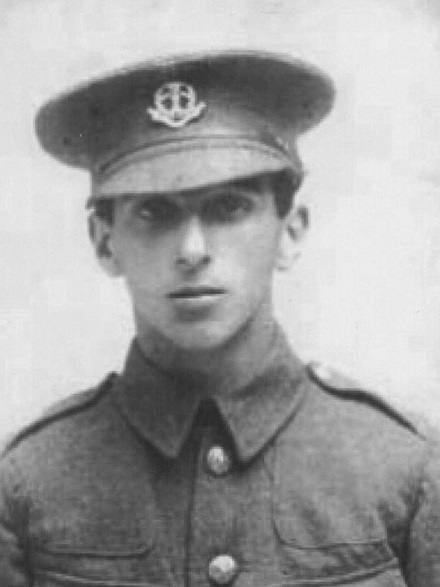
1777: James Molesworth, in the words of the Founding Fathers

John Adams to Abigail Adams

Philadelphia
March 31, 1777

I know not the Time, when I have omitted to write you, so long. I have received but three Letters from you, since We parted, and these were short ones. Do you write by the Post? If you do there must have been some Legerdemain. The Post comes now constantly once a Week, and brings me News Papers, but no Letters. I have ventured to write by the Post, but whether my Letters are received or not, I dont know. If you distrust the Post, the Speaker or your Unkle Smith will find frequent Opportunities of conveying Letters.

I never was more desirous of hearing frequently from Home, and never before heard so seldom. We have Reports here, not very favourable to the Town of Boston. It is said that Dissipation prevails and that Toryism abounds, and is openly avowed at the Coffee Houses. I hope the Reports are false. Apostacies in Boston are more abominable than in any other Place. Toryism finds worse Quarter here. A poor fellow, detected here as a Spy, employed as he confesses by Lord Howe and Mr. Galloway to procure Pilots for Delaware River, and for other Purposes, was this day at Noon, executed on the Gallows in the Presence of an immense Crowd of Spectators. His Name was James Molesworth. He has been Mayors Clerk to three or four Mayors.

I believe you will think my Letters, very trifling. Indeed they are. I write in Trammells. Accidents have thrown so many Letters into the Hands of the Enemy, and they take such a malicious Pleasure, in exposing them, that I choose they should have nothing but Trifles from me to expose. For this Reason I never write any Thing of Consequence from Europe, from Philadelphia, from Camp, or any where else. If I could write freely I would lay open to you, the whole system of Politicks and War, and would delineate all the Characters in Either Drama, as minutely, altho I could not do it, so elegantly, as Tully did in his Letters to Atticus.

We have Letters however from France by a Vessell in at Portsmouth — of her important Cargo you have heard. There is News of very great Importance in the Letters, but I am not at Liberty. The News, however, is very agreable.


John Hancock to George Washington

Philada
April 4[-8], 1777

Sir,

The enclosed Resolves of Congress, which I have the Honour of transmitting, will naturally claim your Attention from their great Importance.

The Regulations relative to the Payment of the Troops and the Department of the Paymaster General, will I hope be the Means of introducing Order and Regularity into that Part of the Army; where, it must be confessed, they were extremely wanted.

General Gates having laid before Congress the Proceedings and Sentence of a Court Martial on a certain James Molesworth who was accused and found guilty of being a Spy, they immediately approved the same. He has since suffered the Punishment due to his Crime. From his repeated Confession, it appears, that Mr Galloway was extremely active in engaging him to undertake this infamous Business, and was the Person employed to make the Bargain with him. He says indeed, Lord Howe was present: but from the Description he gave of his Person, it is supposed he must be mistaken.

The Congress have directed Genl Gates to take Genl Fermoy with him to Ticonderoga, and such other french Officers as he may think proper. Genl St Clair being ordered to Ticonderoga, but previously to repair to this City to wait the further Order of Congress, you will please to direct him to repair here accordingly as soon as possible. I have the Honour to be with the most perfect Esteem & Respect Sir Your most obed. & very hble Serv.

John Hancock Presidt

On this day..

1916: Abraham Bevistein, child soldier

One century ago today, a Polish Jew from east London named Aby Bevistein was shot for cowardice in Calais — four weeks shy of his 18th birthday.

Abraham Bevistein was among an estimated quarter-million Brits who bore arms as minors in World War I. Fired by patriotism, these boys dodged the military’s 18-year-old minimum by … telling their recruiters they were 18. No documentation necessary.

Bevistein, whose family had moved to London from Warsaw when he was a small child, was British through and through enough to surge into the army with the first wave of pie-eyed volunteers in September 1914. He had 16 years and four months, and if he was like many of his new comrades in arms he probably reckoned on being back home by 17 — a bonny hero of a speedy war.

Instead, he spent most of 1915 navigating the labyrinth of trenches in France, and all their attendant horrors. He was wounded in December of that year but soon passed fit for duty again. On February 12-13, 1916, shellshocked and deafened by German grenades, he again sought medical help but was directed back to the lines by a harried medical officer. Instead, Bevistein wandered away to the rear, and took temporary refuge at a French farm.*

“We were in the trenches and I was ill so I went out,” he wrote to his mother by way of all-too-nonchalant explanation. “They’ve taken me to prison and I’m in a bit of trouble now.”

Anti-war suffragette Sylvia Pankhurst took up Bevistein’s cause when she learned about his execution, prominently publishing a sympathetic feature story in her newspaper, Women’s Dreadnought. Like 305 other British and Commonwealth soldiers shot at dawn during the Great War, Bevistein was posthumously pardoned and added to war memorials in the 21st century.

* The farm owner’s later testimony to Bevistein’s court-martial that the young tommy had expressed an intent to return to England sealed his fate as a deserter.

On this day..

1706: Matthias Kraus, Bavarian rebel

On this date in 1706, Bavarian butcher Matthias Kraus was beheaded and quartered for an anti-Austrian rebellion.

This commoner was the victim at several orders’ remove of distant imperial politics; as such, he will enter this story only as a coda. Instead, we begin in the 1690s, in Spain, with the approaching death of the childless Spanish king Charles II.

The question of who would succeed Charles presented European diplomats the stickiest of wickets: there were rival claims that augured civil war, which was bad enough, but such a war’s potential winners could themselves be scions of the French Bourbons or the Austrian Habsburgs … which meant that Spain’s world empire could become conjoined with that of another great European power and unbalance everything.

Now, it just so happened that the Elector of Bavaria Maximilian II Emanuel had a ball in this game — because his marriage to a Habsburg princess had produced a kid who could plausibly receive the throne, Joseph Ferdinand of Bavaria. (The mom died in 1692, but had she been alive, she would have stood to inherit Charles II’s throne.)

For a while this whelp looked like the answer the continent’s schemers were searching for, since neither the state of Bavaria nor his father’s House of Wittelsbach was already a great power — and thus, they could be elevated without creating a new hegemon. But in 1699, months after the infirm Charles had designated the little boy “my legitimate successor in all my kingdoms, states and dominions,” Joseph Ferdinand too dropped dead.

The boy was only seven years old — but he had lived long enough to whet his father’s appetite for a more substantial patrimony. When Charles II finally died in 1700 with the inheritance situation still unresolved, Max Emanuel entered the resulting continental war — the War of Spanish Succession — allying himself with France with the intent of supplanting the Habsburg dynasty on the Austrian throne.

This was a bold gambit to be sure but in the war’s earliest years it looked like it might really work. The Elector of Bavaria parlayed his strong position on the Danube (and ample French support) into a menacing thrust into Austria that threatened to capture Vienna. For the Wittelsbachs, this would mean promotion to a higher plane of dynastic inbreeding; for France, it would mean a lethal blow to the rival Austrian-English-Dutch “Grand Alliance”.

But things went pear-shaped in 1704.

Marlborough mounted a famous march to Austria’s rescue and trounced the Bourbons and Bavarians at the Battle of Blenheim, completely reversing the tide of events. Bavaria now came under Austrian occupation, as Max Emanuel hightailed it to the Low Countries.

All this statecraft brings us as a postscript the unhappy fate of our butcher, Herr Kraus.

The Austrian occupation of Bavaria — complete with punishing wartime levies — triggered in 1705 a peasants’ revolt grandly titled the Bavarian People’s Uprising. Matthias Kraus was a leader in this rising.


Matthias Kraus in Kelheim (Via)

Like the Wittelsbach pretension writ small, Kraus was intrepid but doomed. Having seized the town of Kelheim with a force of 200 or so, he held it for just five days. Austrian forces appearing at the gate negotiated for a peaceful surrender of the city, but as soon as they got the gates open they ran amok in a general massacre.

Kraus himself, interrogated under torture in Ingolstadt, was returned to Kelheim for public execution — his body’s quarters to be mounted around the city as a warning.


Detail view (click for a full image) of an Austrian leaflet publicizing the fate of the rebellious Kraus.

His martyrdom at the hands of a foreign occupation has stood Kraus in good stead in posterity. There is a Matthias-Kraus-Gasse in Kelheim, as well as a fountain memorial put up to celebrate the 1905 bicentennial of his his fleeting moment of heroism.

On this day..

1943: Mildred Fish-Harnack, an American in the German Resistance

On this date in 1943, the Milwaukee-born translator and historian Mildred Fish-Harnack was beheaded at Plotzensee Prison — the only American woman executed by Hitler’s order.

A graduate student at the University of Wisconsin Milwaukee,* she met German jurist Arvid Harnack when the latter was a visiting scholar at the university’s sister campus in Madison.

In 1929, the couple moved to Germany where they worked as academics: Mildred, a teacher of language and literature; Arvid, of economics and foreign policy.

Both watched the rise of Third Reich with growing horror, and soon began converting their circles of academics, artists, and expats into a hive of opposition doing what they could to aid the many classes of excommunicate humans Berlin was busily proscribing. As the Nazi enterprise intensified, that opposition demanded ever more dangerous — more treasonable — extremities.

Good friends with American diplomats, the Harnacks for a time used Arvid’s placement in the Reich economic ministry to pass information to the United States. In 1940, they made contact with Soviet intelligence and from that time until the Gestapo snatched them in September 1942 the so-called** Red Orchestra sent furtive coded radio transmissions to Moscow reporting war preparations, economic data, and whatever else their circle could lay hands on among their various posts.

We have treated the fate of the Red Orchestra elsewhere in these pages; Mildred Harnack did not go to the meathook-nooses with her husband Arvid and others on December 22 because she was sentenced initially only to a term of years. These judgments came down at just the same time as the USSR was drowning the Wehrmacht in blood at Stalingrad, so there might have been a bit of personal pique when the Fuhrer personally quashed Mildred’s lenient sentence and demanded a, ah, reconsideration.

“And I have loved Germany so much,” she murmured as she was thrown under the fallbeil.

There’s a Mildred-Harnack-Schule in Berlin (also a Mildred-Harnack-Straße); her birthday, September 16, is observed every year in Wisconsin schools — although Mildred’s red associations meant that widespread recognition in her native country had to await the end of the Cold War.


Trailer for a Wisconsin Public Television documentary that can be viewed in full here.

* Then known as the Milwaukee State Normal School.

** Though this is the name history remembers them by, Red Orchestra (Rote Kapelle) was conferred by the German intelligence working to stop them. Confusingly, the name was applied to multiple different, and unrelated, spy networks.

On this day..

1945: 59 collaborationists in Bulgaria

New York Times, Feb. 14, 1945

59 Are Executed in Bulgaria

ISTANBUL, Turkey, Feb. 13 (U.P.) — The People’s Court at Philippopolis, Bulgaria, pronounced fifty-nine death sentences against collaborationists today, and those who were sentenced were executed.

On this day..

1864: Private Samuel Jones, in retaliation for Private Daniel Bright

The New York Times of January 23, 1864

Gen. Getty:

DEAR SIR: We, the subscribers, request to say that there was found this morning a dead man, and still hanging, in our neighborhood, as the inclosed scrip which was found pinned to his back, will show you by whom it was done. We have made a suitable box and buried him near the place he was found hung. Should his friends wish to get his body, they can get it by applying to any of the subscribers. We trust that you will not attach any blame to any of the citizens of this neighborhood, as we were entirely ignorant of any of the circumstances until we found the body. From all we can learn, he was brought across the Chowan River to this place, and as soon as the men who had him in charge hung him, they went back.

It was signed by ten people of Pasquotank County, North Carolina.

The note they enclosed, retrieved from the hanging body, read:

NOTICE

Here hangs Private Samuel Jones, of Company B, Fifth Ohio regiment, by order of Maj.-Gen. Pickett, in retaliation for Private Daniel Bright, of Company L, Sixty-second Georgia regiment, hung Dec. 18, 1863, by order of Brig.-Gen. Wild.

Bright, a member of the newly-formed 66th North Carolina guerrillas, had been hanged as a spy. Jones had been obtained by casting lots among Union prisoners of war held at the Confederate capital of Richmond, in response to Pickett’s demand for some Yankee to execute tit for tat. (Pickett’s proclivity for retaliatory executions would soon require him to quit the country at the end of the Civil War.)

On this day..

1864: James Utz, St. Louis spy

Confederate agent James Morgan Utz had a blue Christmas indeed in 1864, awaiting his December 26 execution for espionage.

The Missourian had been captured traveling with a small band out of St. Louis disguised in Union uniforms and carrying supplies and ciphered messages for the invading Confederate army of General (and former governor) Sterling Price.

The federals handled Utz as a spy and a military court sentenced him to hang — a sentence that had already been carried out by the time President Lincoln’s grant of executed clemency arrived.

Tuesday morning last I was horrified at the announcement by a friend that Jas. Utz, Paul’s companion and leader in their attempt to go South, had been executed, being hung on Monday, the day after Christmas, in the jail yard.

It plunged me in a stupor or excitement from which my mind was not free for the entire day. The sentence barely issued and the punishment instantly carried out! The hurry, the suddenness was most revolting. No time given for taking leave of family, friends! No time for appealing for mercy or for a reprieve. No time allowed for composing himself for death!

Diary of a family member of Paul Fusz, one of Utz’s secret party. (Fusz, only 17 when captured, was pardoned after serving six months at hard labor.)

On this day..

1553: Pedro de Valdivia, founder of Santiago

On Christmas Day of 1553, the Spanish conquistador Pedro de Valdivia, noted as the founder of Santiago, Chile,* was executed by Mapuche Indians who had captured him in battle.

Valdivia got his start in New World bloodsport in the train of the Pizarro brothers, and cashed in with mining concessions as a reward for his able service in the Pizarros’ campaign against yet another conquistador, Diego de Almagro.

Not content to wax fat on Incan silver, Valdivia secured permission to pick up Almagro’s aborted mission: the conquest of Chile. With a force of about 150 Spaniards and many times that number of native allies, he successfully crossed the Atacama desert (bypassing Andean tribes that had proven hostile to Almagro) and attained the Mapocho river valley. There he created Santiago** on February 12, 1541, and almost immediately established the Spanish colony — distinct from Peru — whose headquarters it would be.

It didn’t take long for these interlopers to incur native resistance which would long slow the imperial development of Chile. Later in 1541, an Indian attack razed Santiago, although its Spanish defenders just managed to hold on to the rubble and begin a laborious process of vigilant rebuilding.

While the future metropolis, which lies about the north-south midpoint of the present-day state, grew stone by stone, Valdivia endeavored to carry his conquest to the south. This would soon provoke the furious resistance of the Mapuche people and become the Arauco War, which simmered for decades. (Or centuries, depending on the degree of continuity one might attribute to various rebellions.)

Having seen the Spanish throw up a chain of forts in their territory the better to control new gold mines, the Mapuche counterattacked and overran the fort at Tucapel — led by a bold young commander named Lautaro, who had only recently fled from the personal service of Valdivia himself. Grievously underestimating the vigor of his foe, Valdivia set out to pacify the rebels with a mere 40 Spanish soldiers “because at that time the Indians were but lightly esteemed.” (Marmolejo; see below) Approaching an eerily empty Fort Tucapel on Christmas Day, his token force was suddenly engulfed by thousands of ambushing Mapuche and massacred to a man.

Almost to a man.

Valdivia had the misfortune of being taken alive.

The conquistador was put to death shortly after the battle. The chronicler Jeronimo de Vivar simply said that the commander Caupolican ordered him speared to death — but others went in for more frightful descriptions of an event they surely did not witness.

Alonso de Gongora Marmolejo, who like Vivar was a contemporary to the death of the governor, claimed (Spanish link) that “the Indians kindled a fire before him, and cut off his arms from the elbow to the wrist with their blades; they took care not to permit him his death, and so devoured his roasted flash before his eyes.”

As a founding figure in Chilean history, Valdivia has enjoyed frequent literary treatment, as has his impressive mistress Ines de Suarez. (Isabel Allende’s Ines of my Soul is a recent example.) It is likely that none will ever surpass in literary importance the 16th century epic of of the conquest of Chile La Araucana. Although its author, Alonso de Ercilla, did not sail for America until several years after Valdivia’s death, he — naturally — made the late conqueror one of his principal subjects.

* And the namesake of Valdivia, Chile.

** The name pays tribute to Saint James.

On this day..

1889: Abushiri, German East Africa rebel

On this date in 1889, the Germans hanged Abushiri as a rebel.

European empires arriving to East Africa naturally entered a going history of local conflicts and accommodations. In the case of the region at hand, the archipelago of Zanzibar lying just off the coast had been absorbed by, and then spun off from, the domain of the sultan of Oman. As we lay our scene in the late 19th century, it is an independent Sultanate of Zanzibar whose dominion extended to the adjacent Swahili coast and inland, an area also known as the Zanj.

Zanzibar was a British interest here, but the islands themselves do not quite enter this fray directly; the sultanate based there actually survived until 1964.

But in the 1880s, Germans scrambling for Africa arrived to gobble up the sultanate’s mainland possessions. Germany, truth be told, was a little bit late to this game, and although it secured some noteworthy footholds like Cameroon and Namibia, the Second Reich suffered a distinct little imperial brother complex vis-a-vis the British and the French — both of whom had more extensive holdings in Africa, to say nothing of everywhere else in the world.

Certainly the German public, flush with the boom of industrialization and having only just shown the French what-for on the battlefield, clamored for its rightful share of overseas acquisition. The popular thirst for expansion dragged along reluctant chancellor Otto von Bismarck into an adventure so inimical to the good order he prized.

One such German dreaming big dreams of bigger maps was a cocksure 29-year-old doctor of history, Carl Peters. Fresh off a few post-academic years knocking about in a London astir with the white man’s burden, Peters co-founded the German East Africa Company and then put that colonial corporation literally on the map with a bold expedition to Zanzibar. Within a few weeks of arriving in November 1884, and despite the explicit dissuasion of the German consulate there, Peters had obtained via just the right mixture of largesse and menace treaty rights to 155,400 square kilometers conferred by a number of coastal chiefs in the mainland ambit of the Sultan of Zanzibar.

When Peters returned in glory to Germany brandishing these concessions, Chancellor Bismarck was practically forced to accept them as a German protectorate … and charter Peters’s corporation to start exploiting it. The mid-1880s saw a minor local race between Peters and rival British explorers to establish their respective colonial presences on the Swahili coast,* resulting in an 1886 Anglo-German agreement formally dividing the region’s spheres of influence: British to the north, German to the south. Today this line, shooting near-straight to the southeast from Lake Victoria to the Indian Ocean with a slight bend round Mount Kilimanjaro, forms the border between Kenya and Tanzania.

We are, at length, arriving at the unfortunate party whose execution occasions this post.

The problem for young Master Peters with his personal agglomeration of the fatherland was nothing but that familiar difficulty for invaders from time immemorial — and Peters was ultimately an invader, no matter what treaties he could wrangle. For his short spell as the commercial governor of this distant land, Peters earned of his Bantu subjects the sobriquet Milkono wa Damu: the man with blood on his hands.

Diplomats could partition the land in Berlin, and could even compel the supine sultan to acknowledge their arrangements. But no edict could command legitimacy for the man with blood on his hands.

Beginning in September 1888, rebels comprising both Arabs and Swahili tribesmen sacked German East Africa Company assets up and down the coast Peters had so diligently won for Germany. Rousted from most of its towns and trading posts, the Company hunkered down in its territorial capital of Bagamoyo and cabled Berlin for help. Bismarck paternally relieved the in-over-its-head company with the aid of mercenaries hired from Egypt and Mozambique, crushed the uprising with customary roughness, and ushered Peters’s firm out of the colonial administration business in favor of adult supervision. The little protectorate soon became German East Africa, administered as a proper colonial appendage of the German Empire.

This Abushiri revolt (English Wikipedia entry | German) is named for its most prominent leader, a mixed-race Arab-Oromo coastal planter named Abushiri ibh Salim al-Harthi (English Wikipedia entry | German). He would be betrayed to German hands trying to escape and promptly executed; however, resistance by others continued to 1890.

They struck down
The flag of Islam
And now proposed
To raise their own.

They came to Pangani
Full of wrath,
They fitted up the house
And laid cannon.

And the ship at Maziwe
The whole town was humbled
And the Europeans
Strode about the streets.

The town was silent,
No one spoke,
Not a free man
Said a word.

-Swahili poet Hemedi al-Buhriy†

This new disturbance, whose suppression Britain also aided, helped lead London and Berlin back to the negotiating table for the Heligoland-Zanzibar Treaty of 1890 — a comprehensive African arrangement to settle up spheres of influence not only on the Swahili coast but touching Namibia and Togoland, too. Meanwhile, Germany gave up remaining claims north of the Swahili coast dividing line and ceded Zanzibar itself to British authority; in exchange, she obtained the islands of Heligoland off her northwest shoulder — closing a potential security vulnerability.**

Among the many curiosities of the years to follow for the great imperial powers concerned, few are more vexing than just why it was that England and Germany went to war in 1914. Profitable as that bloody effusion has been for these grim annals, it posed as antagonists two countries that had long been thought by keen observers to be natural allies — a belief shared by numerous British and German statesmen. Otto von Bismarck was certainly one of these; his desire for an English alliance (against France and Russia) was a pole star of the Iron Chancellor’s foreign policy. Indeed, he worked amicably with his British opposite number Lord Salisbury; Bismarck once opined of his unwillingly adopted East African holdings that they were “admirably suited to become the sacrificial ram on the altar of friendship” with Great Britain.

But that isn’t what happened.

The failure of these great powers’ flirtation with one another, and the arrangements they ultimately made with other powers instead, defined the belligerents of the Great War. And while we would scarcely propose to lay the charnel houses of Verdun and Gallipoli at the shores of Zanzibar, it has sometimes been postulated that the fatal obstacle to Britain’s arrangement with Germany might have been the paucity of horses to swap.

Thanks to far-flung colonial expansion, Britain had many borders with France all over the globe, and accordingly had frequent need to collaborate and an ample store of chips to trade. With Germany, she had but a few intersections, in Africa — and these were settled almost too comprehensively (pdf) after the Abushiri revolt.

* It goes without saying that the sultan was none too happy about this development, but he was made to get used to the idea. (Germany sent warships, and Great Britain declined to back the sultan.)

The Anglo-German agreement accordingly limited the sultan’s authority on the coast to a 10-mile strip. Although the European powers commanded whatever leases they desired from this zone, Zanzibar’s anomalous territorial claims on the mainland would not be extinguished until the post-colonial era. When that day came, the 10-mile strip made for quite a sticky wicket during negotiations for Kenyan independence in the 1960s. The whole situation lies very far from the scope of this post, but the connosseur of diplomatic Gordian knots should pause to enjoy this pdf exploring the whole mess.

** Each party valued the thing it received quite a bit more than the thing it traded away in this treaty. From Britain’s perspective, Heligoland would be nigh-indefensible in the event of war with Germany; from Germany’s perspective, the claims it gave up outside of German East Africa were little better than phantasmal.

† via Charles Pike’s “History and Imagination: Swahili Literature and Resistance to German Language Imperialism in Tanzania, 1885-1910,” The International Journal of African Historical Studies, Vol. 19, No. 2 (1986)

On this day..

1812: John Rickey but not Benjamin Jackson

The New York Evening Post published this item excerpted from the Philadelphia Democratic Press on Thursday, December 17, 1812.

On Friday, a large concourse of people assembled at Fort Mifflin, to witness the execution of John Rickey and Benjamin Jackson, soldiers of the 16th Regt. U.S. Infantry, sentenced to be shot for desertion, the former having deserted three times, the latter once.

They were conducted to the fatal spot at 1 o’clock, attended by about 600 soldiers of the 2d Artillery and 16th infantry. Rickey’s sentence having been carried into effect, Jackson was pardoned by the commanding officer.

We trust the execution of Rickey, and the exercise of mercy to Jackson, will operate as a warning to the deserters in and about this city. It is stated upon good authority, that every reasonable indulgence will be extended to such deserters as may deliver themselves up voluntarily, but those who are taken cannot expect to be shielded from the penalty of the law.

On this day..