1933: The “killers” of Pavlik Morozov

(Thanks to Meaghan Good of the Charley Project for the guest post. -ed.)

Pavlik Morozov was one of the must well-known figures in the Soviet Union. Every Soviet schoolchild learned his name and the story of his heroic life and tragic death. On April 7, 1933, his alleged killers — his own grandparents, uncles and cousin — were executed by firing squad for his murder.

A postage stamp honoring the Moscow statue honoring little Pavlik Morozov. Many more Pavlik propaganda images are here.

While most Morozov monuments have long since been destroyed or removed from public view, apparently a few still persist.

The legendary Pavlik, a Russian boy who lived in the remote village of Gerasimovka in western Siberia, was a member of the Young Pioneers, a kind of Communist version of the Boy Scouts designed in indoctrinate youth into the Soviet way of thinking. When the superlatively loyal child found out his father, Trofim, was acting against the state, he denounced him to the secret police, the OGPU. (Accounts differ as to what Trofim’s misdeeds actually were; he may have hoarded grain, or sold forged documents, or both.) The result was that Trofim was sent to a labor camp, never to be heard from again.

The Morozov family, not being good Communists like he was, were furious with him for the denunciation. Soon after his father’s trial, in early September 1932, his grandparents, his uncle and his cousin murdered him while he and his eight-year-old brother Fyodor were picking berries in the woods. (Fyodor was taken out too, as he was a witness.) The boys’ bodies weren’t located for several days and it’s unclear when they actually died.

An OGPU officer, Ivan Potupchik, who was another of Pavlik’s cousins, found them. The murderers were arrested in due course, and Pavlik became a martyr and an example for every Soviet child to look up to — a Stalinist passion play, the horrid little saint of denunciation. As Soviet dissident writer Yuri Druzhnikov wrote in this article,

Indeed, it is virtually impossible for someone not born and raised in the USSR to appreciate how all-pervasive a figure Morozov was … [E]veryone in the Soviet Union, young and old alike, used to know about Pavlik Morozov. His portraits appeared in art museums, on postcards, on match-books and postage stamps. Books, films, and canvases praised his courage. In many cities, he still stands in bronze, granite, or plaster, holding high the red banner. Schools were named after him, where in special Pavlik Morozov Halls children were ceremoniously accepted into the Young Pioneers. Statuettes of the young hero were awarded to the winners of sports competitions. Ships, libraries, city streets, collective farms, and national parks were named after Pavlik Morozov.


A reconstruction of the suppressed Eisenstein film based on the Pavlik Morozov story, Bezhin Meadow. Aptly, its supposed ideological flaws got some of its own participants arrested.

The Cult of Pavlik declined significantly once World War II began and there were other young heroes to exalt, and even more so after Stalin’s death. Still, even into the 1980s public figures praised the child as an “ideological martyr.”

The problem, as you might have guessed already, is that almost none of the accepted story about Pavlik is true. While not entirely made up, his Soviet-official biography was always thick with exaggerations, distortions and outright lies.

This Los Angeles Times article explains that Druzhnikov first got interested in Pavlik Morozov in the mid-1970s, when he attended a conference that included a discussion of “positive heroes of Soviet culture.” Pavlik was mentioned, and Druzhnikov asked just what was so positive about someone who had betrayed his own father. A few days later, he was summoned to KGB headquarters and two agents told him very firmly, “do not touch this subject.” It backfired: more curious than ever, Druzhnikov began secretly researching the case.

The book that resulted, Druzhnikov’s Informer 001: The Myth of Pavlik Morozov, was written in the early 1980s, but it was too politically sensitive for publication at the time. Instead it circulated privately among intellectuals and dissidents as Samizdat. It finally saw publication in Russian in 1988, and was then translated into English in 1993. (The full text of this book is available online for free here … in Russian.)

British historian Catriona Kelly published a second book on the subject in 2005, Comrade Pavlik: The Rise and Fall of a Soviet Boy Hero. By then, nearly all the surviving witnesses were dead. But unlike Druzhnikov, Kelly was able to obtain access to the official records of the Morozov murder trial and used them as a major resource.

These two authors got as close to the truth as one is able to get at this late date.

The Real Pavlik’s Life and Death

Pavlik Morozov’s story is sordid and mysterious as only a grand Soviet propaganda myth can be.

There really was a boy named Pavel Morozov (his name was the Russian equivalent of “Paul”) in Gerasimovka, but his nickname was Pasha or Pashka, not Pavlik. He was not ethnically Russian but of Belorussian descent on both sides of his family, as were most of the inhabitants of Gerasimovka. He could not have been member of the Pioneers, since there was no Pioneers troop where he lived.

When Yuri Druzhnikov began picking apart the Pavlik Morozov myth in the 1980s, he was able to talk to those still alive who had known the youth. In addition to the elderly villagers in Gerasimovka, he also interviewed Pavlik’s mother and his sole surviving brother, Alexei. (Another brother, Roman, was killed in World War II.)

Druzhnikov developed the following data points:

  • The exact date of Pavlik’s birth is unknown; his own mother didn’t remember it when asked in her old age. He was probably between twelve and fourteen at the time of his death.
  • The villagers of Gerasimovka who knew Pavlik and were interviewed by Druzhnikov did not remember him fondly: he was variously described as a “hoodlum,” a “rotten kid” and a “miserable wretch, a louse” who enjoyed smoking cigarettes and singing obscene songs.
  • Pavlik enjoyed denouncing his neighbors for breaking the rules; he “terrorized the whole village, spying on everybody.”
  • According to his former schoolteacher, he was almost illiterate; in fact, Druzhnikov believed he may have been slightly mentally retarded.
  • Pavlik’s whole family was the Russian equivalent of poor white trash. Tatiana was a mentally unstable and quarrelsome woman who was widely disliked in the village. After Trofim’s arrest, the state seized all his property and so the family went from mere penury to the brink of starvation.

Druzhnikov’s witnesses from Gerasimovka remembered Trofim Morozov’s denunciation, trial, and exile, which was central to the Pavlik-the-martyr myth. They remembered the boy testifying and said he didn’t seem to understand what was going on.

Kelly, however, examining the historical records twenty years after Druzhnikov, could find no documentary evidence of any trial — nor any proof that Pavlik had denounced his father to the OGPU or that Trofim had been convicted of political offenses and exiled.

Trofim had definitely disappeared from Gerasimovka by the time of his sons’ murders, but Kelly believes it’s entirely possible that he simply walked out of little Pavel’s life and wasn’t put in a labor camp at all. If Pavlik did in fact denounce his father, it was probably at the behest of his mother, Tatiana, and not for political reasons: Trofim had deserted the family and moved in with a mistress.

Tatiana was bitterly angry about her husband’s defection, and Pavlik, as the oldest male member of the household, was stuck with the exhausting household and farm chores his father had once performed. The family certainly did not want for points of friction … and Pavlik Morozov’s murder certainly had nothing to do with politics.

However, one of the four people put to death for the crime might actually have been involved after all.

After the Murders

The murdered boys were buried quickly, before the police even arrived to investigate. No photographs were taken, experts consulted or forensic tests performed. No doctor examined the bodies, and it isn’t even known how many wounds the victims suffered.

Within short order, however, investigators had rounded up five suspects: Pavlik’s uncles, Arseny Silin and Arseny Kulukanov; his grandparents, Sergei and Ksenia Morozov, both of whom were in their eighties; and his nineteen-year-old cousin, Danila, who lived with Sergei and Ksenia.


The accused.

The only physical evidence to implicate them was a bloodstained knife and some bloody clothes found in Pavlik’s grandparents’ house. As Druzhnikov records:

The prosecution had at its disposal two pieces of material evidence that were found in the home of Sergei Morozov: the knife, which was pulled out from behind the icons during the search, and the blood-spattered trousers and shirt — though whose clothes they were, Danila’s, the grandfather’s, or someone else’s, and whose blood was on them remained unknown. The court did not demand a laboratory examination of the blood stains.

It’s worth noting here that Danila had recently slaughtered a calf for Pavlik’s mother; this would provide an alternative, innocent explanation for the bloody clothes.

During their nationally publicized show trial in November 1932, the defendants presented incriminating yet often wildly conflicting statements abut the murders, and virtually no other evidence was presented. Druzhnikov details the farcical proceedings, which lasted four days:

Witnesses for the prosecution (about ten people) … did not introduce facts but demanded that the court employ “the highest measure of social defense” — execution. In fact, there were no defense witnesses at all. At the trial there was only one defense counsel, but during one of the court sessions he stepped forward and announced to the hall that he was revolted by the conduct of his clients and refused to defend them further. After this the lawyer withdrew with a flourish, and the trial concluded without him.

Four of the five were convicted and sentenced to death for “terrorism against representatives of the Soviet Government.” Sergei, Ksenia, and Danila Morozov, and Arseny Kulukanov, were all shot in April after the inevitable rejection of their appeals. (Arseny Silin was able to produce a credible alibi and was acquitted.)

Tatiana supported the convictions and testified against the defendants. Stalin later purchased her a resort home in the Crimea, where she lived until her death in 1983.

Were They Guilty?

Druzhnikov, researching the case fifty years later, concluded that Pavlik and his brother were deliberately set up to be murdered by agents of the OGPU, who treated the murders as political and the children as martyrs, bringing righteous proletarian wrath upon a fiercely independent village which had so far successfully resisted collectivization.

“The murder,” he wrote towards the end of his book, “could only have been committed, or at least provoked, by the hands of the OGPU.”

Stalin’s regime would become famous for its terrifying show trials. “A show trial in the Urals,” Druzhnikov suggests, “called for a show murder.” Because, in Gerasimovka, “there really was no crime. The peasants living there were peaceful; they didn’t want to kill one another. So they needed help.”

Kelly, on the other hand, suggested that the appearance of the crime scene, with no attempt to hide the bodies by burying them or dumping them in the nearby swamp, suggests an impulsive act of violence probably committed by a local teenager or teenagers. (One wonders, however, why it took so long for searchers to find bodies supposedly lying in plain sight.)

Kelly’s best guess was that Pavlik’s cousin Danila may have actually been guilty after all, possibly acting in concert with another villager his own age, Efrem Shatrakov: Danila and Pavlik had a very nasty argument over a horse harness only a few days before Pavlik and Fyodor disappeared, and Pavlik had allegedly denounced the Shatrakov family for possessing an unlicensed gun, which was confiscated.

In fact, Danila’s statements to the authorities made reference to his fight with Pavlik about the harness, and Shatrakov actually confessed to the murders, but later retracted his statements and was let go.

In any case, as Kelly wrote, if one or more of the defendants convicted at the trial happened to be guilty, either of committing the murders or as accessories after the fact, “they most certainly did not receive a fair trial, and the corpus delicti upon which the sentence was based was without question seriously flawed.”

No matter who killed Pavlik, as Druzhnikov says, the final result is this: “It is a historical commonplace that Stalin ruthlessly converted living people into corpses. In this instance, he effected the conversion of a corpse into a living symbol.”


The only known real-life photograph of Pavlik Morozov, at center under the arrow, taken as a school class portrait by a wandering photographer in 1930.

On this day..

1752: Mary Blandy, “forgiveness powder”

(Thanks to Meaghan Good of the Charley Project for the guest post. -ed.)

On this date in 1752, 32-year-old Mary Blandy was hanged for the murder of her father, Francis. He had died in agony on August 14 the previous year, having been sick for months.

That Mary had poisoned her father with arsenic was not in dispute; the evidence proved it and she admitted it herself, even before he died.

The question was as to her motive, and her intentions. Mary conceded she had caused Francis’s death, but denied having ever meant to harm him.

The events that lead to Francis Blandy’s demise at the age of 61 began in 1746. Mary was Francis’s beloved only child and an old maid by the standards of day. They lived in Henley-Upon-Thames, Oxfordshire, UK.

Although scarred from a bout with smallpox, she was well-educated, witty and intelligent, and advertised a dowry of £10,000. But she had never been able to find a suitor her father approved of, until Captain William Henry Cranstoun came along.

Cranstoun was several years older than Mary, short, ugly, a compulsive gambler and not terribly bright, but he was a member of the Scottish aristocracy, the younger son of an earl. When he proposed in 1747, both father and daughter happily said yes.

Unfortunately for the two lovers, Francis Blandy soon learned that Cranstoun was already encumbered with a wife and child back in Scotland. Cranstoun swore (falsely) that he was not legally married to the woman and she’d only ever been his mistress; smitten Mary believed him, but Francis didn’t take kindly to the deception and he showed his would-be son-in-law the door.

Cranstoun, however, was not going to let a £10,000 dowry slip through his fingers so easily.

While he tried (unsuccessfully) to annul his existing marriage, he remained in touch with Mary for years and told her about a special powder made by wise women in Scotland, which caused those who took it to forgive their enemies.

Mary was skeptical, but Cranstoun swore it really worked and said he’d taken it once himself and felt its effects. He obtained some of the powder and convinced Mary to start slipping it into her father’s food and tea, so his heart would soften and he would allow his daughter to marry the man she loved.

Such was Mary’s story, at any rate, and she stuck with it until her dying day.

She swore she did not realize the magic powder was toxic. Sure, Francis rapidly became sick with heartburn and stomach pains, but he had suffered these symptoms before. Then his condition worsened. He vomited constantly and all of his teeth fell out. Mary finally summoned a doctor.

By then it was too late, for both father and daughter. The family servants became suspicious after several of them got violently sick when they drank tea intended for Francis.

One of them noticed a white grainy substance in the bottom of a bowl of gruel Mary had fed her ailing father. The servants took the substance to Francis’s doctor, who determined it was arsenic. Around the same time, another servant saw Mary throw a bundle of Cranstoun’s letters into the fire. She also tried to burn a packet which the servant rescued from the flames; it contained white powder identical to the arsenic that was rapidly burning through the old man’s entrails from the inside out.

When he was informed his daughter had poisoned him and guessed why, Francis refused to be angry with her, saying, “Poor love-sick girl! What will a woman not do for the man she loves?”

As he lay in extremis, Mary rushed to his bedside and begged her father to forgive her. An indulgent parent to the very end (or perhaps the “forgiveness powder” really had worked), he blessed his wayward child and told her he would “pray to God to bless thee, and to amend thy life.” He blamed Cranstoun for everything.

A few days later he was dead.

Mary ran from the house after his death, pursued by an angry mob, and took refuge in the Little Angel Pub. Eventually she was persuaded to surrender herself to the authorities. On August 17, she was arrested.

When Francis’s estate was settled, its worth was determined to be only about £4,000. Cranstoun would have never gotten that £10,000 dowry: it didn’t exist.

James C. Whorton discusses her trial in his book The Arsenic Century: How Victorian Britain was Poisoned at Home, Work and Play:

‘A vast concourse of people’ gathered for the trial, including many students from the university (whom one prosecutor could not resist lecturing ‘See here the dreadful consequences of disobedience to a parent’). The proceedings lasted but a single day, albeit a long one, running from eight in the morning till nine at night. Conducting herself ‘with more than masculine firmness’, Mary continued to insist that she was the victim of a cruel deception (‘What women can withstand the arguments and persuasions men will make of us?’), but the jury would have none of it. Devoting only five minutes to deliberation, not even retiring from the courtroom, they pronounced the defendant guilty.

Just before her execution, Mary wrote out her side of the story, which can be read in full online. Whorton records her death:

The prisoner was hanged five weeks later, on 6 April 1752, still avowing her innocence: ‘May I not meet with eternal salvation,’ she declared from the scaffold, ‘nor be acquitted by the almighty God, in whose awful presence I am instantly to appear,’ if guilty. Then, ‘without shedding one tear,’ Mary Blandy pulled her handkerchief over her face and dropped into eternity.

Her last words were, “For the sake of decency, gentlemen, don’t hang me high.”

There was a lot of public sympathy for Mary, particularly after her execution, but none for Captain Cranstoun.

The Newgate Calendar called him a “profligate wretch” and “a disgrace to the noble blood from which he derived existence.” He escaped the grip of British justice by the skin of his teeth, going into hiding in the Continent when he found out about his fiancee’s arrest.

In the end, however, he got what was coming to him: nine months after Mary’s death, in Belgium, he was stricken by an unspecified intestinal ailment and met much the same end as Francis Blandy.

There was plenty of news coverage about Mary’s case, which had all the hallmarks of a morality play, and which was, in fact, made into one titled The Fair Parricide: A Tragedy in Three Acts. On top of this was the controversy over Mary’s intentions: was she was a conniving and ruthless little minx, a lovesick and pathetically naive girl, or something in between? The Newgate Calendar summed it up thusly:

With regard to Miss Blandy, the public have ever been divided in opinion on her case. Those who have presumed on her innocence have tacitly acknowledged that she was very weak, which contradicts the accounts we have of her genius and mental acquirements. On the contrary, those who have insisted on her guilt, have made no allowances for the weakness of the female mind; nor considered the influence of an artful man over the heart of a girl in love.

Her solemn declaration of her innocence would almost tempt one to think that she was innocent; for it is next to impossible to suppose that a woman of her sense and education would depart this life with a wilful lie in her mouth.

Be all this as it may, an obvious lesson is to be learnt from her fate. — Young ladies should be cautious of listening to the insidious address of artful love as they know not how soon, and how unsuspectedly, their hearts may be engaged to their own destruction, founded on the violation of all their nobler duties.

Mary Blandy was buried between her parents in the Henley Parish Church. There is no trace of her grave today, but her ghost is said to haunt the Little Angel Pub and also the site of her execution, which is the present-day Westford shopping center.

She would be remembered for hundreds of years after her death. Scottish lawyer and true crime writer William Roughead published an examination of her case, The Trial of Mary Blandy, in 1914; it is available free online here. Roughead concluded Mary had deliberately murdered her father. The case was made into a BBC miniseries, and in 1950, Joan Morgan published a novel based on the story, called The Hanging Wood, later retitled simply Mary Blandy.

Update: Because you can find anything on the Internet: the story of Mary Blandy in shadow puppetry.

On this day..

2005: Glen James Ocha, poorly endowed

On this date in 2005, Glen James Ocha took a lethal injection on account of his tiny penis.

It’s true. Ocha on Ocober 5, 1999 picked up a Kissimmee, Fla., barmaid named Carol Skjerva and got her (consensually) into bed.

But Skjerva sent his manhood meter to half mast by busting on Ocha’s unimpressive junk and threatening to tell her boyfriend, who was probably the kind of guy who wouldn’t stand for another man rogering his girl with a mere gherkin.

It’s sad but true that we can’t all wear magnums, and probably most on the hung-like-a-mouse side of the spectrum would prefer not to broadcast the fact to the wide world. But here’s a tip it might have done Glen Ocha well to reflect upon: one good way of keeping strangers in the dark about the paltry dimensions of your John Thomas is not to get yourself arrested for strangling and beheading a woman who makes fun of the paltry dimensions of your John Thomas.

Adolescent chortling aside, this was obviously quite a horrible tragedy for Carol Skjerva, as well as the boyfriend (actually her fiance). Nor was genitalia the only compromised characteristic of the murderer, who was high on ecstasy at the time this all happened and had a history of psychiatric problems and suicidal ideation, all circumstances that comport well with Ocha’s decision to sit his victim’s decapitated head in his lap for a little post-mortem conversation.

This gentleman went right onto suicide watch in the prison, but they needn’t have worried: Ocha was more than ready to work within the system. He confessed to the murder, pled guilty at trial, and dropped all appeals past the minimum required by law, hastening his trip to Florida’s gurney. (Along the way he legally changed his name to Raven Raven.)

His final statement:

I would like to say I apologize to Carol Skjerva, the girl that I murdered, her family and her friends. This is the punishment that I deserve. I’m taking responsibility for my actions. I want everybody to know I’m not a volunteer but this is my responsibility I have to take.

(Meanwhile, he released a last written statement, reading “I unjustly took the life of Carol Skjerva. I have made my peace with my God and go now to face His judgment.”)

Florida Gov. Jeb Bush, a Catholic just as Ocha was, said he was actually prepared to delay the execution out of respect to the April 2 passing of Pope John Paul II. Ocha, the determined volunteer, had no interest in any delay.

On this day..

1205 or 1206: Jamukha, Genghis Khan’s brother and rival

It was in the spring of 1206 that the Mongol warlord Temujin was formally elevated by a council of nomadic chiefs to the title posterity knows him — “Genghis Khan”.

Sun Honglei as Jamukha in the 2007 Russian epic Mongol.

That makes this as good a time as any to mark the completely undated but deeply personal execution that Temujin inflicted on his childhood friend turned rival Jamukha in order to attain that position.

Jamukha was one of the last obstacles to consolidating Temujin’s own rule. His elimination cleared the way for the spring 1206 council adorning Temujin with the title Genghis Khan; this event also marks the traditional founding moment for the renowned Mongol Empire.

Temujin was by this time already past his 40th year, and he had spent that lifetime — for this much was already a plentiful allotment for a steppe warrior — maneuvering by conquest and diplomacy into leadership of Mongolia’s multifarious clans and confederations.

According to our only source for the execution, The Secret History of the Mongols,* Jamukha (or Jamuka, or Jamuga) was the young Temujin’s blood-brother; he had risked himself as a companion-at-arms with the teenage Temujin to recover the latter’s kidnapped bride from a neighboring tribe.

But Jamukha, too, was a young man on the make then, and it was not yet written that it was he who would be a foil in Temujin’s story instead of the other way around; indeed, it was Jamukha’s Jadaran clan that had rank and to whom Temujin’s family had once owed allegiance. Genghis Khan began his political life as a parvenu with questionable innovations like raising commoners to military command and sharing spoils outside of aristocratic circles. To judge from the results, history vindicated these decisions.

As both men rose to prominence in their own webs of family and alliance, it chanced that Jamukha headed the last bloc of nomadic Mongols opposing Temujin. They sparred, often savagely, for close to a decade before Temujin finally prevailed.

The Secret History records a spring 1205 campaign commencing against the Naiman and Merkids, tribes of Jamukha’s holdout coalition who eventually succumbed to Temujin’s arms over what reads like a period of months. This sent Jamukha fleeing into the wilderness with just a handful of followers.

At an unspecified point presumably either late in 1205 or early in 1206, those followers turned on Jamukha and handed him over to Temujin.

The Secret History says Temujin was maybe still a little sentimental about his old friend even after the bloodshed that had passed between him. For one thing, he immediately executed Jamukha’s betrayers.

But now that he had the humbled Jamukha in hand, defeated and no longer a threat, Temujin implored his rival to accept forgiveness and a place in that future greatest land empire in history.

Let us be companions. Now, we are joined together once again, we should remind each other of things we have forgotten. Wake each other from our sleep. Even when you went away and were apart from me, you were still my lucky, blessed sworn brother. Surely, in the days of killing and being killed, the pit of your stomach and your heart pained for me. Surely, in the days of saying and being slain, your breast and your heart pained for me.

Jamukha was, maybe, a little more realistic about things.

Now, when the world is ready for you, what use is there in my becoming a companion to you? On the contrary, sworn brother, in the black night I would haunt your dreams, in the bright day I would trouble your heart. I would be the louse in your collar, I would become the splinter in your door-panel.

Kill me and lay down my dead bones in the high ground. Then eternally and forever, I will protect the seed of your seed, and become a blessing for them.

And on that prophecy, too, you’d say that history vindicated the Mongols.

Temujin had his old friend and rival’s back broken — a noble death without any blood spilled — and gave him a decent burial. And then, perhaps with Jamukha watching over them as promised, Temujin and his heirs started conquering pretty much everything in sight.

* There are full text transcripts of the Secret History in various languages here.

On this day..

1882: Stepan Khalturin, Winter Palace bomber

On this date in 1882* Stepan Khalturin** was hanged in Odessa, Ukraine … but not for his most (in)famous crime.

Khalturin (English Wikipedia entry | Russian) came from a well-off peasant family near the city of Vyatka (today, Kirov; it was renamed for an assassinated Bolshevik). As a young carpenter in 1870s St. Petersburg, he fell in with revolutionary circles and became a distinguished propagandist and organizer. Khalturin helped found the first political labor labor organization in Russia, the “Northern Russian Workers’ Union”.

He’s said by other leftist agitators who knew him to have “persuaded his student workers with tears in his eyes to continue propagandizing, but in no event go down the path of terror. From this, there is no return.”

If that used to be his sentiment, Khalturin’s thinking … evolved.

By February 1880, Khalturin was for all intents and purposes in on the terrorism strategy. He took advantage of a workman’s gig at the Winter Palace to pack the cellar full of dynamite,† two floors below the imperial dining room.

But Tsar Alexander II and party had not yet returned when it blew. Eleven people, mostly guardsmen in the intervening room below the dining hall, died in the blast; dozens of others were injured.

Khalturin watched in frustration from the iron gates of the Winter Palace, and slipped away — never detected. His co-conspirator Zhelyabov consoled him with the prospects of mass recruitment sure to be unleashed by this spectacular propaganda of the deed. “An explosion in the king’s lair — the first attack on the autocracy! Your deed will live forever.” (Russian source)

The tsar, at any rate, was running out of luck.

A year later, Narodnaya Volya finally succeeded in assassinating Alexander II in St. Petersburg. Zhelyabov and five others hanged for that.

Khalturin wasn’t involved in that plot: he had escaped to Odessa.

There, he shot a police officer named Strelnikov. He was captured and hanged under a bogus alias, nobody realizing that they were also executing the mysterious Winter Palace bomber.

Unusually considering Lenin’s distaste for terrorism and Narodnaya Volya, Khalturin was elevated in post-Soviet times into an officially-approved revolutionary exemplar. The street Millionnaya running to the Winter Palace in St. Petersburg was cheekily renamed for him (it’s subsequently been changed back). Public monuments went up for the bomber, especially in the environs of his native soil around Kirov.


(cc) image from Zeder.

* April 3 by the Gregorian calendar; March 22 by the Julian calendar still in use in 19th century Russia.

** Appropriately given Khalturin’s Winter Palace work, khaltura is Russian for an item of shoddy construction. The word has no etymological connection to our man, however. (Linguistic tip courtesy of Sonechka.)

† He was able to manage the feat by bringing in explosives little by little and secreting them in the room where he bunked on-site.

On this day..

1897: Ernest and Alexis Blanc, brothers in blood

On this date in 1897, some 4,000 residents of Lafayette turned up to watch the hanging of two Parisian-born young men.

It had been nearly a full year since Martin Begnaud was discovered bound, gagged, and stabbed over 50 times in his general store at Scott, Louisiana, just outside Lafayette. That was on April 22, 1896.

The motive was self-evident: the prosperous late burgher had been plundered of several thousand dollars. But who did it?

The matter remained a mystery for many months, although two men were indicted for the deed — and blessedly never brought to trial.

But a few days after the murders, brothers Ernest and Alexis Blanc, teenage French orphans who were sharecropping on a plantation in April 1896 also abruptly disappeared without even bothering to sell their crop shares. This naturally raised suspicion as well, but their whereabouts were totally unknown and as months passed any hope of finding them had practically vanished.

Just after New Year’s 1897, the Blancs made a slight miscalculation: they turned up again in Scott and applied to work at their old plantation.

They were swiftly arrested and questioned separately. It did not take long for them to crack; indeed, full of guilt as they were, one might speculate whether these young Catholics didn’t return with the subconscious desire to purge themselves.

The older sibling Ernest explained that they had

secured the loan of a book treating of the daring deeds of Jesse James. From reading this book originated the idea and our plans for the murder. Seeing how poor we were, and how difficult to otherwise better our situation, we made up our minds to emulate the examples inculcated by the book.

(In those days, television was called ‘books’.)

The boys executed this plan with something less than the steel-hearted aplomb of a seasoned outlaw, however. Having gained access after hours to Begnaud and his store on the pretext of making a purchase, the brothers nervously bought tobacco … and then sardines … and then made small talk about mouse traps … all the while trying to screw up the nerve to do the deed, and get Begnaud to turn his back on them so they could have the advantage. When Ernest (as he claimed) finally murdered the shopkeep, “my hand trembled. The triangular instrument burned my hand. I shut my eyes.”

(Both of the previous two quotes are as per the January 9, 1897 Lafayette Advertiser.)

After that, they took off on a travel spree which ought to have carried them safely away from the scene of their crime for good. Instead they returned, like a dog to vomit, and gave up their lives to unburden their hearts. “We have talked too much,” Alexis said matter-of-factly to a reporter before their sentencing. “That is all. Had we kept the secret and not confessed, we would not be here.”

The fact that there was a sentencing at all was a bit of an achievement, and the Blancs have generally been considered the first legal hangings in Lafayette Parish. Actual or suspected malefactors were typically handled with more dispatch and fewer legal niceties previously (also making it something of a miracle that the original, wrongly-accused pair was still around to draw breath). Both Ernest and Alexis spent a good deal of their time jailed in New Orleans for their own protection.

But that protection ran out today.

The boys went to their death in good humor, never adding a failure of nerve to their account of sins. Ernest even joked on the platform at the sight of so many people scrambling up trees to catch a glimpse of the hanging that “There are some who will surely have their necks broken in advance of ours.”

The Lafayette Gazette scored a coup by securing a lengthy confessional from the hands of the doomed lads themselves, which ran on April 3 and reiterated the role of leisure reading in the crime spree.*

It was a life of tranquility, sweet and honest, which we regret having discarded to follow the evil promptings of ambition; the love of fortune, and the desire for gold which the devil suggested to us through the leaves of a book entitled the “James Boys.”** It was by reading this book we were lead to steal. Why work in the field? Why walk behind a plow? And at the end of the year receive not enough to buy clothes to put on our backs?

To rob one of his gold in a single night appeared to us much easier. The birds had eaten the crops and we were discouraged.

The murder itself, they said, had not been premeditated. But

[w]e were discussing the manner in which we would tie [Begnaud] so that he could not give the alarm before morning, when he said:

“Do not destroy my account books nor my private papers, without which I cannot make a living.”

In the silence of the night this sonorous voice appeared probably stronger than it really was and impressed us with a feeling impossible to express, and we rushed to his room and I (Ernest) stabbed Martin who was sitting on his bed. How many times I stabbed him I know not, nor did I ever know.

The Blancs logged some serious mileage in their months living on the Begnaud score. But Catholic guilt aside, it sounds as if their capture might really be attributed more to the country’s miserable economic situation.

After visiting Belgium and England we boarded a steamer for New York City arriving there on the 12th of July. We had already spent the greater portion of the $3,000 [stolen from Begnaud]. Then we commenced our journey across the United States, visiting Chicago, St. Paul, Helena, Portland, Sacramento, San Francisco, Los Angeles, El Paso, Salt Lake City, Ogden, Omaha, Council Bluffs and St. Louis. In the latter city we spent the remainder of our money. Each one having ten dollars, we took the Frisco line on foot, passing through Missouri, Arkansas, Indiana Territory and Texas, and followed the Texas Pacific as far as Mexico, where we rested a few days. All along the route we tried to get work, but failed. There was nothing for strangers to do. It is in this manner that we reached Lafayette on January 2, 1897. Knowing so many people there we thought it would be easy to find employment. We knew that we were risking our necks, but being so miserable, did not care very much.

And this decision to risk returning in preference to starvation is, after all, nothing but the same calculation of risk and reward that people at the economic margins have always made: to descend a lethal mine to feed one’s family; to seek one’s fortune on the treacherous seas; or if it should come to that, not to walk behind the plow but to follow the lead of the James boys and make one’s bread by banditry.

* According to No Spark of Malice: The Murder of Martin Begnaud, the Gazette cleverly obtained the full rights to all the Blancs’ prison writings, and were able to turn them into a 23-page French pamphlet La Vie, le Crime et les Confessions d’Ernest et Alexis Blanc; ou, L’Histoire d’un Crime Horrible. This sold like hotcakes after the hangings and would now be in the public domain; sadly, it does not appear to be available online as of present writing.

** There were probably several books of this title then, just as there have been several since. This volume has a 1911 copyright, but if it is not a version of the same book the Blancs read, it’s surely not too far distant.

On this day..

1916: Gabrielle Petit, Belgian spy

On this date in 1916, German forces occupying Belgium shot Gabrielle Petit at Schaarbeek for espionage.

Petit, orphaned as a child, was a 21-year-old Brussels saleswoman and governess when the First World War began.

In 1914, she helped her wounded fiance, soldier Maurice Gobert, cross the front lines into the Netherlands to rejoin his unit.

This was already a no-no — just the thing, in fact, that would soon get British nurse Edith Cavell shot by the Hun. But Petit went way beyond into outright espionage.

Having impressed British officers upon her successful delivery of Maurice by relating everything she could remember about the German army’s disposition, she got a crash course in spycraft and returned back over the lines. For a year and a half, she continued funneling information about troop movements as well as distributing the then-underground (but today still-extant) newspaper La Libre Belgique.

Captured in February 1916, she refused to trade her life for the identity of any other operative, and was shot for spying.

Although Gabrielle Petit didn’t get anything like Nurse Cavell’s wartime propaganda play, her story became well-known after the Armistice and resulted in a state funeral, various films and books, and a monument in Brussels’ Place Saint-Jean.


(cc) image from dogfael.

On this day..

1923: Konstanty Romuald Budkiewicz, Catholic priest in the USSR

Late the night of March 31-April 1, which was in 1923 the dark between Holy Saturday and Easter Sunday, the Catholic priest Konstanty Budkiewicz (Konstantin Budkevich) was shot in the cellars of Lubyanka.

Born to a Polish family in present-day Latvia, Budkiewicz (English Wikipedia link | Polish) went to seminary in St. Petersburg. He was in that same city, now a 50-year-old vicar-general, when the Bolshevik Revolution shook Petrograd.
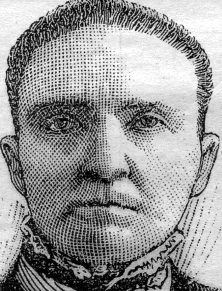
Given the Bolsheviks’ anti-clericalism, this was bound to be a trying position: Catholic clergy, especially of relative prominence, faced intermittent harassment. The outlander Latin rite and any Pole’s hypothetical association with Russia’s ancient geopolitical foe only exacerbated the situation.

Matters came to a head with the March 13, 1923 arrest (Polish link) of a number of Catholic clergy. In the ensuing days, most would be convicted and sentenced to death at a show trial on the grounds of “inciting rebellion by superstition.” To be charged with “inciting rebellion by superstition” is pretty much to stand condemned for it, one would think.

New York Herald correspondent Francis McCullagh, who was present in the courtroom, would later publish his observations of the proceedings in The Bolshevik Persecution of Christianity. The proseutor, McCullagh wrote,

launched into an attack on religion in general and the Catholic Church in particular. “The Catholic Church,” he declared, “has always exploited the working classes.” When he demanded the Archbishop’s death, he said, “All the Jesuitical duplicity with which you have defended yourself will not save you from the death penalty. No Pope in the Vatican can save you now.” …As the long oration proceeded, the Red Procurator worked himself into a fury of anti-religious hatred. “Your religion”, he yelled, “I spit on it, as I do on all religions, — on Orthodox, Jewish, Mohammedan, and the rest.” “There is not law here but Soviet Law,” he yelled at another stage, “and by that law you must die.”

Although information about anti-Christian hostility in the USSR tended to reach the wider world in fragmentary form only, there was an outcry in the western world over this trial’s condemnation of Budkiewicz’s boss, Archbishop Jan Cieplak, as well as that of Monsgnor Budkiewicz. International pressure would ultimately save one of those men … but only one.

Cieplak’s death sentence was commuted, and in 1924 he was even released and allowed to leave for Poland. He died in the United States in 1926.

Budkiewicz made do with grace of the celestial kind. He was whisked from his cell late on the 31st, and shot sometime overnight in the notorious Lubyanka prison in Moscow. Soviet authorities were so tight-lipped and obfuscatory about his situation that the pope prayed publicly in St. Peter’s later that same day for Budkiewicz’s life to be spared. Only several days later was the accomplished fact of Budkiewicz’s execution openly confirmed.

The Polish poet Kazimiera lllakowiczówna dedicated a verse to Budkiewicz, titled The story of the Moscow martyrdom.

Budkiewicz is being investigated by the present-day Catholic church for possible beatification. (Archbishop Cieplak is, too.)

On this day..

1883: Emeline Meaker, child abuser, first woman hanged in Vermont

(Thanks to Meaghan Good of the Charley Project for the guest post. -ed.)

On this day in 1883, Emeline Lucy Meaker was hanged for the murder of her nine-year-old sister-in-law and ward, Alice. She was the first woman executed in Vermont and almost the last; the only other one was in 1905, when Mary Mabel Rogers was hanged after killing her husband for his insurance.

Alice’s father died in 1873 and her impoverished mother sent her and her brother Henry to live in an overcrowded poorhouse. There, the little girl was reportedly sexually abused. Others noted that she was “a timid, shrinking child—of just that disposition that seems to invite, and is unable to resist—persecution.”

In 1879, Alice and Henry got a chance for a better life when their much older half-brother* Horace (described by crime historian Harold Schechter as a “perpetually down-at-heels farmer”) agreed to take them in for a lump sum of $400. However, Horace’s wife, Emeline, was unhappy at this extra burden. She referred to Alice as “little bitch” and “that thing.”

Schechter writes of the killer in his book Psycho USA: Famous American Killers You Never Heard Of:

Married to Horace when she was eighteen, forty-five-year-old Emeline was (according to newspapers at the time) a “coarse, brutal, domineering woman,” a “perfect virago,” a “sullen, morose, repulsive-looking creature.” To be sure, these characterizations were deeply colored by the horror provoked by her crime. Still, there is little doubt that … Emeline’s grim, hardscrabble life had left her deeply embittered and seething with suppressed rage — “malignant passions” (in the words of one contemporary) that would vent themselves against her helpless [sister-in-law].

Young Alice’s life, however difficult it may have been before, became hell after she went to live with her half-brother and his family.

She was forced to do more and heavier chores than she was capable of, and for the slightest reason, Emeline would beat her horribly with a broom, a stick or whatever else was at hand.

Soon Alice’s sister-in-law dropped the pretense of punishment and simply hit Alice whenever she felt like it. Emeline was quite literally deaf to the little girl’s screams, as she had a severe hearing impairment. So did Horace.

Some of the neighbors later said they could hear the child’s cries from half a mile away, and Emeline had no compunctions about abusing Alice in front of visitors. Everyone in in their small community of Duxbury was aware of what was going on, but no one bothered to do anything about it until it was too late.

Less than a year after Alice’s arrival, Emeline decided to do away with her. The crime is reported in detail in Volume 16 of the Duxbury Historical Society’s newsletter.

Emeline convinced her twenty-year-old “weak minded” and “not over bright” son, Lewis Almon Meaker, to help. He later said his mother had persuaded him that Alice would be “better off dead” and that “she wasn’t a very good girl; no one liked her.”

Emeline’s first suggestion was to take Alice out into the mountain wilderness and leave her there to die, but Almon thought this was too risky. Instead, on the night of April 23, 1880, Almon and Emeline woke up Alice, shoved a sack over her head and carried her to the carriage Almon had hired in advance. They drove to a remote hill and forced Alice to drink strychnine from her own favorite mug, which her mother had given her.

Twenty minutes later, the child’s death agonies ceased and Almon buried her in a thicket outside the town of Stowe.

Emeline and Almon, people who had been concerned about the riskiness of a previous murder plot, didn’t bother to get their stories straight about the unannounced disappearance of their charge, so when the neighbors asked where Alice had gone their contradictory explanations for her disappearance raised suspicions.

On April 26, a police officer subjected both mother and son to questioning. Almon didn’t last long before he broke down and confessed. He led the deputy sheriff to the burial site and they disinterred Alice’s remains, still visibly bruised from her last thrashing. Because the deputy’s buggy was small, Almon had to hold Alice’s corpse upright to keep it from falling out during the three-hour journey back to Roxbury.

That must have been some ride.

Emeline and Almon were both charged with murder. Each defendant tried to put as much blame as possible on the other, but both were ultimately convicted and sentenced to death. Almon’s sentence was commuted to life in prison, but Emeline’s was upheld in spite of years of appeals and a try at feigning madness.

Her violent tantrums, attempts at arson, and attacks on the prison staff didn’t convince anyone she was crazy — they merely alienated her family and others who might have otherwise supported her. Once she realized she wasn’t fooling anybody, she calmed down and passed her remaining days quietly knitting in her cell.

She was hanged at 1:30 p.m., 35 months after the murder.

On the day of her execution she asked to see the gallows. The sheriff explained to her how it worked and she declared, “Why, it’s not half as bad as I thought.” For the occasion — she had a crowd of 125 witnesses to impress — she wore a black cambric with white ruffles.

The not-half-bad gallows snapped Emeline Meaker’s neck, but it still took her twelve minutes to die. Emeline wanted her body returned to her husband, but Horace refused to accept it and it was buried in the prison cemetery.

Ten years after his mother’s execution, Almon died in prison of tuberculosis.

* Some reports say Alice was Horace’s niece rather than his half-sister.

On this day..

1944: Roger Bushell and others for the Great Escape

On this date in 1944, the dashing Royal Air Force adventurer and prisoner of war Roger Bushell was shot for his key role orchestrating World War II’s most famous prison break — the Great Escape.


Richard Attenborough plays the Bushell-based character “Roger Bartlett” in The Great Escape, the film based on the story.

South African-born, Cambridge-educated, a pitch-perfect speaker of German and French, Bushell turned in his barristers’ briefs for fighter wings when World War II got underway.

But he was not meant to add Knight of the Air to his c.v., for his Spitfire was downed in its first engagement in May 1940. Bushell wound up in German custody, where he proved to possess a preternatural aptitude for escape.

He slipped German custody in June 1941 and made it within steps of Switzerland before a border guard nabbed him.

Nothing daunted, Bushell escaped again in October 1941 and successfully laid low in Czechoslovakia for months … long enough to finally get swept up in the reprisal roundups following the 1942 assassination of Reinhard Heydrich.

By now he’d wound up in Stalag Luft III, a POW camp adjacent the Silesian town of Sagan (today, Zagan, Poland). Here Bushell would author his breakout masterpiece.

In truth it was a collaborative effort of astonishing scale. Captured soldiers characteristically fled custody, as Bushell himself had before, in ones or twos, or in small groups.

In this camp, Bushell conceived and rigorously managed an industrial-scale operation aiming to bust out more than 200 inmates. “Only” 76 ultimately got out, more than enough for the utter consternation of the Third Reich.

Bushell was going to go big to go home; in fact, his alpha-male code-name among the escape plan’s initiates was “Big X”. Big X mobilized some 600 prisoners to work on three simultaneous escape tunnels, nicknamed “Tom”, “Dick” and “Harry”. Sunk 9 meters underground to stymie German anti-digging seismographs, the tunnels entailed a complex, months-long logistical operation for disposing of dirt, buttressing walls, pumping air. Nor did the escape plans end at the camp wire: teams prepared clothing, papers, maps, money. Every escaping prisoner had a plan and a cover story.

We had a mapping section which turned out 400 maps of the area. Forged passes, they worked day and night turning out some brilliant passes which passed stringent Gestapo checks later on. They were mostly artists, led by an artist called Tim Whelan who was later shot. The clothing department made very good clothes and suits. Compasses, food, you name it, intelligence of course. And train times, we knew all the train times.

Jimmy James

One of the tunnels was found, and one was abandoned, but “Harry” was completed. 102 meters long, it stretched just beyond Stalag Luft III’s outer perimeter, and agonizingly shy of the nearby tree line. On the night of March 24-25 1944, 76 men (Bushell included) slipped out of “Harry” at intervals minutes apart, and into the freezing dark, scurrying into the woods with silent prayers that the nearby guard tower would not throw a spotlight in their direction. The 77th escapee was finally spotted emerging by camp sentries and captured, shutting down the whole operation.

Despite their prepared plans, the runners were very deep within German territory, and in the dead of a moonless night. Successfully completing their escapes would require crossing land on foot in the snow, navigating multiple Reich train platforms without catching the eye of now-hyper-vigilant inspectors, crossing hundreds of kilometers of territory, and passing off accents and forged papers with credible aplomb.

Not many could really manage this: the honor — the duty, as Bushell and many others thought — was in the attempt.

In all, 73 of the 76 escapees in this caper were recaptured within days. (Click here for the stories of the three who actually got away.)

A furious Adolf Hitler personally ordered everyone concerned executed when news broke of the escape, a flagrant violation of the laws of war. His advisors, concerned at triggering possible reprisals, managed to talk the boss down to the nice round number of 50 executions, a … 31.5% less extensive flagrant violation of the laws of war? Germans too suffered the regime’s fury; Hitler was talked off executing the camp commandant, but that guy lost his job. Some workmen from whom the escapees had stolen electrical cable for work on the tunnel were shot for having failed to report the theft.

And the 50 whom the Reich’s leadership had decided to kill* were shot out of hand at various times and places from March 29 to April 12.**

Their somewhat reduced ranks did not much lessen the ferocity of the Allies’ postwar manhunt for the parties involved in conducting it; the “Stalag Luft III murders” were announced in Parliament as soon as May 1944 and became the subject of a dedicated trial in 1947. The convictions in that case led to a mass hanging for war crimes in Hameln, Germany on February 27, 1948.

For his part, Bushell takes his final rest in Posnan, Poland. Although the men shot on this and succeeding nights for the Great Escape are interred at various spots, a monument near the old camp site at Sagan/Zagan permanently honors “the 50”.

* The specific 50 were chosen by Artur Nebe, who would later be executed by the Nazis himself. The selections were heavy on happenstance; while eastern Europeans and the escape leadership were predictably included, many others were in or out by the feeblest of reasons. For example, the Germans are thought to have passed on shooting escapees named “Nelson” and “Churchill” for no better cause than their conceivable relationship to the famous Britons of those names.

** Meanwhile, Germany menacingly warned POWs that further escape attempts would likely cost a man his life. (Image from this page.)

On this day..