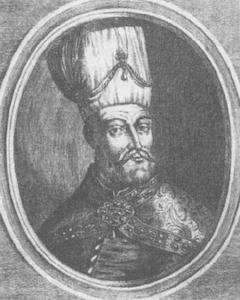
1442: Nguyen Trai

On this date* in 1442, Vietnamese writer, commander, and politician Nguyen Trai died for regicide.

The Confucian scholar (English Wikipedia entry | the far more detailed Vietnamese) was already a patriotic hero for taking to the hills in the successful rebellion that had expelled the occupation of the Chinese Ming dynasty some years before.

This philosopher of irregular war was famed for the very contemporary-sounding aphorism “better to conquer hearts than citadels”;** five centuries on, the great general of another era’s Vietnamese liberation struggle would credit Nguyen Trai’s “attacks on the minds, i.e. propaganda work among the enemy, persuading the enemy to surrender in many cities.”

A literal warrior-poet, Trai bequeathed the ages a corpus of beautiful musings to go with his martial axioms.

To A Friend

My fate naturally has many twists and sharp turns,
So in everything I trust in the wisdom of God.
I still have my tongue — believe me, I am able to talk,
Even though I’m still poor and, as we know, pathetic.
Never to return, the past flies too quickly and the time is short,
But, wandering in this cold room, the night is far too long.
I’ve been reading books for ten years, but I’m poor from clothes to bone
From eating only vegetables and sitting without a cushion.

But the very sharpest turn in his fate was the last one, when the Vietnamese sovereign, healthy and young and passing through the area, paid a courtesy call on the 60-something statesman — and shockingly turned up dead in the morning, thrusting the kingdom into turmoil since his heir was an infant. We have seen in these pages that inhabiting the mere vicinity of an unexpected royal death can be an extremely dangerous situation; so it was for Trai, no matter his former heroism or his poignant verse.

Perhaps his situation as the favored royal advisor had cultivated the envy of rival courtiers who suddenly found themselves in a position to vent their pique; or, maybe it was nothing but tunnel vision where the situation of being the most proximate initial suspect would transmute into an irresistibly self-reinforcing certainty. Or could this celestial household really have been involved in regicide? It’s one of the most famous mysteries in Vietnam’s history.

The man’s contemporaries came to their conclusion almost instantly. Barely six weeks after the emperor’s unexpected death, Nguyen Trai was put to death — and not only he but his wife, Nguyen Thi Lo and all their kin. It’s one of history’s most notorious incidents of the execution of nine relations — the most severe collective punishment to be found in China and Vietnam, wherein anyone closely related to an arch-traitor could be destroyed in a family extermination.

Twenty years later, Emperor Le Thanh Tong formally exonerated the man of the charge, a verdict that has been endorsed by a posterity that honors Nguyen Trai as a national hero.

* We’re translating the date from the Vietnamese lunisolar calendar, a perilous venture. I’m well outside my expertise here but sources I can find are unanimous on this date and Vietnamese calendar converters such as this one appear to agree.

** Another great Nguyen Trai-ism for guerrilla war: “Like the ocean which supports a ship but can also overturn it, so the people can support the throne or sink it.”

On this day..

1682: Ivan Khovansky

On this date in 1682, the boyar Ivan Andreyevich Khovansky went from being the power behind the throne to one of the skulls under it.

A veteran military commander, Khovansky (English Wikipedia entry | Russian) became a key figure in the months after the death of Tsar Feodor III of Russia. This perilous political moment left the throne in the hands of two underage half-brothers overseen by a female regent.

With benefit of hindsight we know that 10-year-old (in 1682) Peter will emerge from this troika to become the mighty Tsar Peter the Great. In 1682, it was anybody’s guess whether any of these dubious prospective autocrats might survive at all.

Peter in particular had cause to fear for his life in May 1682 when the Streltsy, a hereditary guard of Moscow musketeers, bloodily rebelled in favor of his co-heir’s privileges and against his own, rampaging through the Kremlin murdering princes in Peter’s circle. And at the head of these furies stood Khovansky.

Many years later, Peter would revenge himself upon the Streltsy for this horror but in the moment it carried the day, incidentally also carrying Khovansky to a preeminent position in the state.

But he was pitted almost immediately against his erstwhile patron and ally, the regent Sophia Alekseyevna.

Even though the Streltsy rebellion had been conducted on Sophia’s behalf, she could see as well as the next tsar the perils of embracing these latter-day praetorians‘ authority to remake the government by force … and the Streltsy made sure to remind her of it almost immediately when the “Old Believer” movement that predominated among its ranks started raising complaints about Sophia’s religious accommodations.*

Fearing an overmighty nobleman at the head of a treasonable host — and Khovansky has been suspected by both his contemporaries and posterity of coveting the regency for himself — Sophia and the young co-tsars briefly fled Moscow “because we could not tolerate the many offences, unlawful and gross actions and violations committed by criminals and traitors.” Meanwhile she maneuvered adroitly to isolate him politically and had the boyar Duma vote his attainder.

His fate was sealed by the discovery of an anonymous (probably fabricated) letter of denunciation. On 17 September, her own name day, Sophia succeeded in luring Ivan Khovansky and his son Ivan to the royal summer residence at Vozdvizhenskoe outside Moscow. The charges against them centred on their ‘evil designs upon the health and authority of the great sovereigns’ which involved no less than plotting to use the strel’tsy to kill the tsars, Tsaritsa Natalia, Sophia and the patriarch, then to raise rebellion all over Moscow and snatch the throne. The lesser charges included association with ‘accursed schismatics’, embezzlement, dereliction of military duty, and insulting the boyars. The charges were full of inconsistencies and illogicalities, but their sheer weight sealed the Khovanskys’ fate and Prince Ivan and his son were beheaded on the spot … The strel’tsy were forced to swear an oath of loyalty based on a set of conditions, the final clause of which threatened death to anyone who ‘speaks approvingly of the deeds of late, or boasts of committing murder or makes up phrases inciting rebellion as before, or stirs up people to commit criminal acts.’ (Source)

He’s the subject of the Mussorgsky opera Khovanshchina.

* Old Believers wanted a rollback of religious reforms decreed in recent years; Sophia said no dice. Once Peter the Great took over, Sophia and Old Believers alike would end up in the same boat.

On this day..

1952: Mustafa Khamis and Muhammad al-Baqri, Egyptian labor activists

On this date in 1952, Egypt’s revolutionary military government sent a gallows warning to the labor movement.

The towering political figure of the whole Arab world until his death in 1970, Gamal Abdel Nasser led a coup that toppled Egypt’s monarchy just weeks prior to the execution we mark here. (On July 23, 1952; it’s known for that reason as the July 23 Revolution.)

They had bold plans for their countrymen, these young officers: egalitarian land reform, pan-Arabism, release from the hated grip of colonialism.

But don’t mistake that for an invitation to present just any grievance.

the Free Officers were not willing to tolerate a militant, independent trade union movement. The armed forces and workers clashed in Kafr al-Dawwar, 15 miles south of Alexandria. On August 12 and 13, 1952, the 9,000 workers at the Misr Fine Spinning and Weaving Company conducted a strike and demonstration seeking a freely elected union (a pro-company, yellow union had been established in 1943), removal of several managers considered particularly abusive, and the satisfaction of economic demands. Despite the workers’ proclaimed support for the new regime, the army quickly intervened to crush them. A rapidly convened military tribunal convicted 13 workers. Eleven received prison sentences; Mustafa Khamis and Muhammad al-Baqri were sentenced to death and executed on September 7. (Source)

Nasserite Egypt quashed independent labor organizing in these early years, eventually banning all union activity outside of the state-controlled Egyptian Trade Union Federation.

On this day..

1799: Ettore Carafa

On this date in 1799, a nobleman turned republican was turned into a martyr.

Fruit of the distinguished Carafa family, Ettore Carafa (English Wikipedia entry | Italian) was the Count of Ruvo but preferred the ennoblement of all mankind.

After a youthful trip to Paris on the verge of the French Revolution, Carafa returned to make himself the scandal of the Neapolitan aristocracy by such behaviors as translating the Declaration of the Rights of Man and of the Citizen and wearing the republican tricolor to the opera. Carafa was eventually obliged to break out of prison and take sanctuary in the Cisalpine Republic but he returned in glory (and no little satisfaction) with the 1799 Parthenopean Republic, when Naples briefly went republican, too. Commissioned an officer in revolutionary Naples’s army, he besieged his hometown of Andria.

Alas, this democratic interlude did not even live out the year, and many of its leading lights paid the forfeit to a violent reaction. Naples’s briefly-exiled queen was Marie Antoinette‘s sister and nowise forgiving when it came to Jacobin types and certainly not “such a man as Carafa, fit match as he was to Caracciolo, and held in almost equal terror by the Court.”

Carafa was one of its last holdouts, defending Pescara from siege well after Naples itself had fallen.

On September 4, 1799, Carafa mounted the guillotine with aplomb, his last words a command to the executioner Tommaso Paradiso, “You will tell your queen how a Carafa can die!” Then he slid himself under the knife on his back, boldly looking up at the instrument of death as it crashed through him.

On this day..

1937: Alexander Shlyapnikov, Workers’ Opposition leader

September 2 was the execution date during the purge year of 1937 for Old Bolshevik trade unionist Alexander Shlyapnikov.

The metalworker Shlyapnikov was a man who came by his revolutionary politics right from the shop floor. At the age of 10 he left school to work in a foundry, “having learnt to read and write. School was no mother to me, and it was not the teachers who educated me … the teachers were young and very rude, and they often meted out justice to their young charges with their fists. Even during these years, life taught me that there is no justice in this world.” (Source) Born to an Old Believer family, his fervor for justice had an initial religious bent, but after moving from provincial Murom to St. Petersburg/Petrograd* he discarded godliness and became a labor militant of sufficient stature to start turning up on blacklists before he was out of his teens.

During the political chill following Russia’s failed 1905 revolution, the oft-arrested Shliapikov worked abroad in western Europe — by now both a master of his difficult craft, and a Bolshevik who had led an armed rising in his hometown of Murom. Here he became socially and politically close with Lenin and all the brand-name Communist exiles, as well as with European labor unions and left parties.

He also shuttled to and from Russia coordinating the movement’s internal and external actors; he’s left us a memoir of the political maneuvers and adventurous border-crossings of these years. Thanks to this role, Shliapnikov was the most senior Bolshevik on the scene in Petrograd when the February Revolution broke out; he was immediately a key figure in the Petrograd Soviet, and was the Bolshevik state’s first Commissar for Labor.

As the newborn USSR solidified in form and function, Shlyapnikov nursed growing concerns about its distance from — and tendency to run roughshod over — actual workers. He soon became a leading voice for the Workers’ Opposition** around 1919 to 1921. Where the Bolsheviks held that theirs was an ascendant workers’ polity that had subsumed mere guilds, Shlyapnikov insisted on the trade unions as distinct from the Soviet state and the Communist party — “a syndicalist deviation” in Lenin’s charge. The Workers’ Opposition was prescient in its critique of the once-utopian project’s creeping bureaucratizm, with real workers’ material interests, dissenting perspectives, and local idiosyncracies giving way everywhere to the center’s policy orthodoxy dictated through “apparatuses of power … located practically in hands alien to the interests of the working class.” (Source)

Although prominent in its day, the Workers’ Opposition viewpoint was not destined to carry forward into Soviet theory or practice. After bread shortages drove workers and sailors at Kronstadt into a rebellion that the Bolsheviks crushed in 1921, the Workers’ Opposition tendency was quashed within the party. Shlyapnikov thereafter held second-rate posts, and was several times investigated by the Communist Party for “factionalism,” finally being expelled under Stalin in 1933.†

He was favored with a 2016 biography by Barbara C. Allen, Alexander Shlyapnikov, 1885-1937: Life of an Old Bolshevik (review). Allen discussed Shlyapnikov in an interview with the indispensable Sean’s Russia Blog podcast, here. We yield to Allen’s description of Shlyapnikov’s demise among the purging of Old Bolsheviks following the Kirov affair — tragic, banal, and heroic in his plain refusal to gratify his persecutors with any manner of confession or groveling.

In April 1937 he was accused according to article 58-8 and 58-11 of the RSFSR law code of having led a counterrevolutionary group called the Workers’ Opposition, of having linked up with the ‘counterrevolutionary Trotskyist-Zinovievist terrorist bloc’ and of having ‘tried to conclude a bloc with Ruth Fischer for joint struggle against the policy and measures of the Comintern.’ It alleged that he advocated ‘individual terror’ and that groups he directed in Omsk, Rostov-on-Don, Kiev, Odessa, Baku, Kharkov and Moscow had ‘prepared and tried to realise the murder of comrade Stalin.’ Acknowledging that Shlyapnikov did not confess his guilt, the accusation established it through the testimony of Zinoviev, Safarov, Vardin and others. It recommended that the Military Collegium of the USSR Supreme Court should try him and apply the 1 December 1934 law. Applying to cases of terrorist acts, this law ordered the immediate execution of capital-punishment sentences, with no appeals.

The USSR Supreme Court Military Collegium met on 2 September 1937 in closed session to sentence Shlyapnikov, who appeared before the court in a two-hour long session. Refusing to admit his guilt, he also detailed his objections to others’ testimony against him. Given the last word, Shlyapnikov declared that he was ‘not hostile towards soviet power.’ Perhaps as a last ironic remark, he confessed guilt only to ‘a liberal attitude towards those around him.’ Nevertheless, the court on the same day found him guilty under article 58, paragraphs 8 and 11, of having led ‘an anti-Soviet terrorist organisation, the so-called “Workers’ Opposition,”‘ which carried out ‘counterrevolutionary activity directed towards the topping of soviet power.’ He was convicted of having been in contact with ‘leaders of Trotskyist-Zinovievist and Right-Bukharinist terrorist organisations’ and of having ordered members of his ‘anti-Soviet organisation’ to carry out ‘terrorist acts’ against party and government leaders. Then the Military Collegium sentenced him to ‘the highest measure of punishment — execution by shooting with confiscation of all personal property.’ Below this was pencilled: ‘the sentence was carried out on that day in Moscow.’ Despite ‘eyewitness’ tales that he survived for years longer, either abroad or under a false name in the Gulag, documents attest to the fact that shortly after his 1937 execution, Alexander Shlyapnikov’s body was cremated and buried in Donskoy cemetery in a common grave.

* Peter the Great‘s jewel was still St. Petersburg when Shlyapnikov arrived there in the last years of the 19th century; it was renamed Petrograd in 1914 and carried that name during the events of the 1917 revolutions and thereafter. It became Leningrad in 1926, a name that stuck for the remainder of the Soviet era.

** Alexandra Kollontai was also a noteworthy Workers’ Opposition exponent; her apologia makes for sad reading considering the Soviet state’s coming vector towards sclerotic authoritarianism.

† Stalin’s ideological mediocrity is commonplace observation but perhaps its signal instance occurred upon his arrival to revolutionary Petrograd before Lenin: where Shlyapnikov was refusing to entangle the Bolsheviks with the Provisional Government (post-February revolution, pre-October revolution), Stalin insisted on a more moderate and cooperative attitude. When Lenin arrived shortly thereafter, his April Theses famously re-set Bolshevik policy in Shlyapnikov’s more intransigent direction — a defeat to which Stalin owed the Bolshevik conquest of power and his own eventual opportunity to execute men like Shlyapnikov.

On this day..

1816: Joaquim Camacho

On the last of August in 1816, the Colombian statesman Joaquin Camacho was executed as a traitor to Spain.

Blind and paralyzed — he had to be carried to his firing squad in his chair — this lawyer-turned-journalist decorated the 1810-1816 “Foolish Fatherland” era of present-day Colombia, when New Granada declared independence from a Spain bogged down by the Napoleonic Wars.

In fact, multiple regions and municipalities within New Grenada each began declaring their own sovereignty in 1810. The July 20, 1810, declaration by Bogota — then and now the capital city — is still commemorated as Colombia’s Independence Day.

And Camacho (English Wikipedia entry | Spanish) was right in the middle of it.

On the morning of July 20, in a maneuver intentionally staged to coax the Spanish authorities into showing their backsides to New Granada’s patriots, Camacho presented himself to the viceroy to request the calling of a council in Bogota — a request he would (and did) certainly refuse. Elsewhere in the iconic “Flower Vase Incident,” Camacho’s comrades solicited of a wealthy royalist merchant the use of his ornamental flower vase to welcome the arrival of a noted fellow-traveler. They too were predictably refused, and escalated the expected affront into a fistfight and thence to a riot in the market. The backlash against these indignities gave cover to proclaim the independence of Bogota — with Camacho among the signatories of the declaration at a public meeting that evening.

During the exciting years that followed, Camacho served in the Congress of the United Provinces of New Granada and for a few months in 1814-1815 as one of a triumvirate collectively exercising the office of president.

All such offices were swept away by the Spanish reconquest of New Granada under Pablo Morillo, who lived up to his chilling nickname “El Pacificador”. Camacho was among numerous separatist and revolutionary leaders put to death to control New Granada, several of whom we have already encountered in these annals. It worked … for all of three years, until Simon Bolivar accomplished permanently what Camacho et al and died in seeking.

On this day..

1704: Roland Laporte, posthumously, and five aides, humously

On this date in 1704, the great Camisard commander Pierre Laporte was publicly burned. He was already two days dead, but the same could not be said by five comrades-in-rebellion who were quite alive as they were broken on the wheel.

Familiarly known by the nom de guerre “Roland”, Laporte (English Wikipedia entry | the far more detailed French) was a whelp of 22 when entrusted with command of about 400 Protestant guerrillas operating around Lassalle, and his native Mialet.

These were rebels in a very dirty regional civil war in France’s heavily Protestant southeast, following the crown’s revocation of tolerance for the heretics. Roland proved himself one of its ablest prosecutors, putting Catholics to fire and sword be they enemy troops or wrongthinking neighbors.

By 1704 the insurgency was circling the drain as Camisard officers were either killed off or bought off. Our self-proclaimed “general of the children of god” was not the type to be had for 30 pieces of silver plus an army commission,* and so only violence would do for him. On August 14, betrayed by an informer who was amenable to purchase, Roland was slain in a Catholic ambush at Castelnau-les-Valence. Five officers escorting him opted not to go down fighting and surrendered instead, which proved a regrettable decision.

But even death could not slake the vengeance of his foes. “On the 16th August, 1704, the body of Roland Laporte, general of the Camisards … was dragged into Nimes at the tail of a cart and burnt, while 5 of his companions were broken on the wheel around his funeral pyre.”

For the unusually interested reader, there’s a 1954 French biography by Henri Bosc — who also authored a multi-volume history of the Camisard war — titled Un Grand Chef Camisard Pierre Laporte dit Roland, 1680-1704. It’s long out of print and appears to be difficult to come by.

* Not long before Roland’s defeat, just such a deal had shockingly induced fellow Camisard commander Jean Cavalier to turn coat.

On this day..

1862: Frisby McCullough, Missouri bushwhacker

On this date in 1862, Confederate soldier Frisby McCullough was shot as a terrorist during the U.S. Civil War’s guerrilla Missouri campaign.

McCullough had a youthful stint in the California gold rush to his back when he returned to Missouri in the mid-1850s to practice law. (He also served in the Missouri State Guard, a pro-slavery militia that had been established in 1861 by the since-exiled secessionist governor.)

With the onset of the Civil War in 1861, McCullough signed up for the pro-slavery Southern army and after a few different assignments became detailed to aid Confederate Col. James Porter in the hasty bush war raging in that frontier state.

We’ve previously detailed that conflict here. For purposes of this post it will suffice to say that the border state of Missouri was fiercely contested during this war, and claimed by North and South alike.

The Union commander John McNeil was not very inclined to charitably reading the treasonable secessionist irregulars who opposed him in the state, whom the Union considered to be operating illicitly behind its lines — in the character of spies and saboteurs, like the British agent John Andre during the Revolutionary War. This very much applied to our man, since McCullough’s particular gift was recruitment — you know, luring loyal citizens into sedition and rebellion.

On August 6, 1862, McNeil’s forces routed Porter’s at the Battle of Kirksville, and they pressed their victory. The very next day after, McNeil had 15 Confederate prisoners taken at Kirksville executed as former POWs who had violated their paroles by returning to the field: “I enforce the penalty of the bond,” McNeil icily reported to Washington.

Not long after, northern sentries also captured the ailing McCullough riding alone near Edina. He wasn’t a parolee — but “he had no commission except a printed paper authorizing the bearer to recruit for the Confederate army,” McNeil would write of him later in a missive to a comrade. At a snap trial on the 8th, “he was found guilty of bushwhacking and of being a guerilla. He was a brave fellow and a splendid specimen of manhood. I would gladly have spared him had duty permitted. As it was he suffered the same fate that would have fallen to you or me if we had been found recruiting within the Confederate lines. He met a soldier’s death as became a soldier.”

A memoir of the southern travails during this conflict titled With Porter in North Missouri; a chapter in the history of the war between the states is in the public domain; chapter XXII relates with umbrage the fate of McCullough whom the author Dr. Joseph Mudd* greatly admired:

Leaning against a fence he wrote a few lines to his wife, and these, with his watch and one or two other articles, he delivered to an officer to be given her, with assurance of his devoted affection in the hour of death. Upon the way to the place of his execution he requested the privilege of giving the order to fire, which was granted to him. All being ready, he stood bravely up, and without a tremor in his manly frame or a quiver in his clarion voice, he called out, ‘What I have done, I have done as a principle of right. Aim at the heart. Fire!’

… He was a good citizen, a high-minded gentleman, of fine presence, brave as a lion, gentle as a woman. Even in his death the strongest Unionists who knew him respected and admired his virtues and entertained the most bitter regrets that what they considered his misconceptions of duty had led him to his fearful fate. At the time of his death he was thirty-three years of age.

* Dr. Joseph Anthony Mudd hailed from Maryland: he was the brother of the Maryland Dr. Samuel Mudd who narrowly avoided execution as a conspirator in the assassination of President Abraham Lincoln.

On this day..

1849: Celigny Ardouin, Haitian Minister of the Interior

Haitian politician Celigny Ardouin was executed on this date in 1849.

The brother of historian Beaubrun Ardouin (and the already-deceased poet Coriolan Ardouin), Celigny Ardouin was the country’s former Interior Minister but was purged when the slave-turned-general-turned-president Faustin Soulouque, appointed as a figurehead president for the country’s elites, mounted a self-coup to establish himself as the emperor.

Ardouin had opposed Soulouque’s initial selection, and the emerging dictator had opportunistically accused his old foe of orchestrating disturbances in support of a senator who was frustratingly safe from Soulouque’s executioners thanks to French diplomatic pressure.

On this day..

1540: The Botolph Plotters of Calais, the last English Carthusian, and Thomas More’s son-in-law

The 4. of August, Thomas Empson sometime a monke of Westminster, which had beene prisoner in Newgate more than three yeares, was brought before the Justices of goale deliverie at Newgate, and for that he would not aske the king pardon for denying his supremacie, nor be sworne thereto, his monkes cowle was plucked from his backe, and his body repried till the king were informed of his obstinacie. The same 4. of August were brawen to Tiborne 6. persons, and one led betwixt twaine, to wit, Laurence Cooke, prior of Dancaster, William Horne a lay brother of the Charterhouse of London, Giles Horne gentleman, Clement Phillip gentleman of Caleis, and servant to the lord Lisle, Edmond Bromholme priest, chaplaine to the said lord Lisley, Darby Gening, Robert Bird, all hanged and quartered, and had beene attainted by parliament, for deniall of the kings supremacie.

–John Stow, Annals of England to 1603 (see page 977 of this archive.org version)*

Tyburn hosted a mass execution on this date mingling several different offenders with a Catholic bent from Henrician England’s religion/politics bloodsport.

The most politically intriguing are Clement Phillip (or Philpott) and Edmund Brindholme, two members of the retinue of the Viscount Lisle. Lord Lisle governed Calais, Henry VIII’s vital French bridgehead.

Phillip and Brindholme were part of the “Botolph Plot”, so named for a fellow-servant called Gregory Botolf or Botolph.

Botolph was an energetic conspirator and/or trumped-up con man who represented to his mates that he was shuttling mash notes with the exiled Cardinal Reginald Pole, Henry VIII’s once-loved, now-despised nemesis noted for his noisy denunciations of the king’s break with Rome. Botolph’s declared objective was to “get the towne of Calais into the hands of the Pope and Cardynal Pole; this was the matter that I went to Rome for; and I have consulted with the Holy Father the Pope and with the Reverent Father Cardynall Pole.”

The implausibility of these fanciful pretensions — one chronicle calls this guy “Gregory Sweetlips” which gives you an idea of his credibility — stood in inverse relationship to the damage such a plot’s execution would inflict: Calais was a commercially and strategically important port that had been in English hands for nearly 200 years; for a dynasty perpetually nervous of its prestige, fumbling it away could have proven catastrophic.** So once a plan to betray it from the very governor’s household was exposed, the crown prosecuted it ferociously, although as best I can determine Botolph himself appears to have successfully escaped the royal vengeance.

Lord Lisle himself was also clapped in the Tower† for his servants’ misbehavior but no attainder was ever proceeded upon. In 1542, Henry cut him a break and released him; Lisle would already have been near or past the age of 70 by this point, which we mention as context in reporting that news of his intended release caused the poor ex-governor to keel over dead of a heart attack. “Henry VIII’s Mercy was as fatal as his Judgments,” one waggish historian would later remark.‡

Things might have gone less mercifully for Lisle had not his situation happened to overlap with the fall of Thomas Cromwell, which unfolded that same summer of 1540.

Cromwell was beheaded on July 28, significantly upstaging this August 4 coterie, and events in Calais might have played a part in that unhappy end. Politically weakened by his authorship of the failed Anne of Cleves marriage, Cromwell’s defeat is sometimes read in the light of excessive reformation zeal unleashed in Calais. (Like most theses about Tudor England, the Calais-reformers line has its detractors.) One possible way to read the Botolph Plot stuff is as one of Cromwell’s very last, desperate gambits: threatened by the conservative Duke of Norfolk, who had the whip hand during this brief interval thanks to his kinship to incoming queen Catherine Howard, Cromwell struck back against his persecutors “with the concentrated energy of a desperate gambler” (Source) … by going hard after the papist plot in Calais and implicating in the treason Howard’s ally, the aforementioned Lisle.


In William Horn(e) the crown completed the destruction of the Carthusian order, which had been violently suppressed several years previous — with 18 executions into the bargain. Eleven more Carthusians had avoided the scaffold only to be consigned to the dungeons where pestilence and neglect took their toll, until only Horn survived.

Nobody seems quite able to put a finger on why Horn was kept alive all that time: was he just hardier or “luckier” than the rest, or was he being intentionally saved as an accent upon an occasion such as this? With him went Friar Lawrence Cook, the last Carmelite executed in the king’s suppression of that order: he hailed from Yorkshire and had once countenanced that region’s subversive (in Henry’s eyes) Pilgrimage of Grace.

In a similar vein, we also find among this batch Giles Heron, a son-in-law of the first name in Catholic obstinacy, Sir/Saint Thomas More. Heron had kept his head about him and even sat on the Middlesex grand jury that recommended proceedings against Anne Boleyn, which is the sort of thing a Thomas More client wouldn’t mind doing at all.

Alas, he was in the judgment of a contemporary “wise in words, but foolish in deeds” during such dangerous times. Comfortably situated as a rentier landlord, Heron appears to have fallen into a ferocious tiff with a tenant who revenged an eviction by informing to Cromwell’s spies about Heron’s divergences from the new orthodoxy. The evidence of this tenant, one Lyons, eventually led Parliament to attaint Heron. The confiscated estates would be restored to Heron descendants under Queen Mary.

Darby Gynnyng — to use a more Gaelic rendering of his name — was a bit more forceful about his dissidence, for he came “late of Dublin,” where he “has maintained divers of the King’s enemies in Ireland, especially Fitz Garrard whom he succoured and accompanied.”

* A somewhat different roster for the same date is supplied by Wriothesley’s Chronicle (p. 121 of this archive.org version) which might be double-counting his “six persons more” to suggest so many as 13.

This yeare, the fowerth daie of Awgust, were drawen from the Tower of London to Tiburne, Giles Heron, gentleman, Clement Philpott, gentleman, late of Callis, and servant to the Lord Lile, Darbie Gynning, Edmonde Bryndholme, priest, William Horn, late a lay brother of the Charter Howse of London, and another, with six persons more, were there hanged drawn, and quartered, and one Charles Carow, gentleman, was that daie hanged for robbing of my Ladie Carowe, all which persons were attaynted by the whole Parliament for treason.

** The Tudors actually did lose Calais to French siege in 1558. These were the last months of the ailing Queen Mary’s rule; she’s reported to have wailed on her deathbed that “When I am dead and cut open, they will find Philip [her husband] and Calais inscribed on my heart.”

† Seized upon Lord Lisle’s arrest were seven years of correspondence comprising more than 3,000 distinct documents. This trove has survived to present times and become an invaluable resource for historians’ exploration of Tudor life. It’s known as the Lisle Papers; there are published collections and commentaries on them available by the late Muriel St. Clare Byrne.

‡ Still, this was a better fate than that enjoyed by the next Viscount Lisle, John Dudley, who briefly exercised de facto rulership of England only to have his head cut off after the fall of Lady Jane Grey.

On this day..