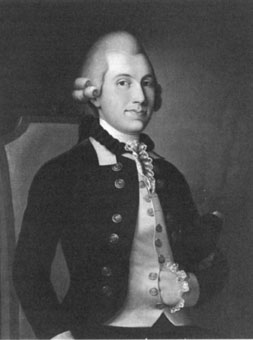
1869: Charles Carpentier

On this date in 1869, an impressive crowd packed Arras’s Grande Place for the beheading of Charles Carpentier.*


Photo believed to have been taken shortly before Carpentier’s execution.

According to Bois de Justice, whose collection of guillotine arcana is second to none, this is one of the rare photographs extant of the guillotine in its more classically inspired public-scaffold setup.

Its construction is lovingly detailed in this New York Times report on the following year’s execution of Jean Baptiste Troppmann:

… a square-shaped scaffold, thirteen feet long by about twelve feet six inches wide, supported on four posts six feet in height, and reached by a flight of ten steps. This scaffold is railed in on all sides, with an open balustrade, and at two-thirds of its length are fixed two upright parallel posts, surmounted by a cross-beam which goes by the name of the “chapeau.” They are thirteen feet high, and have a space of about fifteen inches between them. The knife, which is attached to the chapeau, is composed of a triangular blade of steel, fixed by means of three iron pins into a leaden haft, called the “mouton,” which gives it great weight. This mouton is nearly fourteen inches broad and the blade at its greatest width hardly a foot … The criminal, having mounted the scaffold, finds himself in front of the vertical bascule, which extends from just above his ankles to the middle of his breat, and facing him also is the lunette, with its movable portion raised. The executioner pushes the bascule, which falls into the horizontal position, and then pushes it along the table; the head of the victim seems, as it were, to throw itself into the semi-circular opening of the lunette, and an assistant immediately seizes hold of the hair. Two things now remain to be done — one is to press the button which acts upon the mechanism of the upper portion of the lunette, causing it to fall and secure the head of the criminal — the other is to set loose the knife which is to cut the head off. On decapitation taking place the head is thrown into the basket while the executioner, by a single motion slides the body down the inclined plane. The rapidity of the motion is almost inconceivable …

With the best part of a century under its lunette, the guillotine at this point had been improved from the revolutionary original that Marie Antoinette or Robespierre died upon. But it had the same theatrical concept.

However, an assistant executioner and carpenter by the name of Leon Berger was even then in the process of designing a more compact, less monumental version of the device. This technical advance met evolving French social mores with the 1870 abolition of the scaffold and its towering thirteen-foot chapeau in favor of “the Algerian model.”

From then on, the business was to be conducted by a traveling executioner with a portable guillotine at ground level, meant to reduce the carnival atmosphere and centralize administration of justice.

This concession to an age’s liberalism might well have led to an abolition on public executions full stop, had the French state not simultaneously fallen apart.

The upshot was that the French public beheading — sans scaffold — would persist for seven more decades, long enough not only for photography but for film.

* For murder and robbery on the highway, as reported by the September 16, 1869 Le Figaro. Noting the contrast with some recent acquittals of other criminals, the paper remarked apropos its skeptical stand on the death penalty that “though Carpentier is very unattractive at least from what we know of his case, we confess sincerely that his conviction was not sufficient to convince us [of capital punishment], because it proves once again how juries in different places arrive at different verdicts for the same types of crimes.” Le Figaro anticipated that regional inconsistencies in sentencing would contribute to ending the death penalty.

On this day..

1401: Klaus Stortebeker, Victual Brother pirate

On this date in 1401,* “Victual Brother” Klaus Störtebeker was beheaded in Hamburg.

Statue of Klaus Stortebeker. (cc) image from blariog

This legendary freebooter terrorized the Hanseatic League‘s trading channels from Novgorod to London in the 1390s.

He was the most famous of a company of privateers who’d been hired out in 1392 to place their thumb on the scale of Scandinavian dynastic politics** — notably, supplying Stockholm during a siege, from which service they obtained† the nickname Victual Brothers. It stuck, even when operations had moved far beyond the larder.

In the mid-1390s, the “brothers” turned against Danes and Hanse alike, raiding coasts and plundering sea trade from their base in the shattered port of Visby.

Klaus, the most famous of them, is still remembered today “like Che Guevara, a freedom fighter, but also like Robin Hood, because he fights the rich in the name of the poor”:‡ folk hero-outlaws, men of the pirate utopia.

Whatever debunking that legend might invite, its existence speaks to that timeless romance of the road. And then there’s that kernel of truth, or so one hopes: after Stortebeker’s death, the remnants would persist as the Likedeelers, “those who share equally.”

The buccaneer’s end, after capture by Simon of Utrecht, was equally legendary: he’s supposed to have made a scaffold pact with the headsman to spare any of his mates he could walk past once decapitated.

Rising from the chop like St. Denis, the headless trunk of Stortebeker lurched past 11 of them before the executioner himself tripped it up. (In the most embroidered version of this story, Hamburg not only didn’t honor the promise, it executed the executioner when all was said and done. But we’re pretty comfortable saying that once we reach the headless zombie pirate part of the story, the reader has carte blanche to rewrite anything not to liking.)

Drink up me hearties yo ho! “Stortebeker” itself just means, “quaff the mug.”

Klaus Störtebecker is our master
advised by Godeke Michels!
Shoot through the waves like storm, just faster
The Flying Dutchman’s godfather
Gaffer is the ships goblin
Let’s tackle, crew!
Life is bauble!
We are the hell of Helgoland

Our bloody flag is cracking the mast
Rats scurrying on the floor
A skeleton is our guest
On the sail there are strange shadows
The mermaid is swimming in our wake
Laugh, crew!
Life is bauble!
Still ruling is the hell of Helgoland

And when our ship makes its last run
Laugh while like a coffin she goes down
We die an ancient pirate’s way
Today we fight, tomorrow we drown
In green algae and white sand
Land ho, crew, land!
Life is bauble!
Such dies the hell of Helgoland

-Folk song honoring Klaus Stortebeker
(translated here)

* As often for events at this distance of time, the dates are a little bit shaky; 1400, rather than 1401, has been proposed for the actual year of Stortebeker’s execution; October 21 rather than October 20 is also given on some sites. Folklore more so than almanac blogs has the luxury of indifference to such particulars.

** The Victual Brothers were initially retained to oppose the adroit Danish Queen Margaret. She would face (and brush aside) even weirder challenges to her rule en route to lashing together the Kalmar Union under Danish regional hegemony.

Alternate explanation: food-based euphemisms for piracy trace to armies’ victual officers, and their unscrupulous methods of filling the mess hall.

‡ In a continuing spirit of democratic larceny — or as a gang symbol for the local Hell’s Angels, whatever — our man’s alleged skull was stolen from a Hamburg museum earlier this year.

On this day..

1470: John Tiptoft, Butcher of England

On this date in 1470, cultured and bloodthirsty* English noble John Tiptoft, Earl of Worcester was beheaded at Tower Hill during the War of the Roses.

Tiptoft’s calling card says he’s one of England’s first Renaissance men — literally so, because after cutting his teeth at Oxford, he spent several years in Padua, Ferrara, Rome and Florence, brushing up on Latin and law.

Besides culture and erudition, Tiptoft is supposed to have picked up from his Italianate exposure a taste for that fragmented peninsula’s barbarous political jockeying.*

Back in Britain from the start of the 1460s, Worcester aligned with the Yorkists during the War of the Roses, and made liberal use in both England and Ireland of his continental savvy in matters of torture, earning that unflattering sobriquet Butcher.

Tiptoft gave them the material, exercising,” in his constabulary post, “more extreme crueltie (as the fame wet) then princely pity.” For instance, when putting down one revolt,

the Kynge Edwarde came to Southamptone, and commawndede the Erle of Worcetere to sitt and juge suche menne as were taken … and so xx. persones of gentylmen and yomenne were hangede, drawne, and quartered, and hedede; and after that thei hanged uppe by the leggys, and a stake made scharpe at bothe endes, whereof one ende was putt in att bottokys, and the other ende ther heddes were putt uppe one; for whiche the peple of the londe were gretely displesyd; and evere afterwarde the Erle of Worcestre was gretely behatede emonge the peple, for ther dysordinate dethe that he used, contrarye to the lawe of the londe.

Too bad for the gretely behatede Erle of Worcestre that this was an era when anyone‘s uppance could be coming at any time.

This last, well, butchery was effected against supporters of the Earl of Warwick, the “kingmaker” whose fluid alliances shaped the royal jostle in the mid-15th century.

And the trouble for Tiptoft was that Warwick’s 1470 revolt against Tiptoft’s ally and kin Edward IVworked. Okay, only temporarily, but it was long enough to do in John Tiptoft.

For a brief moment, the Yorkist cause waned and the Lancastrian waxed; during the brief moment, the Butcher of England was haled before the Lancastrian Earl of Oxford, a man who occupied that office because Tiptoft had executed his father and elder brother.

The wheel of fortune had turned. A massive, jeering crowd turned out to see Tiptoft de-topfed. He asked the executioner to do it in three strokes rather than one, in honor of the Trinity.


Prayerful: John Tiptoft’s tomb at Ely Cathedral. (He’s flanked by two of his three wives, one of whom is in the foreground.) Image used with permission.

Tiptoft [wrote Henry Pancoast] was the most learned man among the English nobility of his time … [he] reflects his age at its best and worst. He was set at a confluence of evil influences, when civil strife following the Hundred years War [sic] had debauched the English nobility. Abroad he came close to that Italy which Machiavelli called “the corrupter of the world.” Yet a new intellectual life was growing, and Tiptoft’s career alternates between scholarship and political intrigues. He shows us how early the new spirit was astir in England, and how it was retarded; is is the “butcher” and “the first fruits of the Italian Renaissance.”

You can explore a bit more about John Tiptoft in the first third of this BBC radio 4 program, with author Alison Weir. (Her Tudor books burn up the bestseller lists, but she’s also written about the War of the Roses.) Or, look up the Household of Worcester, a medieval re-enactment society that takes name and inspiration from our day’s butchered butcher.

* This supposed southern influence on our friend the Earl might well be true, but it also strikes this author as an answer in search of a question. It’s hardly necessary to posit foreign influence to explain brutality in 15th century England, nor to explain educated men with a taste for cruelty.

But Tiptoft’s “wanton ferocity,” says Pancoast, “brings to mind the Italian proverb, quoted by Ascham in proof of the brutalizing effect of Italy upon the English nature: Inglese Itilianato e un diabolo incarnato.”

Since oiled stakes up buttocks were no more characteristic of Italian jurisprudence than English, the obvious place one might inquire for an outside influence would be that better-known diabolo incarnato, Vlad the Impaler: stories of Vlad Dracula’s then-contemporary skewerings were even then circulating and magnifying in the 15th century’s fresh new media channel, the printing press.

On this day..

Unspecified Year: The Last Day of a Condemned Man

On an unspecified date around this time in the late 1820s, the narrator of Victor Hugo’s Last Day of a Condemned Man leaves off his diary — bound for the guillotine.

An illustration from The Last Day of a Condemned Man.

The young Hugo‘s first major work of fiction, this 1829 story dramatizes the torment of an unnamed man doomed for an unstated crime. By abstracting its central character, Hugo generalizes its unabashed anti-death penalty message … but one of the few morsels of specificity places the man’s conviction on “a beautiful morning at the close of August,” with the action unfolding over the ensuing six weeks until his date with the guillotine.

If not exactly Hugo’s greatest work, this emotional rendering of a man’s anguish awaiting death well befits an artist deeply sensitive to the passion of the scaffold — and a period when many writers witnessed, critiqued, contested, and even faced the phenomenon of public execution.

They say that it is nothing,–that one does not suffer; that it is an easy death. Ah! then, what do they call this agony of six weeks,–this summing-up in one day? What, then, is the anguish of this irreparable day, which is passing so slowly and yet so fast? What is this ladder of tortures which terminates in the scaffold? Are they not the same convulsions whether life is taken away drop by drop, or intellect extinguished thought by thought?

Now I must fortify myself, and think firmly of the Executioner, the cart, the gendarmes, the crowd in the street and the windows.

I have still an hour to familiarize myself with these ideas. All the people will laugh and clap their hands, and applaud; yet among those men, now free, unknown to jailors, and who run with joy to an execution,–in that throng there is more than one man destined to follow me sooner or later, on the scaffold.

More than one who is here to-day on my account, will come hereafter on his own.


Hungarian painter Mihaly Munkacsy‘s The Last Day of a Condemned Man has no relationship to Hugo’s book, but deals in a similar mood. It won an award from the Paris salon in 1870.

The Last Day of a Condemned Man is available free online (English | French), or in throwback print form from Amazon.com.

* The prisoner finds in his cell the names of then-notable criminals who previously occupied it — a concession to period specificity. The last of these names is Castaing, meaning our man’s story takes place after that poisoner’s 1823 beheading. A subsequent reference to Louis-Auguste Papavoine, executed in 1825, would push the execution to the even narrower window of October 1825, 1826, 1827, or 1828.

On this day..

1471: Thomas Neville, the Bastard Faulconbridge

On this date in 1471, Lancastrian commander Thomas Neville was beheaded in the War of the Roses.

“The bastard Faulconbridge” (Fauconberg, Falconbridge) got his illegitimacy from dad, the Earl of Kent, and like William Neville, young Thomas played both sides of the aisle during the decades-long dynastic struggle.

Thomas made his most famous mark in May of 1471, leading a Lancastrian column to meet up at London with another led by Margaret of Anjou. Unfortunately for Neville, Margaret’s army was trounced at the Battle of Tewkesbury, leaving the Bastard on his own.

Still, he made a solo go of attacking London — “stirring of coles & proud port,” in the judgment of Holinshed, “with hautinesse of hart & violence of hand thin|king to beare downe the people, as an innudation or flowing of water streams dooth all before it: yet he came short of his purpose, & pulled vpon his owne pate finall destruction: though he thought himselfe a man ordeined to glorie.”

Thomas Neuill, bastard sonne to that valiant cap|teine the lord Thomas Fauconbridge (who had late|lie before beene sent to the sea by the earle of War|wike, and after fallen to practise pirasie) had spoiled diuerse merchants ships, Portingals and others, in breach of the ancient amitie that long had continued betwixt the realms of England and Portingale; and furthermore, had now got to him a great number of mariners, out of all parts of the land, and manie traitors and misgouerned people from each quarter of the realme, beside diuerse also foorth of other coun|tries that delighted in theft and robberies, meaning to worke some exploit against the king.

And verelie, his puissance increased dailie, for ha|uing béene at Calis, and brought from thence into Kent manie euill disposed persons, he began to ga|ther his power in that countrie, meaning (as was thought) to attempt some great and wicked enter|prise. After the kings comming to Couentrie, he receiued aduertisements, that this bastard was come before London, with manie thousands of men by land, and also in ships by water, purposing to rob and spoile the citie. Manie Kentishmen were willing to assist him in this mischieuous enterprise, and other were forced against their wils to go with him, or else to aid him with their substance and monie, insomuch that within a short time, he had got togither sixtéene or seuentene thousand men, as they accompted them|selues.

With these he came before the citie of London the twelfe of Maie, in the quarrell (as he pretended) of king Henrie, whome he also meant to haue out of the Tower, & to restore him againe vnto his crowne & roiall dignitie …

The attack gave London a fright, but was eventually repelled; the Bastard fled town as King Edward IV, fresh from Tewkesbury, approached.* He seems to have copped a pardon, but he was beheaded in unclear circumstances (Holinshed says, after resuming his career in piracy — but royal perfidy seems equally likely), and his head shipped to London Bridge for pike-topping duty.


A distant spinoff of the dynasty is rumored to have founded the Falcon Crest estate.

There’s a bastard Faulconbridge in the Shakespeare canon; oddly enough he’s not found in the Henry VI series … but as the central character in the rarely-performed King John. Apart from the name, this fictional Bastard Philip Faulconbridge doesn’t seem to have a lot in common with our man.

* Just hours after resuming London, Edward’s party murdered the theretofore imprisoned Yorkist claimant that Neville had meant to liberate, Henry VI. Henry was wed to Margaret of Anjou, truly an ill-starred marriage.

On this day..

1772: The Marquis de Sade and his servant, in effigy

On this date in 1772, straw effigies of the (in)famous French libertine Marquis de Sade and his servant Latour were executed in Marseilles for sodomy.

“It is always by way of pain one arrives at pleasure.”

The aristocrat christened Donatien Alphonse François (even the name would become taboo for later use among his family) was at this point just 32 years old, but already cultivating the reputation that would make his name a byword for violent sex. He had in 1768 got the boot from Paris in view of the many courtesans who complained of his mistreatment.

Five more would do so for the incident that triggered his “execution”: de Sade took his baroque pleasure from these “very young girls” obtained by his manservant Latour (who also took part in the bisexual debauch). The whole scene was spiced with liberal dosage of the poison/aphrodisiac* spanish fly.

“Cruelty, very far from being a vice, is the first sentiment Nature injects in us all.”

One of these working girls seriously overindulged on the the love potion and spent the next week puking up “a black and fetid substance.” The authorities got interested, and de Sade and Latour bolted to Italy.**

Back in Marseilles, proceedings against the fugitives saw them sentenced for (non-fatal) poisoning and sodomy

for the said Sade to be decapitated … and the said Latour to be hanged by the neck and strangled … then the body of the said Sade and that of the said Latour to be burned and their ashes strewn to the wind.

This was duly carried out against straw effigies of de Sade and Latour on September 12, 1772.

“Lust is to the other passions what the nervous fluid is to life; it supports them all, lends strength to them all: ambition, cruelty, avarice, revenge, are all founded on lust.”

Although the Marquis eventually got this sentence overturned, it did in a sense mark an end to his life as it had been. Later in 1772, he’d be arrested in Italy; though he escaped and went back on the orgy circuit, most of the four-plus decades left to his life would be spent imprisoned or on the run — an ironic situation for the man Guillaume Apollinaire would celebrate as “the freest spirit that has yet existed.”

(Astonishingly, de Sade also avoided execution during the French Revolution: he was supposed to have been in the last batch guillotined before Robespierre fell; either through bureaucratic bungling or efficacious bribery, he avoided the tumbril.† De Sade also cheated death when a man whose daughter the marquis had outraged attempted to shoot him point-blank … only to have the gun misfire.)

“My manner of thinking, so you say, cannot be approved. Do you suppose I care? A poor fool indeed is he who adopts a manner of thinking for others!”

From this latter half of the infamous satyr’s life — when he often had time on his hands not available to dispose in more corporal pursuits — date the pornographic/philosophic writings that would stake de Sade’s disputed reputation for posterity.

* Alleged aphrodisiac.

** With another lover, his sister-in-law Anne … who was also a Benedictine canoness.

† It was on some firsthand authority, then, that de Sade took a dim view of capital punishment: “‘Til the infallibility of human judgements shall have been proved to me, I shall demand the abolition of the penalty of death.” This and other pithy de Sade quotes in this entry are from here.

Part of the Themed Set: Executions in Effigy.

On this day..

1661: Kaj Lykke, in effigy

On an uncertain date in 1661, the Danish noble Kaj Lykke (sometimes Kai Lykke) — safely but penuriously absconded to exile — was “executed” in effigy.

This wealthy roue (Danish Wikipedia page) was famous for his affairs innumerable.

To one of these maids, Lykke addressed a love-note remarking that the unpopular queen consort Sophie Amalie enjoyed queen consorting with her servants.

The sort of salacious rumor-mongering that constitutes many a blogger’s daily bread (and no doubt many a debauched noble’s pillow-talk) was, in Denmark at the dawn of its absolute monarchy, lese-majesty, and a good excuse once it became known to seize the naughty noble’s riches for the crown.

Lykke got himself abroad and didn’t have to face the music in the flesh — though the forfeited estates were no mean loss — and a doll representing the dirty-minded fugitive had its hands and head lopped off in Lykke’s stead in Copenhagen.

Kaj Lykke returned from exile (Swedish link) and died in Denmark in 1699. Centuries later, his skull was unearthed pursuant to eugenics research: the theory was that this bad boy’s sloping forehead showed him to be a primitive Neanderthal-descended type.

Though that particular bit of pseudo-science has long since been buried, Lykke’s skull never has been — and given that it’s out and about anyway, it’s been used to reconstruct the noble’s appearance. (I’ve been unable to locate an image of this reconstruction online.)

Part of the Themed Set: Executions in Effigy.

On this day..

1790: Johan Henrik Hästesko, Anjalaman

On this date in 1790, Scandinavian aristocrat Johan Henrik Hästesko had his head lopped off in Stockholm for his part in the Anjala mutiny.

Named for the town in southern Finland where the conspiracy was cemented, the Anjala mutiny was a bid by disgruntled officers to roll back Swedish King Gustav III‘s ill-conceived* Russian War.

Dissatisfaction worked on multiple planes: nobles were angry at Gustav’s circumventing aristocratic prerogatives (both to launch this war, and elsewhere); those with Finnish estates were especially piqued at the prospect of bearing the burdens of a war and a possible Russian occupation.

The Anjala conspirators pitched Russian Empress Catherine the Great on the prospect of making peace on their authority and withdrawing Finland from Gustav’s control. Catherine demurred, and enough of the army stayed loyal to the crown that the conspiracy collapsed.

While other principals blew town, Hastesko (sketchy Swedish Wikipedia entry | much more detailed English bio on The Sword & The Sea) stuck around to face the music.

Product of an old Swedish-Finnish noble lineage, he might well have expected leniency: for all his executive overreach, Gustav III wasn’t the wholesale-execution type. And indeed, Hastesko was the only conspirator to visit the scaffold.

Cold comfort both to the condemned and to his widow Beata, the latter of whom wore mourning clothes for the remaining 51 years of her life. But she would see in her time the wheel of fortune turn for her late husband’s defeated project quite dramatically.

This particular Russo-Swedish War ultimately amounted to a tempest in a teapot, but not long after it blew over, another tetchy noble assassinated Gustav III.

In 1809, another war between Sweden and Russia did in fact result in Finnish quasi-independence.

* Completely engineered by the Swedish side, the war began with a false flag operation consisting of a staged “attack” by Swedes in Russian uniforms.

On this day..

1793: Adam Philippe, Comte de Custine

The best defense would have been a good offense for French General Adam Philippe, Comte de Custine — guillotined in Paris this date in 1793 for inadequacy in command of the French revolutionary armies fighting continental monarchist armies.

You must be this tall to go on the General Moustache* ride, and poor results in the field at this time could leave you shorter. Losing to the enemy looked an awful lot like conspiring with the enemy, especially when there was a “Comte” in your name.

Custine spent the winter of 1792-1793 coughing up French conquests across the Rhine. (In his defense, several of them were things that he’d previously conquered himself.)

Recalled once to Paris to justify himself, the bewhiskered general was defended by no less than Robespierre, and thereafter returned to the field. Given this background, it was not wise of him to resume the losing streak — but he did.*

The resultant second recall saw the moustache — and its associated head — permanently shaved for treacherously throwing battles like the 1919 White Sox. This met with the great approval** of Hebert‘s Pere Duchesne :

“Epitaph on General Custine”

Here lies an headless General—(I’ll say dead)
As many living Generals want an head.

You have just done something worthy of me by denouncing Custine. You have brought into broad daylight his plots and his treason. If we had waited a few more days to recall him freedom would have been fucked. This infamous rascal, after having had the French in Frankfurt massacred, after having abandoned Mainz, after having allowed Valenciennes to be encircled, after having delivered Condé, only awaited the right moment to lead his army into a slaughter and to deliver the coup de grace to the republic by sacrificing its last resources. Fortunately, the bugger has been put to the side. His crimes have been proved, let his head promptly fall under the national razor, but let his not be the only one! Let all the scoundrels who compose his headquarters also be shortened. Pursue, denounce without rest the infamous Tourville, who was the right arm of Lameth, and who will deliver Maubeuge if we leave him in command. Make known the swindler Lapallière, and especially the ci-devant marquis de Verigni, known in all the gaming houses under the name of Debrulis. Tell the Sans Culottes in the army that this rat has emigrated twice. Don’t forget Leveneur, the intimate friend of Lafayette, and the henchman of Custine. Don’t allow these bandits a moments rest until they’ve been chased and punished as traitors.

Custine’s son also got the chop for defending his old man.

Surviving the purge: Adam Philippe’s then-three-year-old grandson, Astolphe Custine. Custine would become famous as “the de Tocqueville of Russia,” and for his aphoristic and still-current travelogue La Russie en 1839.

* Actual nickname.

** And characteristically profane. Pere Duchesne would not have had a lot of patience for coy little cunnilingus references where a salty sans-culotte f-bomb would do instead.

On this day..

1878: Max Hödel

On this date in 1878, journeyman tinsmith Max Hödel was beheaded in Berlin’s New Prison for taking a potshot at Kaiser Wilhelm I.

Nothing daunted by the prospect of trading his life for an 81-year-old* man’s, this propagandist of the deed tried to kill the conservative German emperor in May of 1878. He missed his target, but killed a bystander.
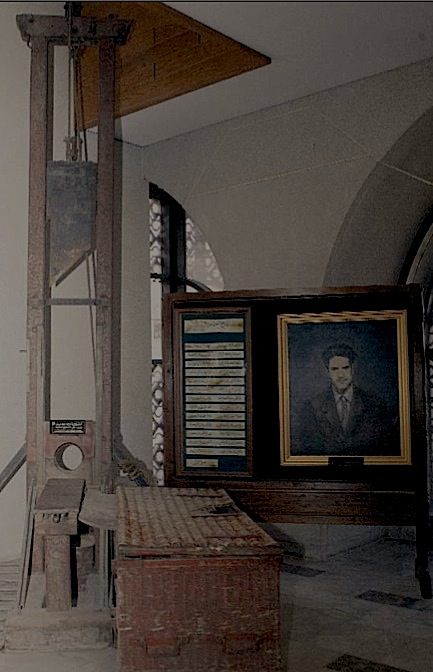
(Hodel’s cover story that he was just trying to blow his own brains out, not shoot the emperor, was belied by a number of hints he had given to others prior to the attack — e.g., telling a photographer who took his picture that the photo would soon be worth thousands.)

Just weeks after Hodel’s miss, another unsuccessful attempt to kill the emperor was undertaken by Karl Nobiling. Though Nobiling died of self-inflicted injuries, Hodel had to make do with decapitation.

Reichstag fire-like, these two outrages provided the Reich sufficient pretext to outlaw the Social Democratic Party** — even though the gunmen were much more radical types than this. (Hodel himself had previously been booted from the SDP.)

Germans having taken a front-row seat to the Paris Commune just a few years before, Chancellor Otto von Bismarck had no intention of allowing radical organizing of any variety to pick up any steam.

Coincidentally, our day’s protagonist shares an execution date with the next generation’s (better) anarchist assassin, Sante Geronimo Caserio — guillotined 16 Aug. 1894 for killing the French president.

* And he was right: nature didn’t take its course with Kaiser Wilhelm for nine more years; he missed outliving his own son and heir by a mere three months.

** Engels — writing polemically, of course — reckons over 11,000 political prisoners arrested from 1879 to 1880 alone.

On this day..