By the jaw-droppingly horrific murder he committed, George Robertson certainly earned the distinction.
Not actually topical save to George Robertson’s milestone as Edinburgh’s literal last drop; this Last Drop Pub is at the city’s Grassmarket where historic public hangings (long gone by Robertson’s day) were conducted. Image (c) Sh0rty and used with permission.
His ex-wife, Elizabeth McGarry, had recently kicked him out of the house after an attempted reunion led right back to the prolific domestic abuse that had ended their marriage in the first place. She was an unwed, unemployed mother of two teenage children, but anything beats being tied up and threatened with a hatchet.
Mother and children — 18-year-old son George Jr., and 16-year-old daughter Jean — lived in waking terror of the vengeful ex-patriarch; in the days before restraining orders, they kept doors constantly bolted and jammed with chairs under the doorknobs, and a poker within reach whenever possible.
According to this retrospective — and read the whole thing for a slasher film in prose — the estranged George managed to get into the house on the night of February 28, 1954, while everyone was asleep.
He summoned his former spouse to the kitchen and knifed her to death, then attacked young George Jr. when he arrived, too. Then he mounted the stairs — where Jean was desperately trying to escape out a window — carrying
the blood-drenched body of his ex-wife, a gaping hole in her stomach and a white handkerchief stuffed in her mouth, hands bound together.
George Alexander Robertson was just in the midst of trussing up Jean and stabbing her to death when the mangled George Jr. distracted the killer by reviving well enough to burst out onto the balcony and into the public quadrangle below. There, he
threw himself through a neighbour’s kitchen window, where he begged for help.
Following him, just yards behind, enraged and still clutching his knife, came his father.
The Hay family, whose quiet home was now about to become a murder scene, cowered in terror as blow after blow rained down on the terrified teen as he screamed for help.
Defenceless against his father’s brutality, young George finally slumped to the floor, dying.
Job done, his father threw his body over his shoulder and strolled home leaving a bloody trail across Tron Square.
The savage “brainstorm” to which he would later attribute this wild spree must have been abating. As he returned to his former domicile, he didn’t bother finishing off Jean, but stuck his head in the kitchen gas oven, where responding police found him.
The obviously unbalanced paterfamilias attempted to plead guilty to avoid the spectacle of the trial (no dice: two days of horror from the witness box riveted the city) and did not attempt to fight the inevitable sentence once imposed. He was dead within 15 weeks of the bloodbath, at the skillful hands of Albert Pierrepoint.
On this date in 1627, the Comte de Bouteville plus his cousin Des Chapelles lost their heads for fighting a duel — ultimately (because of the execution) one of the most notorious duels in French history.
Though this is the duel that everyone knows, Francois de Montmorency-Bouteville (English Wikipedia entry | French) had engaged in 22 such affairs of honor between the tender ages of 15 and 28. Like as not, he was the duellist par excellence in an age where demanding lethal satisfaction was all the rage among devil-may-care aristocratic straplings.
And this, of course, is why he was nominated for condign punishment in Louis XIII’s struggling anti-dueling campaign. One might say he nominated himself.
Dueling, a mano-a-mano vindication of feuds between fops, was an archaic holdover of Burgundian clan violence turned preposterous baroque ritual of conspicuous consociation.
It was also incredibly epidemic in France at this period.
During the reign of Louis’s predecessor Henri IV, 7,000 to 8,000 people are reported to have died in duels, which works out to the suspect rate of one per day for the entire period. Then again, France did have an excess supply of noble progeny whose violent impulses were no longer preoccupied by fratricidal religious warfare.*
Henri IV had tried to ban dueling, even in 1610 executing for lese majeste a couple members of his own guard who defied the ban. Just weeks later, and for no reason connected to dueling, Henri was assassinated. Then-nine-year-old heir Louis XIII was in no position at the time to follow up his father’s policy, and the naughty sport continued to flourish.
“Duels had become so common among the French nobility that the streets of Paris usually served as the field of combat,” according to the Mercure Francois. And as Richard Herr described in his “Honor versus Absolutism: Richelieu’s Fight against Dueling” (The Journal of Modern History, September 1955; this is also the source of all other quotes in this post), they often arose over utterly trivial “slights.”**
Typical was a duel in Lent of 1626 in which Bouteville [i.e., the subject of our post] with two seconds engaged the Comte de Thorigny and his two seconds. The fight was over a dispute between Thorigny and the Marquis de Chalais, who was in prison accused of treason. Bouteville was merely defending the honor of a friend. All six spent the night before the engagement in an inn outside Paris, and in the course of a fairly amicable conversation, they expressed regret that being good friends, they were going to kill each other over another gentleman’s quarrel. But they agreed that they had gone too far to be able to abandon the project without loss of honor. The next day Bouteville killed Thorigny after the latter’s sword broke.
By the 1620s, Louis was old enough to make another run at this intractable elite-on-elite crime wave, and did so with the full encouragement of his famous consigliere Cardinal Richelieu. Depriving the aristocracy of this weird extra-judicial prerogative fit right into the latter’s going campaign to centralize the French state and bring its quarrelsome lords to heel.
What with all those duels he liked to fight, Francois de Montmorency-Bouteville was a great test case. Fighting a public duel in January 1627 — at which his second was slain — made Bouteville a target, and he fled to the Netherlands for safety.
Our fugitive figured he’d send word that a pardon would be appreciated, and everything would blow over like it always did. But Louis was determined to disabuse this type of any privilege to commit public mayhem, and refused to grant Bouteville his absolution.
Honor offended — his default state, to judge by his career — Bouteville vowed angrily to “fight in Paris and in the Place Royale!” This he did on May 12, 1627, slipping back into France for the express purpose of dueling Guy Harcourt, the Marquis de Beuvron. And Bouteville disdained a private fight for the occasion, insisting, as he had declared, on a daytime melee where everyone could see it at the grand new Place Royale (today, Places des Vosges).
Bouteville and Beuvron fought to a bloodless stalemate and agreed to call it a draw. But Bouteville’s second Des Chapelles mortally wounded Beuvron’s second.
Everyone fled, and while Beuvron made it out of the country, Montmorency and Des Chapelles were nabbed, and condemned to death by the Parlement of Paris for violating Louis’s royal edict against duels.
From the king’s standpoint, this was just about the most egregious possible arrangement of factors.
The guy was a serial offender, and he was already a fugitive for his last duel.
The fight had produced a fatality.
Worst, the whole scene — sneaking back into Paris, fighting openly within the potential view of the sovereign — had been overtly staged to scorn the royal ban.
If Louis intended his decree to mean anything at all, he had to come down hard on this one. “It is a question of cutting the throat of duels or of your majesty’s edicts,” Richelieu summarized.
But as clear-cut as were the case indicia, this was still a hard one for Louis, and even for the usually-ruthless Richelieu. Bouteville was a well-born noble, with powerful friends and family who were also close to the king, and they besieged the royal person with petitions for mercy. A sorrowing but firm Louis had to personally refuse mercy to Bouteville’s tearful wife. “Their loss affects me as much as it does you,” he said. “But my conscience prevents my pardoning them.”
Although the poor wife couldn’t make any headway for clemency, she had the better of Bouteville’s swordsmanship off the field of honor. The doomed duke bequeathed one last rapier thrust to posterity by leaving his widow-to-be pregnant with a posthumous son who eventually generalled French armies to any number of routs of the Dutch in the late 17th century.
And while Richelieu’s memoirs would depict this instance of executive implacability as a decisive turn, Herr argues that it was nothing but a brief interruption. The pernicious hobby was back in all its glory within a couple of years, an evil that even Richelieu could never master. France’s aspired-to absolutism could not reach that ancient and intimate noble right save in the very most exemplary case.
In Dumas’s Three Musketeers, set in 1620s France, D’Artagnan is charged by his father in the opening pages to “[n]ever fear quarrels … Fight on all occasions. Fight the more for duels being forbidden, since consequently there is twice as much courage in fighting.” And indeed, it is by blundering into silly duels (e.g., the “offense” caused by bumping into Porthos while hurrying down the stairs, the latter of whom considers D’Artagnan’s apology discourteously perfunctory) that D’Artagnan becomes the fourth of their cadre … because Richelieu’s men arrive to break up the illegal D’Artagnan-vs.-Musketeer melees, and D’Artagnan joins with his “foes” to defend, all for one and one for all, their privilege as gentlemen to slaughter one another.
The dueling phenomenon faded significantly under Louis XIV, but still not completely: Voltaire almost fought a duel in 1726; the artist Manet dueled a critic in 1870; and YouTube will favor the viewer with a number of 20th century professors and litterateurs settling long-forgotten affairs of honor — like disputes over wartime collaboration after World War II — in ceremonial swordfights. Dueling pistol shooting (at human silhouettes) was even an event at the 1906 Olympics.†
* Also worth noting relative to the casualty numbers: at this time, each side’s seconds also fought in addition to the principals. A move for taking seconds out of the fight eventually prevailed, long before the end (if there has been a real end) of dueling, but in 1627 that time was not yet come.
† This event was an “Intercalated Games” falling between the natural 1904 and 1908 Olympiads. It’s an outlier historical experiment during the modern Olympics’ uncertain early years, and though it was officially sanctioned at the time and winners walked away with proper medals, the International Olympic Committee no longer recognizes the Intercalated Games as an official Olympics.
Yue Minjun, who still lives in China, says Tiananmen was “the catalyst for conceiving” of his Execution but that it is most certainly not about the famous protest and ensuing crackdown.
Although 1989 protests toppled dictatorships in Eastern Europe, this pregnant year’s great rally in China brought a bloody (pdf) crackdown.
The student-led Tiananmen Square protests packed hundreds of thousands into that Beijing plaza — with sympathy protests in other major cities — demanding liberalization.
For seven weeks, they seemed on the brink of making another world.
The masters of China must have been holding their breath that day: would the soldiers follow their orders? Would the rebellion shrink away, or metastasize? You really never know.
By night, the masters of China could exhale.
Judicial reprisals were mere days in commencing … and June 21 appears to mark the first known executions* resulting from that tragic movement. And while most “perpetrators” didn’t die for the affair, it seems from the distance of a generation as if their cause did.
There was likewise, it was noticed in the American press, no comment on this date’s signal executions from the United States president. Washington and Beijing, these regimes west and east, alike weathering the end of the Cold War — they had a future in common.
Despite the harsh crackdown on protest, Chinese leaders and mass media have been almost desperately urging foreign businesses to maintain their ties with the country.
The New China News Agency carried a whole series of reports aimed at promoting international economic ties. These included:
— A report that foreign businesses will in the future be permitted to set up officially recognized chambers of commerce in China.
— An announcement that 10 large international industrial exhibitions will be held this year in Shanghai.
— A report that a Japanese businessman said investors from his country have confidence in China’s economy. “Some businessmen from the United States and the European Community have expressed their desire to continue to invest in China,” the report added.
— A statement by Ma Shizhong, vice governor of Shandong province, stressing that his part of China has “a favorable environment for import of foreign capital and introduction of up-to-date overseas technology.”
Only eleven days after the June 4th massacre that cleared Beijing’s Tiananmen Square, the first trial of pro-democracy protesters saw three workers condemned to death in Shanghai.
According to this pdf on the aftermath of Tiananmen, Xu Guoming, a brewery worker, Bian Hanwu, unemployed, and Yan Xuerong, a factory worker, were all convicted of “setting fire to a train and indiscriminate destruction of transport and transport equipment in a serious riot at the Guangxin Road Rail Crossing of Huning Railroad on June 6.”
According to Nick Kristof, that “riot” had been a sit-in on a rail line to protest the June 4 military incursion — until a train actually rammed the demonstrators, who retaliated by torching the machine. Some firefighters were beaten in the disturbance, but nobody was killed.
For their part in this — whatever part that was — Xu, Bian and Yan were deprived of their political rights, and expeditiously shot on June 21. Eight other people got prison sentences shortly thereafter for the same “riot”, having pleaded guilty (all but one of them) to “smashing railway cars, setting fire to nine railway cars and six public security motorcycles, turning over police boxes, beating up firemen to impede them from putting the fire out and fabricating rumors to mislead the people.”
Lin Zhaorong, Zhang Wenkui, Chen Jian, Zu Jianjun, Wang Hanwu, Luo Hongjun, and Ban Huijie, meanwhile, were sentenced for “vandalism and arson in a counter-revolutionary riot” on June 17, 1989, by the Beijing Intermediate People’s Court — stuff like burning a military vehicle, looting supplies from it, and beating up (although again, not killing) a soldier.
(This pdf gives the execution date as June 22; most other sources list June 21.)
An eighth member of their same party, Wang Lianxi, received a suspended death sentence instead. She was spared.
“An undetermined number of anti-government demonstrators,” according to a UPI report, were among 17 prisoners publicly convicted and immediately shot in Jinan on a generic charge of endangering public order on June 21. (UPI is explicit as to the date, but some reports say June 20.)
State radio reported that 10,000 people attended the trial, which meted out 45 sentences in all on a variety of charges and is said to have mixed political prisoners with common criminals.
We note in passing a gentleman who has never qualified for an entry in this blog, and we hope never will.
The identity and fate of the figure at the center of those protests’ most indelible images, the so-called “Tank Man”, remain an enduring mystery.
There exist widespread rumors and ill-substantiated press reports of his execution. But who Tank Man was and what really became of him remains utterly unknown.
* Amnesty International’s appeal for the three workers — and this is the Spanish version; if the English is available, I have not found it — very plausibly alleges that secret, summary executions were already underway before this date’s grim milestone.
On this date in 1945 — morning after a devastating U.S. air raid that destroyed much of Fukuoka — eight previously-captured American airmen* were summarily executed there in retaliation.
In a precedent that dated back to the Doolittle raids, Japan officially considered as a prospective war criminal any enemy airman who could be connected to indiscriminate bombing. Tokyo didn’t follow this logic to the point of executing all downed Americans — indeed, late in the war, beleaguered Japanese civilians became increasingly hostile towards the government for allowing excess legalism to stand in the way of exacting some satisfying revenge for the cities burning under American bombs — but it did execute some, and it had sanctioned legal theorems that could have accommodated quite a bit more bloodletting.
Finding Tokyo short of prison space, the government ordered on May 1, 1945, that the various armies should no longer send to the capital any downed airmen they captured. In the chaos of the war’s last months, this would create the context for local commanders at the Western Military District in Fukuoka to put those legal theorems to seriously nasty use.
Four captured airmen held in Fukuoka were stuck in an indeterminate judicial process which the army realized was going nowhere slowly. The others were just plain underfoot. Over the period of May-June, between a couple of ambiguously-worded orders and the officers’ annoyance at having to divert scarce resources to these captives, an understanding formed if “the air raids increased and conditions became more chaotic, the prisoners would be executed without a trial.”
About 3,000 tons of … incendiary bombs … were released by the B-24s from low level starting about three a.m. … The three cities [Fukuoka, Toyotashi and Shizuoka] were tasting for the first time the bitter flames of war, roaring over factories, shops and thousands of congested homes.
Timothy Lang Francis, whose “‘To Dispose of the Prisoners’: The Japanese Executions of American Aircrew at Fukuoka, Japan, during 1945” from the November 1997 Pacific Historical Review traces the confluence of factors that made possible this day’s executions, describes the fate that was unfolding for Fukuoka’s eight captive airmen at about the same time those words were going to press.
All were blindfolded and had their hands tied in front. Several swords were obtained from the Legal Section. [Yusei] Wako** then told the twenty or so assembled Japanese that, “in compliance with the Commanding General†’s orders, we were going to execute the plane crash survivors.” One officer, Lt. Michio Ikeda of the Medical Section, volunteered himself, and Wako ordered Probationary Officer Tamotsu Onishi, since he was skilled in kendo, to assist him as a third executioner. Sato watched the proceedings from one side.
The first flyer was brought to the edge of the pit and made to sit on his haunches. Wako then ritually washed one of the swords and stood behind the prisoner, slightly to the left. Raising the sword above his right shoulder with both hands, Wako brought it down on the flyer’s neck. “Both the body and head fell into the pit,” remembered Wako; “I washed my sword and ordered the guard to bring another flyer to the pit. I killed this flyer exactly the same way I had killed the first one.” Onishi then executed a third prisoner in the same manner.
In the pause that followed, Lt. Kentaro Toji, an officer attached to Western Army Headquarters, approached Sato. According to his pretrial affidavit, Toji said to Sato, “My mother was killed in the air raid on Fukuoka this morning, and I think it would be fitting that I be the one who execute these American flyers.” Sato told him to wait while Wako ordered Ikeda to execute the fourth flyer. Toji, after borrowing a sword from Onishi, beheaded the last four prisoners. The pit was then filled with dirt.
This is all well and good, but Tokyo’s orders to its armies had been to do the juridical legwork on these cases themselves — and not just to summarily kill prisoners. So, in a bit of ex post facto bureaucratic butt-covering, the Western District Army’s legal section proceeded to close the matter by shipping the central government a report saying that all these prisoners had been killed during the previous night’s air raid. Problem solved!
No known direct connection to this particular atrocity, but there’s a recent documentary about an elderly Japanese man who used to serve at Fukuoka that looks worth the watching.
* Six of the eight were Robert J. Aspinall, Merlin R. Calvin, Jack V. Dengler, Otto W. Baumgarten, Edgar L. McElfresh, and Ralph S. Romines. The other two remain unidentified. These eight were, maybe, the lucky ones: Fukuoka had had 16 prisoners from downed bombers, but the other eight weren’t around to be beheaded because they’d previously been given over to the local hospital to suffer ghastly deaths in vivisection experiments.
** A Judge Advocate who had also been involved in the Doolittle trials.
† Gen. Isamu Yokoyama. When he’d been briefed prior to the June 19 raid that the army was fixing to just dispose of its prisoners if it came to that, Yokoyama had done the Pontius Pilate act and informed Wako, “I have decided to concern myself only with the decisive battle and hereafter do not bother me with the problem of the flyers.”
Saint Malo, the namesake of a 19th century fishing village that formed perhaps the first Filipino settlement in the U.S., was the leader of outlaw settlements of escaped slaves who found refuge in the French colony’s bayous.
“Prior to the sugar boom,” writes Daniel Rasmussen in his well-received American Uprising, “New Orleans was a poor, multi-cultural city with very few social controls.”
The lines between slavery and freedom were not clearly drawn, and slaves frequently escaped into the swamps to form maroon colonies. There was a history of armed resistance in these areas that drew on French, Creole, and Kongolese traditions. These insurrectionary traditions shaped the lives of the slaves and represented an alternative political culture to that of the planters.
As testimony to that hazy line, Saint Malo had widespread support not only from the escaped slaves who joined him, but from those that remained on plantations. The communities were linked by blood and by trade; attempts to send creole militias out to hunt the maroons tended to founder on the draftees’ fear of retaliation by the kith and kin of their targets.
According to Gwendolyn Midlo Hall, Saint Malo’s prosecutor complained that slaves would grumble, affront their masters, leave land uncultivated … and that owners dared but few disciplinary measures lest they disappear into the swamps.
“Malheur au blanc qui passera ces bornes” (“Woe to the white who would pass this boundary”), was the declaration attributed our man, burying an ax dramatically into a tree outside his largest village, Ville Gaillarde. (The maroons lived in permanent settlements.)
It took several years, several tries, and more than several casualties for Louisiana planters to finally bring Saint Malo’s maroons to heel. And when they did — well, the dirge recorded from a fellow maroon (as related in Creole New Orleans: Race and Americanization) describes Malo’s fate.
Alas, young men, come make lament,
For poor St. Malo in distress!
They chased, they hunted him with dogs,
They fired a rifle at him.
They dragged him from the cypress swamp.
His arms they tied behind his back.
They tied his hands in front of him.
They tied him to a horse’s tail.
They dragged him up into the town.
Before those grand Cabildo men.
They charged that he had made a plot
To cut the throats of all the whites.
They asked him who his comrades were.
Poor St. Malo said not a word!
The judge his sentence read to him,
And then they raised the gallows tree.
They drew the horse — the cart moved off
And left St. Malo hanging there.
The sun was up an hour high
When on the levee he was hung.
They left his body swinging there
For carrion crows to feed upon.
* Coincidentally, June 19 would later become Juneteenth, marking the end of slavery in the United States at the conclusion of the Civil War.
In June 1953, some discontented young citizens of Magdeburg, East Germany revolted and began demonstrating against the repressive Communist regime. On June 17, in the spirit of totalitarian governments everywhere, the authorities ordered a platoon of soldiers to open fire on a crowd of protesters.
Incredibly, the soldiers refused.
Every one of them vanished shortly thereafter, never to be seen again.
It was long assumed that the entire platoon had been executed for insubordination. This wasn’t confirmed until 1998, however. Four years previously, Magdeburg construction workers digging the foundation for a new building accidentally unearthed a mass grave containing 32 bullet-riddled skeletons. From the condition of the remains, authorities determined the victims — all of them young men — had died sometime between 1945 and 1960.
They could have been the missing Soviet platoon, but they could also have been prisoners executed by the Gestapo mopping up in May 1945, just before the Germans fled the city in advance of the Red Army.
As Jessica Snyder Sachs noted in her 2001 book Corpse: Nature, Forensics, and the Struggle to Pinpoint Time of Death, the victims all had extensive tooth decay and no sign of dental work, which was consistent with Russia but not central Europe. This was hardly conclusive, however.
To solve the mystery, investigators turned to Reinhard Szibor, a biologist at the nearby Otto von Guericke University.
Szibor had helped in criminal cases before and was famous for using pollen to link suspects to crime scenes. Pollen clings to people’s hair, skin and clothes and is, of course, also inhaled. The stuff is nearly indestructible and will remain long after human remains have disintegrated. Authorities hoped Szibor could use pollen samples from the mass grave to determine what time of year the victims died.
Discover Magazine explains how he did it: Szibor rinsed out the skulls’ nasal cavities, had a look, and found pollen from lime trees, plantains and rye, all of which release their pollen during June and July. In other words, the Magdeburg victims had died during the summer months, the time when the Soviet platoon was reportedly executed, and not in the springtime when the Nazis retreated from the city.
Though we still don’t know the precise date of their deaths, and likely never will, the soldiers who paid for their humanity with their lives had finally been identified.
After the uprising of the 17th of June
The Secretary of the Writers’ Union
Had leaflets distributed in the Stalinallee
Stating that the people
Had forfeited the confidence of the government
And could win it back only
By redoubled efforts. Would it not be easier
In that case for the government
To dissolve the people
And elect another?
On this date in 1842,* British diplomats Charles Stoddart and Arthur Conolly were summarily beheaded by a Central Asian potentate as London’s ill-chosen intervention in Afganistan came to a disastrous conclusion.
The backdrop is “the Great Game”,** the long-running chess match for supremacy in Central Asia between an expanding Russian Empire and Great Britain, with its imperial position in India.
Seeking to pre-empt a Russian move into Afghanistan, Britain invaded in 1839. This was the First Anglo-Afghan War: it would have, for the Brits, an inglorious end.
Our day’s featured principals were among the postscript casualties of that catastrophe, never-avenged losses for an empire that had overreached itself.
Stoddart, an intelligence officer, had been dispatched northward to the ancient silk road city of Bokhara intending enlist the allegiance, or at least the benign neutrality, of its emir, Nasrullah Khan. Today Uzbekistan’s fifth-largest city, Bokhara was then an independent state .
[I]n the nineteenth century, the executions carried out there with genuine cruelty, as well as the tales told by travelers gave the city a reputation of being a forbidden, closed, and hostile place. It was “despotic” Bukhara, and the Europeans projected onto it their own oriental fantasies: with citadel, dungeons, palaces, and city walls bolted shut at night, all helping to set the scene.
Scenic! Bukhara’s historic citadel, the Ark, where Stoddart (and later Conolly) were imprisoned (and later executed). (cc) image from elif ayse.
Into this scene, our Brit entered clumsily, immediately irritating the ruler he intended to supplicate. Reportedly (though the fact has been disputed), he was on the brink of execution when he acceded to save his life to Nasrullah’s formulaic offer of clemency in exchange for conversion to Islam.
In any event, Stoddart languished for years, alternately imprisoned and in the custody of the (better-received) Russian mission. Though the latter had also been charged by its sovereign to retrieve the ill-favored English emissary as a gesture of Great Powers goodwill (and to deprive England of any rationale for intervention that his captivity might offer), Stoddart seems to have been too stubbornly prideful to get out via St. Petersburg while the getting was good.
Instead, he waited on the arrival of countryman Arthur Conolly, who showed up in late 1841 on a mission to secure Stoddart’s release. But Stoddart’s situation little improved, considering Nasrullah Khan’s wary reaction to this second British interloper.
Word has it that the Bukharan prince was piqued that correspondence to him did not arrive over the signature of the British monarch herself, but merely some subcontinental subaltern — as well as, we might think understandably, suspicious at his guests’ motivations and mission.
The captor’s uncertain attitude towards his prisoners was resolved by Britain’s catastrophic loss of Kabul and the subsequent massacre of an entire 16,000-strong army as it attempted to retreat.
Seriously, the whole army. To a man. Except for one guy.
Remnants of an Army, by Elizabeth Butler, depicts the only British subject on retreat from Kabul to reach Jalalabad, William Brydon.
Battles don’t get much more decisive than that.†
Reasoning‡ that the routed British were now of no conceivable threat, nor his prisoners of any conceivable benefit, Nasrullah Khan now accused them of espionage and abused them with impunity.
The two were cast into an Indiana Jones-esque “bug pit,” an oubliette infested with … well, you know.§
Later, finding illicit writing materials secreted on his captives’ persons, the mercurial Nasrullah disposed of them outright.
their quarters were entered by several men, who stripped them, and carried them off to prison … In stripping Colonel Stoddart a lead pencil was found in the lining of his coat, and some papers in his waist. These were taken to the Ameer, who gave orders that Colonel Stoddart should be beaten with heavy sticks until he disclosed who brought the papers, and to whom he wrote. He was most violently beaten, but he revealed nothing; he was beaten repeatedly for two or three days. On Friday, the 8th or 9th (the 7th) of Jemmadee-ool-Eovel (17th of June), the Ameer gave orders that Colonel Stoddart should be killed in the presence of Captain Conolly, who was to be offered life if he would become a Mahomedan. In the afternoon they were taken outside the prison into the street, which is a kind of small square. Their hands were tied across in front. Many people assembled to behold the spectacle. Their graves were dug before their eyes. Colonel Stoddart exclaimed aloud at the cruelty and tyranny of the Ameer. His head was then cut off with a knife.
The chief executioner then turned to Captain Conolly, and said — “The Ameer spares your life if you will become a Mussulman.” Captain Conolly answered, “Colonel Stoddart has been a Mussulman for three years, and you have killed him, you killed Yoosoof too; I will not be a Mussulman, and I am ready to die.” Saying which he stretched forth his neck. His head was then cut off.
The veracity of this faint bulletin from a distant and inaccessible realm nevertheless remained in some doubt. Friends of the lost men, despairing of obtaining definitive word of their fate, commissioned a strange but courageous missionary named Joseph Wolff to brave his own sojourn to Bokhara to investigate.
Wolff barely escaped with his own life, but seemingly confirmed the sad story and published a Narrative of his travels in 1845 (Part 1, Part 2).
* The initially reported June 17 execution date was subsequently contested by Joseph Pierre Ferrier, who argued that the chronology instead pointed to the next Friday, June 24. The matter appears to me permanently unresolvable.
** Ironically, the sportive phrase “the Great Game” was itself attributed to Arthur Conolly for whom, in the end, events turned out to be quite other than playful.
† Britain recaptured Kabul in reprisal later in 1842, upon which pretext it was able to declare its honor vindicated and depart Kabul (sans massacre), ending the war. Certain latter-day occupations of that “graveyard of empires” might envy their forebear’s talent for declaring victory and leaving.
‡ Correctly. Nasrullah Khan faced no British reprisal for his treatment of Stoddart and Conolly, notwithstanding the attempt by some friends to use their sad fate as some sort of casus belli. This public domain book from 1845 bears a dedication to Queen Victoria in “hope of directing your Majesty’s attention to the cruel sufferings and alleged murder of two British officers … abandoned in an unaccountable manner, by your Majesty’s Government … [in circumstances] degrading to the British nation;” the same man had previously published an “Appeal to the British Nation” in an “endeavour to excite the public sympathy.” Sympathy or no, the two British officers stayed abandoned.
§ Bug tortureenhanced interrogation was actually authorized during the Bush administration for the insect-averse Abu Zubaydah. The gentleman approving that technique, Jay Bybee, is now a federal circuit judge.
On this date in 1944, a five-foot-one-inch, ninety-pound prisoner walked into the death chamber of the Central Correctional Institute in Columbia, South Carolina and was executed in the electric chair.
He was so small that the guards had trouble strapping him into the chair and fitting the electrodes on. When the first jolt of electricity hit him, the mask fell off his face, revealing an expression of horror.
His name was George Junius Stinney Jr., and at fourteen years, seven months and twenty-six days, he was the youngest person to be legally executed in the U.S. in the 20th century. In spite of this startling distinction, his death went practically unnoticed in the press.
Stinney, a black youth from a poor family in the town of Alcolu, was condemned for the double murder of two white girls he knew: Betty June Binnicker, age 11, and Mary Emma Thames, age 8. The girls had gone out on their bicycles on March 23, 1944, and along the way they saw Stinney and his sister and asked where to look for flowers. The Stinneys said they didn’t know.
The next day, the two girls’ bodies were found in a muddy, water-filled ditch. They had both sustained severe head injuries; their skulls were shattered. A fifteen-inch railroad spike was found nearby.
A few hours later, Stinney was arrested and locked in a room with several police officers and no one else. According to later testimony, at first he claimed the girls had suddenly attacked him and he hit them with the railroad spike in self-defense. However, a short time later he gave a second statement confessing to premeditated murder.
Stinney allegedly stated he had wanted to have sex with Betty June, but he couldn’t do so until the younger girl was out of the way, so he killed Mary Emma with the railroad spike. Betty June ran away, but Stinney caught up with her. When she resisted his sexual advances, he killed her too and dragged both bodies into the ditch. That’s the story.
When the townspeople found out that Stinney had confessed and would be charged with murder, a lynch mob formed outside the jail. Authorities took the boy to another jail in Columbia, fifty miles away, for his own safety; fearing for their own lives, Stinney’s family also fled town.
The trial took place on April 24, one month and one day after the murders, beginning at 2:30 p.m. Virtually the only evidence against Stinney was the testimony of the sheriff who heard the confession: there was no written record of the confession. Stinney’s defense attorney, who planned to run for state office, did not contest the confession and called no witnesses, but only claimed his client was too young to be held responsible for the murders. However, under South Carolina law at the time, a fourteen-year-old was legally an adult.
The jury was sent out at 5:00 p.m. and returned with a guilty verdict just ten minutes later.
There was no appeal.
Some local churches and the NAACP asked the governor for a commutation, citing Stinney’s age — but the governor allowed the execution to proceed. The entire drama from homicides to execution spanned less than 90 days.
One of Betty June Binnicker’s sisters reflected fifty years later, “Everybody knew that he done it, even before they had the trial they knew that he done it. But I don’t think that they had too much of a trial.”
More than sixty-five years after Stinney died, a community activist called for the case to be reopened, suggesting Stinney may have have been innocent. The evidence against him was absurdly slight. He had no history of violent behavior, and it seems unlikely that this short, slender boy would be strong enough to overpower two girls and beat them to death. Stinney’s brother, now a pastor in Brooklyn, said the family always believed in his innocence. Both his brother and his sister recalled that he had been a smart boy, a good student and artistic, and their family had been a close and loving one.
As one article noted, “Stinney’s trial and subsequent execution were suspicious at best and a miscarriage of justice at worst … This was South Carolina in 1944, with a black male defendant, two young white female victims, and an all white, male jury. Stinney never stood a chance.”
On this date in 1915, twenty activists of the Armenian Hunchakian political party were publicly hanged in Istanbul’s Beyazit Square.
A couple of other very grainy (newspaper?) images are here.
These unfortunates had participated in a 1913 convention that resolved — secretly, so they thought — upon treating to a programme of political assassinations of the nationalist Young Turks then driving belligerent policy against Armenians.
Unfortunately for them, the Sublime Porte had sublime ears.* It pounced on the prospective terrorists at the first opportunity, and gave them a couple of years in a dungeon before a wartime show trial days just days after Armenian genocide had commenced.
Paramaz, who’s probably the most individually famous of the twenty, has a recently-erected monument in Meghri. He’s also credited with a movingly humane exchange with an Ottoman judge, each reflecting on their respective impasse vis-a-vis nationhood and self-determination.
“The attributes of history in our reality are arranged in such a way that what constitutes ‘patriotism’ for one is viewed as destructive treason by the other,” quoth the judge (!!!) to the defendants.
And thus the mutual relations between nations living together amount to the negation of international law and social concepts. Today is the last session of these trials … There was something unusual and unqualifiable in these trials. Unqualifiable because neither you nor us had enough wisdom to penetrate each other’s [worlds].
…
You cannot imagine, effendis, that it is with such grief that I will pronounce the depth of my conviction regarding the patriotism accumulated in you. What can be more heartbreaking tht warm blooded beings like you full of life have sacrificed logic to sentiments … What great deeds vigorous individuals like you could have accomplished, if the ideal of a common welfare had been pursued under one banner … What benefits could have been borne from a mutual understanding that eluded [us], the other end of which is sad and dark. You languished with the idea that you are struggling against injustice; while have felt, every minute, that the rules of the world are abasing higher tendencies under the weight of cruel necessities.
This reflection led Paramaz, who today is an Armenian national hero for his martyrdom at the Turks’ hands, to reciprocate:
I, who has never cried in my life … I am not ashamed to say that I was deeply moved by the sincerity of [the judge] Khurshid Bey’s speech … and I cried, I, Paramaz, because Khurshid Bey put his finger on the wound when he stated, ‘What good deed could have been accomplished …’ I cried because in those words I found the brilliance of truth.
[Yet] we would be asking the same question, and add, What was left that we did not do for the welfare of this country. We accepted such sacrifices, we spilled so much blood and spent so much energy to bring about the brotherhood of Armenians and Turks; we lived through such suffering to elevate each other through trust. And what did we see? Not only did you condemn our gigantic efforts to sterility but also consciously pursued our annihilation …
Gentlemen, judge people by their work, by their traditions, within the realm of their ideas. I am not a separatist from this country. On the contrary it is [this country] that is separating itself from me, being incapable of coming to terms with the ideas that inspire me.
Mutual empathy notwithstanding, the end for these twenty was indeed sad and dark.
* An Armenian informant named Arshavir Sahagian attended the conference and finked out its design. He was killed for his troubles on December 25, 1919, according to Raymond Kevorkian.
Not Ohio’s first execution in the “modern” era — that distinction belongs to Wilford Berry, who voluntarily waived his appeals to hasten a 1999 execution — Jay Scott, who was put to death by lethal injection on this date in 2001, stands at the headwaters of Ohio’s 21st century death penalty binge.
Prior to Scott’s death, Ohio had carried out only that one execution, Berry’s, in all the previous 48 years.
But it’s made up for lost time with another 45 executions in the eleven years since Scott died.
A paranoid schizophrenic and career criminal, Scott entered an East Cleveland deli in May 1983, ordered bologna and crackers, and then shot the 74-year-old proprietess at point-blank range after she served him. Then he went for the restaurant brace by gunning down a security guard at another restaurant. (That death sentence was eventually reversed; technically, Scott died for the first murder only.)
By the time he paid for the crimes, Scott had gotten to know the fledgling Ohio execution process pretty well.
Scheduled death dates on April 17 and May 15 had both been stayed at the last moment over legal appeals around his mental competency — on that latter date, he was three minutes from execution with the shunts that would carry the lethal chemicals already stuck in his arms.
Laborious as it was to finally consummate, Scott’s was the only Ohio execution in 2001.
But the state conducted three the next year — and it’s never carried out fewer than two in any year since then.


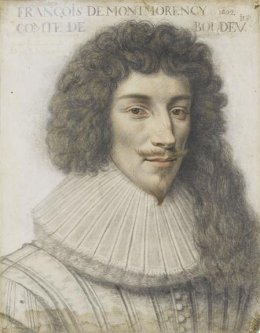 Though this is the duel that everyone knows, Francois de Montmorency-Bouteville (


 A paranoid schizophrenic and career criminal, Scott entered an East Cleveland deli in May 1983, ordered bologna and crackers, and then shot the 74-year-old proprietess at point-blank range after she served him. Then he went for the restaurant brace by gunning down a security guard at another restaurant. (That death sentence was eventually reversed; technically, Scott died for the first murder only.)