Leslie George Stone hanged at Pentonville Prison on this date in 1937 for a murder that was revealed by the fabric of his trousers.
The naked body of Stone’s ex-flame Ruby Keen had turned up in the Bedfordshire town of Leighton Buzzard — strangled with a scarf after what looked a desperate struggle.
Now, Stone would already be a suspect here because of his relationship, and the fact that they’d been seen drinking together in public the preceding night. But what cinched the noose was Scotland Yard taking a variety of cast impressions of the apparent marks left in the earth by the killer.
Casts of the killer’s footprints taken by Scotland Yard from the murder scene of Ruby Keen. From the collection of Scotland Yard’s “Black Museum”.
Sample pairs of trousers were taken from all the possible suspects in the case. When Spilsbury examined Stone’s brand-new suit trousers he found that the knees had been brushed so hard that the nap had been worn away. Microscopic examination of the trousers showed up particles of sandy soil that matched that from the scene of the crime. There was also found, in the lining of Stone’s jacket, a silk fibre that matched with those taken from the dead girl’s underskirt. (Source)
If we’re being honest, “matches” of fiber even now are basically junk forensics that continue to go routinely, maddeningly overclaimed in courtrooms. But the same quality of incriminatory flimflam that enrolls fiber matches in so many wrongful conviction cases seems here to have been spotlighted the right guy. By the time of his trial Stone had to come off his demonstrable falsehoods about his and Keen’s movements on the night of her death, and submitted unpersuasive testimony that he’d strangled her as an accidental exuberance in a fight, and left her still alive.
On this date in 1335,* imperial power in Japan received the executioner’s decisive verdict.
The three-year Kenmu Restoration (1333-1336) makes an interregnum sandwiched between twodifferent eras of samurai-backed feudal shogunates, but if you were an heir to Japan’s ancient imperial house you might call the Kenmu era a plain-old regnum: the briefest of moments when the emperor actually exercised his purported authority.
It would not recur for another five centuries, during Japan’s 19th century Meiji Restoration.
Our older restoration saw Emperor Go-Daigo attempt to seize autocratic powers for his family, appointing his own sons successively as shogun. One of those sons was our date’s principal, Prince Moriyoshi (English Wikipedia entry | the more robust Japanese).
And one of those outside lords aggrieved at being cheated of the shogunate was Ashikaga Takauji, a samurai lord who would rebel against Go-Daigo. It says here that the subsequent period in Japanese historiography was the Ashikaga Shogunate, so that gives you an idea why you’re reading about Prince Moriyoshi on an execution blog. In the midst of his civil war, the upstart shogun-to-be captured Moriyoshi and sent him to a brother, who held the prince prisoner in a cave and had him beheaded at the provocation of some setback to the family cause.
Upon the re-establishment of the imperial house all those centuries later, the Meiji emperor had a Shinto shrine erected in veneration of this martyred ancestor at the place of his sufferings; the Kamakura-gu remains a popular pilgrimage and tourist site to this day.
* As best I can determine, August 12 is the consensus translation of the date from the Japanese lunisolar calendar; a date of “July 23” can also be found in some citations, which apparently reflects the 23rd day of the 7th month. However, the first day of the Japanese year occurred a few weeks after the Julian calendar’s January 1.
We have this incident courtesy of Robert Plot’s 17th century The natural history of Stafford-shire; the date of the (attempted) execution is inferred from the text of the pardon as the Monday preceding the clemency of Saturday, Aug. 16:
Amongst the unusual accidents that have attended the female Sex in the course of their lives, I think I may also reckon the narrow escapes they have made from death … Yet much greater was the deliverance of one Margery Mousole of Arley in this County, who being convicted of killing her bastard child, was, much more justly than Ann Green at Oxford, accordingly condemned and executed at Stafford for it, where she was hanged by the neck the usual time that other Malefactors are, yet like Ann Green and Elizabeth the Servant of one Mrs. Cope of Oxford, she came to life again, as it has been much more common for women to doe in this case, than it has been for men: I suppose for the same reason that some Animals will live longer without Air, than others will, as was showen above; the juices of Women being more cold and viscid, and so more tenacious of the sensitive soul than those of men are. Which appear’d most wonderfully in the case of Judith de Balsham, temp. Hen. 3. who being convicted of receiving and concealing theeves, was condemned and hanged from 9 by the clock on Munday morning, till Sun-rising on Tuesday following, and yet escaped with life as appears by her pardon, which for its rarity I shall here receite verbatim.
Ex Rotulo Paten. de Anno Regni Regis Henrici tertii 48o. membr. 5a.
REX omnibus, &c. Salutem. Quia Inetta de Balsham pro receptamento latronum ei imposito nuper per considerationem Curie nostre suspendio adjudicata & ab hora nona diei Lune us?que post ortum Solis diei Martis sequen. suspensa, viva evasit, sicut ex testimonio fide dignorum accepimus. Nos divine charitatis intuitu pardonavimus eidem Inette sectam pacis nostre que ad nos pertinet pro receptamento predicto & firmam pacem nostram ei inde concedimus. In cujus, &c. Teste Rege apud Cantuar. XVIo. die Augusti.
Covenit cum Recordo Lau Halsted Deput. Algern. May mil.
How unwillingly the cold viscid juices part with the sensitive soule, appear’d, I say, most strangely in this case: unless we shall rather say she could not be hanged, upon account that the Larynx or upper part of her Wind-pipe was turned to bone, as Fallopius tells us he has sometimes found it, which possibly might be so strong, that the weight of her body could not compress it, as it happened in the case of a Swiss, who as I am told by the Reverend Mr. Obadiah Walker Master of University College, was attempted to be hanged no less than 13 times, yet lived notwithstanding, by the benefit of his Wind-pipe, that after his death was found to be turned to a bone: which yet is still wonderfull, since the circulation of the blood must be stopt however, unless his veins and arteries were likewise turned to bone, or the rope not slipt close.
allowing the CIA to plant men with the local police in sensitive places around the world; and after careful observation on their home territory, bringing to the United States prime candidates for enrollment as CIA employees
…
The foreign policemen themselves understood why they were being sent to Washington. Even before the coup d’etat, in July 1963, one Brazilian officer described the academy program to the governor of Sao Paulo as “the latest methods in the field of dispersion of strikes and striking workers.” He would learn, he said, how to use dogs and clubs and “to modernize the mechanism of repression against agitators in Sao Paulo.”
Brazil is where Mitrione made his bones over the course of the 1960s, years when the CIA trained some 100,000 Brazilian cops. But his mission was as universal as the toenails he ripped off and by 1969 he’d been reassigned to neighboring Uruguay further to that state’s suppression of a growing leftist revolutionary movement, the Tupamaros.*
One recruit named Manuel Hevia Cosculluela — who notoriuosly gave Mitrione’s mission statement as “the precise pain, in the precise place, in the precise amount, for the desired effect” — recalled the “trainings” these Uruguayan pupils received in his now-out-of-print 1978 book Pasaporte 11333: ocho años con la CIA.
As subjects for the first testing, they took beggars, known in Uruguay as bichicones, from the outskirts of Montevideo, along with a woman from the border with Brazil. There was no interrogation, only a demonstration of the different voltages on the different parts of the human body, together with the uses of a drug to induce vomiting — I don’t know why or for what — and another chemical substance.
The four of them died.
(There’s a good deal more stomach-turning stuff about the Mitrione program in this pando.com article.)
Heightened repression also heightened the response of the Tupamaros, who had not previously shown themselves a particularly bloodthirsty bunch. The Uruguayan Chief of Police Intelligence Alejandro Otero gave an embarrassing-to-Washington interview to a Brazilian paper revealing Mitrione’s work, complaining that “The violent methods which were beginning to be employed, caused an escalation in Tupamaro activity. Before then their attitude showed that they would use violence only as a last resort.”
In their day the Tupamaros managed to take a pound of flesh from their persecutors by kidnapping Mitrione as a hostage to the release of 150 political prisoners. Mitrione was executed when Uruguay refused the exchange, although in later years Tupamaros founder Raul Sendic would reveal that the guerrillas had intended to hold Mitrione in indefinite captivity, but were spooked into conducting the execution when early-August police raids on revolutionary cadres broke the lines of communication between leadership and kidnappers ahead of a threatened drop-dead date: thus, “when the deadline came the group that was left with Mitrione did not know what to do. So they decided to carry out the threat.”** He was shot in the early hours of August 10 and his body deposited in a car for easy discovery.
Mitrione’s death met with great umbrage on his native soil; his VIP-rich funeral in his native Richmond, Ind. saw the Uruguayan ambassador vow that his killers would “reap the wrath of civilized people everywhere.” So civilized people “in the aftermath of Dan Mitrione’s death … unleashed the illegal death squads to hunt and kill insurgents.”
As for the OPS, that program wound down in 1974 as exposes made its work increasingly untenable … but the same project of barely-veiled anti-Communist suppression transitioned seamlessly to the Drug Enforcement Agency and a host of other alphabet-soup agencies around Washington.
* They were named for executed Andean revolutionary Tupac Amaru. The Tupamaros were violently suppressed over the course of the 1970s but when the dictatorship ended in 1984 its remaining prisoners were amnestied. The remnants of the movement eventually folded into the Frente Amplio center-left party, which is today Uruguay’s ruling party; Jose Mujica, President of Uruguay from 2010 to 2015, was a former Tupamaros guerrilla who served 13 years in prison.
** Sendic is obviously an interested party in the affair but there’s some corroboration to his account in that the movement held several other hostages whom it could not exchange for months, only to release them unharmed in the end. (e.g. American agronomist Claude Fly, British diplomat Geoffrey Jackson)
Photo from here, with the caption “Execution of Mir Hashim (Tabrizi). Mir Hashim and his forces had joined the pro-Mohammad Ali Shah forces in laying siege to Tabriz, fighting against the forces of Sattar Khan and Bagher Khan. Mir Hashim and his brother were executed on 9 August, 1909.” The Persian constitutional revolution that this execution putatively advanced in revolutionary Tabriz also ended with gallows.
Weera Sanadhdhana Weera Balasooriya Kuru Uthumpala Arthadewa Gunaratne Nanayakkara Lakshapathi Maha Widanelage Fransisco Fernando — who is thankfully better known simply as Veera Puran Appu — was executed on this date in 1848 as one of the principals in a Ceylon rebellion against the British.
For several years he had been a famed and colorful bandit in the central highlands around Kandy, and his name bore the romance of the road and the weight of a £10 price. He was “light, well looking, well made, stout, marks of punishment on the back and 4 vaccination marks” in the words of the Brits’ wanted-man bulletin. They forgot to add: political.
In July of 1848, Puran Appu emerged at the head of a popular uprising sparked by land seizures and taxes upon an irate peasantry that every day became more inextricably entangled in the empire’s economic circuitry. It’s known as the Matale rebellion after the central city which Puran Appu briefly held, ransacking government buildings before the disciplined British army was able to rally and put down the rising and stood the rebel in front of a firing squad.
“He died exclaiming, if the king [meaning the self-proclaimed rebel king, in whose name Puran Appu acted] had three men about him as bold and determined as myself he would have been master of Kandy,” the British Governor Torrington* recorded.
He’s honored in Sri Lanka (and Kandy in particular) every year on this anniversary of his death, but fine for any occasion is a 1978 Sri Lankan biopic about, and titled, Veera Puran Appu.
* George Byng was his name, the 7th Viscount Torrington. He’s in the same family tree as the 18th century British admiral infamously executed pour encourager les autres, John Byng: Admiral John was a younger son of the 1st Viscount Torrington.
In those years he contributed a perspicacious literary commentary that resides to this day in the canon of Chinese letters; his criticism is credited with raising the stature of Chinese vernacular literature, for instance via his meticulous analysis of Water Margin — now rated as one of the four classic Chinese novels.
In 1661, Jin took part in a protest against official corruption whose violent suppression is remembered to Chinese history as the “Lamenting at the Temple of Confucius”. Jin’s particular lament — probably apocryphal but too good not to repeat — has been remembered as a jest from the edge of the grave: “Being beheaded is the most painful thing, but for some reason it’s going to happen to me. Fancy that!”
Two hundred years ago today, Nathan Foster hanged in Masonville, New York.
The crime on his charge sheet was poisoning his wife, Eleanor, to get with the pretty young maid she hired.
But little less damning in the eyes of his neighbors was the belief that he had taken the life of a patriot while fighting the pro-British side during the American Revolution.
Foster was a tory during the Revolution, and is reported to have been the identical person who inhumanly murdered Col. Alden, at the massacre of Cherry Valley, in 1777. Priest, in his narrative of the capture of David Ogden, who died a short time since in Franklin, Delaware County, thus refers: “This act of barbarity was perpetrated by a man named Foster, a tory at that time, and the same, who a few years since (1819) was hanged for the murder of his wife, by poison, in Delaware County, N.Y. at Delhi. That the same Foster did murder Colonel Alden, was ascertained by a certain James Campbell, another tory, who stated to David Ogden, that he had heard this Foster boast of the act, while they were both with the British at Niagara. He was at length overtaken by justice, and ended his miserable life on the gallows, although at the advanced age of __ years. He died without a confession of his guilt.
Thomas Hellier, a miserable New World indentured servant who murdered his master and mistress along with another servant to escape his Virginia plantation, was hanged on this date in 1678.
Desperate in London after frittering away the £12 he stole from his parents without successfully getting his barbering/surgeon business off the ground, Hellier was talked into signing into an indenture. To his recruiter, the skeptical Hellier remembered (in his gallows confession),
I replied, I had heard so bad a character of that Country, that I dreaded going thither, in regard I abhorred the Ax and the Haw. He told me, he would promise I should be onely employ’d in Merchants Accompts, and such Employments to which I had been bred, if they were here used.
Just get them to sign on the line which is dotted. Promises to the contrary, Hellier upon arrival got sold straightaway to a farm that calloused his surgeon’s hands with all the abhorrent tools. The place was literally named the Hard Labour Plantation.
It seems that after trying and failing to escape his farm once, Hellier loosed himself by busting into the master’s bedchamber with an axe and bashing to death Mr. Cutbeard Williamson — right hand to God, that’s the name — and his wife, plus the maid who also resided in the house. Although he fled the grounds, neighbors suspicious of his close-cropped hair — a scarlet letter imposed after his previous escape to mark him as a runaway — detained him and the law soon caught up.
Hellier took the opportunity of his execution to sting the Virginia planter class for its abuse of employees, although to some readers eyes it might equally appear a manifesto for laziness.
How much more consonant and agreeable were it to common Policy, Self-interest, as well as true Christian Charity, for all Masters in Virginia, Planters as well as others, to consider first their own Ability, and the Capacity of the Servants whom they designe to purchase, before they deal for them; sincerely at the same time imparting to them, What their Work must be, and what their Usage? And if, by enquiry into their former Condition, they discover them improper persons for their purpose; How much a wiser course were it, that such should seasonably pitch their choice on some others, more useful for them? Or if they will chuse no others, Conscience and Christianity sure ought to oblige them to use such Servants as their Christian Brethren, with Gentleness and Courtesie, content with their honest endeavours, not Tyrannizing over Christians, as Turks do over Galley-slaves, compelling them unmercifully beyond their strength.
For though Masters justly do expect and require Fidelity and painful Industry from their Christian Servants, and such Servants ought to put themselves forth to their utmost power for their Masters Benefit: Yet, the merciful Man exerciseth Mercy towards his Beast, much more toward a Christian Servant. And let cruel, tyrannical, Egyptian Task-masters know, that their Master is also in Heaven, whose Omniscience beholds and knows all persons dealings, and will judge according to Equity, without respect of persons, in his own due time, and listen to the Groans and Sighs of poor oppressed Wretches, vindicating the cause of injur’d Innocents, retributing crosses, vexations and troubles to all Wrong-doers.
And whereas this poor Penitent Wretch declar’d, That the bitterness of his ill-tongued Mistress was the main immediate provocation prompting and exciting him to give way to Satan’s suggestions, while he tempted him to perpetrate this horrid, execrable Outrage: I suppose, all will grant, that Bitterness in any case (especially to morigerous Servants of a gentle Temper, obediently willing to do their endeavours) is no way Christian-like nor commendable, but rather Patience and kinde usage … Also you that are Masters of Servants in this Country, have respect to them, to let them have that which is necessary for them, with good words, and not (Dam you dog, do such a thing, or such a thing.) They are not Dogs, who are professed Christians, and bear God’s Image; happily they are as good Christians as your selves, and as well bred and educated, though through Poverty they are forced to seek Christianity under thy roof; where they usually find nothing but Tyranny. Be good to your Servants, as you would have God be good to you. Servants, in all things obey your Masters according to the flesh, not with eye-service as man-pleasers, but with singleness of heart, fearing God. Masters, give to your Servants what is right and equal; know that you also have a Master in Heaven.


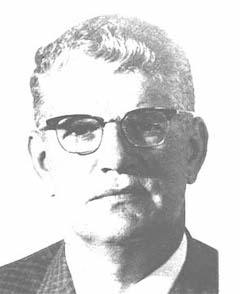 In their day the Tupamaros managed to take a pound of flesh from their persecutors by kidnapping Mitrione as a hostage to the release of 150 political prisoners. Mitrione was executed when Uruguay refused the exchange, although in later years Tupamaros founder
 The
The