1943: Rosanna and Daniel Phillips

Executions on New Year’s Day have not been unheard-of in U.S. history, but it’s been Auld Lang Syne since the last such event — a North Carolina double-gassing on this date in 1943.

The previous year, January 1, 1942, had seen the Tar Heel state host the Rose Bowl at Duke University’s stadium: that was just 25 days after Pearl Harbor, and the California coast was considered a potential target. With war in the Pacific trending America’s way, however, the tournament of Roses — although still not the associated parade — was back in Pasadena on New Year’s 1943. So instead, North Carolina did this.*

Daniel and Rosanna Phillips, black sharecroppers, died consecutively in the Raleigh Central Prison gas chamber for the ax murder of their farm owner a mere five months before.

This laboring couple, lovers living out of wedlock (they married after the murder), seem to have had a violent relationship with one another; their 13-hour trial would feature the defendants’ mutual recriminations of black magic, and allegations by each that the other one was the real killer. (Theft appears to have been the motive.)

(The lengthiest accessible summary of this case that I’ve been able to find is in this pdf of a lengthy journal article, “Black Female Executions in Historical Context” (scroll all the way to p. 77).)

The U.P. wire report (as run in the New York Times, Jan. 2, 1943) says that the pair forgave each other by the end. Still, Daniel was gassed first “at the request of the State Parole Commission, on the possibility that he might make a last-minute statement exonerating his wife,” which would have spared Rosanna. One wonders if she was still in a forgiving mood when she found out that he hadn’t breathed the word that might save her.

At least some newsmen also reported a malfunction in the chair’s cyanide-dropping rack for Rosanna’s execution, which required guards to re-open the chamber after its strapped and hooded subject had been sealed in, and putz about the mechanism while she waited.

* Actual reason to do this on New Year’s Day: the mere happenstance of automatically scheduling execution dates a set number of days after the defendants’ last appeal failed.

On this day..

1942: Three Bialystok Jews

(Thanks to Meaghan Good of the Charley Project for the guest post. -ed.)

On this day in 1942, three anonymous Jewish residents of the Bialystok Ghetto in Nazi-occupied Poland were hung in the public square across the street from the Judenrat (Jewish Council) building. The three worked at the ghetto’s oil factory, and had been caught smuggling sunflower seeds.

The residents of the ghetto paid little attention to the execution, accepting it with resignation. It was hardly remarked on.

But this event was yet another small indication of dire events looming in the near future. Compared to those in other Nazi ghettos, such as those at Warsaw and Lodz, the Bialystok Jews had it pretty good. The ghetto, noted Sara Bender in her 2008 book The Jews of Bialystok During World War II and the Holocaust, was “organized, industrious, and even prosperous. Unlike other ghettos, it never experienced starvation or abject poverty.”

And it was seen as relatively safe. This day’s sort of vicious, arbitrary executions for minor rule infractions, which were so common elsewhere, were not at all frequent in Bialystok. Neither were the mass deportations that had by late 1942 decimated almost all the other ghettos.

Well, Bialystok’s turn was coming.

Unbeknownst to the Bialystokers, just as the sunflower seed smugglers were meeting their end, the powers that be in Berlin were debating the future of the ghetto. The Nazis in immediate charge of the ghetto wanted to keep it, and had logical reasons for doing so: namely, that it was a center of great industry, producing all kinds of goods for the German Army at almost no cost.

Killing off tens of thousands of hardworking slaves during wartime makes about as much sense as hanging three people over sunflower seeds, but this is what Berlin decided to do.

In early- to mid-February 1943, there was a surprise Aktion in the ghetto: 2,000 were killed and a further 10,000 deported to the Treblinka Extermination Camp. About 30,000 remained.

Once it was over, most of the surviving Bialystokers breathed a sigh of relief and hoped against hope that the worst was over — while a small underground group quietly organized an uprising for when the time came.

The rebellion, however, never really had time to get off the ground. When the final deportation occurred in August 1943, almost everyone went quietly in shock to their deaths. A cell of less than 100 fighters put up a few days’ struggle, enough to earn a footnote in history, before the last of the ghetto blew away with the ashes.

On this day..

1941: Eight Russian POWs at Flossenburg

Seventy years ago today, eight unknown Russians — prisoners of the Wehrmacht’s ultimately self-defeating thrust into the Soviet Union — hanged at Flossenburg concentration camp.

By way of a moving 1995 New York Times article, these anonymous Red Army men give us a glimpse at the world of the pink triangle.

Between 10,000 and 15,000 homosexuals may have been incarcerated in the camps, Dr. [Klaus] Mulller said, out of approximately 100,000 men who were arrested under Paragraph 175 of the German criminal code, which called for the imprisonment of any “male who commits lewd and lascivious acts with another male.” (The law was silent on lesbianism, although individual instances of persecutions of lesbians have been recorded.)

Perhaps 60 percent of those in the camps died, Dr. Muller said, meaning that even in 1945, there may have been only 4,000 survivors. Today, Dr. Mliller knows of fewer than 15.

Their travails did not end at liberation. They were still officially regarded as criminals, rather than as political prisoners, since Paragraph 175 remained in force in West Germany until 1969. They were denied reparations and the years they spent in the camps were deducted from their pensions. Some survivors were even jailed again.

Old enough to be grandfathers and great-grandfathers, the survivors scarcely courted attention as homosexuals, having learned all too well the perils of notoriety. “It is not easy to tell a story you were forced to hide for 50 years,” Dr. Mullers said.

One of the first men to break his silence was the anonymous “Prisoner X. Y.,” who furnished a vividly detailed account of life as a homosexual inmate in the 1972 book, The Men With the Pink Triangle, by Heinz Heger, which was reissued last year by Alyson Publications.

By a coincidence that still astonishes him, Dr. Muller said, Prisoner X. Y. — “the best documented homosexual inmate of a camp” — turned out to be Mr. [Josef] Kohout.


The Men With the Pink Triangle inspired the play Bent, later made into a motion picture.

After his arrest in 1939, Mr. Kohout was taken to the Sachsenhausen camp and served at the Klinker brickworks, which he called “the ‘Auschwitz’ for homosexuals.” Prisoners who were not beaten to death could easily be killed by heavy carts barreling down the steep incline of the clay pits.

In 1940, he was transferred to Flossenburg. On Christmas Eve 1941 inmates were made to sing carols in front at a 30-foot-high Christmas tree on the parade ground. Flanking it were gallows from which eight Russian prisoners had been hanging since morning. “Whenever I hear a carol sung –no matter how beautifully — I remember the Christmas tree at Flossenburg with its grisly ‘decorations,’ ” he wrote.

On this day..

1961: Robert McGladdery, the last execution in Northern Ireland

Northern Ireland checks in today at a half-century death penalty-free, dating back to the hanging this date in 1961 of Robert McGladdery.

An agricultural laborer and “well known bad lad”, McGladdery followed a young woman named Pearl Gamble out of a dance hall one night and strangled and stabbed her. It became an open-and-shut case when the police tail surveilling him witnessed McGladdery tramping into some undergrowth where his bloody dance-hall clothes were stashed.

This was all the more remarkable because McGladdery knew he was being watched. In fact, the Daily Mail later got into hot water with the crown because it went and interviewed the suspect: that interview was published while McGladdery was still free, the day before he decided to pay his respects to the evidence that could hang him.*

The case is the subject of the BBC “dramatised documentary” Last Man Hanging, as well as a couple of books.

Books about Robert McGladdery

(Review of Orchid Blue.)

* See London Times, Feb. 18, 1962.

On this day..

1932: Yoon Bong-Gil, nationalist assassin

On this date in 1932, the Japanese shot Korean Yoon (or Yun) Bong-Gil for bombing a parade dais in Shanghai.

A parade to celebrate the emperor’s birthday may be standard enough fare on the home front, but in a China being swallowed by said emperor’s empire it was a provocative act.

In the first months of 1932, Japan had merrily exploited — or incited — anti-Japanese incidents in Shanghai as pretext for an imperialist mini-war, won handily by Japan.

When the aggressors presented their celebratory pageant of arms in the city’s Hongkou Park (today, Lu Xun Park), our young Korean terrorist* “threw a narrow tin box high in the air. In an ear-splitting roar, the grandstand flew apart like a mechanical toy.” (Time magazine, excerpted in this useful Axis History Forum thread.) All seven of the Japanese VIPs on the dais were casualties, and two of them died: one instantly and another succumbing to his injuries a month later.

“A young Korean patriot has accomplished something tens of thousands of Chinese soldiers could not do,” remarked an admiring Chiang Kai-shek. Coming just months after another Korean activist had taken a whack at Hirohito in Tokyo, the generalissimo couldn’t help but appreciate his brothers in resisting colonization.

For this accomplishment Chiang would later go to bat for postwar Korean independence. But for his part, the patriotic Yoon got only a free trip to Japan for military trial and execution.

When calling in Seoul, drop by a well-appointed memorial hall dedicated to Yoon’s memory … or, at the national cemetery where Yoon’s remains were repatriated in 1946.

You’ll find another subtle memorial to this incident in pictures from the decks of the USS Missouri, where a Japanese delegation surrendered to end World War II on September 2, 1945. Leading the delegation is a distinguished gentleman with a top hat and a cane: it is Mamoru Shigemitsu, walking with an artificial leg thanks to Yoon Bong-Gil’s bomb 13 years before.**


Mamoru Shigemitsu aboard the USS Missouri.

* Note: calling Yoon Bong-Gil a “terrorist” is controversial in Korea. We use the word without moral censure.

** Mamoru Shigemitsu had been Japan’s ambassador to China at the time of the assassination bid.

On this day..

1949: Traycho Kostov, Bulgarian purgee

On this date in 1949, leading Bulgarian communist Traycho (Traitcho, Traicho) Kostov was hanged in Sofia.

A journalist and agitator from way back, Kostov was a casualty of the postwar political chasm between east and west.

He’d been the number three man in Bulgaria’s communist hierarchy at the time of his fall in January of 1949, but had also been considered close to Yugoslavia’s independent socialist leader Josip Broz Tito. Like Tito, Kostov was a little too into his own country’s national economic sovereignty as against the purported greater good of a Soviet-dominated eastern bloc.

Stalin had overtly split with Tito in 1948. Over the next few years, Soviet satellites in eastern Europe would systematically eliminate perceived Titoist elements — and submit to economic integration on Moscow’s terms.

So a propagandist could write, comparing Kostov to the Hungarian minister who had swung for Titoism just weeks before, that

[i]f Laszlo Rajk could be regarded as the right arm of Tito’s plans for Eastern Europe, Traicho Kostov, member of the Bulgarian Politburo and Deputy Premier, was certainly his left arm. I sat in a crowded court in Sofia in December, 1949, heard and watched Traicho Kostov and ten other accused and dozens of witnesses testify to a Yugoslav plan for Bulgaria every whit as diabolical and bloodthirsty as that for Hungary. In reality there was only one overall strategic plan with “Operation Rajk” and “Operation Kostov” as tactical moves.

Specifically, “Operation Kostov” entailed spying for western (plus Yugoslavian) powers and plotting to overthrow the People’s Republic.

Although his enemies had browbeaten Kostov into political self-denunciation at party summits, the man stoutly repudiated guilt at trial — which was not necessarily the norm in the show trial genre.

Kostov’s ten fellow defendants received prison terms rather than the rope, and some of them were alive to enjoy the official rehabilitation that followed Stalin’s death.

On this day..

1952: Hard Luck Billy Cook

On this date in 1952, the short and brutal life of William Cook ended in the San Quentin gas chamber.

A quintessential “terrible upbringing” criminal, young Billy was ditched with his siblings by their alcoholic widower father in an abandoned mine when he was a small child.
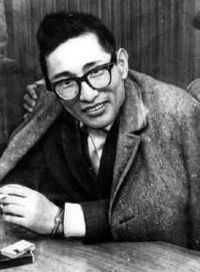
Though brothers and sisters found foster parents, Billy — afflicted by physical deformity and an ungovernable temper — had to make his way as a ward of the state. Constantly delinquent through his adolescence, he was institutionally handed off to the state penitentiary at age 17.

He got out at 22, with a grudge against the world and a knuckle tattoo reading “H-A-R-D L-U-C-K”, resolved — so he told his derelict father — to “live by the gun and roam.”

In a 22-day spree looping from California to Texas and Oklahoma and then back again, Cook slew six people: an entire vacationing family in Oklahoma, and then another kidnapped motorist in California. Taking drivers hostage was how he navigated America’s growing intercity road network, making the Cook story readily adaptable to titillate cinema-goers who knew the loneliness of the open road, in 1953’s The Hitch-Hiker. (Teaser line: “Who’ll be his next victim … YOU?”)

Cook took little care for his own secrecy and had to flee to Mexico to avoid a dragnet. Surprisingly, even the police chief of Santa Rosaria in Baja California recognized the wanted man, and he was captured there unawares and extradited back to the Golden State.

“I hate everybody’s guts,” he reportedly explained upon his capture. “And everybody hates mine.”

On this day..

1970: Akira Nishiguchi, Vengeance Is Mine inspiration

On this date in 1970, Japanese serial killer Akira Nishiguchi was hanged for murder.

Born in 1925, Nishiguchi (English Wikipedia entry | Japanese) spent the war years in juvenile detention but emerged in time to work as an interpreter for the U.S. occupation.

He was arrested repeatedly (Japanese link) as a con man during the 1950s. Police had him pegged as a nonviolent serial fraud artist, but in 1963 he killed two drivers to steal from them, then went on the run in Tokyo.

For 78 terrifying days, his face — those fraud convictions came with fingerprints that identified him as the killer — gazed out of wanted posters as Nishiguchi scraped by in cheap hotels and desperate disguises, committing three more murders in the process. Finally, an 11-year-old girl recognized him, posing as a lawyer.

Nishiguchi is the subject of the 1979 Shohei Imamura film Vengeance Is Mine. (Review | Another)

On this day..

1999: James Beathard, on the word of a known liar

(Thanks to Mary O’Grady for the guest post. -ed.)

Murder is not a common occurrence in Trinity County, Texas. The shotgunning of three members of the Hathorn family in their trailer home on the evening of October 9, 1984 remains notorious, even among locals who were not yet born on the date of the crime.

Clues scattered at the crime scene, African-American human hairs and Kool cigarette butts, were supposed to convince authorities that a certain sort of suspect had killed Gene Hathorn, Sr., his wife Linda Hathorn, and their teenaged son Marcus Hathorn. Mr. Hathorn’s recent receipt of a $150,000 property settlement and his recent disputes with his elder son, Gene Hathorn, Jr., led law enforcement in a different direction. Less than one month after the bodies were found, Gene Hathorn, Jr., and his running buddy James Lee Beathard faced charges of capital murder.

Prosecutors developed evidence that Gene Hathorn, Jr., hatched the plot to kill his family in order to inherit his father’s new wealth. It seems he was unaware that his father had formally disinherited him three weeks before he was murdered.

James Beathard was first to stand trial.

Called to the witness stand by District Attorney Joe Price, Gene Hathorn, Jr., testified against Beathard, to devastating effect. Hathorn claimed that Beathard entered the trailer, killed all three victims, and planted the false clues, while he himself fired only one shot through a window. Beathard was sent to death row.

When the younger Hathorn was brought to trial, District Attorney Price reversed his theory from Beathard’s trial, depicting Hathorn as the “inside man” and the strategist who believed he had concocted the perfect crime. Gene Hathorn, Jr., joined James Lee Beathard on Texas’s death row. Hathorn recanted his testimony against Beathard. No appeals court took notice.

In the mid-1980s, Texas’s male death row occupied part of the aging, red brick and steel Ellis I prison unit outside Huntsville. For prisoners such as James Beathard and Gene Hathorn who conformed themselves to the rules, a considerable amount of communication with other prisoners and with the outside world remained possible. Each of these sons of East Texas soon found himself editor of a death row periodical, the Lamp of Hope in Hathorn’s case and the Texas Death Row Journal for Beathard. Over the years, Beathard emerged as a prolific letter-writer and essayist, publishing a brief nonfiction piece describing life on death row in the British Guardian Weekly in August, 1996.

Beathard’s talent as a correspondent won him considerable sympathy during his fourteen years on death row. As they exchanged letters, American playwright Bruce Graham fictionalized Beathard in his short play, Coyote on a Fence.

James Beathard’s intelligence and powers of articulation were unusual among death row prisoners. Since he could be trusted to exit and re-enter his cell with no fuss and to refrain from blithering forth psychotic delusions, he was sometimes trotted out when prison authorities needed a condemned man to meet the press.

James Beathard’s appeals ran out at last in 1999. He was executed, still protesting his innocence, on December 9th of that year.

His partner in crime, Gene Hathorn, Jr., won an appeal in 2009 based on his trial attorney’s failure to introduce evidence of his father’s abuse of him in childhood. He is now serving consecutive life sentences, reportedly working as a prison cook in general population.

On this day..

1920: Tom Johnson and Jim McDonald, criminal assailants

Charlotte Observer, Nov. 27, 1920 (Nov. 26 dateline)

Govenror Bickett today signed the death warrants of Tom Johnson and Jim McDonald, negroes convicted of criminal assault and whose appeal to the Supreme Court had been dismissed. Johnson, a native of Guilford county, and McDonald, of Davidson, will die in the electric chair at the state prison on December 3.


Charlotte Observer, Dec. 4, 1920 (Dec. 3 dateline)

Tom Johnson and Jim McDonald, Guilford and Davidson county negroes, died in the electric chair at the state prison here today for criminal assault, Johnson preceding McDonald to death by only a few minutes. The killing today was the fourth double electrocution by the state since the electric chair was substituted for the hangman’s noose. Both the prisoners appealed to the supreme court for new trials but their cases were dismissed two weeks ago.

On this day..