1944: Raymond Burgard, lycee Buffon inspiration

Anti-fascist teacher Raymond Burgard was beheaded on the fallbeil on this date in 1944, in Cologne.

A literature instructor at Paris’s lycée Buffon, Burgard (English Wikipedia entry | French) was dangerously forthright about his resistance to the Nazi occupation. He wrote and published resistance newspapers and on one occasion publicly sang La Marseillaise at a march celebrating Joan of Arc.

Evidently he was an inspiring teacher, too.

Burgard was arrested over the Easter 1942 break, and as soon as school re-convened the pupils

organized a demonstration, involving children from other schools. Around a hundred school students took part, chanting Burgard’s name and throwing leaflets in the air. (Source)

Alas, Executed Today has already encountered these brave schoolchildren: the five youths who organized this protest were themselves executed in early 1943.

On this day..

1941: Pittsburgh Phil

On this date in 1941, Brooklyn gangster Pittsburgh Phil went to the Sing Sing electric chair.

The smart-dressed Pittsburgh Phil* — “Harry Strauss” to his parents or just plain “Pep” to his friends — was the most notorious contract killer of the Springsteen-worthy crime syndicate Murder, Inc.. He racked up an alleged body count well north of 100 — possibly several multiples of that figure — popping whomever some organized crime figure needed to be rid of. (Like this guy.)

Pep eschewed any single m.o., murdering with blades and bullets and garrotes and lungs full of water, and he rarely even carried a weapon lest it incriminate him on a chance arrest. Well did he know this tradecraft, for he beat no fewer than 17 prosecutions in New York. The man also took hit assignments all around the country, for other crime lords in cities whose patrolmen did not recognize him by name and reputation.

And fittingly, it took another assassin to kill him.

Fellow Murder, Inc. killer Abe “Kid Twist” Reles — a childhood buddy with whom he’d come up in the Prohibition crime world via Meyer Lansky‘s organization — got caught in the government’s sights and realized that his only probable purchase on life involved giving evidence against his mates.

We’ve seen that his testimony did in Frank Abbandando and Harry Maione, even though Reles had “fallen out of a window” before those goons sat in the mercy seat. Reles likewise gave up Pittsburgh Phil, who in Raymond Chandler’s was “electrocuted with a sneer on his face” on this date along with his fellow Murder, Inc. plugger Buggsy Goldstein.

* Why did they call him “Pittsburgh Phil”? Who knows! He is at any rate not to be confused with groundbreaking horse bettor George “Pittsburgh Phil” Smith.

On this day..

1916: Henri Herduin and Pierre Millant, “cry against military justice”

Cry, after my death, against military justice!

-Henri Herduin, in his last letter to his wife

On this date in 1916, which happened to be Pentecost, two French lieutenants were shot on the Western Front for not surrendering.


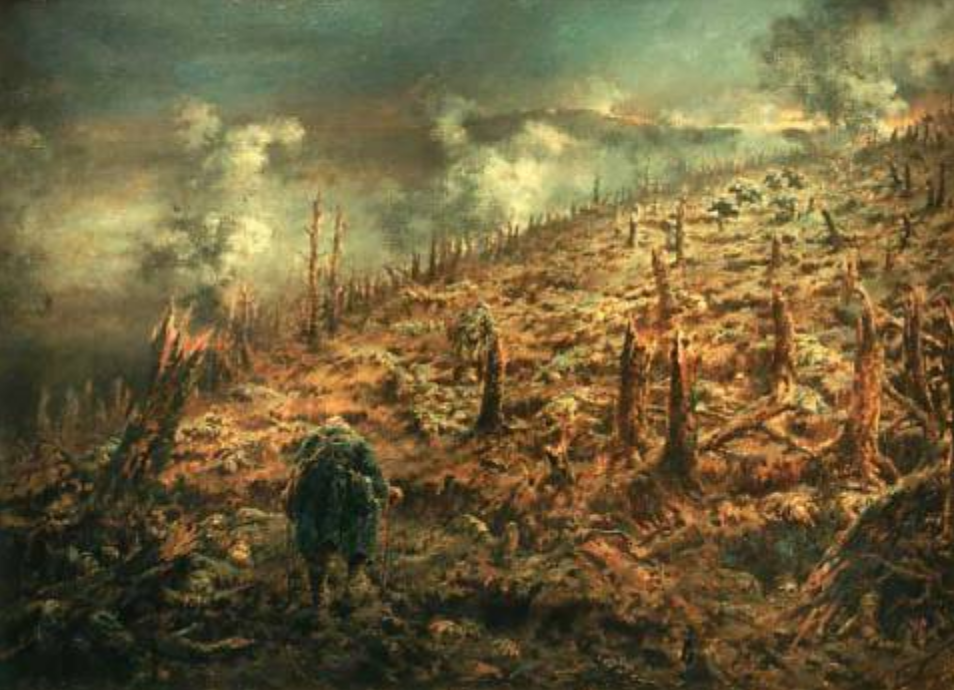
“Le ravin de la mort a Verdun”, by Ferdinand Gueldry.

During the endless Battle of Verdun, which spanned most of 1916, the Germans at one point overran a French bunker called Fort Vaux. German bombardment of the Thiaumont Farm area during this attack smashed the 347th Infantry Regiment to which both Henri Herduin and Pierre Millant belonged. With the regiment commanders killed into the bargain, Herduin and Millant found themselves at the head of a remnant of 40 or so survivors spent of both energy and ammunition, forced to fall back to avoid German encirclement.

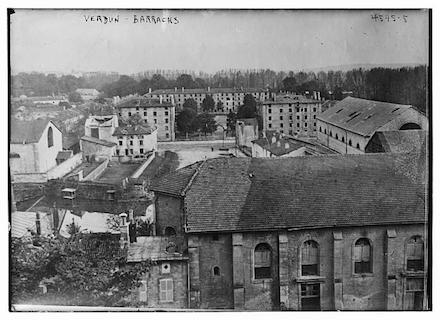
“Our division is broken, the regiment annihilated; I have just lived five terrible days, seeing death at every moment,” Herduin wrote to his wife Fernande on June 9th after he had presented himself at Anthouard barracks. He had not yet any inkling that he too would be a casualty of those terrible days. “Four days without drinking or eating, among the mud and the shells, what a miracle that I’m still here!”


Anthouard barracks during World War I. (U.S. Library of Congress)

Fate and the brass had a perverse sense of humor, for when the two lieutenants presented themselves and their fellow survivors to the reassembled remains of their regiment, about 150 men strong, they discovered that they’d survived all that mud and shelling only to die for France at the stake.

Their unit’s captain held a standing order to execute Herduin and Millant on sight for deserting their post: no need for even the pro forma proceedings of a tribunal. Indeed, the extrajudicial command might have been a fuck-you to civilian authorities who had recently attempted to curtail the army’s enthusiasm for executions. The captain, having no pleasure himself in this order, suffered Herduin to write a hasty explanation/appeal, to which the captain appended his own attestation of good character. Their missive was returned unopened, coldly marked Pas d’observation. Exécution immédiate. Had they not endured those privations to retreat but simply surrendered to the Hun, they would have been better off.

Herduin, a career soldier aged 35, gave his last service as an officer steadying the nerves of his own younger comrades in the firing squad with a demand to “hold to the end for France” — before issuing the firing command from his own lips.

Fernande made good on her husband’s own dying plea to her, and once the Great War’s guns fell silent she waged a public, and embarrassing for the army, fight to clear the men’s names. She eventually achieved a formal posthumous exoneration in 1926, as well as the honor- and pension-clinching appellations “Mort pour la France” applied to their death certificates. She even got a still-extant Rue Lieutenant Herduin christened in that man’s native city of Reims. On Armistice Day 2008, a marker to both men was unveiled on that street; yet another memorial stands to them in Fleury-devant-Douaumont, near the place they were shot.

On this day..

1944: The Massacre of Tulle

On June 9, 1944, the 2nd SS Panzer Division hanged 99 habitants of the French town Tulle as revenge upon the French Resistance.

On June 7, the Communist Francs-Tireurs et Partisans (FTP) guerrillas launched a pre-planned attack on German and milice positions in Tulle. By the 8th, the FTP had liberated the town* … temporarily.

Come the evening of the 8th, the 2nd SS Panzer Division — which had been stationed in southern France but was rumbling north to fortify the German position in the wake of the Allied landing at Normandy — arrived at Tulle and re-occupied the city.

On the morning of the 9th, the Germans went door to door and detained nearly all the men in Tulle over the age of 16, an estimated three to five thousand potential hostages. By the afternoon these had been efficiently culled to 120 semi-random targets for exemplary revenge to cow the populace, people who looked too scruffy to the Germans and didn’t have an alert contact with sufficient pull to exclude them from the pool. The count was determined, as a poster announcing the executions explained, as the multiple of 40 German soldiers estimated lost* during the FTP action.

Throughout the afternoon, that threat was enacted with nooses dangled along lampposts and balconies on the Avenue de la Gare — although not to the full 120 but rather to the odd number of 99. It remains unclear why the hangings stopped early; certainly it was no excess of sentiment on the part of the Panzer division, which had been redeployed to France after giving and getting terrible casualties on the far bloodier eastern front.

“In Russia we got used to hanging. We hanged more than 1,000 at Kharkov and Kiev, this is nothing for us here,” a Sturmbannführer Kowatch remarked to a local official.

And so in batches ten by ten, before an audience of other prisoners and frightened townspeople peeping through shuttered windows and mirthful SS men, the hostages were marched to their makeshift gallows, forced up ladders with rifle-butt blows, and swung off to publicly strangle to death. The avenue’s unwilling gibbets were not suffered to discharge their prey until the evening, when the 99 were hurriedly buried in a mass grave. Afterwards, another 149 were deported en masse to Dachau, most of whom would never return.

The never-repentant commander who ordered the mass execution, Heinz Lammerding, was condemned to death in absentia by a French court; however, West Germany refused extradition demands,** and Lammerding died in 1971 without serving a day in prison.

This event remains a vivid civic memory in Tulle, as well as the namesake of the Rue du 9-Juin-1944; travelers might peruse a guide to the numerous memorials in the vicinity available here (pdf).

The 2nd SS Panzer Division proceeded the next day on its northerly route to Oradour-sur-Glane, and there participated in the mass murder of its inhabitants, an atrocity that is much better remembered today than that of Tulle. The journey and operations of this division are the subject of a World War II microhistory titled after the unit’s nickname, Das Reich: The March of the 2nd SS Panzer Division Through France, June 1944.

* The 40-to-50 German dead in Tulle include some summarily executed. For example, nine officers of the SD were shot in a graveyard after capture.

** Lammerding’s comfortable liberty became headline news in the 1960s, which was not long after Israeli commandos had kidnapped the fugitive Nazi Adolf Eichmann. France allegedly mulled such an operation to bring Lammerding to justice.

On this day..

1946: Chen Gongbo, puppet president

On this date in 1946, Chen Gongbo, president of China under the Japanese occupation, was shot for treason.

Briefly a Communist in his youth, Chen was Kuomintang state minister, then was pulled into the Japanese puppet government.

He served from 1940 as Mayor of Shanghai and speaker of the legislature, and late in 1944 became Acting President and soon actual President when ailing President Wang Jingwei traveled to Japan for medical treatment and died.

It was not long before Chen too had to relocate to Japan — in his case, as a fugitive. He was arrested and extradited back to China, where he defended himself from charges of collaboration arguing that he had acted only out of personal loyalty to his friend Wang. “Soon I will be reunited with Wang Jingwei in the next world,” was his tragic and filial sentiment upon learning his fate.

On this day..

1916: The Zainuco Massacre

On this date in 1916, eight convicts were summarily executed by Argentine police after a prison break in an affair known as the Zainuco Massacre.

Almost all the information about this event available online appears in Spanish and this also applies to the links in this post.

Jose Cancino, Nicolas Ayacura, Fructuoso Padin, Jose Lopez, Antonio Stradelli, Transito Alvarez, Francisco Cerda and Desiderio Guzman were among the last escapees among over 100 inmates who had overpowered their guards and fled the overcrowded Nequen prison on May 23.

Most of these men would be trapped and re-arrested in the coming days, but a large body of them forged rapidly westward, hoping to cover the 500 kilometers to the Chilean border. Not until a week later did police catch up with them, at a place called Zanaicuo south of the city of Zapala.

Bivouaced at a ranch there, the fugitives* were awakened from their rest during the dark early hours of May 30 by a fusillade; they had looted where possible during their flight, but their ammunition was not plentiful and quickly exhausted itself, forcing the escapees’ surrender.

At this point, their captors divided their prizes, either 15 or 16 souls, into two halves. The first of these halves, the lucky half, marched away to Zapala, destined to return to their irons. The other eight were brought to a lagoon, putatively to freshen up … and there they were shot dead, to a man. The cops’ story was that a couple of them tried to grab guns, though a resident of the parts who found the bodies reported that all eight had been shot execution-style in the head. They were consigned to a mass grave.

A few months later, nosy Neuquen journalist Abel Chaneton, who evinced an unwanted degree of interest in this incident, was also shot dead by police, permitting the quiet closure of the case.

And there it has rested ever since — mostly in obscurity, although a human rights consortium recently marked the centennial of the killings by placing a sculpture and marker, reading:

100 years after the Zainuco massacre, we rise up against oblivion and the impunity of this and all the crimes of the state authorities.

* A South African named Martin Bresler had separated from the main body of prisoners and did indeed manage to reach Chile — allegedly surviving a freezing night by nesting inside his horse, tauntaun style. He moved to the United States, fought in World War I, and wound up dying in a Buenos Aires mental asylum in 1942.

On this day..

1989: Stephen McCoy, botched

Rapist-murderer Stephen McCoy succumbed to a badly botched lethal injection in Texas on this date in 1989.

McCoy, according to the Death Penalty Information Center,

had such a violent physical reaction to the drugs (heaving chest, gasping, choking, back arching off the gurney, etc.) that one of the witnesses (male) fainted, crashing into and knocking over another witness. Houston attorney Karen Zellars, who represented McCoy and witnessed the execution, thought the fainting would catalyze a chain reaction. The Texas Attorney General admitted the inmate “seemed to have had a somewhat stronger reaction,” adding, “The drugs might have been administered in a heavier dose or more rapidly.”

McCoy with two accomplices, James Paster and Gary LeBlanc, had committed a cut-rate murder for hire, grossing $1,000 to shoot someone’s ex-husband in the parking lot of a club. Paster, who actually pulled the trigger on that murder, suggested to his mates that they would all rest a little easier in one another’s silence if they jointly committed two more homicides, with each taking his own turn as the murderer.

To that end, they kidnapped one Diana Oliver in November 1980, gang-raped her, and had McCoy take her life with an improvised garrote. Their third victim was 18-year-old Cynthia Johnson, abducted from her stranded vehicle on New Year’s Eve 1980, and also raped and strangled to death.

Paster was also executed. LeBlanc copped a long prison sentence for cooperating with the state against his accomplices.

On this day..

1942: Georges Politzer and Jacques Solomon, academics in resistance

Left-wing intellectuals Georges Politzer and Jacques Solomon were shot at Fort Mont-Valerien on this date in 1942 for their exertions in the French Resistance.

Both numbered among interwar France’s great radical intellectuals: Politzer, a Hungarian Jew nicknamed the “red-headed philosopher” and and Solomon, a Parisian physicist, both numbered among interwar France’s great radical scholars.

The red-headed philosopher hung with the likes of Sartre, taught Marxism at the Workers University of Paris, and critiqued psychology. (A few of his works can be perused here.) Solomon, son-in-law of physicist Paul Langevin, made early contributions to the emerging field of quantum mechanics.

Politically both were Communists and supporters of the anti-fascist Popular Front; with the onset of German occupation, they carried their activism into the French Resistance.

They were arrested (separately) in March 1942 and executed (together) with other Resistance hostages on the outskirts of Paris.

On this day..

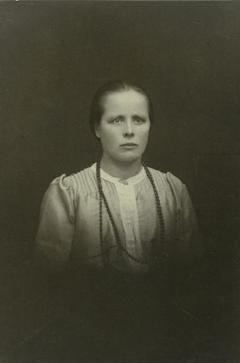
1918: Edla Sofia Hjulgrén, Finnish parliamentarian

One hundred years ago today, former Member of Parliament Edla Sofia Hjulgrén was shot during the Finnish Civil War.

A labor activist for many years, Hjulgrén (English Wikipedia entry | the vastly more detailed Finnish) won election to the Eduskunta in 1913 as a Social Democrat.*

At the time, Finland was still a Grand Duchy within tsarist Russia. When the Russian revolutionaries who conquered power in St. Petersburg in 1917 proved reluctant to agree to Finnish independence, the Finns just declared it, and a civil war ensued in the first months of 1918 — between Soviet-backed Red Guards and German-backed White Guards.

The Whites won a nasty war thick with atrocities on both sides. Although she was a pacifist, our Sofia Hjulgrén was among hundreds of Red supporters swept up after the decisive Battle of Vyborg clinched White victory. She was shot there — it’s Viipuri to the Finns, and Vyborg to the Russians — in the cemetery. The Soviets got Vyborg back in a subsequent war with Finland, and erected a monument there to the hundreds of victims of the Whites’ April-May 1918 Vyborg Massacre.


(cc) image by Olga.

* Finland boasts of being the first legislature in the world with full gender equality — meaning that, as of 1906, women enjoyed full equality both to vote and to stand for office. Women comprised above a tenth of its parliamentary delegates on the eve of Finland’s independence.

On this day..

1968: Karol Kot, the Vampire of Krakow

(Thanks to Meaghan Good of the Charley Project for the guest post. -ed.)

On this date in 1968, Polish serial killer Karol Kot, called the Vampire of Kraków, was hanged in the city of Mysłowice. He was only twenty-one years old.

Kot was born in Kraków in 1946, the son of an engineer and a housewife. His abnormal, violent behavior began early. He was jealous of his baby sister, who was born when he was eight, and thought their parents loved her more. While their parents were away, he beat her and even tortured and killed her pets.

He was fascinated by death and hung around slaughterhouses in his free time, helping the employees there kill calves and drinking the animals’ blood.

Most of the sources about Karol Kot, such as this Warsaw Post article, and this article from Polish Newsweek, are in Polish. He was, however, the subject of an episode in the 2014 English-language documentary series Killers: Behind the Myth.

This Kraków Post article describes Kot’s origins. He did well enough in his studies at school, but his classmates knew him as a shy, withdrawn loner and a weirdo. Between that and his enormous knife collection, it’s no wonder there was a running joke at Kot’s school that he must be the Vampire of Kraków.

One of the few things he truly excelled at was shooting; he was the star of the local rifle club. At one point he was ranked tenth in the entire country in the youth division. Kot’s coach mentored him, invited him to his home and even told his own son, “Be like Karol.” Kot found this hilarious: he had been planning to murder the boy.

He committed his first knife attack in September 1964, at the age of seventeen, stabbing a 48-year-old woman repeatedly inside a church as she knelt to pray. She survived. In fact, she didn’t even realize she was hurt until she went home, removed her coat, saw that she was bleeding and went to the hospital.

Kot went after his second victim, a 73-year-old woman, a few days later. Kot saw her exit a tram, followed her home, and stabbed her in the back as she walked up her front steps. She survived, but remained paralyzed for the rest of her life.

Six days later he stabbed a third woman, 77 years old, again inside a church; this was his first fatality. When the nuns found her, with her dying breaths the victim whispered that her attacker had been a schoolboy.

All three of Kot’s first victims were older females. He committed no more stabbings for a year and a half, but became interested in poison instead. Kot laced open bottles of beer and soda with arsenic and left them lying around, hoping someone would drink from them, but no one was tempted. He tried giving a poisoned drink to a classmate, but his intended victim poured it out because it smelled funny.

In 1966, Kot gave up on the poisoning idea and returned to his old weapon, the knife. He changed his target demographic from elderly women to young children.

In February, he stabbed and killed an eleven-year-old boy named Leszek at Kościuszko Mound. It was a horrific attack, with far more wounds inflicted than were necessary to kill Leszek. In April, Kot attacked a little girl named Małgorzata as she was checking the mail outside her home. He stabbed her a total of eleven times in the chest, back and abdomen. She suffered from severe internal injuries, but survived.

After knifing Małgorzata, Kot went to the militia to get his gun permit renewed, then went home.

In Communist Poland, crime was rarely reported in the newspapers. In the case of Kot’s murders, however, the vexed police took the rare step of issuing press releases about his crimes, appealing to possible witnesses to come forward with information.

The citizens of Kraków were terrified. People began going out with boards and cast-iron pot lids stuffed under their clothes to protect themselves from the Vampire’s blade.

Kot was caught after he bragged about his crimes to fellow member of the rifle club. She didn’t believe him until she read in the newspaper about the attempted murder of Małgorzata. Then she went to the police.

He was arrested, but was permitted to take his final school-leaving examinations, in hopes of forestalling an anticipated insanity plea. Police used the fact that he passed his exams as evidence that he was rational and sane.

After being taken into custody, the baby-faced killer denied everything. But after his surviving victims all identified him as their attacker, he cheerfully confessed to everything. He said he committed the murders because it gave him a sense of pleasure, and he enjoyed drinking his victims’ blood as they lay dying. He even studied books of human anatomy to figure out where to place his knife.

The murders thrilled him and gave some spark to his “heavy, dull and colorless” life, he said. He felt no remorse at all.

Kot’s rifle coach was outraged at first when he heard that such a fine young athlete had been arrested. Surely this was a miscarriage of justice. After Kot confessed, however, his devastated coach wrote to him in prison, asking him to return his rifle medals because he was unworthy of them.

In his final interview, Kot said, “Soon, where I’m going, I’ll meet with my victims, and we can speak. Here on Earth, I have no one to talk to.”

Kot was sentenced to death, but his sentence was reduced to life imprisonment on appeal due to his youth. However, after the General Prosecutor intervened, the death sentence was reinstated and Kot was hanged.

On autopsy, a large tumor was found in his brain. It had gone undiagnosed in life. Whether this was the reason for Kot’s sadism is anyone’s guess.

On this day..