1926: Josef Jakubowski, Weimar Germany wrongful execution

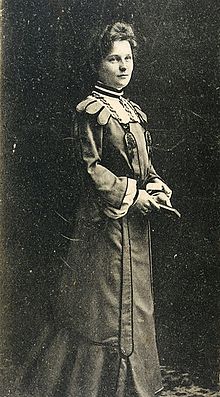
On this date in 1926, Weimar Germany beheaded Josef Jakubowski for a murder he did not commit. Though a notorious miscarriage of justice in Germany, it is not widely known elsewhere and most of the links about Jakubowski are in Germany.

A Pole reared in the tsar’s Lithuania, Jakubowski emigrated by way of that great ravager of imperial borders, the First World War: taken as a POW, he preferred sticking around as a Mecklenburg farmhand over returning to a now-Bolshevik Russia engulfed in civil war.

Jakubowski never married, but if he had done it would have been to Ina Nogens, a local woman with whom he fathered a daughter out of wedlock. But his lover died (in non-suspicious circumstances) leaving Jakubowski to support not only the infant girl but also Ina’s three-year-old son by another man, Ewald — who were nonetheless being raised not by Jakubowski but by the Nogens relatives.

On November 9, 1924, Ewald disappeared: he was found outside the village the next day, strangled to death.

The Nogens family immediately made known their suspicions of the almost in-law from a foreign land, and in no time at all Jakubowski was caught in that still-familiar gaze of official tunnel vision and its mirrors of endlessly receding self-vindication. The most substantial evidence against Jakubowski was the shaky — and in fact, manipulated — eyewitness report of a mentally impaired teenager made to sort of put the Pole on the path to the Nogens house on the morning of the little boy’s disappearance. That’s it. It’s the sort of case would have to level up several times to achieve the stature of laughability, but when everyone already knows you did it, actual evidence is really just a luxury. Jakubowski was an outsider who maybe wanted to stop paying child support. Work backward from there!

Two years after the luckless migrant lost his head to the fallbeil, it came out that some of the Nogens clan were the ones really behind the murder, a two birds, one stone scheme to take off their hands both bastard whelp and Auslander. Three were judicially convicted of the very same murder, and one, Ina’s brother August, was actually sentenced to death — although the sentence was remitted. Despite issuing these other convictions, no German state organ has ever officially reversed Jakubowski’s condemnation.

The case was portrayed in a two-part West German TV series in 1964, Der Fall Jakubowski.

On this day..

1957: Fernand Iveton, pied-noir revolutionary

Iveton is taken, is condemned to death, is refused pardon, is beheaded. This man said and proved that he did not seek anyone’s death, but we, we sought his and we got it without fail. It was intimidating, was not it? And as was said the other day by an imbecile, it “showed the terrible face of France irritated.”

-Jean-Paul Sartre, We Are All Murderers (Source, in French)

Fernand Iveton (or Yveton) was guillotined on this date in 1957, for Algeria.

An pied-noir gas worker, Iveton (English Wikipedia entry | French) attempted to bomb the Algerian Gas Company in support of the National Liberation Front, to which he also belonged.

Wishing to commit his sabotage sans bloodshed, he timed the bomb to detonate when the plant would be empty … but under close surveillance, he was stopped in the act of setting it on the evening of November 14, 1956.

Iveton’s tenderness for his countrymen’s lives was not reciprocated by the military court which, acting with frightful emergency powers, death-sentenced him as a terrorist 10 days later. The man’s last mercy appeal was denied by the Minister of Justice, Francois Mitterrand* — who as President of France a quarter-century hence would abolish the the death penalty.

He went to the guillotine with two Muslims, Mohamed Lakhneche and Mohamed Ouenouri, kissing them in the shadow of the blade with the words, “The life of a man is of little account. What matters is Algeria, its future. Algeria will be free tomorrow: I am certain that the friendship between Frenchmen and Algerians will mend.”

Iveton was the only European guillotined in the Algerian War of Indepenence.

* Mitterand always remained coy when asked to comment in later years on this case.

On this day..

1794: Nicolas Luckner, German marshal of France

On this date in 1794, Nicolas Luckner was guillotined in Paris.

A count with his own manor on the German-Danish frontier, Luckner (English Wikipedia entry | German, where he’s Nikolaus von Luckner) made the sort of cross-national career pivot that was still possible in the pre-revolutionary world by going from commanding hussars against France in the Seven Years’ War to serving in the Bourbon army.

Allegedly convinced that Marie Antoinette had blocked his advancement, Luckner supported the French Revolution, and by 1791 had summited his profession as Marshal of France.

He was the very commander of the Army of the Rhine to whom Rouget de Lisle dedicated the 1792 Chant de Guerre pour l’Armée du Rhin … the marchable tune which later became the Marseillaise. (Luckner’s name also appears on the Arc de Triomphe.)

Things did not go as swimmingly with the Army of the North, where he bogged down in the Low Countries — and the incriminating defection of the Marquis de Lafayette to France’s royalist enemies did him no favors in the court of Jacobin opinion. Luckner was relieved of his command by the impatient National Convention.*

This septuagenarian foreign count showed a lordly blindness to his adoptive country’s situation both fiscal and political by journeying to Paris later in 1793 to complain that his pension was not being funded in full. Other officers had already fallen under the Terror’s blade for command failure, where any shortcoming in the field could be readily conflated with treachery — and Luckner, no surprise, was soon denounced as a royalist.

City hall in the small Bavarian town of Cham, where Luckner was born in 1722, still chimes the Marseillaise every day to honor its native son … whose name also associates with Germany’s World War I naval hero Felix von Luckner, the great grandson of our man Nicolas.

* The Convention’s emissary on this occasion was Choderlos de Laclos … best known now (and then) as the author of the viperous epistolary novel of ancien regime misbehavior Les Liaisons Dangereuses.

On this day..

1825: Angelo Targhini and Leonidas Montanari, carbonari

On this date in 1825, alleged carbonari plotters Angelo Targhini and Leonidas Montanari were guillotined by Papal executioner Mastro Titta.

This excommunicate revolutionary secret society was spending the 1820s — a decade in-between revolutions — harrying the restored crowned heads of Italy and France with assassination plots.

It was accordingly much-harried in its own turn, to the repeated profit of this grim chronicle.

The pair we feature today were casualties of all that cloak-and-dagger, specifically the latter.

The story (Italian link) goes that the Carbonari became convinced (correctly) that one of their number, a Filippo Spada, was informing against them; thereupon, our Angelo Targhini — very much the impressionable young zealot — was tasked with stabbing the turncoat to death in an alley. The victim, known familiarly as “Spontini”, survived the attack. Montanari, a physician, was one of the first on the scene but arriving policemen perceived that the “treatment” he was applying to the victim was actually deepening his wounds, and seized him as a conspirator.

Montanari admitted nothing of the kind and was accused solely on the impressions of police plus the information of another informant. But he was in no position to impeach this information because it was a secret court of the automcratic Pope Leo XII that condemned both men for treason — solicitous of neither defense nor appeals.

In his diaries, as detailed here as ever, the headsman Mastro Titta reports receiving death threats. Security on the Piazza del Popolo, “thick with people, as I never saw her,” in Titto’s words, was extremely tight — but no public disturbance or carbonari raid disturbed proceedings. That was left only to the prisoners, who declined to receive the sacrament of confession or acknowledge themselves assassins.

“All attempts to persuade them to repent came to nothing,” Titta laments. “They invariably replied only: ‘We have no account to render to anyone. Our God plumbs the fathoms of our conscience.'”

The young men are the subjects of the 1969 Luigi Magni film Nell’anno del Signore.

On this day..

1954: Karli Bandelow and Ewald Misera, in the Gehlen-Prozess

On this date in 1954, railway official Ewald Misera and civil engineer Karli Bandelow were beheaded in Dresden as West German spies.

They had been recruited to inform for the West German Gehlen Organization, an intelligence apparatus directed, as its name implied, by former Third Reich spymaster Reinhard Gehlen.

Gehlen had the honor to be dismissed by Hitler in the war’s closing days for his accurately defeatist reports on the overwhelming strength of the advancing Red Army, but for the western Allies — to whom he savvily surrendered — his expertise on and contacts in eastern Europe were very well worth having as the Cold War took shape.

His organization, the precursor to Germany’s present-day intelligence service, naturally set about penetrating East Germany — which was far simpler to do in those early years, before the East all but sealed the border.

East Germany, of course, was equally keen to undermine the Gehlen network’s moles and after the alarm of the June 17, 1953 rising it implemented a concerted effort to bring root out western spies known as Operation Arrow (Pfeil). Mass arrests beginning in October of 1953 swept up hundreds of suspected agents not only for Gehlen but for British, French, and American intelligence.

The consequent trials, or more particularly those targeting West German assets, are collectively known as the Gehlen-Prozess. We have indeed encountered some of its victims already: Elli Barczatis and Karl Laurenz, who would be executed a year after the principals in this post for their own work in Gehlen’s service.

Barczatis and Laurenz had alarmingly close access to the Prime Minister himself, and their trial was a secret one. Bandelow and Misera, by contrast, were civil servants fit for the sort of show trial that the Communist bloc was in these years raising to an art form.

In an orchestrated juridical performance piece from November 1 through 9, Communist Germany aimed “to expose the Gehlen organization as a gang of war criminals, fascists and revenge-seekers that threaten the peace of Germany and the world.”* Five other Gehlen informants besides Bandelow and Misera were convicted at the same proceedings, and sentenced to various prison terms.

Vainly playing for the mercy of the court, Bandelow offered to the spectacle that classic Stalinist flourish, the auto-denunciation of the doomed.

My Judge! I do not wish to speak a last word on my behalf … only to remark that I deeply regret my actions and I am ready for the harshest punishment. …

I call upon all those who like me have betrayed the nation and state to put an end to their criminal activity which threatens to unleash an insane war — call upon them to accept the leniency offered by the government and turn themselves in at once. I wish to cry out to them, take this generous offer so it does not go for you like has gone for me! (Source, in German)

Having done their last duty by the state, Bandelow’s frightened, penitent lips were closed by the fallbeil within 48 hours.

* The words of Anton Plenikowski.

On this day..

1792: Barnabé Farmian Durosoy, royalist journalist

Litterateur Barnabé Farmian Durosoy was guillotined in Paris on this date in 1792.

Playwright, poet, and (most problematically) journalist, Durosoy‘s newspaper Gazette de Paris took issue with the French Revolution’s radical and anti-clerical turn — incurring the dangerous denunciation of Marat.

Durosoy had the boldness to denounce in print the 10 August coup whereby Georges Danton and the Paris Commune* toppled the monarchy.

“If these rebels dare to degrade the king then they dare to judge, and if they judge then their verdict is death!” Durosoy thundered.

He would not even live long enough to see his prophecy fulfilled: the Gazette was immediately suppressed and Durosoy brought to trial as “cashier of all the Anti-revolutionists of the interior.” (Carlyle)

He was the first journalist guillotined in revolutionary France — noting that he died as a royalist ought on the feast day of St. Louis.

* No, not that Paris Commune.

On this day..

1908: Grete Beier, who wanted the fairy tale

Marie Margarethe (Grete) Beier, the daughter of the late Mayor of Brand-Erbisdorf, was beheaded on the fallbeil on this date in 1908 for murdering her fiance. While her crime was banal, the consequent spectacle lit up newswires all the globe ’round.


Despite the marquee half of this contradictory headline in the Adelaide, Australia Advertiser (Aug. 26, 1908), the execution occurred behind prison walls. About two hundred tickets were distributed to members of the public (all men), but thousands of applicants (which included many women) were denied them. These “ticket holders rushed in pell mell in their eagerness to get the best places. Men fell and fought wildly.”

Secretly carrying on with a lover named Johannes Merker, Beier (German Wikipedia link) was forced by her parents — a working-class couple made good — into pledging her troth to a respectable engineer named Heinrich Pressler.

With “the face of an angel and the heart of a fiend”* the charming Beier contrived a plan to truly have it all: on May 13, 1907, she visited her would-be husband and spiked his drink with potassium cyanide — then to be sure of her project, had him close his eyes and open his mouth on her flirty promise of a sweet surprise. Then she shoved his own revolver between his lips and fired, abandoning at the scene of her crime a forged will to her benefit, a forged suicide note lamenting a purported affair with a vengeful Italian woman, and forged love letters corroborating the latter, fictional, relationship.

She was some weeks on towards her way to getting away with it — the coroner did indeed take Herr Pressler for a suicide — before suspicions as to the dead man’s testament led police to set a watch on her and unravel the web. Grete Beier confessed, in an unsuccessful gambit to secure mercy.

She reportedly died bravely, albeit slightly appalled by the size of the audience that had been admitted to gawk at her disgraceful finale.


Detail view (click for the full image) of the courthouse yard at Freiburg being readied for Grete Beier’s beheading. Image via the invaluable Bois de Justice.

* Her feminine fiendishness was greatly exacerbated to contemporaries by stories that she had also aborted three bastard children.

On this day..

1822: Armand Valle, carbonari plotter

On this date in 1822, Armand Valle was guillotined in Toulon.

We meet Restoration France in the 1820s under the sway of an Ultra-Royalist ministry — headed, from December 1821, by Jean-Baptiste de Villele. This was the faction whose perspective on the preceding generation’s tectonic events was to roll it all back; their legislative programme would be to restrict the franchise, reassemble great estates, and generally rebuild as much of the ancien regime as could be salvaged from the aftermath of the Tennis Court Oath.

Villele would serve as Louis’s Prime Minister for six and a half years, and he set the tone right away in 1822 by investigating as conspirators virtually any two Jacobins, Bonapartists, or Liberals who clinked glasses.

The man did have reason to fear.

A round of revolutions had rocked Europe in 1820-21; the Italian carbonari in particular certainly spread into France, right down to the name (charbonnerie). And over the preceding decades, each of the royalists’ rival factions had been rudely dispossessed of power in successive violent overturnings of each new social order; each movement nursed its own grievances and spawned true believers ready to spin ahead the cycle of revolutions by intrigue, or munition.

And in 1820 — and this was the proximate reason Villele had ascended to his current place in statecraft — someone had assassinated the heir to the throne, triggering a massive reaction.

Can we pity the secret policeman? Ultra-royalist France had to chase ghosts; the conspiracy against the Orleanists must have seemed omnipresent, yet ever receding as agents provocateur entrapped this or that suspected subversive who turned out to be some embarrassingly minor dissident. At the same time, the security-mad repressive atmosphere of the times — France even went so far as to introduce the death penalty for sacrilege* — tended to channel potentially “normal” political activity into murmured intrigues.

Even as France’s crackdown neatly generated its own self-justifying threat, the cases that it did bring to trial made the martyrs whose sacrifices vindicated the regime’s foes.

We have already met in these pages the Sergeants of La Rochelle, young officers of charbonnerie sympathies. Indeed, France’s citizen army, so recently grande, ran thick with characters who conceived of much worthier polities to exercise their arms for than Bourbon absolutism.

At the end of 1821, a conspiracy for a rising by the Belfort garrison had been suppressed; the liberal deputy (and American Revolution hero) Lafayette was compromised and only narrowly avoided being implicated.**

Just days after the abortive Belfort plot fizzled and with the brass on high alert, our man Armand Valle had the indiscretion to “[entertain] a number of half-pay and retired officers at a tavern at Toulon. After inveighing against the pretensions of the nobles and the growing power of the clergy, he read out to his audience the statutes of the Carbonari.” (Source, which misdates Valle’s subsequent execution) His suspicious superiors had him seized, and soon found half-destroyed documents written in his hand implicating Valle as a carbonarist recruiter.†

Valle perhaps stood a fair chance of beating or minimizing the imputation of treasonable design since the evidence against him was partial and suggestive, and did not point conclusively to an actual plot against the state. But at the court where his barristers attempted to mount such an argument, a martyr-minded Valle overwhelmed all doubts by repeatedly interrupting to rant against the proceedings, the judiciary, the monarchy, and their collusion with France’s enemies. Here, surely, was a man to gratify those frustrating exertions of police spies.

On June 10 before great crowds of the citizens of Toulon, he marched with his escort to the scaffold. That last journey of former captain Valle has been retold in several accounts as a heroic calvary. There is Valle dressed almost foppishly, forbidding women to weep for the demise of his young beauty; asking for a glass to toastt the braves and la patrie; bidding adieu to his country once more on the scaffold as the drum rolls drown out his last words.

This romantic tale is confirmed in the complacent reports of the president of the tribunal at Toulon: Valle takes the glass, he makes the toast, and then, “thrown down on the fatal machine, he tried to address the crowd. The drum roll swallowed up his voice.” (Source)

A decade after Valle’s beheading, fellow-travelers erected a monument to him inscribed, “The Faithful Armand Valle d’Arras, a member of the Legion of Honor, captain of the cavalry of the former Imperial Guard, died June 10, 1822 a martyr of freedom. In gratitude, the patriots of Toulon.” (There’s a photograph of the still-extant obelisk here, part of this French forum post of Toulon markers.)

* It never carried out such a sentence under the Anti-Sacrilege Act prior to that law’s repeal in 1830.

** Lafayette got word of the plot’s failure while en route to the scene, and prudently returned home, destroying whatever was incriminating.

† A Commandant Caron was Valle’s carbonari paymaster, and Valle’s arrest ruined a coup that Caron was planning — helping lead to the latter’s own exposure, arrest, and (later in 1822) execution.

On this day..

1895: Areski El Bachir, Algerian rebel

Algerian rebel Areski El Bachir was guillotined on this date in 1895 at Azazga with five of his companions.

Our man emerged in the 1880s bedeviling the French from Kabilya where the French had already had to suppress a rebellion. Collective punishment for that rising, onerous taxes, and the empire’s confiscations to benefit colonists all fired continuing resentment.

To French eyes, El Bachir was simply a bandit. But for periods of his nearly 15 years’ activity his word was next to law where the triclor could not reach. Kabilya’s colonial officials lived in fear of his revenge.

It required a dedicated military expedition mounted by the Governor-General of Algiers in order to capture El Bachir and disperse his band. Many of his followers were deported to the New Caledonia penal colony.

On this day..

1910: Mathias Muff, reproached by 15 orphans

Thanks to the outstanding Trove digitized records of Australian newspapers, we have this item from the Advertiser (Adelaide) published May 4, 1910, concerning an affair from two days previous on the other side of the globe.

The death penalty was barely in use in Switzerland at this point; Muff’s execution would be the fifth-last for common crimes in Swiss history.


LONDON, May 3.

Mathias Muff, who some time ago murdered four persons in the canton of Lucerne, was executed in Lucerne, the capital, yesterday, the guillotine being used.

This is the first execution which has taken place for many years in Switzerland, Lucerne being one of the cantons which have re-enacted the death penalty after its abolition. Muff, when urged to sign a petition to the President for the commutation of the death sentenced, refused, saying, “I cannot live to hear the voices of fifteen orphans reproaching me.”

There was some difficulty in obtaining a guillotine, there being none in existence in Switzerland, and the authorities were compelled to secure the loan of one from the French Government. In France there are but two official guillotines, and both are kept in Paris, but one is specially reserved for executions in the provinces. Neither of these could be spared, but one was obtained from the French colonies, which between them have nine.

The cost of the guillotines is said to be £250 each, but they are well made, for the two now in use in France were made in 1870 in the place of those burnt during the Commune and by all accounts they still work as well as when first tested on a bundle of straw.

On this day..