1740: Artemy Volynsky

On this date in 1740, the Russian politician Artemy Volynsky was beheaded in St. Petersburg.

Volynsky, as famously corrupt as he was famously able, had worked himself up from Peter the Great’s dragoons into the circles of high statecraft but lost a power struggle in the notoriously cruel court of Empress Anna. He’d made it all the way to Anna’s cabinet, but there made himself the rival of powerful Baltic grand chamberlain Ernst Johann von Biron: in political terms, Biron and the fellow Balt who ran foreign policy had a west-facing, German orientation, while Volynsky looked east to Central Asia, India, and China; in personal terms, Biron was the lover of the queen, and Volynsky … was not.

After Volynsky beat up a poet, Biron had the excuse to have him investigated and was able to construct as treasonable some private correspondence about changing the way things are done in Russia, Biron thereby ridding himself of the rival.


Just a few months after Volynsky’s execution, Anna herself died, leaving an ill-starred one-year-old heir and an uncertain political situation.

In the event, Biron and his fellow Germanophiles were driven out of court by the Russian grandees, who then constructed the late Volynsky — by all indications as cutthroat and grasping as anyone else at court — as a patriotic martyr vis-a-vis the detested late ascendancy of the Baltic types.*

As a result, in 1741, a modest monument (later aggrandized) was set up to Volynsky et al at St. Sampson’s Cathedral.**

Further to that same end, the scaffold-bound 19th century Decembrist poet Ryleyev (Ryleev) paid his own tribute to Volynsky in verse. So far, I’ve only found Ryleyev’s “Volynsky” in Russian, but here’s a little taste [courtesy of blog friend Sonechka] of the gist:

He who resists the overweening
Expects no reward and asks for none
And forgetting even himself
Sacrifices all to the motherland.
Against the cruel tyrants
He will be free even in chains
At execution justly proud
And ever after exalted.


In that same vein, Ryleyev’s contemporary Ivan Lazhechnikov featured Volynsky as the protagonist of his historical novel The Ice Palace or The Ice House,† again whitewashing the man’s ample stock of disreputable qualities.

The book’s title alludes to a famous structure put up in the winter of 1739-1740 for the royal court’s amusement, a vast frozen edifice 20 meters tall and 50 meters wide, designed by the architect Pyotr Yeropkin … a Volynsky ally who ultimately shared Volynsky’s fate on June 27, 1740.

This sounds great, but the decadent amusement park soon became the scene for one of imperial Russia’s more infamous and bizarre horrors: Anna forced an ex-prince who had been demoted to court jester for marrying a Catholic to wed a homely Kalmyk serving-girl, with whom he would have to pass a “wedding night” naked in that icebox. (Somehow, they managed to survive.)


The yellow-clad Anna dances merrily while her terrified servants/prey brace to survive a winter night on the ice bed. Detail view; click for the full painting.

Volynsky’s machiavellian contribution to the ghastly scene had been to associate this spectacle with a celebration of Anna’s name day.

This bit of sucking up didn’t buy him quite enough time when it was all said and done, but it reminds of Volynsky’s highly mitigated claim on eternal exaltation.

* Remembered as the Bironovshchina. Compare to the Yezhovshchina, at the height of Stalin’s purges: why don’t these things ever get named for the actual chief executive?

** Saint Sampson the Hospitable has a June 27 feast date; the cathedral was dedicated in his honor because that was also the date, in 1709, of Russia’s watershed victory over Sweden at the Battle of Poltava.

† There’s more about this novel in the context of both 19th century literature and Volynsky’s own era in this pdf dissertation extract, pp. 7-22.

On this day..

1953: 32 merciful Soviet soldiers

(Thanks to Meaghan Good of the Charley Project for the guest post. -ed.)

In June 1953, some discontented young citizens of Magdeburg, East Germany revolted and began demonstrating against the repressive Communist regime. On June 17, in the spirit of totalitarian governments everywhere, the authorities ordered a platoon of soldiers to open fire on a crowd of protesters.

Incredibly, the soldiers refused.

Every one of them vanished shortly thereafter, never to be seen again.

It was long assumed that the entire platoon had been executed for insubordination. This wasn’t confirmed until 1998, however. Four years previously, Magdeburg construction workers digging the foundation for a new building accidentally unearthed a mass grave containing 32 bullet-riddled skeletons. From the condition of the remains, authorities determined the victims — all of them young men — had died sometime between 1945 and 1960.

They could have been the missing Soviet platoon, but they could also have been prisoners executed by the Gestapo mopping up in May 1945, just before the Germans fled the city in advance of the Red Army.

As Jessica Snyder Sachs noted in her 2001 book Corpse: Nature, Forensics, and the Struggle to Pinpoint Time of Death, the victims all had extensive tooth decay and no sign of dental work, which was consistent with Russia but not central Europe. This was hardly conclusive, however.

To solve the mystery, investigators turned to Reinhard Szibor, a biologist at the nearby Otto von Guericke University.

Szibor had helped in criminal cases before and was famous for using pollen to link suspects to crime scenes. Pollen clings to people’s hair, skin and clothes and is, of course, also inhaled. The stuff is nearly indestructible and will remain long after human remains have disintegrated. Authorities hoped Szibor could use pollen samples from the mass grave to determine what time of year the victims died.

Discover Magazine explains how he did it: Szibor rinsed out the skulls’ nasal cavities, had a look, and found pollen from lime trees, plantains and rye, all of which release their pollen during June and July. In other words, the Magdeburg victims had died during the summer months, the time when the Soviet platoon was reportedly executed, and not in the springtime when the Nazis retreated from the city.

Though we still don’t know the precise date of their deaths, and likely never will, the soldiers who paid for their humanity with their lives had finally been identified.

Die Lösung (The Solution)

After the uprising of the 17th of June
The Secretary of the Writers’ Union
Had leaflets distributed in the Stalinallee
Stating that the people
Had forfeited the confidence of the government
And could win it back only
By redoubled efforts. Would it not be easier
In that case for the government
To dissolve the people
And elect another?

-Bertold Brecht

On this day..

1920: Maria Bochkareva, Russian Joan of Arc

On this date in 1920, the Cheka shot famed female soldier Maria Bochkareva (or Botchkareva).

The “Russian Joan of Arc” was a peasant woman from Novgorod by way of Siberia.

She’d been in the workforce since the age of eight, and had passed almost continuously through abusive male relationships (violently drunken father, marriages to two wife-batterers). She’d also in that time shown herself a natural leader, and become a construction foreman.

It seems the great war came for Bochkareva as a liberating, almost redemptive, force: at least, that is the conclusion of hindsight.

In her memoir Yashka: My Life as Peasant, Exile and Soldier (freely available here), she recalls the spirit of patriotism that swept Russians into war, just as it did German and French and British youths.

a gigantic wave of popular enthusiasm, sweeping the steppes, valleys, and forests of vast Russia, from Petrograd and Moscow, across the Ural mountains and Siberia, to the borders of China, and the Pacific coast.

There was something sublime about the nation’s response. Old men, who had fought in the Crimean War, in the Turkish Campaign of 1877-78, and the Russo-Japanese War, declared that they never saw such exaltation of spirit. It was a glorious, inspiring, unforgettable moment in one’s life. My soul was deeply stirred, and I had a dim realization of a new world coming to life, a purer, a happier and a holier world.

“Go to war to help save the country!” a voice within me called.

This dovetailed nicely (we do not say insincerely) with Bochkareva’s own striving for a more meaningful life than was on offer in her second marriage.

To leave Yasha for my personal comfort and safety was almost unthinkable. But to leave him for the field of unselfish sacrifice, that was a different matter. And the thought of going to war penetrated deeper and deeper into my whole being, giving me no rest.

Bochkareva appealed directly to the tsar and secured his personal permission to enlist. She earned several decorations for heroism in the tsarist army … and when the Romanovs fell, the pre-Bolshevik revolutionary government under Alexander Keresnky gave her permission to create an all-female formation: the Women’s Battalion of Death.

(“Of Death” was a bombastic cognomen any unit could receive by pledging never to surrender.)

“Come with us in the name of your fallen heroes,” Bochkareva implored in an appeal to Russian women in June 1917. “Come with us to dry the tears and heal the wounds of Russia. Protect her with yours lives. We women are turning into tigresses to protect our children from a shameful yoke — to protect the freedom of our country.”


Maria Bochkareva, center, supervises shooing practice. (Source)

Some 2,000 answered the summons.

Only around 300 of these could withstand Bochkareva’s iron discipline, and though other women’s battalions would follow (one, for instance, defended the Winter Palace against the Bolsheviks), only Bochkareva’s saw service on the front.


The Women’s Battalion at a Moscow ceremony in the summer of 1917.

Although amenable to Kerensky’s Provisional Government, Bochkareva was an unmitigated anti-Bolshevik.

According to her memoirs, her “tigresses” continued fighting while the rest of the front was fraternizing, and enraged her male comrades by drawing artillery fire. She had to flee male soldiers intent on lynching her when she was still fighting after peace was announced. She had a hard time getting used to the idea of the new Soviet government, and the feeling was mutual: her battalion was soon disbanded and it wasn’t long before she took a steamship into exile.

(Her memoirs contain a harrowing account of her once being detained as a counterrevolutionary and barely avoiding execution.)

That memoir of Bochkareva’s was dictated in New York in 1918, just a few months since she had been in the trenches facing the Kaiser. Clearly she did not believe her mission to “heal the wounds of Russia” had been accomplished, for it was her attempt to return to the fight against the Bolsheviks that doomed her: in spring 1919, she went to the Russian Urals during the civil war to try to form a women’s unit under the White Admiral Kolchak.

But she was captured by the Reds inside of a year, and sentenced as an enemy of the people.

There’s an interesting open-access academic article about Bochkareva and the woman-soldier phenomenon here, as well as a larger bibliography here.

A few topical books

On this day..

1861: Anton Petrov, of Bezdna

On this date in 1861,* a peasant rebel was shot for demanding a little too much emancipation.

The scene is a village — aptly named Bezdna, which is Russian for abyss — in the Kazan Province, and the time is the critical reign of tsar Alexander II.

This reformer, who ascended the throne in 1855, saw his historic task as modernizing and liberalizing Europe’s most backward great power (fresh off a salutary clock-cleaning at British hands in the Crimean War). Ultimately, he wouldn’t advance Russia’s feudal despotism far enough, fast enough before revolutionaries murdered him, and his descendants suffered the consequences.

Here in 1861, all that bloodshed remains many years to the future, and a young Alexander is reordering Russia with the landmark emancipation of the serfs.


Reading the Manifesto, by Boris Kustodiev. (Also see this version)

Big. Change.

But, you didn’t really think the power and property interests that nobles held in their serfs were just going to be thrown over willy-nilly, did you?

Quite the contrary. Emancipated serfs got small plots of land** along with obligations to pay off their lords, restrictions on using lands designated to aristocrats, and new bureaucracies to answer to. In short, this wasn’t exactly the freedom of the open road. This was swapping an old set of onerous legal encumbrances for a new set. Sort of tsarist Russia’s 40 acres and a mule moment.

The Bezdna unrest started when a charismatic local peasant named Anton Petrov started convincing his neighbors that the the local officials interpreting the new reforms were lying, and that volya, a true open-ended liberty, had been proclaimed. One should bear in mind here that most serfs were illiterate, and both depended upon and distrusted the legal interpretations bandied about by literate country squires who also happened to be directly interested parties in the law they were announcing. Russia had some issues.

Some form of this grumbling must have been common throughout the Empire, but in Bezdna it became even more serious than that. Transported by Petrov’s “perverse interpretation” of the law, emancipated serfs refused to fulfill their alleged obligations to nobles or recognize the legal authorities who were those nobles’ handmaidens.


Klavdy Lebedev‘s painting of Alexander II personally announcing emancipation to serfs. Maybe it’s a good thing he didn’t actually do that.

This experience of volya was as short-lived as it was intoxicating. Within days, troops arrived to “emancipate” the peasantry properly.

On April 12 (April 24 by the “New Style” Gregorian calendar), thousands of unarmed and peaceful ex-serfs were confronted by a detachment of the Russian army. According to a report to the Minister of Internal Affairs translated and excerpted in Daniel Field’s Rebels in the Name of the Tsar, the troops demanded Petrov’s surrender — but

the people kept replying the same thing: “We will not surrender him, we are united for the tsar, you will be shooting at the Sovereign Alexander Nikolaevich himself.” The soldiers, drawn up in ranks, made five or six volleys; they shot the first few without aiming, so that at a distance of 300 paces [only] three or four men fell, but then they became outraged by the peasants’ stubbornness, and hit with every shot on the fourth volley. The poor people stood motionless like a wall and continued to shout, “We will not yield, it is the tsar’s blood that is flowing, you are shooting at the tsar.” After the last volley they wavered and fled, and then Anton Petrov appeared, holing the [Emancipation] Statute on his forehead, and was arrested.

It must have been a riveting spectacle, to see this peaceable and resolute mass of humans fired by the promise of freedom, absorbing volley after volley from their savior tsar’s own foot soldiers. Well over 50 civilians died.

These people, at least, did not endure the last volley of a judicial massacre. Petrov only was punished, lashed to a telegraph pole and shot in public.

Publishing from exile in England, Russia socialist Alexander Herzen lamented the martyred serfs’ suicidal adherence to that venerable myth of the good tsar.

If only my words could reach you, toiler and sufferer of the land of Russia!… How well I would teach you to despise your spiritual shepherds, placed over you by the St. Petersburg Synod and a German tsar…. You hate the landlord, you hate the official, you fear them, and rightly so; but you still believe in the tsar and the bishop … do not believe them. The tsar is with them, and they are his men. It is him you now see — you, the father of a youth murdered in Bezdna, and you, the son of a father murdered in Penza…. Your shepherds are as ignorant as you, and as poor…. Such was another Anthony (not Bishop Anthony, but Anton of Bezdna) who suffered for you in Kazan…. The dead bodies of your martyrs will not perform forty-eight miracles, and praying to them will not cure a tooth ache; but their living memory may produce one miracle — your emancipation.

* The officer sent to suppress the revolt reported that “the military court passed sentence on April 17, I confirmed it the same day, and it was carried out on the 19th” — referring to the Julian dates, which correspond to April 29 and May 1, respectively. However, this is quoted by Field, who believes that officer is himself mistaken about the 19th; since I don’t have access to the primary documents which lead him to that conclusion, and all the secondary sourcing on the execution date is pretty squishy, I’m just going with the self-reported April 19/May 1 date.

** Serfs who hadn’t been working in agriculture were pretty well hosed: they got emancipation without the land.

On this day..

1945: Massacres of Treuenbrietzen

On this date in 1945 — the same date when, in Berlin, a last mopping-up terminated the remaining participants in the Valkyrie assassination plot, such as Albrecht Haushofer — successive war crimes by the German and Soviet armies slew hundreds at the nearby village of Treuenbrietzen.

In the German installment of the Massaker von Treuenbrietzen, the army led 131 Italian internees taken prisoner after that erstwhile ally had gone over to the Allies in 1943 out to a gravel pit, and gunned them all down. (Stone markers now label the site.)

Only four men survived the mass execution.

“I can not explain this miracle,” said Edo Magnalardo, an Italian who played dead until the heap of corpses was buried, and then climbed out and found some Russians to surrender to/be liberated by. This German article records Magnalardo’s recollections of events, and the long and fruitless struggle for an official investigation.

For Germans in Treuenbrietzen, surrendering to the Red Army was a much less liberating experience … not that anybody had a choice in the matter.

Beginning on this date, Soviet soldiers carried out a horrifying rampage that left upwards of a thousand Treuenbrietzen men dead.

Apparently provoked when a Russian officer celebrating the village’s capture had been shot dead during a brief German reconquest, Soviet troops shot an estimated 270 or so civilians at the edge of the nearby forest on April 23. Over the next two weeks, they kept shooting: some 800 to 1,000 men (mostly) are believed to have been killed in this way by the end of the war. As for the women … there would soon be a need to set up a gynecological station in a local office, and require that all report for VD testing.

Since Treuenbrietzen ended up in communist East Germany after the war, this part of the massacre was seriously downplayed for a long time.

But no matter how officially favored the winning side in the war, the grim fate of so many noncombatants in Treuenbrietzen surely shames those who participated in it. As one survivor put it in the German press, “He who takes revenge can not be celebrated as a liberator, even though he has helped to end this disastrous war.”

This date is locally commemorated in Treuenbrietzen for both massacres, and both Italian and Russian diplomats have participated in memorial ceremonies.

From the Themed Set: The Death Rattle of the Third Reich.

On this day..

1945: Wilhelm Cauer, but not Helmuth Weidling

On this date in 1945, the brilliant scientist Wilhelm Cauer was summarily executed by Red Army soldiers advancing into besieged Berlin.

Cauer hailed from a rich lineage of academics.

Although his career prospects in Nazi Germany were ultimately limited owing to that lineage’s kinship to Frederick the Great’s Jewish banker, they were not so limited that he was not able to become a university professor and one of the founding figures in the field of engineering network synthesis filters. The elliptical filter is known as the “Cauer filter” in his honor.*

By the end of World War II, he was, like millions of less-distinguished countrymen and -women, merely a person in the way of a terrible conflagration.

Cauer succeeded in evacuating his family west, where the American and not the Soviet army would overtake it — but for reasons unclear he then returned himself to Berlin. His son Emil remembered (pdf) the sad result.

The last time I saw my father was two days before the American Forces occupied the small town of Witzenhausen in Hesse, about 30 km from Gottingen. We children were staying there with relatives in order to protect us from air raids. Because rail travel was already impossible, my father was using a bicycle. Military Police was patrolling the streets stopping people and checking their documents. By that time, all men over 16 were forbidden to leave towns without a permit, and on the mere suspicion of being deserters, many were hung summarily in the market places. Given this atmosphere of terror and the terrible outrages which Germans had inflicted on the peoples of the Soviet Union, I passionately tried to persuade my father to hide rather than return to Berlin, since it was understandable that the Red Army would take its revenge. But he decided to go back, perhaps out of solidarity with his colleagues still in Berlin, or just due to his sense of duty, or out of sheer determination to carry out what he had decided to do.

Seven months after the ending of that war, my mother succeeded in reaching Berlin and found the ruins of our house in a southern suburb of the city. None of the neighbors knew about my father’s fate. But someone gave identification papers to my mother which were found in a garden of the neighborhood. The track led to a mass grave with eight bodies where my mother could identify her husband and another man who used to live in our house. By April 22, 1945, the Red Army had crossed the city limits of Berlin at several points. Although he was a civilian and not a member of the Nazi Party, my father and other civilians were executed by soldiers of the Red Army. The people who witnessed the executions were taken into Soviet captivity, and it was not possible to obtain details of the exact circumstances of my father’s death.

Cauer’s name was actually on a list of scientists the Soviets were looking to recruit, not eliminate. Presumably he and those other civilians who shared his nameless grave fell foul of the occupying army in some incidental way and were shot out of hand in the fog of war.


By contrast, April 22 was the lucky day for Wehrmacht General Helmuth Weidling.

Weidling had been forced by overwhelming Russian power to withdraw from a position and an enraged Hitler ordered him summarily shot.**

Fortunately, it was not effected so “summarily” that Weidling wasn’t able to get his side of the story in and have the execution order revoked. Lucky Helmuth was within hours, uh, “promoted” to commander of the Berlin Defence Area, which is supposed to have led him to remark, “I’d rather be shot than have this honour.”

This was not to be his fate.

Instead, after a week’s overseeing the suicidal exertions of his underaged, underarmed Volkssturm militia, it fell to Weidling on May 2 to issue the order directing remaining garrisons in Berlin to lay down their arms.

On April 30, 1945, the Führer committed suicide, and thus abandoned those who had sworn loyalty to him. According to the Führer’s order, you German soldiers would have had to go on fighting for Berlin despite the fact that our ammunition has run out and despite the general situation which makes our further resistance meaningless. I order the immediate cessation of resistance.

The devastated Berlin of the Soviet encirclement was Weidling’s last glimpse of his homeland: he was flown to the USSR as a prisoner of war and died there in captivity in 1955.

* Also working against the big brain’s career path in academia: “few people could appreciate the vast potential of Cauer’s special field of work … for mathematicians, he seemed too involved in applied sciences, and for electrical engineers his contributions included too much mathematics.” These days, Cauer’s disciplined application of mathematical principles to the field of network filtering is precisely what he’s remembered for.

** This was a notably bad day for der Fuhrer: it was also on April 22 when the impotence of the German army’s remaining shreds caused him to launch into that bunker tirade that has spawned a thousand Internet parodies.

From the Themed Set: The Death Rattle of the Third Reich.

On this day..

1719: Mary Hamilton, lady in waiting

On this date in 1719, Mary (Marie) Hamilton, lady-in-waiting upon the tsaritsa Catherine I, was beheaded in St. Petersburg for infanticide.

A frightened Mary Hamilton contemplates her imminent execution in this 1904 painting by Pavel Svedomsky.

Lady Hamilton — her Scottish family had emigrated generations earlier — did not like to wait on her libido.

She could tell you if Peter the Great deserved his nickname, and dish on any number of other courtiers, nobles, and hangers-on.

This pleasing sport, of course, assumes with it the risks imposed by an equally impatient biology. Hamilton’s gallantries two or three times quickened her womb.

Her decision to dispose of these unwanted descendants in the expedient way — once by abortion, and again by infanticide — was done on the sly (voluminous court gowns helped) but surely also with no expectation of such a severe sanction in the unlikely event of detection.

But according to Eve Levin,* Russia’s longtime slap-on-the-wrist policy for infanticide was changing, and beginning “to distinguish between a woman who killed her child to hide illicit sexual conduct, and a woman who killed her child because she was too poor to care for it. In the first instance, the killing of the child reflected selfish behavior and was considered to be murder.”

Mary Hamilton was obviously not too poor to raise children.

In 1717, an unrelated investigation of another of Hamilton’s lovers led him to accuse the libertine lady-in-waiting of practicing post-natal birth control, which Mary admitted to,** certainly expecting her mistress the queen and her paramour the king to look forward, not back.

Peter, the towering and intense “learned druzhina” with his eye fixed on the West and a modernity that Russia lagged behind, was a liberal man in many respects. But he remained eminently capable of ruthlessness in service of an idea. This affair played out, after all, in his brand-new capital St. Petersburg, built on the bones of thousands peasants who threw up the city over swampland at Peter’s command. In 1718, he’d had his own son knouted to death.

Apparently infanticide was one of those ideas.

After all, executing women for infanticide was happening where the Hamiltons had come from. And it would still be good enough for late 18th century Enlightenment philosophers.

On the day of the execution, the prisoner appeared on the scaffold in a white silk gown trimmed with black ribbons. Peter climbed the structure to stand beside her and spoke quietly into her ear. The condemned woman and most of the spectators assumed that this would be her last-minute reprieve. Instead, the Tsar gave her a kiss and said sadly, “I cannot violate the laws to save your life. Support your punishment with courage, and, in the hope that God may forgive you your sins, address your prayers to him with a heart full of faith and contrition.” Miss Hamilton knelt and prayed, the Tsar turned away and the headsman struck.

Then, the bystanding tsar picked up the severed head that had once shared his pillow and discoursed to the multitude on its anatomical features — another idea imported from the West. That strange tsar afterward had the disembodied dome preserved in a jar until Catherine the Great ran across it and (after remarking that the woman’s youthful beauty had been preserved this half-century) had it decently buried.

Something else of Mary Hamilton outlasted her pickled cranium, however.

In one of those unaccountable twists of history, Hamilton maybe became conflated with the “four Marys”, Ladies-in-Waiting of Mary, Queen of Scots — and the story seemingly became translated backwards into this altogether different time and place. This is a much-disputed hypothesis† but for purposes of a blog post is well worth the noticing, while resigning to wiser heads the literary forensics at stake.

There was no “Mary Hamilton” among the Queen of Scots’s attendants, but in at least some of the many different versions of this ballad that survive, a person of this name is held to have become the lover of the king (“the highest Stuart,” in this case) and been put to death for killing her illegitimate child.‡ It is, at the very least, rather difficult to miss the parallel.

O little did my mother ken,
The day she cradled me,
The lands I was to travel in,
Or the dog’s death I wad d’ee!

Variants of this ballad remain popular to this day.

* “Infanticide in Pre-Petrine Russia,” Jahrbücher für Geschichte Osteuropas, Neue Folge, Bd. 34, H. 2 (1986).

** She had also pilfered some effects from the Queen.

† Dissenting opinions on identifying the “Mary Hamilton” of the ballad with our Mary Hamilton can be read here and here.

Presumed basis for the conflation: an actual 1563 infanticide scandal featuring the illicit offspring of Mary’s apothecary and “a Frenchwoman that served in the Queen’s bedchamber.”

On this day..

1940: Nikolai Yezhov, terror namesake

In the terrible years of the Yezhovshchina, I spent seventeen months in lines outside the prison in Leningrad [queuing to deliver food to or get news of imprisoned loved ones: in her case, her son Lev]. One day somebody in the crowd identified me. Standing behind me was a woman, with lips blue from cold, who had, of course, never heard me called by name before. Now she started out of the torpor common to us all and asked me in a whisper (everyone whispered there):
‘And can you describe this?’
And I said: ‘I can.’
Then something like a smile passed fleetingly over what had once been her face.

-Poet Anna Akhmatova

On this date in 1940, the first name in Stalin’s terror got his just deserts.

Well. The first name after Stalin’s own, a point energetically made by Nikolai Yezhov’s daughter* in her fruitless post-Soviet attempts to rehabilitate the man.

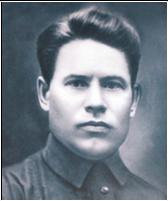
But clearing a fellow’s name is a tough task when that name is the mother tongue’s very metonym for political persecution: the Soviet Union’s mind-bending late-1930s witch hunt for internal enemies, known as the Yezhovshchina.

From late 1936, when he eliminated his predecessor Genrikh Yagoda (later executed, of course), until his own fall from power in at the end of 1938, Yezhov presided over the apex of Stalinist terror, averaging hundreds of political killings daily — perhaps north of 600,000 for the two-year period, plus a like number disappeared into the Gulag’s freezers. (Just browse this here site’s ‘1937’ tag for a taste.)

Departments and regions received quotas for executions as if they were tractor factories. Security officials well understood that their own heads would be next on the block for any perceived shortcoming; Yezhov had thousands of them arrested, too. (pdf)**

We are launching a major attack on the Enemy; let there be no resentment if we bump someone with an elbow. Better that ten innocent people should suffer than one spy get away. When you chop wood, chips fly.

-Yezhov

The “Bloody Dwarf” — surely there is some of Yezhov in the Master and Margarita character Azazello, the Satan/Stalin figure’s murderous and diminutive attendant — rode this tiger unto his own destruction.


Stalin and other Soviet VIPs with (front right) Nikolai Yezhov.

The same photo ‘updated’ after Yezhov’s fall. (For a similarly chilling photographic disappearance, see Vladimir Clementis.)

As Yezhov had once displaced and killed his mentor Yagoda, so Yezhov’s own nominal underling Beria would displace Yezhov.

Power in the NKVD shifted towards Beria over the course of 1938 until Yezhov’s own resignation that November. The former boss was quietly arrested the next April and barely troubled his skilled torturers before copping to the usual litany of official self-denunciations: corruption, economic sabotage and “wrecking”, treasonable collaboration with the Germans, plus a bisexual personal life. (That last one was true.)

Bound for historical infamy, Yezhov salvaged a shred of dignity in the last, when he was “tried” a few hours before death and renounced those confessions — albeit from the twisted standpoint of a man still unquestioningly committed to the man and the system that had destroyed him.

It is better to die, but to leave this earth as an honorable man and to tell nothing but the truth at the trial. At the preliminary investigation I said that I was not a spy, that I was not a terrorist, but they didn’t believe me and applied to me the strongest beating. During the 25 years of my party work I have fought honorably against enemies and have exterminated them. I have committed crimes for which I might well be executed … But those crimes which are imputed to me by the indictment in my case I did not commit …

My fate is obvious. My life, naturally, will not be spared since I myself have contributed to this at my preliminary investigation. I ask only one thing: shoot me quietly, without tortures …Tell Stalin that I shall die with his name on my lips.

And indeed, Yezhov knew from plenty of personal experience how this script ended. It was called the Yezhovshchina for a reason.

The judges pretended to deliberate for half an hour. Ezhov fainted at the verdict, then scrawled a petition for mecy; it was read out over the telephone to the Kremlin and rejected. Ezhov was taken in the dead of night to a slaughterhouse he himself had built near the Lubianka. Dragged screaming to a special room with a sloping cement floor and a log-lined wall, he was shot by the NKVD’s chief executioner, Vasili Blokhin. Beria gave Stalin a list of 346 of Ezhov’s associates to be shot. Sixty of them were NKVD officers, another fifty were relatives and sexual partners. (From Stalin and His Hangmen: The Tyrant and Those Who Killed for Him

* Natalia Khayutina is actually Yezhov’s adoptive daughter. Her birth parents were killed … in the Yezhovschina.

** “I purged 14,000 chekists,” Yezhov later said. “But my guilt lies in the fact that I did not purge enough of them.”

On this day..

1937: Martemyan Ryutin, for his affair

On this date in 1937, Martemyan Ryutin was condemned to death and immediately executed in Stalinist USSR.

Ryutin (English Wikipedia entry | Russian | another Russian bio) was a revolutionary from the Far East who by the late 1920s was in the Bolsheviks’ heretical right wing; his affiliation with Bukharin and Rykov got him temporarily booted out of the Communist party in 1930.

Not content to keep his head safely down as Stalin’s star ascended, Ryutin typed out an anti-Stalin pamphlet and the 200-page “Ryutin Platform” denouncing Josef Djugashvili as “the gravedigger of the Revolution” and urging that he be removed — even by force.*

Weeks after Ryutin began circulating this incendiary samizdat the secret police busted him.

Though open discussion of the so-called Ryutin Affair was nonexistent in the Soviet Union until the Gorbachev era, it was a matter of dire importance for the Politburo in 1932; indeed, fleeting as it was, it’s one of the few organized elite attempts to thwart Stalin discernible during the 1930s. Stalin wanted Ryutin executed, but he was outvoted; this is a small milepost on the way to the Yezhovschina indicating that Stalin’s power still had its limits … and Bolsheviks still recoiled at the prospect of killing other party members.** These constraints were not very long for the scene.

Even so, Ryutin got a 10-year prison sentence and anyone else who had read the Ryutin platform without informing on it to the Party was in seriously hot water. Twenty-four were expelled from the party in October 1932 for this reason, including once-proud and soon-doomed Old Bolsheviks Zinoviev and Kamenev.

Ryutin, for his part, had only a few years to wait before the deteriorating political climate dispensed with those taboos about internecine bloodletting. The Supreme Court signed off on his execution this day with just a few minutes’ hearing, and it was immediately carried out.

Ryutin’s two sons were also executed in 1937, and his wife died in a labor camp. Only his daughter Lyubov survived the Ryutin Affair — which convictions were posthumously reversed in 1988.

* Bukharin’s widow later wrote that Stalin’s agents later added the most inflammatory material — like that violent overthrow stuff.

** Had Stalin had his way in 1932, Ryutin would have had the distinction of being the first Central Committee member to be executed, according to Suzi Weissman.

On this day..

1543: Andrei Shuisky, gone to the dogs

On December 29, 1543, Ivan the Terrible arrived — with the summary execution of hated boyar Andrei Shuisky (Shuysky).

Call it Ivan’s rite of passage.

The 13-year-old Ivan IV had technically “ruled” Russia since toddlerhood, when his father died suddenly in the prime of life.

But in reality, the “ruler” was not the master of his domain.

The powerful boyar nobles ran roughshod during his minority, scrapping for power, poisoning off his mother,* and behind the Kremlin’s closed doors overtly treating the kiddo’s regal person like a redheaded stepchild.

“What evil did I suffer at [the boyars’] hands!” Ivan later remembered of these years in his hostile correspondence with the exiled noble Kurbsky.

we and our brother … remained as orphans, [having lost] our parents and receiving no human care from any quarter; and hoping only for the mercy of God … our subjects had achieved their desire, namely, to have a kingdom without a ruler, then did they not deem us, their sovereigns, worthy of any loving care, but themselves ran after wealth and glory … they began to feed us as though we were foreigners or the most wretched menials. What sufferings did I endure through [lack of] clothing and through hunger! For in all things my will was not my own; everything was contrary to my will and unbefitting my tender years. (Source)

Ivan’s indomitable personality and mercilessness, later the stuff of legend, make their first appearance in these formative years. Biding his time, nurturing his hatred, he survived his humiliations and designed a show-stopping vengenace. “Then,” remembers Ivan, “did we take it upon ourselves to put our kingdom in order.”

In the span of a single feast on this date in 1543 the young prince elevated himself from abused orphan to feared sovereign when he unexpectedly accused the attending boyars of mismanagement and had the greatest man among them — Andrei, of the mighty Shuisky family, the de facto head of state** — arrested and brutally put to death.

(The most colorful versions of this have it that Shuisky was thrown to the dogs to be devoured; I’m inclined to suspect this is embroidery upon the chronicler’s report that it was mean little Ivan’s kennel-keepers who were the men tasked with arresting and beating to death the nobleman.)

Sergei Eisenstein dramatized the terrible tsar’s backstory of violently overturning his childhood abuse in part two of Ivan the Terrible. (Masterful review.)

With his terrible blow, Ivan — still only an (unusually warped) adolescent after all this time — freed his hands and truly began the strange and cruel reign that would earn him the awestruck sobriquet Grozny, “terrible”. He got the ball rolling by purging a couple dozen other Shuisky loyalists.

While Ivan Grozny had his way in his reign’s political conflicts with Russia’s nobility, the violent monarch also shockingly killed his own son during a fit of rage — effectively destroying his own lineage. In the Time of Troubles invited by the resulting power vacuum, Andrei Shuisky’s grandson briefly claimed the throne as Tsar Vasily IV.

Though this power grab didn’t work out any better than had his grandfather’s, Vasily was the last [legitimate] product of the Rurik dynasty† dignified as Tsar of Russia, before the Romanovs were elevated to that station.

* Allegedly. Ivan certainly thought so.

** Andrei’s brother Ivan, equally loathesome to the tsar, had passed on the Big Man in Russia mantle to Andrei when he died a couple of years before.

† The Shuiskies were merely a junior branch, but they were a branch.

On this day..