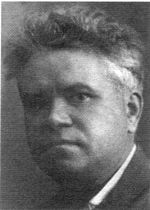
1648: The leaders of the Salt Riot

On this date in 1648, the ringleaders of a short-lived rebellion over salt taxes were executed in Moscow.

Salt saker image (cc) Greg Bishop

The Salt Riot is exactly what you’d think from its name, right down to being over in a matter of weeks.

Common folk irked at a new salt tax* that made the commodity dramatically more expensive besieged tsar Alexei I at the beginning of June, soon joined by opportunistic Streltsy who hadn’t been paid in a while.

The specific target of their rage was the boyar Boris Morozov, the elder brother-in-law of the teenage monarch, and the true power behind the throne. He accordingly played the traditional role of bad cop to the tsar’s presumptive good cop.

Of course, both guys were really on the same team.

A few days of mayhem, a few boyars’ heads on pikes later, the Streltsy had been bought off and the rioters divided and quashed. Alexei avoided handing over Morozov to the vengeance of the mob, and “exiled” him to a monastery. He would return from “exile” in a few months, once everyone had chilled out and the rising could be taken with a grain of salt.


Salt Riot in Kolomenskoe, by Nikolay Nekrasov.

This passing spasm in the Russian polity left a long-lived and troublesome legacy: one of the demands of the rioters was the convocation of the Zemsky Sobor to hammer out a new legal code.

This happened to be a need for the Russian state anyway, since its rulers were governing by the haphazard issuance of countless ukases nobody could keep straight. So, 1649 saw the promulgation of the Sobornoye Ulozheniye, helpfully rationalizing the lawmaking process.

Win, and win! Except that this legislative milestone also codified serfdom in its most heavy-handed form, formally binding most Russian peasants to their estate without freedom of movement, and making this unhappy condition hereditary. The legal code, and the institution of serfdom subsisted until the 19th century.

* According to The Cambridge History of Russia, the salt tax itself had actually been abolished at the end of 1647, but “other direct taxes were tripled to compensate for the loss of revenue.”

On this day..

1937: Jan Sten, Stalin’s tutor

Anyone who has ever had an unedifying experience of pedagogy ought to be able to sympathize with Jan Sten, the Marxist philosopher once hired to tune up Joseph Stalin’s intellectual credentials and who on this date in 1937 was purged by his former pupil.

This account of Sten’s unfortunate (though hardly atypical) fate comes from the archive of Sten’s personal friend, one Yevgeny Frolov and is printed in Let History Judge: The Origins and Consequences of Stalinism.

Hardly anyone knew Stalin better than Sten. Stalin, as we know, received no systematic education. Without success Stalin struggled to understand philosophical questions. And then, in 1925, he called in Jan Sten, one of the leading Marxist philosophers of that time, to direct his study of Hegelian dialectics. Sten drew up a program of study for Stalin and conscientiously, twice a week, dinned Hegelian wisdom into his illustrious pupil. (In those years dialectics was studied by a system that Pokrovsky had worked out at the Institute of Red Professors, a parallel study of Marx’s Capital and Hegel’s Phenomenology of Mind.) Often Sten told me in confidence about these lessons, about the difficulties he as the teacher, was having because of his student’s inability to master Hegelian dialectics. Jan often dropped in to see me after a lesson with Stalin, in a depressed and gloomy state, and despite his naturally cheerful disposition, he found it difficult to regain his equilibrium. Sten was not only a leading philosopher but also a political activist, an outstanding member of the Leninist cohort of old Bolsheviks. The meetings with Stalin, the conversations with him on philosophical matters, during which Jan would always bring up contemporary political problems, opened his eyes more and more to Stalin’s true nature, his striving for one-man rule, his craft schemes and methods for putting them into effect … As early as 1928, in a small circle of his personal friends, Sten said: “Koba will do things that will put the trials of Dreyfus and of Beilis in the shade.”This was his answer to his comrades’ request for a prognosis of Stalin’s leadership over ten years’ time. Thus, Sten was not wrong either in his characterization of Stalin’s rule or in the time schedule for the realization of his bloody schemes.


Komar and Melamid‘s ironic 1981-1982 Stalin and the Muses travesties sycophantic Socialist Realism exaltations of Uncle Joe, like these. (More by K&M)

Sten’s lessons with Stalin ended in 1928. Several years later he was expelled from the party for a year and exiled to Akmolinsk. In 1937 he was seized on the direct order of Stalin, who declared him one of the chiefs of the Menshevizing idealists.* At the time the printer had just finished a volume of the Great Soviet Encyclopedia that contained a major article by Sten, “Dialectical Materialism.” The ordinary solution — and such problems were ordinary in those years — was to destroy the entire printing. But in this case the editors of the encyclopedia found a cheaper solution. Only one page of the whole printing was changed, the one with the signature of Jan Sten. “Dialectical Materialism” appeared over the name of M.B. Mitin, the future academician and editor in chief of Problems of Philosophy, thus adding to his list the one publication that is really interesting. On June 19, 1937, Sten was put to death in Lefortovo prison.

Seen in that light, a hostile review on RateMyProfessors.com doesn’t sound so bad at all.

* Menshevizing idealism — here’s an official Soviet definition from the 1970’s — was among Stalin-era “polemical by-words for philosophical heresy.” (Robert Tucker, “The Rise of Stalin’s Personality Cult,” The American Historical Review, Apr. 1979)

On this day..

1951: Ospan Batyr, Kazakh freedom fighter

On this date in 1951, Kazakh national hero Ospan Batyr was executed in Urumqi.

Ospan — the second name is an honorific, not a family name — hailed from an ethnic Kazakh region in China’s eastern Xinjian region, noted today for its still-robust Uighur separatist movement.

Executed Today does not envy any ethnic group attempting to sort out its national aspirations on the frontiers of great powers, and this was the dangerous matter to which our day’s principal applied himself.

The powers in question here are the Soviet Union and China; their degree of sway over Xinjiang (or “East Turkestan”) shapes the parameters of the struggle.

During the early 1940’s, the Soviets’ dire wartime position gave them less weight to throw around; accordingly, the formerly Soviet-allied local warlord Sheng Shicai — an ethnic cleanser of Kazakhs from way back — made nice with the Koumintang.

As Moscow gained the upper hand over Berlin, however, it had leave to tend its eastern ambitions as well.

Since Sheng’s attempt to sell out to Stalin failed, he left Xinjiang with 50 trucks full of loot, and retired to Taiwan to write this 1958 volume on his erstwhile demesne.

When Sheng got bounced from his post trying to re-defect to the victorious Soviets, Ospan Batyr (alternatively, Osman or Uthman Batur) led Kazakh forces in a multi-ethnic Muslim rebellion that established a short-lived East Turkestan Republic, allied with the Soviet Union.

But what the political expediency of great powers giveth, it also taketh away.

The postwar partition of the globe left Xinjiang in China’s sphere of influence, drawing down the East Turkestan Republic’s Soviet support. When that state-like entity became involved in a border conflict with Soviet-backed Mongolia, Osman and the Kazakhs lined up with the Koumintang — not Russia.

As a matter of straight realpolitik, this was an inauspicious moment to get with Chiang Kai-shek since he was on the verge of finally losing China’s long civil war. But it’s a move that would be subsequently vindicated by the way Kazakhs voted with their feet under Mao.

Ospan Batyr had to settle for the judgment of history when the People’s Liberation Army absorbed Xinjiang, and in 1950 finally corralled the remnants of his Kazakh resistance. He repelled demands under torture that he sign on with the Reds and make an appeal to his people in their name: “I can give a life. My nation will continue the struggle.”


Ospan Batyr awaits execution.

Most of the information readily available online about this Kazakh martyr is not in English, and a good deal of it tends to the hagiographical — like this Turkish-language page, lavishly illustrated.

On this day..

1938: Yakov Peters, Siege of Sidney Street survivor

On this date in 1938, a Soviet purge claimed (among others*) Yakov (Jacob) Peters, former Cheka executioner and once the subject of a headline-grabbing trial in England.

Peters was a trusted (and ruthless) operator in the Soviet internal police from the start of the Revolution: he helped interrogate Lenin‘s would-be assassin Fanya Kaplan in 1918.

And he was the guy Trotsky had on speed-dial when Cheka founder Felix Dzerzhinsky was arrested by the Left SRs during their abortive 1918 uprising against their erstwhile revolutionary allies, the Bolsheviks.**

Dzerzhinsky was disarmed and locked in a room. his assistant, M.I. Latsis, was captured in the Cheka Lubianka headquarters. “No point in taking him anywhere, put this scum against the wall!” shouted a sailor, but one of the leaders, Alexandrovich, intervened, saying, “There is no need to kill, comrades; arrest him, but do not kill.” Dzerzhinsky’s assistant Yakov Peters was urgently summoned by Trotsky, who ordered him to crush the uprising by attacking the Left Eser headquarters. Alexandrovich was caught at a railway station, and Latsis, whom he had saved from execution, personally shot him. Mass executions in Cheka prisons followed. (Source)

Like a lot of old Bolsheviks, Peters’s early service to the cause didn’t age too well. He ran afoul of some bureaucratic intrigue or point of party discipline or other and caught a bullet in 1938. (Khrushchev rehabilitated him.)

For anyone in England watching the fate of this distant apparatchik, the proximity to bloodbaths would have had a familiar hue.

Peters was one of a gang of Latvian revolutionaries who came to cinematic public attention in London when, in the course of being rounded up for a December 1910 murder, they engaged the police in a stupendous East End firefight on January 2, 1911 — the Siege of Sidney Street. (It’s also known as the Battle of Stepney.)

Armed like soldiery, the Latvians easily outgunned the bobbies who had them hemmed into a cul-de-sac, and they fired on John Law with ruthless effect. This necessitated a call to the Scots Guard — whose deployment was okayed by Home Secretary Winston Churchill, the latter captured on film that day awkwardly milling about the scene of the urban combat.


(Translated directly to the city’s cinemas as soon as that same evening, Churchill’s image came in for public catcalls owing to his support for a relatively open immigration policy for eastern Europeans.)

This incident was a landmark in crime, policing, media — recognizably modern in its trappings of nefarious immigrant terrorists, politicized state funerals for policemen, and of course, the live-on-the-scenes camera work.

Since Britain was a ready hand with the noose at this time, one might think an execution would have been just the denouement.

However, responsibility for the policememen slain in the affray had been officially assigned to a different gang member, George Gardstein — who was killed when the besieged house burned down — and there was little usable evidence against those who were finally put on trial for the gang’s various crimes. Most of the witnesses were dead, fled, or completely unreliable, so the surviving Latvians all walked.

(Since the identity of one of the first guys to start shooting when the police rang always remained murky, there are some theories — such as in this out-of-print book — that Peters himself had been one of the gunmen on-site, and/or that he could be identified with the absconded and never-captured gang leader “Peter the Painter”.)

Whatever the exact measure of blood on Yakov Peters’s hands from Sidney Street, there would be a lot more where it came from.

While Peters went off to his different fate in revolutionary Russia, the dramatic scene he left behind has naturally attracted continuing retrospective attention in England. The testimony of witnesses, who also recollect the shootout’s anti-immigrant fallout, is preserved in this BBC Witness radio program:

[audio:http://downloads.bbc.co.uk/podcasts/worldservice/witness/witness_20110127-0950a.mp3]

And, on this BBC Four television special:

* e.g., Russian Civil War officer Nikolay Gikalo and Romanian Jewish revolutionary Leon Lichtblau.

** And in favor of resuming Russia’s ruinous involvement in World War I!

On this day..

Unspecified year: Snowball’s animal fifth column

“Four days” after an unspecified “early spring” date in George Orwell’s classic allegory of Soviet communism, Animal Farm, a show trial and mass execution of animals purporting to work for the book’s Trotsky figure signals the titular farm’s unmistakable collapse into dystopia.

In the book, a revolution of animals displaces the farm’s human owner, Jones — the hated ruler of the ancien regime.

The farm’s early cooperative elan soon shatters, with a pig bearing the unsubtle name of Napoleon becoming the revolution’s autocrat, and fostering a paranoid security climate against phantasmal plots by his fellow swine and onetime comrade, the exiled Snowball.

Let’s watch.

Napoleon ordered all the animals to assemble in the yard. When they were all gathered together, Napoleon emerged from the farmhouse, wearing both his medals (for he had recently awarded himself “Animal Hero, First Class”, and “Animal Hero, Second Class”), with his nine huge dogs frisking round him and uttering growls that sent shivers down all the animals’ spines. They all cowered silently in their places, seeming to know in advance that some terrible thing was about to happen.

Napoleon stood sternly surveying his audience; then he uttered a high-pitched whimper. Immediately the dogs bounded forward, seized four of the pigs by the ear and dragged them, squealing with pain and terror, to Napoleon’s feet.0 …

The four pigs waited, trembling, with guilt written on every line of their countenances. Napoleon now called upon them to confess their crimes. … Without any further prompting they confessed that they had been secretly in touch with Snowball ever since his expulsion, that they had collaborated with him in destroying the windmill, and that they had entered into an agreement with him to hand over Animal Farm to Mr. Frederick. They added that Snowball had privately admitted to them that he had been Jones’s secret agent for years past. When they had finished their confession, the dogs promptly tore their throats out, and in a terrible voice Napoleon demanded whether any other animal had anything to confess.

The three hens who had been the ringleaders in the attempted rebellion over the eggs now came forward and stated that Snowball had appeared to them in a dream and incited them to disobey Napoleon’s orders. They, too, were slaughtered. Then a goose came forward and confessed to having secreted six ears of corn during the last year’s harvest and eaten them in the night. Then a sheep confessed to having urinated in the drinking pool — urged to do this, so she said, by Snowball — and two other sheep confessed to having murdered an old ram, an especially devoted follower of Napoleon, by chasing him round and round a bonfire when he was suffering from a cough. They were all slain on the spot. And so the tale of confessions and executions went on, until there was a pile of corpses lying before Napoleon’s feet and the air was heavy with the smell of blood, which had been unknown there since the expulsion of Jones.

When it was all over, the remaining animals, except for the pigs and dogs, crept away in a body. They were shaken and miserable. They did not know which was more shocking — the treachery of the animals who had leagued themselves with Snowball, or the cruel retribution they had just witnessed. In the old days there had often been scenes of bloodshed equally terrible, but it seemed to all of them that it was far worse now that it was happening among themselves. Since Jones had left the farm, until today, no animal had killed another animal.

Animal Farm was published in 1945. In this 1954 British animated feature, the downer of an ending — with the corrupt pig rulers becoming literally indistinguishable from people — was dumped in favor of an ending where the animals revolt again.

On this day..

1942: Not Hersh Smolar, saved by Genesis

(Thanks to Meaghan Good of the Charley Project for the guest post. -ed.)

On this day in 1942, the Nazis issued an ultimatum to the Judenrat of the Minsk Ghetto in Belarus: turn over Hersh Smolar for torture and execution by noon, or they would all face execution themselves.

Smolar, a dedicated Communist who was a writer and editor in civilian life, had been a problem for the Germans for quite some time. He was a leader in the resistance of the Minsk Ghetto, and that resistance was a force to be reckoned with. Smolar and others like him formed an underground organization that printed leaflets about Soviet successes in the war, occasionally hid non-Jewish Communists and escaped Russian prisoners of war within the ghetto (the infectious disease ward of the hospital was a great hiding place: the Germans never went there), and above all tried to save the lives of as many Jews as possible.

The Minsk Ghetto underground formed links with underground resistance organizations on the outside and they worked together. Unlike the rest of Eastern Europe, the general population of Belarus was as a whole sympathetic and helpful to the Jews. The result was that Jews were able to escape the ghetto and join partisan groups in the forest by the thousands, surviving and taking out Nazis at the same time.

The Minsk Ghetto leaked like a sieve. By the time it was liquidated, 10,000 of its residents had joined partisan groups in the forest.

Smolar, of course, had tried to keep his activities a secret from the Nazis, but he couldn’t avoid their attention forever. Unfortunately the Minsk Ghetto Underground wasn’t very good at keeping itself a secret and twice it was decimated by mass arrests.

By the spring of 1942, Smolar was a hunted man, and in hiding. On April 1 he was in the hospital’s infectious disease ward, disguised as a typhus patient, meaning his face could be covered. (Typhus patients suffer extreme sensitivity to light.) The Judenrat paid him a visit and told him about the Nazis’ ultimatum.

Some of the Judenrat members were prepared to turn Smolar in, so only one person would have to die. Of course, the ideal solution would be where no one would die. They turned to the Tanakh for guidance, specifically the story of Joseph. When Joseph’s brothers sold him into slavery in Egypt and told their father he had died, they dipped his coat in the blood of a kid and presented this as proof of his death.

Displaying the sincerest and brassiest form of flattery, one of the Judenrat members took a blank passport, filled it out with Smolar’s photograph and details, smeared it with blood from a recent Nazi victim, and took it to the Gestapo officers. He explained that they had apparently gotten Smolar in a random shooting, as the passport had just been found on a mutilated body at the cemetery.

And the Germans actually fell for this. April Fools!

Barbara Epstein’s excellent book The Minsk Ghetto 1941-1943: Jewish Resistance and Soviet Internationalism records the rest of the story: Smolar remained in hiding in the hospital for another four months. Eventually he left the infectious disease ward and moved to a specially constructed hiding place in the attic chimney, which was only large enough to stand in.

Presumably he was very happy in August 1942, when the time came for him to leave the ghetto and join a partisan group in the forest. He survived the war … as did about 4,500 other Jewish partisans from the Minsk Ghetto.

Smolar wrote a memoir about his experiences and the Minsk Ghetto Underground in general, titled The Minsk Ghetto: Soviet-Jewish Partisans Against the Nazis. He died in Israel in 1993, age 88.

On this day..

1906: Pyotr Schmidt, Sevastopol uprising leader

On this date* in 1906, tsarist Russia executed the naval officer who had made bold to style himself Commander of the rebellious Black Sea Fleet.

During the unsuccessful 1905 Russian Revolution, our firebrand Pyotr Schmidt was lieutenant commander of a destroyer stationed at the Black Sea port of Sebastopol/Sevastopol.

Schmidt made an impassioned revolutionary speech that got him arrested, and was in turn freed by protesting workers and soldiers.

So they knew just the guy to call when a collection of Black Sea Fleet vessels finally out and mutinied. And Pyotr Schmidt knew how to talk the talk.

The glorious Black Sea Fleet, sacredly devoted to the people, demands Your Majesty to immediately call a meeting of the Constituent Assembly, and no longer obeys orders of Your ministers.

Commander of the Fleet P. Schmidt.

Nicholas II decided he was better advised to just order the mutinying ships stormed, and Schmidt was taken prisoner.

The most famous ship under Schmidt’s “command” was, of course, the battleship Potemkin, which trumps the cruiser Aurora as the revolutionariest hulk of floating steel in the Russian fleet by virtue of Sergei Eisenstein‘s silent cinematic celebration of the Sevastopol mutiny, The Battleship Potemkin.

With this sort of insurrectionary credential, Schmidt was a popular choice for Soviet-era naming and renaming — streets, bridges, other naval vessels.

(And come this, er, sea change in fortunes, the commander of the firing squad that did Pyotr Schmidt to death was himself arrested, and shot in 1923 by the Cheka.)

Schmidt thereby contributed his name to an entirely different innovation in the Russian language: in one Ostap Bender novel, there’s a “Children of Lieutenant Schmidt” network of con artists each claiming (in a different part of that vast country) to be the martyred mutineer’s progeny and mooching the material comforts due such an impressive lineage.

So striking and popular was this portrayal that “children (or sons) of Lt. Schmidt” remains a going Russian idiom for anyone running a similar scam.

* March 19 was the Gregorian date; it was March 6 by the obsolete Julian calendar still hanging on in Russia at this time.

On this day..

1570: Hegumen Kornily of the Pskov-Pechery Monastery

Though the primary sources are shaky, at least one chronicle avers that it was on this date in 1570 that the Russian tsar Ivan the Terrible had Hegumen Kornily [Cornelius] of the Pskov-Pechery Monastery put to death.

An icon of the sainted Cornelius marks the spot of his martyrdom at his Pskovo-Pechery monastery. From (cc) image by Usama.

This was the coda to Ivan’s bloody sack of Novgorod, part of the violent state consolidation carried out in Ivan’s terrible police state.

Having left Novgorod prostrate, Ivan marched westwards towards the edge of Livonia (what is now the Russian-Estonian frontier) to put Pskov in its place.

If Ivan’s depredations here were less extensive than in Novgorod — and they were less extensive — it might be due in no small measure to this date’s victim.

Over a period of four decades, Kornily had overseen the golden age of his priory — agglomerating lands, riches, and brethren. He had also charted a somewhat independent, contra-Moscow political course, and apparently harbored anti-Ivan refugee Andrei Kurbsky.*

[Ivan] came [to Pskov] in great wrath, roaring like a lion, for he wished to torture innocent people and to spill much blood. But the Lord God, all-bountiful and all-merciful lover of mankind … took pity on the human race … when the Grand Duke came before Pskov, he halted near the town and rested at the monastery of St Nicholas. And … when the Grand Duke heard all the bells ringing, his heart was softened and he came to himself, and ordered all his soldiers to blunt their swords with stones and forbade them to commit murder in the town … he was met by the Abbot of the Pechery monastery, Kornily, with all the clergy … and they went into the cathedral church of the Holy Trinity and heard mass.**


Ivan the Terrible begs Kornily for admission to the monastery, by Klavdy Lebedev. (Detail view; click for the full canvas.)

This all sounds friendly enough.

What we may have in the passage foregoing is a conflation of legends about the monk, who is unambiguously attested a martyr to Ivan at the gates of the monastery even as he’s credited with sparing the city as a whole from the tsar’s full fury. (This particular execution — or murder — date is cited in this popular history of Ivan; “February” sometime is generally agreed.)

So maybe it was one of the tyrant’s famous piques of rage — or maybe Kornily didn’t really charm him into altering his plans at all.

Although the particulars are half-obscured in legend, one can still visit at this gorgeous monastery the “Path of Blood”: the route from the gates to the cathedral along which the remorseful tsar allegedly carried his victim’s body. Ivan also made several gifts to the monastery.†

Kornily himself is still venerated on these sacred grounds, thanks not only to his holy martyrdom but to his worldly machinations. A decade after the abbott laid down his life, the walls he had raised around the monastery proved fortification enough to repel the Polish king Stephen Bathory‡ — helping cement Kornily’s reputation as the celestial defender of Pskov.

* See the title of the next footnote? Vassian Muromtsev was a protege of Kornily’s in the Pskov-Pechery monastery; Kurbsky actually had a running correspondence with Muromtsev.

Muromtsev “was put to death together with [Kornily],” reports Kurbsky, although his authority for this claim is doubtful. “They say that they were both crushed together on the same day by some kind of instrument of torture; and their holy martyred corpses were buried together.”

** Quoted in Nikolai Andreyev, “Kurbsky’s Letters to Vas’yan Muromtsev,” The Slavonic and East European Review, June 1955.

† Andreyev, “The Pskov-Pechery Monastery in the 16th Century,” The Slavonic and East European Review, June 1954.

‡ We’ve met Stephen Bathory’s infamous niece in these pages.

On this day..

1892: Two Georgian bandits, witnessed by Stalin

On this date in 1892, two outlaws were hanged (and a third spared at the last moment) in Gori, Georgia — part of the tsarist Russian Empire.

Josef Djughashvili, the future Stalin, was a teenager when he saw an 1892 public hanging in Gori.

The most noteworthy executioner present on this occasion was not on the scaffold, but in the audience: a 14-year-old student at an orthodox church school named Joseph Djugashvili. You know him by his later, steely revolutionist alias: Stalin.

This precocious, ferocious youth attended the public hanging with school mates to whom he was already a natural leader.

He and his friends sympathized with the doomed Caucasians, so insouciant at being strung up by the tsarist oppressor: conversing after the gruesome spectacle, Djugashvili would maintain that the men had not been consigned to hell, for they had suffered enough in the present.

But this boy was not made for theologizing; though he proceeded to seminary school in Tiflis — the best education prospect for an impoverished family — he disappeared thence into the life of professional revolutionary outlawry.

The recent (and well-received) biography Young Stalin recaptures this scene from Joseph Djugashvili’s youth.

The condemned men had stolen a cow and, in the ensuing pursuit, had killed a policeman. But the boys learned that the criminals were actually just three “peasants who had been so oppressed by landowners that they escaped into the forest,” petty Robin Hoods, attacking only local squires and helping other peasants …

The boys were fascinated. “Soso Djugashvili, me and four other schoolboys climbed a tree and watched the terrifying show from there,” remembers one of the group, Grigory Razmadze … Another spectator whom Stalin would later befriend and promote was Maxim Gorky, then a journalist, soon to be Russia’s most celebrated writer.

The Gorelis sympathized with these brave Caucasian bandits … The crowd became menacing; double ranks of Russian soldiers encircled the square. The drums began to beat. “The authorities in uniforms lingered around the scaffold,” wrote Gorky in his article. “Their dreary and severe faces looked strange and hostile.” They had reason to be nervous.

The three bandits in leg irons were marched onto the scaffold. One was separated from the others — he had been reprieved. The priest offered the two condemned men his blessings; one accepted and one refused. Both asked for a smoke and a sip of water. Sandro Khubuluri was silent, but the handsome and strong “ringleader,” Tato Jioshvili, smiled and joked valiantly before the admiring crowd. He leaned on the railings of the gallows and, noticed Gorky, “chatted to people who had come to see hi die.” The crowd threw stones at the hangman, who was masked and clad completely in scarlet. He placed the condemned on stools and tightened the nooses around their necks. Sandro just twirled his moustache and readjusted the noose. The time had come.

The hangman kicked away the stools. As so often with Tsarist repression, it was inept: Sandro’s rope broke. The crowd gasped. The scarlet hangman replaced him on the stool, placed a new noose round his neck and hanged him again. Tato also took a while to die.


Even Joseph Stalin was a child once.

One would have to really like the difficult-to-prove notion that executions have a brutalizing effect encouraging violence in others in order to see in this hanging the germ of the incomprehensible suffering young master Djugashvili would eventually unleash.

It’s not like this was Stalin’s only childhood exposure to brutality, and not too many of those buddies who watched this date’s hanging grew up to kill 20 million people.

Gori was one of the last towns to practise the ‘picturesque and savage custom’ of free-for-all town brawls with special rules but no-holds-barred violence. The boozing, praying and fighting were all interconnected, with drunken priests acting as referees… [At festivals during Stalin’s youth] the males in each family, from children upwards, also paraded, drinking wine and singing until night fell, when the real fun began. This ‘assault of free boxing’—the sport of krivi—was a ‘mass duel with rules’; boys of three wrestled other three-year-olds, then children fought together, then teenagers and finally the men threw themselves into ‘an incredible battle,’ by which time the town was completely out of control, a state that lasted into the following day—even at school, where classes fought classes.


This is Russia, not Georgia: festive Maslenitsa fisticuffs.

The small Georgian town that spawned the first name in Soviet terror actually maintained a public statue to its most famous son until 2010 — when it was finally removed in an apparent anti-Russian gesture in the wake of the South Ossetia war.

On this day..

1940: Robert Indrikovich Eikhe, “believing in the truth of Party policy as I have believed in it during my whole life”

On this date in 1940, the former Soviet People’s Commissar for Agriculture was shot for treason.

The 1930’s were a scary time in the USSR, but the agricultural posts — forced collectivizations, production quotas, and screw-ups that starved thousands — were particularly fraught.

R.I. Eikhe inherited the job from a fellow purged in the trial of the 21. And, unsurprisingly, he went the same way.

It was another former agricultural commissar (of Ukraine), Nikita Khrushchev, who managed to succeed Stalin.

When, in 1956, Khrushchev made his “secret speech” denouncing the savagery of his predecessor, the fate of his old comrade Eikhe was lamented in detail.

Excerpted below is the relevant portion of Khrushchev’s report, as cited here.


The great modesty of the genius of the revolution, Vladimir Ilyich Lenin, is known. Lenin had always stressed the role of the people as the creator of history, the directing and organizational role of the party as a living and creative organism, and also the role of the central committee.

Lenin never imposed by force his views upon his coworkers. He tried to convince; he patiently explained his opinions to others. Lenin always diligently observed that the norms of party life were realized, that the party statute was enforced, that the party congresses and the plenary sessions of the central committee took place at the proper intervals.

In addition to the great accomplishments of V. I. Lenin for the victory of the working class and of the working peasants, for the victory of our party and for the application of the ideas of scientific communism to life, his acute mind expressed itself also in this that lie detected in Stalin in time those negative characteristics which resulted later in grave consequences. Fearing the future fate of the party and of the Soviet nation, V.I. Lenin made a completely correct characterization of Stalin, pointing out that it was necessary to consider the question of transferring Stalin from the position of Secretary General because of the fact that Stalin is excessively rude, that he does not have a proper attitude toward his comrades, that lie is capricious, and abuses his power. . . .

Vladimir Ilyich said:

“Stalin is excessively rude, and this defect, which can be freely tolerated in our midst and in contacts among us Communists, becomes a defect which cannot be tolerated in one holding the position of the Secretary General. Because of this, I propose that the comrades consider the method by which Stalin would be removed from this position and by which another man would be selected for it, a man, who above all , would differ from Stalin in only one quality, namely, greater tolerance, greater loyalty, greater kindness, and more considerate attitude toward the comrades, a less capricious temper, etc.”

As later events have proven, Lenin’s anxiety was justified …

Stalin originated the concept enemy of the people. This term automatically rendered it unnecessary that the ideological errors of a man or men engaged in a controversy be proven; this term made possible the usage of the most cruel repression, violating all norms of revolutionary legality, against anyone who in any way disagreed with Stalin, against those who were only suspected of hostile intent, against those who had bad reputations. This concept, enemy of the people, actually eliminated the possibility of any kind of ideological fight or the making of one’s views known on this or that issue, even those of a practical character. In the main, and in actuality, the only proof of guilt used, against all norms of current legal science, was the confession of the accused himself, and, as subsequent probing proved, confessions were acquired through physical pressures against the accused. . . .

Lenin used severe methods only in the most necessary cases, when the exploiting classes were still in existence and were vigorously opposing the revolution, when the struggle for survival was decidedly assuming the sharpest forms, even including a civil war.

Stalin, on the other hand, used extreme methods and mass repressions at a time when the revolution was already victorious, when the Soviet state was strengthened, when the exploiting classes were already liquidated, and Socialist relations were rooted solidly in all phases of national economy, when our party was politically consolidated and had strengthened itself both numerically and ideologically. It is clear that here Stalin showed in a whole series of cases his intolerance, his brutality, and his abuse of power.

Stalin’s willfulness vis-a-vis the party and its central committee became fully evident after the 17th party congress, which took place in 1934. . . .

It was determined that of the 139 members and candidates of the party’s Central Committee who were elected at the 17th congress, 98 persons, that is, 70 percent, were arrested and shot (mostly in 1937-38). [Indignation in the hall.] . . .

The majority of the Central Committee members and candidates elected at the 17th congress and arrested in 1937-38 were expelled from the party illegally through the brutal abuse of the party statute, because the question of their expulsion was never studied at the Central Committee plenum.

Now when the cases of some of these so-called spies and saboteurs were examined it was found that all their cases were fabricated. Confessions of guilt of many- arrested and charged with enemy activity were gained with the help of cruel and inhuman tortures. . . .

An example of vile provocation of odious falsification and of criminal violation of revolutionary legality is the case of the former candidate for the central committee political bureau, one of the most eminent workers of the party and of the Soviet Government, Comrade Eikhe, who was a party member since 1905. [Commotion in the hall.]

Comrade Eikhe was arrested on April 29, 1938, on the basis of slanderous materials, without the sanction of the prosecutor of the USSR, which was finally received 15 months after the arrest.

Investigation of Eikhe’s case was made in a manner which most brutally violated Soviet legality and was accompanied by willfulness and falsification.

Eikhe was forced under torture to sign ahead of time a protocol of his confession prepared by the investigative judges, in which he and several other eminent party workers were accused of anti-Soviet activity.

On October 1, 1939, Eikhe sent his declaration to Stalin in which be categorically denied his guilt and asked for an examination of his case. In the declaration he wrote:

“There is no more bitter misery than to sit In the jail of a government for which I have always fought.”

On February 2, 1940, Eikhe was brought before the court. Here he did not confess any guilt and said as follows:

“In all the so-called confessions of mine there is not one letter written by me with the exception of my signatures under the protocols which were forced from me. I have made my confession under pressure from the investigative judge who from the time of my arrest tormented me. After that I began to write all this nonsense. The most important thing for me is to tell the court, the party and Stalin that I am not guilty. I have never been guilty of any conspiracy. I will die believing in the truth of party policy as I have believed in it during my whole life.”

On February 4 Eikhe was shot. [Indignation in the hall.] It has been definitely established now that Eikhe’s case was fabricated; he has been posthumously rehabilitated.

On this day..