On August 9, 1786, in the state of Franklin (in what is now eastern Tennessee), a black slave named Tom was hanged for murder.
Tom had poisoned John Fuller Lain, a white man. The circumstances of the murder and Tom’s motive for it have been lost to history; all we know is that Lain was not his owner. Tom’s owner, William Evans, actually hired counsel to defend him, but the court refused to hear it.
Tom was imprisoned in July of that year, tried and convicted on August 8 and put to death the next day.
Aptly for a man of Franklin, Evans was concerned about the Benjamins. He filed a lawsuit against the sheriff for wrongful destruction of his personal property, but this was dismissed. Doggedly, on May 2, 1799 — nearly thirteen years after Tom’s death — Evans petitioned the General Assembly asking to be reimbursed for the value of the dead man, whom he described as “faithful, industrious, healthy slave … in the prime of life.”
Edwards reckoned Tom was worth £100. A hundred people signed the petition, but the General Assembly — by now the Tennessee General Assembly, since “Franklin” had failed as an independent entity — refused to cough up the funds.
On this date in 1993, Joseph Paul Jernigan died by lethal injection in Texas. Yet he lives on still.
A career burglar, Jernigan was surprised mid-robbery in 1981 by 75-year-old Edward Hale: the thief promptly shot the homeowner dead, then finished his looting. His life as a free man would be over within days.
As a criminal you wouldn’t much notice Joseph Paul Jernigan — unless it was your house he was burgling, of course — and you wouldn’t exactly call his smash-and-grab act state-of-the-art. But little over a year after his death, Jernigan was making headlines for a groundbreaking scientific project.
Jernigan donated his body to science, joining an ancient tradition of condemned men and women whose bodies are “cadaverized” for whatever medical material is required of their own day and age.
But instead of serving as a med school’s pincushion, “science” in Jernigan’s case turned out to be — Jernigan had no idea of it while he lived — the Visible Human Project.
This National Library of Medicine initiative built a data set of digital images depicting the complete anatomy of a normal adult man and woman: Jernigan’s cadaver was selected for the male lead.
So, after his execution, Jernigan’s entire body was “sliced” from head to foot into 1,871 one-millimeter slides. (The “slicing” process ground away the body completely; it did not literally slice it like salami.)
Joseph Jernigan’s thorax, including the heart. (From here.)
The project is still online, and has never yet been replicated/surpassed with the the advancing technologies of the intervening decades. It’s a weirdly beautiful, unsettling, and ethically questionable artifact — a Smugglerius of the digital age — but it’s also inescapably awe-striking.
So here: take a tour down Joseph Jernigan at the, er, cutting edge of anatomization.
Edison was a proponent of direct current (DC), where the electricity flows in one direction from source to receiver. Westinghouse, one the other hand, favored AC, alternating current, where the electrical current will reverse direction from time to time and electricity doesn’t flow from the source to the receiver so much as in between them.
In the late 1800s, as electrical systems were spreading all over America, Westinghouse’s company and Edison’s company were duking it out as to which system would prevail over the other. Westinghouse’s AC, being far more efficient, was usually the system of choice for providing electricity to houses, businesses and streetlights, which was where most of the profits lay. (DC was better for things like batteries.)
Desperate to hold onto eroding market share, Edison saw an opportunity to do Westinghouse dirty when New York State adopted the electric chair as their means of execution. Some notable botches had rendered hanging unpalatable, but industrial electrification was still such a newfangled concept that at the time the law was passed, the chair had yet to be built. Edison figured that a propaganda blitz to make sure the device used AC would help convince the public that the rival current was too deadly to be used in private homes and city streets.
In private experiments, Brown and his assistant, Arthur E. Kennelly, “attached electrodes to dozens of stray dogs and tried various combinations of volts and amperes before announcing that it took only 300 volts of alternating current to kill a dog, but 1,000 volts of direct current.”
Seriously?*
Satisfied that they were ready to go public, Brown scheduled a demonstration at Columbia on July 30, inviting electricians, scientists and the press to watch. Kennelly and Dr. Frederick Peterson, a member of the Medico-Legal Society of New York, assisted him.
Brown opened his demonstration by insisting that he had been drawn into the controversy not out of any self-interest but because of his concern that alternating current was too dangerous to be used on city streets. He denied charges that he was in the pay of any electric light company and had “no financial or commercial interest” in the results of his experiments. Of course, the fact that he was using Edison’s equipment and was assisted by Edison’s chief of research spoke of itself.
Brown then brought in the first experimental subject: a 76-pound Newfoundland dog in a metal cage. The dog had been muzzled and had electrodes attached to one foreleg and one hind leg.
Brown connected the dog to the DC generator that Edison had loaned him and starting with 300 volts gradually increased the voltage to 1,000 volts. As the voltage increased, the observers noted, the dog’s yelping increased but it remained alive.
Having proven the safety of DC current, Brown disconnected the suffering animal from the DC generator and connected it to the AC generator with the remark, “We shall make him feel better.” (No word on whether he was twirling his mustache as he said so.)
Brown turned the voltage to 330, and the dog collapsed and died instantly.
The viewers were impressed, but Brown wasn’t done yet and brought in another dog. He said he was going to connect this one to the AC generator first. This, he said, would prove that the animal didn’t die because the shocks from the DC generator had weakened it.
Before he could accomplish this, however, an agent from the American Society for the Prevention of Cruelty to Animals arrived and asked Brown to stop the experiment and spare the poor dog’s life. It took some convincing, but in the end Brown agreed to stay of execution. The second dog would die another day.
Although the regular newspapers loved this bit of theater, the trade magazine The Electrical Engineer claimed the experiment was unscientific. The magazine offered a terrible little poem about the proceedings:
The dog stood in the lattice box,
The wires around him led,
He knew not that electric shocks
So soon would strike him dead…
At last there came a deadly bolt,
The dog, O where was he?
Three hundred alternating volts,
Had burst his vicerae
Although the ASPCA might have brought his first experiment to a premature end, Brown was not deterred. He toured New York State for months, giving dog and pony shows before fascinated crowds, where he would electrocute cats, cows, calves, and well, dogs and ponies, using both direct and alternating currents. He paid young boys twenty-five cents apiece to round up stray animals to get fried.
The public watched — but wasn’t fooled, and continued to use alternating currents. Even the 1890 execution of William Kemmler in New York’s brand-spanking new AC electric chair failed to convince anyone that they were going to drop dead if they installed AC electricity in their homes. (Brown helped design the chair.) AC won the War of Currents hands-down.
The poor Newfoundland, having laid down its small life for the greater prosperity of Edison’s investors, died, unmourned, in vain.
* This shock-a-dog diagram is from “Death-Current Experiments at the Edison Laboratory,” an article that Harold Brown published in the New York Medico-Legal Journal, vol. 6, issue 4. He remarks therein, just by the by, on alternating current’s “life-destroying qualities,” and how the august committee carrying out these electrocutions “were not a little startled when I told of them results of recent tests for leakage made by me not long since on the circuit of one of the alternating current stations in this city.” Brown was, he said, indebted to “Mr. Thos. A. Edison, through whose kindness I was allowed the use of apparatus.”
As noted, the thorough Brown put said apparatus to use on a variety of fauna. In the interest of science, he also includes in this same article diagrams on the electrocution of a calf and a horse; we enclose them here for your edification.
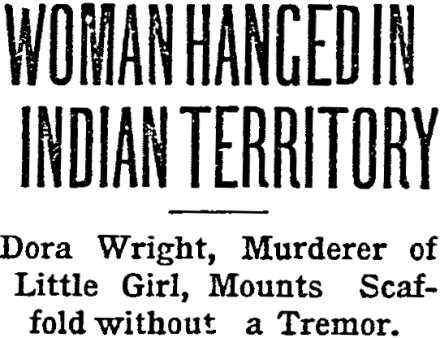
On this date in 1903, Dora Wright was hanged at McAlester in Indian Territory — the present-day U.S. state of Oklahoma.
Wright beat and tortured to death a 7-year-old orphan in her charge named Annie Williams. Wright tormented the little girl over several months until she finally succumbed to a thrashing in February 1903. It was, the local paper said, “the most horrible and outrageous” crime in memory in the area; Wright’s jury only needed 20 minutes’ deliberation to condemn her.
As Oklahoma was yet four years shy of statehood, “Indian Territory” jurisdiction — and with it any decision on executive clemency — fell to U.S. President Theodore Roosevelt. The inclination of the Rough Rider is aptly conveyed by the words of Attorney General Philander Knox‘s brief on the case to the President, which were released for press consumption:
The real facts in this case are that this woman tortured to death a little child seven years old, her niece, whom she was pretending to care for and support. She whipped the child most unmercifully with large switches, struck it about the hand and face so as to cause wounds sufficient to produce death, burned holes in its legs and thighs with a heated poker, and committed other nameless atrocities upon the person of the child. The testimony shows that the woman pursued a course of cruelty which was fiendish and barbarous … The only ground upon which her pardon is sought is that she is a woman, and that the infliction of the death penalty upon a woman would be a shock to the moral sense of the people in the community.
T.R. was incredulous at the feminine special pleading.
“If that woman was mean enough to do a thing like that,” Roosevelt said, “she ought to have the nerve to meet her punishment.”
Wright did have that nerve in the end, and was noted for the calm with which she comported herself on the scaffold. (She was hanged alongside another fellow, Charles Barrett, who shot a man dead in a robbery.)
From the Duluth (Minn.) News-Tribune, July 18, 1903.
On this date in 1917, someone was electrocuted in Rockview, Pennsylvania.
“John Nelson”, the cipher alias by which authorities were eventually content to call him, was 5′ 8″ tall and 165 pounds, and looked like an African-American. (“Nelson” himself said that neither white men nor black were of his race.) Papers put this about quizzically because he was also utterly steadfast in refusing to identify himself or his background.
He eventually allowed that he came from Canton, Ohio (but who knows if that’s true). “He reads Shakespeare and seeks high grade newspapers and magazines,” ran news-of-the-weird wire copy all around the country. He boasts “long hair which bears the appearance of having been done up in kids to give a ‘Sis Hopkins’* effect” as well as “long gray whiskers, sideburns and a heavy mustache.” He looked maybe 60 years old.
Anyone?
Aw, heck.
The Scranton Times sent 5,000 of these postcards around the country hoping to scare up information about their mysterious murderer.
Tips poured in from all over — but nothing definitive. An upstate New York sheriff reported discharging a guy named John Nelson from jail a couple of years before. A woman in Butte, Montana recognized the picture and thought it might be her vanished father. The prisoner also resembled a missionary from Ohio and a bank president from Richmond, Va., also both missing; a Scranton woman thought he maybe used to be her gardener. (All but the last of these indefinite tips via Cheryl Kashuba’s two-part series on this case in the March 17 and March 24, 2013, issues of the Scranton Times-Tribune.)
Although nobody could figure out who he was, everyone was pretty sure what he’d done.
On the evening of Oct. 30, 1915, he’d trudged into Mill City, a Wyoming County township outside of Scranton, and made an unexplained sudden attack on three men lolling about a barbershop porch.
According to those three men’s story — and they’re all we have to work with since Nelson kept mum on this, too — a little white boy running down the darkened street bumped into the mystery pedestrian. At that, “Nelson” suddenly produced a knife and charged at the trio of nearby men, bellowing “White people in a tank town like this can’t run over me!”
J.M. Sickler, a prosperous local farmer, bravely intercepted the attacker before he reached Judge Robert Westlake, and suffered mortal stab wounds for his trouble. The attacker fled, but other locals roused by the commotion overpowered him as he escaped; Sickler lived long enough to give a deathbed positive identification.
Of course, it wasn’t really “positive” — that’s the whole point. And “John Nelson”, whoever he might have been, kept his nose in his Shakespeare and his lips enigmatically sealed on the crime and its causes; on his background and biography; on everything whatsoever. “I just wouldn’t care to talk about that,” he would reply when questioned, or similar versions of that polite deflection.
He kept his queer peace all the way to the electric chair.
* Maybe Mr. “Nelson” was just taking Sis Hopkins’ good advice: “There ain’t no sense in doin’ nothin’ for nobody what won’t do nothin’ for you.” As Nelson blithely put it (and who could contradict him?) any name at all would do for his circumstances.
On this day in 1920, Lee Monroe Betterton (addressed by his middle name) was electrocuted in Oklahoma for the murder of his wife, whose unusual name has been given variously as “Elzeana,” “Aldazia” and “Elzadah.” (This account will use the latter spelling, which was the one used in Betterton’s Oklahoma Court of Criminal Appeals syllabus.)
Little is known about Monroe Betterton’s background, other than that he was born in Missouri and was the seventh of twelve children, ten of whom survived to adulthood.
He was a heavy drinker and his violent nature was self-evident: Elzadah was, sadly, not the first wife Betterton killed. Nor was she even the second wife Betterton killed.
Betterton killed his first wife, Laura Elizabeth, in Barry County, Missouri in 1904. They had four young children together, two sons and two daughters. During an argument he beat her unconscious and she was taken to the hospital, where she soon died. For some reason, her husband was not prosecuted.
By 1908, Betterton had remarried and was living with Rosie, Wife #2, in Neosho, Missouri. They were walking to nearby Monett to visit some of his relatives when they started quarreling. Both of them had been drinking. About two miles outside of town, Betterton suddenly pulled out a knife and stabbed Rosie in the heart. She died instantly and he laid her body beside the railroad tracks.
This time he was arrested and charged with the crime. Betterton maintained that “I was guilty of that woman’s death, but it was an accident.” He got 99 years in prison, but served only ten before he was paroled in 1918.
He was 48 by then, and he returned to Monett and began courting Elzadah Lockwood, a widow close to his own age who was unfamiliar with the old adage that while once is a coincidence, twice is a trend. They got married, but their relationship turned rocky almost immediately and they argued constantly.
The couple separated after only a few months and filed for divorce. However, they reconciled after Betterton’s son Clifford married Elzadah’s daughter Mamie. In the first week of July 1919, a mere week after their divorce was final, Monroe and Elzadah remarried and settled in Vinita, Oklahoma.
Their previous problems resurfaced, however, and within days they were fighting like cats.
On July 9, 1919, Elzadah was preparing to leave her son-in-law Arthur Thomas’s house after yet another argument when Betterton shot her three times in the back. One of the bullets blew away the whole right side of her heart, and she was dead before authorities arrived at the scene.
When questioned, Betterton implicated everyone: the son Clifford; the son-in-law Arthur; even Elzadah herself as a phenomenally effective suicide. Mamie had been present at the scene, though. She and Elzadah’s eight-year-old son Raymond saw the whole thing, and both testified against their stepfather at his trial.
The case was pretty open-and-shut: As the Vinita Daily Journalnoted, “The prisoner seems to be the least [a]ffected of the family and pays close attention to the testimony for or against him … There was practically no defense.”
Hobart (Okla.) Daily Republican, June 21, 1920.
Less than an hour before his execution, Betterton gave an interview in his cell and continued to assert his innocence: “I am not guilty of the crime with which I am charged. I am ready to die. I am ready to meet my God. I do not fear death, but I do not want to die for a crime which I did not commit.”
Approximately 100 people witnessed his execution. He had no final statement.
The Aug. 28, 1955 lynching of Emmett Till and the subsequent acquittal of his murderers by an all-white Mississippi jury were among the American civil rights movement’s pivotal events.
For a certain indecent number of people, however, the passion of the 14-year-old youth — alleged to have flirted with a white woman — was to be mourned only insofar as it confirmed the menace that insatiable Negro libidos posed to southern way of life.
Further to that end, the months following Emmett Till’s death brought to the headlines the formerly obscure* July 2, 1945 hanging of an American G.I. in Italy: Emmett’s father, Louis Till.
The violent Louis Till ruined his marriage to Emmett’s mother Mamie shortly after his son’s birth. Repeatedly violating her restraining order eventually landed Till pere before a judge, who gave him a choice between hard time and enlistment. Till joined the U.S. Army.
In 1945, he was court-martialed for murdering an Italian woman and raping two others. His execution near Pisa — he’s buried in Europe in the Oise-Aisne American Cemetery, the same final resting place as Eddie Slovik — was the no-account end of a no-account man for many years thereafter. Mamie Till said that she wasn’t even told what happened to her ex-husband, and was stonewalled when she sought information.
By the end of 1955, everyone knew.
In Jim Crow’s backlash against nationwide condemnation of the Till lynching, Louis Till came back to life in newsprint all that autumn to visit the sins of the father upon his late son: here was the mirror of the young predator all grown up, violating Italian women. Mississippi’s white supremacistsenators used their rank to obtain his army file, and leaked it to reporters.
According to Davis Houck and Matthew Grindy’s study of the Mississippi media’s conflicting reactions to the events of 1955, “Louis Till became a most important rhetorical pawn in the high-stakes game of north versus south, black versus white, NAACP versus White Citizens’ Councils.”
The pawn’s sacrifice did not figure in the endgame.
Crude attempts to impose blood guilt for Louis Till’s crimes aside, Clenora Hudson-Weems argues in her Emmett Till: The Sacrificial Lamb of the Civil Rights Movement that it was Emmett Till’s shocking death that catalyzed the civil rights movement — that the horrifyingly mutilated face at his open-casket funeral and the insouciant confession of his killers once they had been acquitted shook southern blacks and northern whites alike so profoundly as to dispel any confidence that legal briefs or political incrementalism could grapple with America’s race problem. Civil rights lion Joyce Ladner was an 11-year-old Mississippi girl when Emmett Till was lynched; she would tell Hudson-Weems of the shock it delivered in her world coming on the heels of the Brown v. Board of Education ruling desegregating schools.
A very important thing is that it followed the Supreme Court decision in 1954. It’s like the Whites said that they don’t care what rights we were given … So when the spark came in Mississippi to sit in the public library, for example, people who participated had been incensed by the Till incident and were just waiting for the spark to come. The Till incident was the catalyst.
Emmett Till’s body was exhumed for autopsy and DNA testing in 2005, in part to dispel the old story first promulgated by the attorneys who defended Till’s murderers — that the body wasn’t Emmett Till’s at all. On the corpse’s finger was a ring inscribed with the initials of his father: L.T.
* Louis Till did have one small claim to fame prior to his son’s murder: the fascist poet Ezra Pound chanced to be imprisoned with Till; he mentions the later-famous execution in his Pisan Cantos:
Till was hung yesterday
for murder and rape with trimmings
“A most infernal plot has lately been discovered here, which, had it been put into execution, would have made America tremble, and been as fatal a stroke to us, this Country, as Gun Powder Treason would to England, had it succeeded.”
On this date in 1776, Continental Army soldier Thomas Hickey was hanged before “a vast concourse of people” for a plot that might have strangled the American Revolution in its crib.
That revolution was a highly uncertain venture at this moment, and in a different timeline Thomas Hickey might have been a British hero for squelching it. “These are the times that try men’s souls,” revolutionary firebrand Thomas Painewrote late in 1776. Hickey had to face his trial in the flesh.
George Washington had holed up in New York City in the spring to fortify it against an expected British invasion — an invasion that did indeed arrive and eventually drove the Continental Army all the way to Philadelphia.* As Paine beheld, the wrong turn of events here could have been decisive. The Continental Army was badly outnumbered and afflicted by desertion. The Continental Congress itself had to abandon Philadelphia not long after boldly declaring independence on July 4.
Whatever one might say of the great-man historiographical mood, you’d have to think that knocking out the rebel army’s top general at this juncture would have been a coup for the British.
In June of 1776, New York was tense ahead of the fighting. A British ship of the line sat forebodingly in the harbor, and even as she awaited the coming British force, her crew members rowed freely ashore for provisions. Plots went abroad among the mixed population of “Patriot” and “Loyalist” citizens. Nathan Hale would soon earn his martyr’s laurels in New York, trying to reconnoiter behind enemy lines as Washington staged a series of losing battles and a gradual retreat.
Somewhat below this plane of world-shaping combat and statecraft, a guy named Isaac Ketcham (or Ketchum) found himself clapped in gaol for counterfeiting the easily-counterfeited colonial paper currency. There, Ketcham caught jailhouse scuttlebutt of Loyalist plots afoot in New York. Realizing this could be his ticket out of prison, Ketcham wrote New York’s Provincial Congress informing on the schemes.
Sadly, Ketcham’s full memorandum has been lost, and as the ensuing trial records are circumspect the “plot” or “plots” in question are a bit of a historical muddle. Roughly, there are two discernible thrusts:
A fifth-column plot against the patriot position in New York, with Loyalist-inclined soldiers set to desert back to the arriving British army.
A plot against the person of George Washington himself.
Ketcham was eagerly interrogated by the Provincial Congress on these matters, and returned to his dungeon in the capacity of an informant. There, he made the acquaintance of the Irish-born Thomas Hickey, a member of George Washington‘s personal guards who had on June 15th been committed for doing his own bit of private currency-printing.
Representing himself as a Tory loyalist, Ketcham apparently induced Hickey to boast about something quite a bit more serious than counterfeiting.
“In different conversations he informed me that the Army was become damnably corrupted,” Ketcham told the court-martial that tried Hickey. “That the fleet was soon expected; and that he and a number of others were in a band to turn against the American Army when the King’s troops should arrive.”
The whole scheme went under the pay of Loyalist New York mayor David Mathews, who was also arrested by patriot troops — although Mathews, whose execution might have turned the British very nasty in the various diplomatic conferences ongoing during the New York campaign, was never even tried.** He escaped to British protection shortly after capture.
No kid gloves were available to the treacherous Irishman Hickey, however. Word of the conspiracy against the patriots had also been obtained from a businessman, William Leary, who reported the attempt of his former employee to recruit him into it. The sheer quantity of highly indiscreet men blabbing about it in taverns and jails and the like makes the whole thing seem crazy in retrospect, but if it had succeeded in, say, destroying Kingsbridge, it might have trapped the Continental Army on Manhattan where they would have been easy pickings for the vastly superior British. Someone surely had to pay for this.
Several of Hickey’s accomplices provided evidence against him, and the speedy conclusion of the military commission that tried him was that Hickey should hang in order to, as Washington wrote the Continental Congress, “produce many salutary consequences, and deter others from entering into like traitorous practices.” So far as is known, however, Hickey was the only person to suffer this extremity.
The unhappy fate of Thomas Hickey, executed this day for mutiny, sedition, and treachery, the General hopes will be a warning to every soldier in the Army to avoid those crimes, and all others, so disgraceful to the character of a soldier, and pernicious to his country, whose pay he receives and bread he eats. And in order to avoid those crimes, the most certain method is to keep out of the temptation of them, and particularly to avoid lewd women, who, by the dying confession of this poor criminal, first led him into practices which ended in an untimely and ignominious death.
Physician William Eustis (eventually the U.S. Secretary of War), who was among the 20,000 to see Hickey hanged, wrote a friend that afternoon of the execution.
Their design was, upon the first engagement which took place, to have murdered (with trembling I say it) the best man on earth: Genl Washington was to have been the first subject of their unheard of Sacricide: our magazines which, as you know, are very capacious, were to have been blown up: every General Officer and every other who was active in serving his country in the field was to have been assassinated: our cannon were to be spiked up: and in short every the most accursed scheme was laid to give us into the hands of the enemy, and to ruin us. (Source)
The scarcity of original documentation makes it very difficult to say with confidence just how impressive this accursed scheme really was. One can see from Eustis’s letter that it was understood immediately to have compassed the murder of George Washington. This prospective “Sacricide” of America’s founding father par excellence has been worth a good bit of embellishment; one bit of utterly insupportable folklore congenial to vegetable-hating schoolchildren is that Hickey arranged to have General Washington’s peas poisoned with arsenic, but the faithful housekeeper exposed the scheme in the nick of time.
Only a bit more fantastical is the video game Assassins Creed III, whose representation of the death of Thomas Hickey — this version of Hickey is a Templar agent — uses a wacky sequence that begins with the public execution of the game player’s own assassin character, complete with first-person, inside-the-hood perspective.
It might well be that Hickey had been engaged in a plot not to murder but to kidnap the rebel general. David Mathews, the New York mayor, would later tell a royal commission in London autopsying Britain’s Revolutionary War defeat, “I formed a plan for the taking of Mr. Washington and his Guard prisoners but which was not effected.” It’s been speculated that the Continental Army itself chose to play up the “murder” angle for public consumption in preference to “kidnap” — perhaps because the notion that the Tories had the strength to contemplate the more complex objective of snatching Washington away from his own army, and were in a position to use his very own guards to accomplish it, implied a weakness in the revolutionary cause far too grave to acknowledge openly.
* It’s from this position that Washington would [re-]cross the Delaware amid December ice floes to conduct a morale-salvaging raid on Hessian troops in New Jersey after many long months of reversals. The British, for their part, held New York for the balance of the war, and this helped make adjacent New Jersey a battleground between pro-British and pro-American militias.
** Mathews administered New York until 1783, when the British ceded it to the victorious colonists.
Close to midnight on this date in 1890, four convicted murderers — three of them black and one white — were hanged on the gallows inside the Shelby County Jail in Tennessee. They were Edward Carr, 28, Parker Harris, 30, Hardy Ballard, 45, and Frank Brenish, 36.
Carr, who was half-black, had murdered his estranged wife Sallie in broad daylight on the street in Memphis on November 9, 1889. Edward Carr wanted to move to Mississippi and Sallie did not, and she had left him and moved in with a woman friend. When Edward saw his wife and her friend walking down the street, he said, “Sallie, I am going to kill you,” and then shot her.
She ran away, but he chased after her and shot her three more times. Sallie Carr died in her friend’s arms.
Edward surrendered to the police three days later, and his lawyer had to persuade him not to plead guilty to murder.
At his trial he said, “I do not know why I killed her. It was not because she offended me. We had lived happily together … I loved her so well, and she would not go with me.” Offering no defense, he was accordingly convicted on December 17, six weeks after his crime.
Harris had also killed his wife, Letha “Lettie” Harris, on the street in front of witnesses. Lettie was an “octoroon”, a now-outdated term for someone who is of mixed race and one-eighth black, seven-eighths white.
Like the Carrs, the Harrises were estranged and Lettie was living apart from her husband. On August 18, 1889, said husband encountered her riding in a buggy with several women and asked her to come home; Lettie replied that she never wanted to speak to him again.
In response, Parker Harris slashed her throat, then his own. He was able to run from the scene but collapsed several blocks away, weak from blood loss. He recovered sufficiently from his wounds to face trial; he too was easily convicted.
Hardy Ballard had killed a streetcar driver, G. Emmett Pinkston, on Christmas Day 1889 after an argument over the nickel fare. Ballard insisted he had paid; Pinkston said he hadn’t, and kicked him off the car. Both parties were armed in the ensuing fight, Ballard with a knife and Pinkston with an iron hook, and Ballard got the better of the streetcar driver and stabbed him to death.
His plea of self-defense at trial was not believed by the jury.
The sole white man, Frank Brenish, was a wife killer just like two of his co-condemned. Mary, his wife of two years, had left him because of his drinking and his failure to support her and his two stepchildren. Frank threatened to kill his wife if she didn’t come back to him, and Mary took these threats seriously enough to report them to the police. The cops had a talk with Frank and he promised to leave his wife alone.
Mary remained fearful, however, and when she went out she took her fourteen-year-old daughter, her sister and another man to protect her in case she encountered her husband. They were with her the night the murder was committed: they saw the whole thing.
Frank Brenish’s crime was so similar to Parker Harris’s that there was some speculation the two might have a joint trial: on July 5, 1889 he jumped out of a dark alley and slashed Mary’s throat, nearly decapitating her. Then he cut his own throat. Against the odds, a doctor was able to save Frank’s life, but Mary was beyond help: she had died almost instantly.
All four of the condemned were given copious amounts of alcohol while awaiting their execution, and Brenish got morphine as well. The wound on his throat hadn’t healed and it leaked from time to time. The night before his executed, he made a halfhearted attempt at suicide by slashing his wrist with a makeshift knife.
This was the era of racial apartheid in America, however, and even when men died together, they perhaps might not die together.
The gallows in this instance was built for two, so the natural idea was to hang the four men as two pairs.
Brenish, however, refused to suffer the indignity of being hanged alongside a Negro.
His jailers — and one hardly needs to mention their racial identity — honored his request for a segregated execution and modified the gallows so three people could be hanged at once.
The three black prisoners went first. Brenish died alone, fifteen minutes later. Harris, Ballard and Carr had “clean” hangings and died quickly, after making the usual final statements about their sins and their hope for redemption in Heaven.
When the time came for his racially unsullied death, Brenish was either so drunk or so scared he could barely stand, and he took several more swallows of whiskey while standing on the scaffold. He had severed his trachea when he slashed his throat and could only barely speak above a whisper. When he was asked for a final statement, the best he could come up with was, “They oughtn’t to hang a man when he ain’t in his right mind.”
The officers had difficulty in placing the handcuffs because of his bandaged wrist. Blood trickled down his white gloves. With the noose and cap placed, he swayed to and fro and had to be held. When the lever was pulled and he dropped there was a pop (his neck was broken) and a hissing sound. The drop had opened the hole in his throat from the attempted suicide on the night of the killing. The hole was large enough to hold a cigar. As he hung, his wrist wound bled profusely.
Gruesome as his death may have appeared, though, Brenish didn’t suffer long. His heart stopped in less than a minute.
On this date in 1934, “the most successful and painless [execution] ever conducted at the penitentiary” claimed the life of William Cody Kelley in Colorado’s brand-new gas chamber.
Nevada had debuted this American contribution to the art of killing 10 years before. Colorado was the second state to gas a prisoner, and stood on the leading edge of gas chamber adoption during the 1930s by a half-dozen states in the American West. (… plus North Carolina.)
Kelley was condemned for bludgeoning pig-rancher Russell Browning to death with a pipe, and his otherwise forgettable case was a milestone for a reason besides the method: Kelley was the first executed in the state of Colorado without review by the state supreme court.
The reason? Dead broke, Kelley couldn’t scrape together $200 required for the appeal.
Journalist Lorena Hickok heard of Kelley’s plight and was about to front the cash when she was talked off it, on the grounds that her sticking up for a condemned murderer might throw a politically difficult light on her close friend Eleanor Roosevelt.
Hickok swallowed her principles but a later letter to the First Lady — the two had a voluminous correspondence; they may well have had a romantic relationship, too — drips with Hickok’s regret.
The thing has nearly driven me crazy. How can you have any faith or hope in us if we do things like that in this supposedly enlightened age? … I feel as though we were living in the Dark Ages, and I loathe myself for not having more courage and trying to stop it, no matter what the consequences were. You would have done it. Well — I guess I’d better not think about it any more.
While an inconceivable fortune stood between Kelley and his life, the execution materiel — a dozen acid capsules — set Colorado back just 90 cents. Such a pittance bought a killing method so reliable that “there was no cutting out of the victim’s heart, as was done after executions under the State’s old system of hanging, to make sure of death,” a gross if well–founded precaution.
Kelley’s partner in the murder, Lloyd Frady, testified against Kelley (both men claimed the other had committed the murder), and had his own death sentence commuted for his trouble. Frady was eventually released in 1949, but not before he made his fortune behind prison walls selling artsy “curio goods”. Those without the capital, as they say, get the punishment — and in this case, vice versa.
Colorado used the gas chamber for all its executions until 1967.


 A career burglar, Jernigan was surprised mid-robbery in 1981 by 75-year-old Edward Hale: the thief promptly shot the homeowner dead, then finished his looting. His life as a free man would be over within days.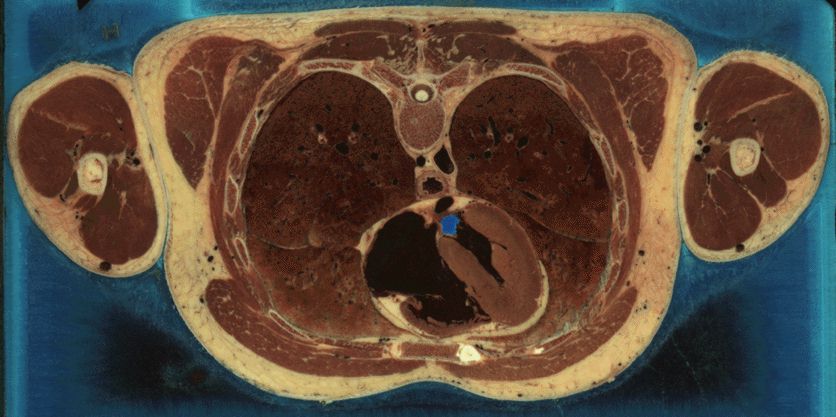




 Kelley was condemned for bludgeoning pig-rancher Russell Browning to death with a pipe, and his otherwise forgettable case was a milestone for a reason besides the method: Kelley was the