1478: Pazzi Conspiracy attempted … and suppressed

On this date in 1478, a coup d’etat against the Medici family in Florence was attempted during Easter mass — and by day’s end, its leading perpetrators had been hanged.

The Pazzi conspiracy implicates, even more than the municipal political rivalries of the Pazzi and Medici families, the peninsular geopolitics pitting Florence against the Pope, each side with its own constellations of allied lords and city-states.

The arrangement of players and their assorted interests is amply covered elsewhere; we shall suffice for this space to say that the Pazzi were a family of wealth and lineage (another death-sentenced Florentine, Dante, had dropped a couple of their ancestors into his infernal tableau), and proceed to the aftermath.

When one strikes a king, one must strike to kill. In this case, the co-ruling Medici brothers, Giuliano and Lorenzo were both attacked — but Lorenzo survived, and visited a terrible vengeance upon the assailants.

An enraged mob — the Pazzi had misjudged the city’s mood to begin with, and committing murder in church was ill-calculated to win sympathy — and a star chamber of Medici loyalists immediately began rounding up the numerous conspirators, many of whom were summarily hanged from the windows of the Palazzo Vecchio.

Along with a number of obscure foot soldiers and family retainers who suffered such indignities as being thrown from high windows onto cobblestones and torn apart by the mob, the most prominent victims this day were Francesco de Pazzi (the link is to his Italian wikipedia page) and Archbishop Francesco Salviati, a papal loyalist whose grievance against Florence for delaying his seat as archbishop of Pisa had done much to instigate the conspiracy.

They were far from the only victims: fugitives who had escaped the city were hunted for weeks and months thereafter, although Lorenzo “the Great” — who cuts the very model of the enlightened prince to posterity, rightly or not — was disposed in several cases to grant mercy to innocents against the dictates of political expediency.

However, the culpable after this day had every reason to fear. Perhaps the most affecting story is that of elderly Pazzi patriarch Jacopo de Pazzi (Italian again), caught in flight by Tuscan villagers whom he tried desperately (and unavailingly) to bribe for the privilege of suicide rather than a return to the fate of his kinsmen. Florentine communal pride celebrated popular participation in vengeance against the papal plot. Botticelli was commissioned to paint the executed conspirators hanging in their death throes on the very facade of the palace where they had in fact been put to death.

The Pazzi family wasn’t quite blotted out literally — later, it would even be restored to the city — but a comprehensive sentence of civic damnatio memoriae followed in the weeks after the immediate danger was checked. The family property was confiscated, its name and coat of arms banished, even the public festival its Crusader forebear had inspired was (unsuccessfully) renamed. For a time, merely to marry a Pazzi was to exclude oneself from public office.

Niccolo Machiavelli was a boy of eight at the time the Pazzi conspiracy was attempted. As a political theorist in later years, the event would liberally illustrate his writings. In Machiavelli’s Discourses (available free from Project Gutenberg), for instance, the Pazzi conspiracy is a lesson in the danger of conspiring against two princes at once, the risk inherent in having any great number of people aware of the plot, and the unpredictable small turns of fortune and minor slips in execution upon which a great matter may succeed or fail.

[I]n these grave undertakings, no one who is without such experience, however bold and resolute, is to be trusted.

The confusion of which I speak may either cause you to drop your weapon from your hand, or to use words which will have the same results. Quintianus being commanded by Lucilla, sister of Commodus, to slay him, lay in wait for him at the entrance of the amphitheatre, and rushing upon him with a drawn dagger, cried out, “The senate sends you this;” which words caused him to be seized before his blow descended. In like manner Messer Antonio of Volterra, who as we have elsewhere seen was told off to kill Lorenzo de’ Medici, exclaimed as he approached him, “Ah traitor!” and this exclamation proved the salvation of Lorenzo and the ruin of that conspiracy.

Machiavelli also renders his account of this day’s affair in his History of Florence, another Gutenberg freebie.

A detailed exploration of the event is available here.

On this day..

2001: Robert Lee Massie, who spent a lifetime dying

On January 7, 1965, 23-year-old Robert Lee Massie shot and killed Mildred Weiss during a botched robbery near her home. He pleaded guilty and, sentenced to die by the state of California, came within 16 hours of execution in 1967, when then-Governor Ronald Reagan temporarily halted his execution so that he could testify at the trial of his alleged co-conspirator. By this time, Massie had begun complaining to anybody who would listen about the conditions on death row, and greeting the prospect of an execution date as a welcome deliverance, was dubbed “the prisoner who wants to die” by the press.

However, Reagan’s reprieve bought him just enough time to live to see a California Supreme Court decision temporarily halting executions, which was followed by the US Supreme Court Furman v. Georgia decision of 1972 banning the death penalty as then being enforced as unconstitutionally arbitrary and capricious.

With Furman, death rows across the country were summarily cleared, and Massie, a model prisoner, was paroled for good behavior in 1978. By this time, the US Supreme Court had handed down the Gregg v. Georgia decision holding that states had revised their death penalty statutes sufficiently to allow executions to resume.

Only months after his release, Massie killed Boris Naumoff in his liquor store and wounded a clerk in another botched robbery. Again pleading guilty, this time over the objections of his court-appointed lawyer, Massie was again sentenced to die.

As before, Massie welcomed his sentence and, acting on a own novel interpretation of the Sixth Amendment guarantee of self-representation, argued that he had a constitutional right to bypass the appeals process usually automatic in capital cases and that there “is no meaningful difference between forcing an automatic appeal upon a defendant and forcing unwanted counsel upon him.” The appeals court disagreed, ruling that “while a litigant may waive the advantage of a law intended solely for his benefit, he may not waive a law established for a public reason.”

Appeals in capital cases were never intended to allow the prisoner to “choose his own sentence,” the Court wrote, and were in fact in place for just such a reason of ensuring full investigation into the “real issue [of] the propriety of allowing the state to conduct an illegal execution of a citizen.” The state was obliged to proceed with Massie’s appeals against his stated wishes, a charge unique to capital cases, because of the singular obligations imposed by the death sentence on the legal machinery of the state — and in fact imposed by the Furman and Gregg decisions that years earlier had ushered Massie unwillingly off death row.

His appeals continuing against his wishes, Massie’s conviction was ultimately overturned in a 1985 California Supreme Court decision holding that the sentence was invalid because his lawyer had not consented to the guilty plea.

Convicted again in a retrial in 1989, Massie was, once again, sentenced to death. Though he was briefly heartened enough to pursue appeals in earnest, those, too, foundered; increasingly convinced that corrupt judges were violating their oath to uphold the Constitution and greasing the machinery of death, he determined once again to pursue his own death.

As his appeals ran out, lawyers and advocates of all stripes stepped in to try to prevent Massie’s execution. A lifetime of abuse in foster care and juvenile detention centers and evidence of clinical depression and mental disorder were all presented at the last minute in a last-ditch attempt to save a man who didn’t want saving.

All were denied, and Robert Lee Massie was executed at the age of 59 on March 27, 2001. He was just the ninth prisoner executed in California in the post-Furman era and the 703rd nationwide.

Massie is one of a growing trend of death row volunteers, prisoners who voluntarily seek to run through their appeals and bring their lives on death row to an end. His frequent visitor in his last years in prison and “next friend,” Michael Kroll,* writes:

My friend, Bob Massie, maneuvered the state of California into assisting in his suicide. He had his own lawyer doing the dance of death with the attorney general and managed to avoid being declared incompetent.

And in the words of a relative of one of Massie’s victims:

I know he wants to die. It makes me think, if he wants out of the suffering, well, maybe we shouldn’t be killing him. Maybe he should just be left there to suffer.

Tossed hither and yon with the shifting legal tides of death penalty law spanning eight presidential administrations, Massie had to aid his executioners to the very last breath: when finally strapped to a gurney 36 years since that young man had murdered Mildred Weiss, he obligingly flexed his arm to help the technician find a suitable vein.

* Kroll tried to prevent Massie’s execution on the grounds that he was mentally ill, incurring his friend’s wrath.

On this day..

1302: Dante Alighieri condemned

(Thanks to Jeffrey Fisher [jeffreyfisher at me.com] for the guest post.)

On this day in 1302, the governing commune of the city of Florence condemned to death Dante Alighieri, statesman, philosopher, and above all, poet. Arguably the greatest mind of his generation, Dante is most famous for his authorship of the Divine Comedy, relating his journeys through, successively, hell, purgatory, and heaven.

Born in 1265 to a noble family of Florence that, while not the city’s most prominent family, had already seen several of his ancestors banished as a result of political turmoil, Dante could hardly have avoided becoming embroiled in public life had he even wanted to. In brief, a long-running struggle between pro-imperial (the so-called Holy Roman Empire) and pro-papal factions was finally won by the pro-papal forces, known as the Guelphs. Two decisive battles in 1289 established both Florence’s independence (particularly from their old nemesis, Pisa) and the rule of the Guelphs, Dante’s own party.

Dante is likely to have taken part in those battles and was active in city politics in the following decade, culminating in a turn in 1300 as prior (one of six key counsellors to the city, serving a two-month term). Florence prided itself on a tradition of democratic rule going back to the death of the Holy Roman Emperor Frederick II in 1250.

Persona Non Grata

Giotto painted Dante prior to his exile — the oldest portrait of Dante known.

Unfortunately, by the time Dante took on the priorate, the old rivalries had reshaped themselves into new factions eerily parallel to their predecessors: the so-called “Black” Guelphs, who aligned themselves with the Pope (as of 1294, Boniface VIII), and “White” Guelphs, who took a more moderate political stance and saw themselves as defending an independent Florence from the Pope and his allies (namely, the Blacks).

Things got so bad that, at the time of Dante’s priorate, the city’s ruling body banished leaders of both sides in an effort to stabilize the city. The pope took the opportunity to send emissaries to Florence on the pretext of negotiating a peace. After more than a year of this maneuvering, the commune sent Dante and two others to have words with Boniface in Rome in 1301.

The Pope “invited” Dante to stay in Rome while his companions returned to Florence to try to bring the commune around. In the meantime, the Pope’s key man had got himself into Florence and helped the Blacks take power, whereupon they confiscated properties and levied fines.

Dante was ordered to appear before a tribunal to answer for his alleged crimes. When he did not show up, he was banished to two years of exile, permanently banned from holding city office, and ordered to pay a further fine of some five thousand florins–a staggering sum–within three days. When that did not happen, either (Dante was apparently in Siena, a short ways from Florence, when he heard this news), the commune confiscated all of his goods and condemned him to death by burning should he ever return.

Fortunately, there were others in Italy at the time who had more sense, but Dante spent the rest of his life–almost another twenty years–wandering from city to city with his sons. He was excluded from an amnesty in 1311, and when he refused the terms of another in 1315, his death sentence was not only reaffirmed, but extended to include his sons. Despite all this, he still held out hope of returning to Florence to be crowned as poet, declining to be so crowned in Bologna as little as a year or two before he died.

Art in Exile

It was over the course of that time in exile that Dante composed his political and philosophical works, together with what must be considered his single greatest contribution to letters, the three-volume Divina Commedia.

There is no way to do justice to any of these works, much less all of them, but in the present context it is worth noting that in three key works — the Commedia (Dante’s title is this simple), Il Convivio (or The Banquet), and De Monarchia (On Monarchy) — Dante develops a serious, even strikingly modern, religious political philosophy.

In contrast to many of his religious contemporaries, taking issue with the great St. Augustine even as he espouses positions derived from Thomas Aquinas, Dante argues in favor of a strong central secular authority, specifically an emperor, and even more particularly, that this authority should be understood by Christians as co-equal with, not subordinate to, the spiritual authority of the Church: “two suns,” he says, rather than the sun and the moon (which merely reflects the light of the sun).

Indeed, he held out an almost messianic hope for the return of an emperor who would restore peace and order. He even wrote public letters to the Emperor Henry VII requesting that he restore justice in Florence (and this is surely a factor in the commune’s treatment of him with respect to amnesty). When Henry died before accomplishing these things, much of Dante’s hope for imperial cohesion died along with him.

(Consider this Open Yale Courses podcast series for more Dante appreciation.)

He Knew Beatrice All Along

It would be nothing short of travesty to write anything of this length about Dante and not mention Beatrice, the love of his life from the age of nine, when he first laid eyes on her, to the day he died in exile. Beatrice, who only spoke to Dante once and who died an early death, directly inspired his poetic-explicatory work, the Vita Nuova (New Life), an exemplar of the dolce stil nuovo (“sweet new style”) movement in poetry. As a character in the Commedia, Beatrice sends Virgil to rescue Dante from a dark forest in the Inferno, and guides him through the spheres of Heaven in Paradiso.

“Dante and Beatrice in the Constellation of Gemini and the Sphere of Flame”, one of William Blake‘s (uncompleted) series of watercolors illustrating Dante’s magnum opus.

Despite two decades of exile, Dante never gave up hope of returning to Florence in his lifetime, and clearly hoped (perhaps “expected” is more accurate) to be united with his other true love in the next. His body remains in Ravenna, where he died and was buried in 1321.

Florentines wish they could have him back.

Part of the Themed Set: The Written Word.

On this day..

1838: Andrea Rondola but not Peppino

On this date in 1838, in The Count of Monte Cristo, the title character witnesses two men brought to the scaffold for public execution in Rome.

In Alexandre Dumas‘ classic, the count is really Edmond Dantes, wrongly imprisoned years before, who has escaped and enriched himself with a discovered treasure, purchasing thereafter his ennoblement. This date’s execution occurs shortly after Dantes has surfaced publicly as the count. He witnesses it with two young friends — goading one of the reluctant youths by remarking, “when you travel, it is to see everything. Think what a figure you will make when you are asked, ‘How do they execute at Rome?’ and you reply, ‘I do not know’!” — and the naked brutality with which the Count greets a scene horrifying to his more genteel companions prefigures the pitiless revenge he will soon visit on his onetime persecutors.

The scene is laid on the first day of Carnival — the concealed identities among the crowd and the tension between its celebratory state of mind and the public butchery played out before it both serving the novel’s themes.

The prisoners are: a murderer, executed by the unique (and error-prone) Roman method of mazzolatura, in which the prisoner is incapacitated with a blow from a mallet before being finished off with a knife; and, a young man wrongly condemned to the guillotine for banditry, who will be reprieved thanks to the protagonist’s intervention further to the latter’s designs of vengeance.

It was the first time Franz had ever seen a guillotine, — we say guillotine, because the Roman mandaia is formed on almost the same model as the French instrument. The knife, which is shaped like a crescent, that cuts with the convex side, falls from a less height, and that is all the difference. Two men, seated on the movable plank on which the victim is laid, were eating their breakfasts, while waiting for the criminal. Their repast consisted apparently of bread and sausages. One of them lifted the plank, took out a flask of wine, drank some, and then passed it to his companion. These two men were the executioner’s assistants. At this sight Franz felt the perspiration start forth upon his brow. The prisoners, transported the previous evening from the Carcere Nuovo to the little church of Santa Maria del Popolo, had passed the night, each accompanied by two priests, in a chapel closed by a grating, before which were two sentinels, who were relieved at intervals. A double line of carbineers, placed on each side of the door of the church, reached to the scaffold, and formed a circle around it, leaving a path about ten feet wide, and around the guillotine a space of nearly a hundred feet. All the rest of the square was paved with heads. Many women held their infants on their shoulders, and thus the children had the best view. The Monte Pincio seemed a vast amphitheatre filled with spectators; the balconies of the two churches at the corner of the Via del Babuino and the Via di Ripetta were crammed; the steps even seemed a parti-colored sea, that was impelled towards the portico; every niche in the wall held its living statue. What the count said was true — the most curious spectacle in life is that of death. And yet, instead of the silence and the solemnity demanded by the occasion, laughter and jests arose from the crowd. It was evident that the execution was, in the eyes of the people, only the commencement of the Carnival. Suddenly the tumult ceased, as if by magic, and the doors of the church opened. A brotherhood of penitents, clothed from head to foot in robes of gray sackcloth, with holes for the eyes, and holding in their hands lighted tapers, appeared first; the chief marched at the head. Behind the penitents came a man of vast stature and proportions. He was naked, with the exception of cloth drawers at the left side of which hung a large knife in a sheath, and he bore on his right shoulder a heavy iron sledge-hammer. This man was the executioner. He had, moreover, sandals bound on his feet by cords. Behind the executioner came, in the order in which they were to die, first Peppino and then Andrea. Each was accompanied by two priests. Neither had his eyes bandaged. Peppino walked with a firm step, doubtless aware of what awaited him. [i.e., a pardon] Andrea was supported by two priests. Each of them, from time to time, kissed the crucifix a confessor held out to them. At this sight alone Franz felt his legs tremble under him. He looked at Albert — he was as white as his shirt, and mechanically cast away his cigar, although he had not half smoked it. The count alone seemed unmoved — nay, more, a slight color seemed striving to rise in his pale cheeks. His nostrils dilated like those of a wild beast that scents its prey, and his lips, half opened, disclosed his white teeth, small and sharp like those of a jackal. And yet his features wore an expression of smiling tenderness, such as Franz had never before witnessed in them; his black eyes especially were full of kindness and pity. However, the two culprits advanced, and as they approached their faces became visible. Peppino was a handsome young man of four or five and twenty, bronzed by the sun; he carried his head erect, and seemed on the watch to see on which side his liberator would appear. Andrea was short and fat; his visage, marked with brutal cruelty, did not indicate age; he might be thirty. In prison he had suffered his beard to grow; his head fell on his shoulder, his legs bent beneath him, and his movements were apparently automatic and unconscious.

“I thought,” said Franz to the count, “that you told me there would be but one execution.”

“I told you true,” replied he coldly.

“And yet here are two culprits.”

“Yes; but only one of these two is about to die; the other has many years to live.”

“If the pardon is to come, there is no time to lose.”

“And see, here it is,” said the count. At the moment when Peppino reached the foot of the mandaia, a priest arrived in some haste, forced his way through the soldiers, and, advancing to the chief of the brotherhood, gave him a folded paper. The piercing eye of Peppino had noticed all. The chief took the paper, unfolded it, and, raising his hand, “Heaven be praised, and his holiness also,” said he in a loud voice; “here is a pardon for one of the prisoners!”

“A pardon!” cried the people with one voice — “a pardon!” At this cry Andrea raised his head. “Pardon for whom?” cried he.

Peppino remained breathless. “A pardon for Peppino, called Rocca Priori,” said the principal friar. And he passed the paper to the officer commanding the carbineers, who read and returned it to him.

“For Peppino!” cried Andrea, who seemed roused from the torpor in which he had been plunged. “Why for him and not for me? We ought to die together. I was promised he should die with me. You have no right to put me to death alone. I will not die alone — I will not!” And he broke from the priests struggling and raving like a wild beast, and striving desperately to break the cords that bound his hands. The executioner made a sign, and his two assistants leaped from the scaffold and seized him. “What is going on?” asked Franz of the count; for, as all the talk was in the Roman dialect, he had not perfectly understood it. “Do you not see?” returned the count, “that this human creature who is about to die is furious that his fellow-sufferer does not perish with him? and, were he able, he would rather tear him to pieces with his teeth and nails than let him enjoy the life he himself is about to be deprived of. Oh, man, man — race of crocodiles,” cried the count, extending his clinched hands towards the crowd, “how well do I recognize you there, and that at all times you are worthy of yourselves!” Meanwhile Andrea and the two executioners were struggling on the ground, and he kept exclaiming, “He ought to die! — he shall die! — I will not die alone!”

“Look, look,” cried the count, seizing the young men’s hands — “look, for on my soul it is curious. Here is a man who had resigned himself to his fate, who was going to the scaffold to die — like a coward, it is true, but he was about to die without resistance. Do you know what gave him strength? — do you know what consoled him? It was, that another partook of his punishment — that another partook of his anguish — that another was to die before him. Lead two sheep to the butcher’s, two oxen to the slaughterhouse, and make one of them understand that his companion will not die; the sheep will bleat for pleasure, the ox will bellow with joy. But man — man, whom God created in his own image — man, upon whom God has laid his first, his sole commandment, to love his neighbor — man, to whom God has given a voice to express his thoughts — what is his first cry when he hears his fellow-man is saved? A blasphemy. Honor to man, this masterpiece of nature, this king of the creation!” And the count burst into a laugh; a terrible laugh, that showed he must have suffered horribly to be able thus to laugh. However, the struggle still continued, and it was dreadful to witness. The people all took part against Andrea, and twenty thousand voices cried, “Put him to death! put him to death!” Franz sprang back, but the count seized his arm, and held him before the window. “What are you doing?” said he. “Do you pity him? If you heard the cry of `Mad dog!’ you would take your gun — you would unhesitatingly shoot the poor beast, who, after all, was only guilty of having been bitten by another dog. And yet you pity a man who, without being bitten by one of his race, has yet murdered his benefactor; and who, now unable to kill any one, because his hands are bound, wishes to see his companion in captivity perish. No, no — look, look!”

The command was needless. Franz was fascinated by the horrible spectacle. The two assistants had borne Andrea to the scaffold, and there, in spite of his struggles, his bites, and his cries, had forced him to his knees. During this time the executioner* had raised his mace, and signed to them to get out of the way; the criminal strove to rise, but, ere he had time, the mace fell on his left temple. A dull and heavy sound was heard, and the man dropped like an ox on his face, and then turned over on his back. The executioner let fall his mace, drew his knife, and with one stroke opened his throat, and mounting on his stomach, stamped violently on it with his feet. At every stroke a jet of blood sprang from the wound.

This time Franz could contain himself no longer, but sank, half fainting, into a seat. Albert, with his eyes closed, was standing grasping the window-curtains. The count was erect and triumphant, like the Avenging Angel!

The Count of Monte Cristo is available free at Project Gutenberg. This day’s scene occurs in chapter 35. (An announcement in chapter 34 establishes the date.)

* The executioner plays no part in the novel, but presumably it would be the prolific Mastro Titta.

On this day..

1547: Not Thomas Howard, because Henry VIII died first

On this date in 1547, the Duke of Norfolk was to have been beheaded.

But thanks to the previous day’s death of the corpulent 55-year-old King Henry VIII, the duke’s death warrant was never signed, and the condemned noble died in bed … seven years later.

A force in the gore-soaked arena of English politics for two generations, Thomas Howard had steered two nieces into the monarch’s bed. Both girls had gone to the scaffold,* and the disgrace of the second, Catherine Howard, brought a collapse in the whole family’s fortunes. Thomas Howard’s son Henry was not as lucky as the father: Henry was beheaded just a few days before the king succumbed, on the same charge of treason that almost claimed Thomas this day.

Though Howard pere would survive long enough to see his title restored, this day was far from the last chapter of his grasping family’s encounter with that classic Tudor denouement, the chopping-block. Thomas, his executed son, and his executed grandson today stock the family tombs at St. Michael, Framlingham — itself a sort of late monument to the aristocracy unmade by Henry’s reforms more than by his executioners.

* “She has miscarried of her savior,” Howard famously remarked of the male heir his niece Anne Boleyn delivered stillborn. A few months later, the Duke presided over Anne’s trial and voted to condemn her to death. (Hat tip: Fiz.)

Part of the Themed Set: The English Reformation.

On this day..

Feast Day of St. Sebastian

(Thanks to Jeffrey Fisher [jeffreyfisher at me.com] for the guest post.)

Sebastian In Art


Martyrdom — dying for the sake of one’s religious beliefs — has been one of the defining aspects of Christian self-understanding since at least about 100 CE, when the Book of Revelation was composed. Only a few systematic persecutions of Christians can be even minimally documented, but the idea that Christians suffer and even die for their faith — at the hands of the Jewish establishment, or the Roman authorities, or, today, secular humanists — is absolutely central to Christian identity for many Christians.

One of these ancient periods of persecution for which there is some historical evidence is in the late third and early fourth centuries, around the time of the Emperor Diocletian. On this day in 287, according to tradition, Diocletian martyred Saint Sebastian, at the time an officer in the Praetorian Guard.

The story goes that Sebastian’s Christianity was unknown to the Emperor until Sebastian balked at his job of executing Christians who refused to offer a libation to the emperor (a god, according to the emperor cult of the time). Indeed, Sebastian went so far as to encourage two Christians martyrs in their faith, and to convert several others. Upon hearing of all this, Diocletian ordered Sebastian tied to a tree and shot to death with a firing squad of the ancient sort: bows and arrows.

This, then, is how Sebastian is best known and most commonly represented: as a beautiful youth tied to a tree or a pillar and pierced with arrows.

Like the martyr Saint Catherine, however, whose iconic imagery is also a form of execution* survived by the saint, Sebastian was riddled with arrows and left for dead but did not die. He was rescued by St. Irene, who nursed him back to health. He lived until he heckled the Emperor sometime later, at which point Diocletian had him beaten and, making certain he was dead, threw him into a privy.

The truth is that we know next to nothing of the historical Sebastian. The Catholic Encyclopedia has a very short article that says mainly that. But this has not diminished his importance or cultural prominence, and he has quite the account in the Golden Legend.

Sebastian walks in a solid tradition of military martyrs, including St. George and St. Martin of Tours, and is like George a patron saint of soldiers. Interestingly, while George was also martyred, George is typically represented in strength, slaying a dragon, while Sebastian is represented (again, like Catherine) at an ostensibly powerless moment that is simultaneously his nadir as a human and his pinnacle as a saint.

The image has fascinated artists (and writers) for millennia, including most especially Renaissance Italian artists and early modern artists from all over Europe. Botticelli painted Sebastian twice, but perhaps the single most famous painting is that of Andrea Mantegna, who painted the saint three times. The fame of these paintings may be due in part to the way in which they typify the conception of the saint and his representation as a complex icon of fantastic vulnerability and strength, suffering and fortitude, and with striking homoerotic potential (perhaps having to do with the complex relationship between pain and pleasure), which is more fully realized in, for example, Botticelli’s earlier work or in Guido Reni’s painting.

More recently, St. Sebastian has a cameo in the video for REM’s “Losing My Religion,” which seems to be very much about the hazards of being young and gay in a heteronormative culture.

There is no more or less reason to think that Sebastian himself was gay than to think that he was in the Praetorian Guard, from Gallia Narbonensis, or even, really, that he was martyred. But he has been an important icon in what we might call gay culture since at least the Italian Renaissance, and it’s not clear that it matters whether he was gay any more than it matters whether or not he even existed.

* The breaking wheel, which is said to have shattered at her touch.

On this day..

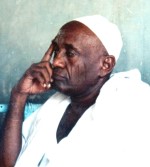
1985: Mahmoud Mohamed Taha, progressive Islamic theologian

On this date in 1985 progressive Islamic theologian Mahmoud Mohamed Taha was publicly hanged at a prison in Khartoum North, Sudan.

Seventy-five years old at his death, Taha spent his youth in the nationalist movement against British control of Sudan where he emerged as the standard-bearer of the liberal/secular Republican Party.

After Sudan won independence in 1956, both Taha and his party maintained — in the face of official hostility that waxed and waned with the changing regimes — nonviolent support for political openness, national unity between Muslims and non-Muslims, and a theology pointing to reform within Islam. Specifically, Taha embraced a women’s movement and opposed the imposition of sharia, at least in the absence of a radical modernization of the Islamic religious law.

The introduction of sharia in 1983 brought matters to a head, and not only with Taha: civil war broke out — the conflict between the Muslim north and the Christian and animist south only recently and imperfectly abated.

Taha and four other Republicans were tried for their intransigence in a two-hour trial under a seemingly muddled mixture of secular and religious law.

Among the hundreds of attendees of Taha’s hanging this day were his four “co-conspirators.” They were themselves under sentence of death to be carried out January 20th, unless they should recant. All four recanted. Hundreds of other Republicans were held around the country on lesser charges until they did likewise.

The next year, with a new government in place, the Sudanese Supreme Court declared the proceedings against the Republicans to have been in error.

Little of Taha’s work has been translated, but his Second Message of Islam is available in English and presents a conception of the faith so unfamiliar in the west that one reviewer mitigates his praise with the regret that “it is nonsensical to talk of reforming Islam, a religion which is doctrinally irreformable.”

Taha’s thought also has a scholarly evaluation in Quest for Divinity: A Critical Examination of the Thought of Mahmud Muhammad Taha. More information by and about Taha and the Republicans is here.

On this day..

1463: Not François Villon

Je suis François, dont ce me poise,
Né de Paris emprès Ponthoise.
Or d’une corde d’une toise
Saura mon col que mon cul poise.*

-F. Villon, LE QUATRAIN
“Que feit Villon quand il fut jugé à mourir.”

On this day in 1463 François Villon vanished into thin air — along with his mastery for words and for mischief.

Posterity is left to write blog entries about his miraculous deliverance from the gallows; to credit him with influence on Fin de siècle poets, contemporary cinema and god knows what else; to speculate about his destiny; to explain the motives for his disreputable lifestyle (oh, why, my dear reader, are we so presumptuous?); and, well, to read his verse.

[audio:Villon_ballade_du_concours_de_Blois.mp3]

The epithets “thief” and “rogue” are de rigueur when a discourse demands an allusion to his name. The man was a villain, all right. Villon’s official criminal career started with a drunken brawl murder. He got entangled with a gang. He stole, imbibed and rollicked. He was banished, imprisoned and tortured.

One prim Scotsman, a trained lawyer and a beloved writer, wields rather harsh albeit stunningly eloquent prose to depict our pauvre Villon. To Stevenson, Villon was “the first wicked sansculotte”, a “sinister dog”, “the sorriest figure on the rolls of fame”, whose “pathos is that of a professional mendicant who should happen to be a man of genius”.

Incidentally (I hope the reader will forgive this digression given the general topicality of the issue), Stevenson, a harsh judge of Villon’s ignoble nature, says this about waterboarding:

[Villon] was put to the question by water. He who had tossed off so many cups of white Baigneux or red Beaune, now drank water through linen folds, until his bowels were flooded and his heart stood still. After so much raising of the elbow, so much outcry of fictitious thirst, here at last was enough drinking for a lifetime. Truly, of our pleasant vices, the gods make whips to scourge us …

A different take on Villon’s despicable life is voiced by another poet, Osip Mandelstam:

Villon’s sympathy to the society’s scumbags, to everything that is vile and criminal is not demonism. The nefarious company, to which he was so quickly and intimately drawn, captivated his feminine nature with great temperament and powerful rhythm of life, which he could not find elsewhere in the society.

… With odd brutality and rhythmic ardor, he depicts in his ballad [The Ballad of the Hanged], how wind swings the bodies of the wretched, to and fro, as it will … Even death he endows with dynamic qualities, and here manages to manifest his love to rhythm and movement … I think that Villon was allured not by demonism, but by the dynamics of crime …

(Mandelstam’s original is in Russian; this translation is mine)

In the autumn of 1462 François Villon was arrested. He expected to be hanged. Instead, on this date, parliament granted him a pardon and banished him from Paris (for the third time, no less).

What happened to the poor vagabond, medieval Parisian desperado, that troubadour of the rascals?

The trail goes cold — the yellowed parchments fall silent. He vanished into thin air …

* Below is a rather unsatisfactory and uncredited translation found here, which nevertheless conveys the idea:

Surname? Villon, just my luck.
Born? In Paris, near Pontoise.
You wonder what my backside weighs?
Ask my neck when they string me up.

On this day..

1663: Illiam Dhone

On this date in 1663, Illiam Dhone was shot for treason at Hango Hill on the Isle of Man.

William Christian — “Illiam Dhone” is a Gaelic sobriquet meaning “Brown William” — committed his fatal offense in 1651: as a powerful Manx pol charged with defense of the island against a prospective Roundhead invasion, he overthrew the Royalist lords and bloodlessly surrendered instead.

Although documentation seems to be fragmentary, an overreaching assertion of lordly prerogatives by James Stanley, Earl of Derby, of late made Cromwell‘s prisoner, might have prepared a powder keg ignited by the efforts of the Earl’s wife to ransom her husband by the Isle’s sacrifice.

Treason doth never prosper, so with the prosperity of Cromwell’s revolution, Christian earned the Manx governorship. Only upon restoration of the crown did his putsch come a cropper.

“In all likelihood Illiam Dhone was probably executed as an act of revenge by the Stanley family,” Roger Sims of the Manx Museum says. “However, the fact remains that Illiam Dhone’s actions in surrendering the island probably saved a great many lives and a great deal of property.”

The case, however, proceeded despite a general amnesty that should have spared the “traitor”. A week after he had already delivered himself of his dying denunciation against “a prompted and threatened jury, a pretended Court of Justice, of which the greater part were by no means qualified,” his appeal finally reached London — and was granted.

The patriot’s martyrdom made its mark in literature with the Gaelic ballad “Baase Illiam Dhone” (lyrics and translation, sheet music) and Sir Walter Scott’s Peveril of the Peak.

On this day..

1862: 38 Sioux

On this date in 1862, 38 rebellious Sioux were hanged in Mankato, Minnesota, in the largest mass execution in U.S. history.

Fully 303 had been condemned to die in drumhead trials after the five-week Dakota War, one of the numerous native conflicts sparked by the march of European settlers across North America.

Abraham Lincoln — in a political risk — commuted all but 39 sentences* adjudged “to have participated in massacres, as distinguished from participation in battles,” essentially defining a special category for what today might be considered “war crimes.”

Lincoln had more pressing business on his hands, to be sure, but seems to have been affected by the plight of the natives that drove them to wage hopeless war on encroaching settlers:

“[Bishop Henry Whipple] came here the other day and talked with me about the rascality of this Indian business until I felt it down to my boots. If we get through this war, and I live, this Indian system shall be reformed!”

Fateful “if” — but politicians say many things, after all, and it was long before Lincoln went to Ford’s Theater that the tribes had been forced out of Minnesota, scattered to wasteland reservations and subsequent clashes with the American army.

On this day, all that doleful future was prefigured in the 38 who hanged together in what is now Mankato’s Reconciliation Park, an event that after a century’s time has become a moment for commemoration.

Two academics’ pages on the Dakota War and its aftermath are here and here.

*One of those was subsequently spared over uncertainty of the evidence against him.

Part of the Themed Set: The Spectacle of Public Hanging in America.

On this day..