1474: A cock and its eggs

“On the Thursday before St. Lawrence’s Day,” writes Gross in his Kurtze Basler Kronik, “they burned a cock on the Kolenberg, together with an egg which he had laid,* for they feared that a dragon might be hatched therefrom. The executioner cut open the cock and found three more eggs in him. For, as Vicentius saith in the sixth book of his Speculum Naturale, it hath always been held that a cock in his old age may lay an egg, whence ariseth a basilisk, if it be hatched out on a dungheap by the serpent called coluber. Wherefore the basilisk is half cock and half serpent. He saith also that certain persons declare they have seen basilisks hatched from such eggs. (Source)

* “The cock,” George Ives reassures, “was possibly an hermaphrodite or, more likely, a crowing hen.”

On this day..

1209: Massacre of Beziers, “kill them all, let God sort them out”

Today the French town of Beziers remembers the 800th anniversary of the first sack and massacre of the Albigensian Crusade.

Rome was alarmed by the advent in southern France of a mass religious movement, Catharism, with such scandalous doctrines as spirit-body dualism and not giving tons of money to Rome.

Naturally, God said to cut them to pieces.

Beziers was the first town invested by the invading crusader army, left to its fate as the Cathars mustered in Carcassone. Interestingly, this particular city did not so much present that familiar spectacle of Christians killing Christians who thought differently — unless the thought in question was about handing over their neighbors to a throng of land-grabbing nobles.

Part of the Catholic faith did itself honor this day: those Biterrois who refused to abandon to the glories of martyrdom the Cathars in their midst, who are thought to have numbered merely a few hundred. So when the walls fell, it was mostly orthodox Catholics killing orthodox Catholics.

Well, what’s a crusading army with other cities to sack supposed to do?

“Kill them all”

After the fortified city embarrassingly got itself captured within hours by camp followers, Caesar of Heisterbach recorded one of history’s more quotably infamous instances of prayerful deliberation:

When they discovered, from the admissions of some of them, that there were Catholics mingled with the heretics they said to the abbot “Sir, what shall we do, for we cannot distinguish between the faithful and the heretics.” The abbot, like the others, was afraid that many, in fear of death, would pretend to be Catholics, and after their departure, would return to their heresy, and is said to have replied “Kill them all for the Lord knoweth them that are His” (2 Tim. ii. 19) and so countless number in that town were slain.

Or, in glorious Latin:

Caedite eos. Novit enim Dominus qui sunt eius.

And so they did.

And they killed everyone who fled into the church; no cross or altar or crucifix could save them. And these raving beggarly lads, they killed the clergy too, and the women and children. I doubt if one person came out alive … such a slaughter has not been known or consented to, I think, since the time of the Saracens. (William of Tudela, cited in Cathar Castles)

Ten to twenty thousand are thought to have been slain this day — in what proportions Catholic and heretic, only God can say.

On this day..

1977: Princess Misha’al bint Fahd al Saud and her lover

On this date in 1977, a 19-year-old royal adulteress and her paramour were executed in a Jeddah parking lot by the order of the girl’s powerful grandfather.

Princess Misha’al‘s fate has been obscured by secrecy and the Rashomon-like interpretations imposed upon it by observers.

In its outline (and the first stock interpretation we’re imposing) it’s that timeless human tragedy, the love story, in which headstrong royal daughter and suffocating traditional family square off over the seditious power of the feminine libido.

The princess, in a youthful arranged marriage by most accounts, took up with a Saudi boy while both were studying abroad in cosmopolitan Beirut, and dangerously attempted to maintain the affair back in the royal kingdom to the point of a quixotic (and obviously foiled) escape attempt. Whether under color of a judicial proceeding — the story says Misha’al refused to walk away by simply renouncing her lover and defiantly brought down the death sentence by confessing adultery — or simply on his own authority, the girl’s staunchly conservative* grandfather exercised his right as tribal patriarch to inflict an honor killing for the disgrace they had brought on the family.

The execution in Jeddah — she by gunshot,** he by a very clumsy beheading — that is supposed to have occurred on this date was public, but quiet; news of it got abroad only slowly and incompletely. Small wonder that, once it did, the blended motifs of Romeo and Juliet, harem titillation and oil politics made dynamite material for high-, middle- or lowbrow exploitation.

In 1980, the affair became the subject of one of the most notorious television programs ever aired, the docudrama Death of a Princess. This film’s airing in Britain in 1980 led Riyadh to expel the British ambassador, and cost £200 million of lost revenue for the UK from canceled orders and product boycotts by the Saudis.†

It was aired on in the United States on PBS in 1980 to similar controversy, as oil companies rushed to distance themselves from it.

Rebroadcast in 2005, Death of a Princess is available online for your judgment (as is this partial script): is this a muckraking expose of a shameful crime? orientalist heavy petting? “a sensitive and thoughtful exploration of the Arab dilemma,” as per its own advance publicity? and what did the official apologies (and in only a few countries, censorship) say about the political weight of the petroleum industry?

These, meanwhile, are the western reactions, already removed from events by a further layer of mediation, a forest of axes seeking grinding. If the writer who composed this piece is to be believed, the executed girl has posthumously achieved a sort of universal symbolic gravity in the Arab world, standing for the plight of any hopeless cause of justice dashed against authoritarian power.

* For the House of Saud, it must be recalled, the personal was political in the problematic confrontation between tradition and modernity athwart the desert kingdom’s sea of oil.

** “Princess Misha’al” was executed fully veiled, which permits the rumor that the slain woman was actually a surrogate and the onetime royal favorite lives on incognito somewhere.

† According to the July 4, 1980 London Times.

Part of the Themed Set: The Feminine Mystique.

Editor’s note: References to “Princess Misha” corrected; thanks to hannah for the clarification.

On this day..

1749: Maria Renata Singer, theological football

On this date in 1749, an aged subprioress of the Unterzell nunnery was beheaded and burnt in Wurzburg for witchcraft … and for the principle of witchcraft.

Maria Renata Singer (or Singerin — here’s her German Wikipedia page) had been a reclusive denizen of the convent for half a century.

A dying nun accused her of working black magic, and everything snowballed in the usual way: other nuns got into the act, often in the throes of exorcism. Confinement and interrogation (torture is not recorded) eventually induced her to confess to having been a witch for more than 60 years. (Details of the unfolding procedure here, in German.)

On this morning 260 years ago, her sentence — moderated from burning alive — was carried out: Singer’s head was struck off and mounted on a pole, and her body burned to ashes.


Witnesses reported seeing a vulture appear when the body was burned.

Nothing so remarkable, really, in the annals of witchcraft. Nothing except the date. Witch-burnings in 1749! Voltaire was in his fifties. Thomas Jefferson was alive. Wurzburg itself hadn’t seen witchcraft executions since the madness of the Thirty Years’ War.

But even in the Age of Enlightenment, the benighted world got its licks in. And in this instance, the case of the witch-nun of Bavaria was bulletin-board material in an unfolding public debate over witchcraft.

Scholars and theologians were burdening the mid-18th century printing presses with treatises on the legitimacy of witchcraft persecutions. Singer herself, when first confronted with the accusation, had not simply denied it: she had denied there was any such thing as a witch.

That same year of 1749, Girolamo Tartarotti‘s influential Congresso notturno delle lammie skewered witchcraft jurisprudence.

Tartarotti’s work fit into a growing critique naturally animated by the rationalist spirit of the times.

Partly through Singer’s execution, the witchsniffers’ intellectual defenders mounted their last defense.

Jesuit Georg Gaar, who had been Singer’s confessor before death, preached a sermon at her cremation “praising the wise severity of laws against these crimes, and speculating that this might be God’s warning against the men of our time who do not believe in witches, or magic, or the devil, or God. Father Gaar plainly thought himself, and told the people, that they only needed to read the evidence from Unterzell to be persuaded of the justice of the sentence and the truth about witchcraft.”

Tartarotti reprinted this sermon with a critical commentary. But some theologians (and not only Bavarians*) were ready to go to bat for the traditional superstitions.**

According to Brian Copenhaver, writing in the Journal of the History of Philosophy (January, 1979):

The rigorist Dominican Daniele Concina [Italian link -ed] argued that God permits witchcraft “for the greater confirmation of faith,” and he disposed of the skeptical sections of the Canon episcopi as a forger’s work. In a variation on Pangloss’s reasoning about noses and spectacles, Benedetto Bonelli deduced the reality of witchcraft from the existence of laws against witches.

As another critic of Tartarotti fretted, “Does not the denial of the existence of demons open the way and lead directly to the denial of the existence of God?”

Interestingly, Tartarotti accepted the reality of “magic” while denying the existence of witches, ascribing the latter’s survival as folklore to incomplete Christianization. While (see Copenhaver once again) this tack could be read as a tactical choice of moderation on Tartarotti’s part to achieve the pragmatic end of eliminating witchcraft trials, it put him in the crossfire between more rigorously rationalist intellectuals and the likes of Georg Gaar.

This angle of Tartarotti’s, especially given his simultaneous interest in the occult, has led to his work’s subsequent adoption as an antecedent to the still-popular if academically disreputable theory that underground sects of pagan practitioners really did persist in Europe, and were the true targets of witch-hunts like the one that killed Maria Renata Singer.

A lengthy 19th-century treatment of the case is available in German in a public domain Google books entry here.

* 18th century English theologian John Wesley, feeling himself pinned by the Old Testament verses about not-suffering-a-witch-to-live and all that, insisted that “giving up witchcraft is, in effect, giving up the Bible” and “the credit of all history, sacred and profane.”

** Conversely, a German scholar sneered at the backward prejudices of “the common rabble, especially in our beloved Bavaria.”

On this day..

1987: Jimmy Glass, electrocution appellant

On this date in 1987, Jimmy L. Glass died in Louisiana’s electric chair — having come one vote short of having the device declared unconstitutional by the Supreme Court.

The 20-year-old Glass escaped from a parish jail with fellow inmate Jimmy Wingo on Christmas Eve, 1982, robbing and murdering an elderly couple in the process. Each blamed the other; both got the chair.*

But should they have?

Glass would lend his name to a landmark 1985 Supreme Court decision contesting Louisiana’s method of execution.

By a 5-4 decision, the high court held that electrocution, still at that point the country’s prevailing method of execution despite its medieval reputation for grisly botches, remained a constitutional method of inflicting death.

Liberal Justice William Brennan‘s vigorous dissent from that judgment is not for the squeamish. (For readability, I’ve added emphasis and removed the many citations in the original.)

[E]vidence suggests that death by electrical current is extremely violent and inflicts pain and indignities far beyond the “mere extinguishment of life.” Witnesses routinely report that, when the switch is thrown, the condemned prisoner “cringes,” “leaps,” and ” ‘fights the straps with amazing strength.’ ” “The hands turn red, then white, and the cords of the neck stand out like steel bands.” The prisoner’s limbs, fingers, toes, and face are severely contorted. The force of the electrical current is so powerful that the prisoner’s eyeballs sometimes pop out and “rest on [his] cheeks.” The prisoner often defecates, urinates, and vomits blood and drool.

“The body turns bright red as its temperature rises,” and the prisoner’s “flesh swells and his skin stretches to the point of breaking.” Sometimes the prisoner catches on fire, particularly “if [he] perspires excessively.” Witnesses hear a loud and sustained sound ” like bacon frying,” and “the sickly sweet smell of burning flesh” permeates the chamber. This “smell of frying human flesh in the immediate neighbourhood of the chair is sometimes bad enough to nauseate even the Press representatives who are present.” In the meantime, the prisoner almost literally boils: “the temperature in the brain itself approaches the boiling point of water,” and when the postelectrocution autopsy is performed “the liver is so hot that doctors have said that it cannot be touched by the human hand.” The body frequently is badly burned and disfigured.

The violence of killing prisoners through electrical current is frequently explained away by the assumption that death in these circumstances is instantaneous and painless. This assumption, however, in fact “is open to serious question” and is “a matter of sharp conflict of expert opinion.” Throughout the 20th century a number of distinguished electrical scientists and medical doctors have argued that the available evidence strongly suggests that electrocution causes unspeakable pain and suffering. Because ” ‘[t]he current flows along a restricted path into the body, and destroys all the tissue confronted in this path . . . [i]n the meantime the vital organs may be preserved; and pain, too great for us to imagine, is induced. . . . For the sufferer, time stands still; and this excruciating torture seems to last for an eternity.‘ ” L.G.V. Rota, a renowned French electrical scientist, concluded after extensive research that

“[i]n every case of electrocution, . . . death inevitably supervenes but it may be very long, and above all, excruciatingly painful . . . . [T]he space of time before death supervenes varies according to the subject. Some have a greater physiological resistance than others. I do not believe that anyone killed by electrocution dies instantly, no matter how weak the subject may be. In certain cases death will not have come about even though the point of contact of the electrode with the body shows distinct burns. Thus, in particular cases, the condemned person may be alive and even conscious for several minutes without it being possible for a doctor to say whether the victim is dead or not. . . . This method of execution is a form of torture.”

At least neither the juridical near miss nor Brennan’s graphic description of his impending manner of death dented Jimmy’s sense of humor. Asked for his last words, the “swaggering” inmate, already strapped in the chair, replied

Yeah, I think I’d rather be fishing.

Luckily for Carlisle United, he’s not the same guy as journeyman goaltender Jimmy Glass, who in 1999 improbably struck home one of the greatest goals in English football history.

* Wingo was put to death four days after Glass.

On this day..

1862: William B. Mumford, flag desecrator

On this date in 1862, a 42-year-old gambler hanged at the New Orleans mint where, six weeks before, he had pulled down the Stars and Stripes of the arriving Union occupiers to the delight of a Confederate mob.
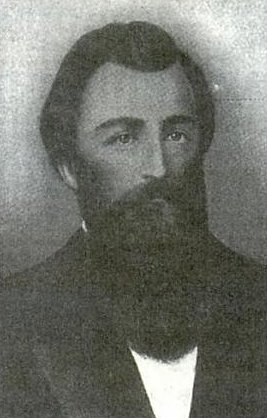
Moving to secure the Mississippi, Northern forces had the Big Easy encircled and about to surrender when, an advance team landed in the undefended city and pulled down the Stars and Bars over the mint on Esplanade Avenue.

William Bruce Mumford was among the Confederate loyalists who took exception to the Yankee flag, so he chopped it down and dragged it through the street (provoking a cannonade from a Union warship). The flag was little but tatters by the time he had through with it.

Although the city was not officially occupied at the time of this incident, the mint was a federal building. Army General Benjamin Butler resolved to make a salutary example out of the incident to quell any possible civil unrest.

I find the city under the dominion of a mob. They have insulted our flag — torn it down with indignity. This outrage will be punished in such a manner as in my judgment will caution both the perpetrators and abettors of the act, so that they will fear the stripes, if they do not reverence the stars of our banner.

Butler, it should be allowed, had some reason for this conclusion. The Picayune exulted the act as, well, a call to resistance.

The names of the party that distinguished themselves by gallantly tearing down the flag that had been surreptitiously hoisted, we learn, are W. B. Mumford, who cut it loose from the flag-staff amid the shower of grape. Lieutenant N. Holmes, Sergeant Burns and James Reed. They deserve great credit for their patriotic act. New Orleans, in this hour of adversity, by the calm dignity she displays in the presence of the enemy, by the proof she gives of her unflinching determination to sustain to the uttermost the righteous cause for which she has done so much and made such great sacrifices, by her serene endurance undismayed of the evil which afllicts her, and her abiding confidence in the not distant coming of better and brighter days — of speedy deliverance from the enemy’s toils — is showing a bright example to her sister cities, and proving herself, in all respects, worthy of the proud position she has achieved. We glory in being a citizen of this great metropolis.

This free book argues that Butler’s clemency a few days before to a group of condemned southern enlisted men made mercy politically impossible in the Mumford case, lest the citizenry interpret executive weakness as an invitation to lawlessness.

If that was Butler’s calculus, Confederate die-hards did not appreciate it.

Accordingly, when Mumford was “hung … from a flag-staff projecting from one of the windows under the front portico” of the mint, he won promotion into the pantheon of southern martyrs.

Confederate President Jefferson Davis issued an order condemning General Butler, and even his officers, to death, along with some outsized bluster about embargoing prisoner exchanges that the Confederacy had not the manpower to seriously intend:

William B. Mumford, a citizen of this Confederacy, was actually and publicly executed in cold blood by hanging alter the occupation of the city of New Orleans by the forces under the command of General Benjamin F. Butler when said Mumford was an unresisting and non-combatant captive, and for no offense even alleged to have been committed by him subsequent to the date of the capture of the said city …

the silence of the Government of the United States and its maintaining of said Butler in high office under its authority for many months after his commission of an act that can be viewed in no other light than as a deliberate murder, as well as of numerous other outrages and atrocities hereafter to be mentioned, afford evidence only too conclusive that the said Government sanctions the conduct of said Butler and is determined that he shall remain unpunished for his crimes:

Now therefore I, Jefferson Davis, President of the Confederate States of America, and in their name do pronounce and declare the said Benjamin F. Butler to be a felon deserving of capital punishment. I do order that he be no longer considered or treated simply as a public enemy of the Confederate States of America but as an outlaw and common enemy of mankind, and that in the event of his capture the officer in command of the capturing force do cause him to be immediately executed by hanging; and I do further order that no commissioned officer of the United States taken captive shall be released on parole before exchange until the said Butler shall have met with due punishment for his crimes.

And whereas the hostilities waged against this Confederacy by the forces of the United States under the command of said Benjamin F. Butler have borne no resemblance to such warfare as is alone permissible by the rules of international law or the usages of civilization but have been characterized by repeated atrocities and outrages

… (examples of atrocities omitted) …

I, Jefferson Davis, President of the Confederate States of America and acting by their authority, appealing to the Divine Judge in attestation that their conduct is not guided by the passion of revenge but that they reluctantly yield to the solemn duty of repressing by necessary severity crimes of which their citizens are the victims, do issue this my proclamation, and by virtue of my authority as Commander-in-Chief of the Armies of the Confederate States do order-

1. That all commissioned officers in the command of said Benjamin F. Butler be declared not entitled to be considered as soldiers engaged in honorable warfare but as robbers and criminals deserving death, and that they and each of them be whenever captured reserved for execution.

2. That the private soldiers and non-commissioned officers in the army of said Butler be considered as only the instruments used for the commission of the crimes perpetrated by his orders and not as free agents; that they therefore be treated when captured as prisoners of war with kindness and humanity and be sent home on the usual parole that they will in no manner aid or serve the United States in any capacity during the continuance of this war unless duly exchanged.

3. That all negro slaves captured in arms be at once delivered over to the executive authorities of the respective States to which they belong to be dealt with according to the laws of said States.

4. That the like orders be executed in all cases with respect to all commissioned officers of the United States when found serving in company with armed slaves in insurrection against the authorities of the different States of this Confederacy.

The Confederates never got a chance to enforce the order; he resumed his colorful political career and died in 1893 hailed as Massachusetts’ greatest citizen-soldier. Complain (pdf) as they might of his iron-heeled rule, the residents of New Orleans had good cause to appreciate the relatively early and orderly occupation of their city, which spared it the flames visited on more recalcitrant rebel strongholds.

For the South, the loss of its largest city and the gateway to the Mississippi was a severe blow. As the rebel position crumbled in the months to come, Jefferson Davis must have had a worry for his own neck.

Somehow, he and every other Southerner escaped execution for their treasonable design, which leaves William Bruce Mumford, the riverboat gambler who tore down Old Glory, as the only American since at least the War of 1812 to be put to death for treason against the United States.*

* Anti-slavery rebel John Brown was hanged for treason in 1859, but it was treason against the state of Virginia — not against the U.S. Julius and Ethel Rosenberg were electrocuted for espionage, not treason.

On this day..

1993: Leonel Herrera, perilously close to simple murder?

On this date in 1993, Leonel Herrera was executed by lethal injection in Huntsville, Texas, for shooting two policemen. Herrera’s last statement averred,

Herrera’s sister Norma self-published this book about the case — keeping a promise to her executed brother.

I am innocent, innocent, innocent. Make no mistake about this; I owe society nothing. Continue the struggle for human rights, helping those who are innocent, especially Mr. Graham. I am an innocent man, and something very wrong is taking place tonight. May God bless you all. I am ready.

Well, Herrera wasn’t the first to go to his death maintaining his innocence. The circumstances (and circumstantial evidence) of the crime rate on the forgettable side.

But Leonel Torres Herrera was a bit different from his cousins in hopeless protestation: while he died this evening, his name lived on … in a landmark Supreme Court decision

Herrera v. Collins

Years after Herrera was convicted and death-sentenced, multiple affidavits were produced to the effect that his late brother, Raul, was the real killer.

This evidence was naturally pursued with gusto by the condemned man.

Unfortunately, a claim like Herrera’s of “actual innocence” faces a very high bar when raised in appellate courts, once a prisoner has already been convicted and their presumption of innocence become a presumption of guilt.

That this arbitrary rule of the game has a defensible rationale — could any criminal justice system operate if prisoners could continually relitigate their cases while memories fade and evidence ages into obsolescence? — does not make it the less Kafkaesque for individual prisoners, some of whom are in fact innocent.

Herrera presented this problem in unusually stark terms. Lacking any procedural violation upon which to hang his hat as an appeals issue, his claim pitted substance against form in the Supreme Court. (Oral arguments at Oyez.org)

You already know how it ended.

Chief Justice William Rehnquist’s opinion patiently explained a jurisprudential truism loftily uncolored by any experience in life liable to introduce a sense of kinship with a Hispanic man charged with a Texas cop-killing who uncovers too late the evidence that could save him.

“[A]ctual innocence” is not itself a constitutional claim.*

Instead, the Court recommended — tongue no doubt planted firmly in cheek — that Herrera apply for executive clemency, a dead letter procedure in Texas used exclusively in a good cop/bad cop routine opposite the black robes.

“Judicial restraint forbids relieving you,” says the court. “Go ask the governor.”

“The courts have thoroughly reviewed the case,” intones the governor. “May God have mercy on your soul.”

Herrera himself may or may not have been innocent. At the end of the day, he went down because the game was rigged against him: his exculpatory evidence was not available at trial, when it might have introduced “reasonable doubt” — as Rehnquist’s opinion put it, “in state criminal proceedings the trial is the paramount event for determining the guilt or innocence of the defendant.” Once that evidence became available deep in the appeals process, it was procedurally barred, and far from such a slam-dunk exoneration that any institutional actor would stick his, her or its neck out to lift Leonel Torres Herrera from the gurney.

Justice Harry Blackmun’s dissent retorted,

Just as an execution without adequate safeguards is unacceptable, so too is an execution when the condemned prisoner can prove that he is innocent. The execution of a person who can show that he is innocent comes perilously close to simple murder.

Whether “simple murder” happened in Huntsville this night in 1993, perhaps no one can really say with certainty.

But as DNA evidence and other forensic advances in the intervening years have increasingly eroded confidence in the reliability of the justice system that metes out death, Herrera v. Collins stands as a key precedent in a case now before the Supreme Court — in which states (joined by the Obama administration) are asking the justices to agree that convicted prisoners have no right to cheap, simple, and frequently dispositive DNA testing that may not have been available when they were tried.

Given the composition of the court (including three holdovers from the Herrera majority), that decision figures to have Leonel Herrera rolling over in his grave.

* Rehnquist conceded a theoretical possibility that extraordinarily persuasive evidence could generate relief on due process grounds. Antonin Scalia and Clarence Thomas went much further, claiming that prisoners had no right to anything but their trial and their (procedural) appeals.

On this day..

1947: Willie Francis, this time successfully

(Thanks to Gilbert King, author of The Execution of Willie Francis (book site), for the guest post, the second of two. Read the first here.)

On May 9, 1947, Willie Francis was executed in the same electric chair that he had walked away from a year and a week earlier, when a drunken prison guard and trustee bungled the wiring. Willie’s story had made front-page headlines around the country as the United States Supreme Court grappled with questions about what the State of Louisiana was permitted to do with regard to double jeopardy and cruel and unusual punishments.

One of the things that drew me to this story as I was working on my book, The Execution of Willie Francis, was the shroud of secrecy that surrounded the Willie Francis case.

Willie was accused and convicted of killing 53-year-old Andrew Thomas, a Cajun pharmacist who was something of a mystery to the people in the small town of St. Martinville, Louisiana. Thomas’ brother Claude was the town’s chief of police, and Willie was convicted by twelve Cajun jurors and sentenced to death by a Cajun judge. His court-appointed attorneys neither called nor cross examined any witnesses, and did not even make a case in defense of their 16-year-old client.

The prosecution based its entire case on a confession obtained while Willie was in police custody without the aid of a lawyer. In this confession, Willie wrote, “it was a secret about me and him,” which was never explained. It was obvious to me that there was more to Willie’s story than the version presented in trial and to the public.

In my research, I came across a photograph taken on the evening Willie had survived his own execution. He’d been brought back to his cell, and the sheriff allowed reporters and a photographer to visit with Willie, where he told them that death tasted “like peanut butter” and looked a lot “like shines in a rooster’s tail.” The photographer asked for a few pictures, and Willie, holding his dog-eared Bible, stood in front of a dull pink wall. The flash fired.

This picture was never used by any of the newspapers. There was a lot of glare on the wall, and the photographer had gotten a much better one of Willie smiling — the picture that ended up on the front page of many newspapers the next day. But there was some writing on the wall image that was barely legible. I scanned it onto my computer and ran it through Photoshop, adding contrast and burning and dodging until the words could be read. The handwriting matched Willie’s.


Detail of the enhanced photograph. Click for the full image.

Not surprisingly, the sheriff had testified under oath that Willie had confessed to killing Andrew Thomas in writing on the wall of his cell a month before he was scheduled to die in the chair. But the Sheriff had also taken Willie’s words out of context, reading only select portions of the writing, and mischaracterizing others. In fact, Willie Francis, just as he had when he wrote in his confession that “it was a secret about me and him,” alluded to something different than the robbery-turned killing prosecutors accused him of. Willie wrote, “Practically I killed Andrew by accident. It will happen once in a life time”

Only two people know the truth about that fateful confrontation at the house of the Cajun bachelor and the black teenager who once worked for him. Both are dead, and the official story does not ring true. Willie Francis never denied killing Andrew Thomas. But he disputed the prosecution’s accusation that he was trying to rob the pharmacist. “I wasn’t after money,” Willie insisted to a reporter before he went to the chair a second time. Yet he would never elaborate, and took whatever “secret” there was between him and Thomas to his grave.

On this day..

1795: Antoine Quentin Fouquier-Tinville, Robespierre’s prosecutor

On this date in 1795, the attorney who had engineered the Terror was guillotined for engineering the Terror.

Antoine Quentin Fouquier de Tinville (English Wikipedia page | French), or just plain Fouquier-Tinville, had emerged during the Revolution from penurious obscurity to wrangle a jury foreman’s position courtesy of his connection to Camille Desmoulins. When Desmoulins ally Georges Danton spearheaded creation of a Revolutionary Tribunal (French link), Fouquier-Tinville drew the choice gig of Public Prosecutor.

From that perch, he would supply the arbitrary exercises of the Committee of Public Safety their (increasingly scanty) scaffolding of formal legality in Paris’s greatest show trials.

Charlotte Corday.

The Girondists.

Marie Antoinette.

Fouquier-Tinville’s own onetime benefactors, Danton and Desmoulins. (He struggled to contain Danton’s rhetorical fireworks, as depicted in the 1983 film Danton — we see him plying his trade from about 3:29 of this clip.)

Heck … when the Terror ended, our good state’s attorney even signed off on the execution of Robespierre, with what must have been a lump in his throat. He was himself denounced within days, and narrowly preserved from the summary justice of his fellow-prisoners upon incarceration.

Naturally, like every criminal barrister since, Fouquier-Tinville’s defense was, hey, don’t blame me: the law made me do it. “I had only acted in the spirit of the laws passed by a Convention invested with all powers. Through the absence of its members [on trial], I find myself the head of a conspiracy I have never been aware of.”

Pity the lawyers.

This varietal of the only-following-orders defense did not impress in Fouquier-Tinville’s case; the Public Prosecutor had made the role too much his own.

I have been told by a gentleman who was at school with Fouquier, and has had frequent occasions of observing him at different periods since, that he always appeared to him to be a man of mild manners, and by no means likely to become the instrument of these atrocities; but a strong addiction to gaming having involved him in embarrassments, he was induced to accept the office of Public Accuser to the Tribunal, and was progressively led on from administering to the iniquity of his employers, to find a gratification in it himself.

And, indeed, he was condemned by his own hand. His lawyerly letter to the Convention during Danton’s trial — “the accused are behaving like madmen and demand the summoning of their witnesses … our judicial powers do not furnish us with any means of refusing” — duly elicited those heretofore absent powers, which the prosecutor immediately deployed to gag the defense.

Antoine Quentin Fouquier de Tinville, the sinister mediocrity who gave villainy the cover of law, was guillotined this morning in 1795 to the delight of the Paris mob: the last head to roll in a batch of 16.

On this day..

1722: Arundel Cooke and John Woodburne, despite a novel defense

On this date in 1722, Arundel Cooke and John Woodburne were hanged at Bury St. Edmunds, curiously becoming the first victims [edit: or maybe not] of a law of unintended consequences.

This duo’s path to the gallows begins years before their births, when Stuart Restoration parliamentarian John Coventry trod on the royal toes and was in consequence beaten up by some of Monmouth‘s goons.

Incensed, parliament passed the Coventry Act.

By this statute it is enacted that if any person shall of malice aforethought, and by laying in wait, unlawfully cut or disable the tongue, put out an eye, slit the nose, cut off the nose or lip, or cut off or disable any limb or member of any other person, with intent to maim or disfigure him, such person, his counsellors, aiders and abettors, shall be guilty of felony, without benefit of clergy.

“Previous to the passing,” claims The Newgate Calendar, “it was customary for revengeful men to waylay another and cut and maim him, so that though he did not die of such wounds he might remain a cripple during the remainder of life, and such case was not then a capital offence. It was also a dangerous practice resorted to by thieves, who would often cut the sinews of men’s legs, called ham-stringing, in order to prevent their escape from being robbed.”

Sounds like an interesting time. One may well wonder how very customary this practice was, with the half-century lapse before the law found its first prey.

Cooke and Woodburne, for that matter, did not commit the sort of crime that long-ago parliament had had in mind.

Cooke, a well-off barrister, desired to secure for himself the sizable estate to which he was married, and hired working stiff John Woodburne to bump off his brother-in-law, on Christmas evening no less. The would-be assassin jumped him in a churchyard and

knocked down the unhappy man, and cut and maimed him in a terrible manner, in which he was abetted by the counsellor [Cooke].

Imagining they had dispatched him, Mr Cooke rewarded Woodburne with a few shillings and instantly went home; but he had not arrived more than a quarter of an hour before [the victim] knocked at the door, and entered, covered with wounds, and almost dead through loss of blood. He was unable to speak, but by his looks seemed to accuse Cooke with the intended murder, and was then put to bed and his wounds dressed by a surgeon. At the end of about a week he was so much mended that he was removed to his own house.

The perps were easily discovered, and having maimed the intended victim, appeared to fall within the compass of the Coventry Act.

But had they really committed a hanging offense? The defendant put his professional legal training to use.

[Cooke] urged that judgment could not pass on the verdict, because the Act of Parliament simply mentions an intention to maim or deface, whereas he was firmly resolved to have committed murder.

That’s a defense you don’t hear every day. Evidently, the court wanted to keep it that way.

Lord Chief Justice King, who presided on this occasion, declared he could not admit the force of Mr Cooke’s plea, consistent with his own oath as a judge — “For,” said he, “it would establish a principle in the law inconsistent with the first dictates of natural reason, as the greatest villain might, when convicted of a smaller offence, plead that the judgment must be arrested because he intended to commit a greater. In the present instance judgment cannot be arrested, as the intention is naturally implied when the crime is actually committed.”

Cooke’s university education and oleaginous lawyering did, however, enable him to make a successful request to be hanged before dawn on his scheduled day of execution, so as not to be exposed to the rude opprobrium of the commoners. John Woodburne (whether due to class position or the value he put on his last hours of life, the text does not inform us) was not extended the same courtesy, and swung later that day in full public view.

Part of the Themed Set: Selections from the Newgate Calendar.

On this day..