On this date in 1946, market day in the southeastern Polish town of Debica, three captured fighters* from the anti-communist Freedom and Independence (WiN) movement were publicly hanged.
This salutary, and surprise, hanging was a nasty public message during the dirty post-war war to consolidate communist authority in Poland.
The message, however, was not exactly meant for a world wider than Poland itself, so the fact that it was captured in a grainy photograph snapped by WiN agent Józef Stec and subsequently smuggled out to the West was not at all to the liking of Polish authorities.
According to a WiN eyewitness report also presumed to have been filed by Stec,
First the MO [local militia], the UB, and the military occupied the execution square holding their machine guns ready to fire. Then, a car came with uniformed individuals who placed the noose on the hook. After a short time the same car brought three condemned men in white shirts. Their hands and legs were tied with barbed wire. A Jewish prosecutor read the sentence and passed the condemned into the hands of the executioner. Before the execution, one of the condemned yelled: “Long live the Home Army. Long live General Anders and General Bor-Komorowski. Down with the commies. Brothers persevere or you’ll die like us. I swear before God that I have never been a bandit [as communist authorities designated them]. I am dying for the Motherland. Lord forgive them [the executioners] because they know not what they are doing.
* The victims were Józef Grebosz, Józef Kozlowski, and Franciszek Noster, according to the 2003 monograph After the Holocaust: Polish-Jewish conflict in the wake of World War II, by Marek Jan Chodakiewicz. This monograph is also the source for Stec’s quoted report on the hanging.
He had a couple of years to cool his heels and work his rosary while the new king, Henry VII, set about securing a reign of dubious legitimacy. One cunning strategem: Henry had his late rival’s supporters (like our friend Stafford) attainted of treason without actually taking action on those attainders, maintaining continuity with the ancien regime while dangling a Damoclean sword over the head of any lord who might step out of line again in the future.
Nevertheless, in the spring of 1486, the already-attainted Stafford emerged from his holy confines to throw the dice on a minor rebellion that never got off the ground. As the whole thing descended into fiasco, Stafford fled back to sanctuary at Culham.
A cozy but ill-fortified sanctuary: St. Paul’s at Culham. Image (c) Rex Harris and used with permission. (Mr. Harris says the church as pictured is a Victorian-era rebuild.)
Henry broke the asserted sanctuary to haul his man off consecrated grounds.
This was a bit of a sticky wicket, juridically, and Henry’s own judges proceeded very cautiously with it — ultimately holding that sanctuaries proceeded from the common-law grant of the king, and specifically that sanctuary may not be pleaded for instances of treason. There’s more about all this in this Google books freebie, which adds the interesting detail that the Pope himself did not fight this interpretation — assenting in a papal bull later that year to a much-circumscribed view of ecclesiastical refuge:
Where a sanctuary man got out of sanctuary and committed mischief and trespass, he lost the benefit of sanctuary although he returned to it.
The goods of no sanctuary men were to be protected from their Creditors.
If any man took sanctuary for case of treason, the King might appoint keepers to look after him in sanctuary.
“The Rebellion of Humphrey Stafford in 1486” by C. H. Williams in The English Historical Review, April 1928 — a JSTOR article that seems like it must be in the public domain even if it’s not yet covered by that institution’s free content bloc — is virtually the only semi-detailed source on this affair that’s readily available. Williams’s pithy conclusion: “Henry’s policy towards Stafford and his party was definite enough. Like all problems of statecraft of that period the rebellion ‘was so handled that neither prerogative nor profit went to diminution.'”
* The date is asserted here and here, among other places, although upon what primary authority I have not been able to determine.
On this date in 1730, the pirate Olivier Levasseur was hanged at Reunion Island– legendarily hurling into the crowd cryptic directions to his vast hidden treasure.
Supposedly a bourgeois son of Calais, Levasseur (English Wikipedia entry | French) made his start on the briny deep as a French naval officer-turned-privateer during the War of Spanish Succession, transitioning to full-time buccaneer after that conflict ended in 1714.
By the 1720s — and with a bad eye necessitating that most trite of pirate accessories, the eyepatch — Levasseur had a mixed-race crew raiding the east African coast and the Indian ocean.
His most renowned exploit put him decisively in piracy’s 1%.
Descending upon the Portuguese galleon Cabo — fat with gems and gold bars and loose guineas and silks and a gigantic decorative cross and a noble’s diamond-encrusted +3 vorpal sword, all en route from the wealthy colony of Goa but disarmed at anchor off Reunion Island after having barely survived a storm — Levasseur’s band was able to plunder something on the order of a present-day value well north of £1 billion.
A lot more than that.
This stupendous fortune, even after dividing it democratically with the crew, would cinch Levasseur’s fame, and his fate.
La Buse (“the Buzzard”; alternatively, “la Bouche”, “the mouth”) naturally tried to take advantage of the next available pirate amnesty to cash out and retire, but found that he’d be expected to cough up his loot as part of the deal. So he hoarded his treasure instead, hung up his pirate’s cutlass, and tried to hide out. He was eventually captured casually working as a ship’s pilot off Madagascar and strung up by the French; you can still pour out a rum for him at his grave at Saint-Paul.
By Tonton Bernardo (Own work) [CC-BY-SA-3.0 (http://creativecommons.org/licenses/by-sa/3.0)], via Wikimedia Commons
So much for Levasseur.
The reason we’re still talking about him three centuries on is that he’s alleged,* just before he dropped, to have hurled a bundle of parchments and/or a cryptogram necklace into the crowd assembled to watch him die, crying “find my treasure, who can!” or “my treasure for he who understands!”
And that’s pretty tantalizing stuff, considering the treasure has never since been found.
Levasseur’s boodle, if it did then and does still exist, is thought to be stashed somewhere on the Seychelles island of Mahe, and the slow and tantalizing unraveling of our corsair’s mysterious clues have seduced generations of treasure-hunters right into the present — like this fellow, or this one,** chasing after Masonic codes and rock etchings and Labors of Hercules and the promise of turning a five-figure investment in dynamite and scuba gear into a nine-figure payday and all the Discovery channel specials you can handle.
Until that day comes, Olivier is only a minor cinematic fixture. Basil Rathbone portrayed him (loosely) in the 1935 Errol Flynn vehicle Captain Blood (in that version, Rathbone dies by Flynn’s sword). An accessible treasure of this production, courtesy of YouTube: this 1937 radio drama of that same adventure, voiced by the principal actors:
On this date in 1691, Jack Collet was hanged for “sacrilegious burglary.”
This little-known highwayman ditched an apprenticeship with a Cheapside upholsterer to take the road, and carved a niche as the guy what robbed while dressed up as a bishop. (Once having lost his ecclesiastical garb at dice, he re-robed by sticking up a churchman on the road and forcing his victim to dis-.)
“As if he had been determined to live by the Church,” clucks the Newgate calndar, “he was at last apprehended for sacrilege and burglary, in breaking open the vestry of Great St Bartholomew’s, in London, in company with one Christopher Ashley, alias Brown, and stealing from thence the pulpit cloth and all the communion plate.”
For this bid to render un-from God, Caesar rendered Collet unto Tyburn.
On this date in 1680, the Spanish capital of Madrid celebrated an enormous auto de fe, culminating with 18 executions plus eight people posthumously burned and 22 fugitives “executed” in effigy. (Source of the numbers)
This signal event needed every drop of sunlight from the long summer’s day. Staged for the appearance of the royal family itself, it likewise pulled in every available case from around Spain: the regional cities shipped their apostates and heretics to Madrid to dignify the main event with a suitable quantity of prey.
It began with a morning ceremonial procession of prisoners, nearly a hundred — every source seems to have a slightly different figure — in the traditional Inquisitorial manner. This account comes from an English contemporary, as reprinted in Human Judgment: The Eye of the Beholder. (Note: paragraph breaks added, and ubiquitous capitalization of nouns removed, for better readability.)
A scaffold, fifty feet in length, was erected in the Square, which was raised to the same height with the balcony made for the King to sit in. At the end, and along the whole breadth of the scaffold, at the right of the King’s balcony, an amphitheatre was raised, to which they ascend by twenty-five or thirty steps; and this was appointed for the Council of the Inquisition, and the other Councils of Spain. Above these steps, and under a canopy, the Grand Inquisitor’s rostrum was placed so that he was raised much higher than the King’s balcony. At the left of the scaffold and balcony, a second amphitheatre was erected of the same extent with the former, for the criminals to stand in.
A month after proclamation had been made of the Act of Faith, the ceremony opened with a procession [on June 29], which proceeded from St. Mary’s church in the following order. The march was preceded by an hundred coal merchants, all arm’d with pikes and muskets; these people furnishing the wood with which the criminals are burnt. They were followed by Dominicans, before whom a white cross was carried. Then came the Duke of Medina-Celi, carrying the Standard of the Inquisition. Afterwards was brought forwards a green cross covered with black crepe; which was followed by several grandees and other persons of quality, who were familiars of the Inquisition. The march was clos’d by fifty guards belonging to the Inquisition, clothed with black and white garments and commanded by the Marquis of Povar, hereditary Protector of the Inquisition.
The procession having marched in this order before the palace, proceeded afterwards to the square, where the standard and the green cross were placed on the scaffold, where none but the Dominicans stayed, the rest being retired. These friars spent part of the night in singing of psalms, and several Masses were celebrated on the altar from daybreak to six in the morning. An hour after, the King and Queen of Spain, the Queen-Mother, and all the ladies of quality, appeared in the balconies.
At eight o’clock the procession began, in like manner as the day before, with the company of coal merchants, who placed themselves on the left of the King’s balcony, his guards standing on his right (the rest of the balconies and scaffolds being fill’d by the embassadors, the nobility and gentry).
Afterwards came thirty men, carrying images made in pasteboard, as big as life. Some of these represented those who were dead in prison, whose bones were also brought in trunks, with flames painted round them; and the rest of the figures represented those who having escaped the hands of the Inquisition, were outlaws. These figures were placed at one end of the amphitheatre.
After these there came twelve men and women, with ropes about their necks and torches in their hands, with pasteboard caps three feet high, on which their crimes were written, or represented, in different manners. These were followed by fifty others, having torches also in their hands and cloathed with a yellow sanbenito or great coat without sleeves, with a large St. Andrew’s cross, of a red colour, before and behind.
Detail view (click for the full image) of a Goya painting of Inquisition prisoners in the sambenito.
These were criminals who (this being the first time of their imprisonment) had repented of their crimes; these are usually condemned either to some years imprisonment or to wear the sanbenito, which is looked upon to be the greatest disgrace that can happen to a family. Each of the criminals were led by two familiars of the Inquisition.
Next came twenty more criminals, of both sexes, who had relapsed thrice into their former errors and were condemn’d to the flames. Those who had given some tokens of repentance were to be strangled before they were burnt; but for the rest, for having persisted obstinately in their errors, were to be burnt alive. These wore linen sanbenitos, having devils and flames painted on them, and caps after the same manner: five or six among them, who were more obstinate than the rest, were gagged to prevent their uttering any blasphemous tenets. Such as were condemned to die were surrounded, besides the two familiars, with four or five monks, who were preparing them for death as they went along.
[skipping the seating arrangements … ]
About twelve o’clock they began to read the sentence of the condemned criminals. That of the criminals who died in prison, or were outlaws, was first read. Their figures in pasteboard were carried up into a little scaffold and put into small cages made for that purpose. They then went on to read the sentences to each criminal, who thereupon were put into the said cages one by one in order for all men to know them. The whole ceremony lasted till nine at night; and when they had finished the celebration of the Mass the King withdrew and the criminals who had been condemn’d to be burnt were delivered over to the secular arm, and being mounted upon asses were carried through the gate called Foncaral, and at midnight near this place were all executed.
As best I can determine, two condemned people bought their lives with last-second conversions, leaving 18 to die for Judaizing … or, in one case, for converting to Islam. It will suffice to say that a very large, very ornate, and very long ceremony unfolded, and that at the end of it the flames consumed a number of people (and even more mannequins) associated with the Abrahamic faith.
“These punishments,” observed a French diplomat who witnessed the proceedings, “do not significantly diminish the number of Jews in Spain and above all in Madrid where, while some are punished with great severity, one sees several others employed in finance, esteemed and respected though known to be of Jewish origin.” Actual eliminationist Jew-hunting was so 1492.
Great as were these astounding spectacles, their day was passing. In fact, this was it — the long, sweltering, tiresomely gaudy day that it passed.
Spain in 1680 was in the grip of plague, famine, and deflation; though there’s value to the state in the distraction of a circus, there’s also the very substantial cost of putting the bloody thing on, especially on such a scale, especially when you’re going to let off most of the victims but not until you sock them away in prison and feed them for months or years until the next auto.
It seems that by the 17th century this end-zone spike of the Inquisition had become quite an encumbrance: procedures required the Inquisition to dispose of certain cases in autos de fe, which, because they had to be put on just so, were increasingly rare, and clogged up gaol cells in the meanwhile. There’s a reason besides spectacle that all the rest of Spain gratefully dumped its religious criminals on Madrid on this date.
The model just wasn’t sustainable.
Over the 1680s, practical pushback reconfigured the venerable ritual into something less burdensome to the public purse. This date’s event was very far from the last auto de fe in Spain, but it’s seen as the last of the classic, public-festival spectaculars evoked by the term. They would, in the future, become (mostly) smaller, (usually) shorter, and (somewhat) less garish affairs conducted not on public plazas but on church grounds, and with most cases of reconciliation simply handled quickly, quietly, and locally.
On this date in 1740, the Russian politician Artemy Volynsky was beheaded in St. Petersburg.
Volynsky, as famously corrupt as he was famously able, had worked himself up from Peter the Great’s dragoons into the circles of high statecraft but lost a power struggle in the notoriously cruel court of Empress Anna. He’d made it all the way to Anna’s cabinet, but there made himself the rival of powerful Baltic grand chamberlain Ernst Johann von Biron: in political terms, Biron and the fellow Balt who ran foreign policy had a west-facing, German orientation, while Volynsky looked east to Central Asia, India, and China; in personal terms, Biron was the lover of the queen, and Volynsky … was not.
After Volynsky beat up a poet, Biron had the excuse to have him investigated and was able to construct as treasonable some private correspondence about changing the way things are done in Russia, Biron thereby ridding himself of the rival.
Just a few months after Volynsky’s execution, Anna herself died, leaving an ill-starred one-year-old heir and an uncertain political situation.
In the event, Biron and his fellow Germanophiles were driven out of court by the Russian grandees, who then constructed the late Volynsky — by all indications as cutthroat and grasping as anyone else at court — as a patriotic martyr vis-a-vis the detested late ascendancy of the Baltic types.*
Further to that same end, the scaffold-bound 19th century Decembrist poet Ryleyev (Ryleev) paid his own tribute to Volynsky in verse. So far, I’ve only found Ryleyev’s “Volynsky” in Russian, but here’s a little taste [courtesy of blog friend Sonechka] of the gist:
He who resists the overweening
Expects no reward and asks for none
And forgetting even himself
Sacrifices all to the motherland.
Against the cruel tyrants
He will be free even in chains
At execution justly proud
And ever after exalted.
In that same vein, Ryleyev’s contemporary Ivan Lazhechnikov featured Volynsky as the protagonist of his historical novel The Ice Palace or The Ice House,† again whitewashing the man’s ample stock of disreputable qualities.
The book’s title alludes to a famous structure put up in the winter of 1739-1740 for the royal court’s amusement, a vast frozen edifice 20 meters tall and 50 meters wide, designed by the architect Pyotr Yeropkin … a Volynsky ally who ultimately shared Volynsky’s fate on June 27, 1740.
This sounds great, but the decadent amusement park soon became the scene for one of imperial Russia’s more infamous and bizarre horrors: Anna forced an ex-prince who had been demoted to court jester for marrying a Catholic to wed a homely Kalmyk serving-girl, with whom he would have to pass a “wedding night” naked in that icebox. (Somehow, they managed to survive.)
The yellow-clad Anna dances merrily while her terrified servants/prey brace to survive a winter night on the ice bed. Detail view; click for the full painting.
Volynsky’s machiavellian contribution to the ghastly scene had been to associate this spectacle with a celebration of Anna’s name day.
This bit of sucking up didn’t buy him quite enough time when it was all said and done, but it reminds of Volynsky’s highly mitigated claim on eternal exaltation.
* Remembered as the Bironovshchina. Compare to the Yezhovshchina, at the height of Stalin’s purges: why don’t these things ever get named for the actual chief executive?
On this date in 1804, royalist counterrevolutionary Georges Cadoudal was guillotined in Paris with eleven of his chouan brothers-in-arms.
Cadoudal (English Wikipedia entry | the much more detailed French) was the French Revolution’s ultimate antagonist, a Breton notary (and commoner, obviously) who obstinately resisted the bloody progress of those years to the last of his strength.
His decade of royalist adventures (French) reads* like an adventure novel, a mind-bogglingly perilous series of revolts, captures, escapes, rappelling, martial exploits, diplomatic intrigue, terrorist plotting, high principles, low politics … a desperately heroic (or anti-heroic) struggle using every resource of a changing world to claw back the lost age of Bourbons.
After that dynasty’s last (up until then) king was guillotined in 1793, the intrepid Cadoudal staked his life to the 1793 Vendee rising, mounted an insurrection at Brest, and became one of the principal leaders of the anti-revolutionary Chouannerie fighting les bleus around northwest France through the 1790s.
Beaten but not bowed, Cadoudal took refuge in England when those campaigns came to grief following the royalist debacle at Quiberon, but he was never one to retire to the exile social circuit. Cadoudal remained an active schemer against the France of a rising Napoleon Bonaparte, and he was backed now by Britain’s statecraft … and her gold.
Spurning a proffered arrangement with the Corsican — who, say what one will, could recognize ability when he saw it — Cadoudal instead oversaw a dramatic 1800 assassination attempt on Napoleon that didn’t get the dictator but blew a bunch of Parisian bystanders to smithereens.
This effort having failed, our persistent intriguer slipped back into France to attempt an even bolder venture to kidnap Napoleon and elevate the Duke of Enghien — the going Bourbon candidate, who lurked on the French frontier to rush into the power vacuum.
This didn’t work either. As outlandish as the idea seems with benefit of hindsight, it was hardly a crackpot plan — as attested by the credentials of its participants.
“All Europe laughs at the conspiracy in Paris; it was, however, a well-built machine. Men, money, everything was ready. Bonaparte was to be taken alive and carried out like lightning from one post to the sea and the English fleet … I am inconsolable that it missed its mark. Those who criticize the French princes that they do not risk themselves while others fight for them, they will be the first to cry: What madness! How childish! [that d’Enghien risked himself] That is how men are made.”
Which is a long way of saying that it still comes down to wins and losses.
Having lost, the Bourbon pretender (he’s a pretender because he lost, of course) d’Enghien was arrested and immediately shot for his trouble; Cadoudal, taken on the streets of Paris,** was around long enough to see the hated Bonaparte take sufficient warning from the conspiracies against him to vest his governance in the imperial dignity. That was proclaimed on May 18. (The famous coronation wasn’t until December.)
“We have done better than we hoped,” the doomed Cadoudal remarked caustically from his dungeon. “We intended to give France a king, and we have given her an emperor.”
He was rock-ribbed in his royalism to the very last.
He’d met Napoleon face to face years before in an abortive parley — when Cadoudal was offered, and rejected, the bribe of a lucrative Republican military commission — and now Cadoudal’s proposed victim let it be known to him that mercy was his for the asking. The indignant Breton scorned as dishonorable the very idea of supplicating Napoleon, even when the invitation was refreshed as he underwent the fatal toilette on his final day. His dozen-strong party went to their deaths this date taking heart from following the very footsteps of their martyred king.
The Execution of Georges Cadoudal, by Armand de Polignac … who portrayed several scenes of the conspirators.
A very lovely mausoleum in his native village of Kerleano preserves Cadoudal’s remains (reburied honorably there after his Bourbon Restoration finally came to pass), and his memory.
The Okudaira, allies of the wars’ eventually-victorious Tokugawa clan, found themselves besieged by the Takeda. This would result in the important Battle of Nagashino.
Kurosawa’s masterpiece Kagemusha imagines the Takeda where the (real) late daimyoShingen was succeeded after his (real) 1573 death (fictitiously) by an imposter thief posing as the great commander. In the film, the imposter is unmasked and deposed, but witnesses the climactic Battle of Nagashino … and then makes a futile charge under the Takeda banner after that side is slaughtered.
After an initial Takeda attempt to take the fortress by storm, the Takeda settled in for a brief siege — knowing the defenders to have only a few days’ supplies on hand. Enter Torii Suneemon.
Under cover of darkness on the night of the 22nd-23rd, Suneemon slipped out of the Yagyu gate and picked his way through Takeda tripwires to escape the investment … and summon help.
Torii Suneemon embarks on his mission: 19th century woodblock print of Yoshitoshi‘s “24 Accomplishments of Imperial Japan” series. The same artist also depicted that event in this triptych.
He made it on the 23rd to Tokugawa Ieyasu and Oda Nobunaga, who upon hearing his report pledged to dispatch a relief force the very next day.
Alas for him, Suneemon’s attempt to sneak back into the encircled fortress to deliver the good news was detected on the 24th, and he came as a prisoner to the Takeda commander. The Takeda prevailed upon their helpless captive to exchange his life for a signal service: approach the fortress walls and shout to the garrison that no help was on the way.
This Suneemon agreed to do.
The legends differ as to whether he walked on up to deliver this bogus bad news, or whether the Takeda lifted him up on a cross to impress upon their new agent the penalty for any funny business. Either way, Torii Suneemon had the last laugh: he immediately began hollering to the defenders that help was coming if they could just hang on a few more days.
The besiegers, of course, crucified him immediately … but everyone could appreciate the doomed man’s heroism.
While the grateful Okudaira elevated his family to samurai rank, even an enemy Takeda commander who witnessed the event was so moved that he adopted the image of the defiantly crucified soldier for his battle standard.
Nor was the brave soldier’s sacrifice in vain. The garrison did hold on — and their allies did relieve them, and did rout the Takeda in the resulting Battle of Nagashino. (The scenario is widely reproduced in video games nowadays).
* Some sites give this as “May 16”, but I believe the primary sources here actually indicate the 16th day of the 5th month on the traditional Japanese lunisolar calendar. This date corresponds to June 24, 1575 of the Julian calendar. (1570s conversion aid in this pdf, or use this converter).
On this date in 1627, the Comte de Bouteville plus his cousin Des Chapelles lost their heads for fighting a duel — ultimately (because of the execution) one of the most notorious duels in French history.
Though this is the duel that everyone knows, Francois de Montmorency-Bouteville (English Wikipedia entry | French) had engaged in 22 such affairs of honor between the tender ages of 15 and 28. Like as not, he was the duellist par excellence in an age where demanding lethal satisfaction was all the rage among devil-may-care aristocratic straplings.
And this, of course, is why he was nominated for condign punishment in Louis XIII’s struggling anti-dueling campaign. One might say he nominated himself.
Dueling, a mano-a-mano vindication of feuds between fops, was an archaic holdover of Burgundian clan violence turned preposterous baroque ritual of conspicuous consociation.
It was also incredibly epidemic in France at this period.
During the reign of Louis’s predecessor Henri IV, 7,000 to 8,000 people are reported to have died in duels, which works out to the suspect rate of one per day for the entire period. Then again, France did have an excess supply of noble progeny whose violent impulses were no longer preoccupied by fratricidal religious warfare.*
Henri IV had tried to ban dueling, even in 1610 executing for lese majeste a couple members of his own guard who defied the ban. Just weeks later, and for no reason connected to dueling, Henri was assassinated. Then-nine-year-old heir Louis XIII was in no position at the time to follow up his father’s policy, and the naughty sport continued to flourish.
“Duels had become so common among the French nobility that the streets of Paris usually served as the field of combat,” according to the Mercure Francois. And as Richard Herr described in his “Honor versus Absolutism: Richelieu’s Fight against Dueling” (The Journal of Modern History, September 1955; this is also the source of all other quotes in this post), they often arose over utterly trivial “slights.”**
Typical was a duel in Lent of 1626 in which Bouteville [i.e., the subject of our post] with two seconds engaged the Comte de Thorigny and his two seconds. The fight was over a dispute between Thorigny and the Marquis de Chalais, who was in prison accused of treason. Bouteville was merely defending the honor of a friend. All six spent the night before the engagement in an inn outside Paris, and in the course of a fairly amicable conversation, they expressed regret that being good friends, they were going to kill each other over another gentleman’s quarrel. But they agreed that they had gone too far to be able to abandon the project without loss of honor. The next day Bouteville killed Thorigny after the latter’s sword broke.
By the 1620s, Louis was old enough to make another run at this intractable elite-on-elite crime wave, and did so with the full encouragement of his famous consigliere Cardinal Richelieu. Depriving the aristocracy of this weird extra-judicial prerogative fit right into the latter’s going campaign to centralize the French state and bring its quarrelsome lords to heel.
What with all those duels he liked to fight, Francois de Montmorency-Bouteville was a great test case. Fighting a public duel in January 1627 — at which his second was slain — made Bouteville a target, and he fled to the Netherlands for safety.
Our fugitive figured he’d send word that a pardon would be appreciated, and everything would blow over like it always did. But Louis was determined to disabuse this type of any privilege to commit public mayhem, and refused to grant Bouteville his absolution.
Honor offended — his default state, to judge by his career — Bouteville vowed angrily to “fight in Paris and in the Place Royale!” This he did on May 12, 1627, slipping back into France for the express purpose of dueling Guy Harcourt, the Marquis de Beuvron. And Bouteville disdained a private fight for the occasion, insisting, as he had declared, on a daytime melee where everyone could see it at the grand new Place Royale (today, Places des Vosges).
Bouteville and Beuvron fought to a bloodless stalemate and agreed to call it a draw. But Bouteville’s second Des Chapelles mortally wounded Beuvron’s second.
Everyone fled, and while Beuvron made it out of the country, Montmorency and Des Chapelles were nabbed, and condemned to death by the Parlement of Paris for violating Louis’s royal edict against duels.
From the king’s standpoint, this was just about the most egregious possible arrangement of factors.
The guy was a serial offender, and he was already a fugitive for his last duel.
The fight had produced a fatality.
Worst, the whole scene — sneaking back into Paris, fighting openly within the potential view of the sovereign — had been overtly staged to scorn the royal ban.
If Louis intended his decree to mean anything at all, he had to come down hard on this one. “It is a question of cutting the throat of duels or of your majesty’s edicts,” Richelieu summarized.
But as clear-cut as were the case indicia, this was still a hard one for Louis, and even for the usually-ruthless Richelieu. Bouteville was a well-born noble, with powerful friends and family who were also close to the king, and they besieged the royal person with petitions for mercy. A sorrowing but firm Louis had to personally refuse mercy to Bouteville’s tearful wife. “Their loss affects me as much as it does you,” he said. “But my conscience prevents my pardoning them.”
Although the poor wife couldn’t make any headway for clemency, she had the better of Bouteville’s swordsmanship off the field of honor. The doomed duke bequeathed one last rapier thrust to posterity by leaving his widow-to-be pregnant with a posthumous son who eventually generalled French armies to any number of routs of the Dutch in the late 17th century.
And while Richelieu’s memoirs would depict this instance of executive implacability as a decisive turn, Herr argues that it was nothing but a brief interruption. The pernicious hobby was back in all its glory within a couple of years, an evil that even Richelieu could never master. France’s aspired-to absolutism could not reach that ancient and intimate noble right save in the very most exemplary case.
In Dumas’s Three Musketeers, set in 1620s France, D’Artagnan is charged by his father in the opening pages to “[n]ever fear quarrels … Fight on all occasions. Fight the more for duels being forbidden, since consequently there is twice as much courage in fighting.” And indeed, it is by blundering into silly duels (e.g., the “offense” caused by bumping into Porthos while hurrying down the stairs, the latter of whom considers D’Artagnan’s apology discourteously perfunctory) that D’Artagnan becomes the fourth of their cadre … because Richelieu’s men arrive to break up the illegal D’Artagnan-vs.-Musketeer melees, and D’Artagnan joins with his “foes” to defend, all for one and one for all, their privilege as gentlemen to slaughter one another.
The dueling phenomenon faded significantly under Louis XIV, but still not completely: Voltaire almost fought a duel in 1726; the artist Manet dueled a critic in 1870; and YouTube will favor the viewer with a number of 20th century professors and litterateurs settling long-forgotten affairs of honor — like disputes over wartime collaboration after World War II — in ceremonial swordfights. Dueling pistol shooting (at human silhouettes) was even an event at the 1906 Olympics.†
* Also worth noting relative to the casualty numbers: at this time, each side’s seconds also fought in addition to the principals. A move for taking seconds out of the fight eventually prevailed, long before the end (if there has been a real end) of dueling, but in 1627 that time was not yet come.
† This event was an “Intercalated Games” falling between the natural 1904 and 1908 Olympiads. It’s an outlier historical experiment during the modern Olympics’ uncertain early years, and though it was officially sanctioned at the time and winners walked away with proper medals, the International Olympic Committee no longer recognizes the Intercalated Games as an official Olympics.
Yue Minjun, who still lives in China, says Tiananmen was “the catalyst for conceiving” of his Execution but that it is most certainly not about the famous protest and ensuing crackdown.
Although 1989 protests toppled dictatorships in Eastern Europe, this pregnant year’s great rally in China brought a bloody (pdf) crackdown.
The student-led Tiananmen Square protests packed hundreds of thousands into that Beijing plaza — with sympathy protests in other major cities — demanding liberalization.
For seven weeks, they seemed on the brink of making another world.
The masters of China must have been holding their breath that day: would the soldiers follow their orders? Would the rebellion shrink away, or metastasize? You really never know.
By night, the masters of China could exhale.
Judicial reprisals were mere days in commencing … and June 21 appears to mark the first known executions* resulting from that tragic movement. And while most “perpetrators” didn’t die for the affair, it seems from the distance of a generation as if their cause did.
There was likewise, it was noticed in the American press, no comment on this date’s signal executions from the United States president. Washington and Beijing, these regimes west and east, alike weathering the end of the Cold War — they had a future in common.
Despite the harsh crackdown on protest, Chinese leaders and mass media have been almost desperately urging foreign businesses to maintain their ties with the country.
The New China News Agency carried a whole series of reports aimed at promoting international economic ties. These included:
— A report that foreign businesses will in the future be permitted to set up officially recognized chambers of commerce in China.
— An announcement that 10 large international industrial exhibitions will be held this year in Shanghai.
— A report that a Japanese businessman said investors from his country have confidence in China’s economy. “Some businessmen from the United States and the European Community have expressed their desire to continue to invest in China,” the report added.
— A statement by Ma Shizhong, vice governor of Shandong province, stressing that his part of China has “a favorable environment for import of foreign capital and introduction of up-to-date overseas technology.”
Only eleven days after the June 4th massacre that cleared Beijing’s Tiananmen Square, the first trial of pro-democracy protesters saw three workers condemned to death in Shanghai.
According to this pdf on the aftermath of Tiananmen, Xu Guoming, a brewery worker, Bian Hanwu, unemployed, and Yan Xuerong, a factory worker, were all convicted of “setting fire to a train and indiscriminate destruction of transport and transport equipment in a serious riot at the Guangxin Road Rail Crossing of Huning Railroad on June 6.”
According to Nick Kristof, that “riot” had been a sit-in on a rail line to protest the June 4 military incursion — until a train actually rammed the demonstrators, who retaliated by torching the machine. Some firefighters were beaten in the disturbance, but nobody was killed.
For their part in this — whatever part that was — Xu, Bian and Yan were deprived of their political rights, and expeditiously shot on June 21. Eight other people got prison sentences shortly thereafter for the same “riot”, having pleaded guilty (all but one of them) to “smashing railway cars, setting fire to nine railway cars and six public security motorcycles, turning over police boxes, beating up firemen to impede them from putting the fire out and fabricating rumors to mislead the people.”
Lin Zhaorong, Zhang Wenkui, Chen Jian, Zu Jianjun, Wang Hanwu, Luo Hongjun, and Ban Huijie, meanwhile, were sentenced for “vandalism and arson in a counter-revolutionary riot” on June 17, 1989, by the Beijing Intermediate People’s Court — stuff like burning a military vehicle, looting supplies from it, and beating up (although again, not killing) a soldier.
(This pdf gives the execution date as June 22; most other sources list June 21.)
An eighth member of their same party, Wang Lianxi, received a suspended death sentence instead. She was spared.
“An undetermined number of anti-government demonstrators,” according to a UPI report, were among 17 prisoners publicly convicted and immediately shot in Jinan on a generic charge of endangering public order on June 21. (UPI is explicit as to the date, but some reports say June 20.)
State radio reported that 10,000 people attended the trial, which meted out 45 sentences in all on a variety of charges and is said to have mixed political prisoners with common criminals.
We note in passing a gentleman who has never qualified for an entry in this blog, and we hope never will.
The identity and fate of the figure at the center of those protests’ most indelible images, the so-called “Tank Man”, remain an enduring mystery.
There exist widespread rumors and ill-substantiated press reports of his execution. But who Tank Man was and what really became of him remains utterly unknown.
* Amnesty International’s appeal for the three workers — and this is the Spanish version; if the English is available, I have not found it — very plausibly alleges that secret, summary executions were already underway before this date’s grim milestone.


 Supposedly a bourgeois son of Calais, Levasseur (


 Cadoudal (


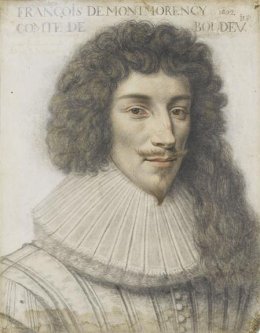 Though this is the duel that everyone knows, Francois de Montmorency-Bouteville (


